THIS OBJECT WAS SOLD
Processional Reliquary Cross, Late 14th–early 15th Century
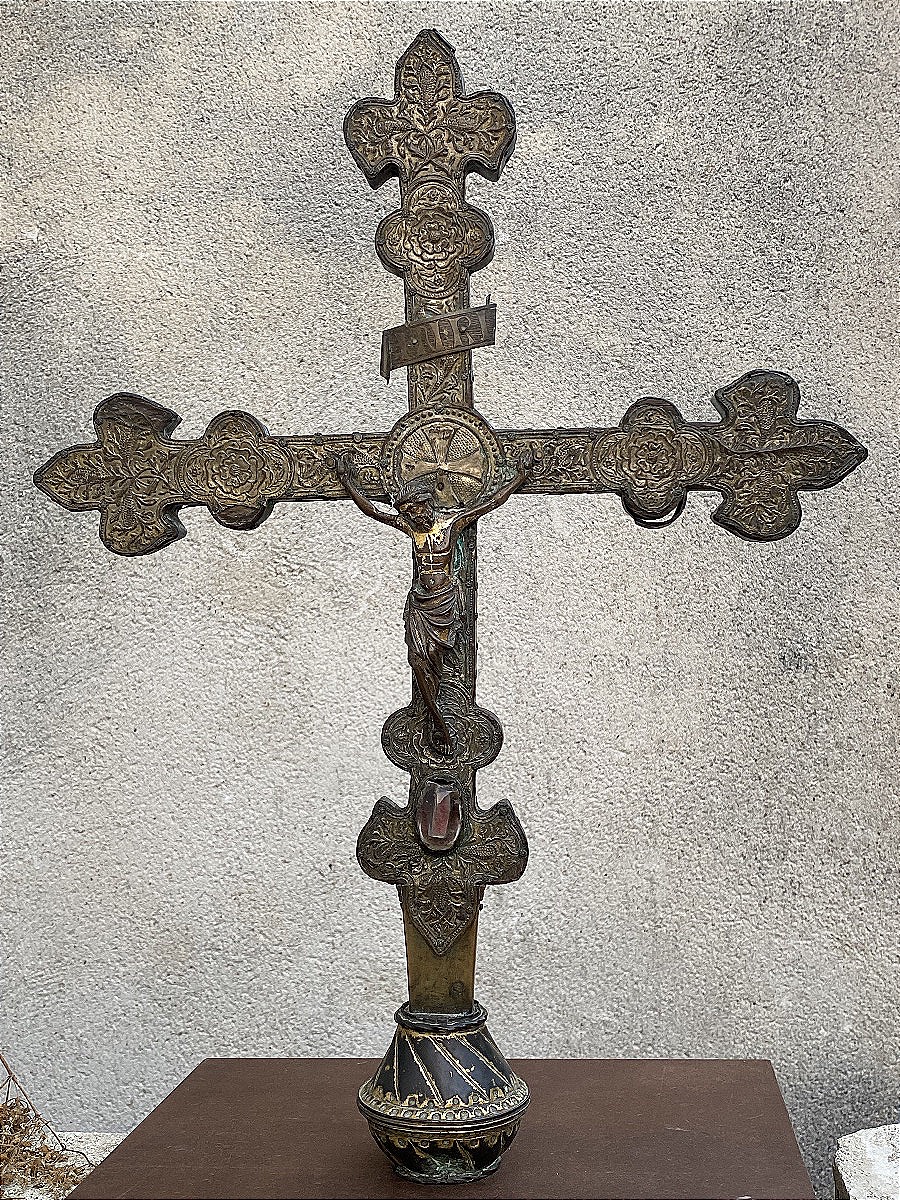
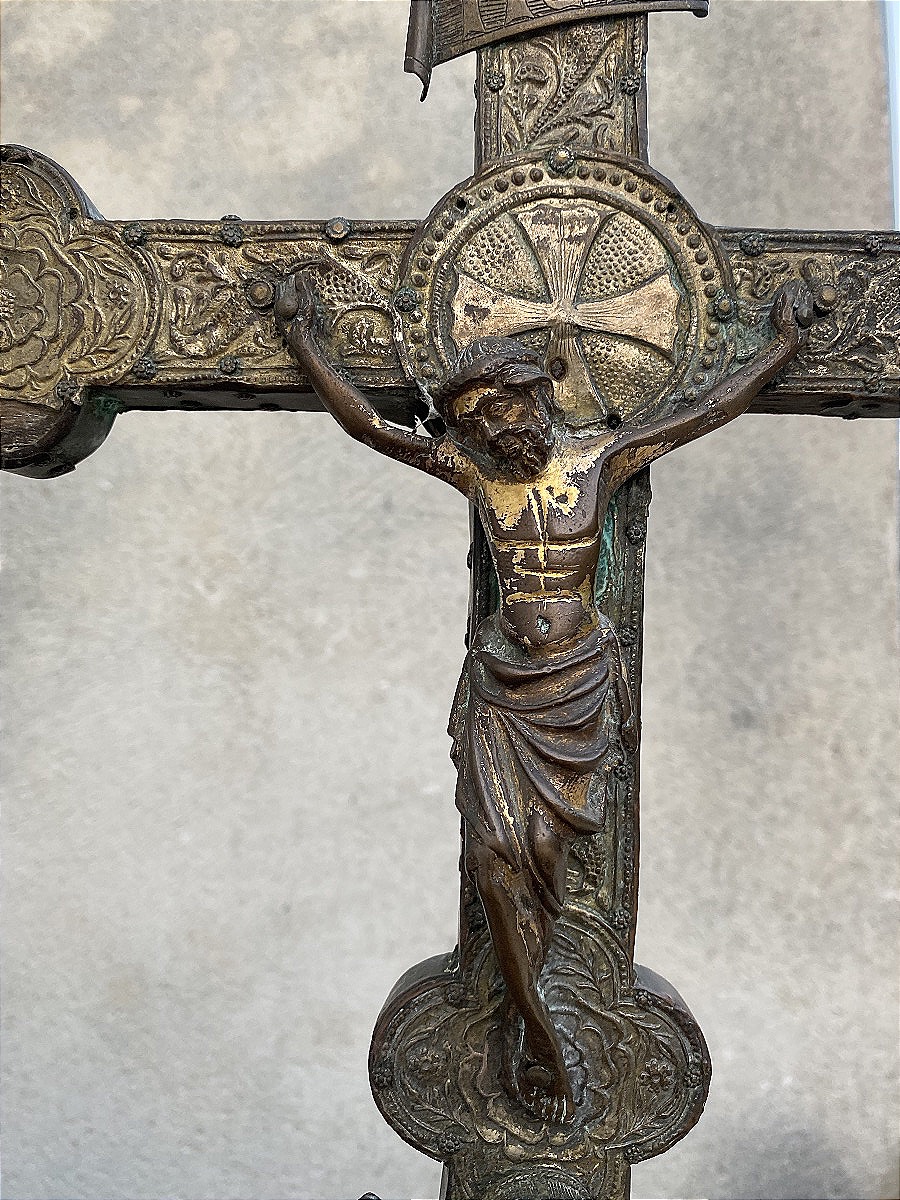
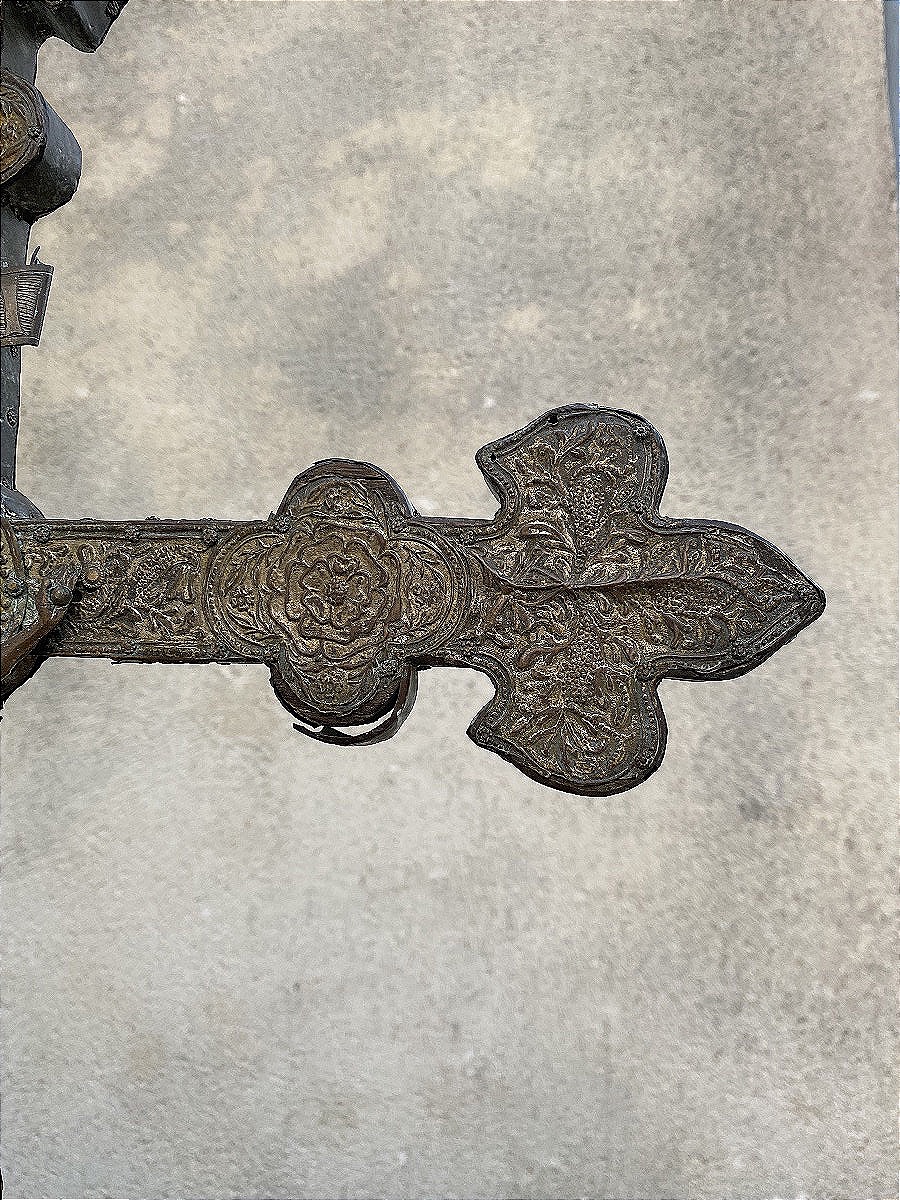
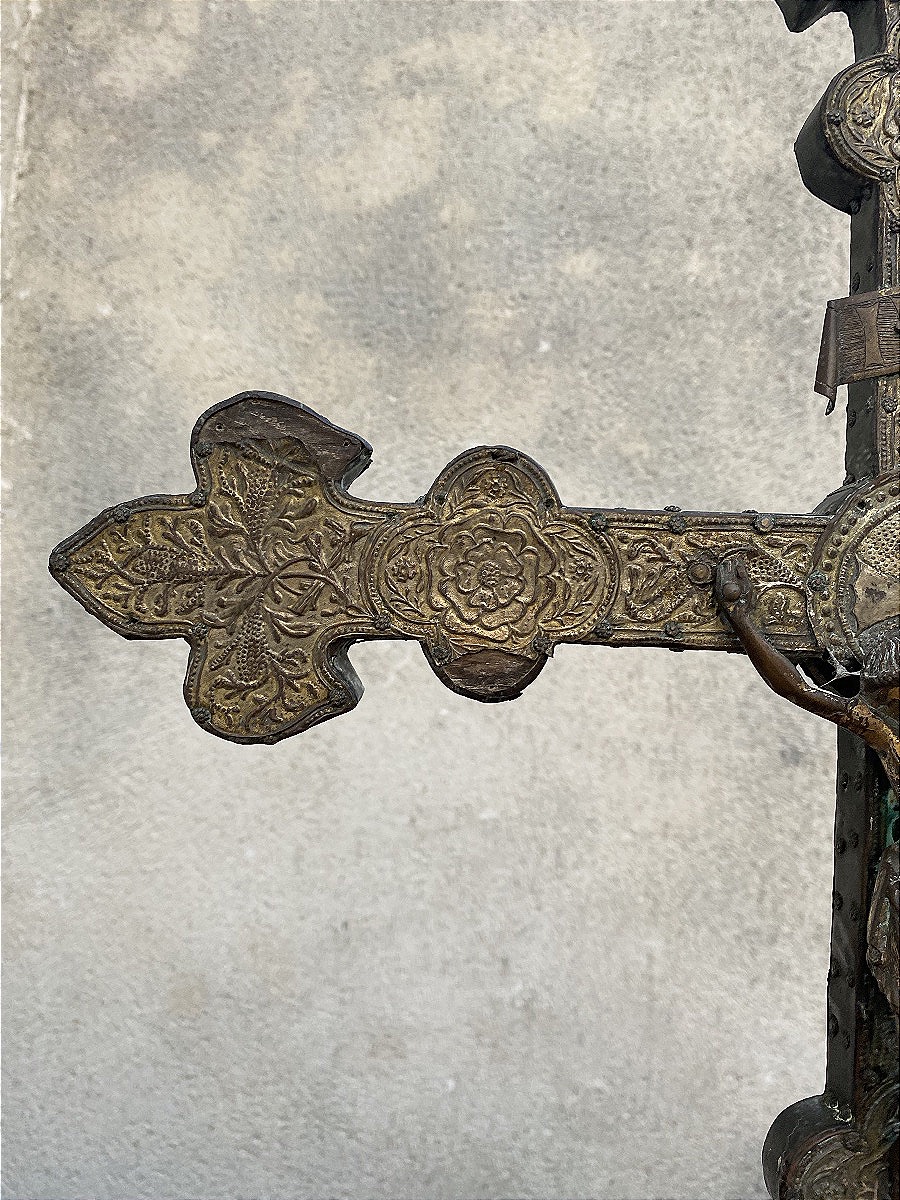
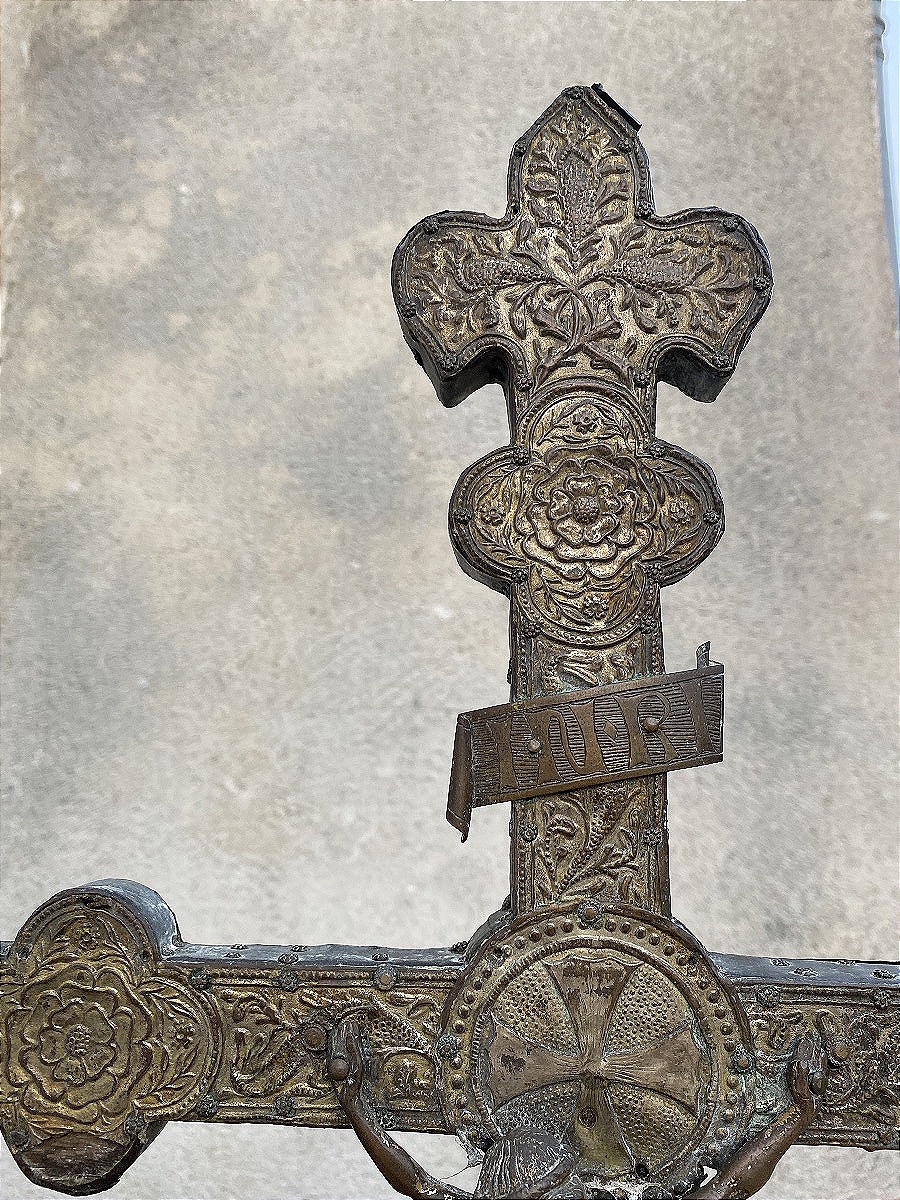
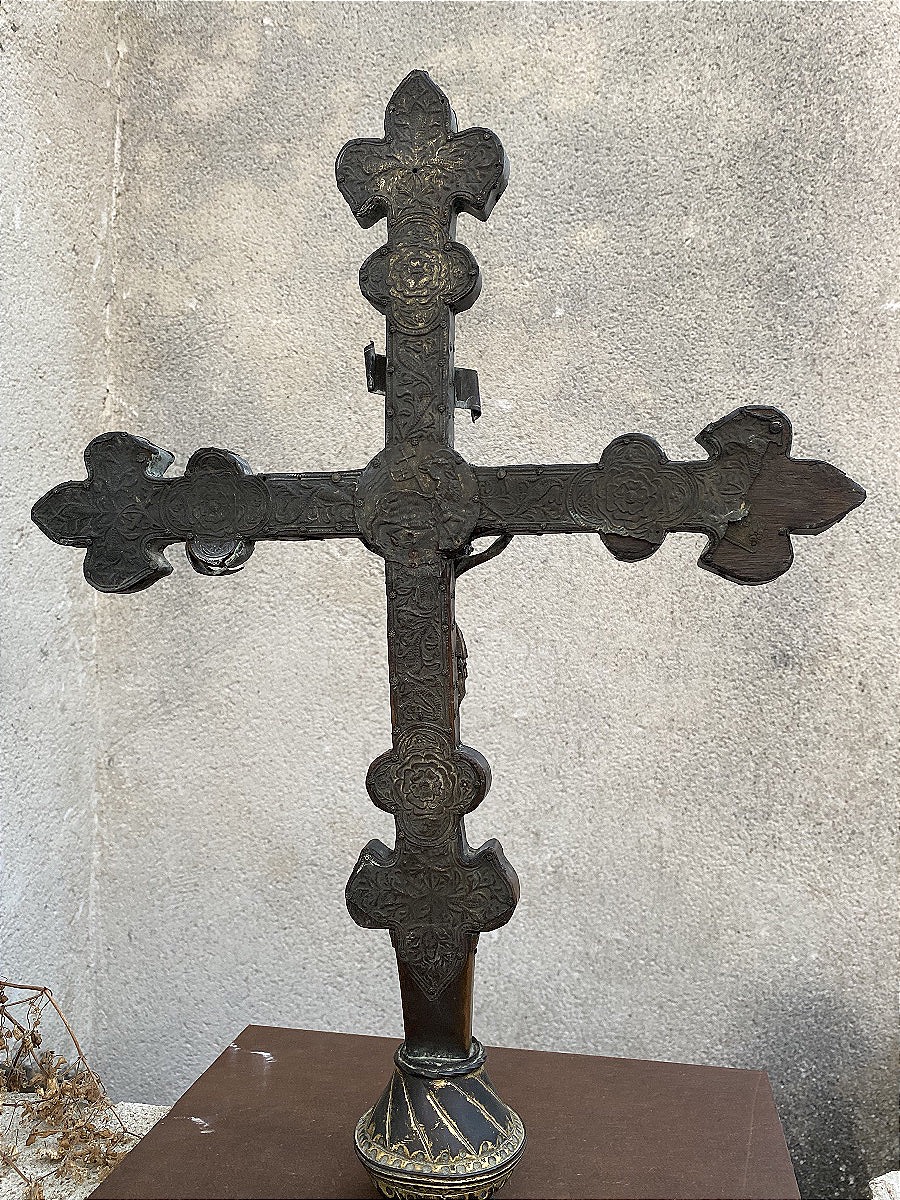
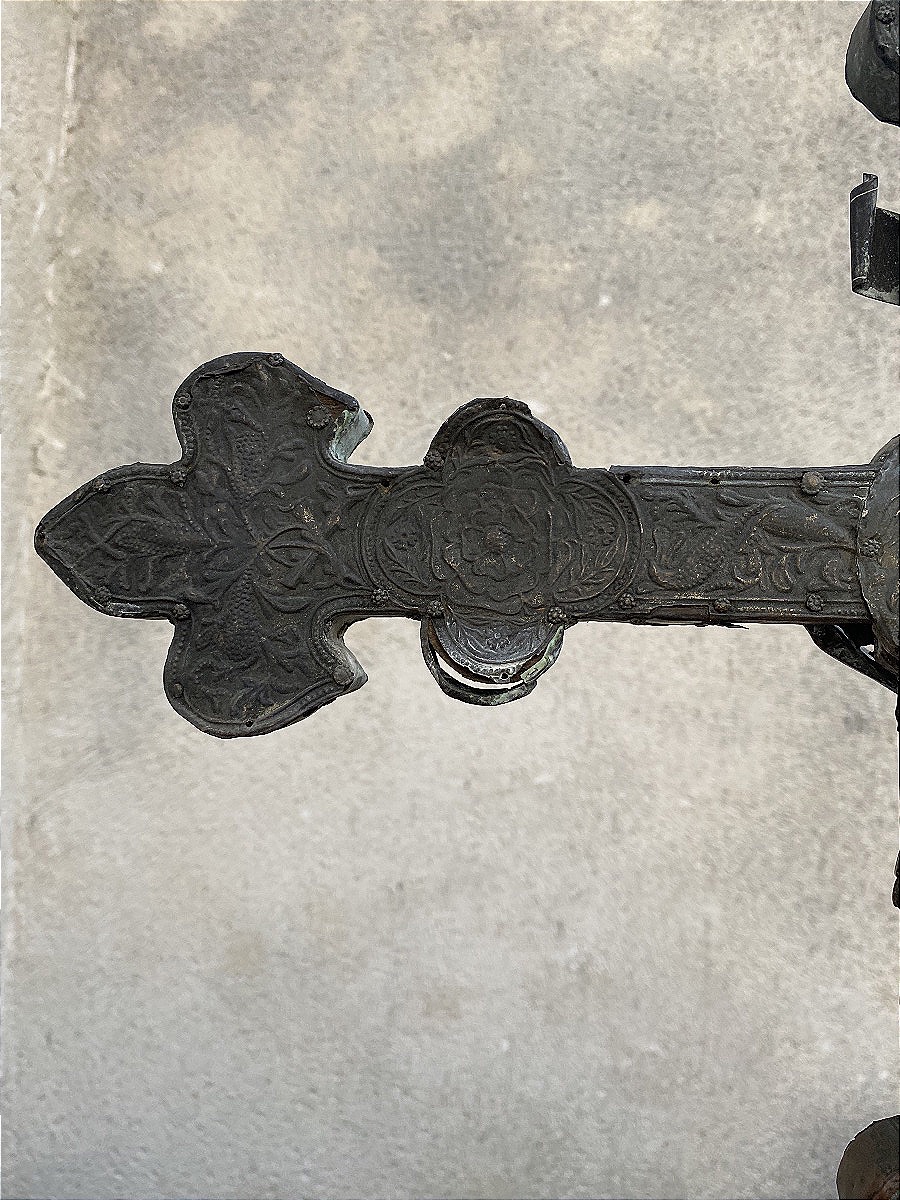
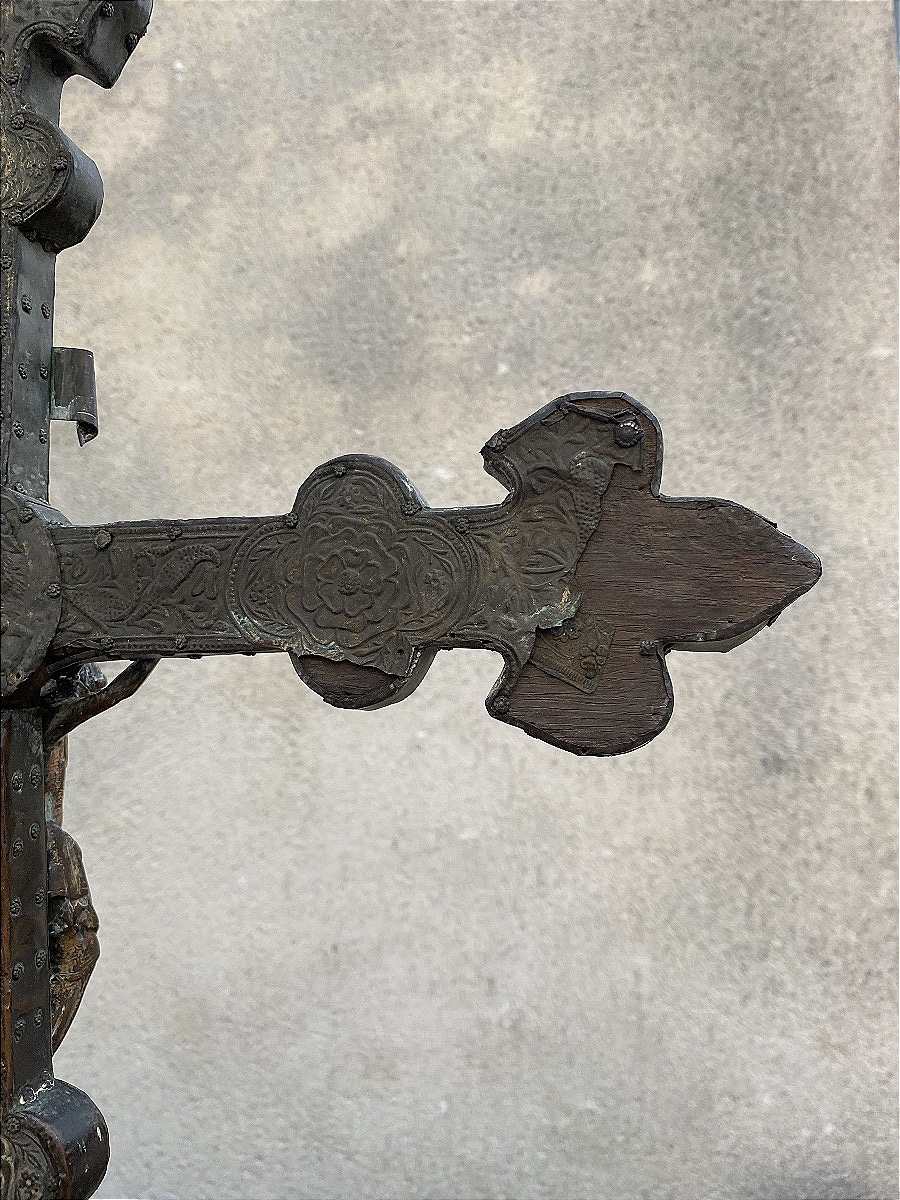
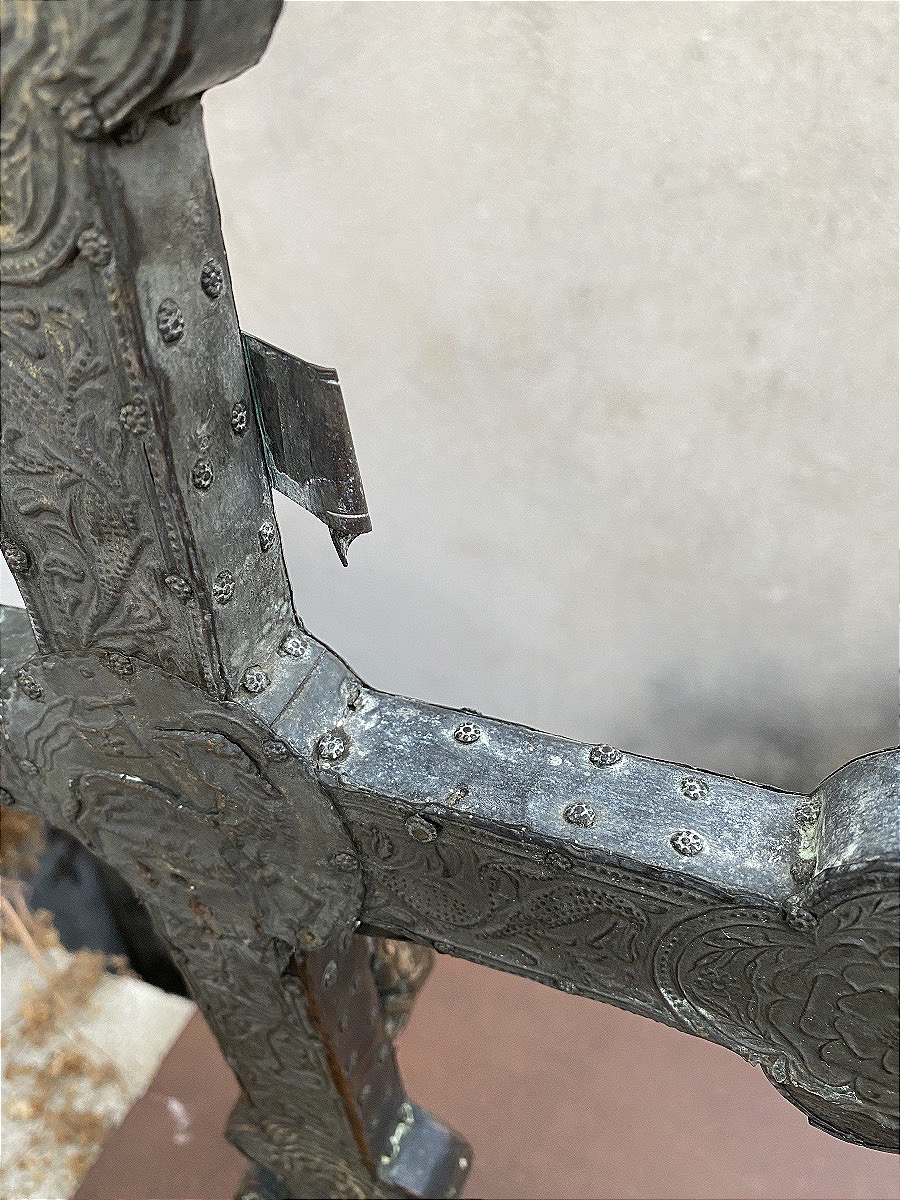
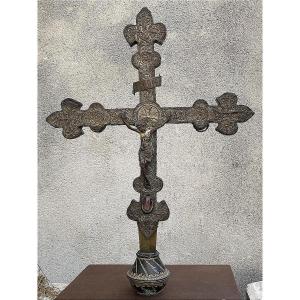


A rare reliquary processional cross made of repoussé copper, engraved and formerly gilded, with fleur-de-lis-shaped ends, richly adorned with a floral motif of scrollwork and stylized flowers, characteristic of the Gothic style.
The obverse features a finely cast Christ in the round, with a slender body and a bowed head, still reflecting the aesthetic of the late 14th century. He is clad in a long perizonium reaching down to the knees, whose supple and elegant folds attest to the quality of the casting. Above it is the titulus “INRI,” while a circular medallion placed behind Christ’s head forms a cruciferous nimbus.
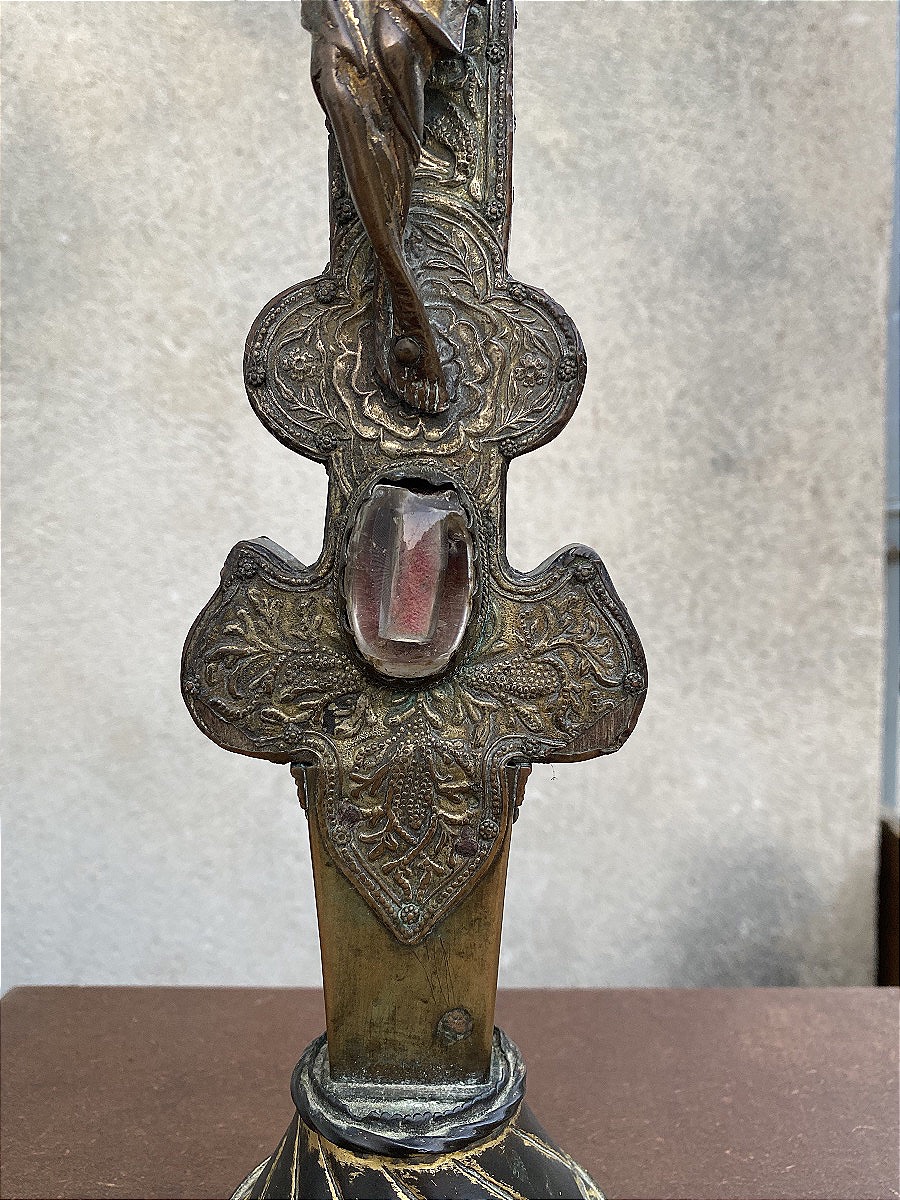
The lower section contains a large reliquary compartment closed by a rock crystal cabochon, intended to hold and display a precious relic to the faithful during processions. This feature confirms the cross’s liturgical function, as it was used during major religious ceremonies, particularly those of Easter.
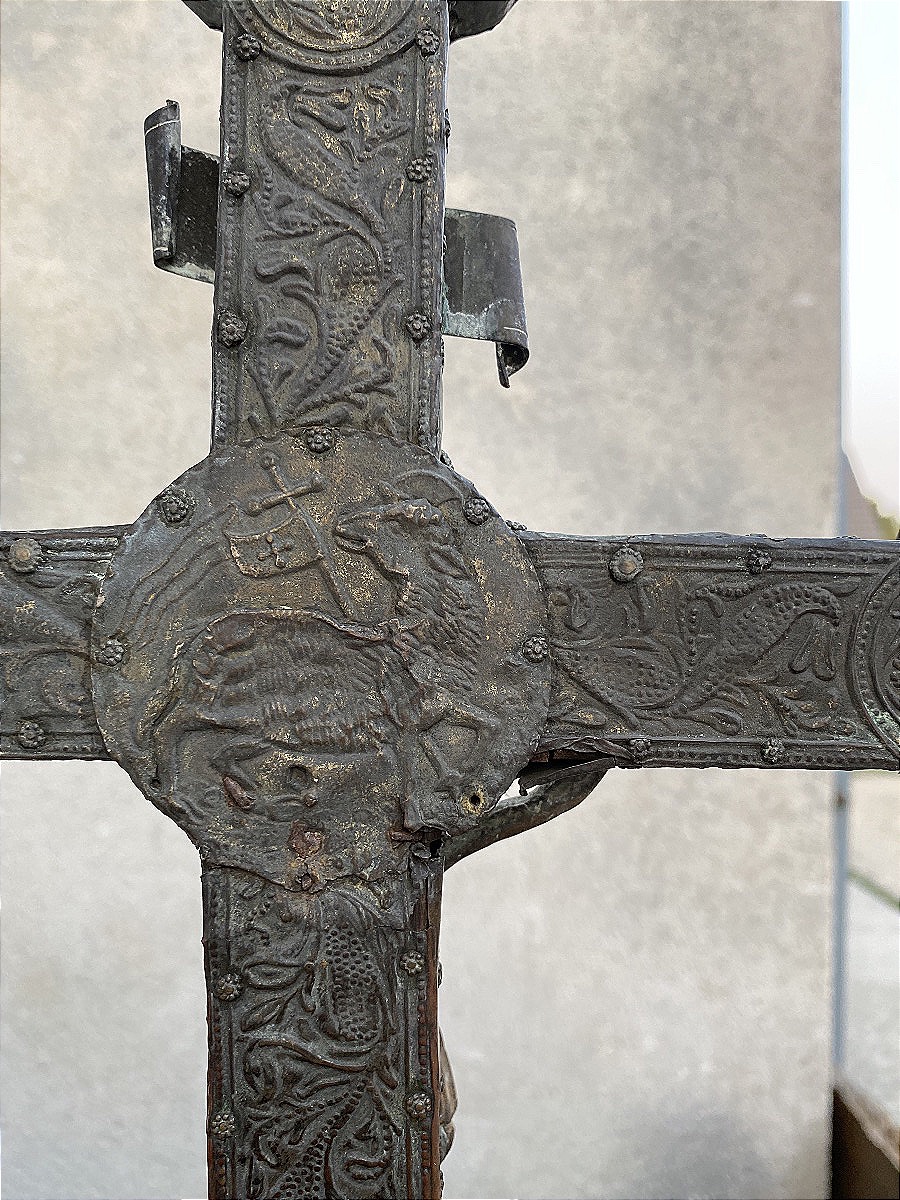
The reverse, equally richly ornamented, is decorated in the center with the Paschal Lamb, a symbol of the risen Christ—an iconography particularly suited to Easter processions and celebrations of the Resurrection.
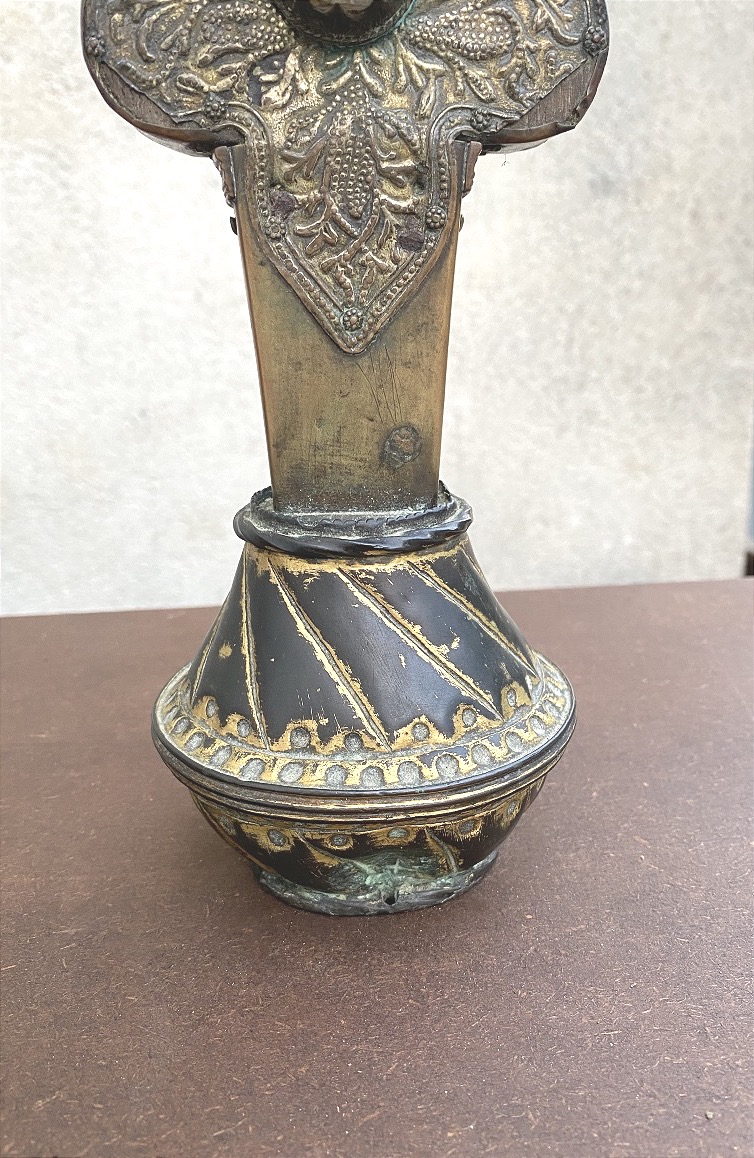
The shaft retains its original socket, allowing it to be mounted on a processional pole. The lower knot is decorated with engraved fillets and retains traces of gilding.
Partially missing at both ends and one nail.
A rare example of late medieval Gothic religious metalwork, this cross combines particularly evocative iconography—the crucified Christ on the obverse and the Mystical Lamb on the reverse—with a genuine reliquary function, making this object a liturgical piece of the highest order.
Explore similar pieces and discover your ideal find:
Christian Art