

Portraits Of Mary And Her Child, Reverse-glass (églomisé). Wood And Gilt Bronze Frame.17th
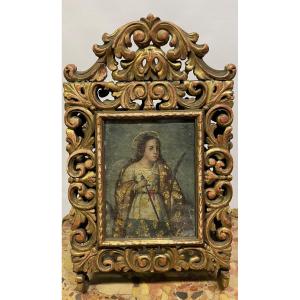
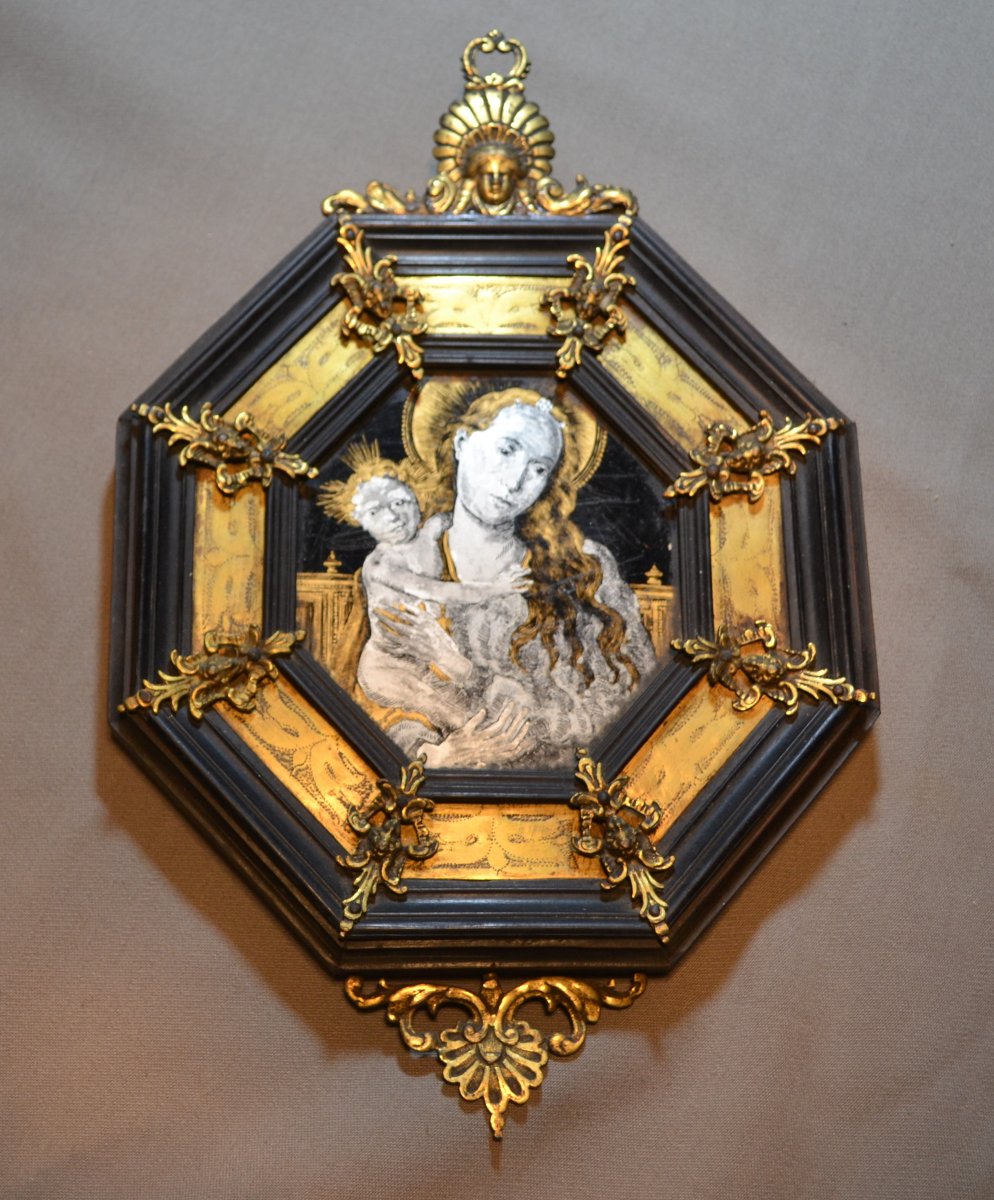
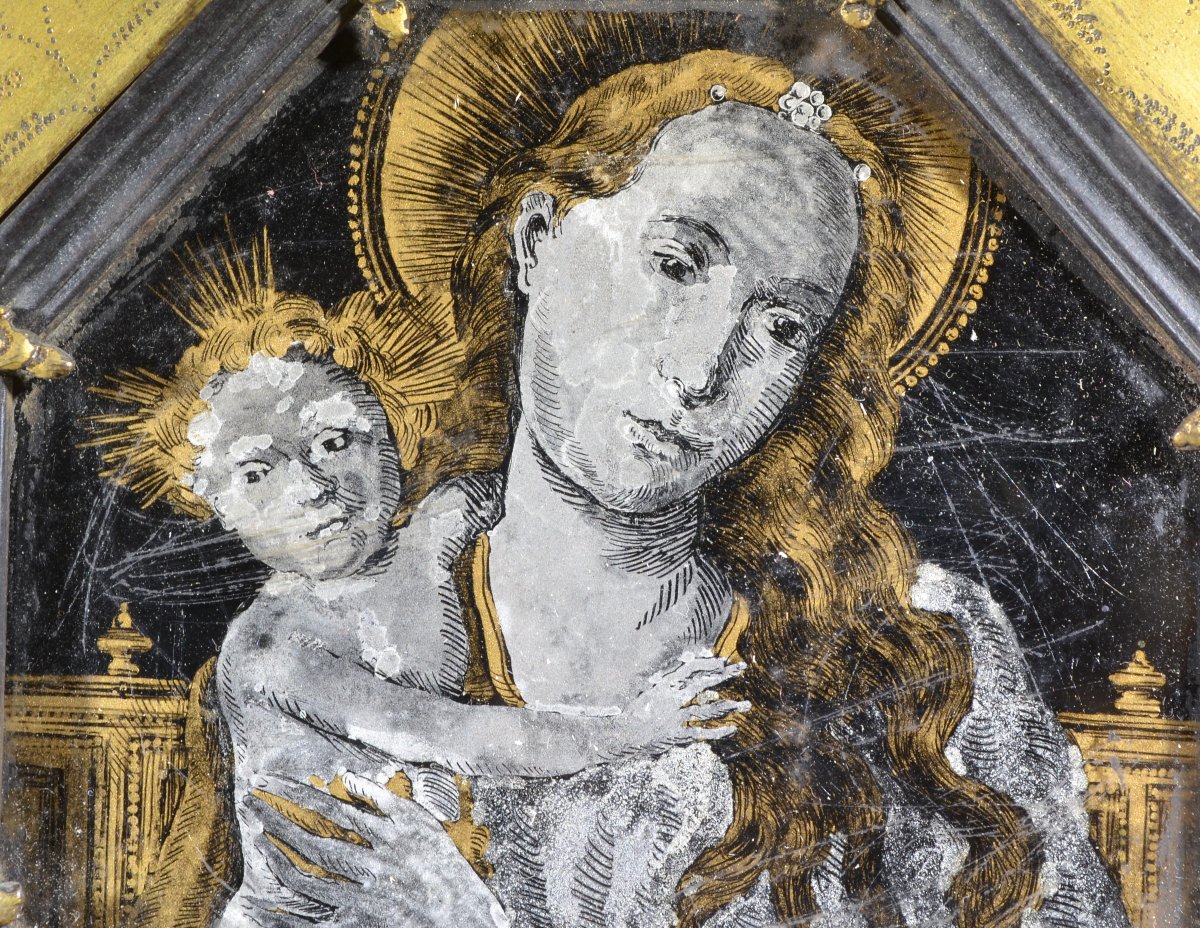
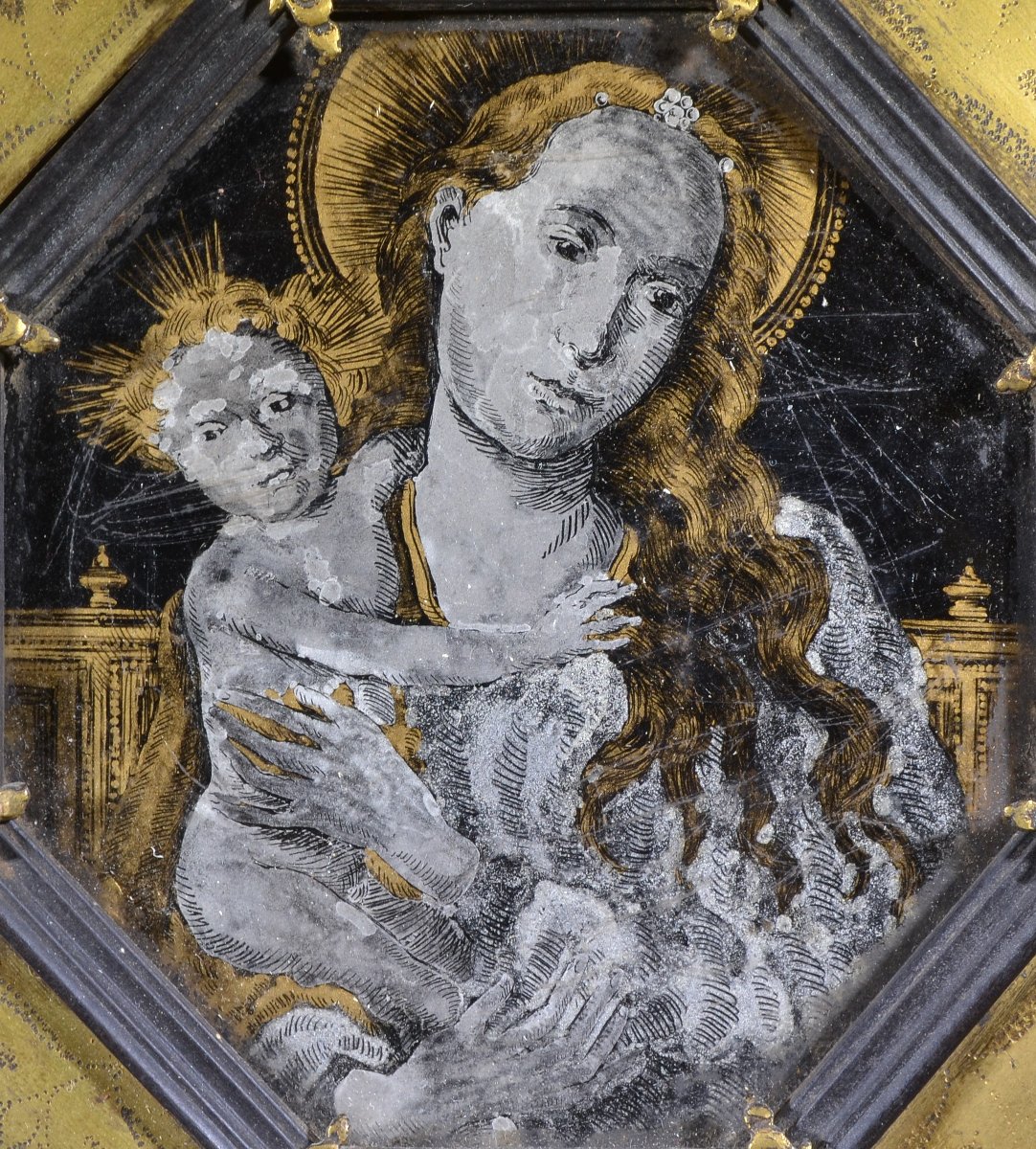
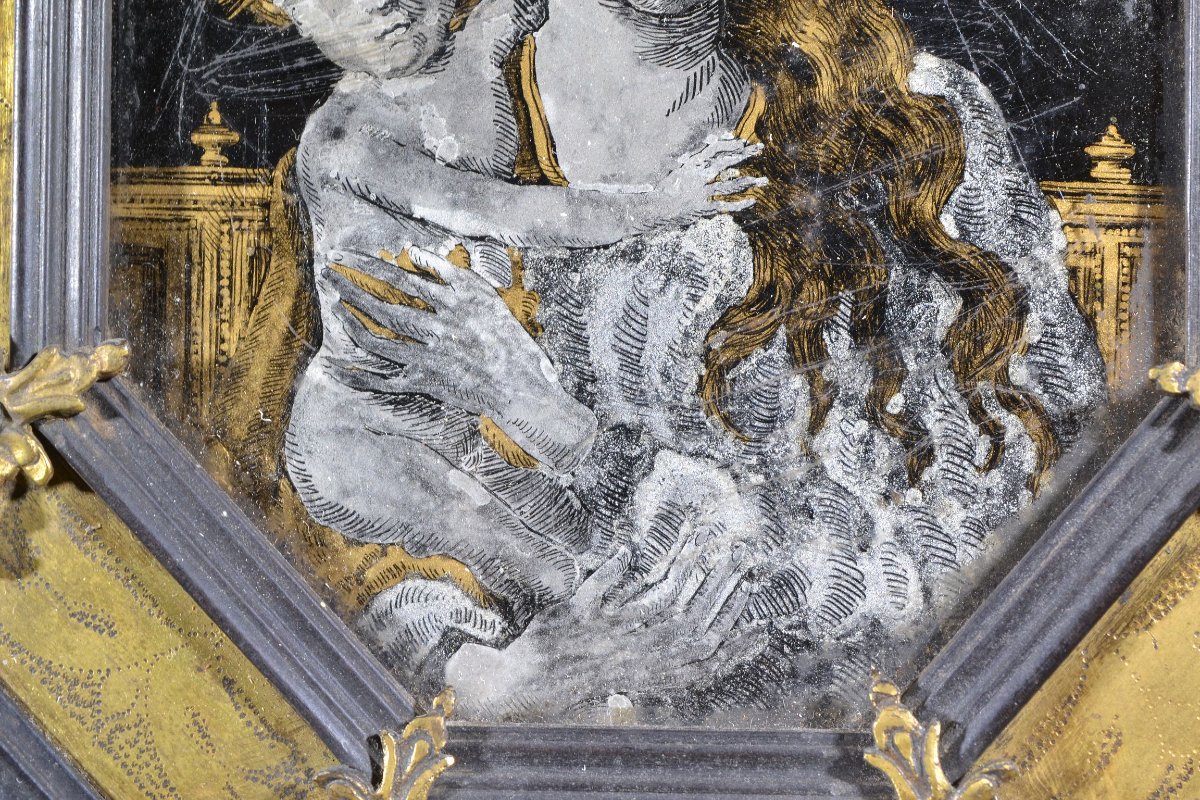
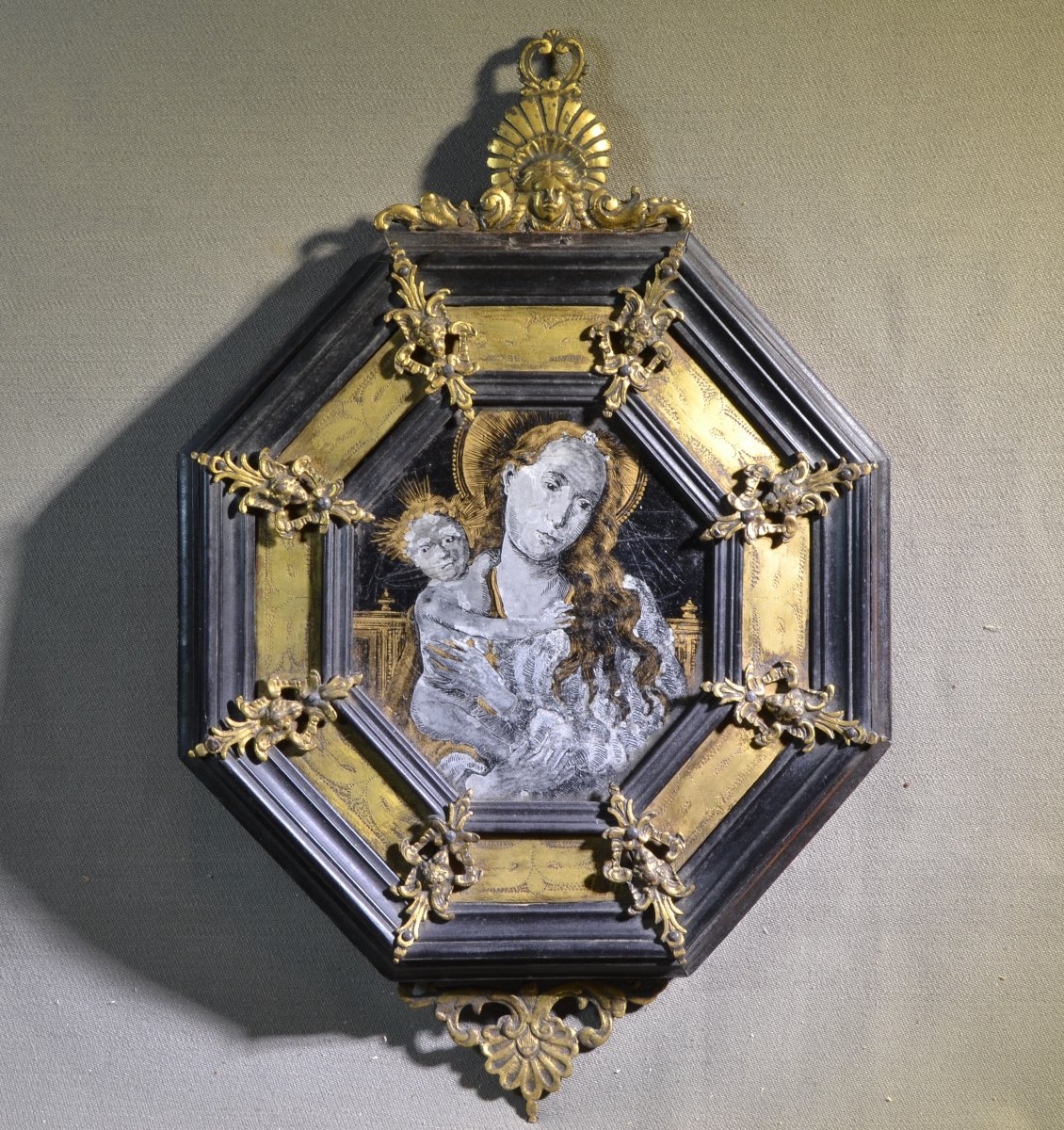
The Virgin Mary is depicted seated, her head slightly inclined, holding the Christ Child in her arms. Executed in gold and silver powders beneath glass on a black ground, the composition is inspired by an engraving, probably of German origin. The artist deliberately reproduced the engraved burin lines, giving the painting the distinctive graphic language of a printed image.
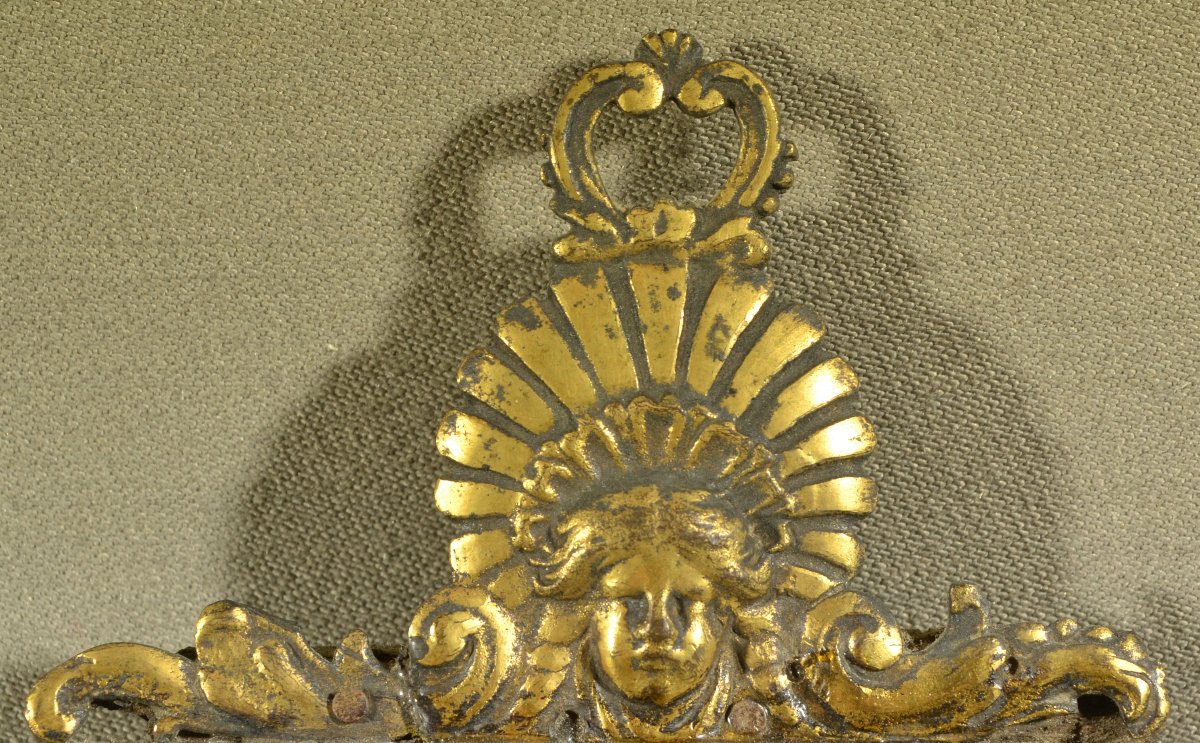
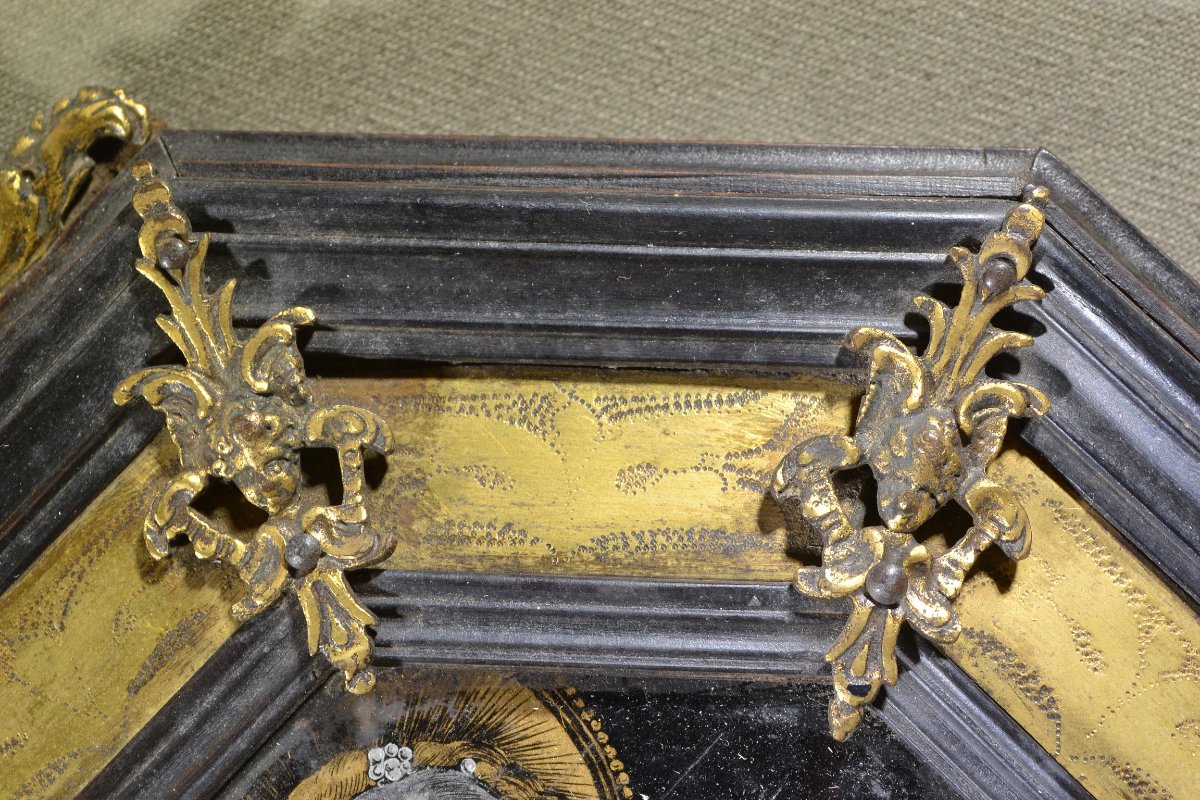
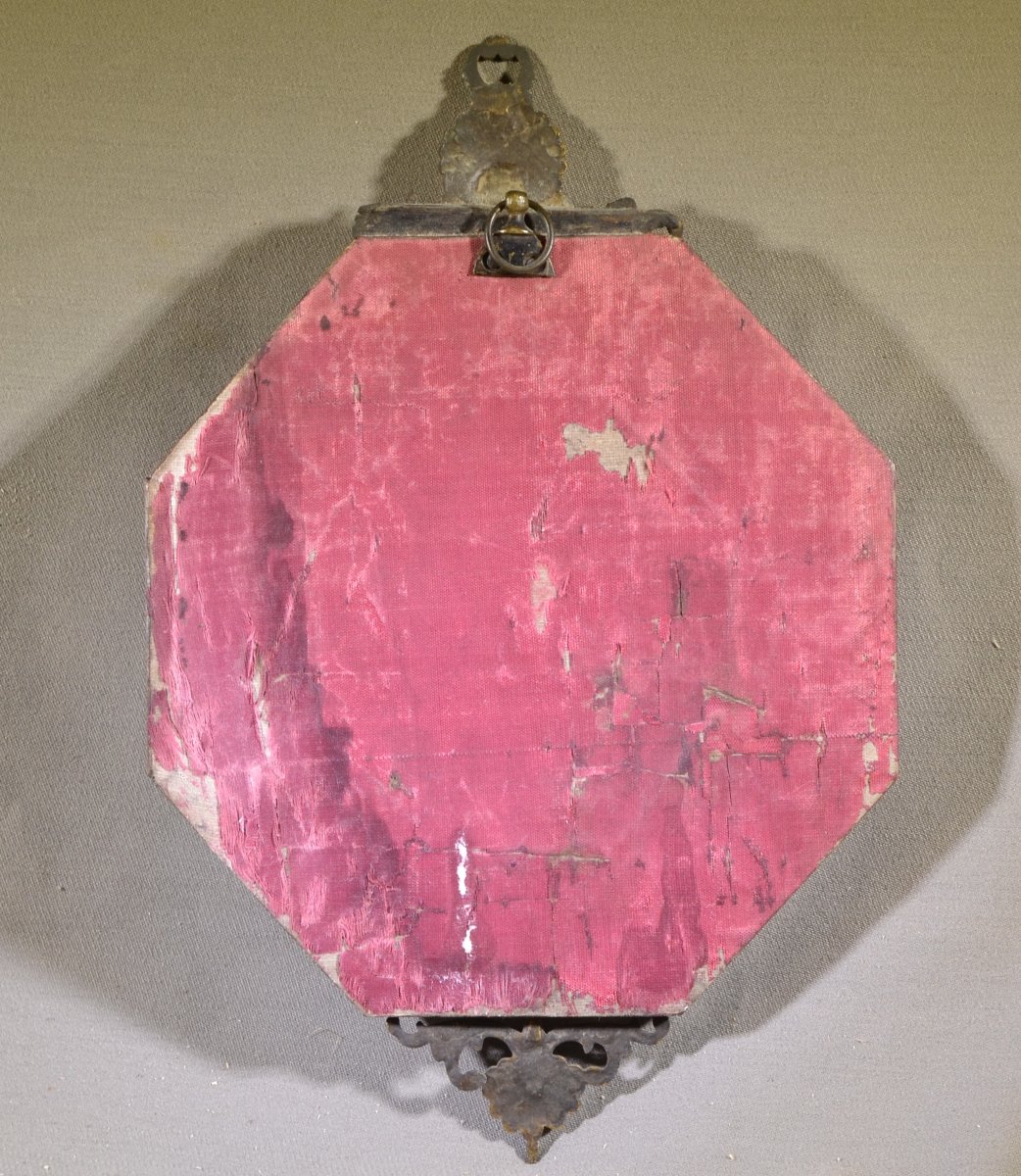
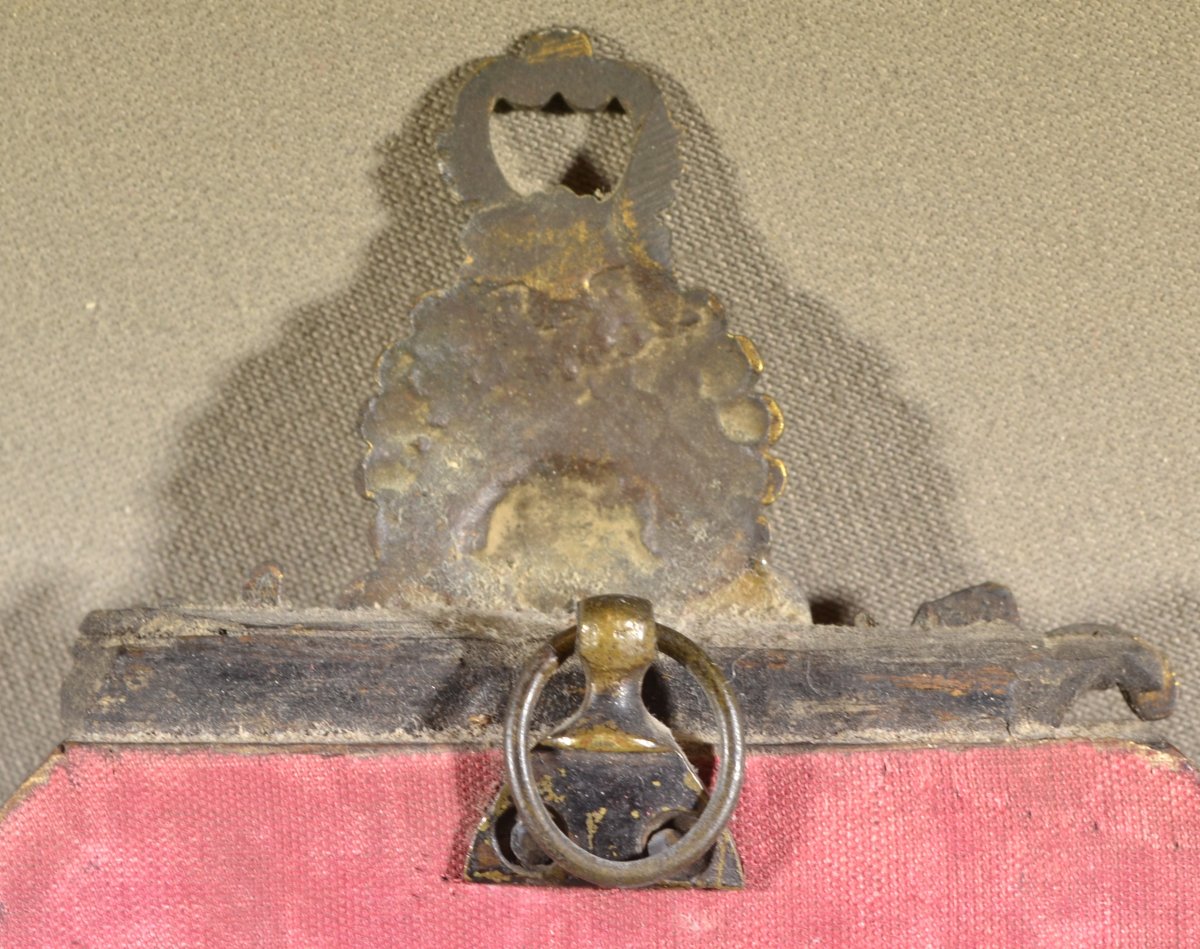
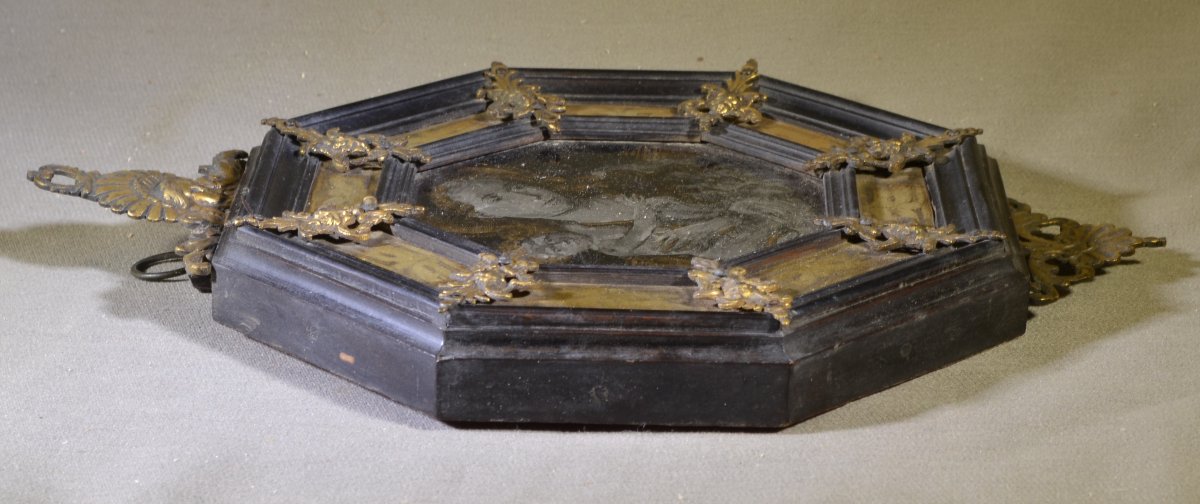
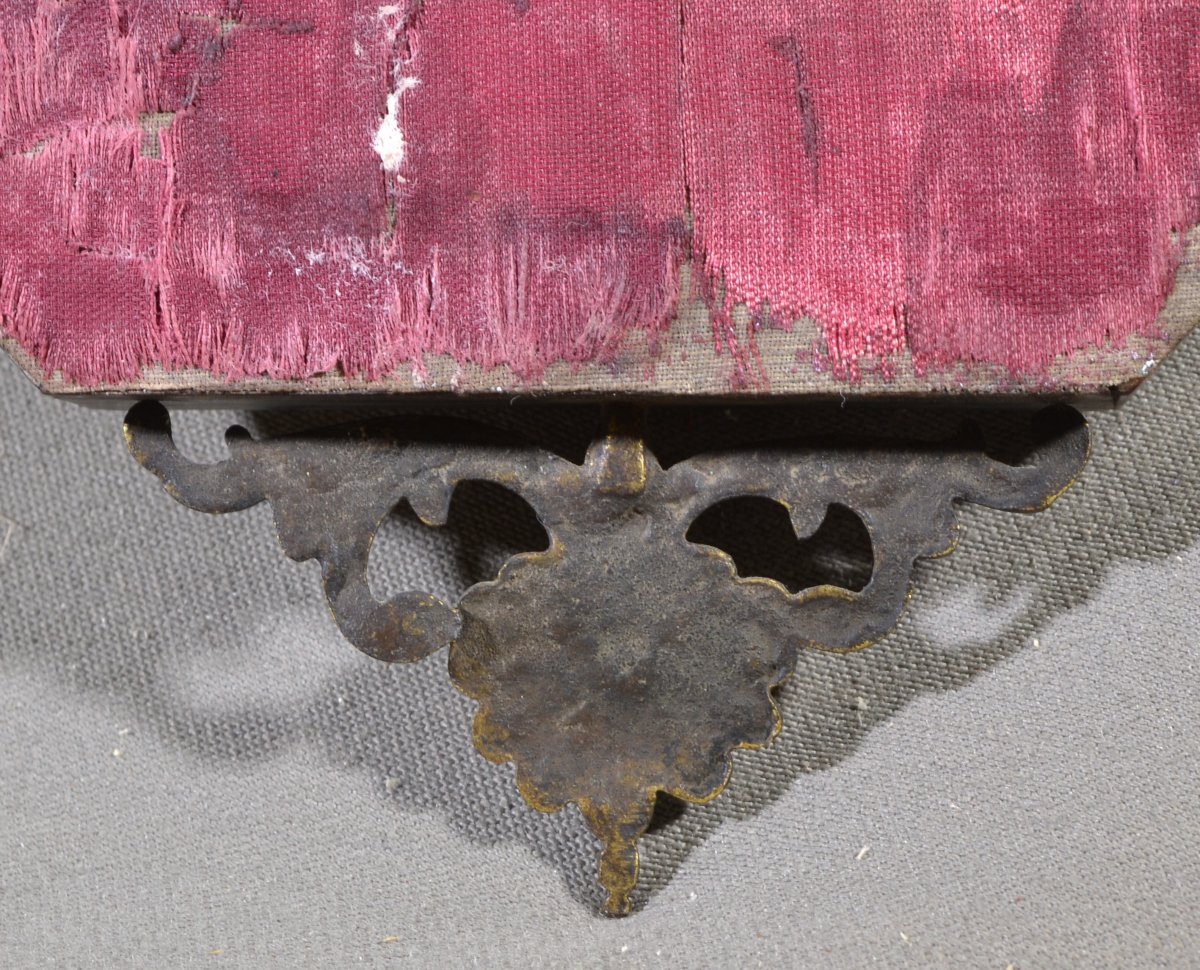
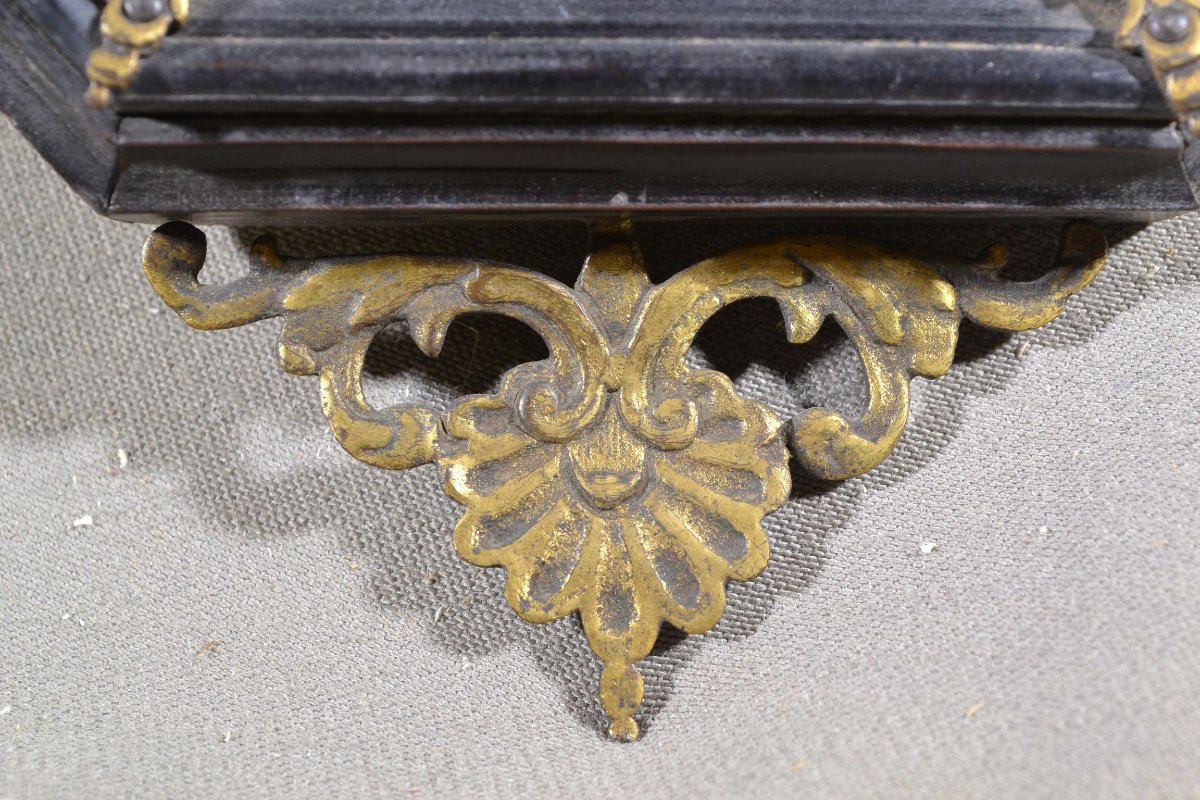
The reverse-painted glass is mounted in a finely crafted frame made of a precious wood, probably ebony, adorned with cast gilt-bronze cherubs' heads and engraved gilt-copper plaques. On the reverse, a finely woven silk fabric, probably original, is still preserved.
We believe the frame dates from the 17th century, probably Italian (it remained in Lombardy until recently), whereas the reverse-painted glass itself is likely to be earlier. It may originally have been larger, as the figures appear somewhat confined within the present frame and the upper part of the Virgin's halo is missing.
Our hypothesis is that the glass was damaged, later cut down, and subsequently mounted into a new frame specially made for it. This, however, cannot be stated with certainty, as numerous depictions of the Virgin exist in which the halo is intentionally only partially represented.
It has proved impossible to determine the precise date and place of production of this reverse-painted glass. It was probably made in the Germanic world before the 17th century, and the compact composition of the figures suggests a Late Medieval artistic tradition.
Only a specialist will be able to reach a definitive conclusion and may perhaps uncover a very pleasant surprise.
Good overall condition. No restoration and no losses. The glass shows surface scratches in places but is not cracked.
Dimensions: 270 × 175 × 28 mm.
The reverse-painted glass is mounted in a finely crafted frame made of a precious wood, probably ebony, adorned with cast gilt-bronze cherubs' heads and engraved gilt-copper plaques. On the reverse, a finely woven silk fabric, probably original, is still preserved.
We believe the frame dates from the 17th century, probably Italian (it remained in Lombardy until recently), whereas the reverse-painted glass itself is likely to be earlier. It may originally have been larger, as the figures appear somewhat confined within the present frame and the upper part of the Virgin's halo is missing.
Our hypothesis is that the glass was damaged, later cut down, and subsequently mounted into a new frame specially made for it. This, however, cannot be stated with certainty, as numerous depictions of the Virgin exist in which the halo is intentionally only partially represented.
It has proved impossible to determine the precise date and place of production of this reverse-painted glass. It was probably made in the Germanic world before the 17th century, and the compact composition of the figures suggests a Late Medieval artistic tradition.
Only a specialist will be able to reach a definitive conclusion and may perhaps uncover a very pleasant surprise.
Good overall condition. No restoration and no losses. The glass shows surface scratches in places but is not cracked.
Dimensions: 270 × 175 × 28 mm.
7 000 €
Period: 17th century
Style: Renaissance, Louis 13th
Condition: Good condition
Material: Glass
Width: 175mm
Height: 270mm
Depth: 28mm
Reference (ID): 1801335
Availability: In stock
Print