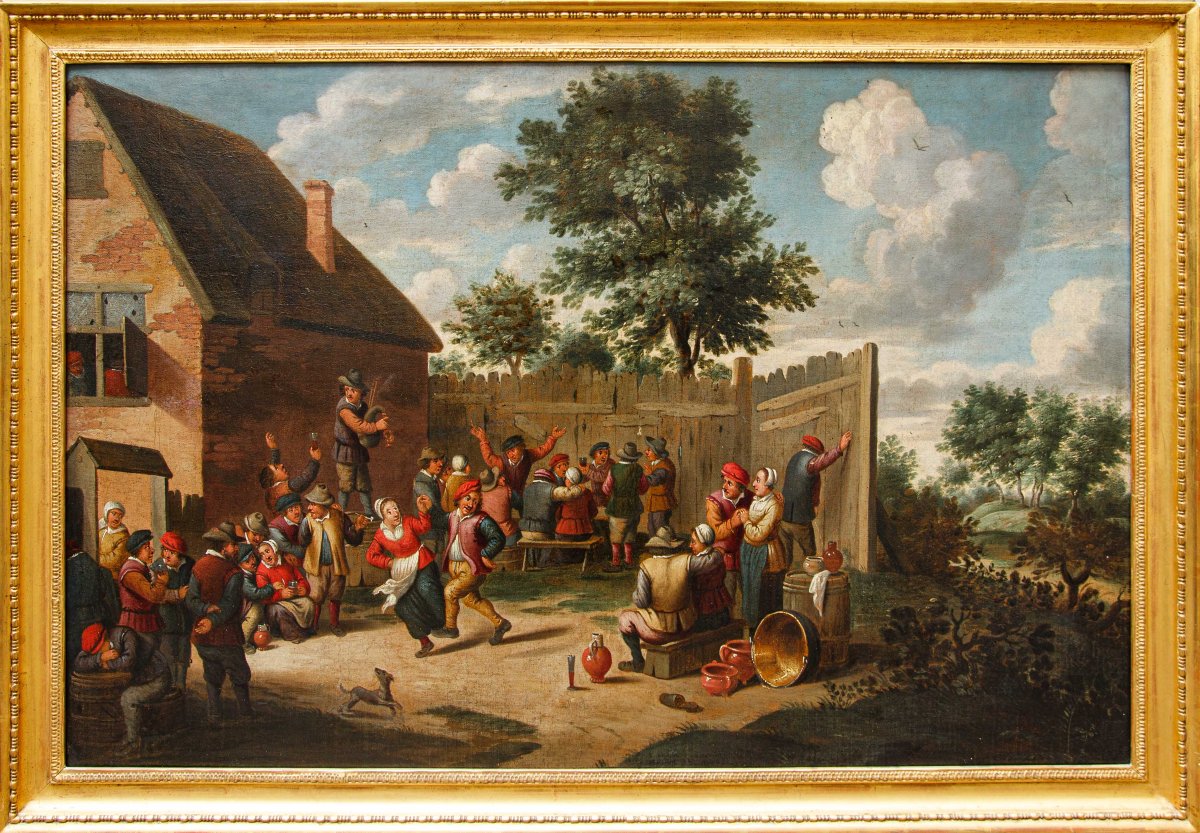
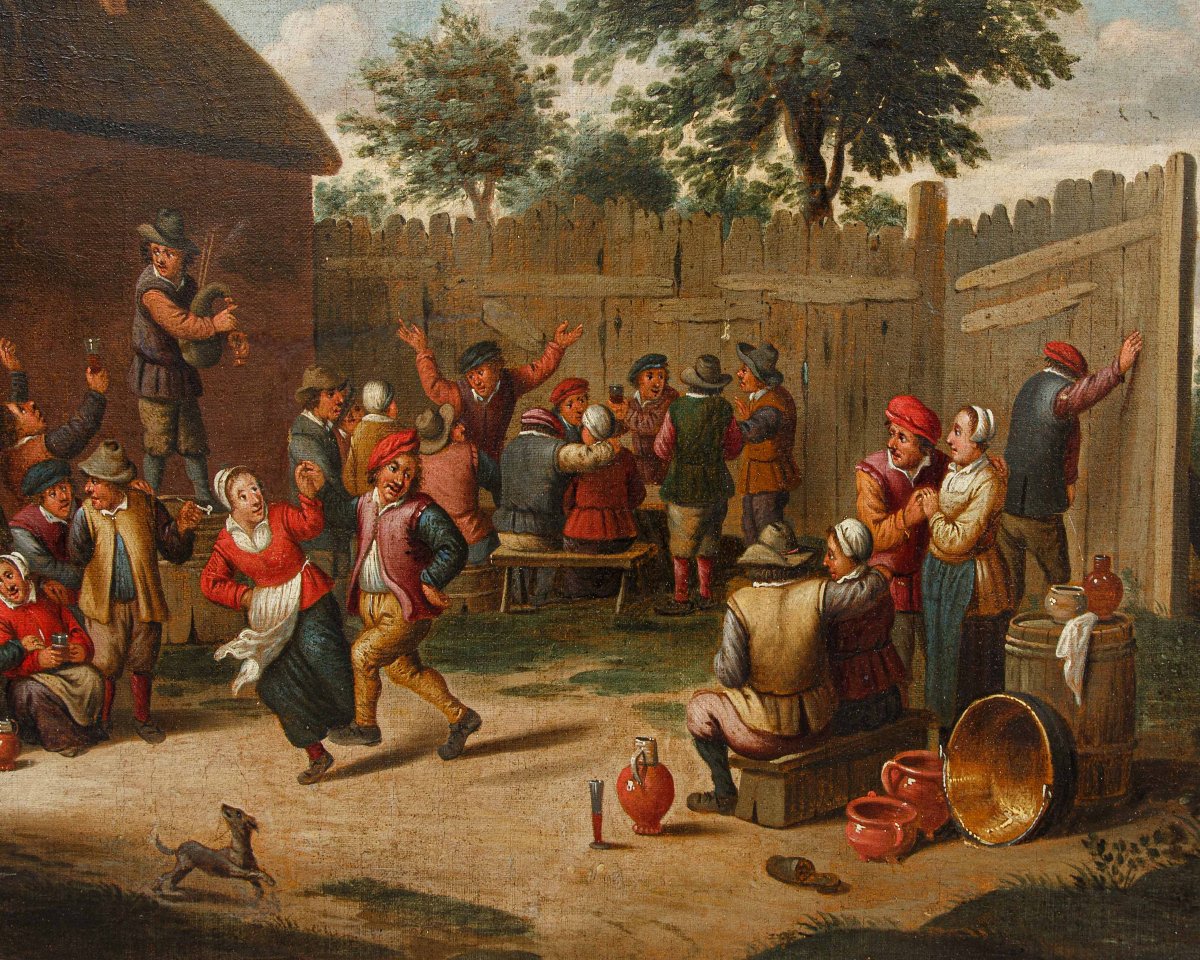
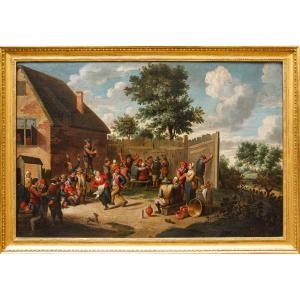


David Teniers The Younger (antwerp, 1610 – Brussels, 1690), From The Studio Of, Village Festival
David Teniers the Younger (Antwerp, 1610 – Brussels, 1690), from the workshop of
Village Festival
Oil on canvas, 73 x 107 cm
With frame, 88 x 123 cm
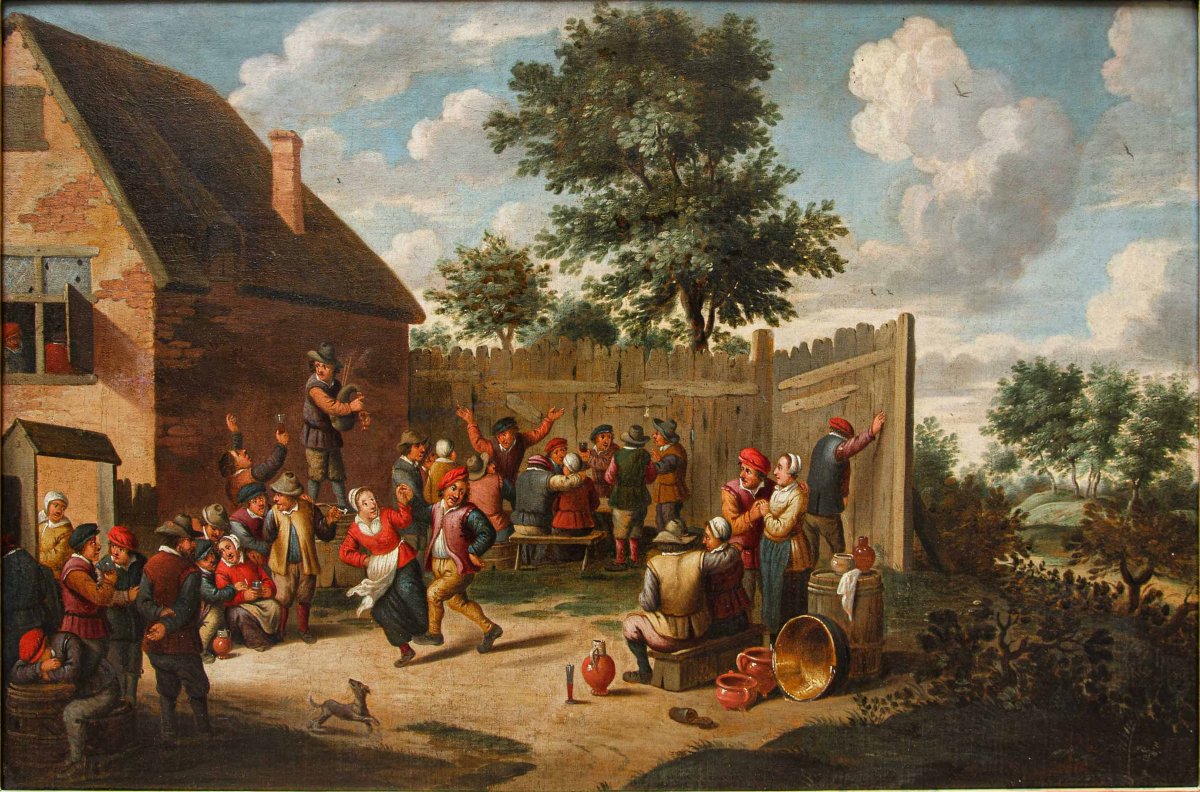
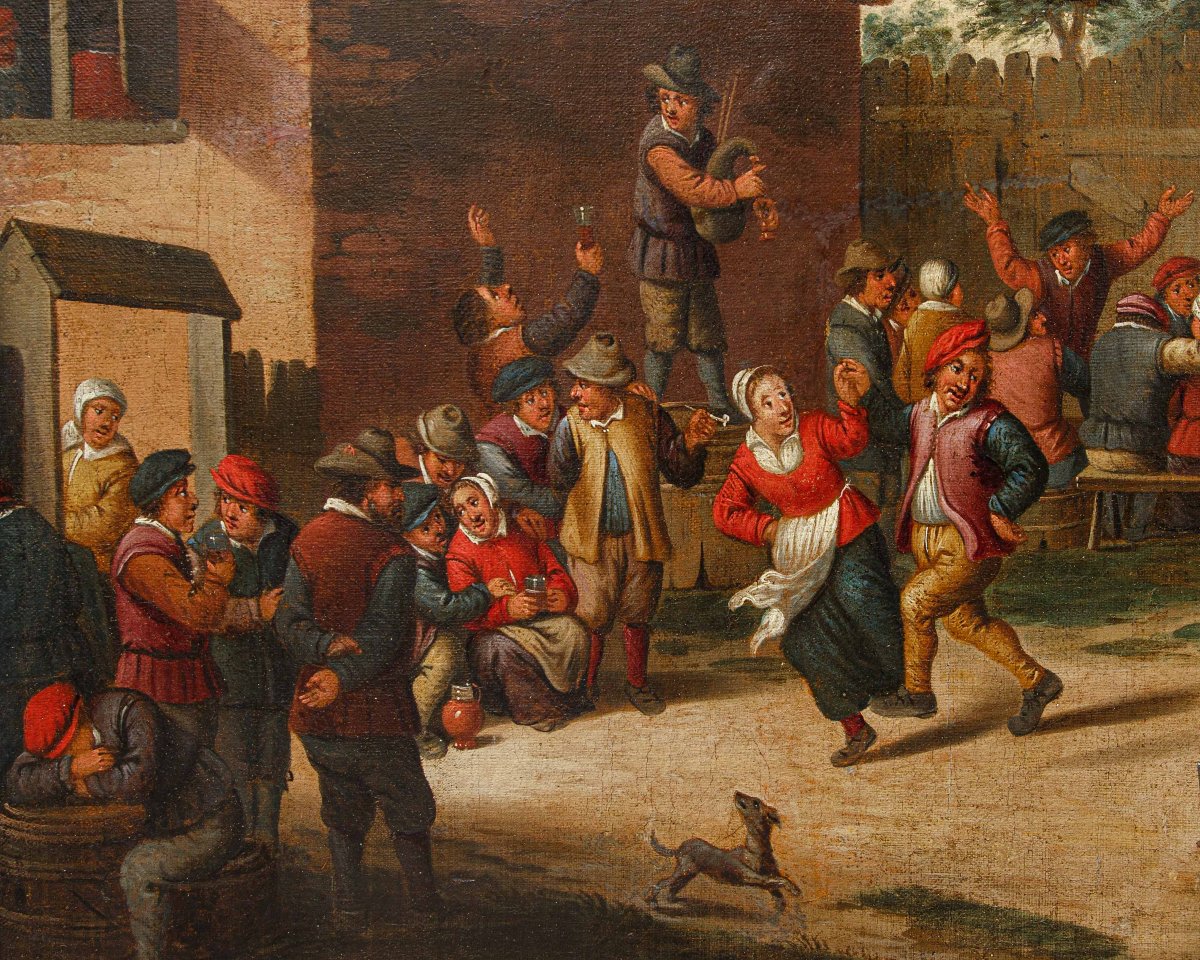
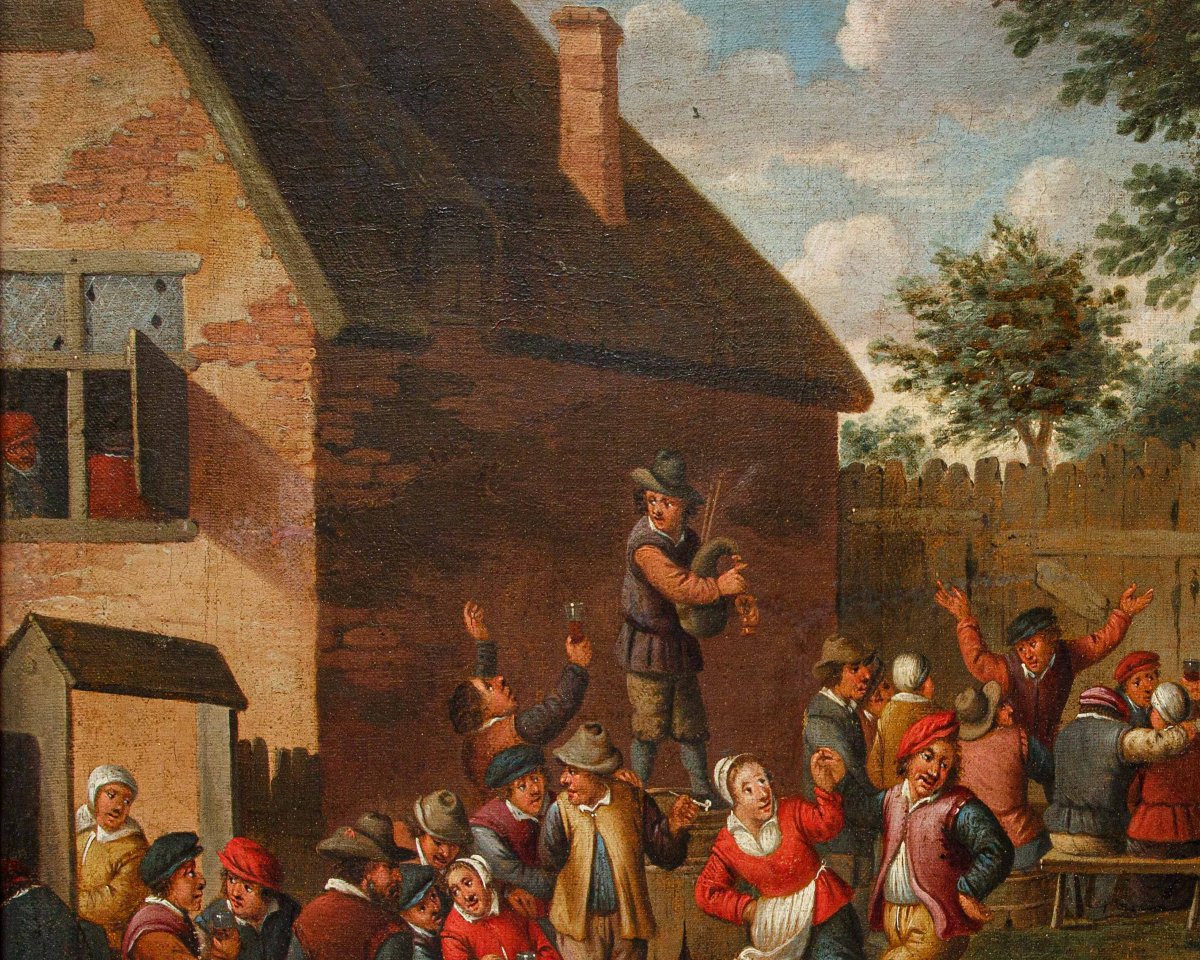
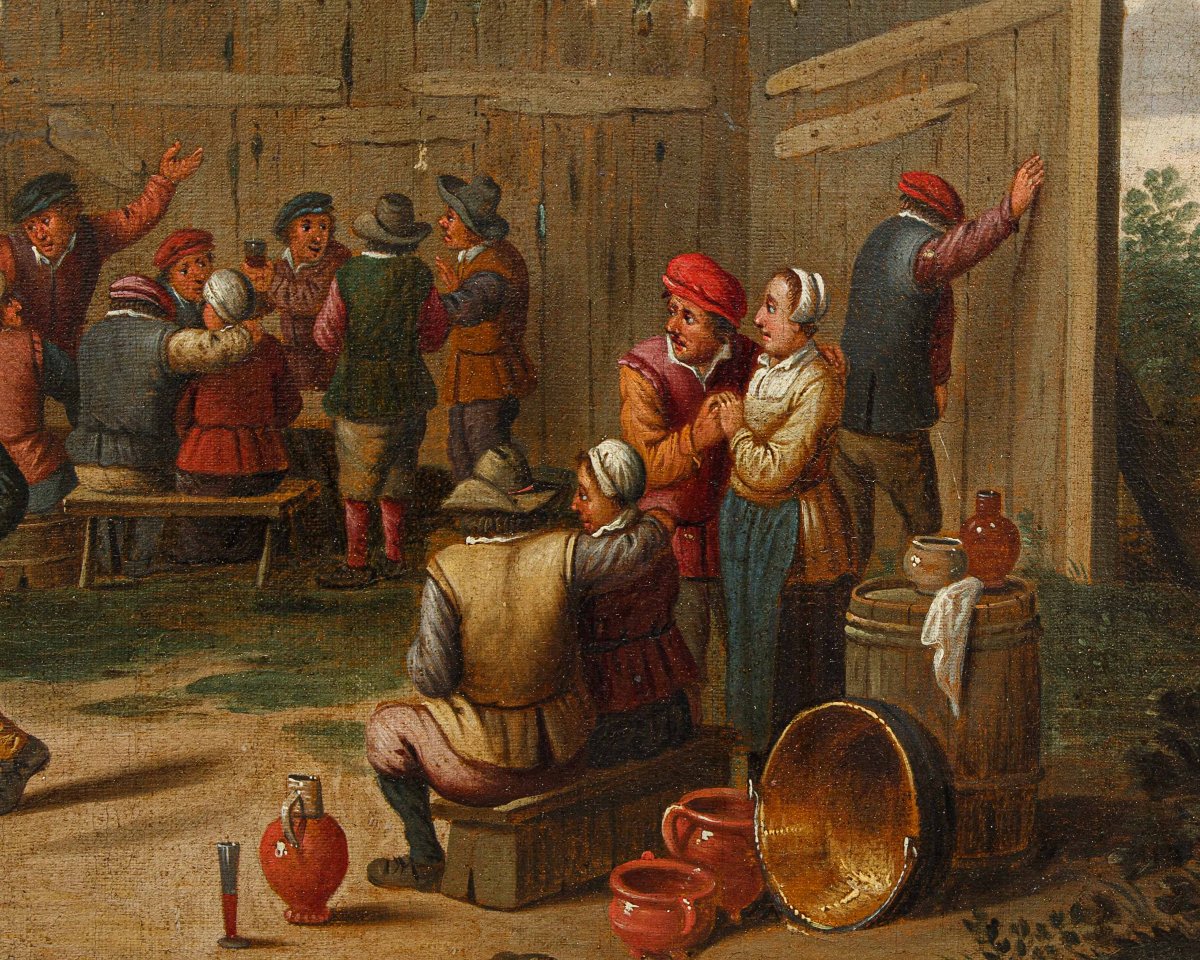
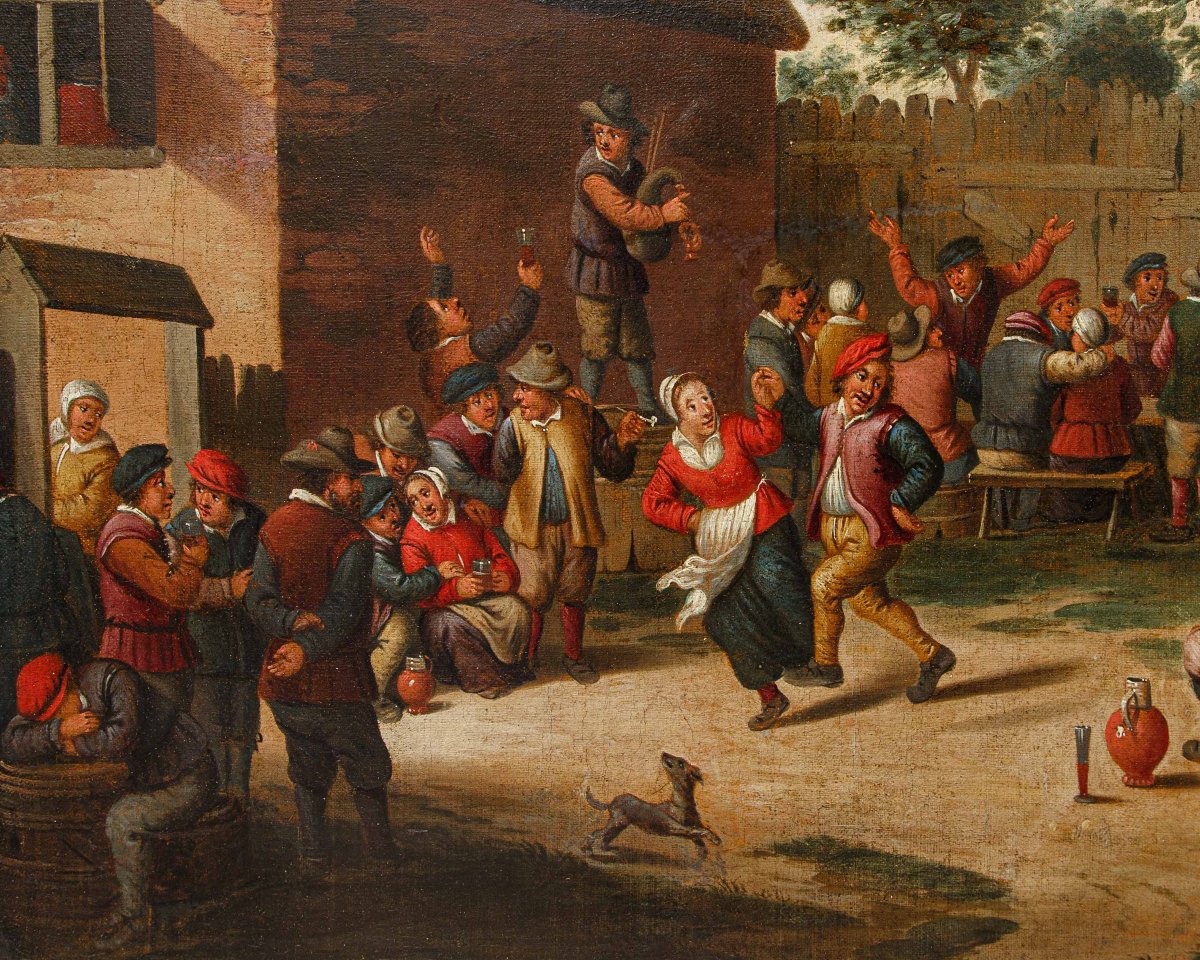
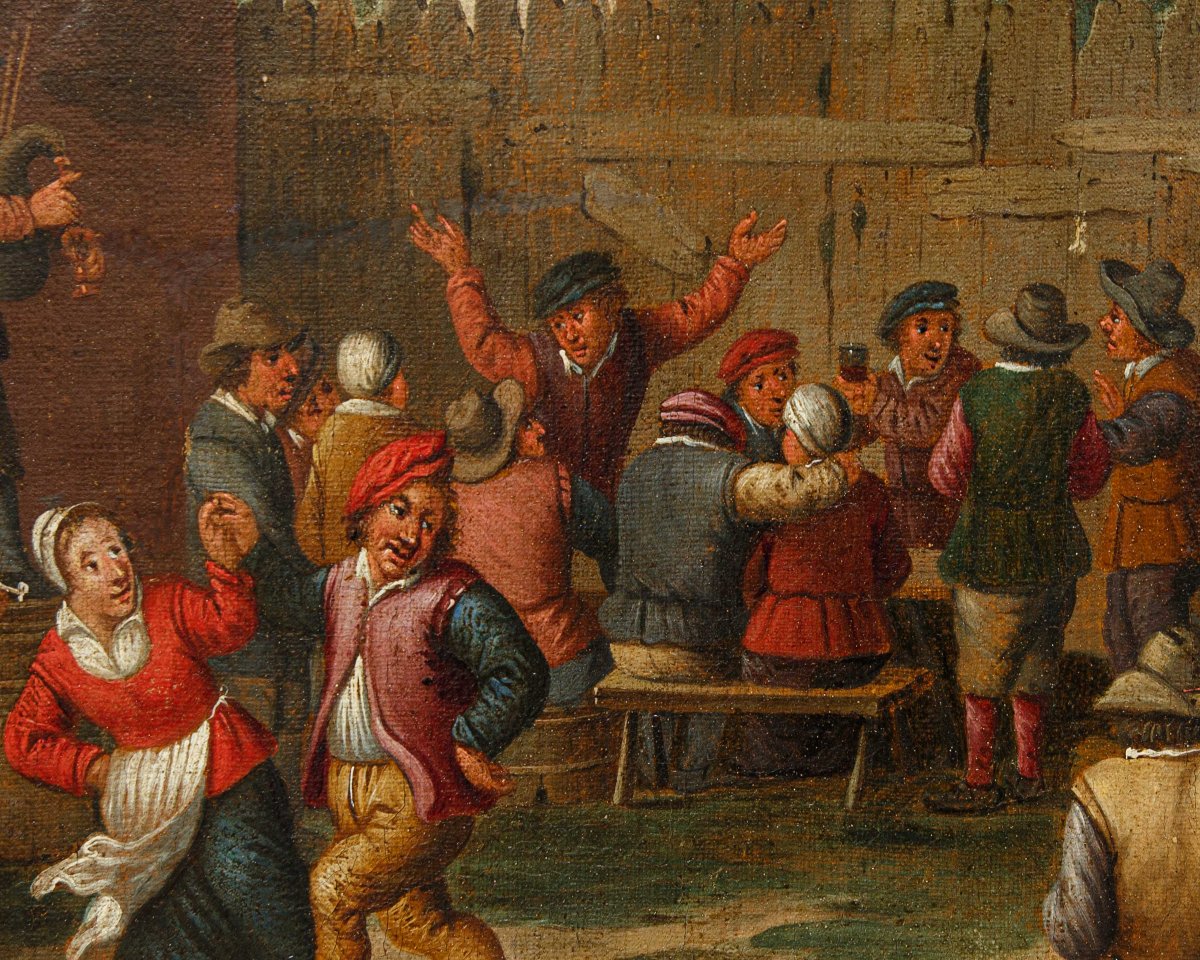
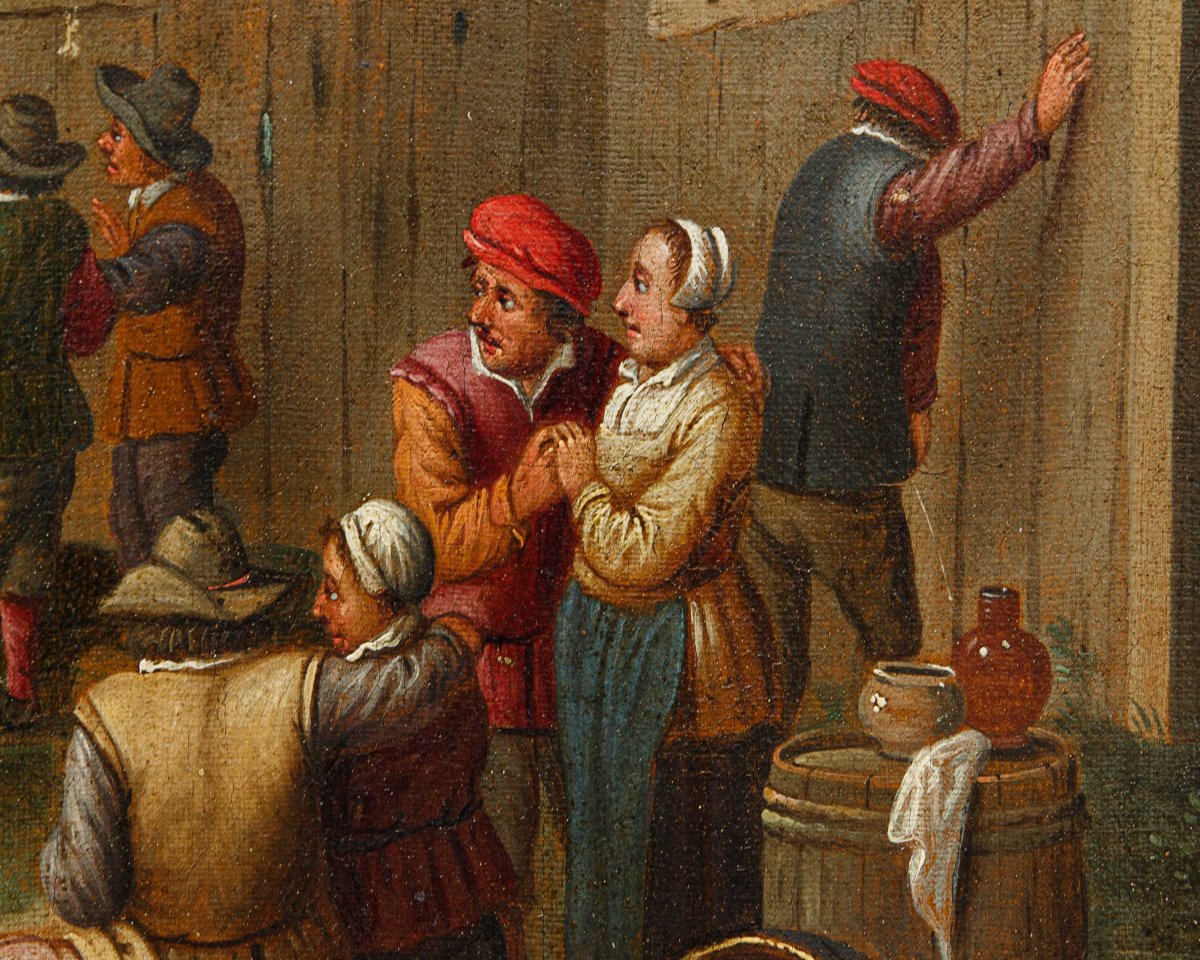
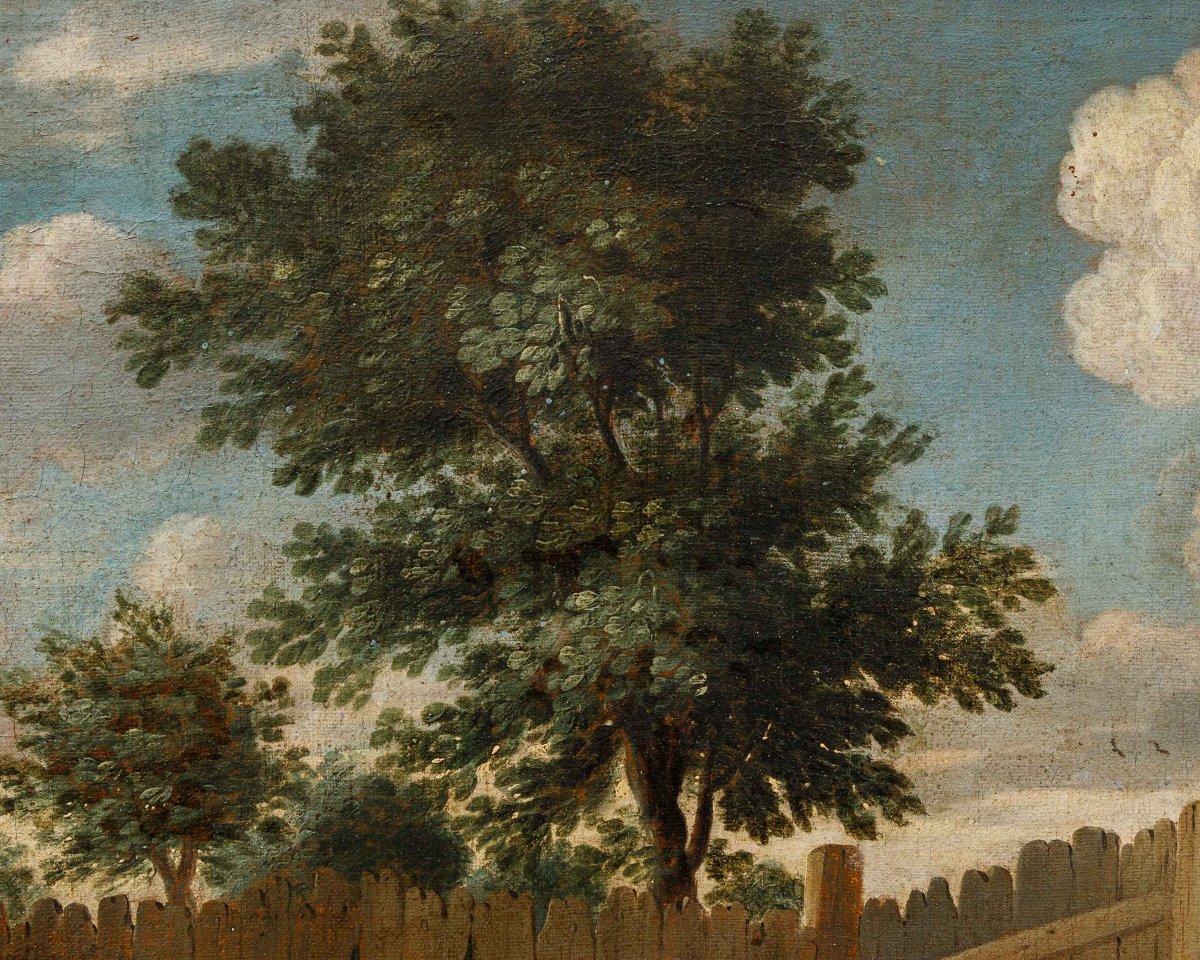
The painting examined here, a work from the workshop of David Teniers II, depicts a rural festival enlivened by a group of peasants dancing to the sound of a bagpipe in front of a brick house, following a compositional scheme that the Flemish artist repeated countless times throughout his long career. The scene, set in a courtyard enclosed by a high wooden fence, is populated by figures characteristic of Teniers’s repertoire: the pair of dancers at the center of the composition, the children playing undisturbed among the adults, the figure of the drinker leaning against the fence on the right, and in the background a grove that frames the view with soft masses of trees, beneath a sky enlivened by bright white clouds. This pictorial composition finds a precise point of comparison in the autograph work preserved at the Prado Museum in Madrid, where the same archetypal characters appear, almost repeated as fixed formulas within the artist’s oeuvre: the wind instrument player seated on a barrel, the young couple in love, the mischievous children, and the tipsy figure leaning against the fence. This is not an isolated case: Teniers returned with extraordinary frequency to the theme of the village festival, as demonstrated by the version now housed at the Museum Boijmans Van Beuningen in Rotterdam, in which—similar to our painting—a sleeping young man leans against a barrel in the foreground on the left, and the versions preserved at the Cleveland Museum of Art and at Apsley House in London, which confirm just how central this subject was to the artist’s oeuvre and how his workshop produced numerous variations to meet a very brisk market demand. Moreover, the popularity of these themes has its roots in the aesthetics of Jan Brueghel the Elder, from whom Teniers drew not only compositional schemes but also the idyllic and good-natured vision of peasant life, so dear to seventeenth-century Flemish culture and widely celebrated in literature as well. The son of David Teniers the Elder, he was trained in his father’s workshop, where he absorbed the teachings of Adam Elsheimer and the innovations of Rubens. David II married the daughter of Jan Brueghel the Velvet in 1637, thereby becoming related to one of the most illustrious dynasties of Flemish painting. His work, initially influenced by Frans Francken II and later by Adriaen Brouwer, focused primarily on genre painting: tavern scenes, village festivals, interiors depicting witchcraft and alchemists, and art galleries—a vast repertoire that earned him enormous success at European courts. Appointed in 1651 as court painter and director of Archduke Leopold William’s collections in Brussels, Teniers curated a collection that would later form the core of the Kunsthistorisches Museum in Vienna. It is precisely the enormous demand for these rural compositions that explains the workshop’s active role in replicating and adapting the models devised by the master, of which this painting stands as a coherent and faithful testament to the original spirit.
Period: 17th century
Style: Other Style
Condition: Good condition
Material: Oil painting
Width: 107
Height: 73
Reference (ID): 1799551
Availability: In stock