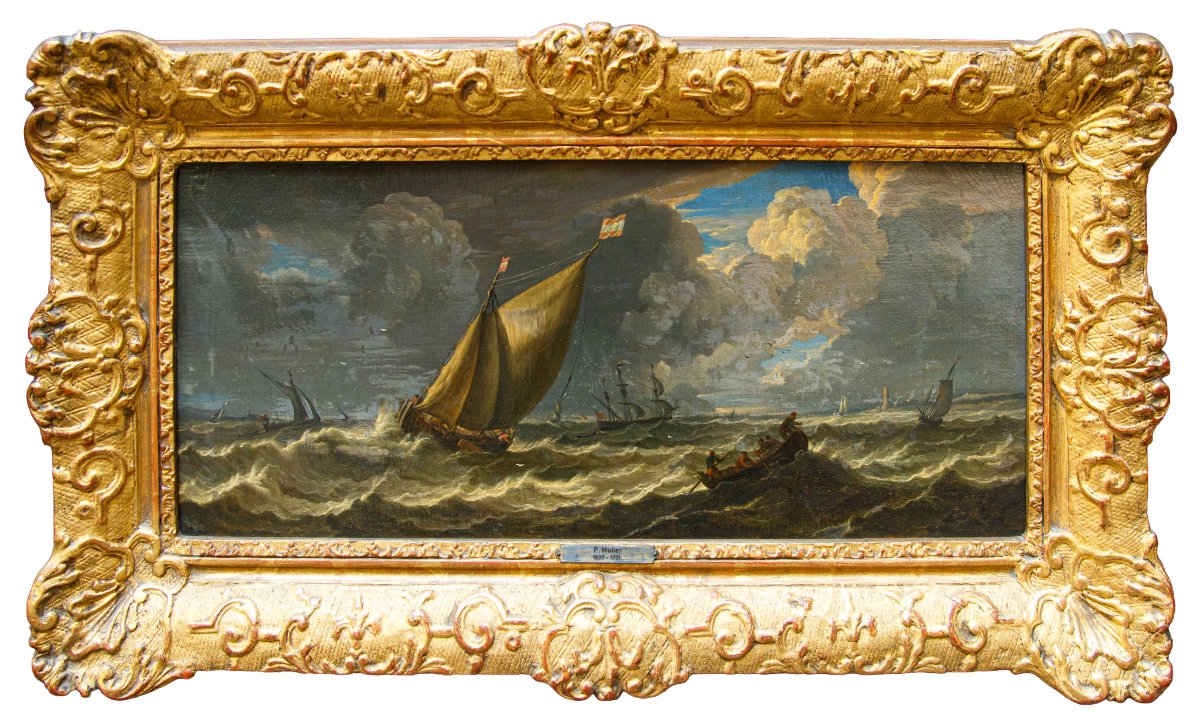
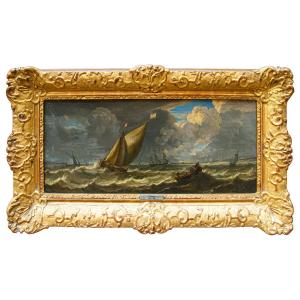


Pieter Mulier The Younger (haarlem, 1637–milan, 1701), Ships In A Stormy Sea
Pieter Mulier the Younger, known as Cavalier Tempesta (Haarlem, 1637– Milan, 1701)
Ships in a stormy sea
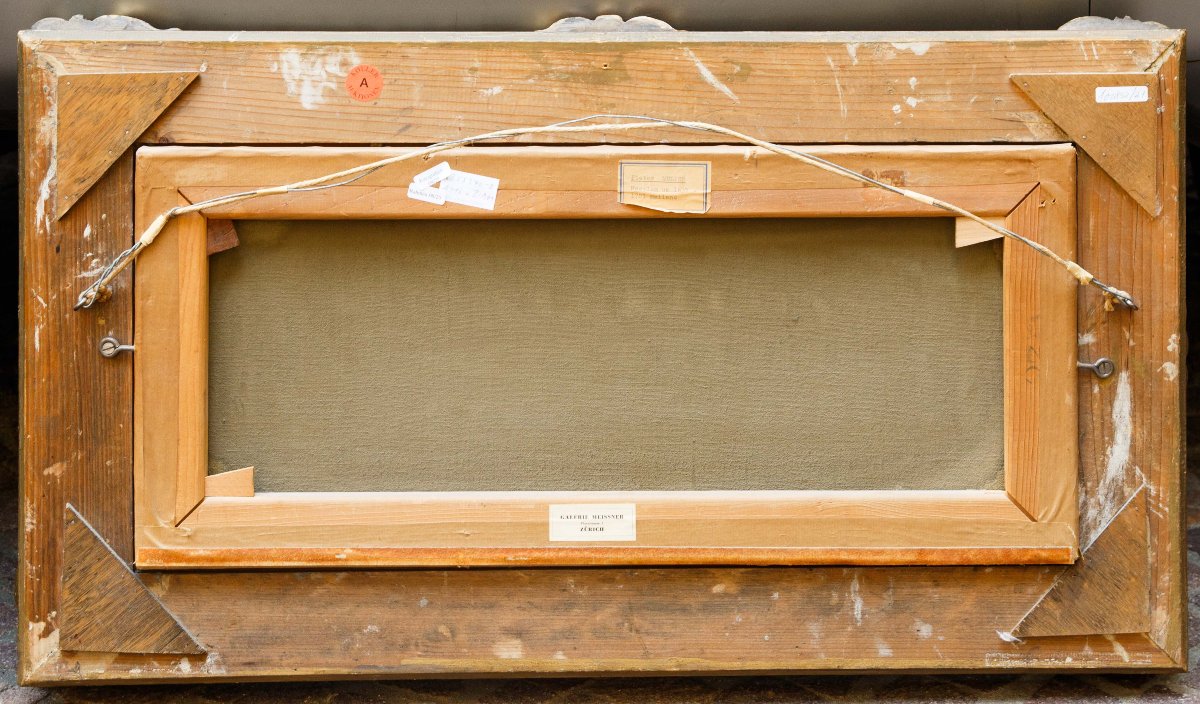
Oil on canvas, 28.5 × 63.5 cm
With frame, cm 45 x 80
Published in M. Roethlisberger, Cavalier Pietro Tempesta and his time, 1970, cat. n. 346, p. 118.
Catalogued in RKD https://rkd.nl/images/37534
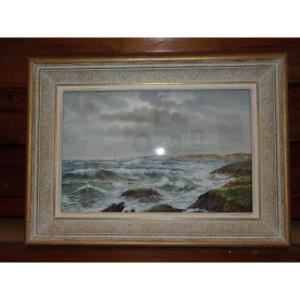
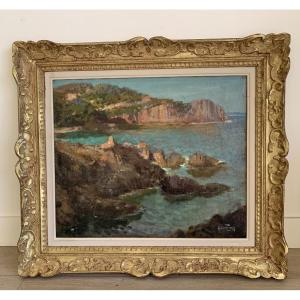
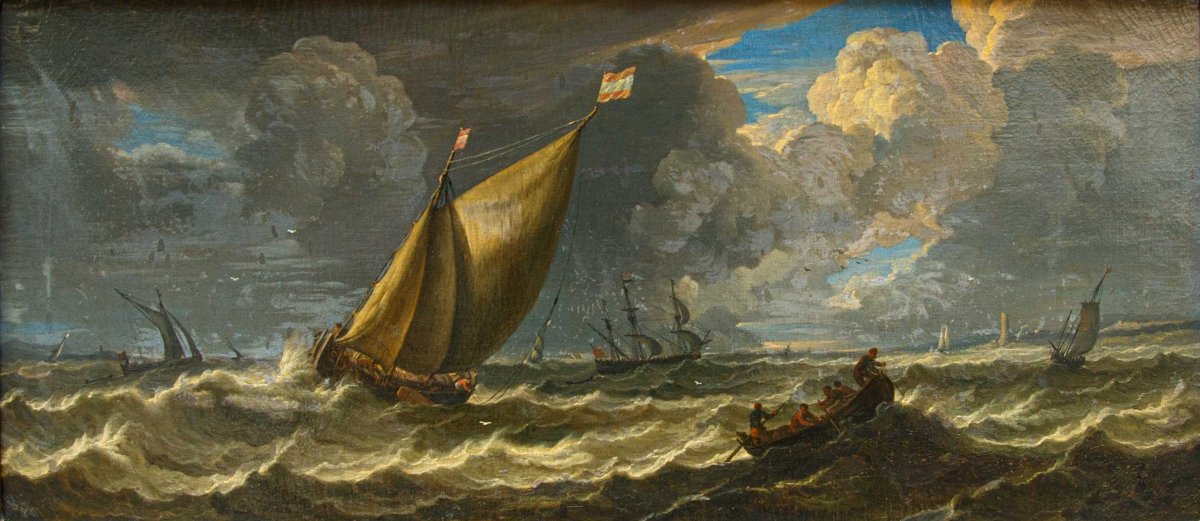
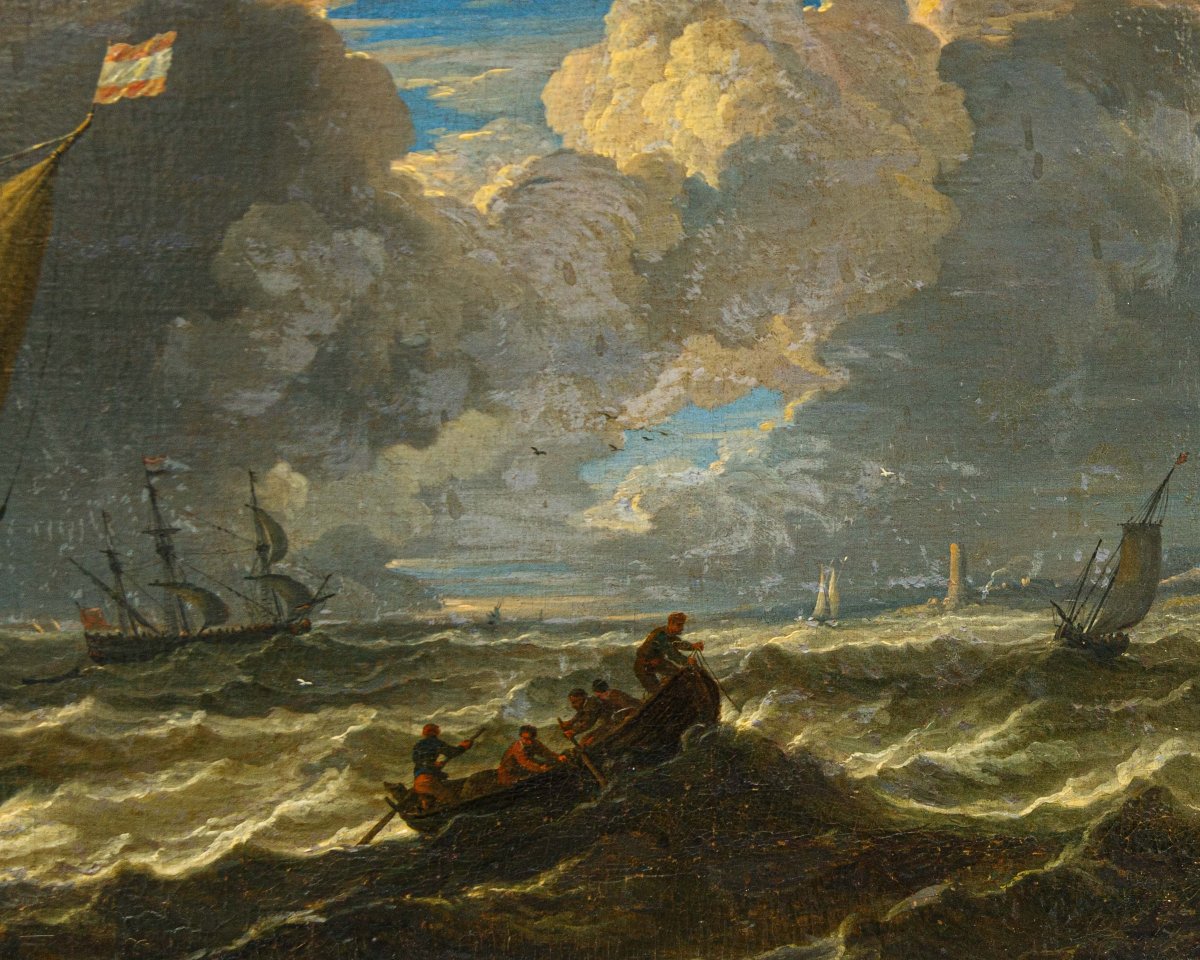
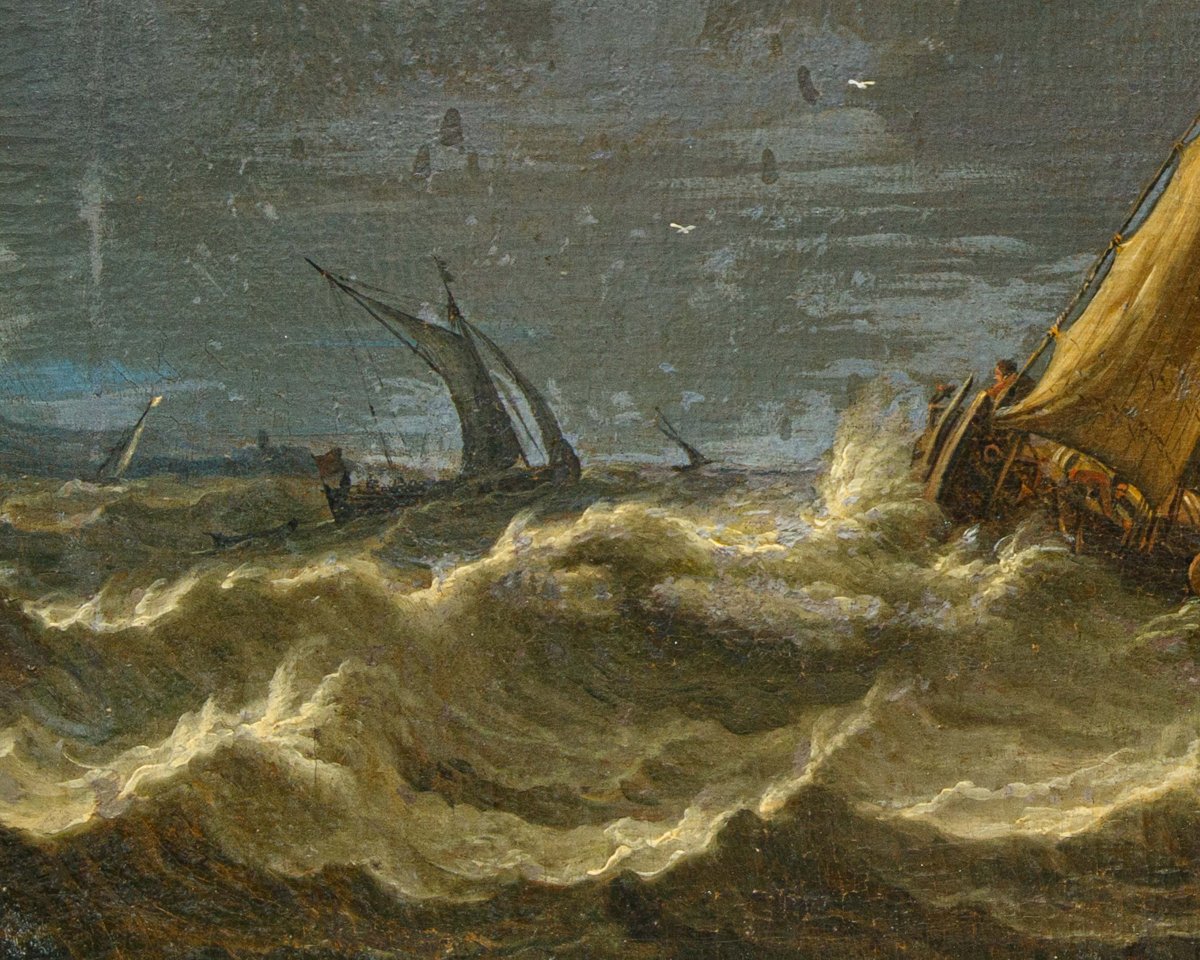
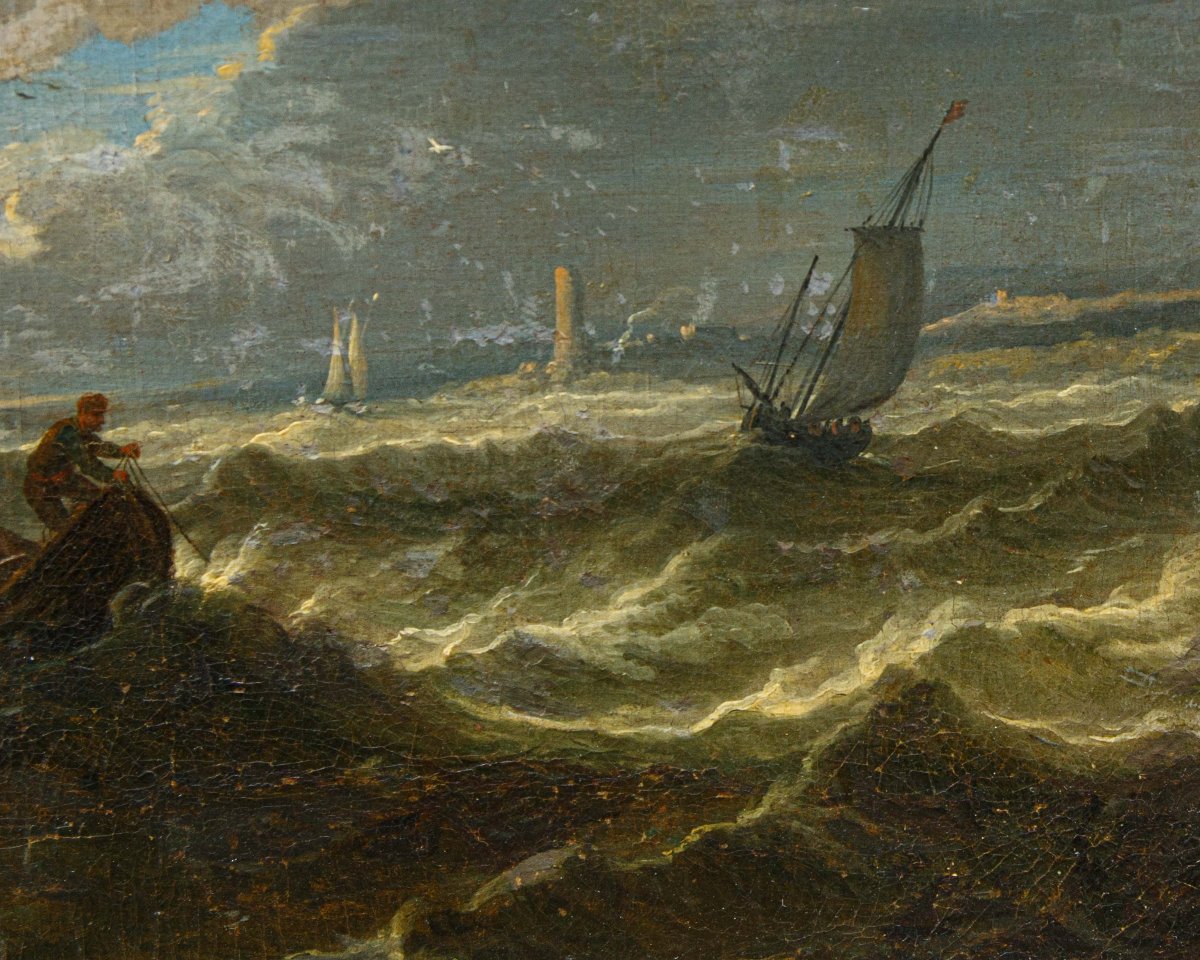
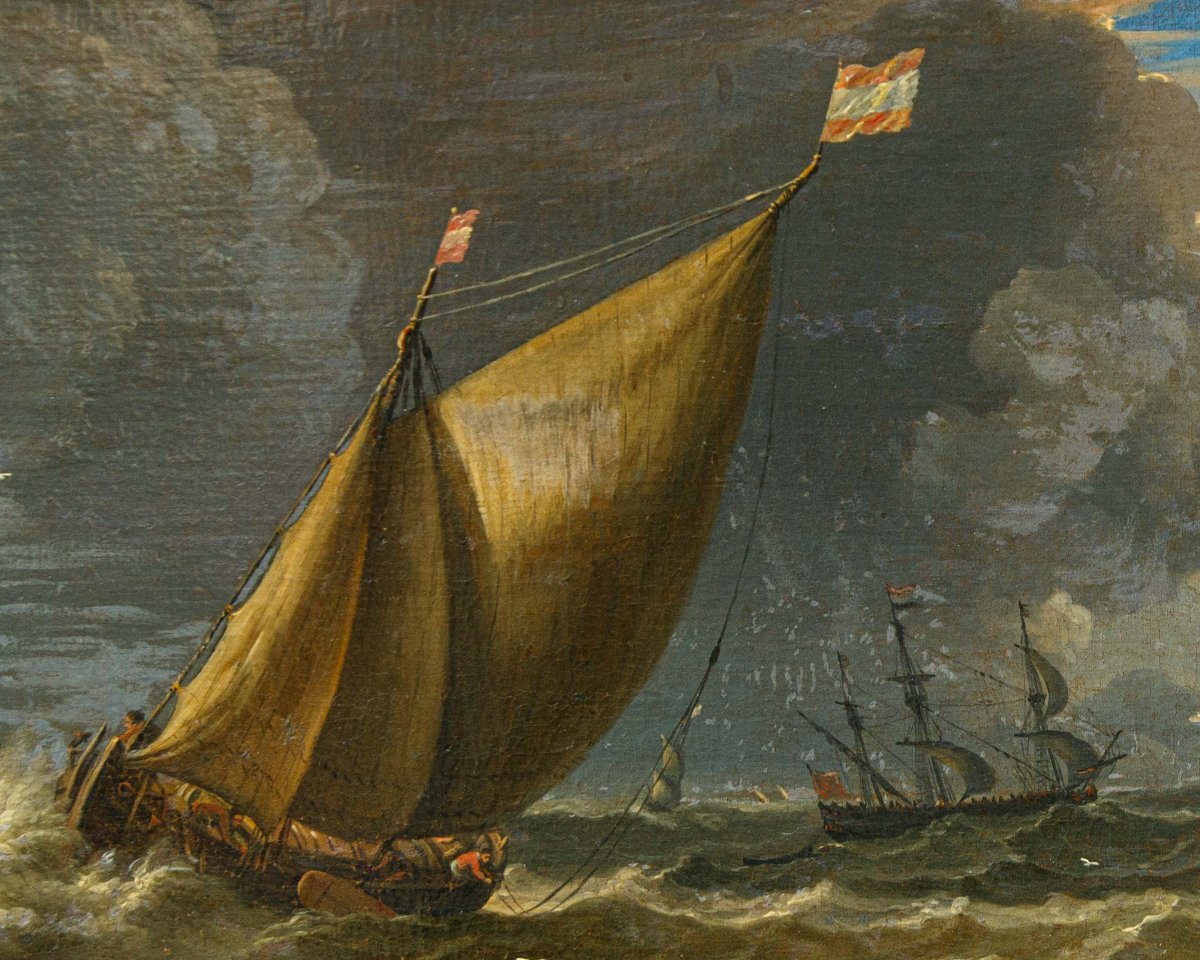
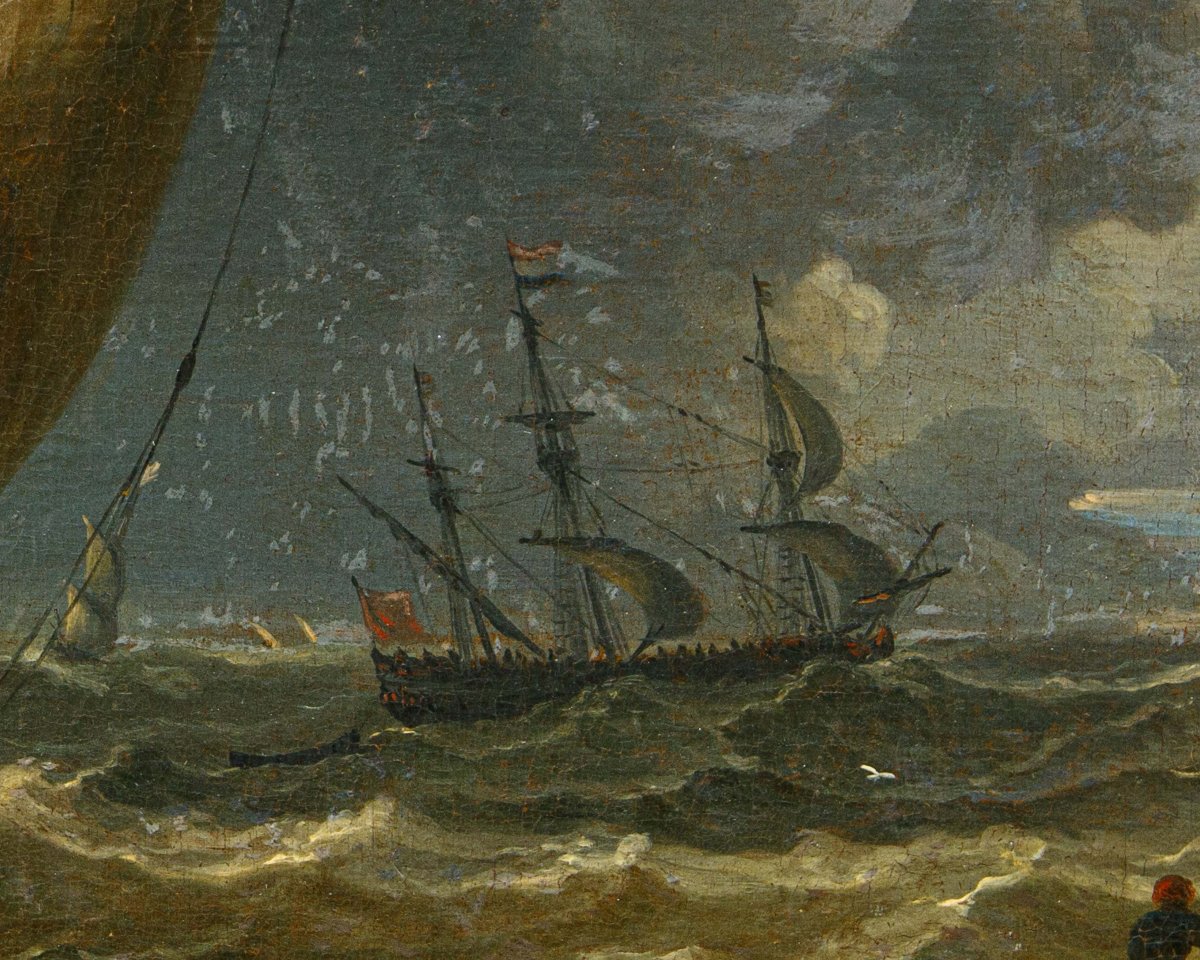
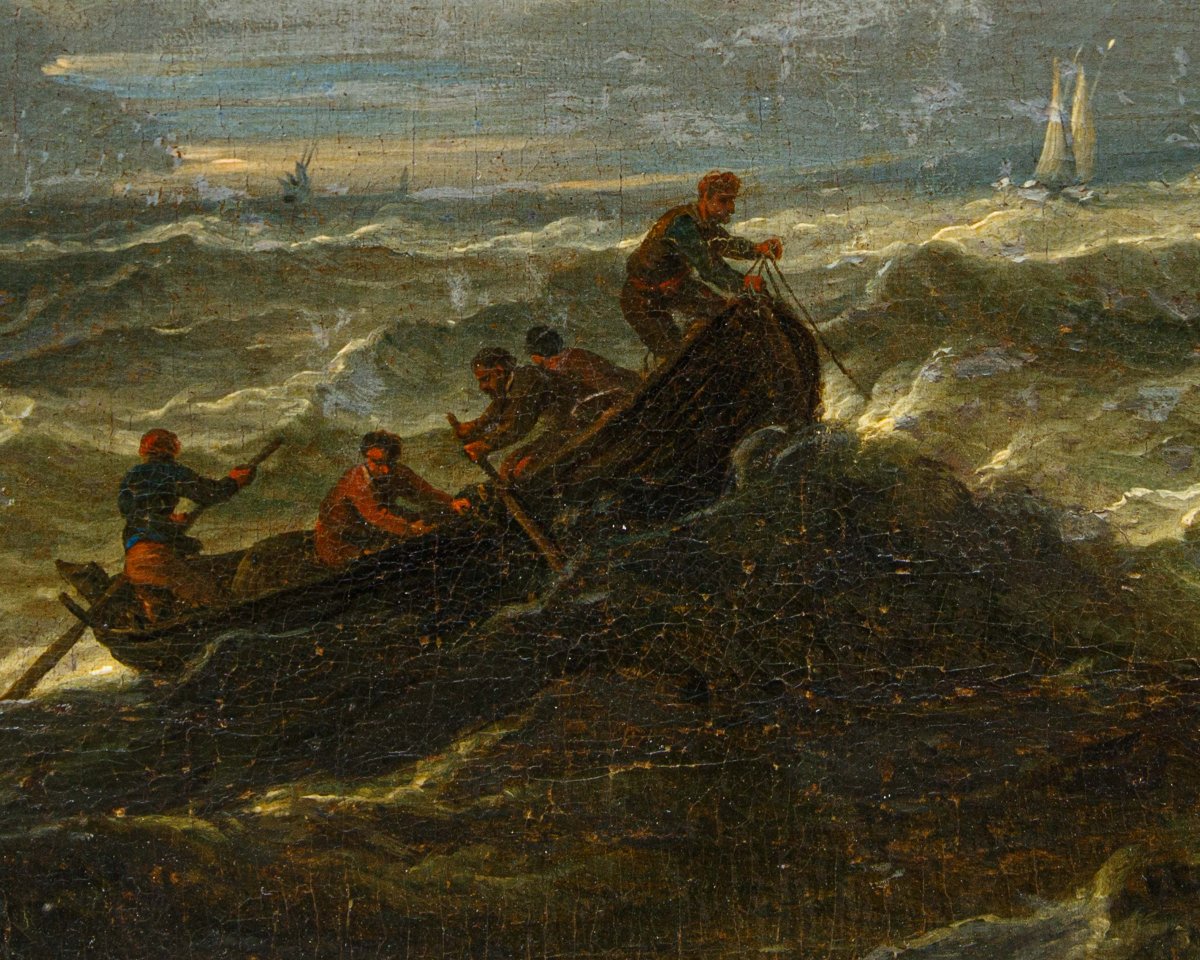
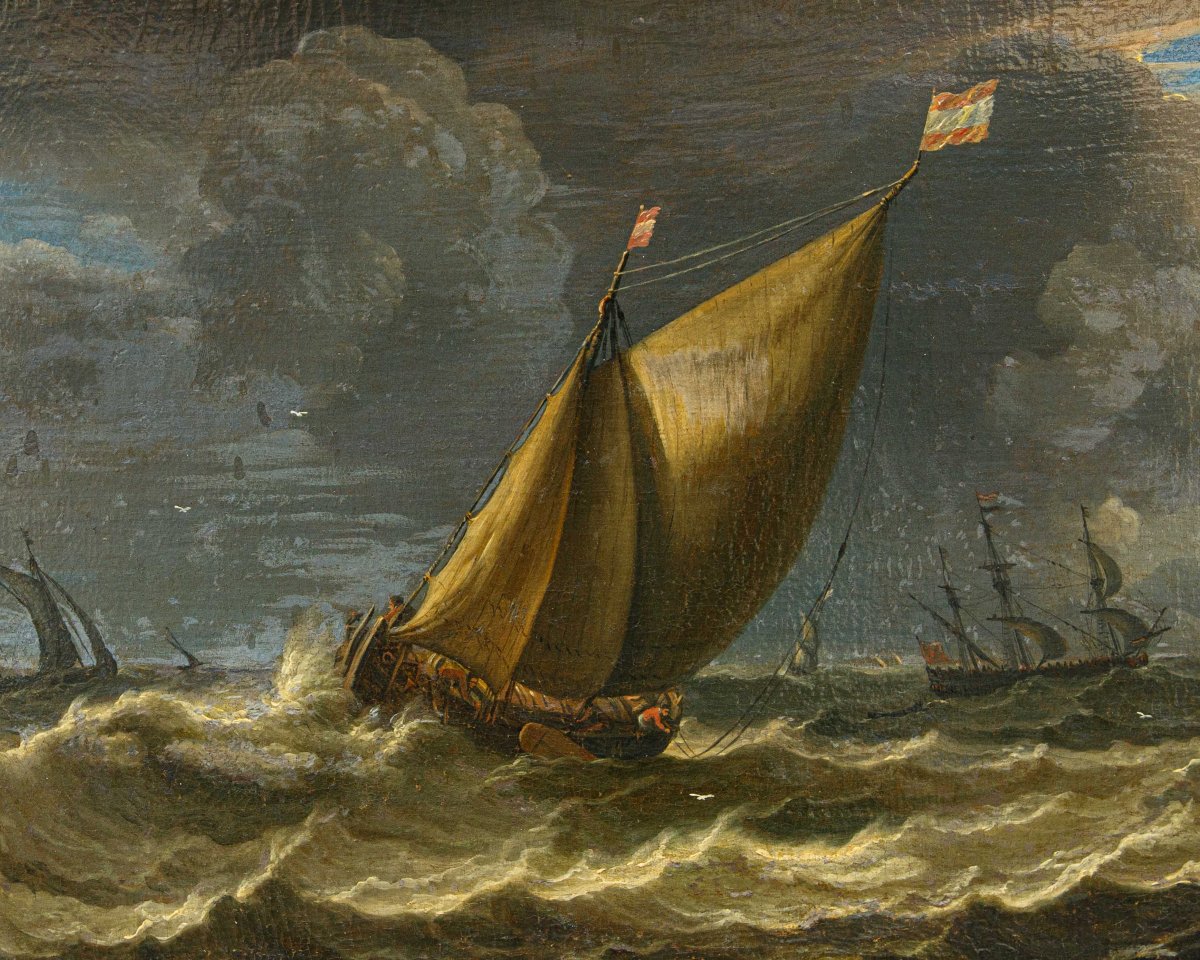
Among the most evocative interpretations of marine painting that developed in Italy in the second half of the seventeenth century, Ships in a Stormy Sea represents an example of extraordinary narrative and atmospheric effectiveness, capable of translating the unpredictable force of natural elements onto canvas. The composition is dominated by a sailing vessel propelled by rough seas, while raging waves and threatening clouds occupy much of the pictorial surface. In the background, other ships can be seen braving the storm and, on the right, a thin coastline barely illuminated by sudden flashes of light. The contrast between the dark masses of the sky and the bright openings filtering through the clouds gives the scene a dramatic tension of great intensity, typical of the best inventions of the Cavalier Tempesta. The work was conceived as a pendant to a coastal view of identical size and technique, now preserved in a private collection. The latter bears the signature "Cavalier P. Storm", by the master's hand, which attests to the autograph of both works. The quality of the couple and the full adherence to the ways of the Tempest in fact confirm that these are personal executions of the master. The compositions reveal the technical mastery and stylistic coherence that distinguish the autographed works of The Tempest, particularly appreciated by 17th-century private collectors for their landscape and marine subjects. The painting finds a significant precedent in Pieter Mulier the Elder's View with a Storm at the Staatliche Kunsthalle Karlsruhe, where a similar compositional structure appears, based on the contrast between the vessel in the foreground and the vastness of the gale-force sea. However, compared to the paternal model, the son's personality stands out here: the brushstrokes of the sky, applied with a material that changes from deep black to grays and purplish tones, belong to the mature language of Cavalier Tempesta and constitute one of the most recognizable elements of his production. The coastal strip in the background also features recurring motifs in other works by the artist, such as the Coastal View formerly at the Galleria Sacerdoti in Milan and now in a private collection.
Pieter Mulier the Younger, also known by his Latinized name of Mulieribus, was born in Haarlem and educated by his father Pieter Mulier the Elder. After a stay in Antwerp, where he perfected his specialization in the depiction of seascapes and animals, he arrived in Rome in 1656. Having come into contact with Cornelis De Wael, he found important clients in the Orsini, Borromeo, Doria Pamphilj and Colonna families. In those years he joined the brotherhood of Dutch painters active in the city, taking the nickname "Storm", destined to make him famous. For Prince Colonna he also executed fresco decorations in the family's Roman palace. His biographical story was marked by dramatic events: in 1661 he married Lucia De Rossi, half-sister of the painter Domenico De Marchis, one of the students and collaborators active in his workshop. Having moved to Genoa in 1668, after receiving the title of Knight from the Duke of Bracciano in the same year, he worked successfully for the Doria and Brignole Sale families. The tragic killing of his wife during the journey from Rome to Genoa and the subsequent trial in which he was accused of instigating it led to his conviction in 1679. Even during his long detention, however, he continued to paint, making use of an atelier located in the Torre del Popolo of the Doge's Palace, from which he could observe the Genoese port, an inexhaustible source of inspiration for his seascapes. Ships in a stormy sea effectively testifies to the highest phase of his production, when direct observation of nature is combined with an almost theatrical sensitivity in the construction of the scene. The rendering of the wave motion, the dramaturgy of the light and the monumentality of the clouds reveal that ability to transform the landscape into a tale that made Cavalier Tempesta one of the most appreciated marine specialists of his time. It is therefore not surprising that his works are now preserved in the most prestigious European collections, from the Royal Collection in Greenwich to the Kunsthistorisches Museum in Vienna, from the Galleria Doria Pamphilj in Rome to the Gemäldegalerie Alte Meister in Dresden. This painting contains all the qualities that made it successful: the power of nature, the emotional tension of the narrative, and an extraordinary mastery in translating the tumult of the sea into a pictorial image.
Ships in a stormy sea
Oil on canvas, 28.5 × 63.5 cm
With frame, cm 45 x 80
Published in M. Roethlisberger, Cavalier Pietro Tempesta and his time, 1970, cat. n. 346, p. 118.
Catalogued in RKD https://rkd.nl/images/37534
Among the most evocative interpretations of marine painting that developed in Italy in the second half of the seventeenth century, Ships in a Stormy Sea represents an example of extraordinary narrative and atmospheric effectiveness, capable of translating the unpredictable force of natural elements onto canvas. The composition is dominated by a sailing vessel propelled by rough seas, while raging waves and threatening clouds occupy much of the pictorial surface. In the background, other ships can be seen braving the storm and, on the right, a thin coastline barely illuminated by sudden flashes of light. The contrast between the dark masses of the sky and the bright openings filtering through the clouds gives the scene a dramatic tension of great intensity, typical of the best inventions of the Cavalier Tempesta. The work was conceived as a pendant to a coastal view of identical size and technique, now preserved in a private collection. The latter bears the signature "Cavalier P. Storm", by the master's hand, which attests to the autograph of both works. The quality of the couple and the full adherence to the ways of the Tempest in fact confirm that these are personal executions of the master. The compositions reveal the technical mastery and stylistic coherence that distinguish the autographed works of The Tempest, particularly appreciated by 17th-century private collectors for their landscape and marine subjects. The painting finds a significant precedent in Pieter Mulier the Elder's View with a Storm at the Staatliche Kunsthalle Karlsruhe, where a similar compositional structure appears, based on the contrast between the vessel in the foreground and the vastness of the gale-force sea. However, compared to the paternal model, the son's personality stands out here: the brushstrokes of the sky, applied with a material that changes from deep black to grays and purplish tones, belong to the mature language of Cavalier Tempesta and constitute one of the most recognizable elements of his production. The coastal strip in the background also features recurring motifs in other works by the artist, such as the Coastal View formerly at the Galleria Sacerdoti in Milan and now in a private collection.
Pieter Mulier the Younger, also known by his Latinized name of Mulieribus, was born in Haarlem and educated by his father Pieter Mulier the Elder. After a stay in Antwerp, where he perfected his specialization in the depiction of seascapes and animals, he arrived in Rome in 1656. Having come into contact with Cornelis De Wael, he found important clients in the Orsini, Borromeo, Doria Pamphilj and Colonna families. In those years he joined the brotherhood of Dutch painters active in the city, taking the nickname "Storm", destined to make him famous. For Prince Colonna he also executed fresco decorations in the family's Roman palace. His biographical story was marked by dramatic events: in 1661 he married Lucia De Rossi, half-sister of the painter Domenico De Marchis, one of the students and collaborators active in his workshop. Having moved to Genoa in 1668, after receiving the title of Knight from the Duke of Bracciano in the same year, he worked successfully for the Doria and Brignole Sale families. The tragic killing of his wife during the journey from Rome to Genoa and the subsequent trial in which he was accused of instigating it led to his conviction in 1679. Even during his long detention, however, he continued to paint, making use of an atelier located in the Torre del Popolo of the Doge's Palace, from which he could observe the Genoese port, an inexhaustible source of inspiration for his seascapes. Ships in a stormy sea effectively testifies to the highest phase of his production, when direct observation of nature is combined with an almost theatrical sensitivity in the construction of the scene. The rendering of the wave motion, the dramaturgy of the light and the monumentality of the clouds reveal that ability to transform the landscape into a tale that made Cavalier Tempesta one of the most appreciated marine specialists of his time. It is therefore not surprising that his works are now preserved in the most prestigious European collections, from the Royal Collection in Greenwich to the Kunsthistorisches Museum in Vienna, from the Galleria Doria Pamphilj in Rome to the Gemäldegalerie Alte Meister in Dresden. This painting contains all the qualities that made it successful: the power of nature, the emotional tension of the narrative, and an extraordinary mastery in translating the tumult of the sea into a pictorial image.
4 600 €
Period: 17th century
Style: Other Style
Condition: Good condition
Material: Oil painting
Width: 63,5
Height: 28,5
Reference (ID): 1786404
Availability: In stock
Print