


San Genesio, Simone De Magistris (caldarola, C. 1538 – 1613) Or Workshop
Artist: Simone De Magistris (caldarola, Vers 1538 – 1613) Ou Son Atelier
Simone De Magistris (Caldarola, c. 1538 – 1613) or workshop
San Genesio
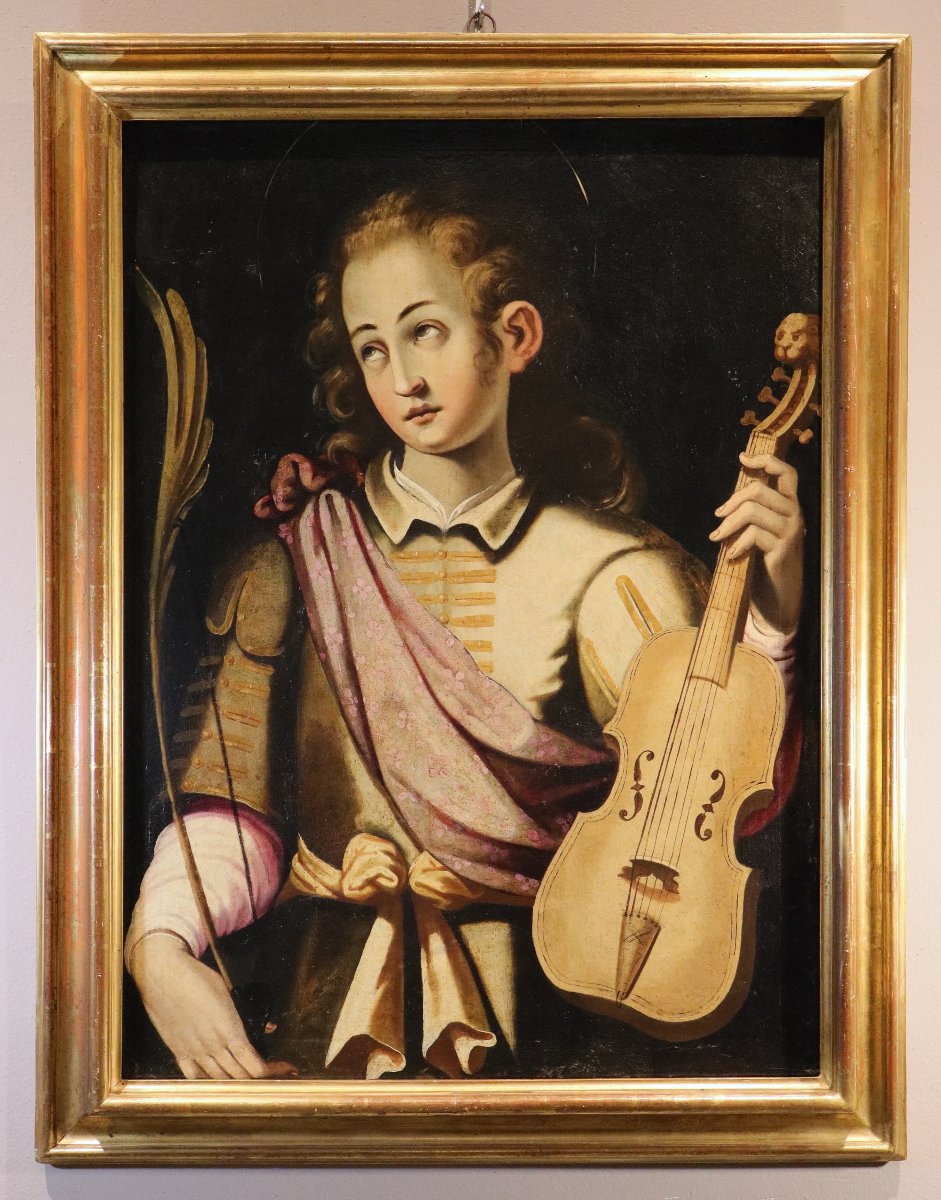
Oil on canvas (84 x 62 cm. – Framed: 99 x 76 cm.)
DETAILS OF THIS PAINTING (CLICK ON THE FOLLOWING LINK)
In the heart of ancient Rome, amid the splendor and the persecution of Christians by Emperor Diocletian, unfolds the extraordinary story of Saint Genesio, one of the most fascinating figures in Christianity: a theater actor who, from the stage of a pagan play, was inspired by God and became a martyr, offering his life for his newly discovered faith.
As the patron saint of actors and musicians, his figure remains relevant today, prompting reflection on the redemptive power of faith, capable of converting even those who mock it.
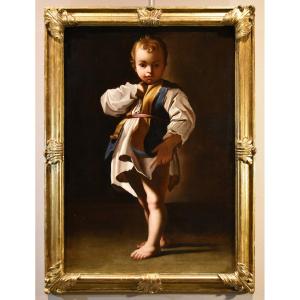
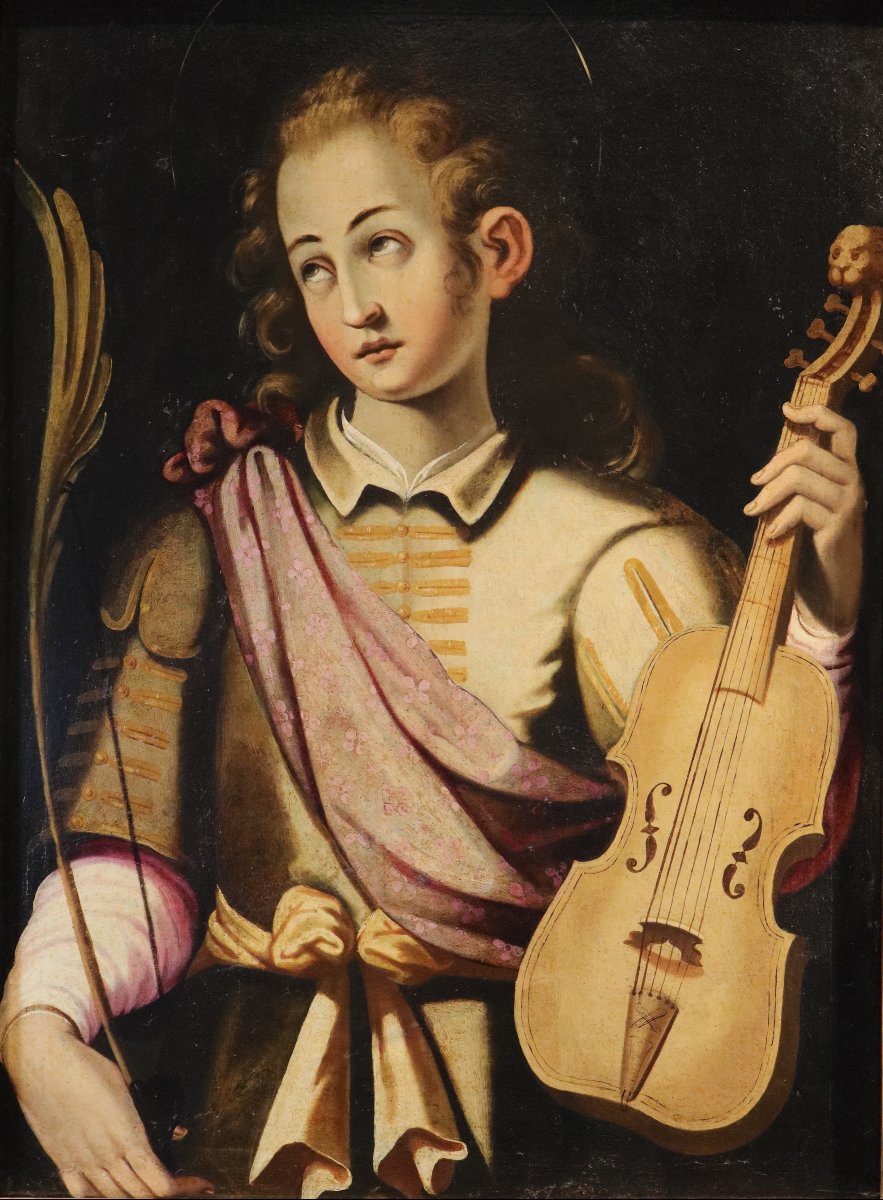
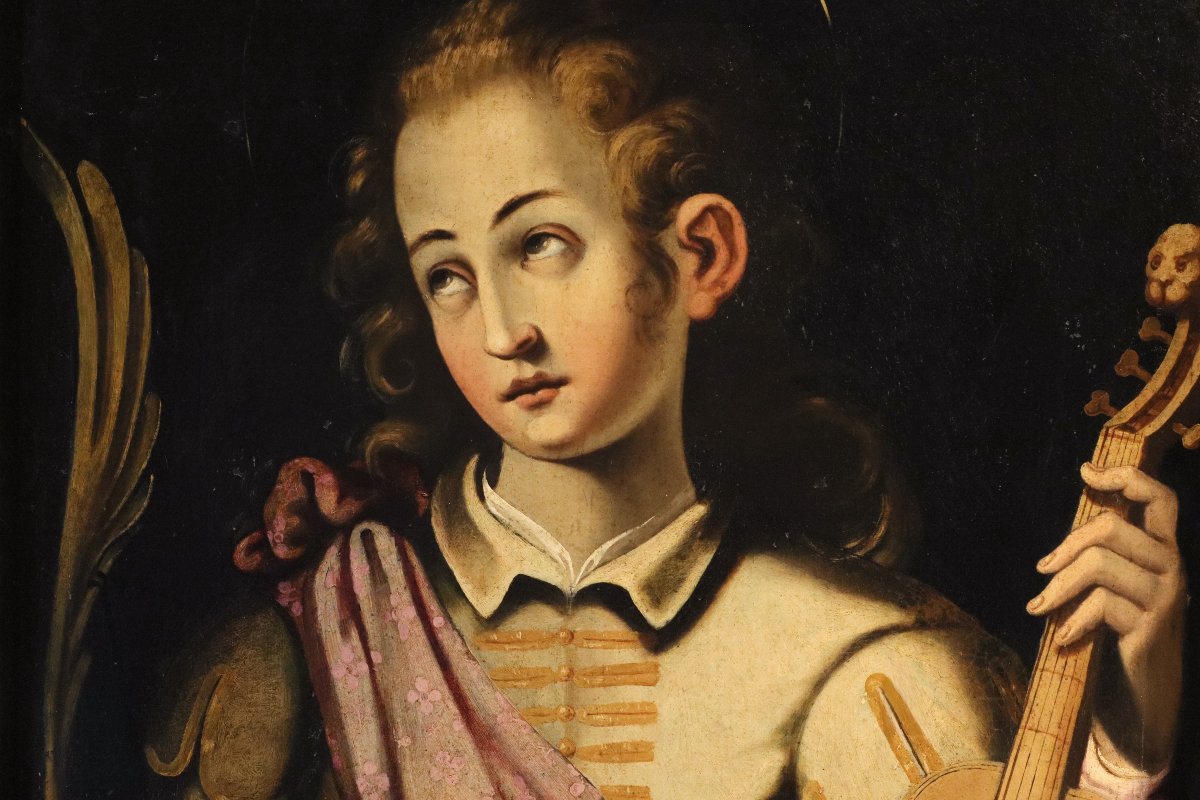
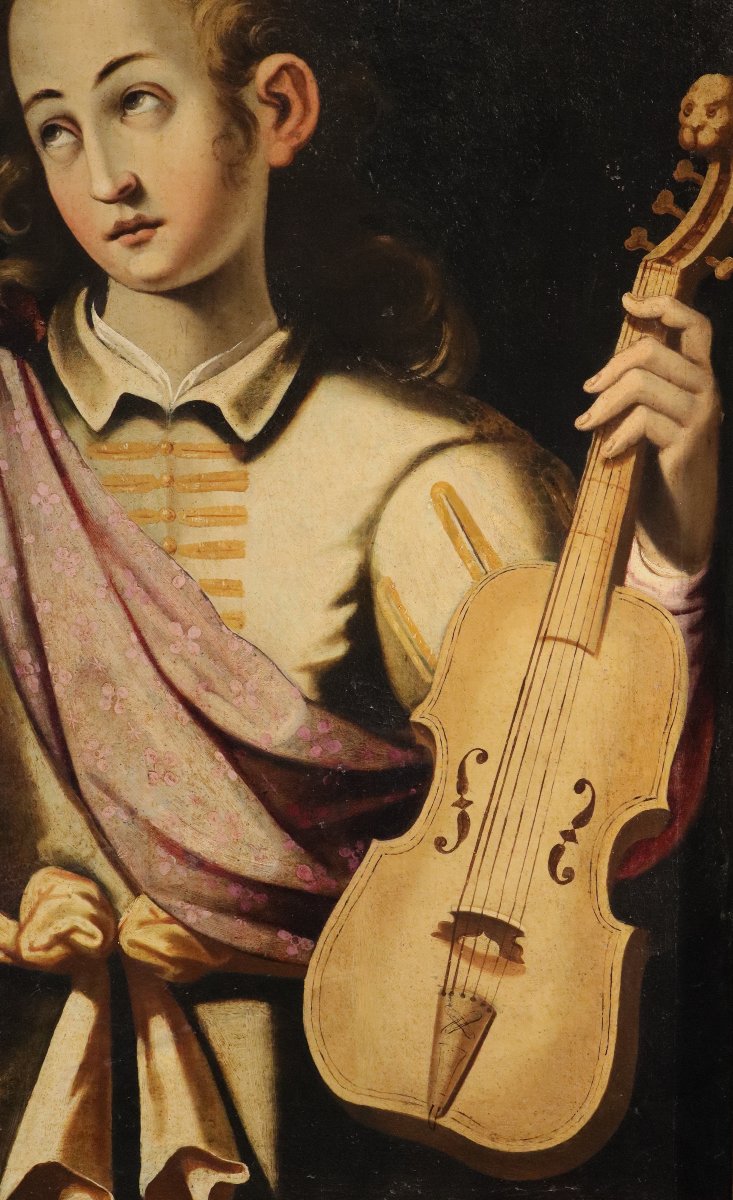
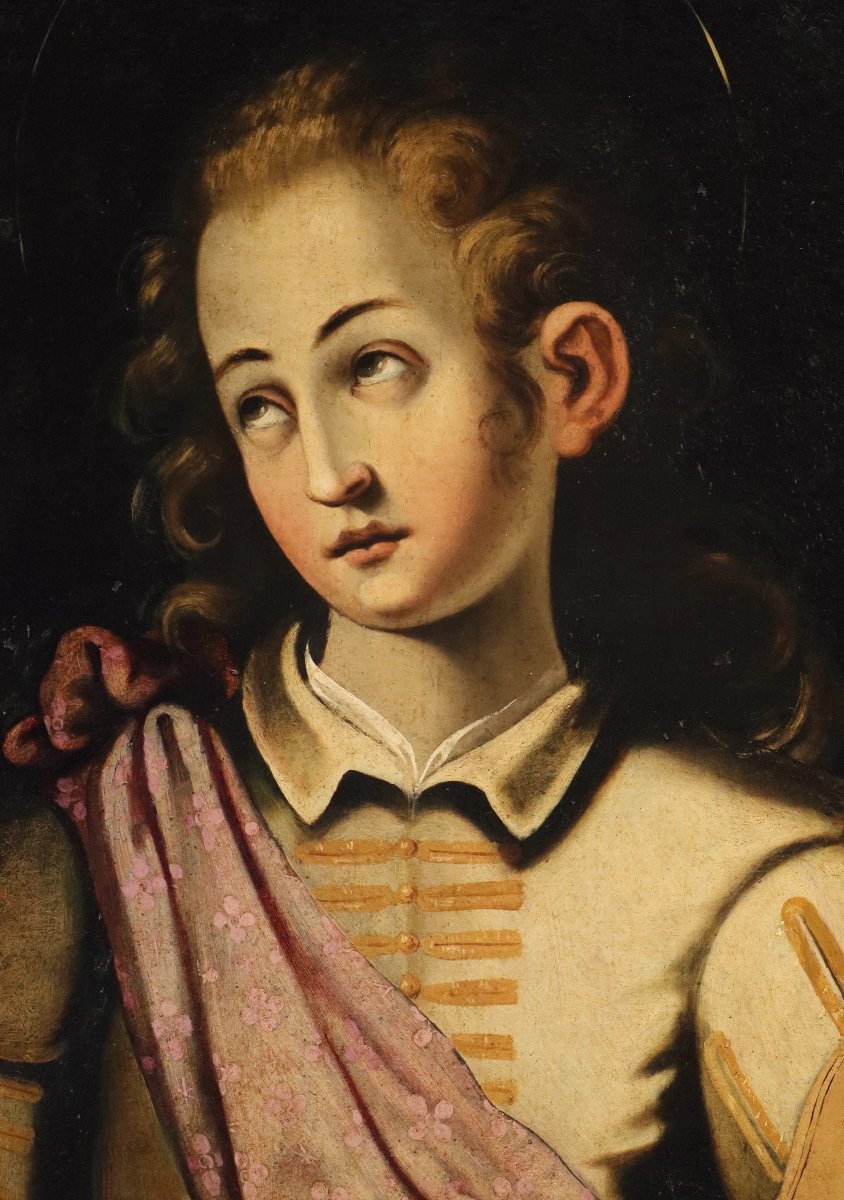
The face of the young saint emerges from the darkness of the background with alabaster skin, framed by golden curls, and large, expressive eyes that do not seek out the viewer but are turned upward, as if enraptured by a divine vision in a dreamy expression.
These elements, imbued with a strongly Mannerist style, reflect in every minute detail the painterly characteristics of the eccentric Simone De Magistris (1538–1613), a painter trained in Venice and Rome, following the examples of Lotto and Federico Zuccari.
Although he is a little-known artist, his style is easily recognizable, combining a visionary, dramatic, and highly expressive Mannerism with the Marche tradition, featuring distinct Venetian and Tuscan influences. The figure of the saint captivates the viewer with his magnetism, portrayed in a theatrical yet deeply spiritual manner, with an expression full of pathos—almost caricatural—that we find in several of De Magistris’s works, so unusual that it remains etched in the memory (see *Madonna del Rosario*, particularly the face of Saint Catherine of Siena, source: Fototeca Zeri: https://catalogo.fondazionezeri.unibo.it/scheda/opera/33754/).
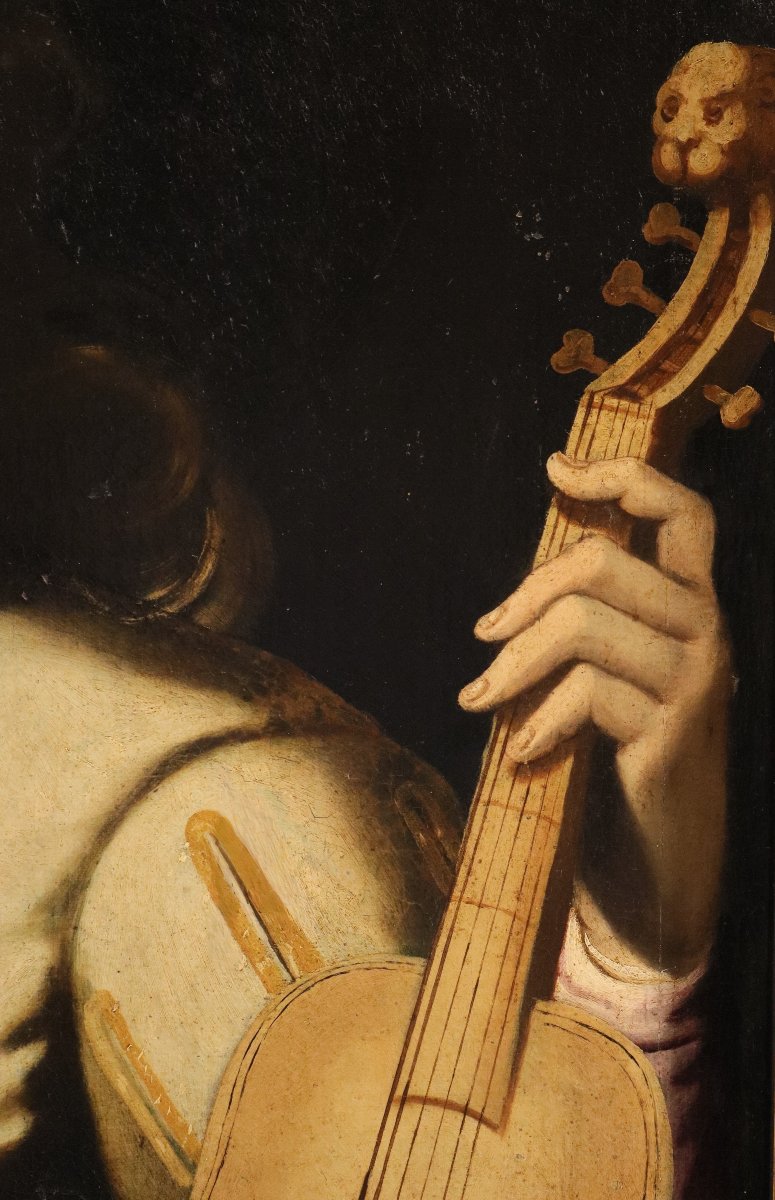
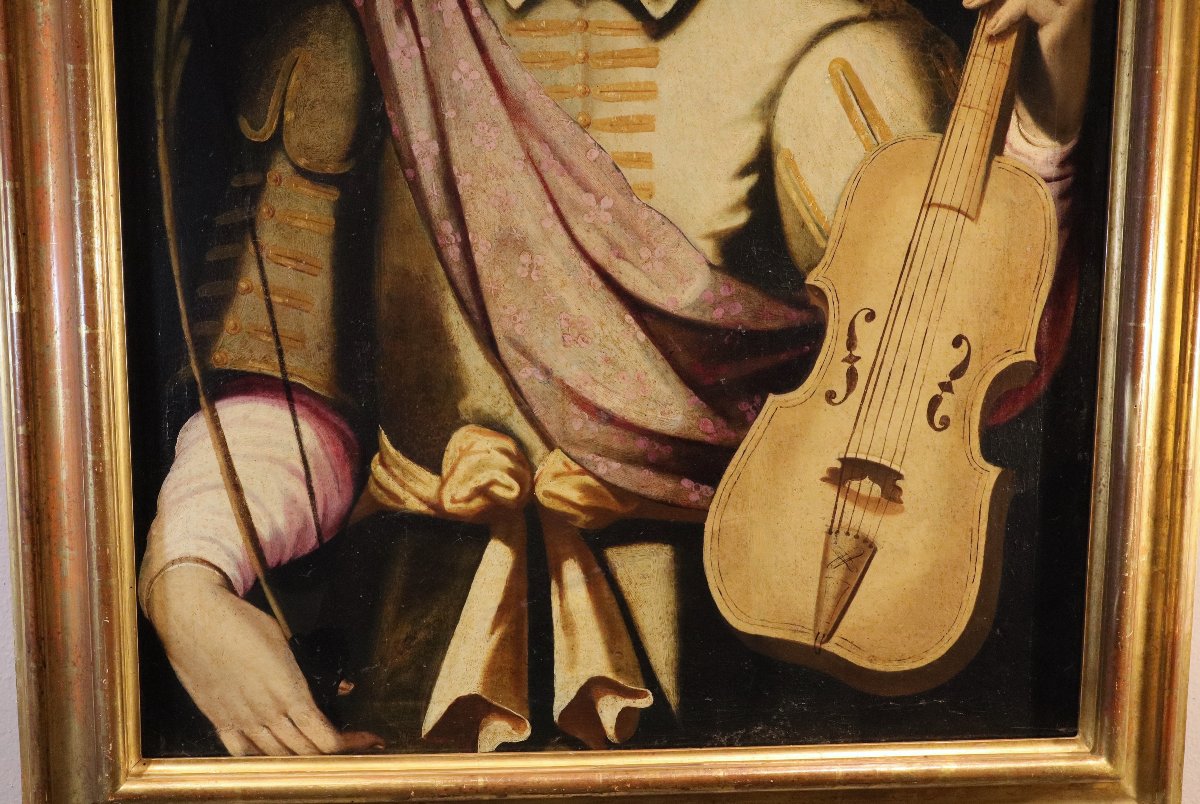
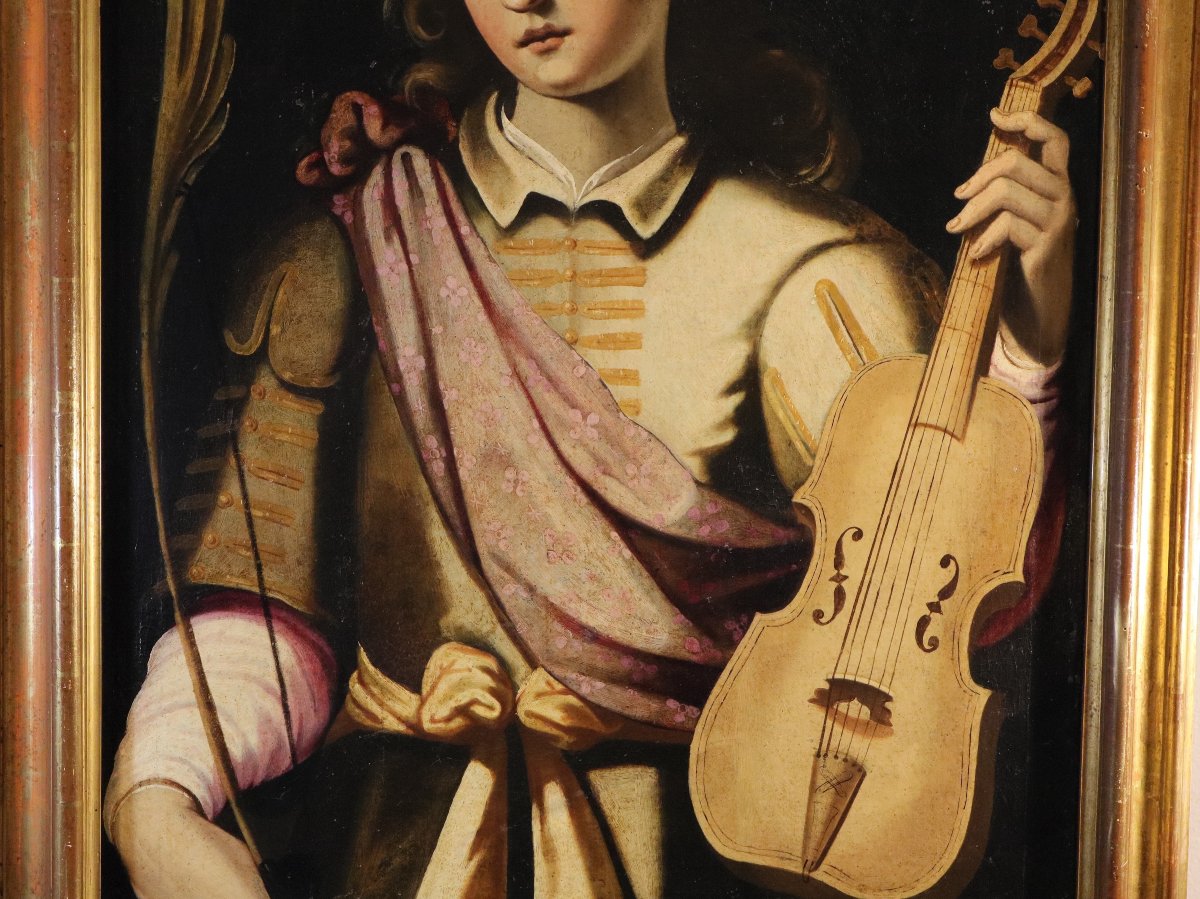
Rounding out the iconography of the young martyr are his two unmistakable attributes: an antique violin, distinguished by its carved lion’s-head tailpiece—a detail of exquisite craftsmanship that evokes the strength of faith and the nobility of sacred art—and the palm frond (a symbol of martyrdom) shaped like a bow.
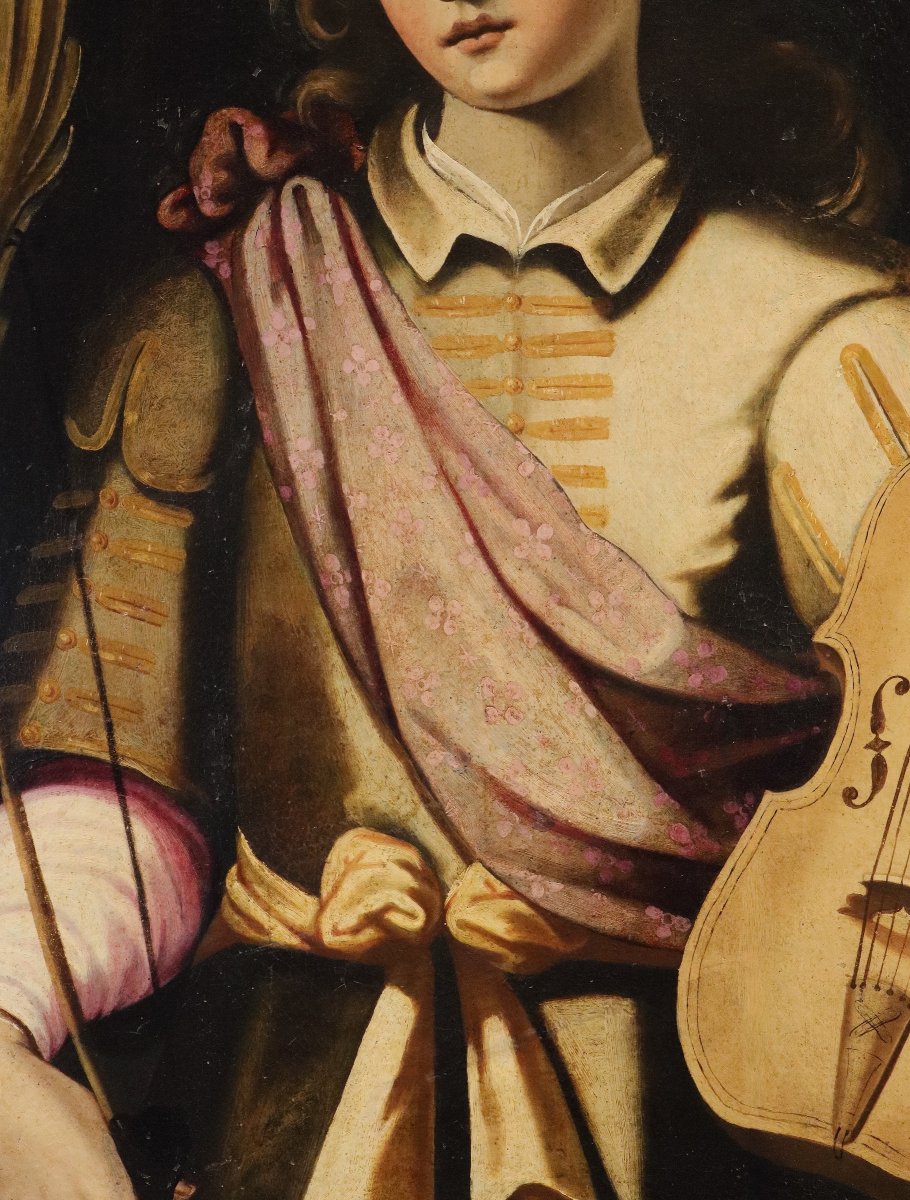
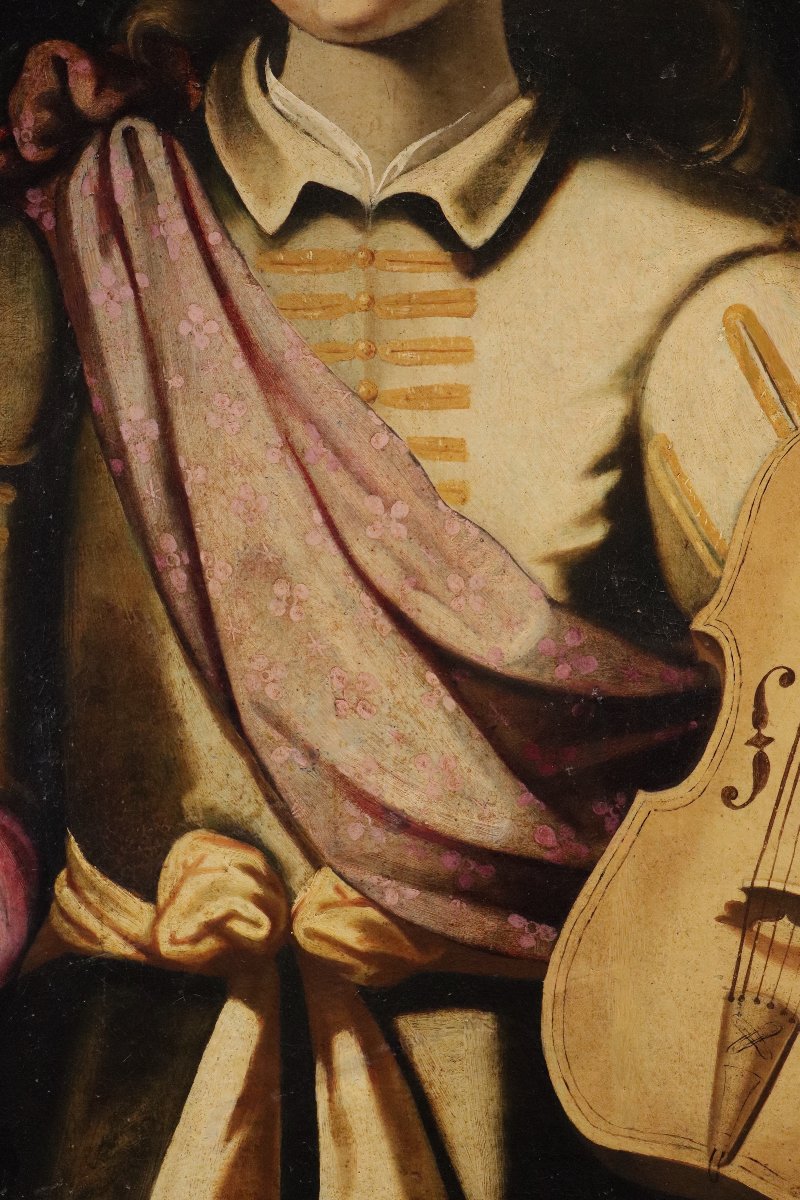
Even the details of the saint’s garments are a triumph of Mannerist contrasts: he wears a light-colored tunic decorated on the chest with horizontal gold stripes, over which he wears a piece of metal armor on his shoulder. A band of antique-pink brocade crosses his torso diagonally, wrapping around his chest like a theatrical scarf, before tying at the waist with a striking golden sash. The vivid, bright, and iridescent hues of the fabrics—a direct legacy of Lorenzo Lotto’s influence—vibrate vigorously against the black background, accentuating the composition’s suspended atmosphere.
ADDITIONAL INFORMATION:
The work is complete with an attractive gilded frame and comes with a certificate of authenticity and a descriptive iconographic sheet.
We handle and arrange the shipping of purchased works, both within Italy and internationally, through professional and insured carriers.
You can also view the painting at our gallery in Riva del Garda; we would be delighted to welcome you and show you our collection of artworks.
Please feel free to contact us, with no obligation, for any additional information.
Follow us on:
INSTAGRAM https://www.instagram.com/galleriacastelbarco/?hl=it
FACEBOOK https://www.facebook.com/galleriacastelbarco/
San Genesio
Oil on canvas (84 x 62 cm. – Framed: 99 x 76 cm.)
DETAILS OF THIS PAINTING (CLICK ON THE FOLLOWING LINK)
In the heart of ancient Rome, amid the splendor and the persecution of Christians by Emperor Diocletian, unfolds the extraordinary story of Saint Genesio, one of the most fascinating figures in Christianity: a theater actor who, from the stage of a pagan play, was inspired by God and became a martyr, offering his life for his newly discovered faith.
As the patron saint of actors and musicians, his figure remains relevant today, prompting reflection on the redemptive power of faith, capable of converting even those who mock it.
The face of the young saint emerges from the darkness of the background with alabaster skin, framed by golden curls, and large, expressive eyes that do not seek out the viewer but are turned upward, as if enraptured by a divine vision in a dreamy expression.
These elements, imbued with a strongly Mannerist style, reflect in every minute detail the painterly characteristics of the eccentric Simone De Magistris (1538–1613), a painter trained in Venice and Rome, following the examples of Lotto and Federico Zuccari.
Although he is a little-known artist, his style is easily recognizable, combining a visionary, dramatic, and highly expressive Mannerism with the Marche tradition, featuring distinct Venetian and Tuscan influences. The figure of the saint captivates the viewer with his magnetism, portrayed in a theatrical yet deeply spiritual manner, with an expression full of pathos—almost caricatural—that we find in several of De Magistris’s works, so unusual that it remains etched in the memory (see *Madonna del Rosario*, particularly the face of Saint Catherine of Siena, source: Fototeca Zeri: https://catalogo.fondazionezeri.unibo.it/scheda/opera/33754/).
Rounding out the iconography of the young martyr are his two unmistakable attributes: an antique violin, distinguished by its carved lion’s-head tailpiece—a detail of exquisite craftsmanship that evokes the strength of faith and the nobility of sacred art—and the palm frond (a symbol of martyrdom) shaped like a bow.
Even the details of the saint’s garments are a triumph of Mannerist contrasts: he wears a light-colored tunic decorated on the chest with horizontal gold stripes, over which he wears a piece of metal armor on his shoulder. A band of antique-pink brocade crosses his torso diagonally, wrapping around his chest like a theatrical scarf, before tying at the waist with a striking golden sash. The vivid, bright, and iridescent hues of the fabrics—a direct legacy of Lorenzo Lotto’s influence—vibrate vigorously against the black background, accentuating the composition’s suspended atmosphere.
ADDITIONAL INFORMATION:
The work is complete with an attractive gilded frame and comes with a certificate of authenticity and a descriptive iconographic sheet.
We handle and arrange the shipping of purchased works, both within Italy and internationally, through professional and insured carriers.
You can also view the painting at our gallery in Riva del Garda; we would be delighted to welcome you and show you our collection of artworks.
Please feel free to contact us, with no obligation, for any additional information.
Follow us on:
INSTAGRAM https://www.instagram.com/galleriacastelbarco/?hl=it
FACEBOOK https://www.facebook.com/galleriacastelbarco/
6 500 €
Period: 17th century
Style: Louis 15th - Transition
Condition: Excellent condition
Material: Oil painting
Width: encadré 76 cm.
Height: encadré 99 cm.
Reference (ID): 1799476
Availability: In stock
Print