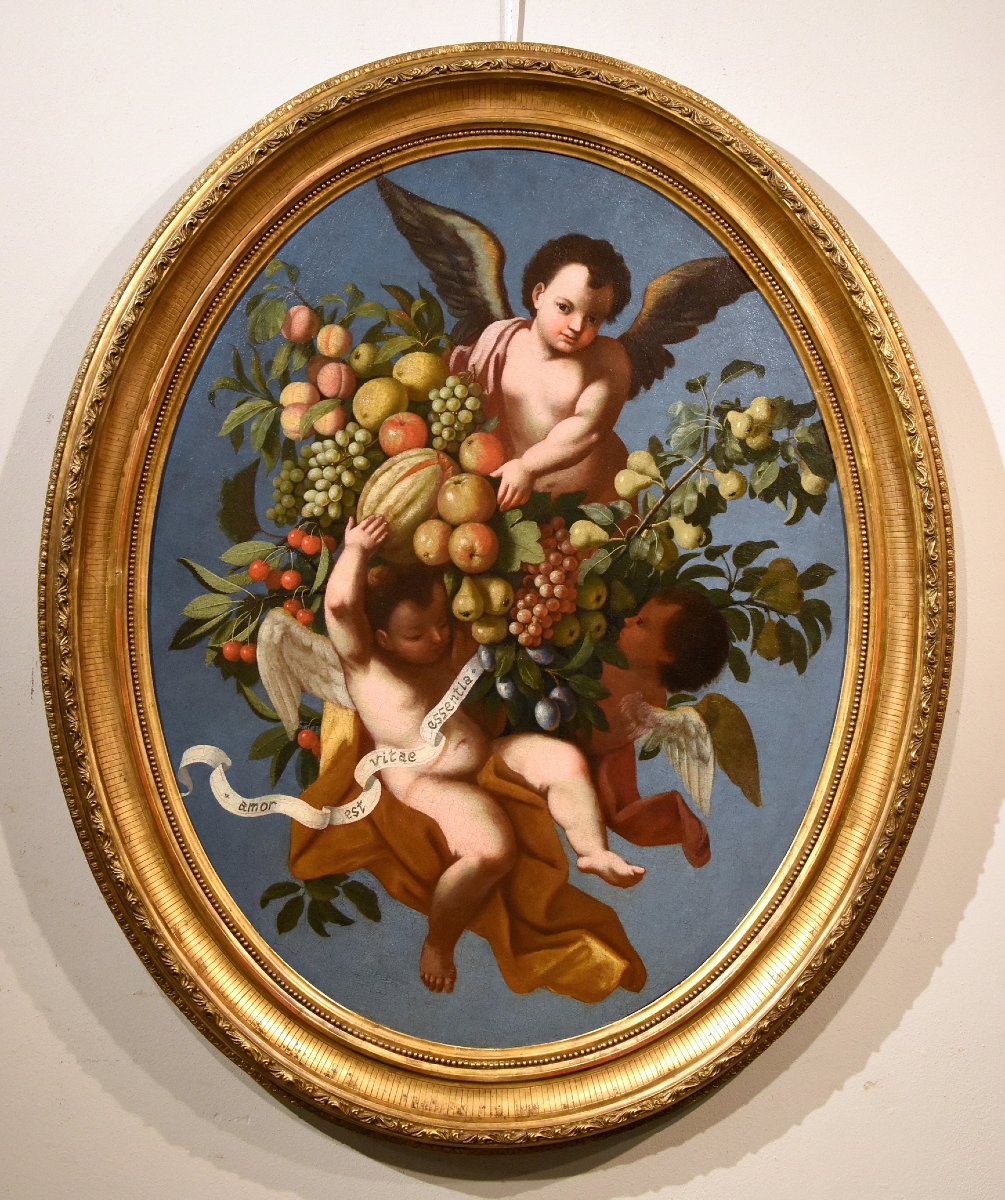
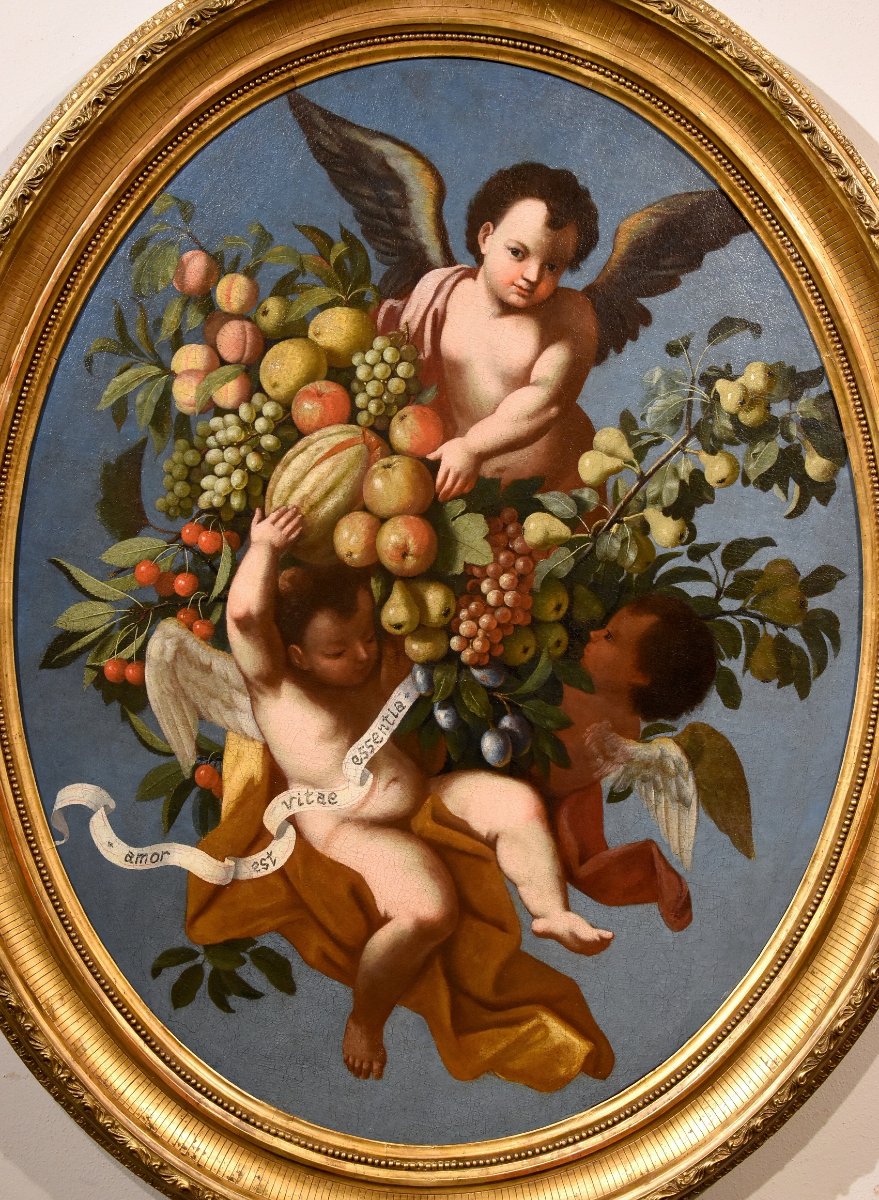
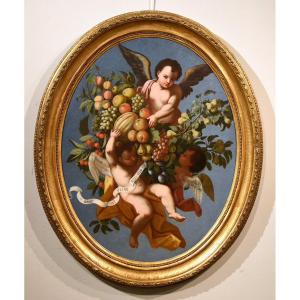


Fruit Still Life Supported By Three Angels, Luigi Garzi (pistoia 1638 – Rome 1721)
Artist: Ecole Romaine Du Début Du Xviiie Siècle - Luigi Garzi (pistoia 1638– Rome 1721) Attribué
Early 18th-century Roman School
Luigi Garzi(Pistoia 1638 – Rome 1721)attributed
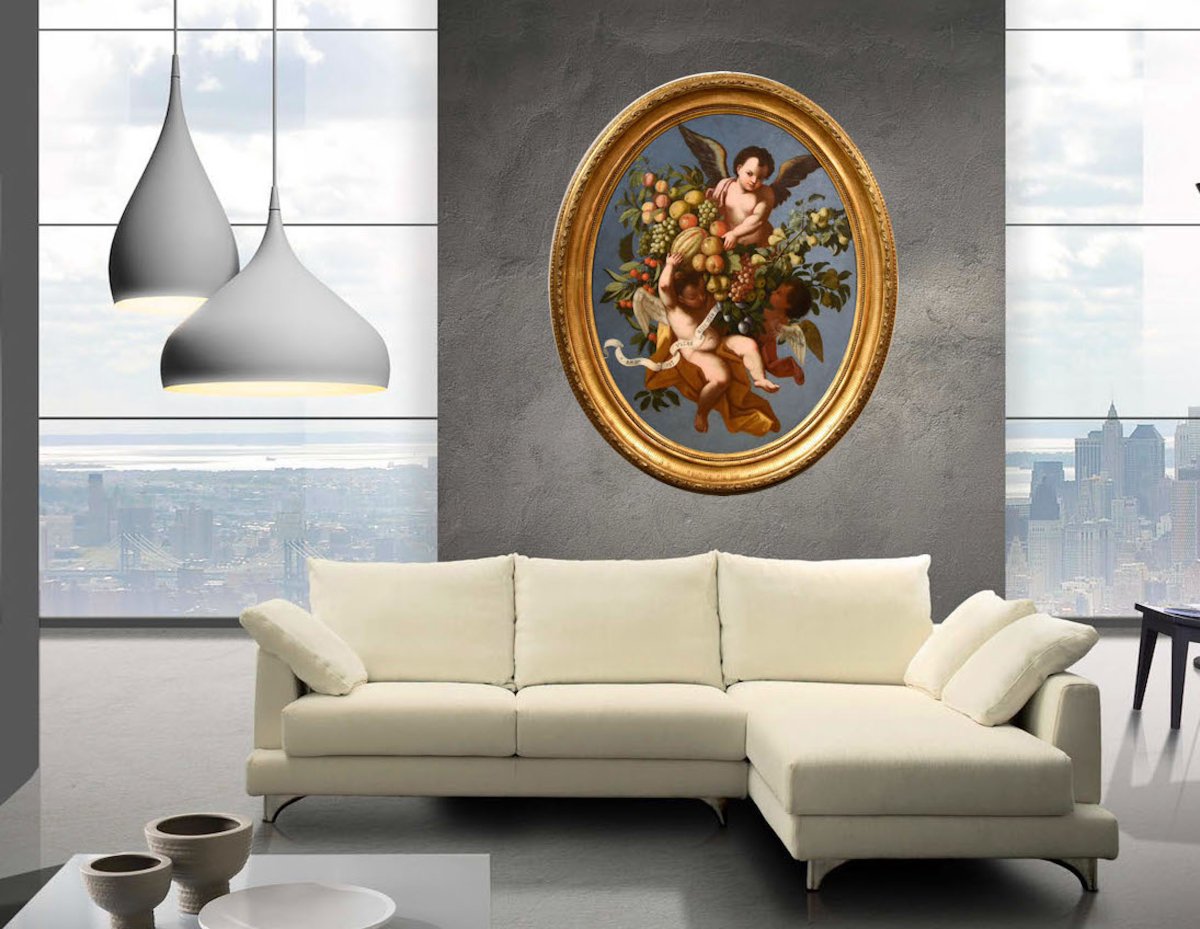
Still Life with Fruit Supported by Three Angels
Oil on oval canvas
116 x 91 cm., framed 140 x 119 cm.
Authenticated based on a photograph by Prof. Giancarlo Sestieri, who attributes the work to the circle of Luigi Garzi
Complete details of the painting: https://www.antichitacastelbarco.it/it/product/still-life-of-fruit-supported-by-three-angels
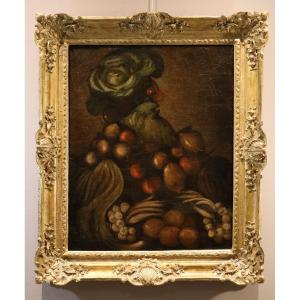
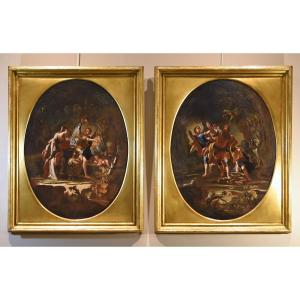
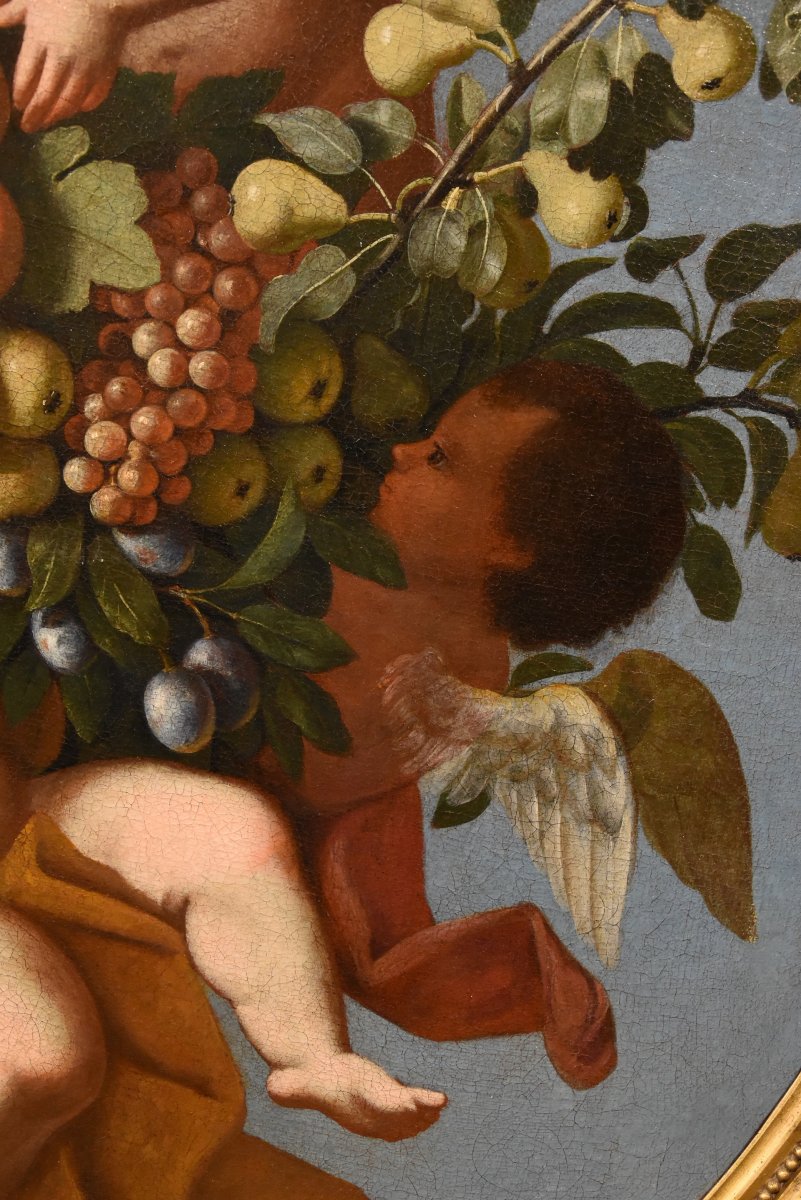
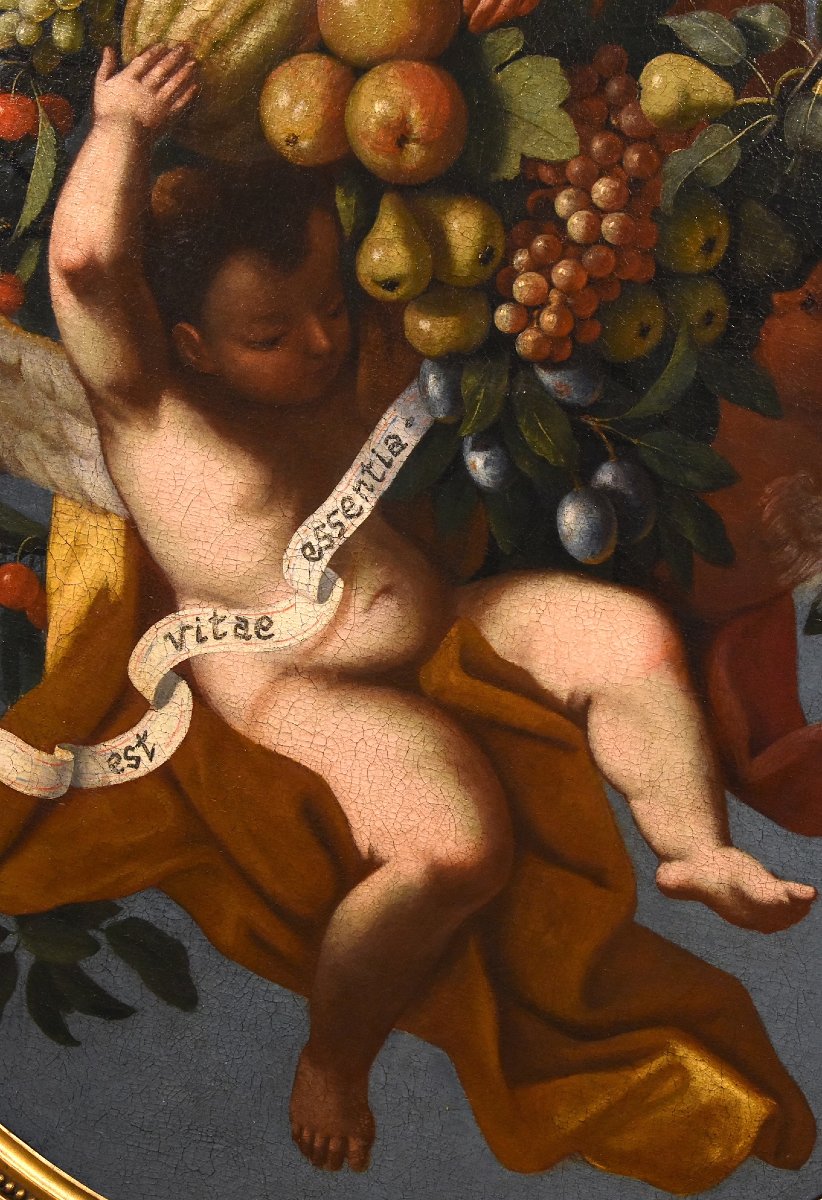
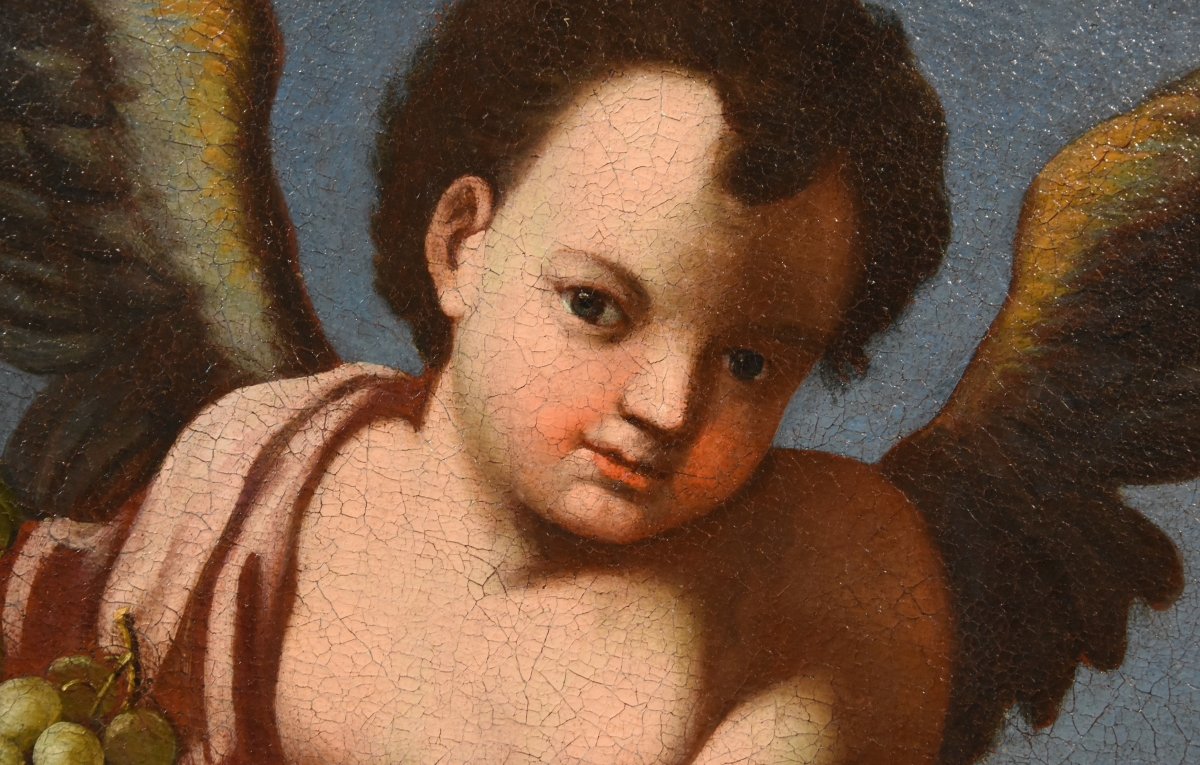
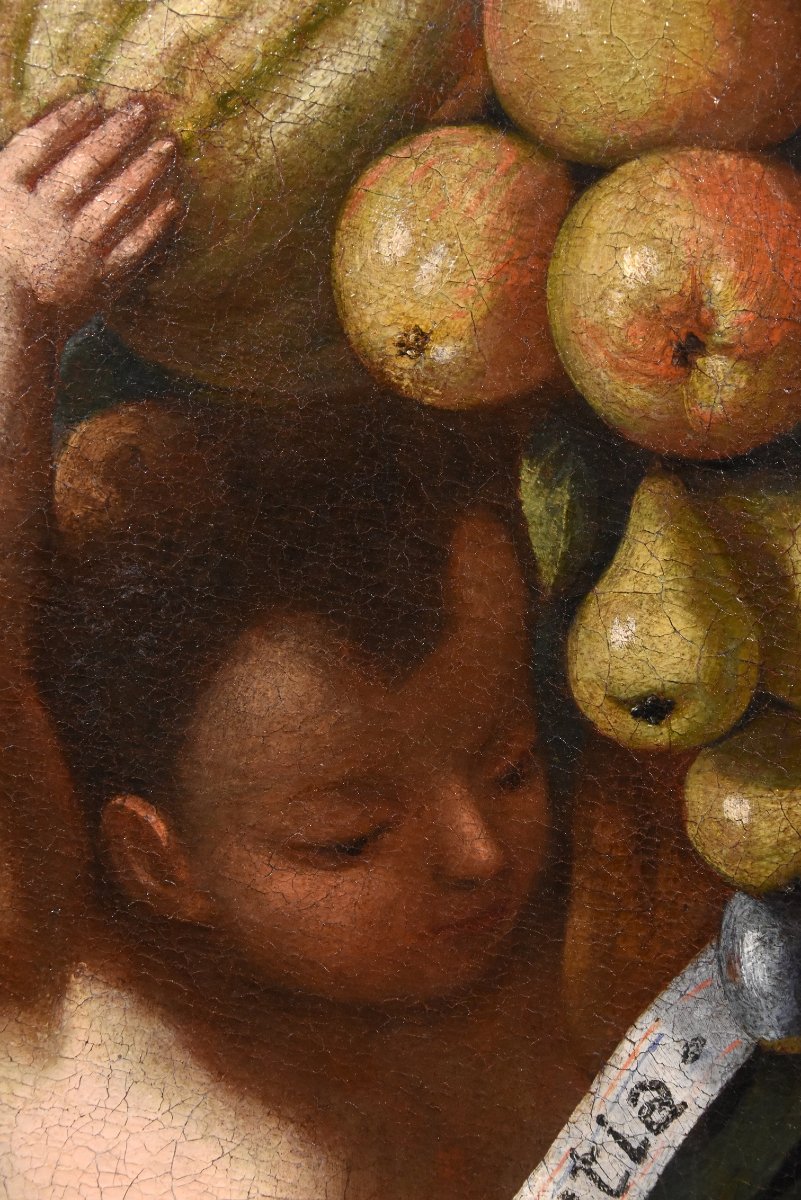
This magnificent canvas depicts a sumptuous composition of fruit supported by three plump winged cherubs, from whom emerges a scroll bearing the Latin phrase “Amor est vitae essentiae,” is to be attributed to a Roman artist active between the second half of the 17th century and the early 18th century.
The iconography depicting cherubs with fruit or flowers is common in the Baroque period, especially in Rome, beginning in the 17th century, with that particular artistic trend toward illusionistic and frivolous imagery—a type of painting or fresco with strong decorative value, intended for private settings and depicting, precisely, revelries of cherubs, angels, or cherubim—of which our canvas is a perfect example.
Among the most illustrious iconographic precedents, we can mention the elegant mirrors painted by Mario Nuzzi and Carlo Maratta that adorn the hall of Palazzo Colonna in Rome, as well as the painting preserved at the museum in Rouen and similar works at Palazzo Chigi in Ariccia, with Filippo Lauri collaborating on the figurative elements.
The commercial and decorative success of such works is also attested to by artists such as Guglielmo Cortese, known as “il Borgognone” (1628–1679), Franz Werner von Tamm (1658–1724), Giovan Battista Gaulli (1639–1709), Giovanni Paolo Castelli, known as Spadino (Rome 1650–1740), and the aforementioned Carlo Maratta (1625–1713).
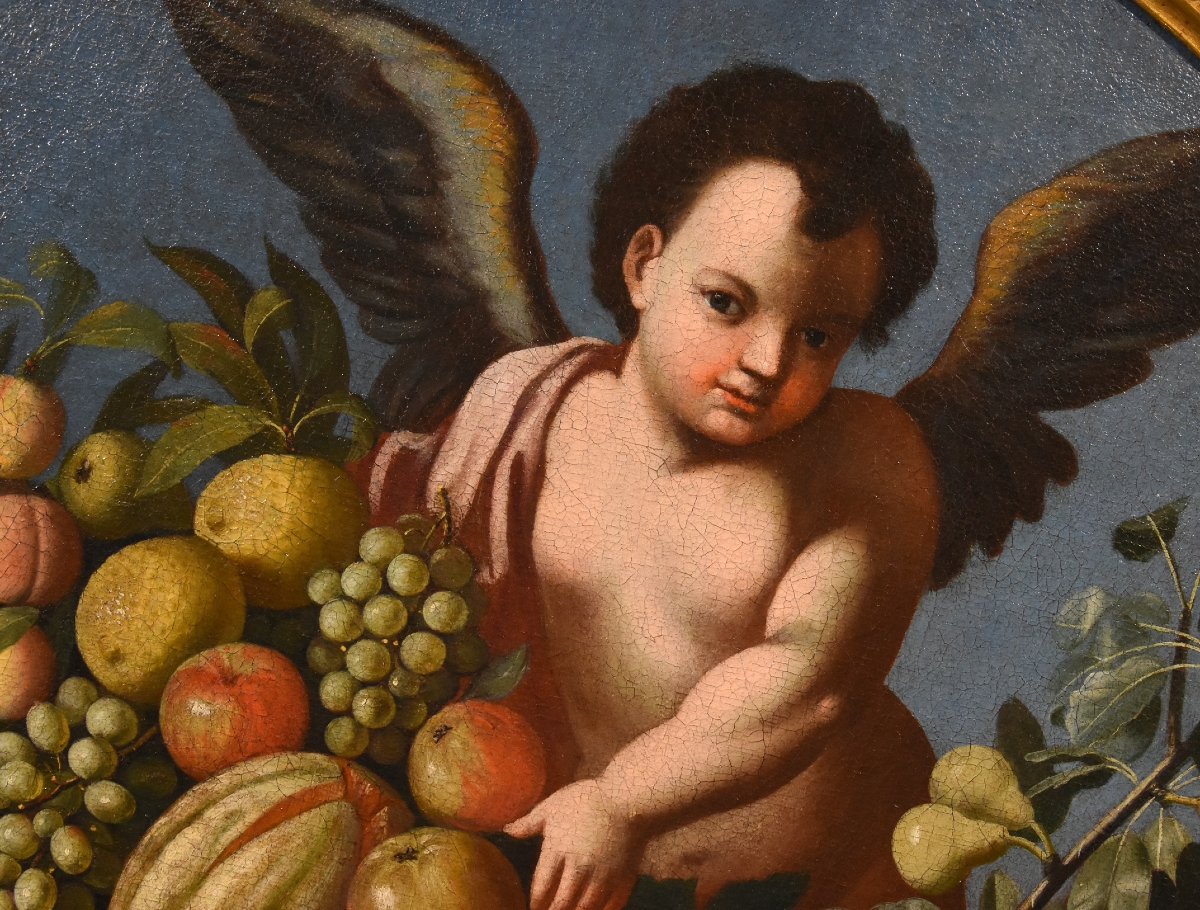
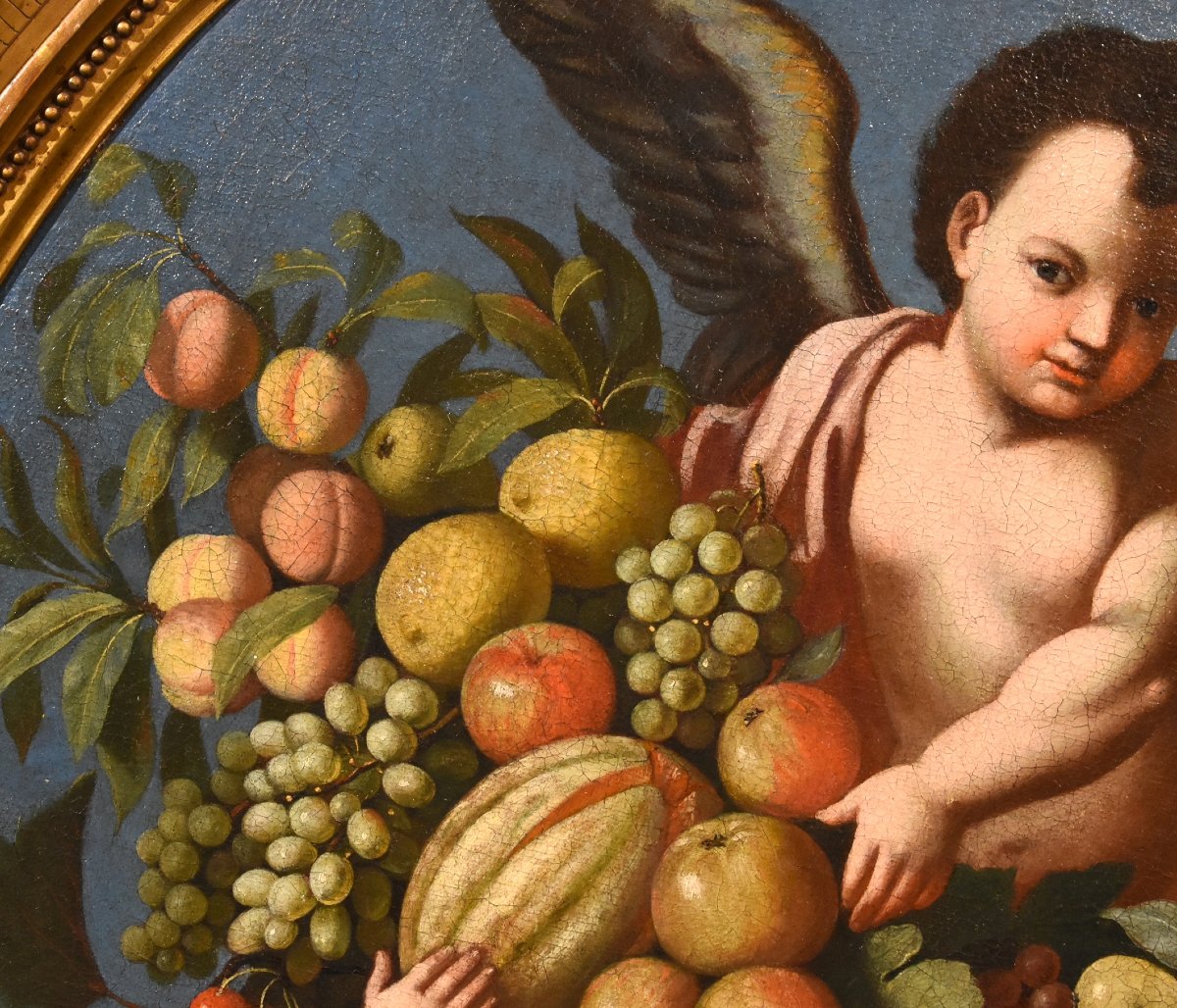
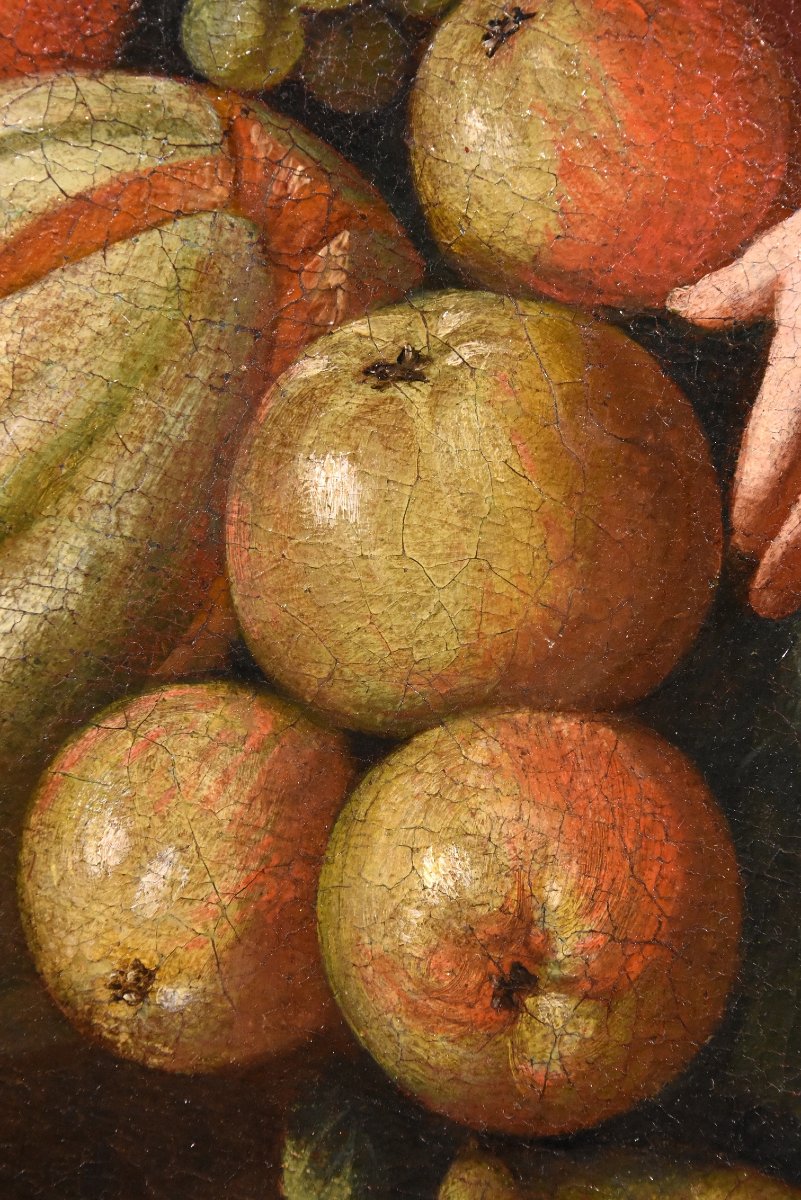
The work, studied by Giancarlo Sestieri, has been linked to the style of the eclectic Pistoia-born painter Luigi Garzi, one of the leading figures in Roman painting during the transitional decades between the 17th and 18th centuries. In this painting, we can see the typical elements of his style: soft, delicately chiaroscuro lighting; the sculptural classicism of the figures; and the stunning effects of light and color.
Luigi Garzi’s training and artistic career took place in the Eternal City, and he was, to all intents and purposes, a Roman artist. Having moved to Rome at a very young age from Pistoia, his hometown, he joined the studio of Andrea Sacchi, who guided his studies toward classicism, engaging with the works of Raphael, Domenichino, and Nicolas Poussin, as well as with the Emilian tradition, with particular attention to the school of Guido Reni.
However, the Emilian examples undoubtedly took precedence, with a particular preference for Giovani Lanfranco, who shaped his taste and style, along with a nuanced Cortonian influence, while those pre-eighteenth-century sensibilities are attributable to the teachings of Carlo Maratta.
However, there is no doubt that the painter developed his own artistic identity without ever succumbing to imitation, achieving a refined elegance and autonomy of expression, as clearly demonstrated by the canvas under consideration, in which the various influences blend into a refined amalgam in perfect harmony with the Baroque evolution between the 17th and 18th centuries, suggesting a date from his early maturity.
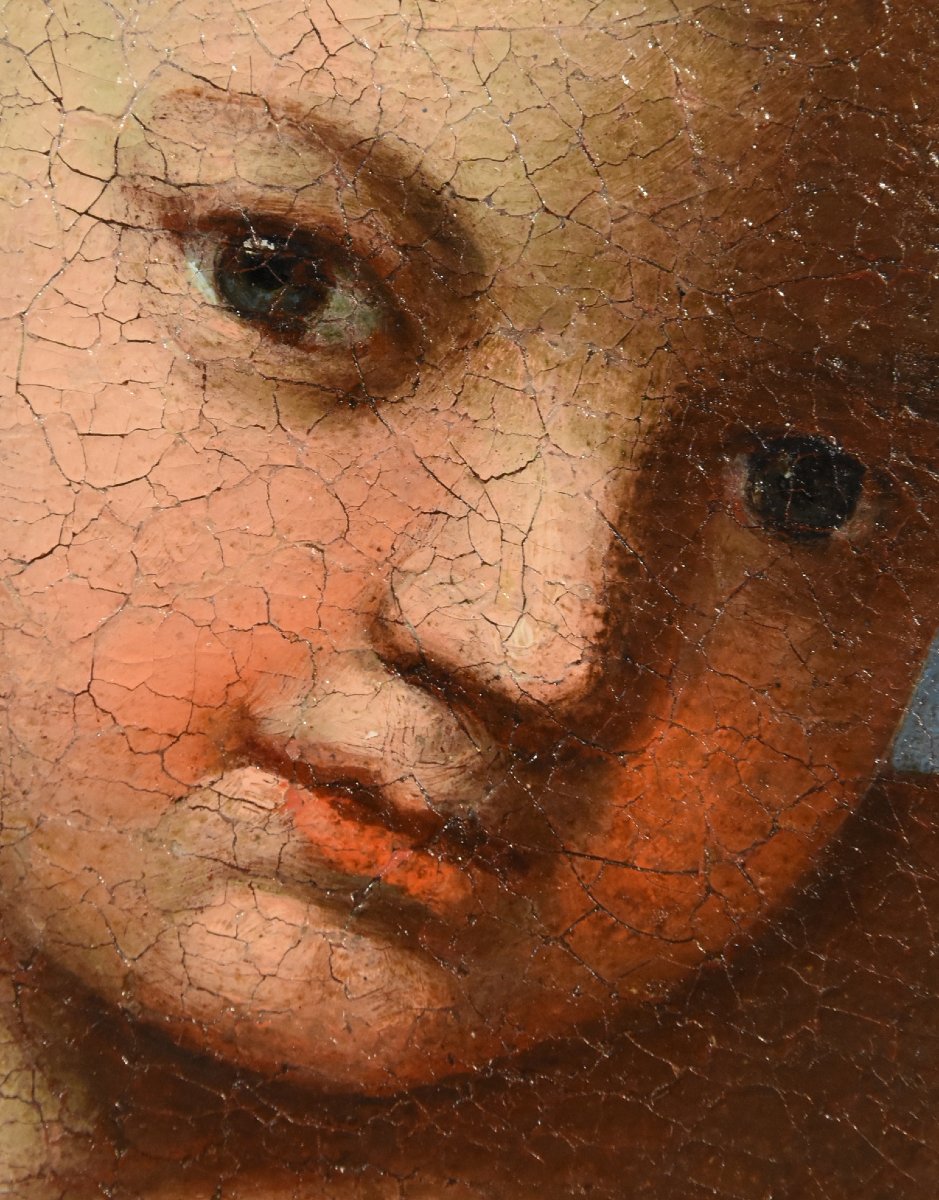
These qualities led the painter to quickly earn recognition and prestigious commissions, such as the frescoes in Palazzo Borghese and San Carlo al Corso—where echoes of Domenichino and Reni are evident—and the dome of the Cybo Chapel in Santa Maria del Popolo. Returning to the work itself, we can therefore infer a mature chronological placement, given its distinctive execution, characterized by glazed brushstrokes and a heartfelt classical sensibility.
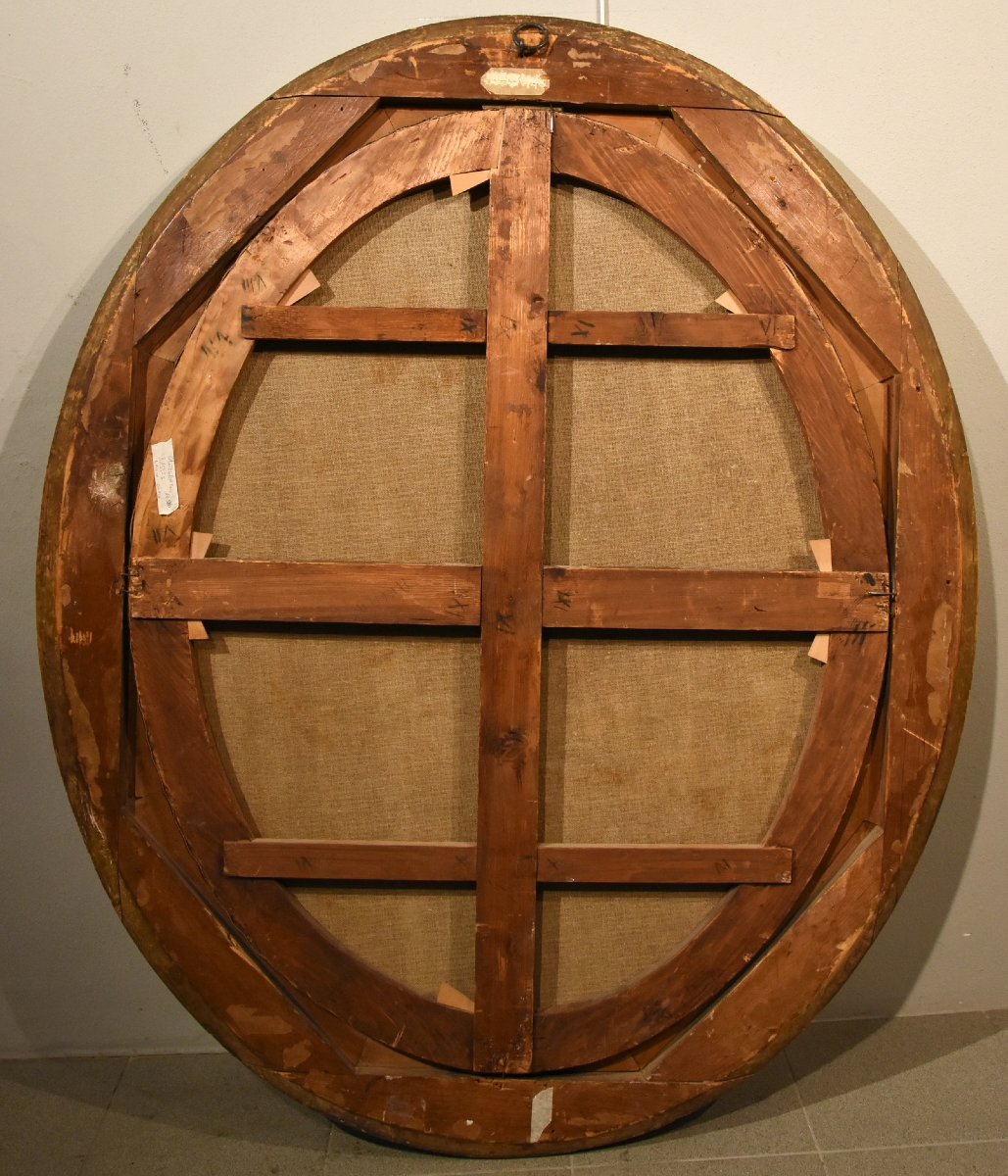
The painting is in excellent condition, with a beautiful antique frame.
The work comes with a photographic certificate of authenticity in accordance with the law.
We handle and arrange the shipping of purchased works, both within Italy and internationally, through professional and insured carriers. For any additional information, please do not hesitate to contact us.
Follow us on:
https://www.instagram.com/galleriacastelbarco/?hl=it
https://www.facebook.com/galleriacastelbarco/
Luigi Garzi(Pistoia 1638 – Rome 1721)attributed
Still Life with Fruit Supported by Three Angels
Oil on oval canvas
116 x 91 cm., framed 140 x 119 cm.
Authenticated based on a photograph by Prof. Giancarlo Sestieri, who attributes the work to the circle of Luigi Garzi
Complete details of the painting: https://www.antichitacastelbarco.it/it/product/still-life-of-fruit-supported-by-three-angels
This magnificent canvas depicts a sumptuous composition of fruit supported by three plump winged cherubs, from whom emerges a scroll bearing the Latin phrase “Amor est vitae essentiae,” is to be attributed to a Roman artist active between the second half of the 17th century and the early 18th century.
The iconography depicting cherubs with fruit or flowers is common in the Baroque period, especially in Rome, beginning in the 17th century, with that particular artistic trend toward illusionistic and frivolous imagery—a type of painting or fresco with strong decorative value, intended for private settings and depicting, precisely, revelries of cherubs, angels, or cherubim—of which our canvas is a perfect example.
Among the most illustrious iconographic precedents, we can mention the elegant mirrors painted by Mario Nuzzi and Carlo Maratta that adorn the hall of Palazzo Colonna in Rome, as well as the painting preserved at the museum in Rouen and similar works at Palazzo Chigi in Ariccia, with Filippo Lauri collaborating on the figurative elements.
The commercial and decorative success of such works is also attested to by artists such as Guglielmo Cortese, known as “il Borgognone” (1628–1679), Franz Werner von Tamm (1658–1724), Giovan Battista Gaulli (1639–1709), Giovanni Paolo Castelli, known as Spadino (Rome 1650–1740), and the aforementioned Carlo Maratta (1625–1713).
The work, studied by Giancarlo Sestieri, has been linked to the style of the eclectic Pistoia-born painter Luigi Garzi, one of the leading figures in Roman painting during the transitional decades between the 17th and 18th centuries. In this painting, we can see the typical elements of his style: soft, delicately chiaroscuro lighting; the sculptural classicism of the figures; and the stunning effects of light and color.
Luigi Garzi’s training and artistic career took place in the Eternal City, and he was, to all intents and purposes, a Roman artist. Having moved to Rome at a very young age from Pistoia, his hometown, he joined the studio of Andrea Sacchi, who guided his studies toward classicism, engaging with the works of Raphael, Domenichino, and Nicolas Poussin, as well as with the Emilian tradition, with particular attention to the school of Guido Reni.
However, the Emilian examples undoubtedly took precedence, with a particular preference for Giovani Lanfranco, who shaped his taste and style, along with a nuanced Cortonian influence, while those pre-eighteenth-century sensibilities are attributable to the teachings of Carlo Maratta.
However, there is no doubt that the painter developed his own artistic identity without ever succumbing to imitation, achieving a refined elegance and autonomy of expression, as clearly demonstrated by the canvas under consideration, in which the various influences blend into a refined amalgam in perfect harmony with the Baroque evolution between the 17th and 18th centuries, suggesting a date from his early maturity.
These qualities led the painter to quickly earn recognition and prestigious commissions, such as the frescoes in Palazzo Borghese and San Carlo al Corso—where echoes of Domenichino and Reni are evident—and the dome of the Cybo Chapel in Santa Maria del Popolo. Returning to the work itself, we can therefore infer a mature chronological placement, given its distinctive execution, characterized by glazed brushstrokes and a heartfelt classical sensibility.
The painting is in excellent condition, with a beautiful antique frame.
The work comes with a photographic certificate of authenticity in accordance with the law.
We handle and arrange the shipping of purchased works, both within Italy and internationally, through professional and insured carriers. For any additional information, please do not hesitate to contact us.
Follow us on:
https://www.instagram.com/galleriacastelbarco/?hl=it
https://www.facebook.com/galleriacastelbarco/
12 000 €
Period: 17th century
Style: Louis 14th, Regency
Condition: Excellent condition
Material: Oil painting
Width: encadré 119 cm.
Height: encadré 140 cm.
Reference (ID): 1793082
Availability: In stock
Print