

The Last Supper, 17th-century Tuscan Painter, By Pieter De Witte (c. 1548–1628)
Artist: Peintre Toscan Du Xviie Siècle, D'après Pieter De Witte (vers 1548 – 1628)
17th-century Tuscan painter
The Last Supper
After Pieter de Witte (c. 1548 – 1628)
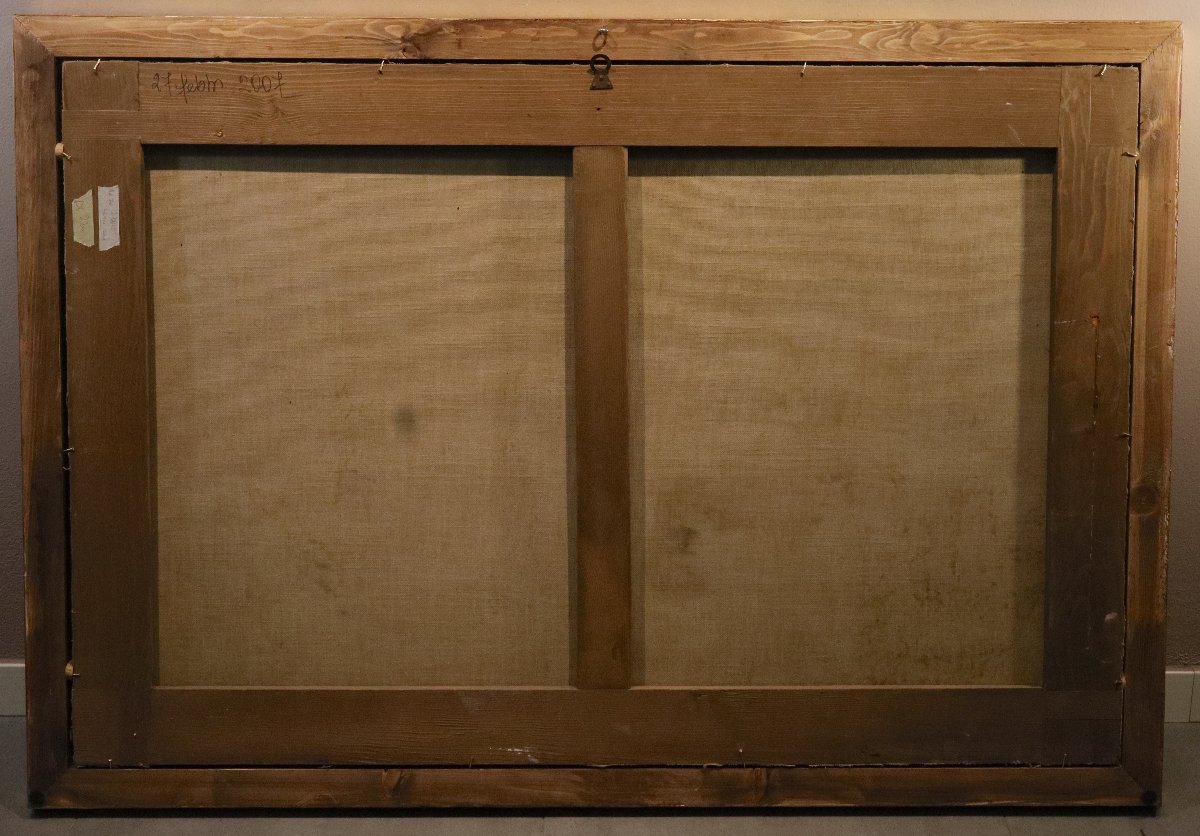
oil on canvas (89 x 134 cm – framed 100 x 145 cm)
FULL DETAILS OF THIS PAINTING (CLICK HERE)
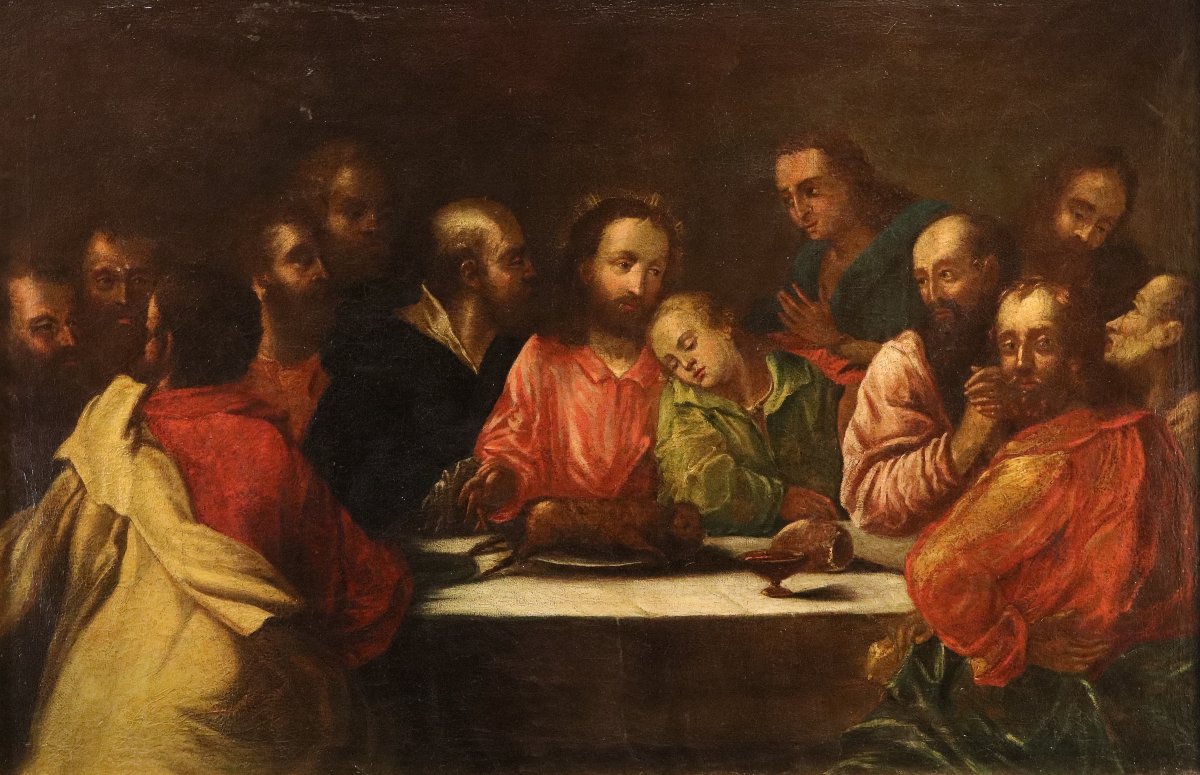
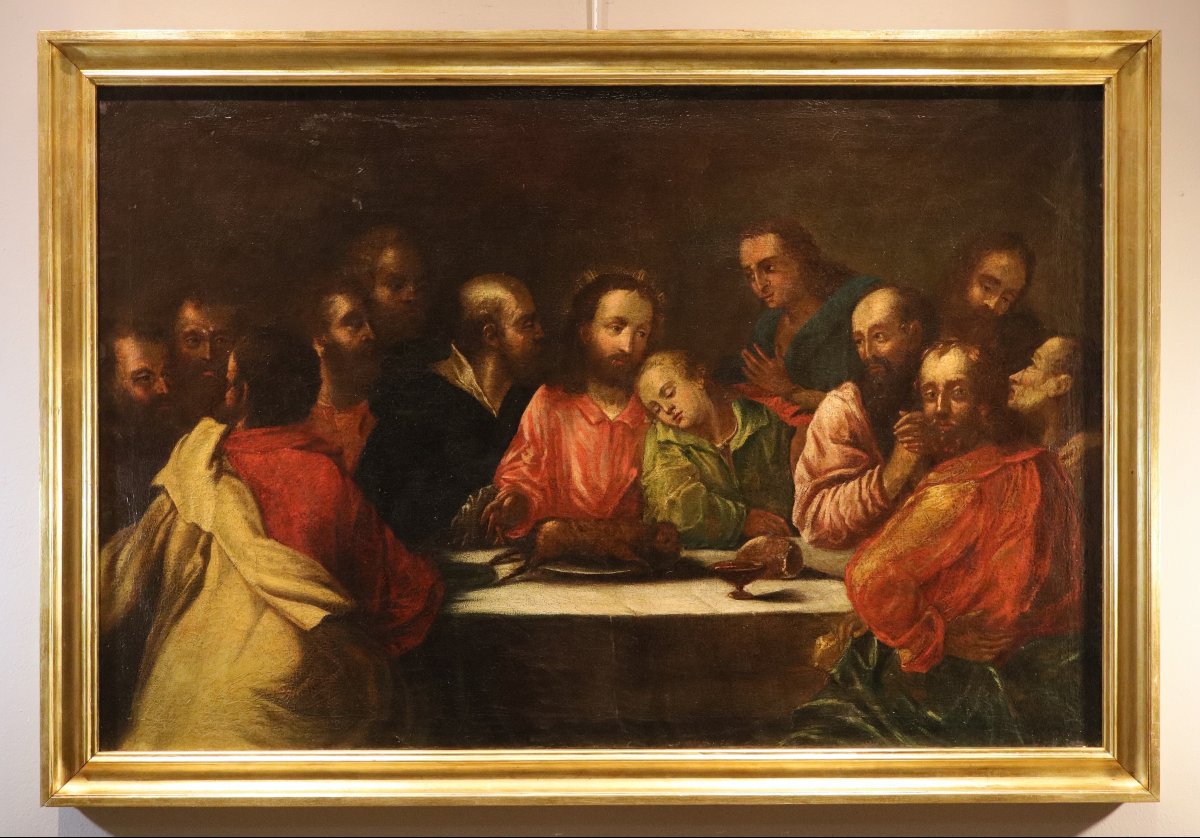
This delightful painting, depicting the scene of the Last Supper with Jesus surrounded by his apostles, is attributed to a painter of the Tuscan school who was active in the mid-17th century; it also reveals strong references to 16th-century Mannerist culture.
Thanks to the evocative subject matter, the work is full of charm and extremely interesting.
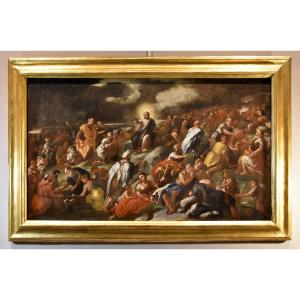
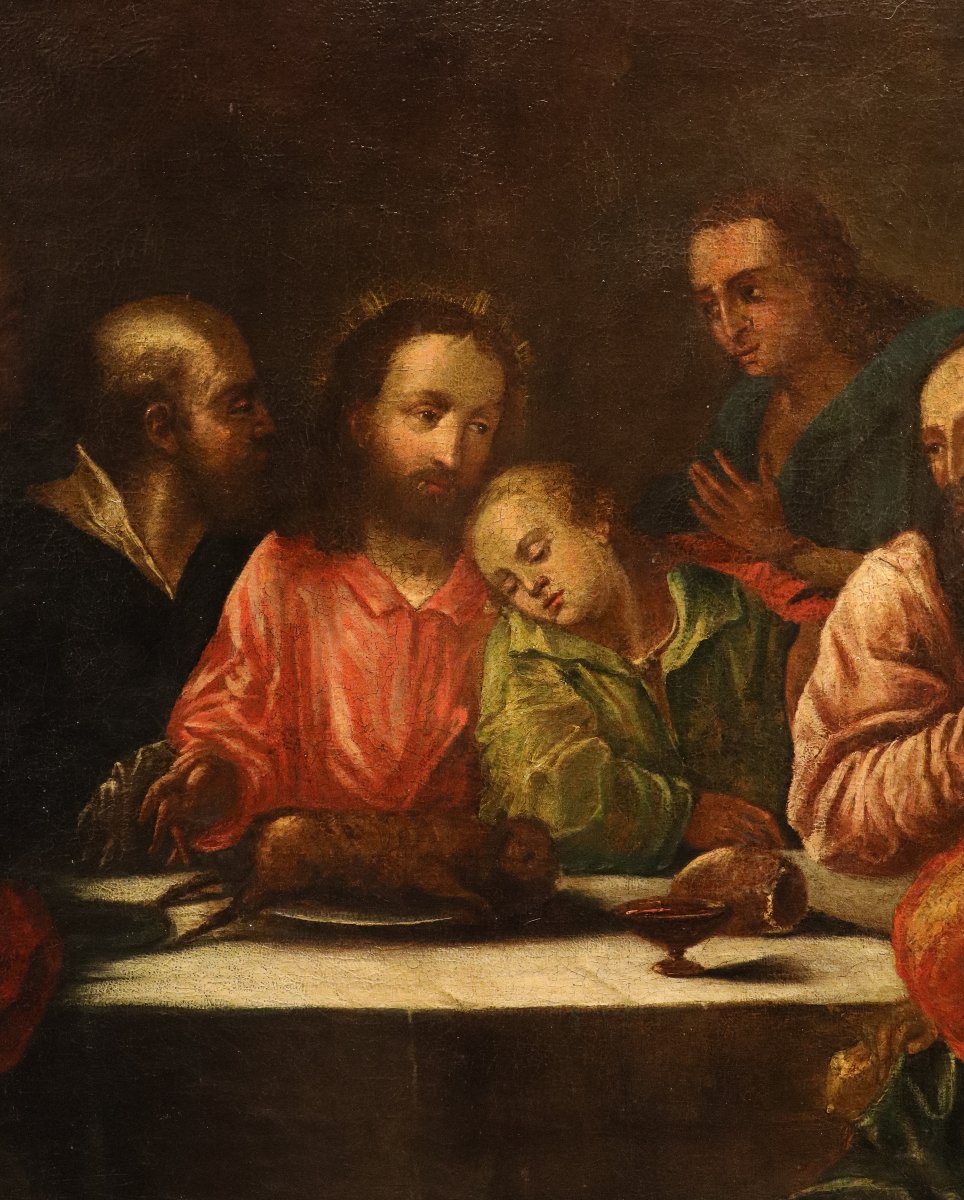
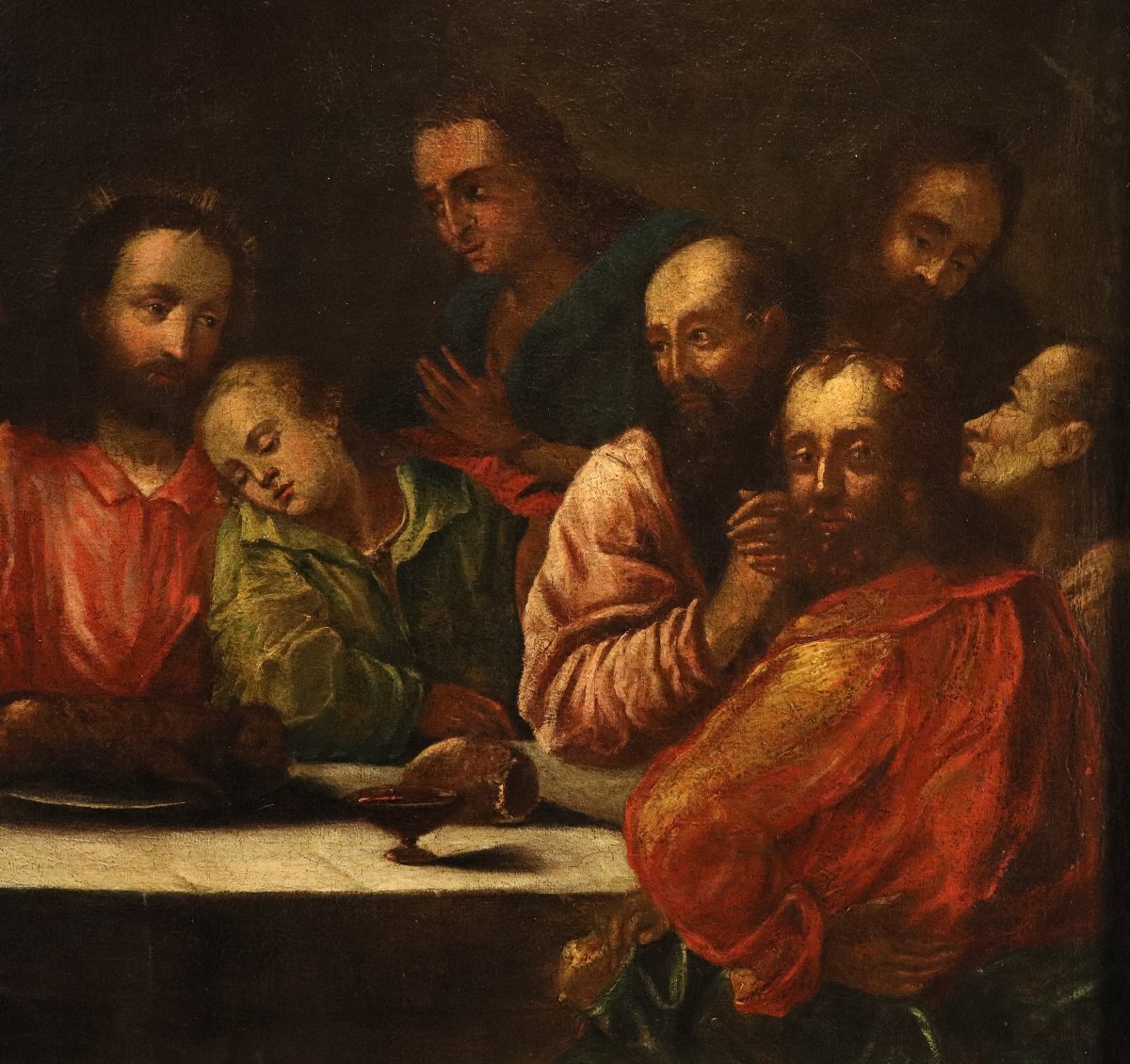
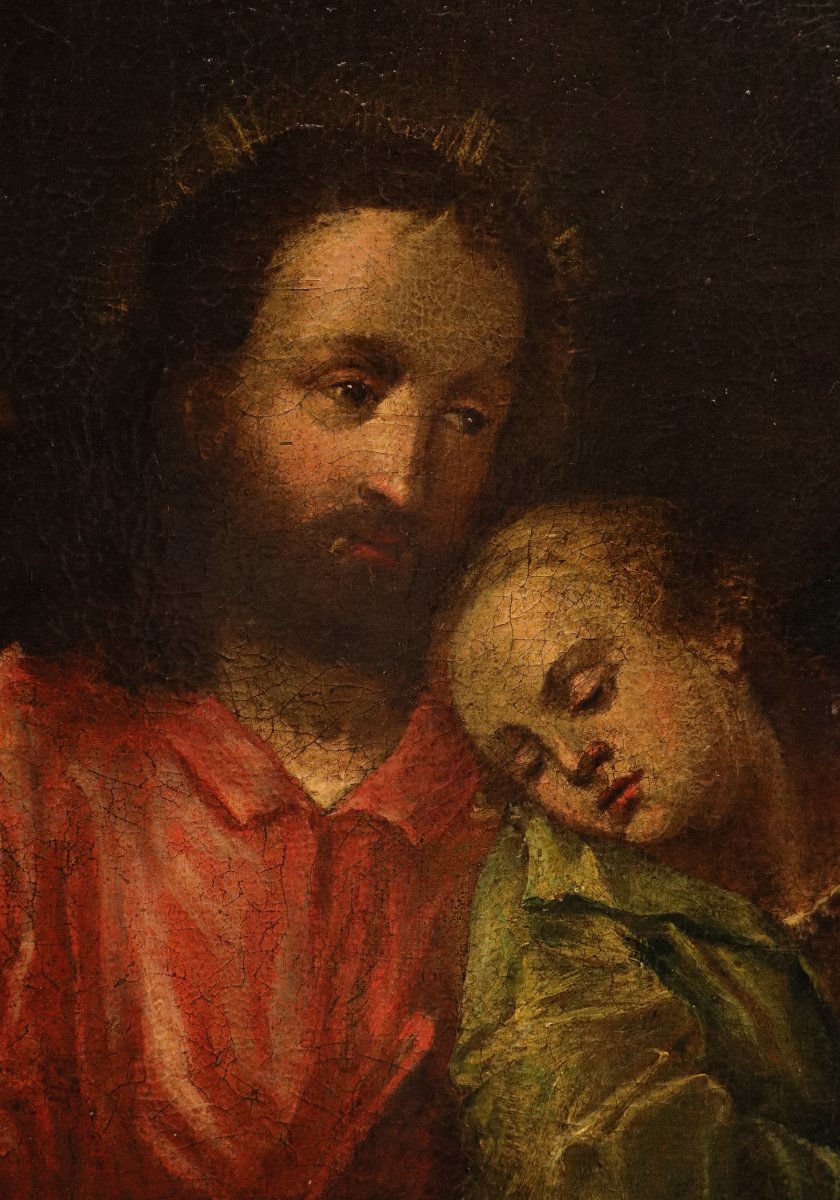
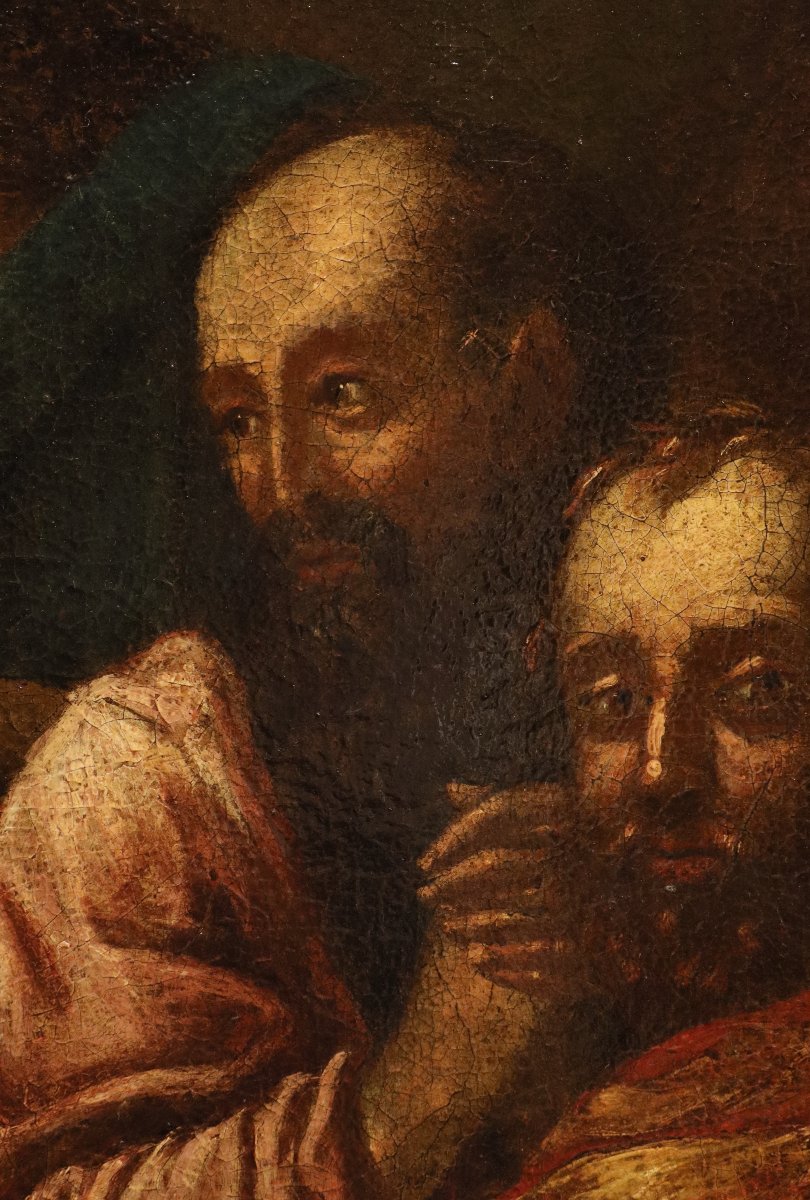
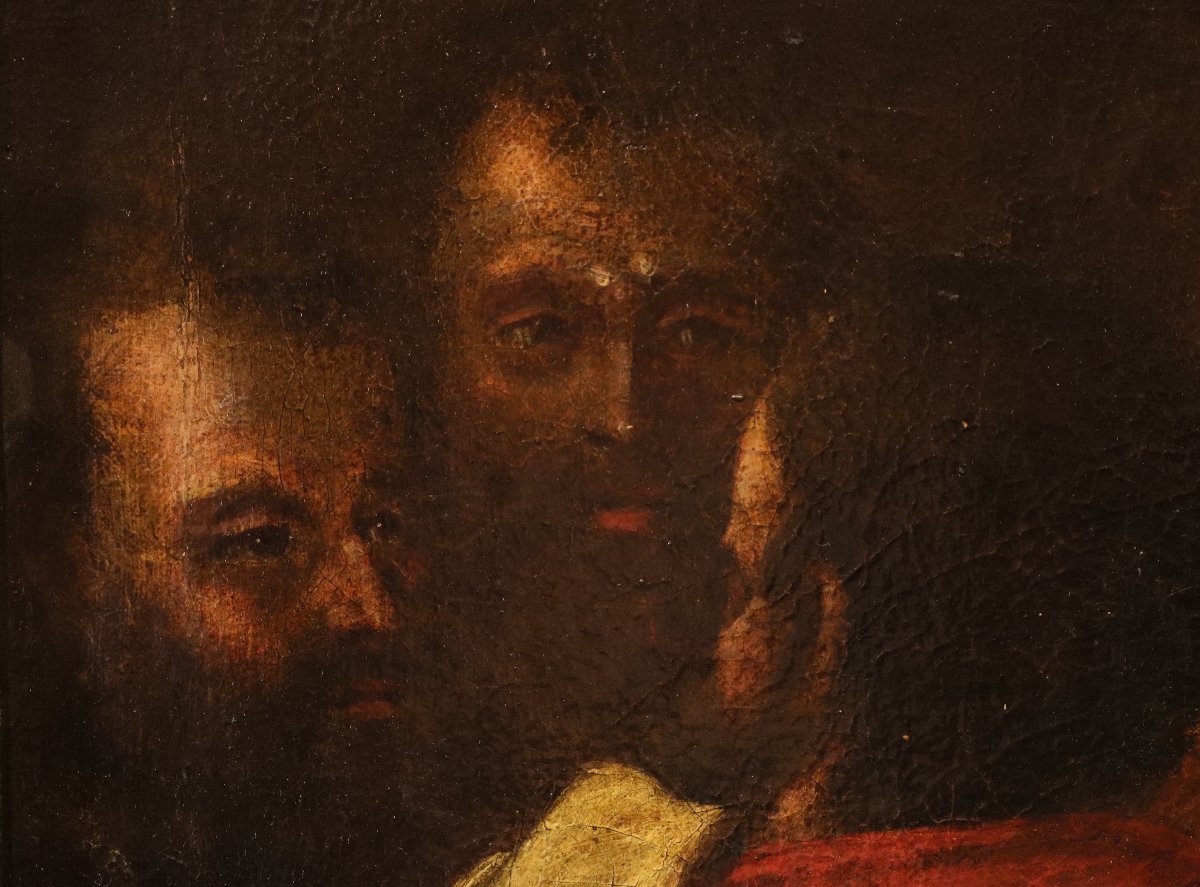
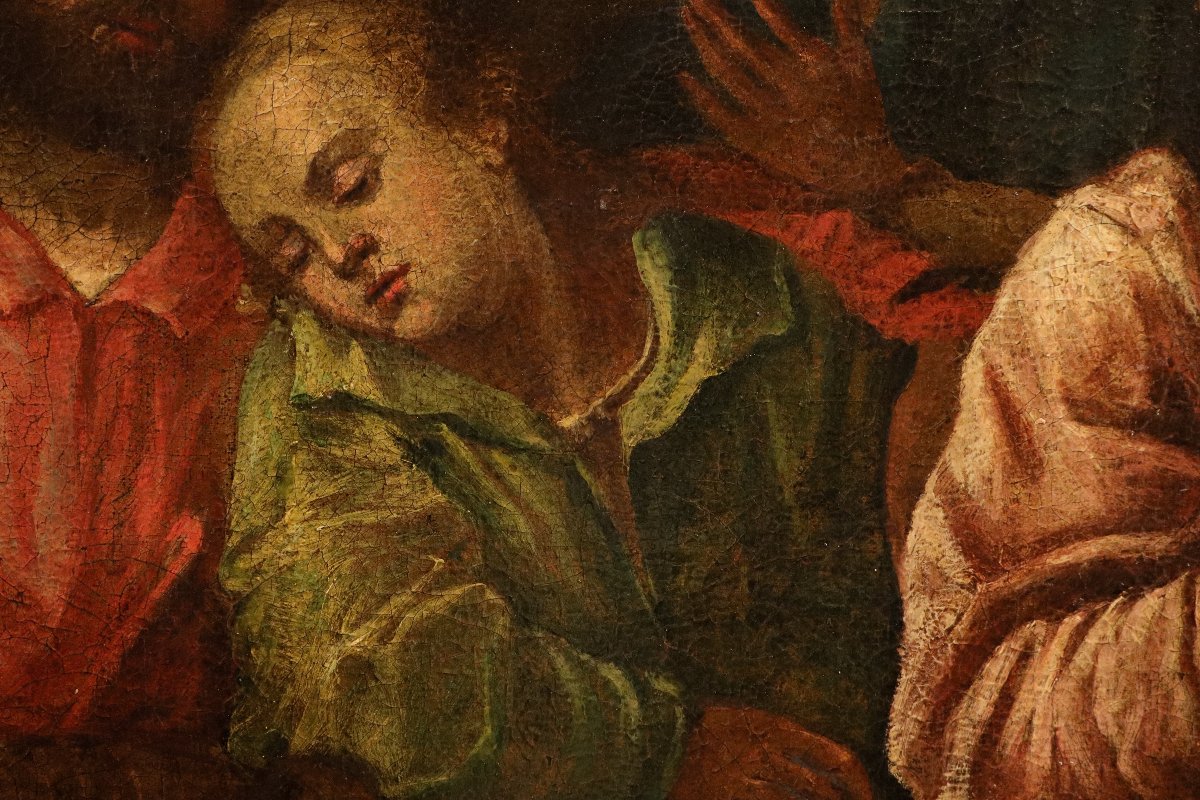
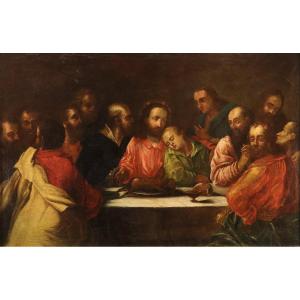
Its composition is richly detailed, with Christ, the focal point of the composition, surrounded by the apostles. To his left, John, with his eyes closed, rests his head on his Master’s left shoulder, whilst Peter, to his right, shows deep concern upon learning that his Lord is about to be betrayed. Judas, in the foreground on the right, holds in his right hand the moneybag symbolising his imminent act of betrayal; he is the only one in the group who looks directly at the viewer.
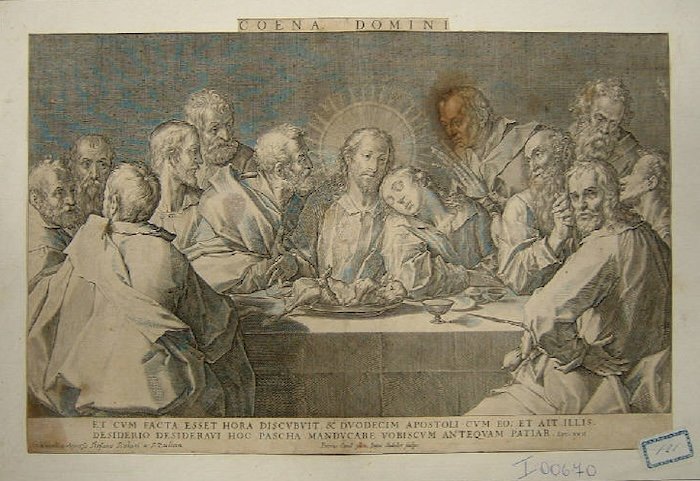
Looking at the subject in more detail, this is a fine derivation from Pieter de Witte (c. 1548 – 1628), specifically from one of the most influential Flemish Mannerist compositional models in the history of art. Although his original painting has been lost, the powerful iconography has survived and spread throughout Europe thanks to the print produced by theFlemish engraver Jan Sadeler I (*), who made this composition famous even in his own time.
(* https://catalogo.beniculturali.it/detail/HistoricOrArtisticProperty/0300619651 )
This subject has, in fact, been rendered in countless variations over the centuries by various artists – not only Flemish ones – faithfully based on de Witte’s model. Among these is the painting on the late-Renaissance high altar of Schleswig-Holstein, in St Mary’s Church in Flensburg, painted in 1598 by Jan von Enum (https://de.wikipedia.org/wiki/ Marienkirche_(Flensburg)#/media/Datei:MariaNadverbilledeFlensborg.jpg), and also the altarpiece adorning Tórshavn Cathedral (Denmark) and derived from the same engraving, the work of an anonymous Flemish artist from 1647 (https://en.wikipedia.org/wiki/T%C3%B3rshavn_Cathedral#/media/File:FaroeNadver.jpg).
But the popularity of the model did not stop at Northern Europe: consider that de Witte, thanks to the influences he absorbed during his stay in Tuscany—specifically in Florence in Vasari’s workshop—is regarded in every respect as an artist of the ‘Tuscan-Flemish’ style, blending the Tuscan Mannerist style with Nordic realism; his works were therefore extensively studied, reproduced and copied by many Italian painters.
Added to this is the circulation in Italy of the aforementioned print by Sadeler: in particular, it was distributed on the Tuscan market by Matteo Florimi, an important art publisher active in Siena between 1580 and 1613, known for republishing and marketing reproductions or prints based on the works of the greatest European masters of the time, first and foremost Jan Sadeler I himself.
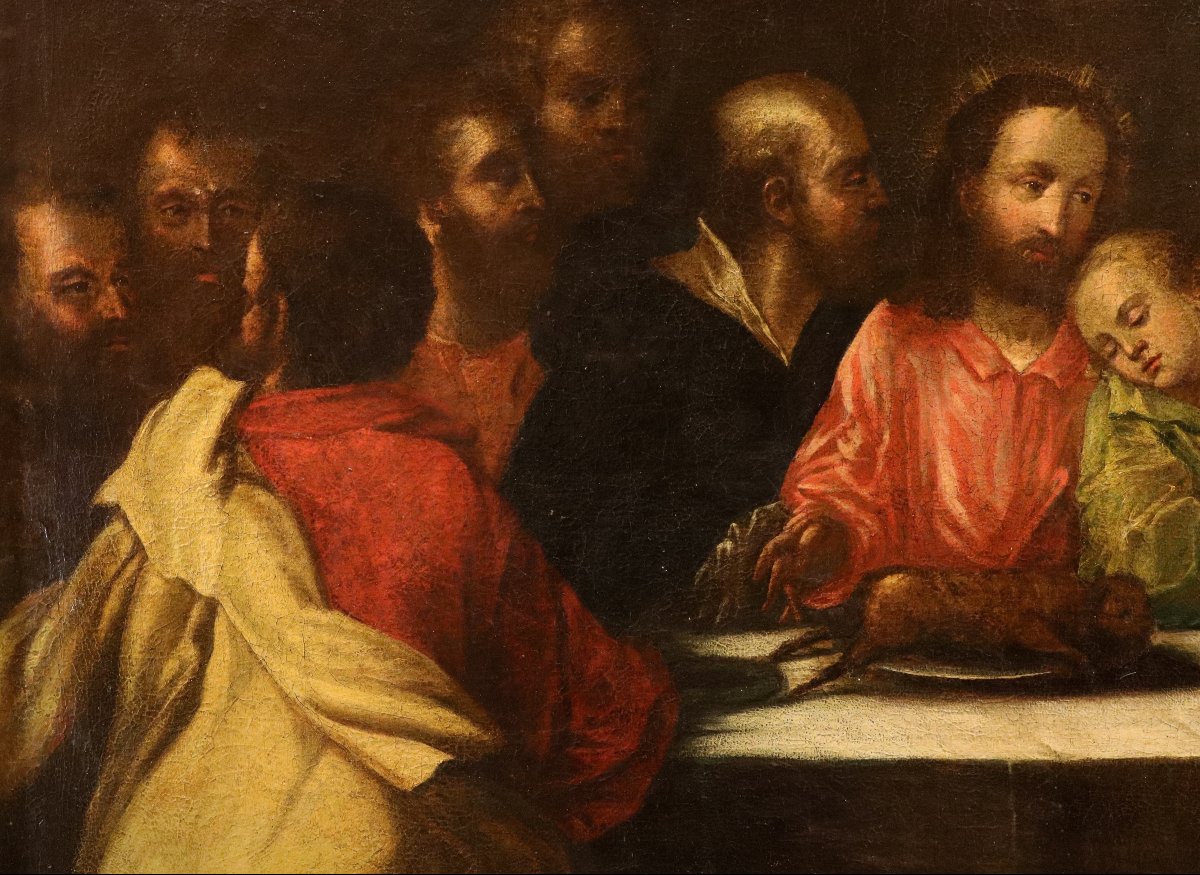
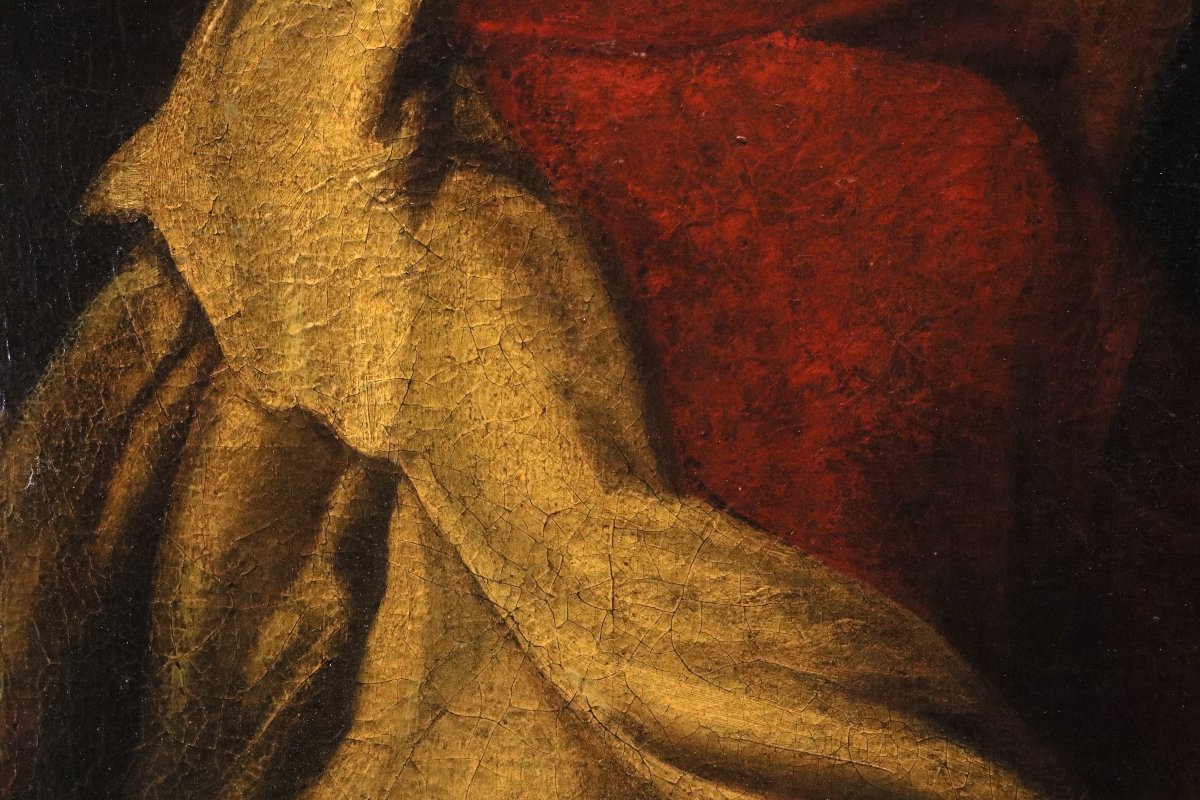
Looking closely at our painting, we can appreciate its excellent execution: the painting is set off by a colour scheme dominated by warm earth tones, intense reds, carmine pinks and olive greens, balanced by the whiteness of the tablecloth which illuminates the lower part of the canvas.
The scene emerges from a dark background through a theatrical use of light, inspired by Caravaggio, which strikes the figures from the side, emphasising the volume of the drapery and the expressiveness of the faces.
The work is in good condition, with evidence of previous restoration.
ADDITIONAL INFORMATION:
The images were taken using professional photographic equipment; therefore, the painting may appear darker if not properly lit.
The work is complete with an attractive gilded wooden frame and is accompanied by a certificate of authenticity and a descriptive iconographic sheet.
We arrange and organise the transport of purchased works, both within Italy and abroad, using professional, insured carriers.
It is also possible to view the painting at our gallery in Riva del Garda; we would be delighted to welcome you and show you our collection of works.
Please feel free to contact us, with no obligation, for any further information.
Follow us on:
INSTAGRAM https://www.instagram.com/galleriacastelbarco/?hl=it
FACEBOOK https://www.facebook.com/galleriacastelbarco/
The Last Supper
After Pieter de Witte (c. 1548 – 1628)
oil on canvas (89 x 134 cm – framed 100 x 145 cm)
FULL DETAILS OF THIS PAINTING (CLICK HERE)
This delightful painting, depicting the scene of the Last Supper with Jesus surrounded by his apostles, is attributed to a painter of the Tuscan school who was active in the mid-17th century; it also reveals strong references to 16th-century Mannerist culture.
Thanks to the evocative subject matter, the work is full of charm and extremely interesting.
Its composition is richly detailed, with Christ, the focal point of the composition, surrounded by the apostles. To his left, John, with his eyes closed, rests his head on his Master’s left shoulder, whilst Peter, to his right, shows deep concern upon learning that his Lord is about to be betrayed. Judas, in the foreground on the right, holds in his right hand the moneybag symbolising his imminent act of betrayal; he is the only one in the group who looks directly at the viewer.
Looking at the subject in more detail, this is a fine derivation from Pieter de Witte (c. 1548 – 1628), specifically from one of the most influential Flemish Mannerist compositional models in the history of art. Although his original painting has been lost, the powerful iconography has survived and spread throughout Europe thanks to the print produced by theFlemish engraver Jan Sadeler I (*), who made this composition famous even in his own time.
(* https://catalogo.beniculturali.it/detail/HistoricOrArtisticProperty/0300619651 )
This subject has, in fact, been rendered in countless variations over the centuries by various artists – not only Flemish ones – faithfully based on de Witte’s model. Among these is the painting on the late-Renaissance high altar of Schleswig-Holstein, in St Mary’s Church in Flensburg, painted in 1598 by Jan von Enum (https://de.wikipedia.org/wiki/ Marienkirche_(Flensburg)#/media/Datei:MariaNadverbilledeFlensborg.jpg), and also the altarpiece adorning Tórshavn Cathedral (Denmark) and derived from the same engraving, the work of an anonymous Flemish artist from 1647 (https://en.wikipedia.org/wiki/T%C3%B3rshavn_Cathedral#/media/File:FaroeNadver.jpg).
But the popularity of the model did not stop at Northern Europe: consider that de Witte, thanks to the influences he absorbed during his stay in Tuscany—specifically in Florence in Vasari’s workshop—is regarded in every respect as an artist of the ‘Tuscan-Flemish’ style, blending the Tuscan Mannerist style with Nordic realism; his works were therefore extensively studied, reproduced and copied by many Italian painters.
Added to this is the circulation in Italy of the aforementioned print by Sadeler: in particular, it was distributed on the Tuscan market by Matteo Florimi, an important art publisher active in Siena between 1580 and 1613, known for republishing and marketing reproductions or prints based on the works of the greatest European masters of the time, first and foremost Jan Sadeler I himself.
Looking closely at our painting, we can appreciate its excellent execution: the painting is set off by a colour scheme dominated by warm earth tones, intense reds, carmine pinks and olive greens, balanced by the whiteness of the tablecloth which illuminates the lower part of the canvas.
The scene emerges from a dark background through a theatrical use of light, inspired by Caravaggio, which strikes the figures from the side, emphasising the volume of the drapery and the expressiveness of the faces.
The work is in good condition, with evidence of previous restoration.
ADDITIONAL INFORMATION:
The images were taken using professional photographic equipment; therefore, the painting may appear darker if not properly lit.
The work is complete with an attractive gilded wooden frame and is accompanied by a certificate of authenticity and a descriptive iconographic sheet.
We arrange and organise the transport of purchased works, both within Italy and abroad, using professional, insured carriers.
It is also possible to view the painting at our gallery in Riva del Garda; we would be delighted to welcome you and show you our collection of works.
Please feel free to contact us, with no obligation, for any further information.
Follow us on:
INSTAGRAM https://www.instagram.com/galleriacastelbarco/?hl=it
FACEBOOK https://www.facebook.com/galleriacastelbarco/
7 800 €
Period: 17th century
Style: Louis 15th - Transition
Condition: Excellent condition
Material: Oil painting
Width: encadré 145 cm.
Height: encadré 100 cm.
Reference (ID): 1798972
Availability: In stock
Print