

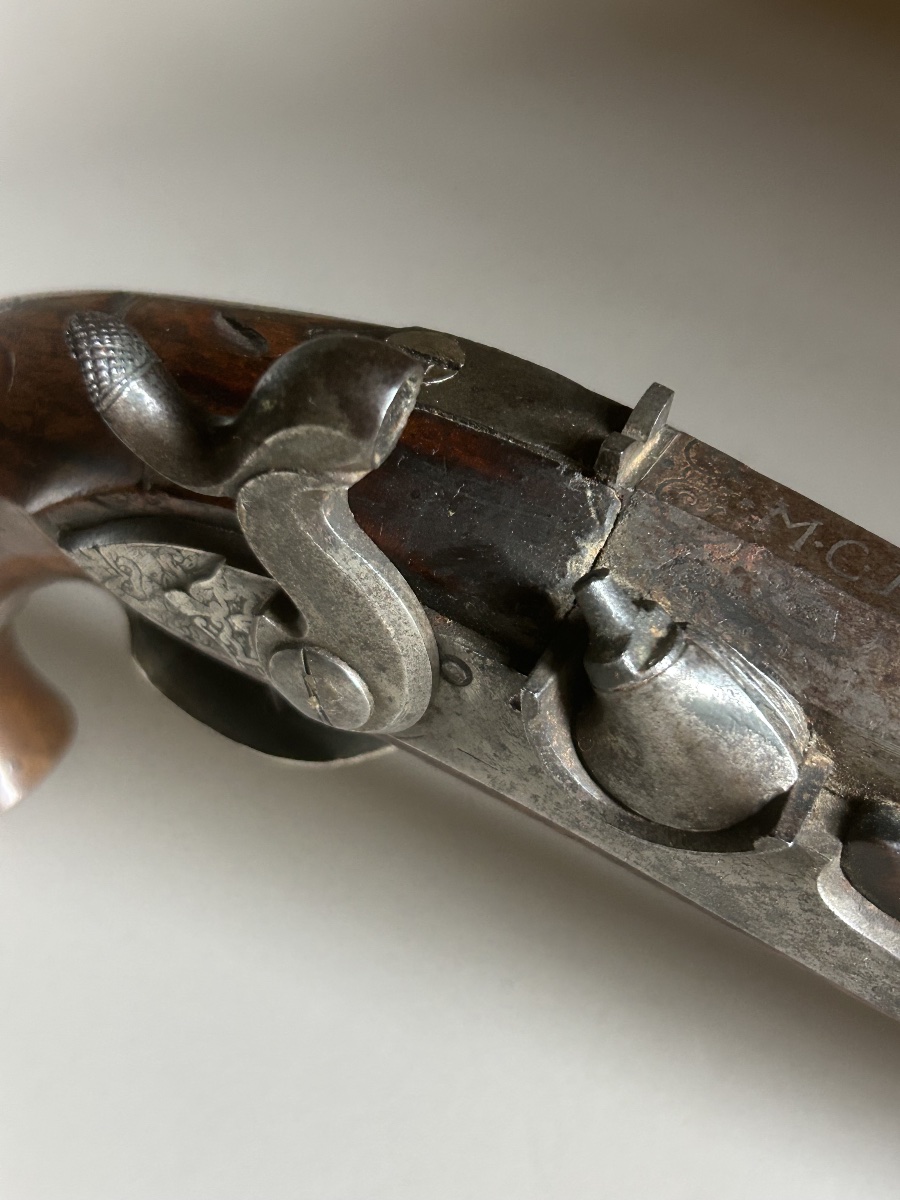
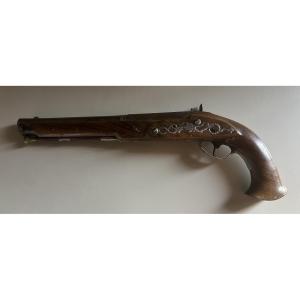


Matthias Conrad Pistor Percussion Pistol
Artist: Matthias Conrad Pistor
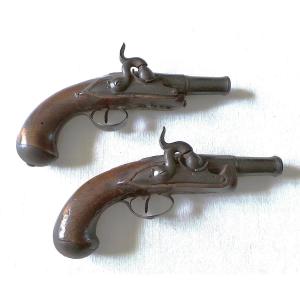
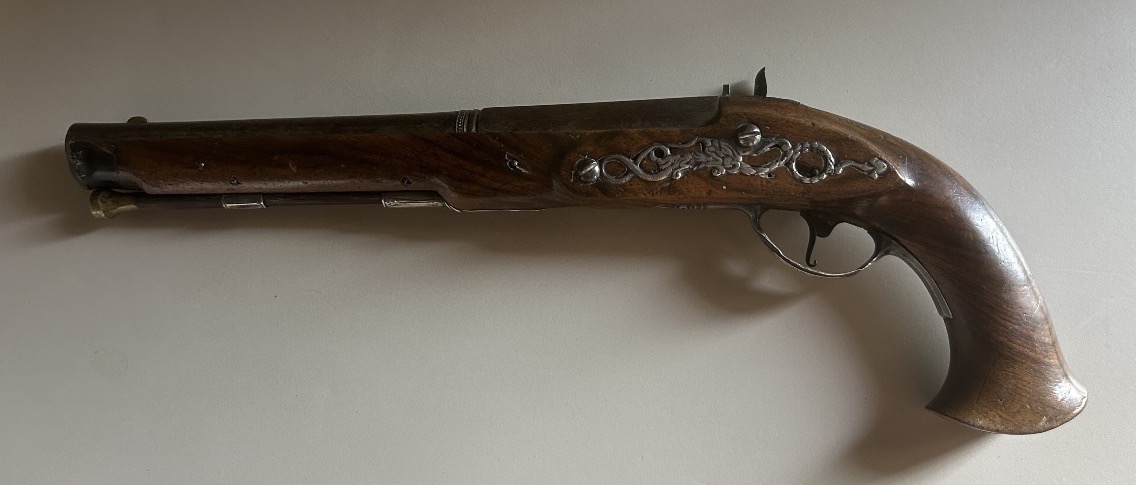
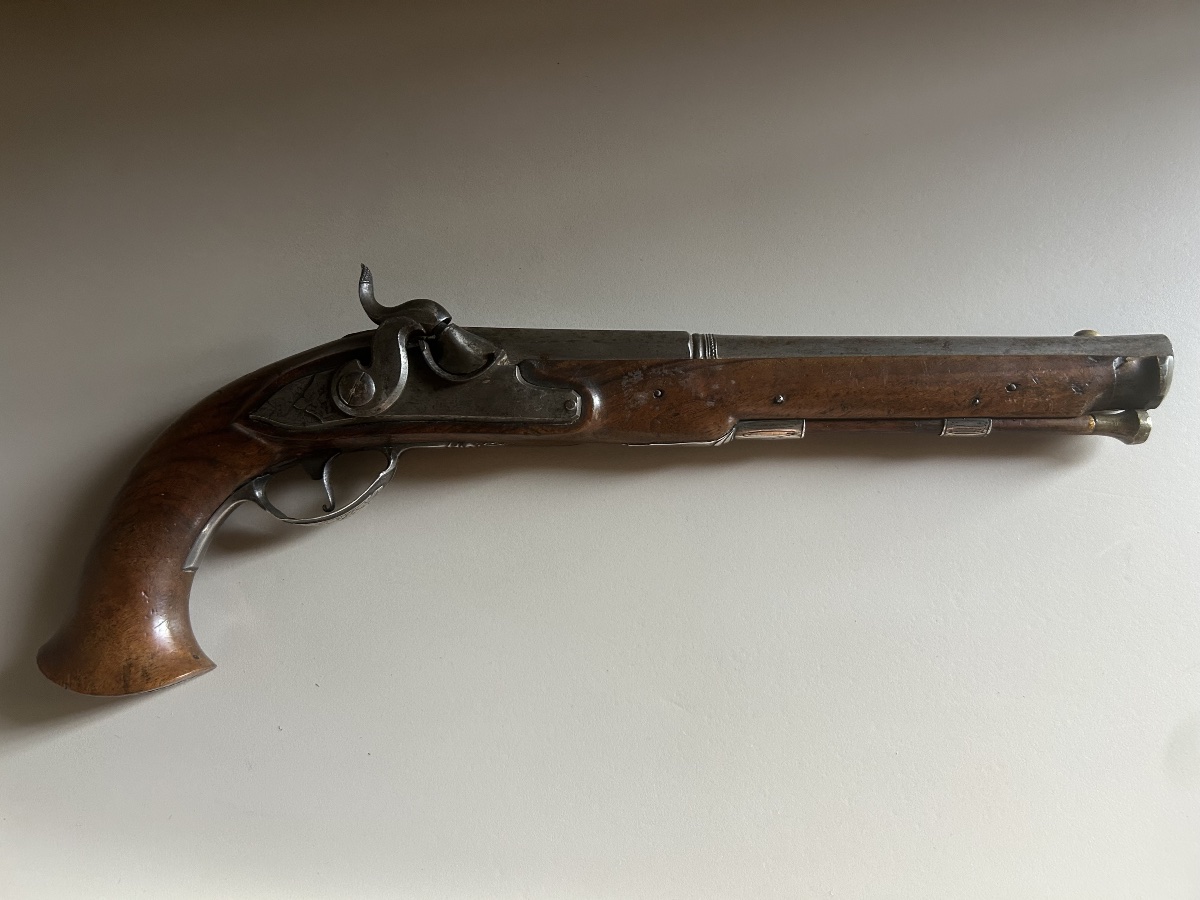
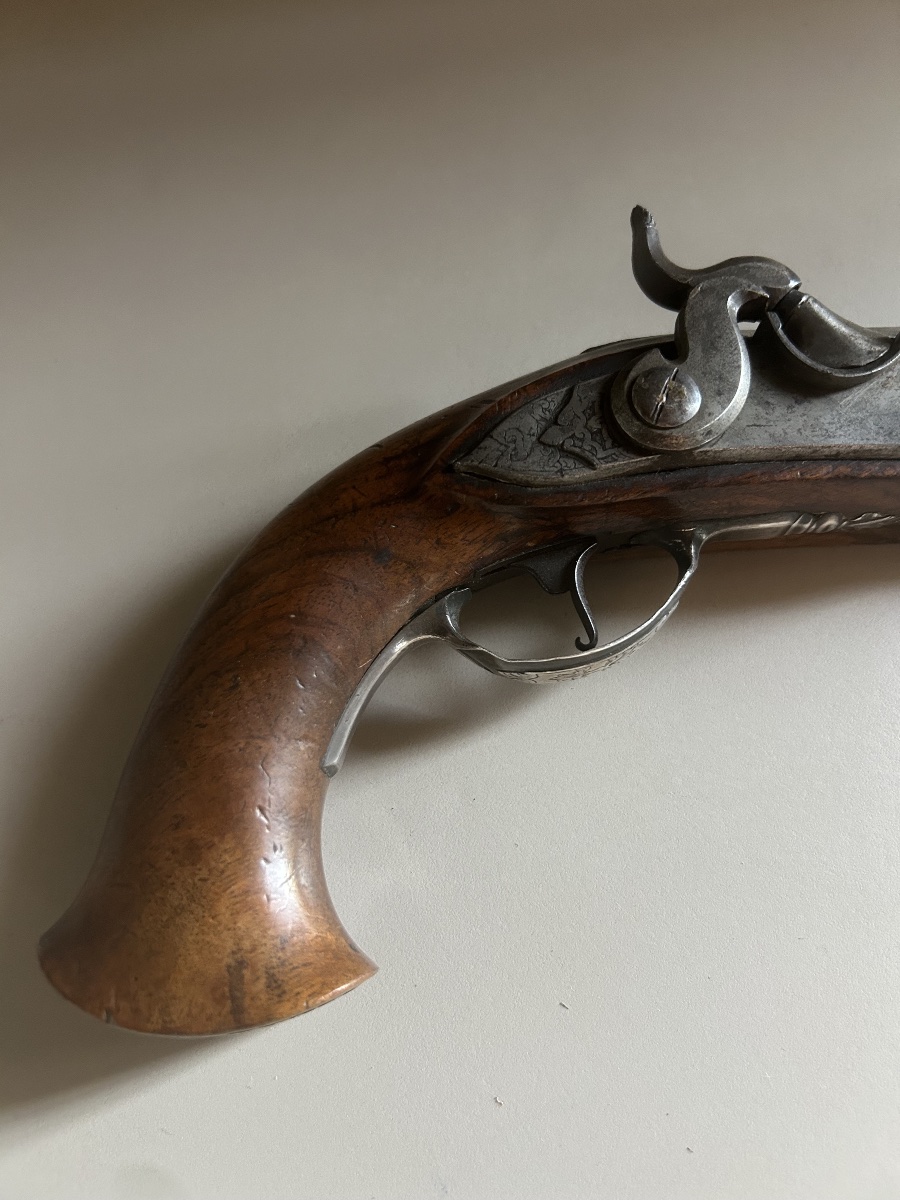
Walnut percussion pistol
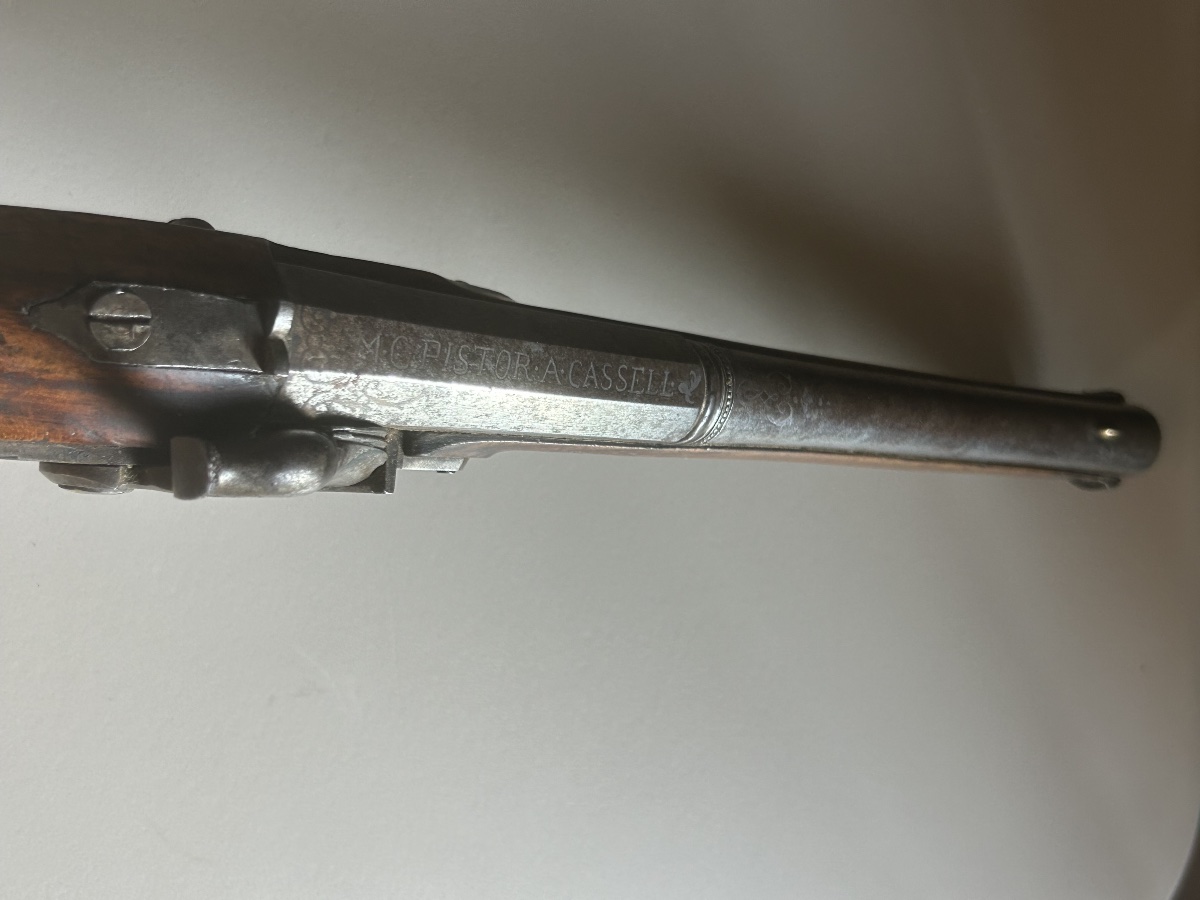
barrel length 25 cm
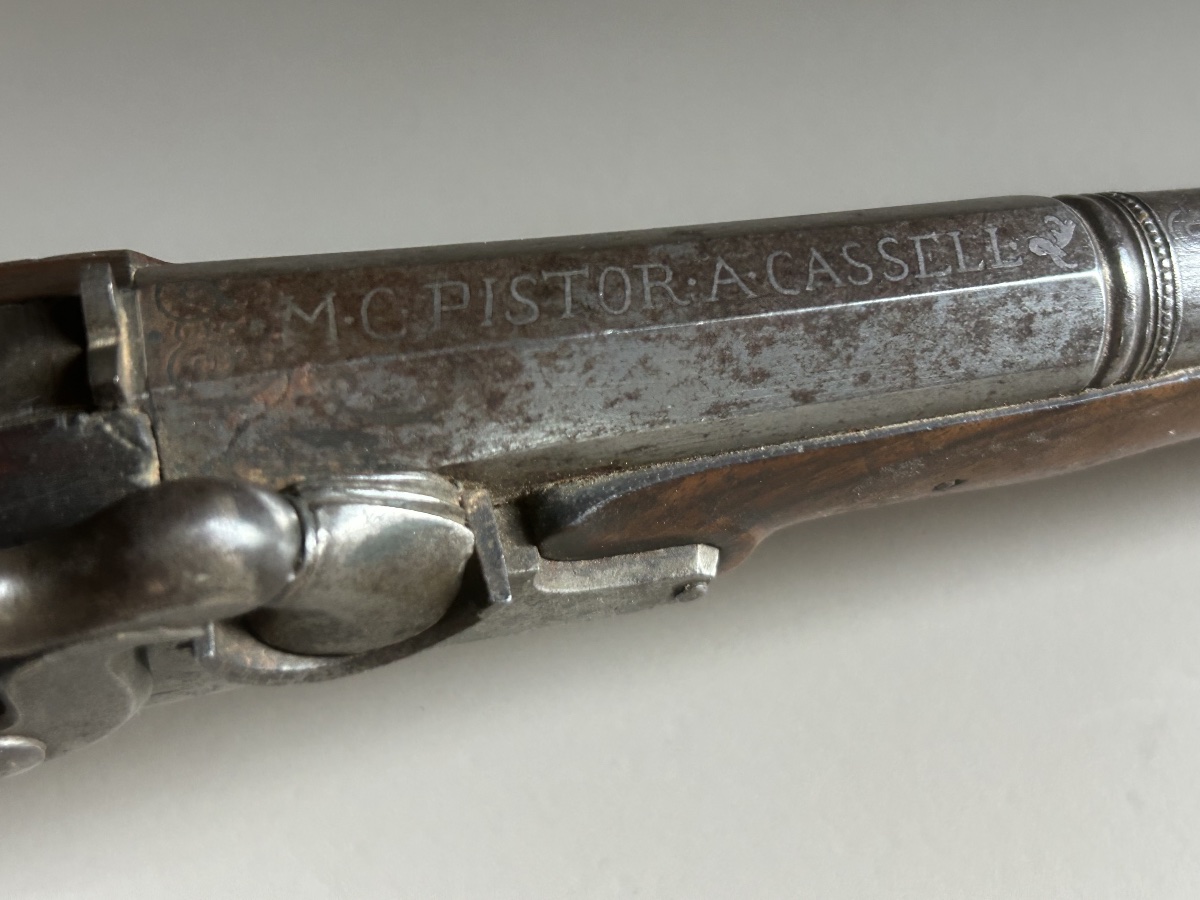
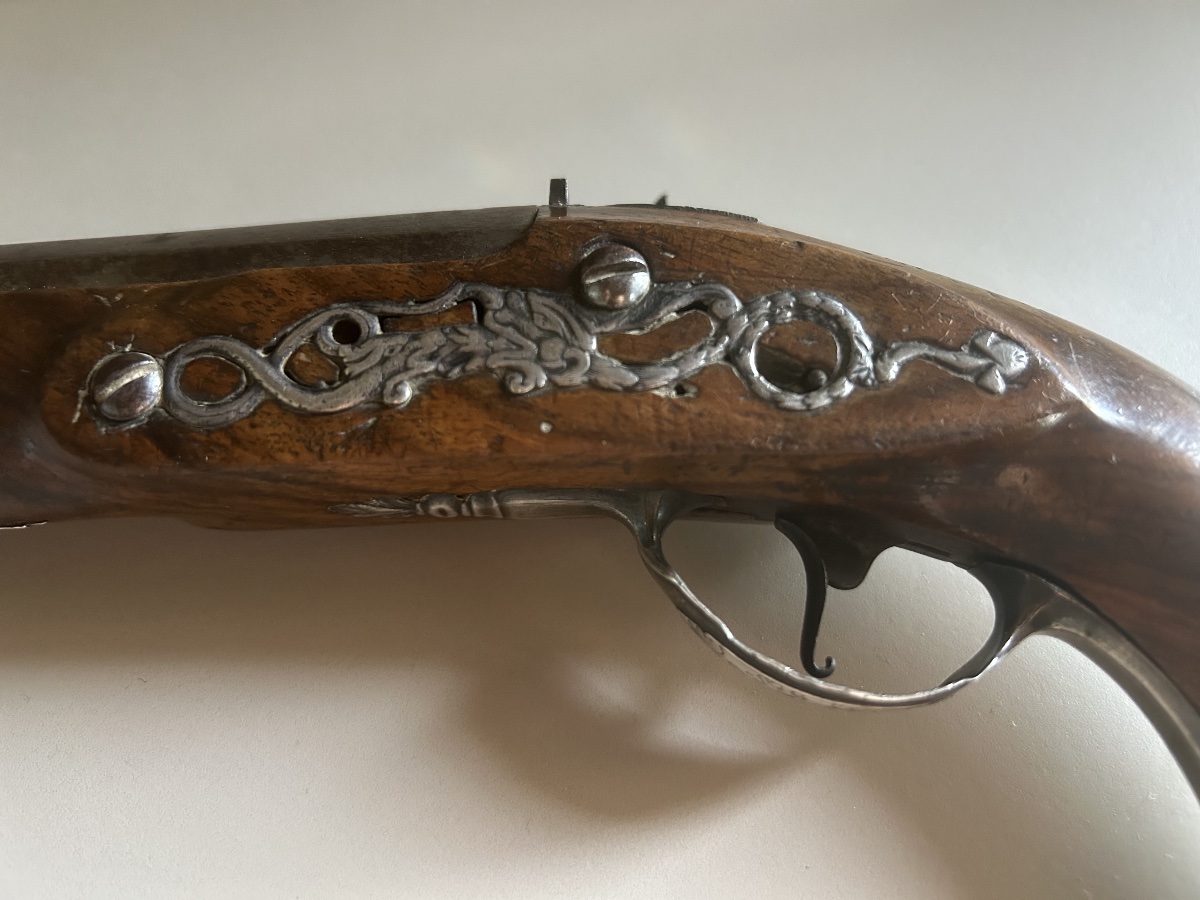
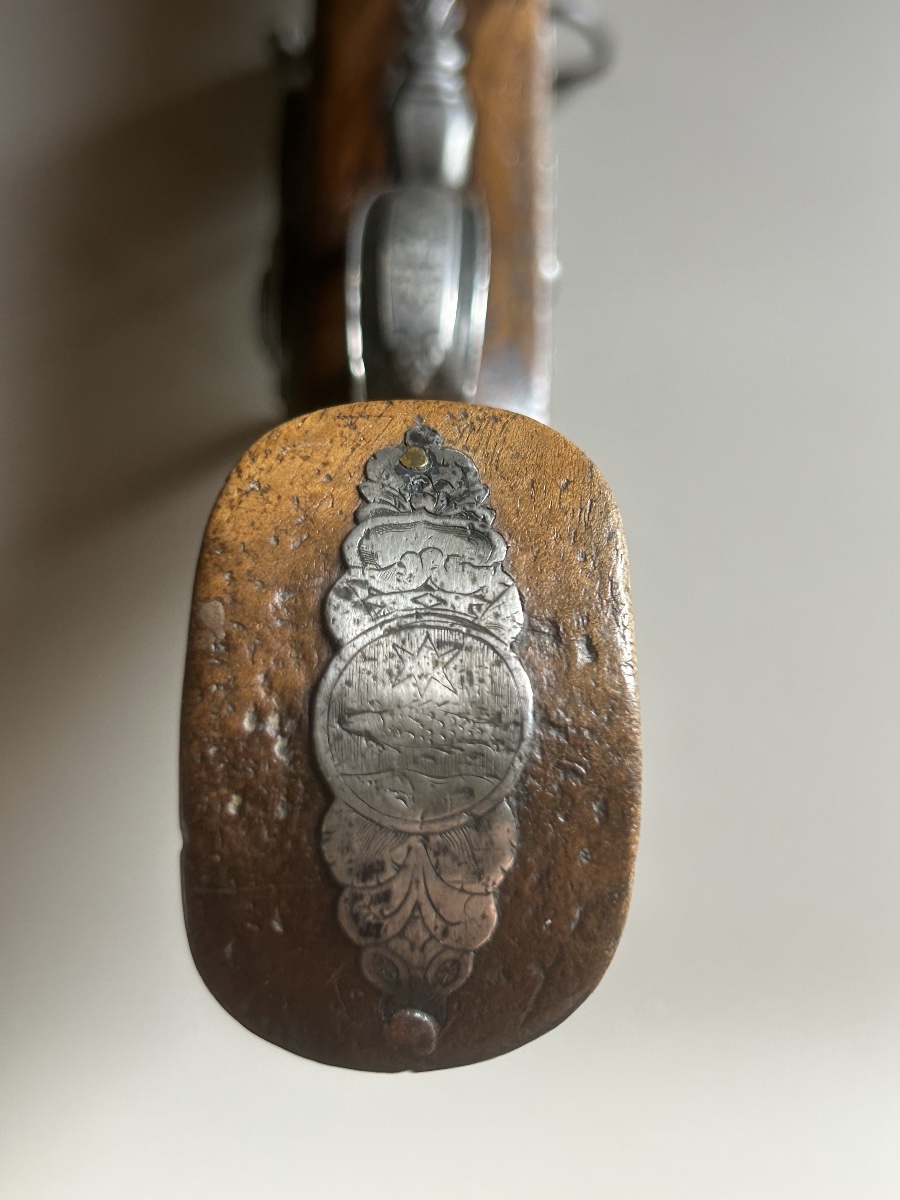
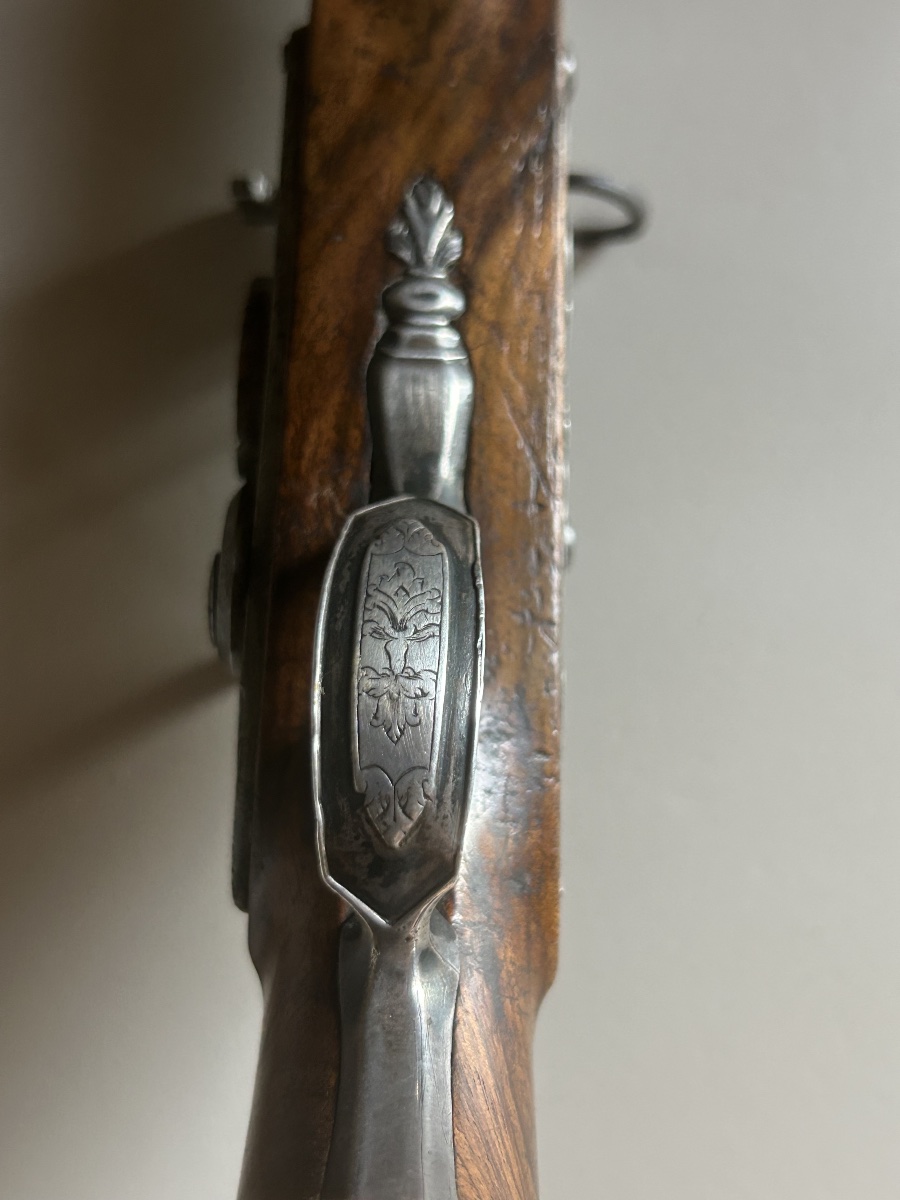
The barrels and lock plates of these exquisitely crafted pistols bear the inscription "M. C. PISTOR A CASSEL," identifying them as the work of one of Hesse’s most renowned gunsmiths and the founder of a gun manufactory that spanned four generations. Hunting scenes are incorporated into the fine scrollwork of the etched lock plates: a huntsman blowing a hunting horn, accompanied by several hounds in pursuit of a stag and a wild boar. The barrels—featuring a round cross-section for the front two-thirds and a faceted profile for the rear third—are forged from Damascus steel. The silver stock fittings are designed as floral ornaments; the butt caps, also made of silver, are engraved with delicate scrollwork and adorned with a mask executed in relief. The pistols' artistic design, the use of select materials, and their technical quality make this pair an outstanding example of the gunsmith's art. Matthias Conrad Pistor, born in Offenbach as the grandson of a master clockmaker, was appointed Landgravial Master of Ordnance by Landgrave Carl in 1720. In 1728, he took over his first gunsmithing workshop in Bettenhausen before receiving the privilege to build a gun manufactory in Schmalkalden in 1745 from the future Landgrave Wilhelm VIII. The workshop—known as the "Bohrmühle" (Boring Mill)—began production that same year and soon ranked among the most significant arms manufactories. Following Matthias Conrad Pistor's death, his sons Thomas Wilhelm (in Schmalkalden) and Hieronymus (in Bettenhausen) continued the production of firearms. Their brother Heinrich Bernhard—also known as Bernhard Pistor the Elder—worked as a gunsmith not only in Kassel but, for a time, likely also in the service of the Russian Empire.
barrel length 25 cm
The barrels and lock plates of these exquisitely crafted pistols bear the inscription "M. C. PISTOR A CASSEL," identifying them as the work of one of Hesse’s most renowned gunsmiths and the founder of a gun manufactory that spanned four generations. Hunting scenes are incorporated into the fine scrollwork of the etched lock plates: a huntsman blowing a hunting horn, accompanied by several hounds in pursuit of a stag and a wild boar. The barrels—featuring a round cross-section for the front two-thirds and a faceted profile for the rear third—are forged from Damascus steel. The silver stock fittings are designed as floral ornaments; the butt caps, also made of silver, are engraved with delicate scrollwork and adorned with a mask executed in relief. The pistols' artistic design, the use of select materials, and their technical quality make this pair an outstanding example of the gunsmith's art. Matthias Conrad Pistor, born in Offenbach as the grandson of a master clockmaker, was appointed Landgravial Master of Ordnance by Landgrave Carl in 1720. In 1728, he took over his first gunsmithing workshop in Bettenhausen before receiving the privilege to build a gun manufactory in Schmalkalden in 1745 from the future Landgrave Wilhelm VIII. The workshop—known as the "Bohrmühle" (Boring Mill)—began production that same year and soon ranked among the most significant arms manufactories. Following Matthias Conrad Pistor's death, his sons Thomas Wilhelm (in Schmalkalden) and Hieronymus (in Bettenhausen) continued the production of firearms. Their brother Heinrich Bernhard—also known as Bernhard Pistor the Elder—worked as a gunsmith not only in Kassel but, for a time, likely also in the service of the Russian Empire.
1 500 €
Period: 18th century
Style: Louis 16th, Directory
Condition: Condition of use
Material: Wallnut
Reference (ID): 1797625
Availability: In stock
Print