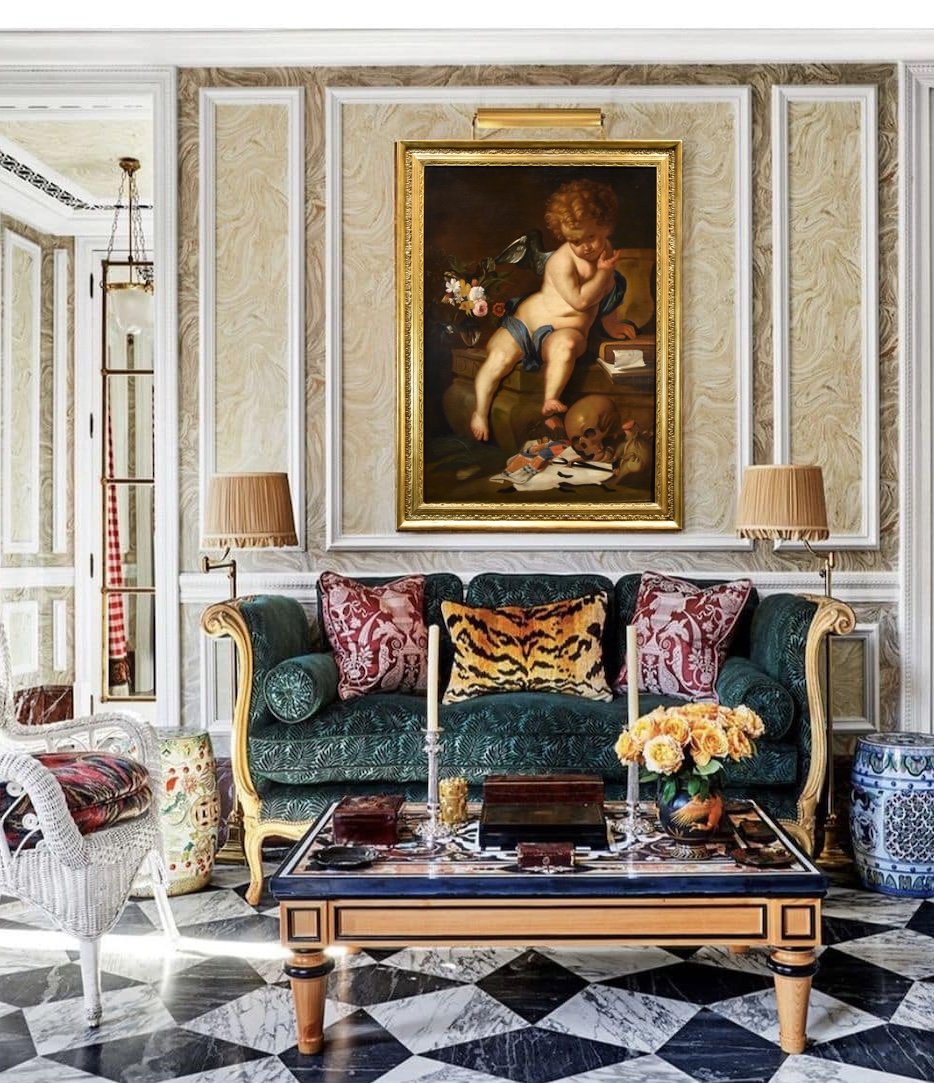



Allegory Of The Vanity Of Life Or Youth, Erasmus Quellinus II (antwerp 1607–1672)
Artist: Erasme Quellinus Ii (anvers 1607 - 1672)
Erasmus Quellinus II (Antwerp 1607–1672)
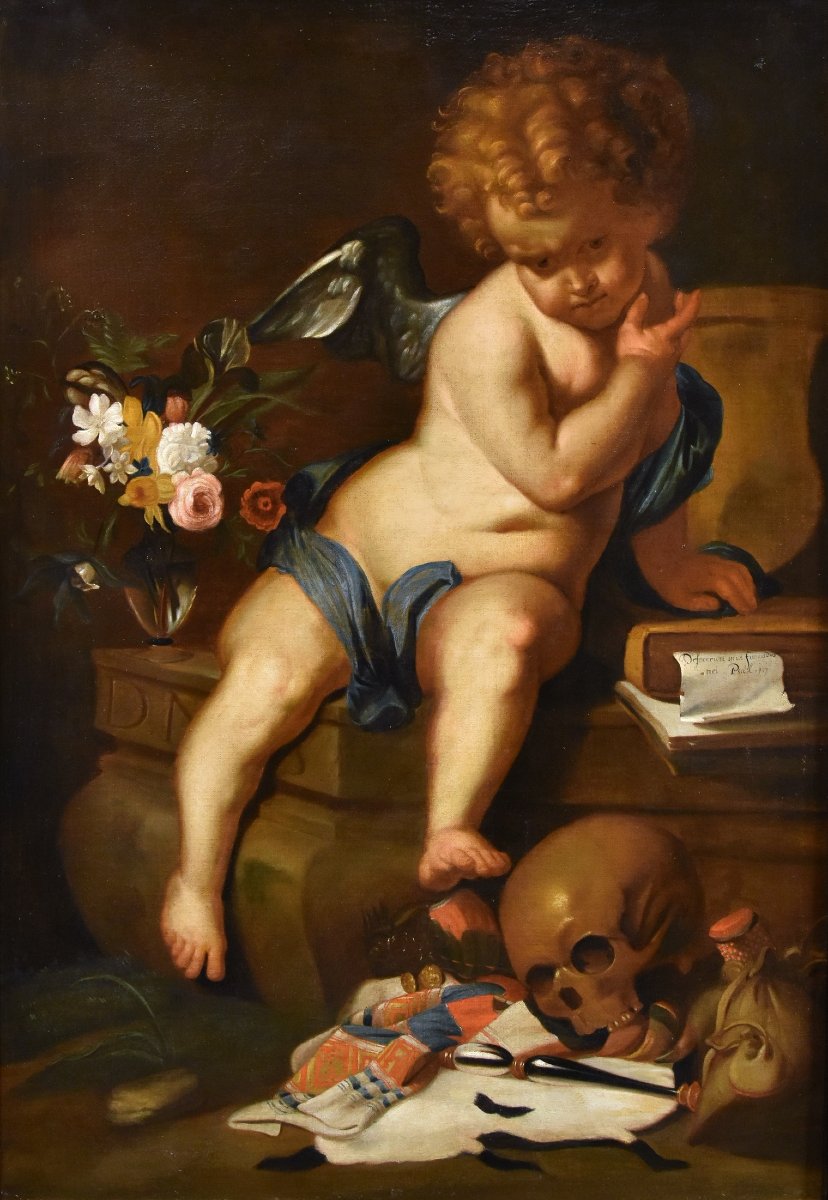
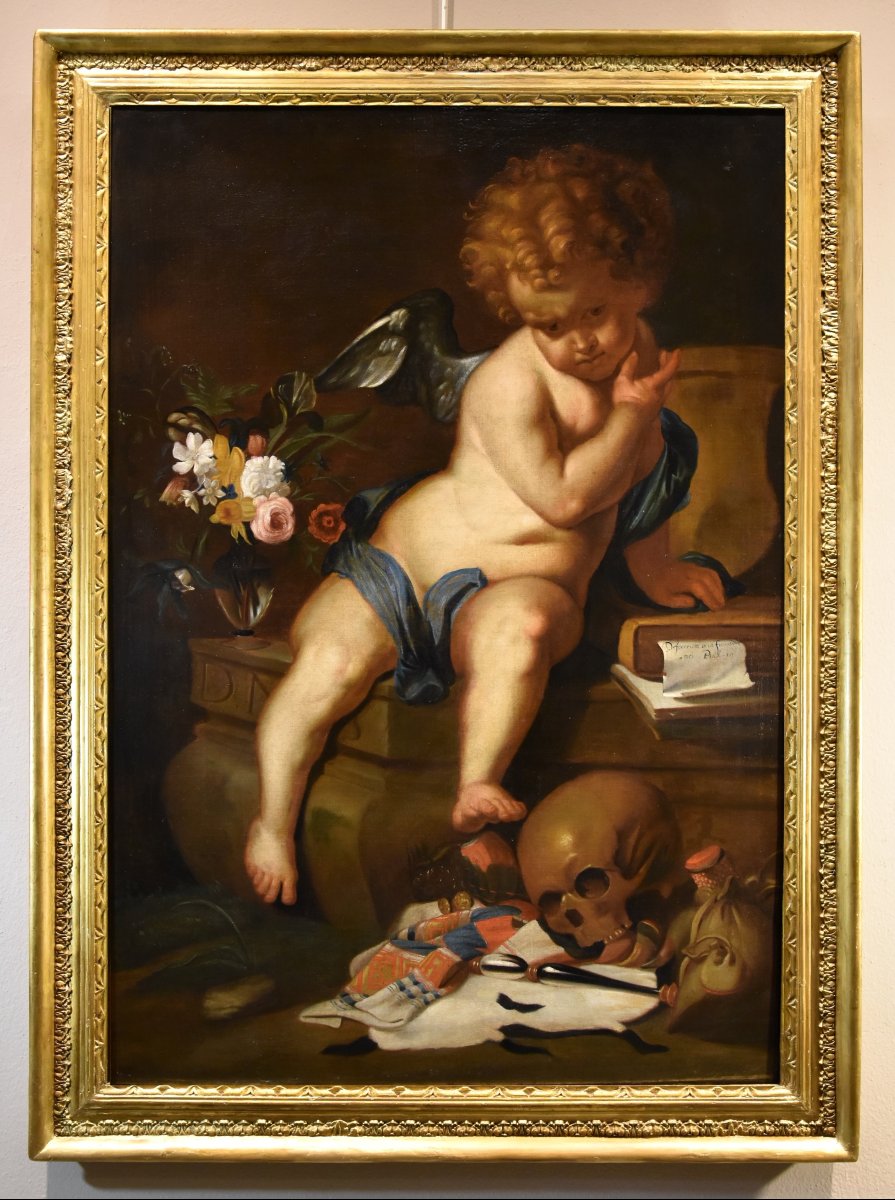
Vanitas (as an allegory of the vanity of life or youth)
Oil on canvas—cm. 121 x 84, framed 135 x 98 cm
The work is accompanied by an in-depth study written by Prof. Emilio Negro, from which we present some excerpts.
- FULL DETAILS AVAILABLE DIRECTLY AT THE FOLLOWING LINK -
The subject of the painting we are presenting is a unique and rare “Vanitas,” a subject of strong moral significance which, in the context of painting, refers to a composition with symbolic elements alluding to the theme of the transience of life, and thus intended to prompt the viewer to reflect on the fleeting nature of human destiny and the fragility of worldly pleasures.
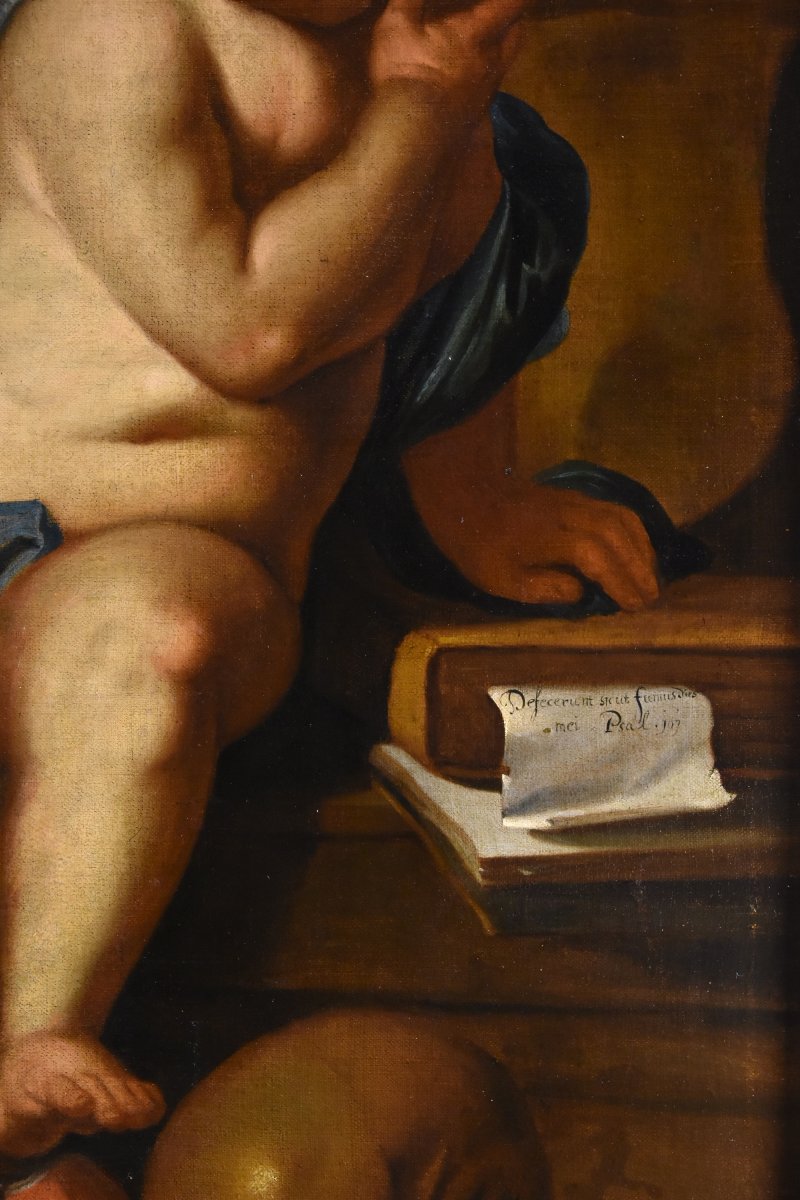
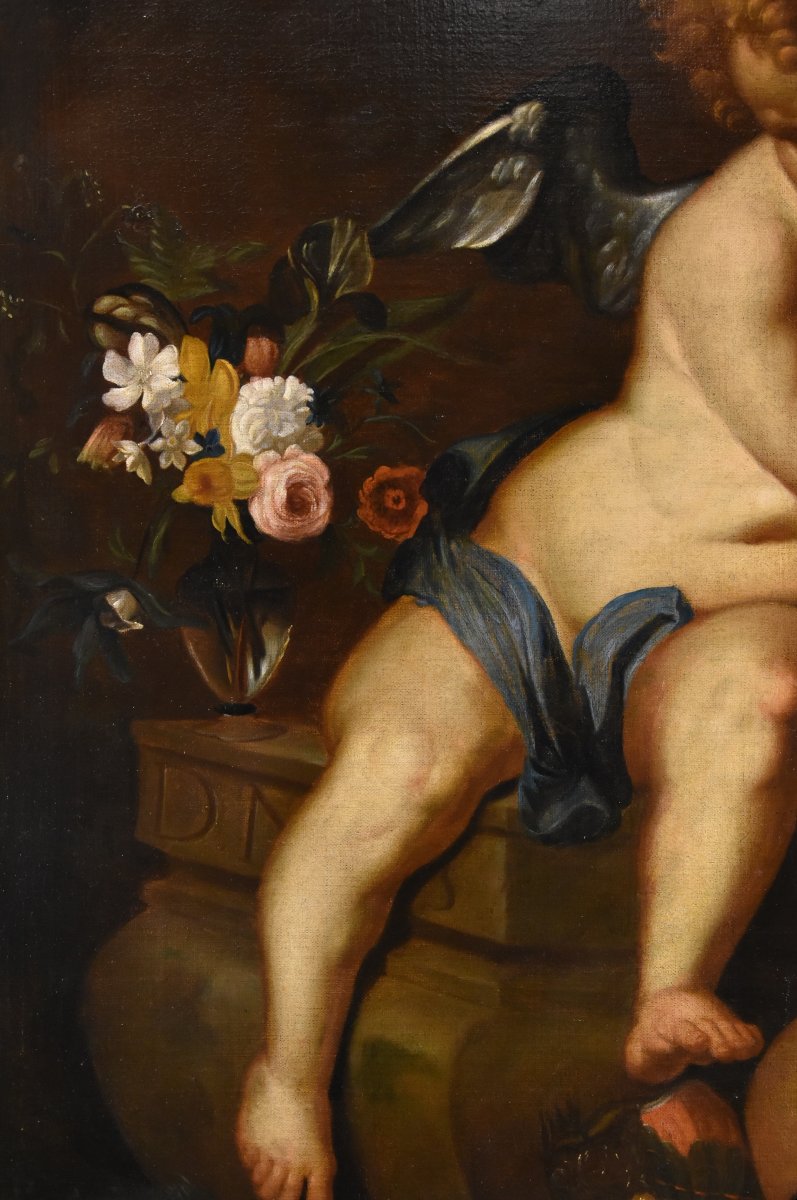
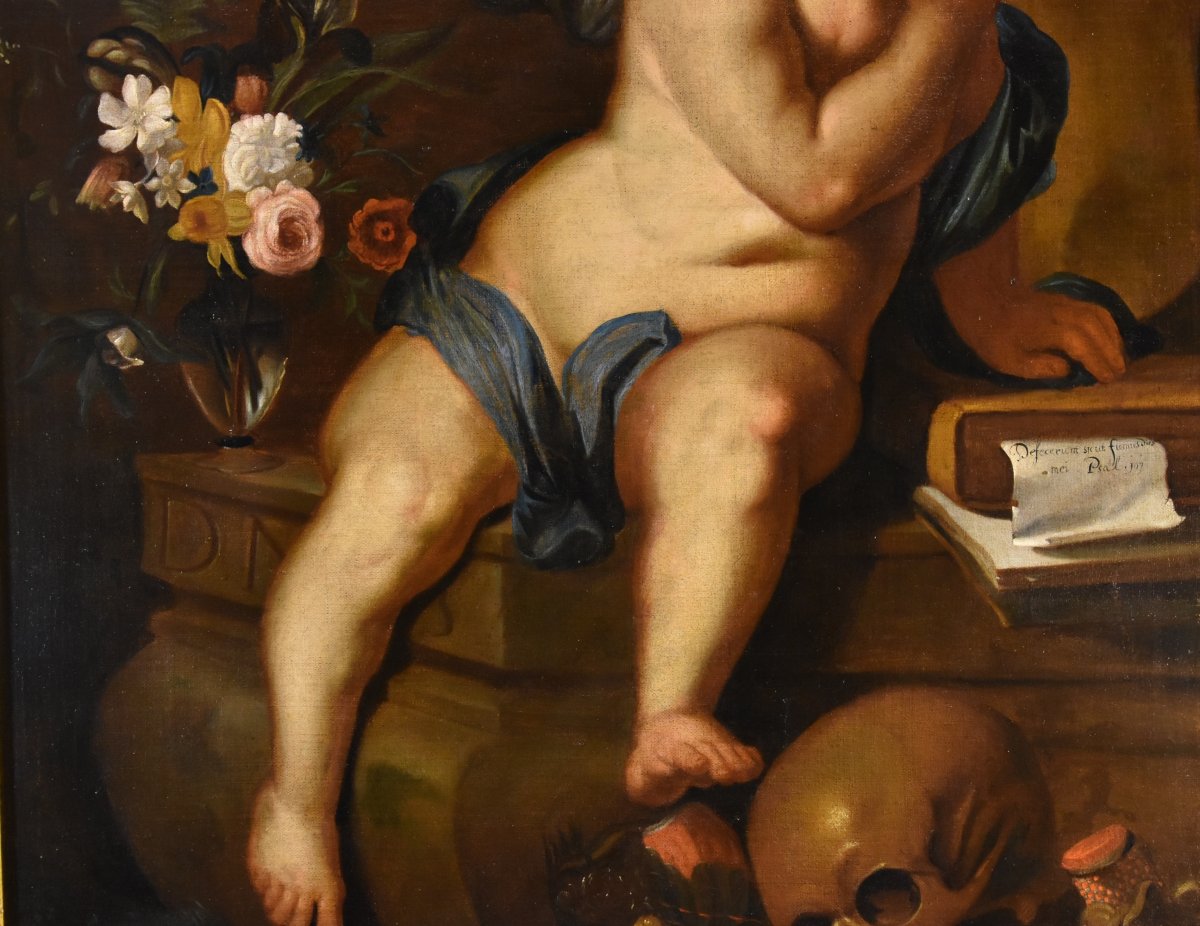
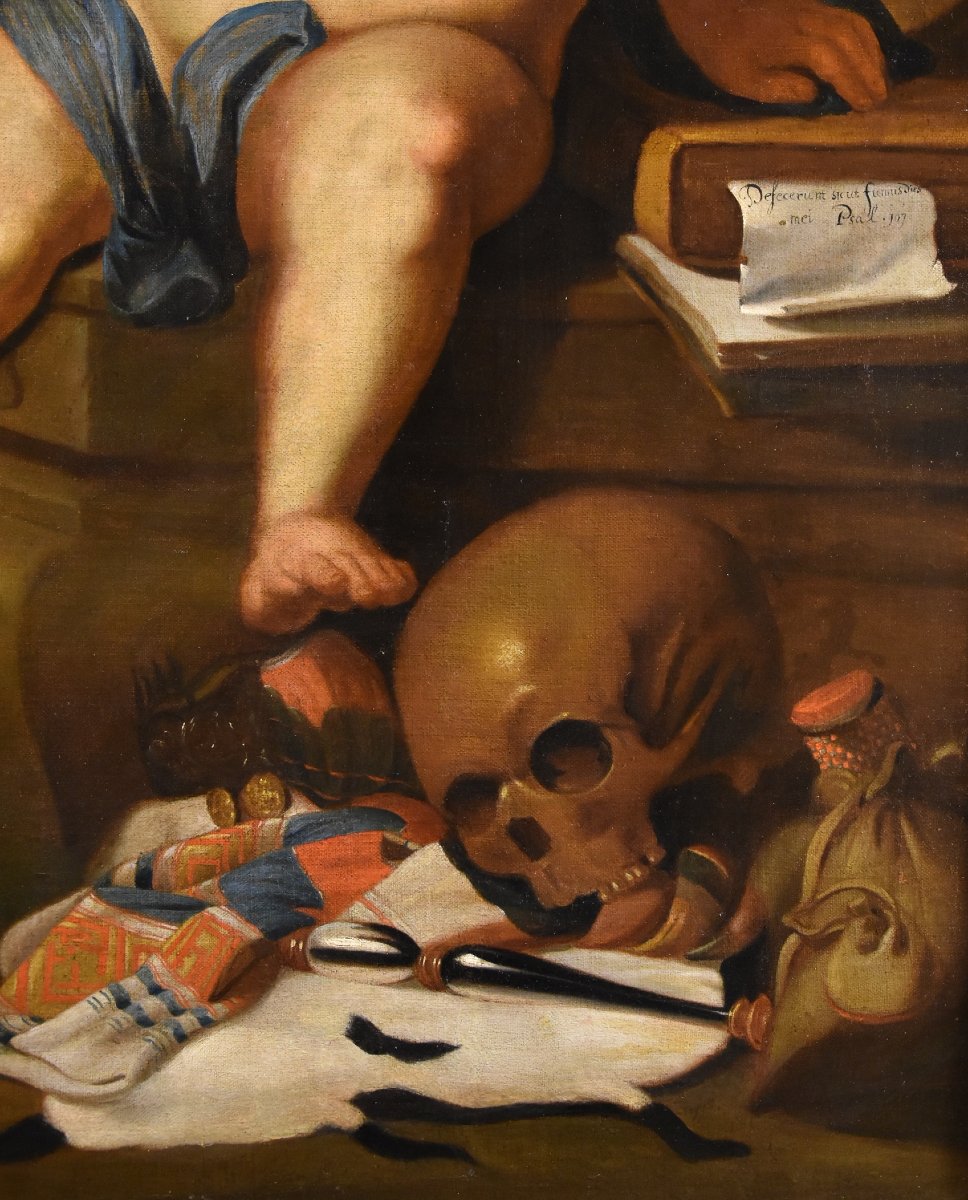
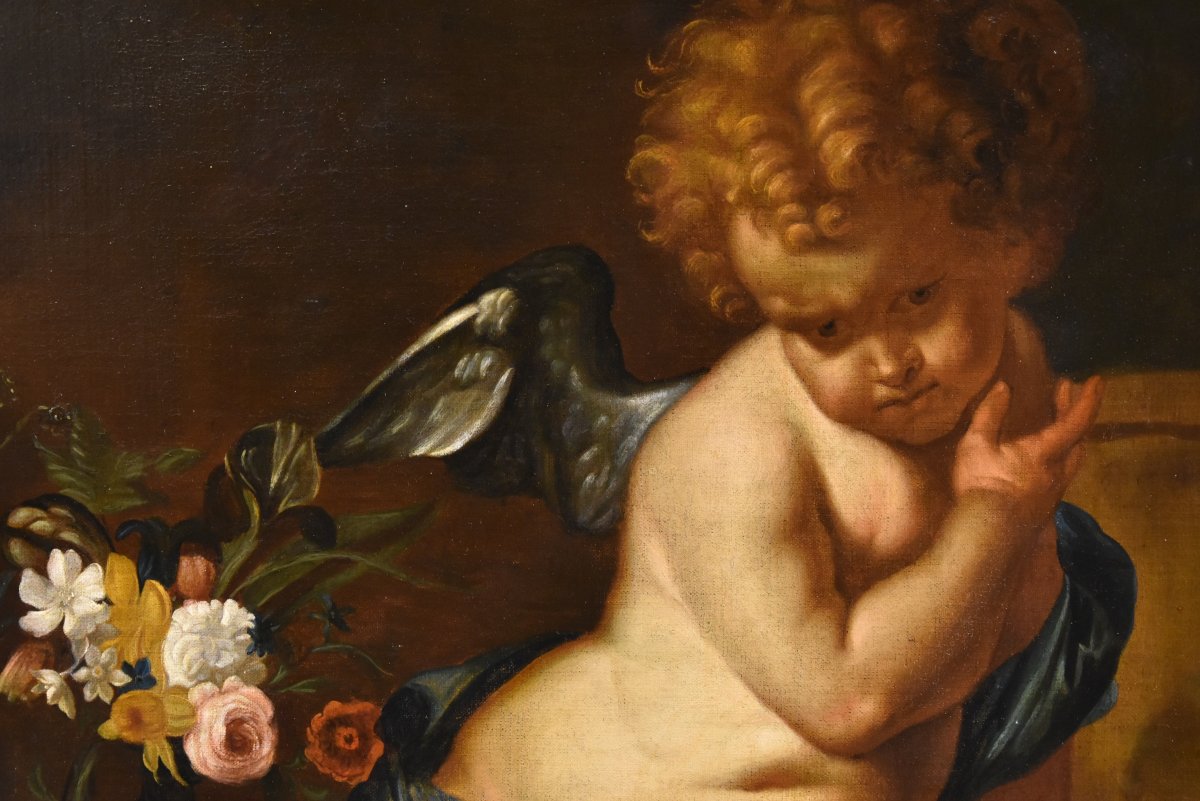
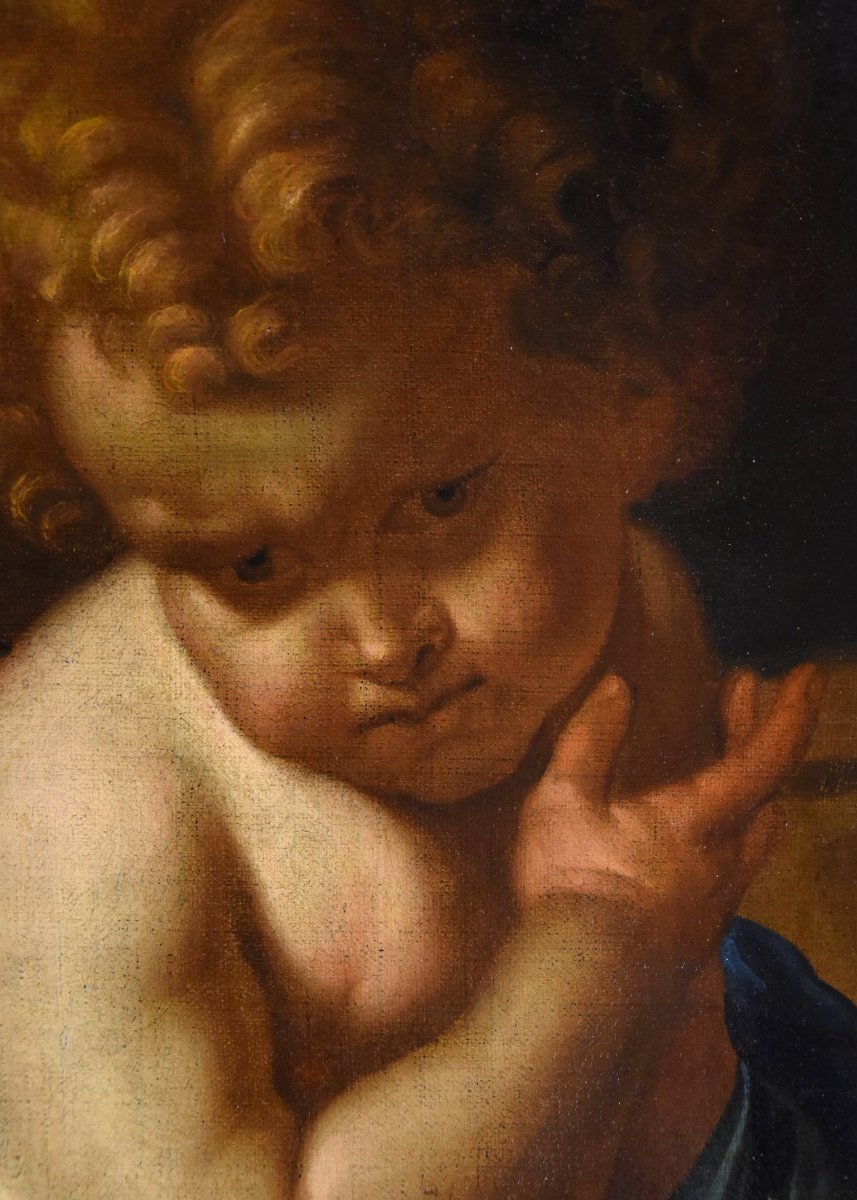
Such subjects, which were particularly popular in Flemish art, are works of great charm, interesting to study, and often difficult to decipher; The protagonist of our painting is a capricious cherub, seated on a sarcophagus—a sort of pictorial, anthropomorphic embodiment of “Carpe Diem” (seize the fleeting moment)—who invites us to reflect on the fleeting nature of life and to enjoy the moments of happiness it affords; all this without regard for the vicissitudes of fate, symbolized by the putto’s foot trampling on gold coins, precious fabric, a scepter, an ermine stole, a skull, a hunting horn, and books.
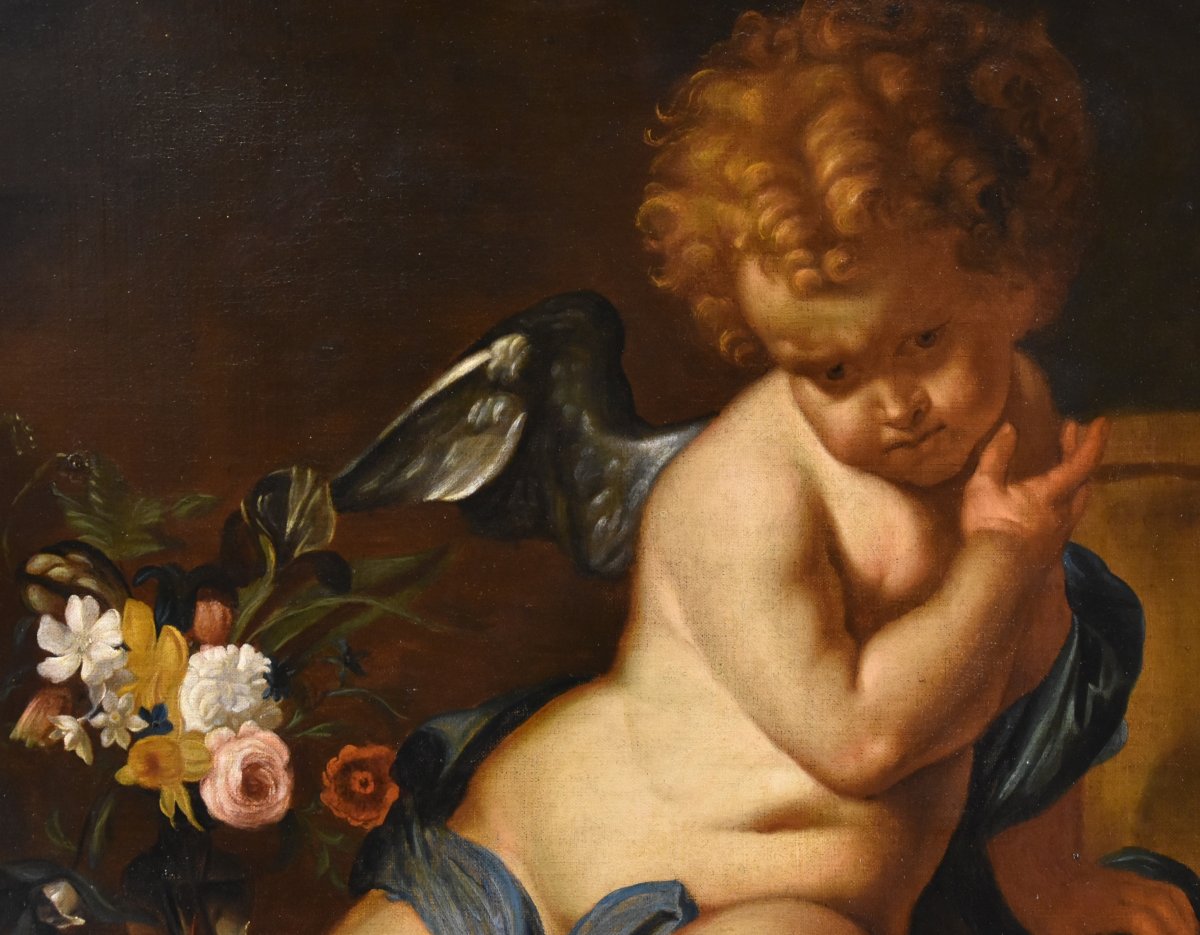
At his side is a still life of colorful flowers arranged in a crystal vase, whose presence takes on a clear allegorical meaning, as they serve as a metaphor for the transience of youthful beauty, which, like fresh flowers, is destined to wither.
[...]
Regarding the pictorial origin of this composition, it should first be noted that it is an interesting replica, with some modifications, of a work created collaboratively by Erasmus Quellinus the Younger (the figure of the putto) and Daniel Seghers (the still life).
A version of the same composition, titled “Allegory of the Passage of Youth,” is also known; it was sold at Sotheby’s in Amsterdam as a work by Cornelis Schut and Daniël Seghers (December 12, 1991, Old Master Paintings and Drawings, lot 218, price €16,630), and later sold in London as a work by Thomas Willeboirts Bosschaert (Sotheby’s, Dec. 16, 1999, lot 59, Hammer price: 126,592 € / 80,000 £).
Here is the link to the painting: https://rkd.nl/en/explore/images/record?filters%5Bkunstenaar%5D=Willeboirts+Bosschaert%2C+Thomas&...
And also the *Vanity* attributed to Thomas Willeboirts Bosschaert, which was sold in Vienna by Dorotheum (October 17, 2007, with an estimate of €18,000–24,000,
link: https://www.invaluable.com/auction-lot/thomas-willeboirts-bosschaert-bergen-op-zoom-1613-228-c-ms7xg...#
[...]
These reasons allow us to link this Vanitas to the modus operandi of the aforementioned Erasmus Quellinus the Younger (Antwerp, 1607–1678), one of Rubens’s closest collaborators in the 1630s, who was assisted here by a skilled collaborator trained within his active workshop. A descendant of a renowned family of artists (his father being the painter Erasmus Quellinus the Elder), Erasmus Quellinus II worked primarily in Flanders, where his activity is evidenced by numerous compositions similar to this one, attributed to him and housed in the most important public and private collections. Furthermore, he headed a well-established studio where numerous students were trained, including his own children and grandchildren. It is true that in the painting in question—which was likely intended to adorn the walls of a noble residence belonging to a collector, scholar, or humanist—a meticulous style of painting emerges, particularly in the meticulous attention to detail and the use of warm tones, which are hallmarks of Erasmus’s finest works.
For further information, please feel free to contact us.
This work, like all of our items, is sold with a photographic certificate of authenticity in accordance with the law.
Follow us on:
https://www.instagram.com/galleriacastelbarco/?hl=it
https://www.facebook.com/galleriacastelbarco/
Vanitas (as an allegory of the vanity of life or youth)
Oil on canvas—cm. 121 x 84, framed 135 x 98 cm
The work is accompanied by an in-depth study written by Prof. Emilio Negro, from which we present some excerpts.
- FULL DETAILS AVAILABLE DIRECTLY AT THE FOLLOWING LINK -
The subject of the painting we are presenting is a unique and rare “Vanitas,” a subject of strong moral significance which, in the context of painting, refers to a composition with symbolic elements alluding to the theme of the transience of life, and thus intended to prompt the viewer to reflect on the fleeting nature of human destiny and the fragility of worldly pleasures.
Such subjects, which were particularly popular in Flemish art, are works of great charm, interesting to study, and often difficult to decipher; The protagonist of our painting is a capricious cherub, seated on a sarcophagus—a sort of pictorial, anthropomorphic embodiment of “Carpe Diem” (seize the fleeting moment)—who invites us to reflect on the fleeting nature of life and to enjoy the moments of happiness it affords; all this without regard for the vicissitudes of fate, symbolized by the putto’s foot trampling on gold coins, precious fabric, a scepter, an ermine stole, a skull, a hunting horn, and books.
At his side is a still life of colorful flowers arranged in a crystal vase, whose presence takes on a clear allegorical meaning, as they serve as a metaphor for the transience of youthful beauty, which, like fresh flowers, is destined to wither.
[...]
Regarding the pictorial origin of this composition, it should first be noted that it is an interesting replica, with some modifications, of a work created collaboratively by Erasmus Quellinus the Younger (the figure of the putto) and Daniel Seghers (the still life).
A version of the same composition, titled “Allegory of the Passage of Youth,” is also known; it was sold at Sotheby’s in Amsterdam as a work by Cornelis Schut and Daniël Seghers (December 12, 1991, Old Master Paintings and Drawings, lot 218, price €16,630), and later sold in London as a work by Thomas Willeboirts Bosschaert (Sotheby’s, Dec. 16, 1999, lot 59, Hammer price: 126,592 € / 80,000 £).
Here is the link to the painting: https://rkd.nl/en/explore/images/record?filters%5Bkunstenaar%5D=Willeboirts+Bosschaert%2C+Thomas&...
And also the *Vanity* attributed to Thomas Willeboirts Bosschaert, which was sold in Vienna by Dorotheum (October 17, 2007, with an estimate of €18,000–24,000,
link: https://www.invaluable.com/auction-lot/thomas-willeboirts-bosschaert-bergen-op-zoom-1613-228-c-ms7xg...#
[...]
These reasons allow us to link this Vanitas to the modus operandi of the aforementioned Erasmus Quellinus the Younger (Antwerp, 1607–1678), one of Rubens’s closest collaborators in the 1630s, who was assisted here by a skilled collaborator trained within his active workshop. A descendant of a renowned family of artists (his father being the painter Erasmus Quellinus the Elder), Erasmus Quellinus II worked primarily in Flanders, where his activity is evidenced by numerous compositions similar to this one, attributed to him and housed in the most important public and private collections. Furthermore, he headed a well-established studio where numerous students were trained, including his own children and grandchildren. It is true that in the painting in question—which was likely intended to adorn the walls of a noble residence belonging to a collector, scholar, or humanist—a meticulous style of painting emerges, particularly in the meticulous attention to detail and the use of warm tones, which are hallmarks of Erasmus’s finest works.
For further information, please feel free to contact us.
This work, like all of our items, is sold with a photographic certificate of authenticity in accordance with the law.
Follow us on:
https://www.instagram.com/galleriacastelbarco/?hl=it
https://www.facebook.com/galleriacastelbarco/
12 000 €
Period: 17th century
Style: Renaissance, Louis 13th
Condition: Excellent condition
Material: Oil painting
Width: encadré 98 cm.
Height: encadré 135 cm.
Reference (ID): 1797310
Availability: In stock
Print