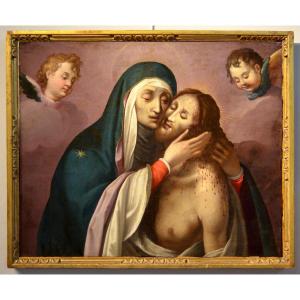


The Pietà With Two Cherubs, Scipione Pulzone (gaeta 1550 – Rome 1598) Entourage Of
Artist: Peintre Actif à Rome Au Xvie Siècle, Entourage De Scipione Pulzone (gaeta 1550 - Rome 1598)
Painter active in Rome in the 16th century, a follower of Scipione Pulzone (Gaeta 1550 – Rome 1598)
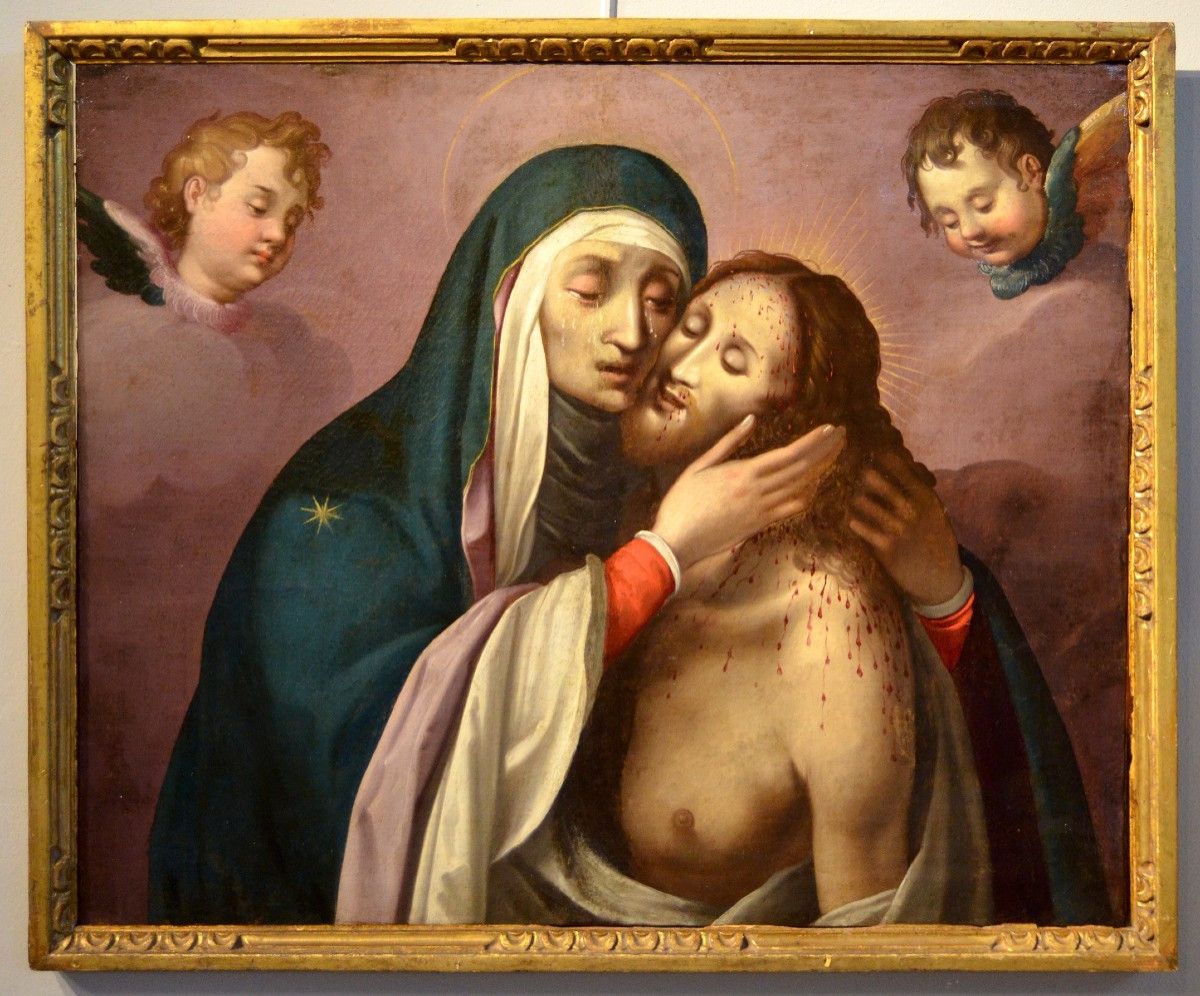
The Pietà (Dead Christ supported by the Virgin Mary)
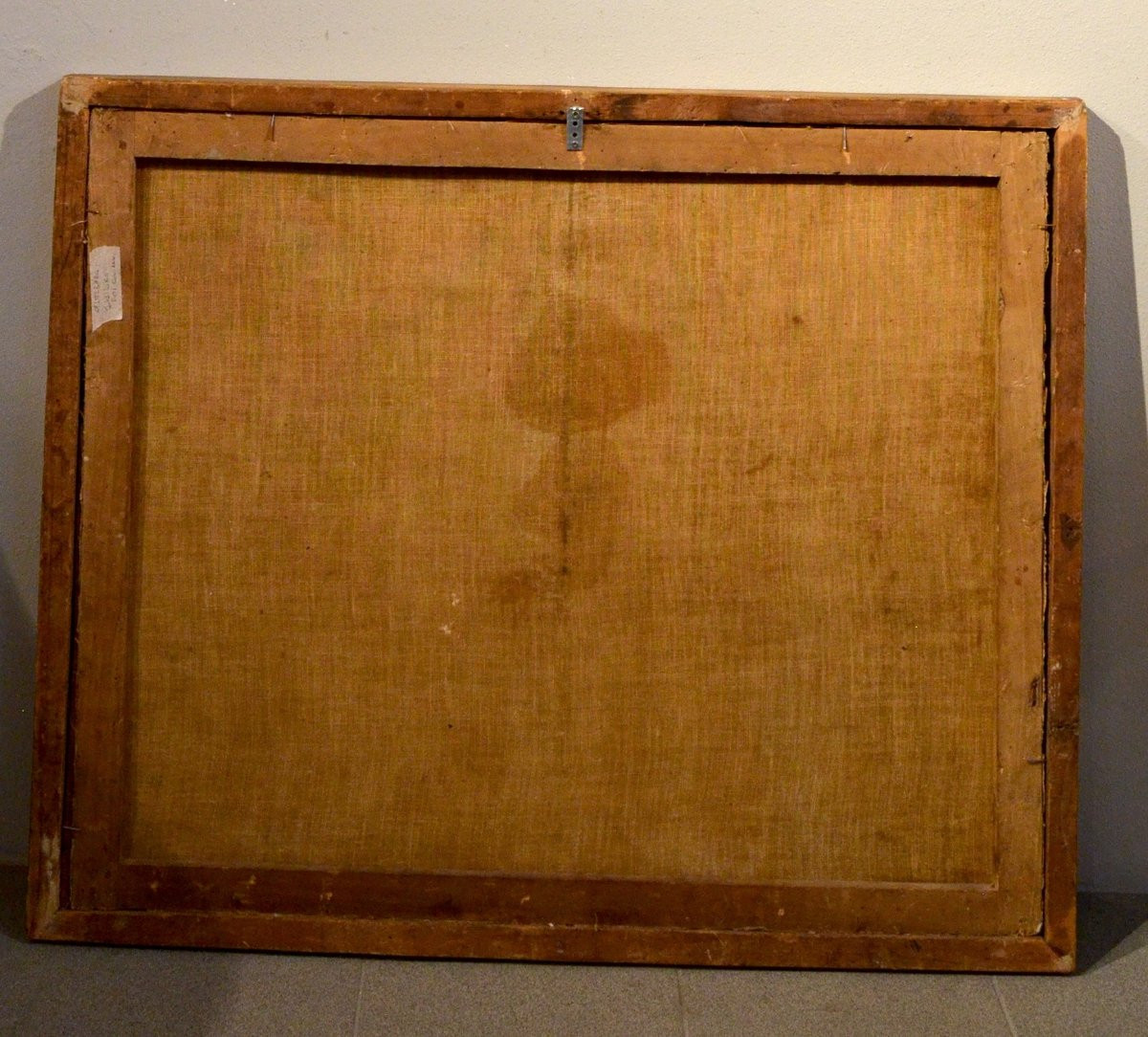
oil on canvas, 78 x 94 cm
framed 86 x 102 cm
Full details of the work available directly at: https://www.antichitacastelbarco.it/it/product/the-pieta-with-two-cherubs-rome-500
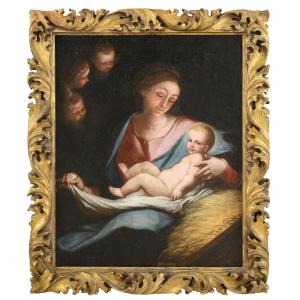
Observing the exquisite quality and elegance of the composition of this intense 16th-century Pietà, we can compare its execution to the most refined works of late Roman Mannerism. In particular, there are many points of contact with the mature style of Scipione Pulzone, known as il Gaetano (Gaeta 1550 – Rome 1598), whose flourishing workshop produced this subject in numerous variations.
The artist is considered one of the most original exponents of painting during the Counter-Reformation and among the most esteemed artists active in the Roman area in the second half of the sixteenth century.
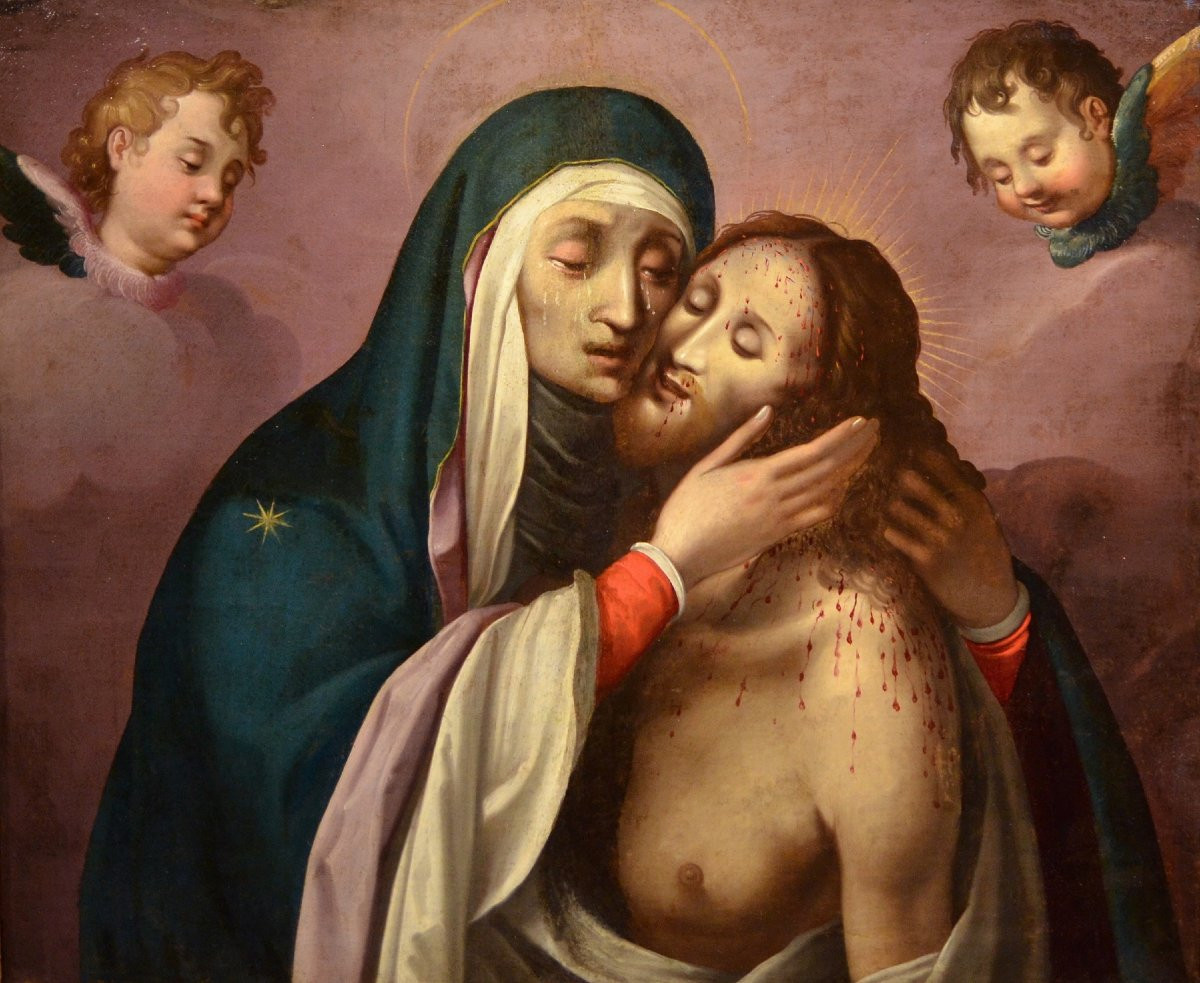
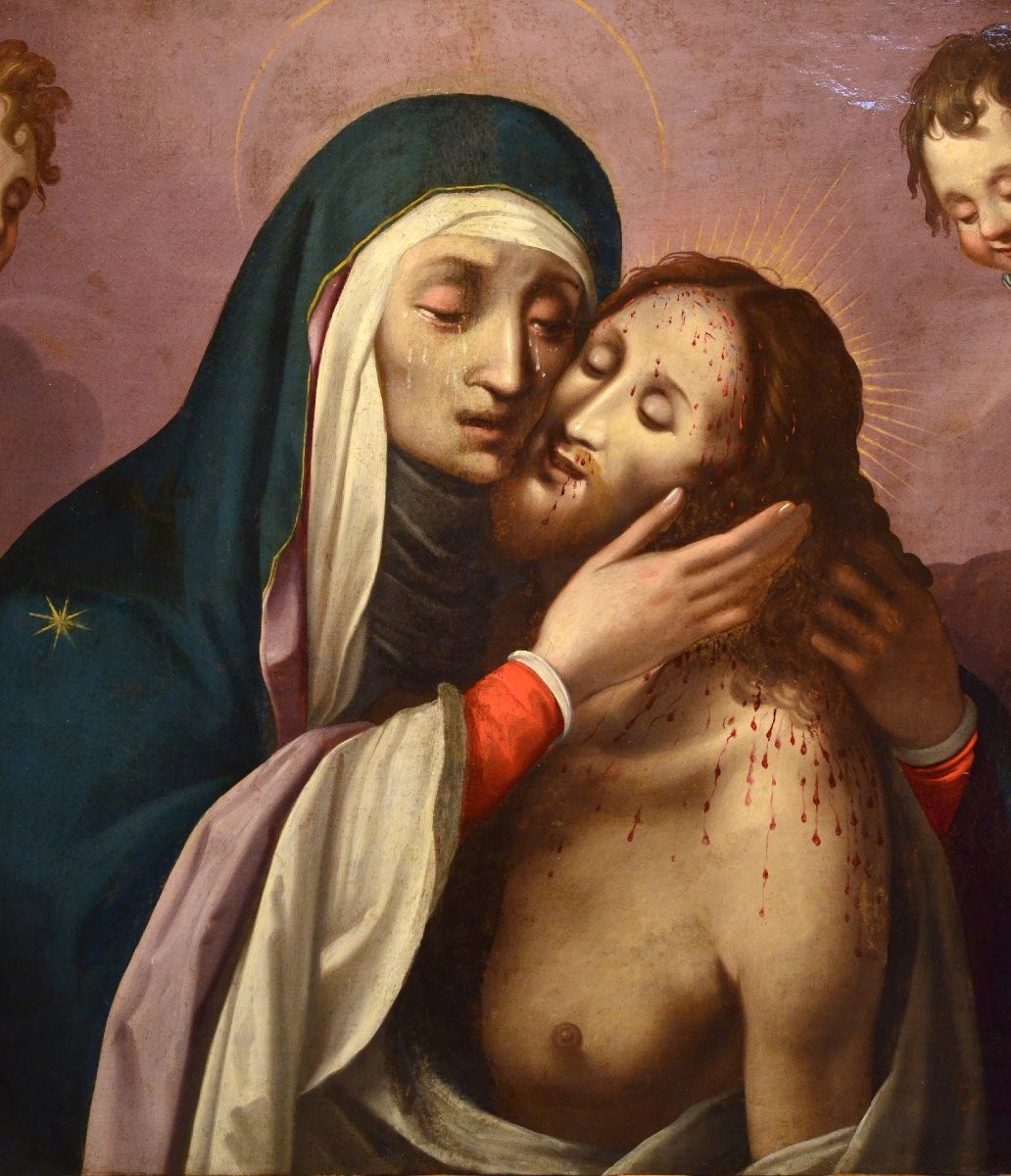
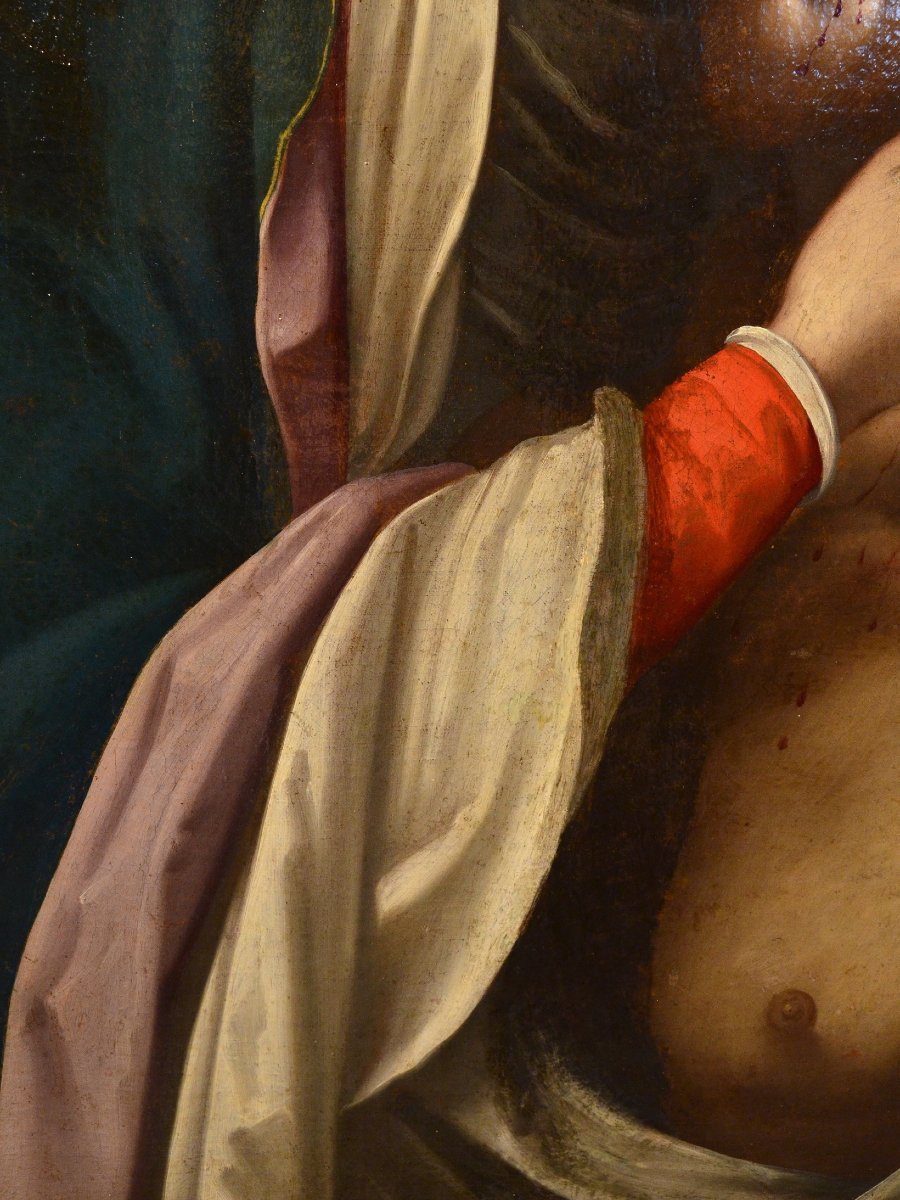
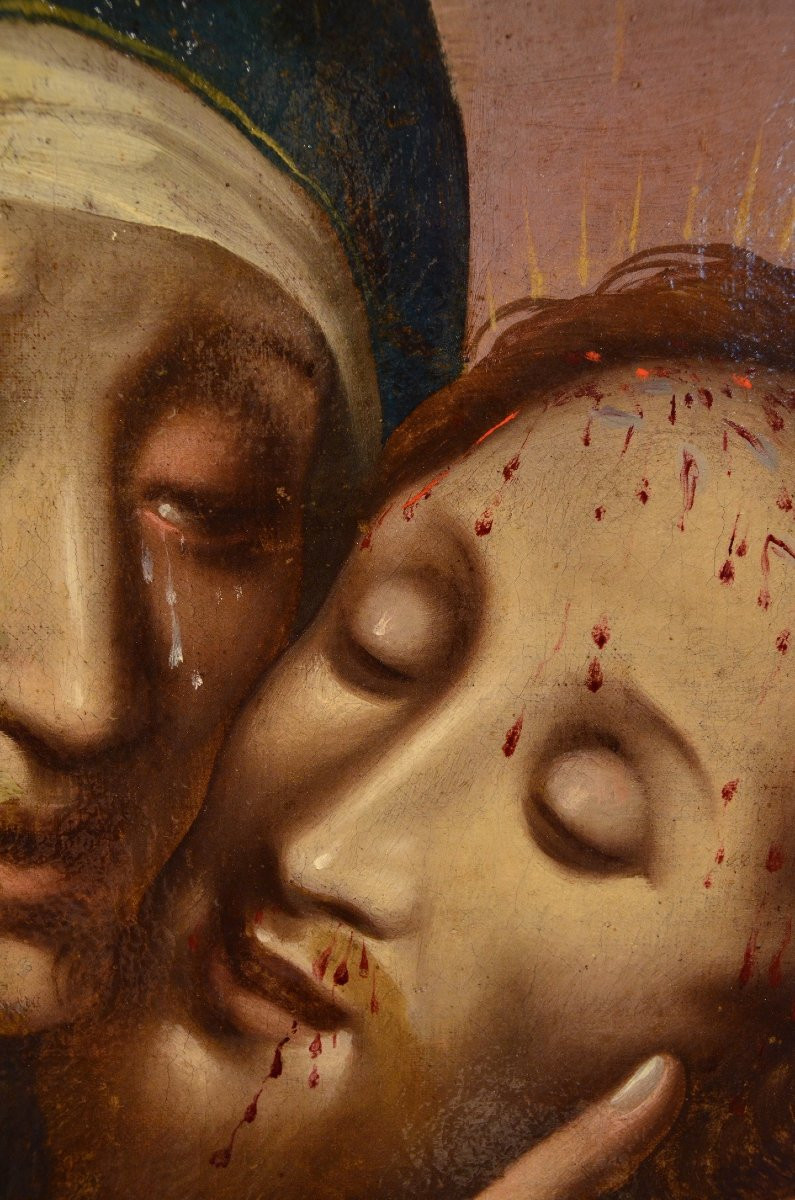
In the canvas presented here, the artist has rendered the moment of Christ’s lamentation in an extraordinary manner, demonstrating precision, realism, and emotional depth in his interpretation of the sacred union between the Virgin Mary and Christ, through a masterful interplay of contrasting colors, light, and shadow.
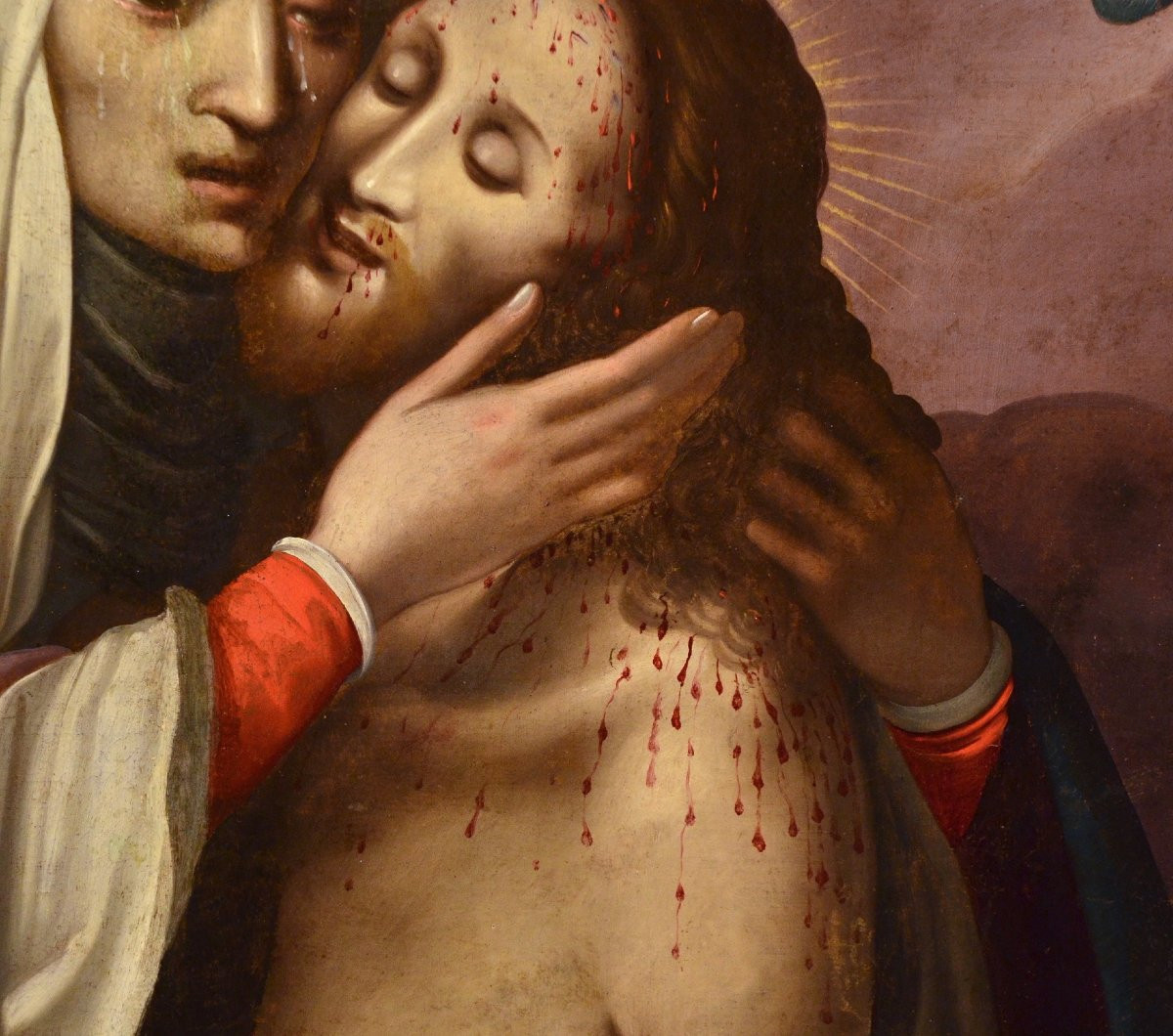
The pietistic and devotional style of Counter-Reformation painting is evident in the canvas: the depiction, of great dramatic effect, shows Christ, after being taken down from the cross, received into the Virgin’s arms.
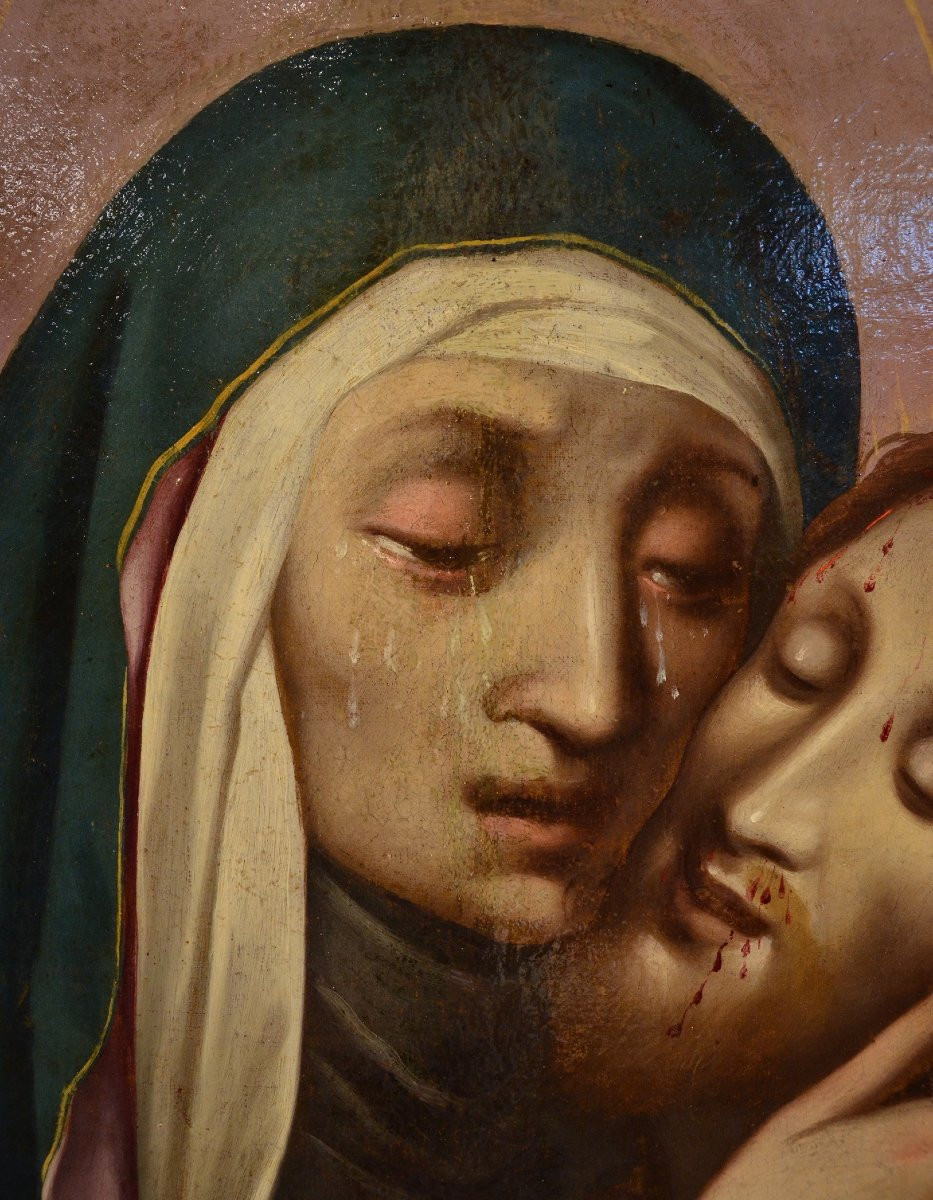
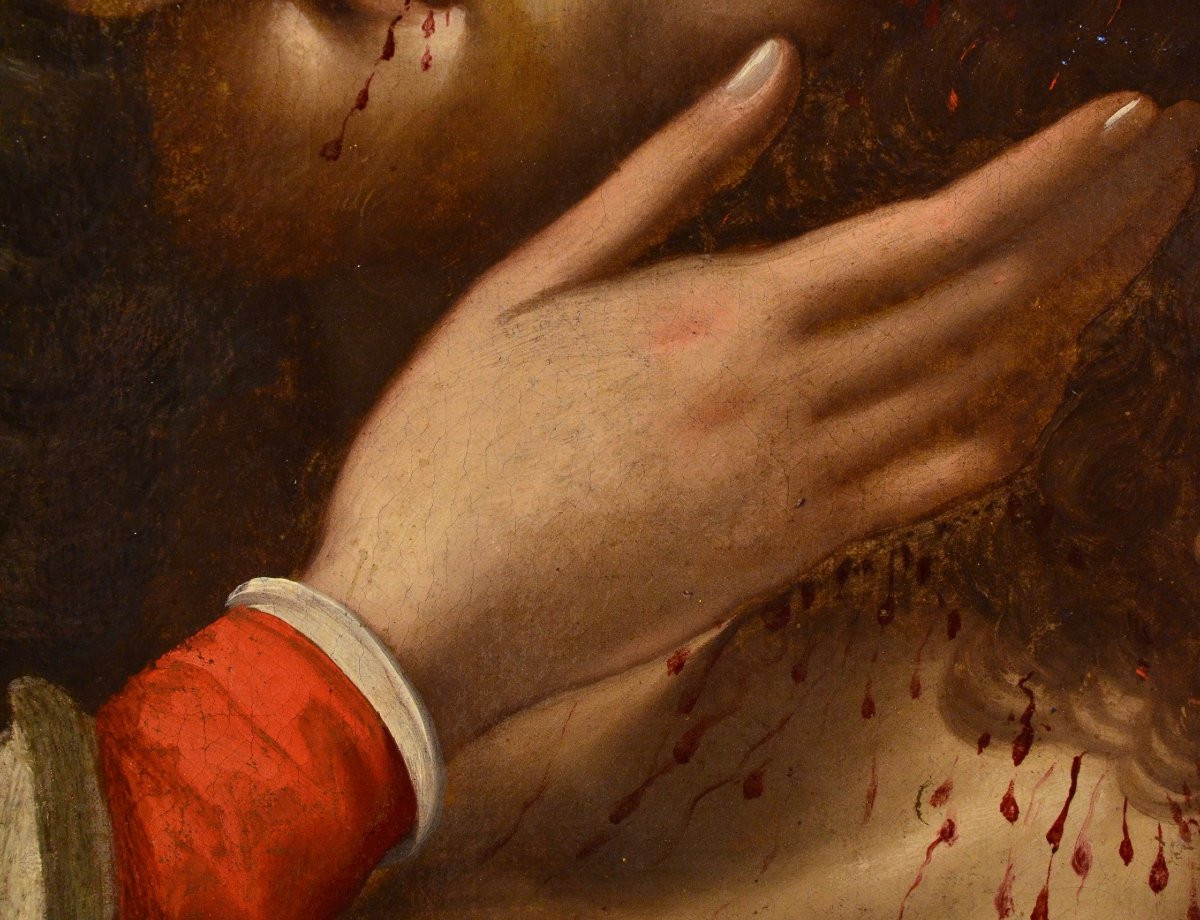
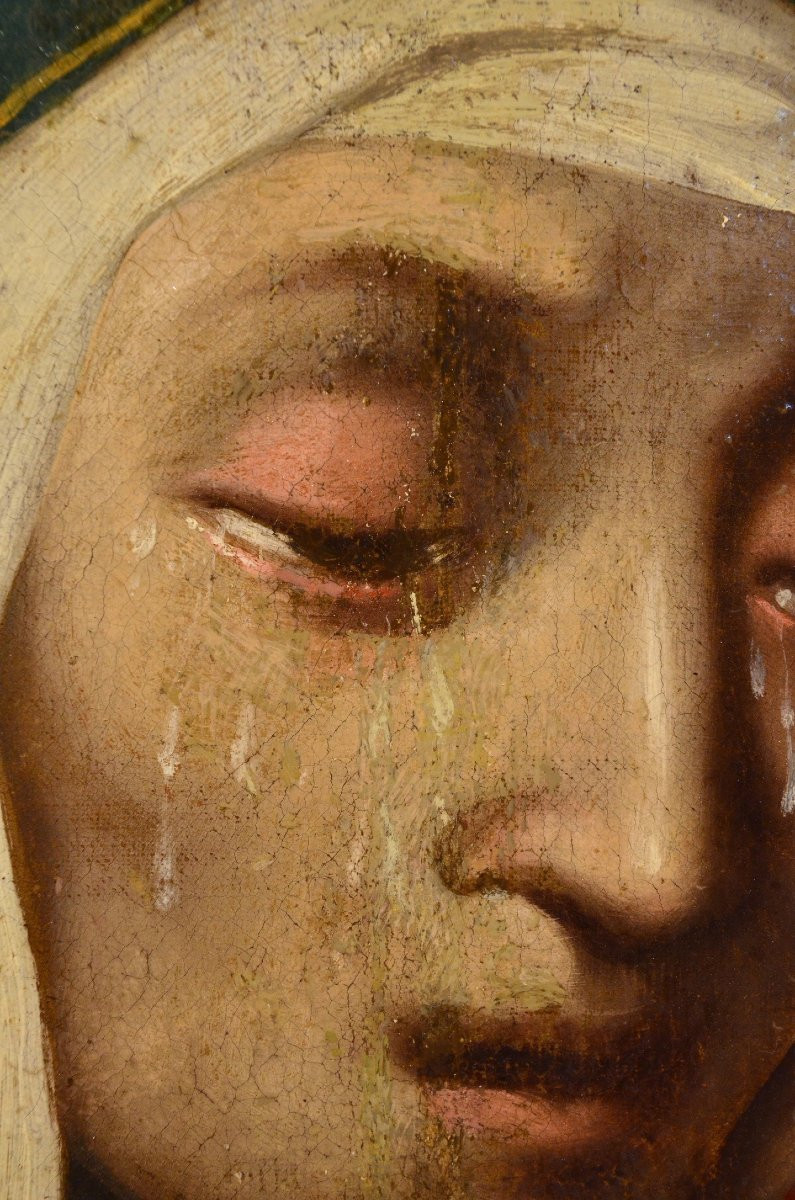
There is a strong physical and psychological characterization of the figures, rendered through marked chiaroscuro effects and thick contour lines that contribute to a plastic, sculptural construction of the forms; the intense maternal compassion is evident in the expression on her face, which, aware of her son’s fate, exudes suffering but also calm resignation. Christ, abandoned in his mother’s embrace, displays a sorrowful yet serene face, made even more poignant by the smile he seems to offer the Virgin.
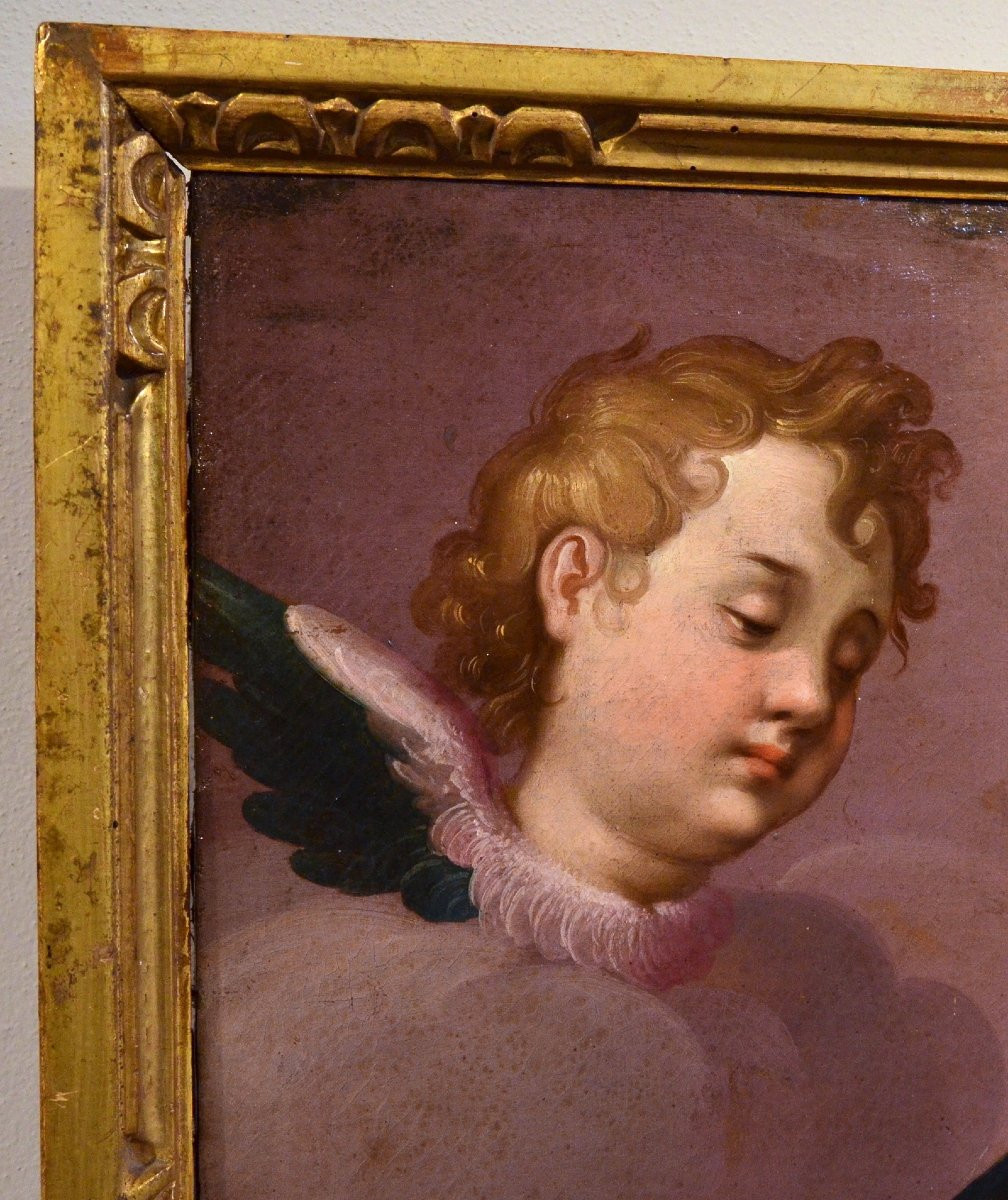
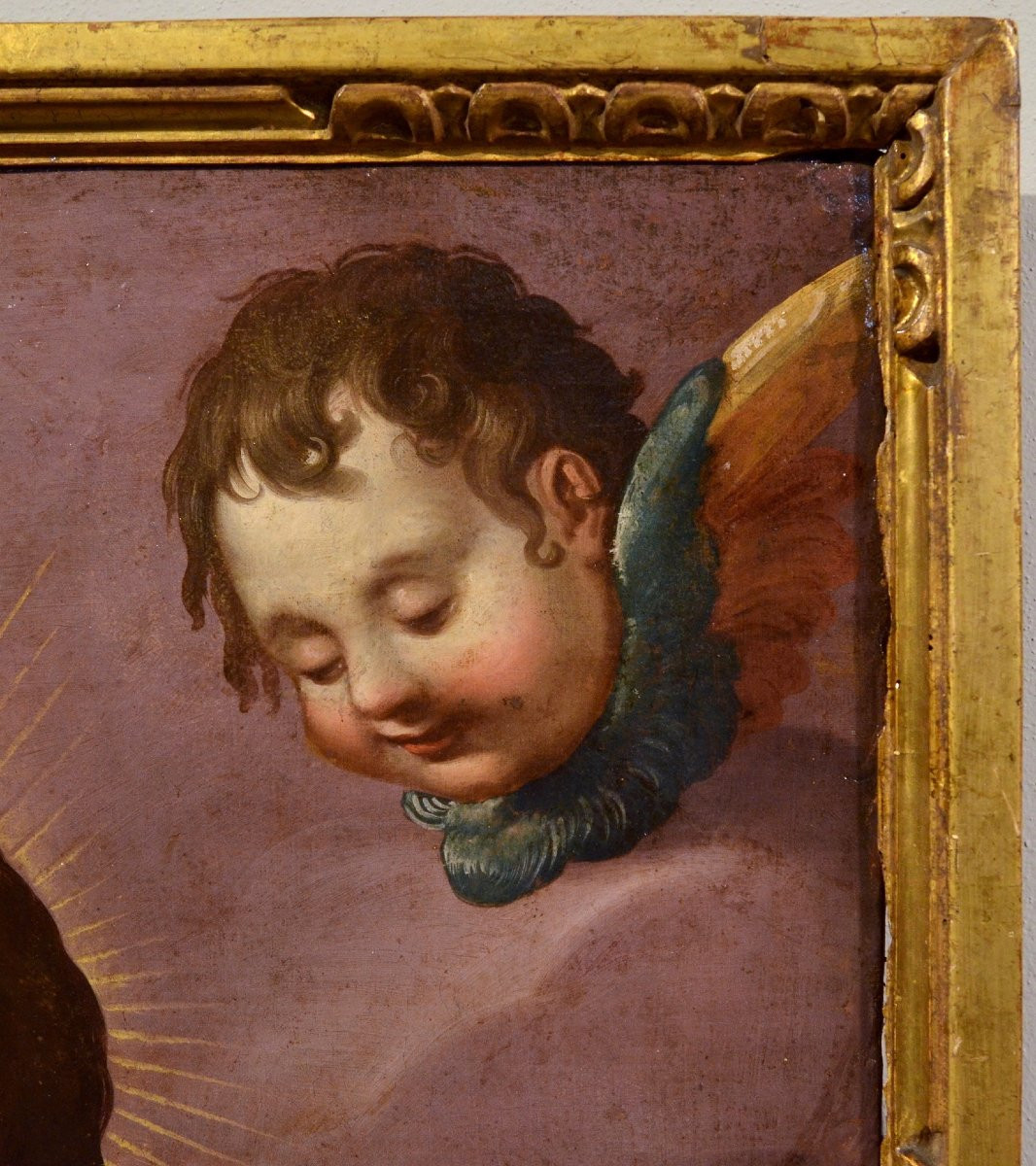
The painter favored cool tones, with a violet background, creating an intense and surreal effect, not without Iberian and Flemish influences. The specific color palette with which our artist chose to define the background is also incredibly rich in charm and spiritual significance: violet is associated with repentance, atonement, and sacrifice.
The painting, like all our items, is sold with a photographic certificate of authenticity in accordance with the law (FIMA)
For further details, please contact us: we are at your complete disposal for any information.
The Pietà (Dead Christ supported by the Virgin Mary)
oil on canvas, 78 x 94 cm
framed 86 x 102 cm
Full details of the work available directly at: https://www.antichitacastelbarco.it/it/product/the-pieta-with-two-cherubs-rome-500
Observing the exquisite quality and elegance of the composition of this intense 16th-century Pietà, we can compare its execution to the most refined works of late Roman Mannerism. In particular, there are many points of contact with the mature style of Scipione Pulzone, known as il Gaetano (Gaeta 1550 – Rome 1598), whose flourishing workshop produced this subject in numerous variations.
The artist is considered one of the most original exponents of painting during the Counter-Reformation and among the most esteemed artists active in the Roman area in the second half of the sixteenth century.
In the canvas presented here, the artist has rendered the moment of Christ’s lamentation in an extraordinary manner, demonstrating precision, realism, and emotional depth in his interpretation of the sacred union between the Virgin Mary and Christ, through a masterful interplay of contrasting colors, light, and shadow.
The pietistic and devotional style of Counter-Reformation painting is evident in the canvas: the depiction, of great dramatic effect, shows Christ, after being taken down from the cross, received into the Virgin’s arms.
There is a strong physical and psychological characterization of the figures, rendered through marked chiaroscuro effects and thick contour lines that contribute to a plastic, sculptural construction of the forms; the intense maternal compassion is evident in the expression on her face, which, aware of her son’s fate, exudes suffering but also calm resignation. Christ, abandoned in his mother’s embrace, displays a sorrowful yet serene face, made even more poignant by the smile he seems to offer the Virgin.
The painter favored cool tones, with a violet background, creating an intense and surreal effect, not without Iberian and Flemish influences. The specific color palette with which our artist chose to define the background is also incredibly rich in charm and spiritual significance: violet is associated with repentance, atonement, and sacrifice.
The painting, like all our items, is sold with a photographic certificate of authenticity in accordance with the law (FIMA)
For further details, please contact us: we are at your complete disposal for any information.
7 900 €
Period: 16th century
Style: Renaissance, Louis 13th
Condition: Excellent condition
Material: Oil painting
Width: encadré cm. 102
Height: encadré cm. 86
Reference (ID): 1753148
Availability: In stock
Print