

Fantastic Landscape With Mary Magdalene, Paul Bril (antwerp, 1554 – Rome, 1626) Workshop Of
Artist: Paul Bril (anvers, 1554 – Rome, 1626) Atelier De
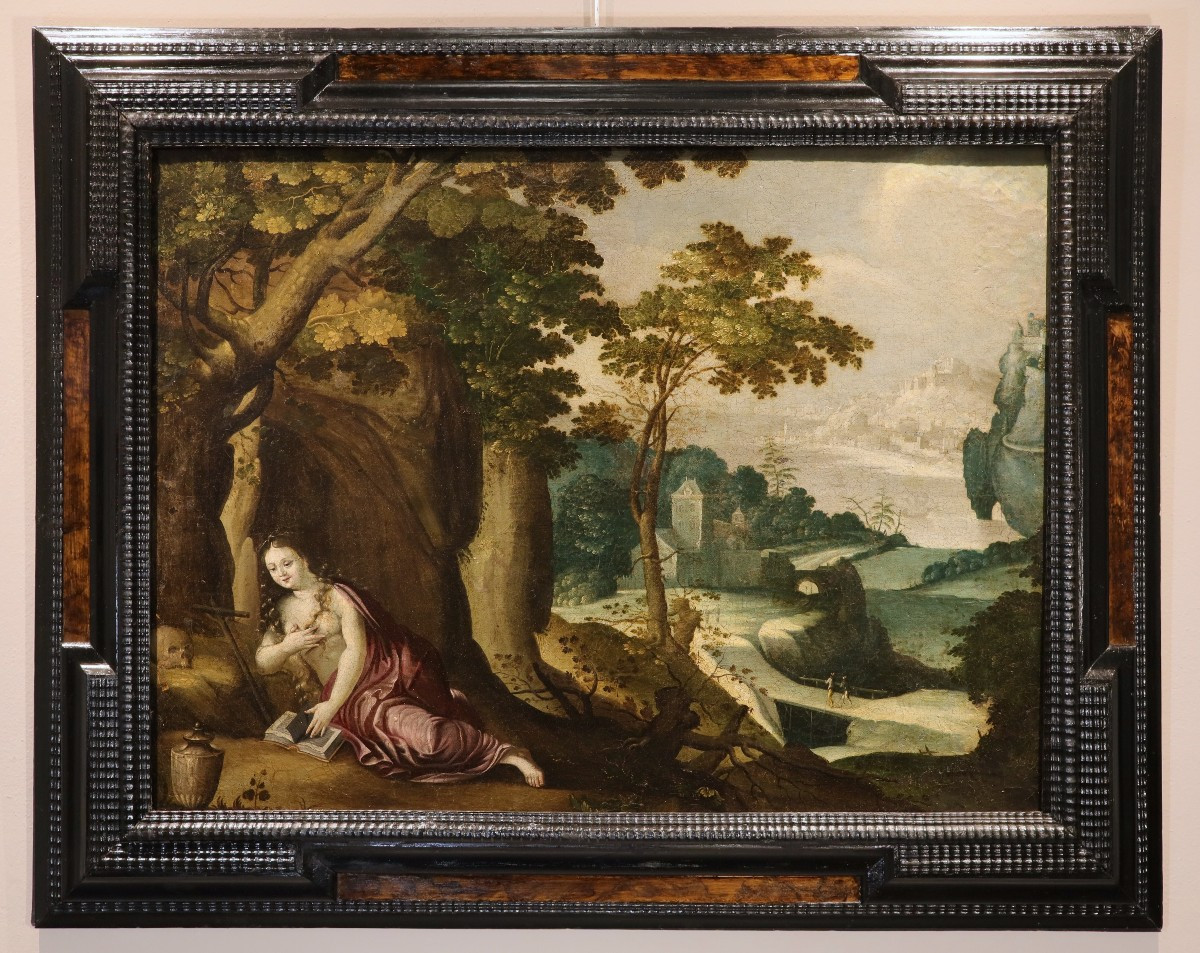
Fantastic Landscape with Mary Magdalene
Paul Bril (Antwerp, 1554 – Rome, 1626) Workshop of
First half of the 17th century
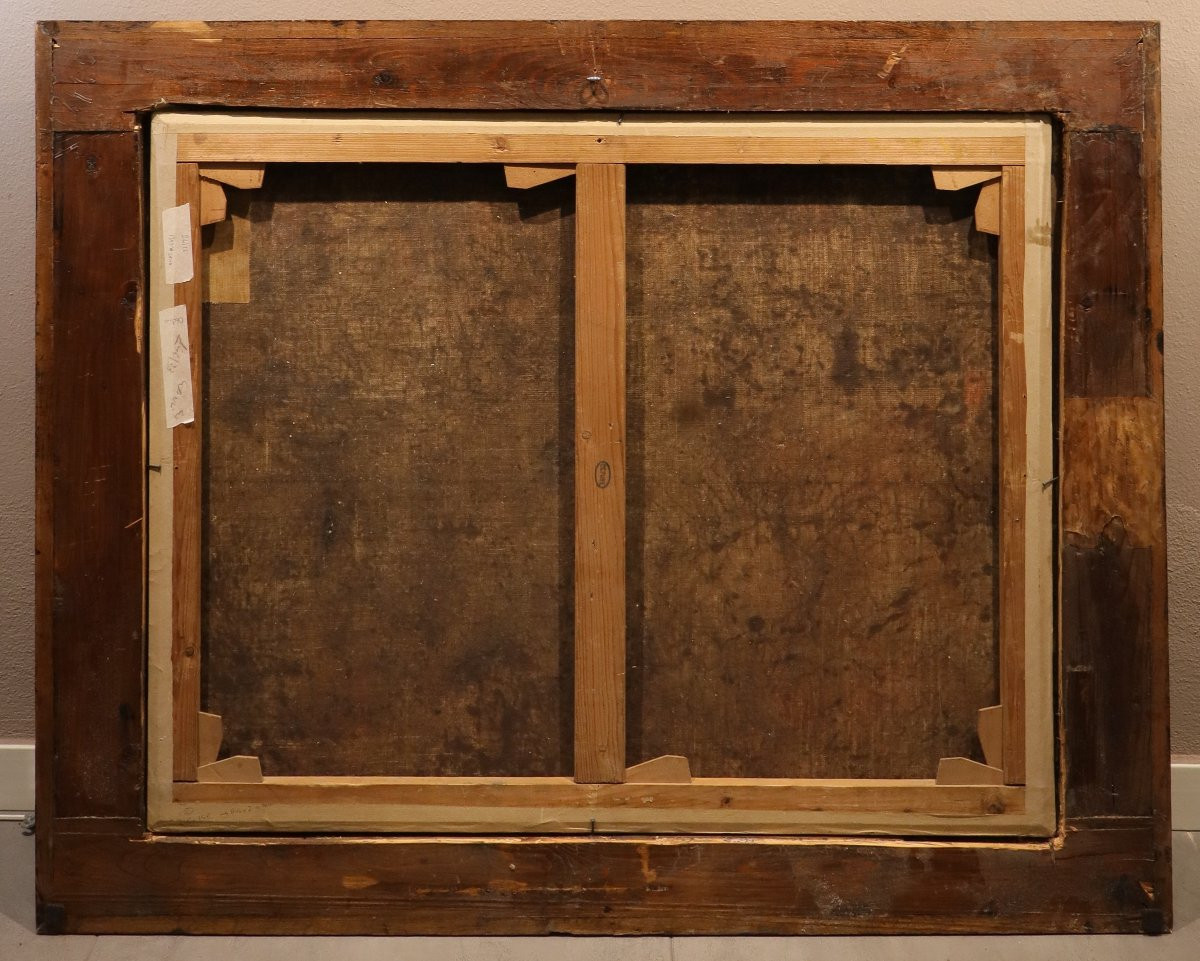
Oil on canvas (76 x 96 cm - In antique frame 95 x 119 cm)
Full details of the artwork (click HERE)
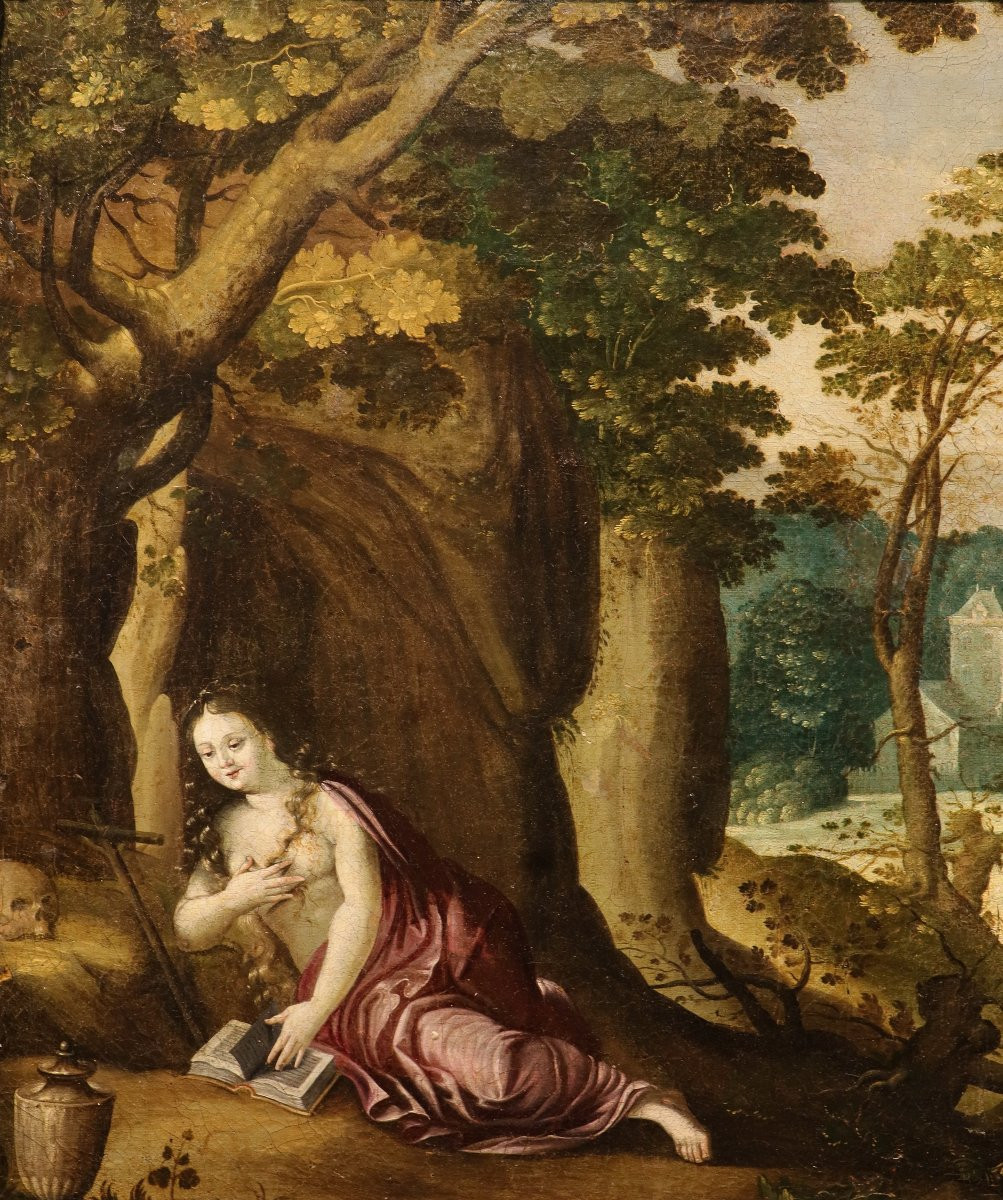
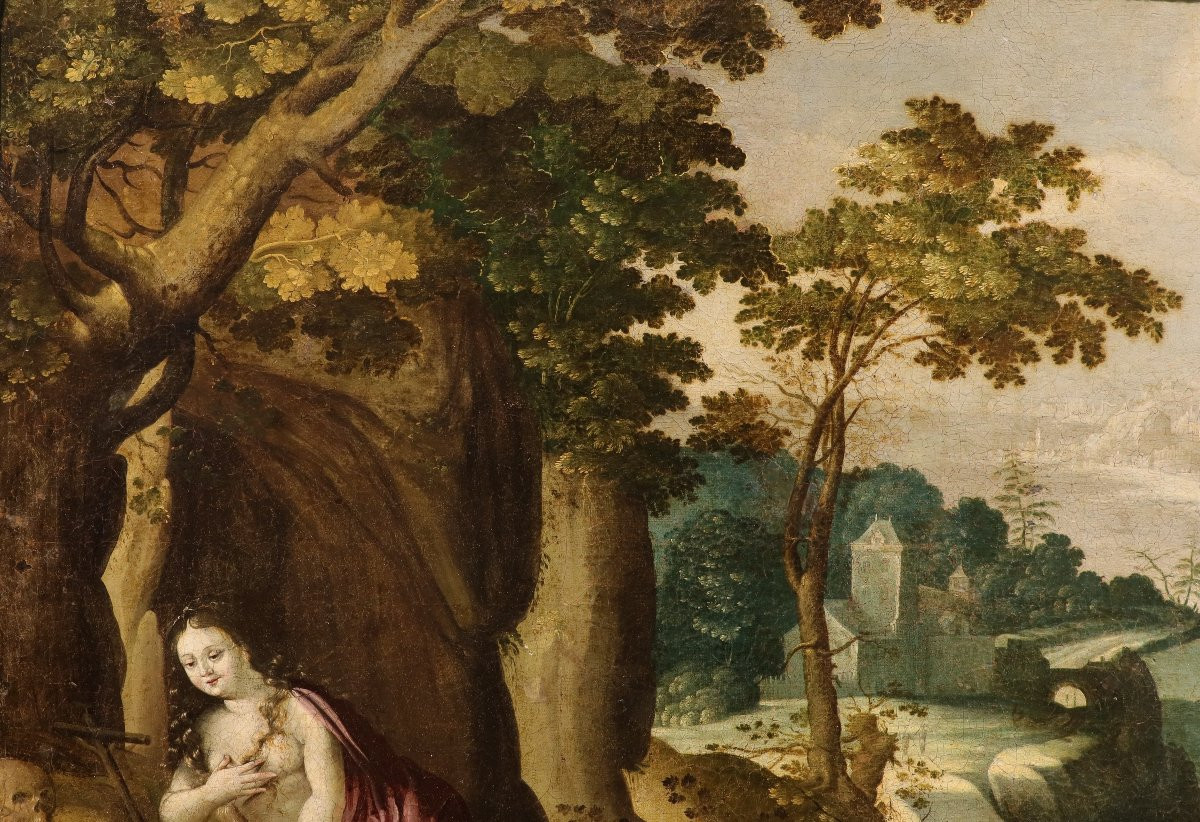
The painting in question, a fascinating fantasy landscape whose characteristics immediately reveal the northern origins of its author, can be rightly attributed to the close circle of the Flemish artist Paul Bril (Antwerp, 1554 – Rome, 1626) and, in particular, to a talented painter active in the early 17th century.
The view is characterised by a marked imaginative and free vein, capable of transfiguring the realistic landscape into something absolutely dreamlike, almost oneiric, and is part of a landscape genre typical of 17th-century Flemish art, of which Paul Bril was the undisputed master.
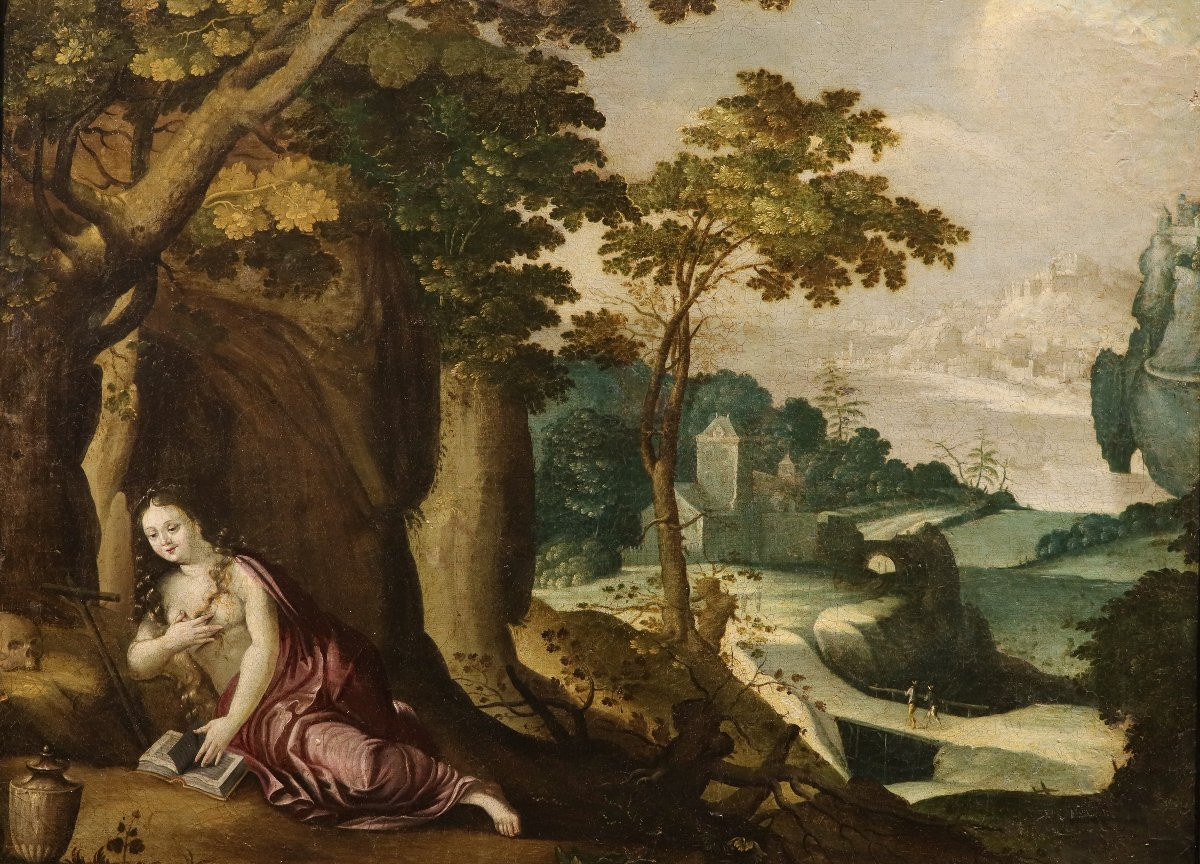
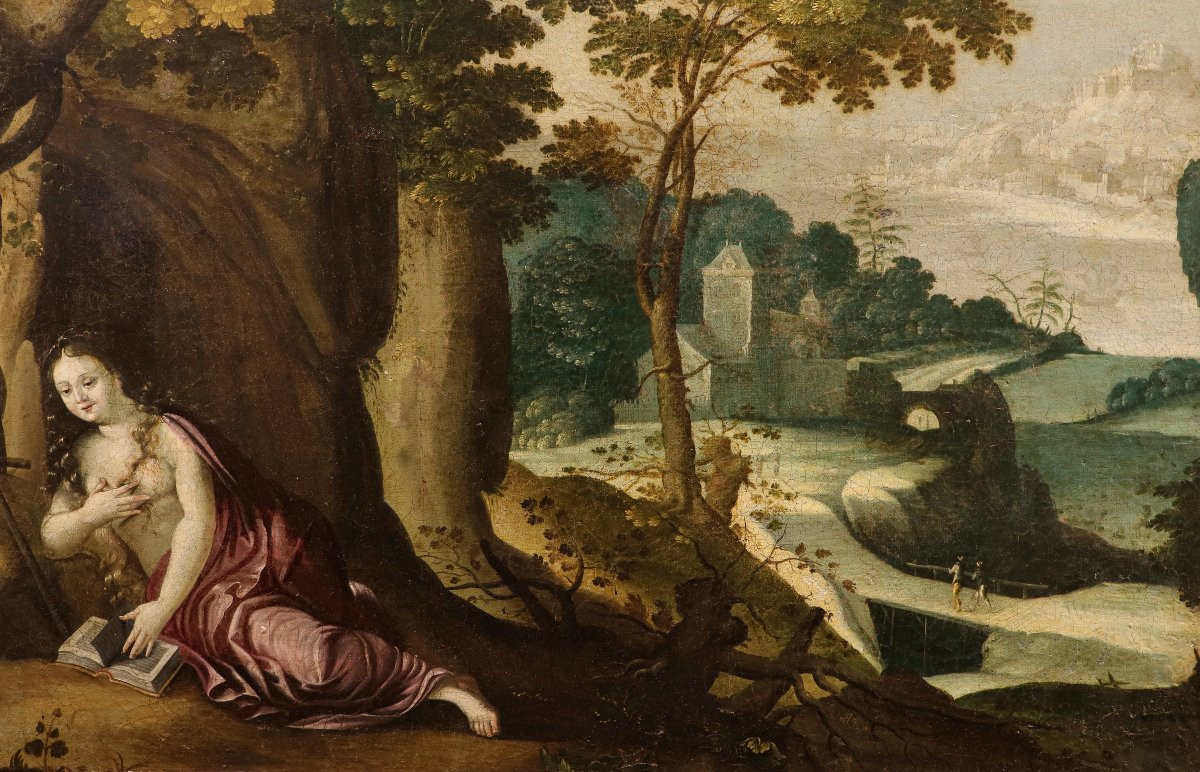
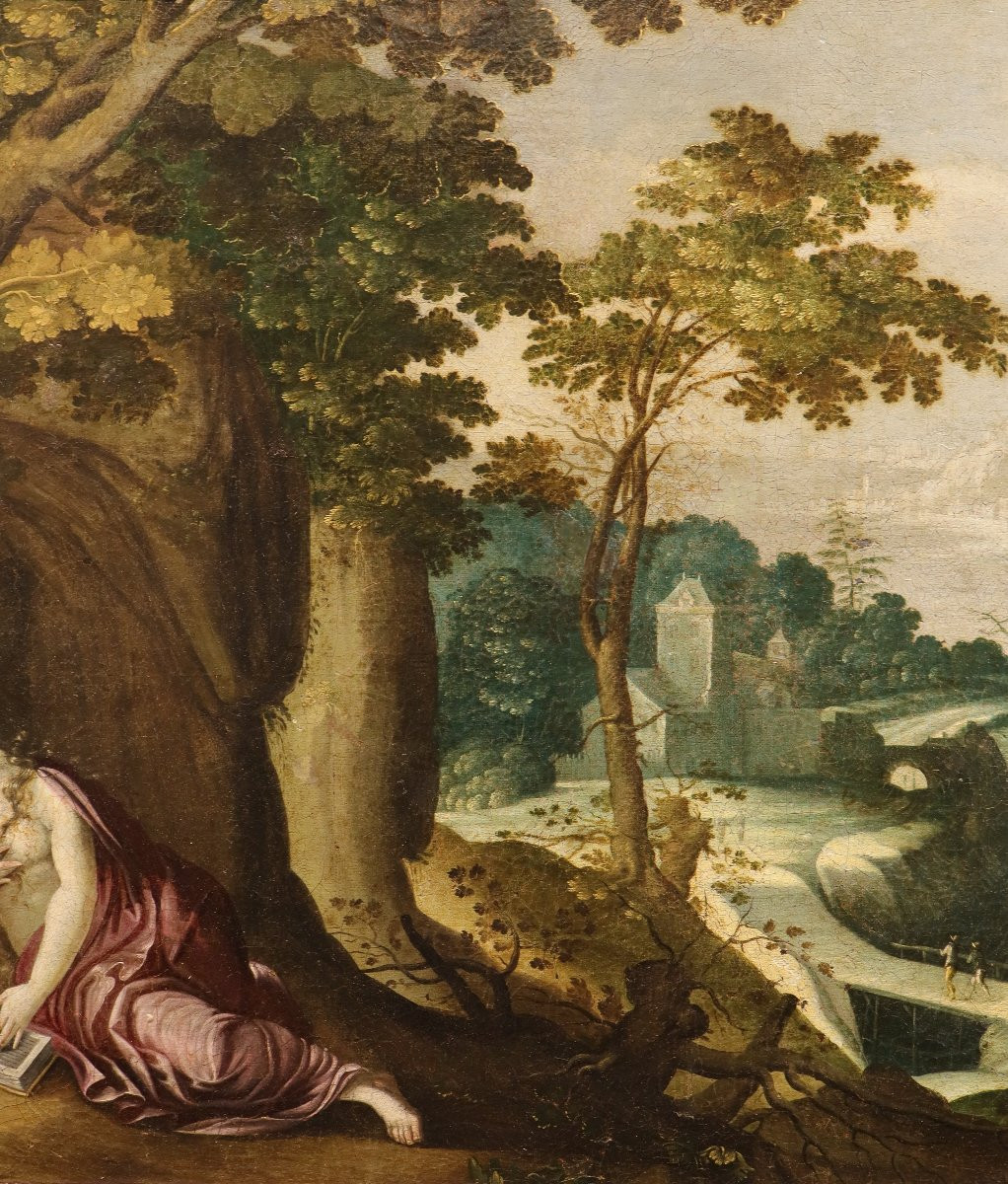
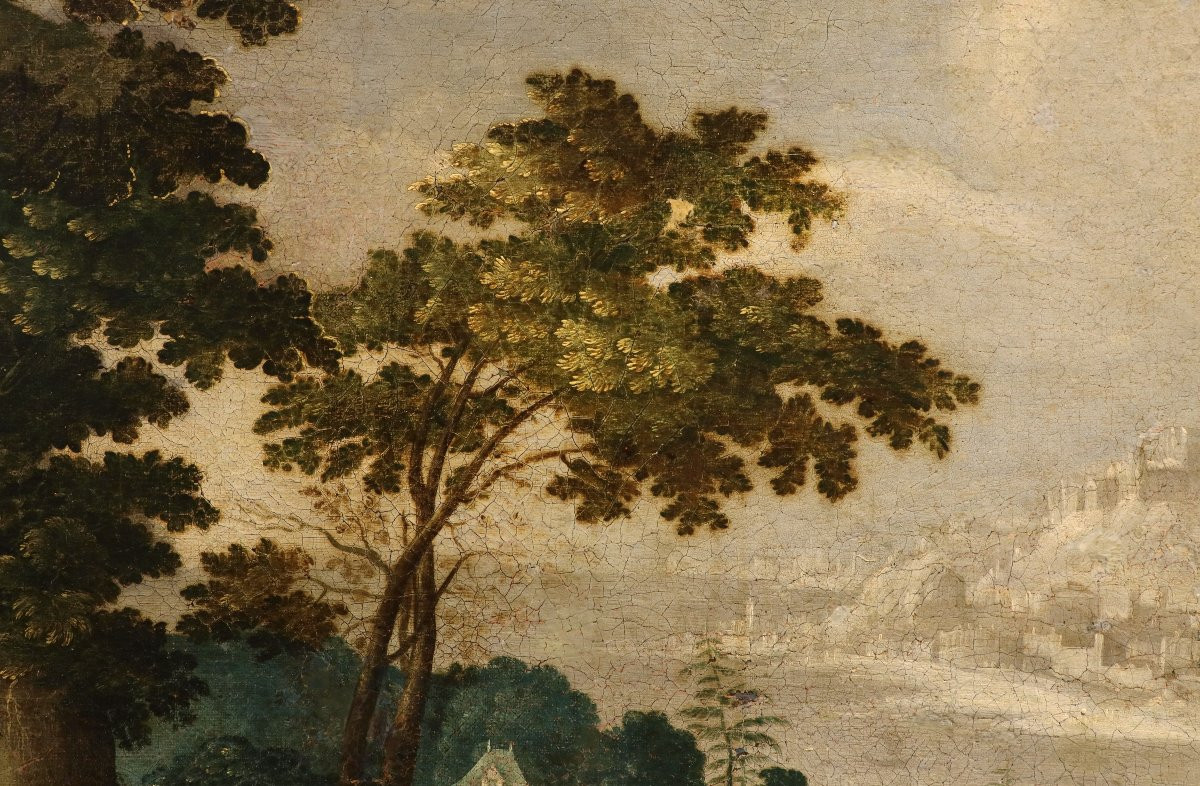
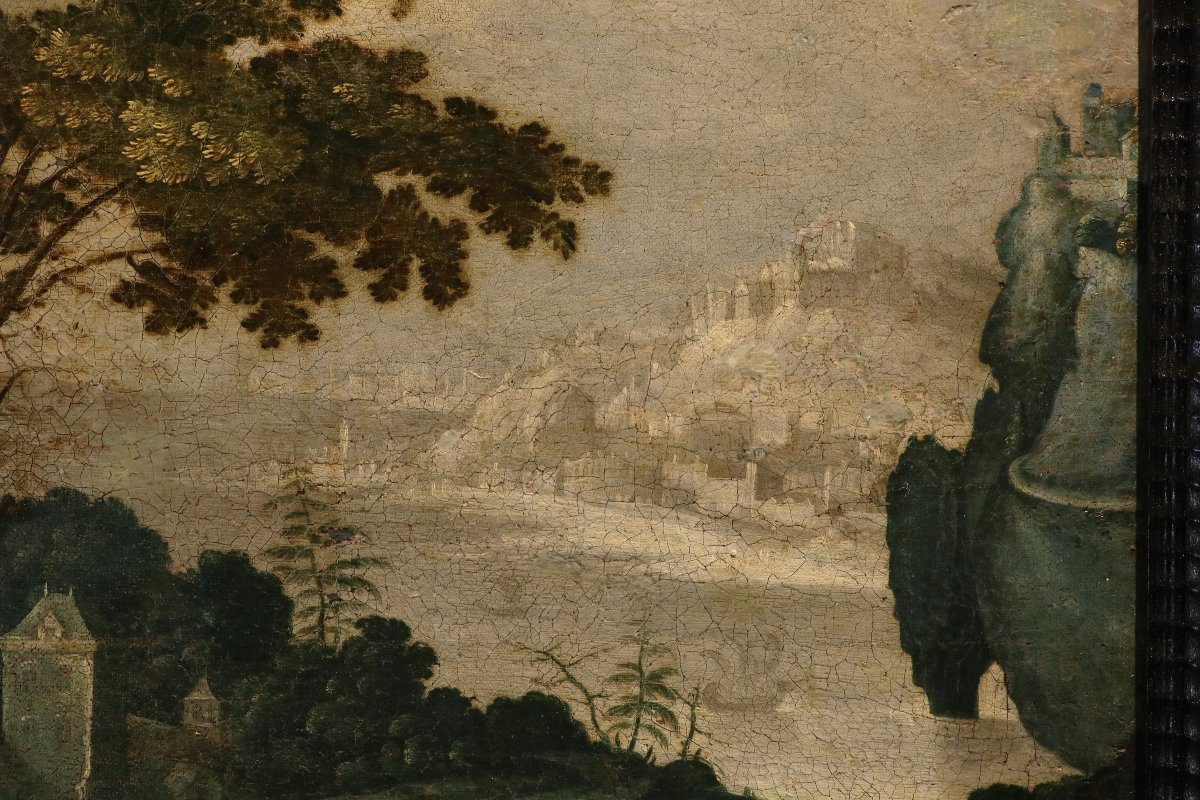
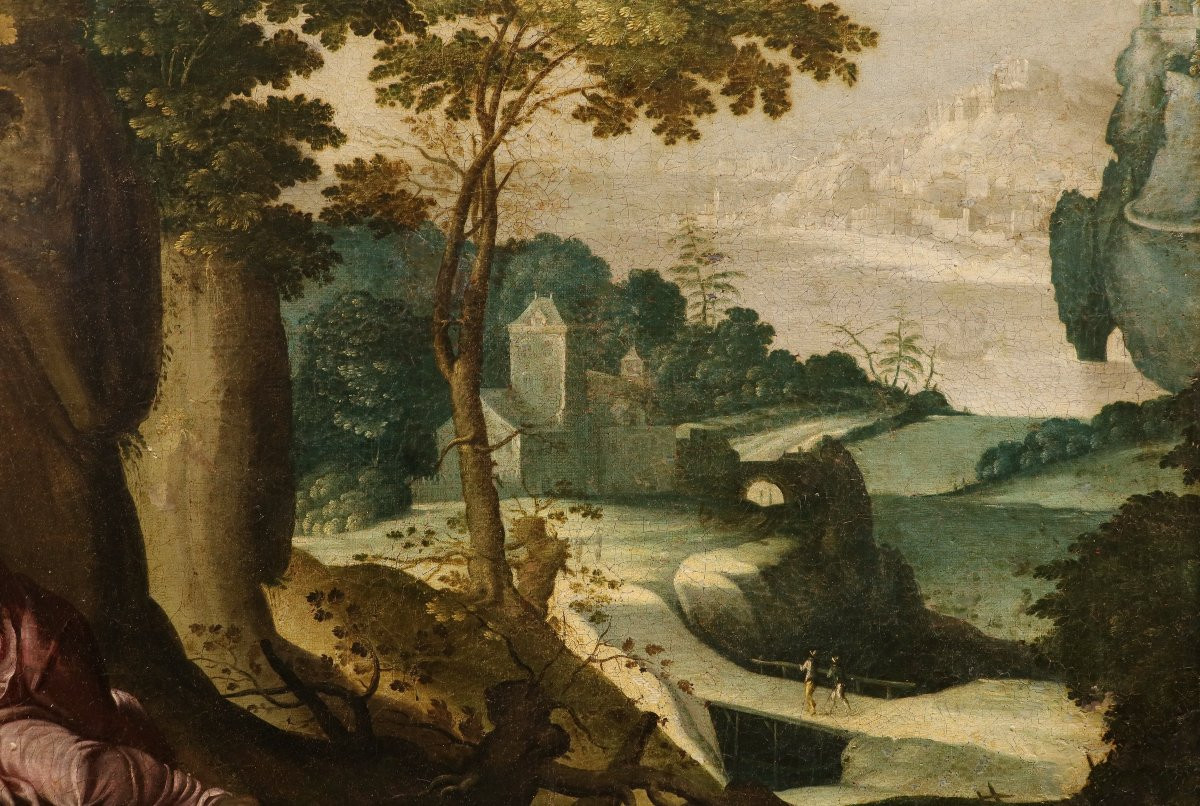
In the distance, with a sloping effect, we can see a wide landscape composed of cities, waterways, castles, steep rocks and mountains: both the description of the details and the unfolding of the perspective and the chromatic tones, characterised by the evocative elegance of the colours, are unmistakable features that confirm the author's proximity.
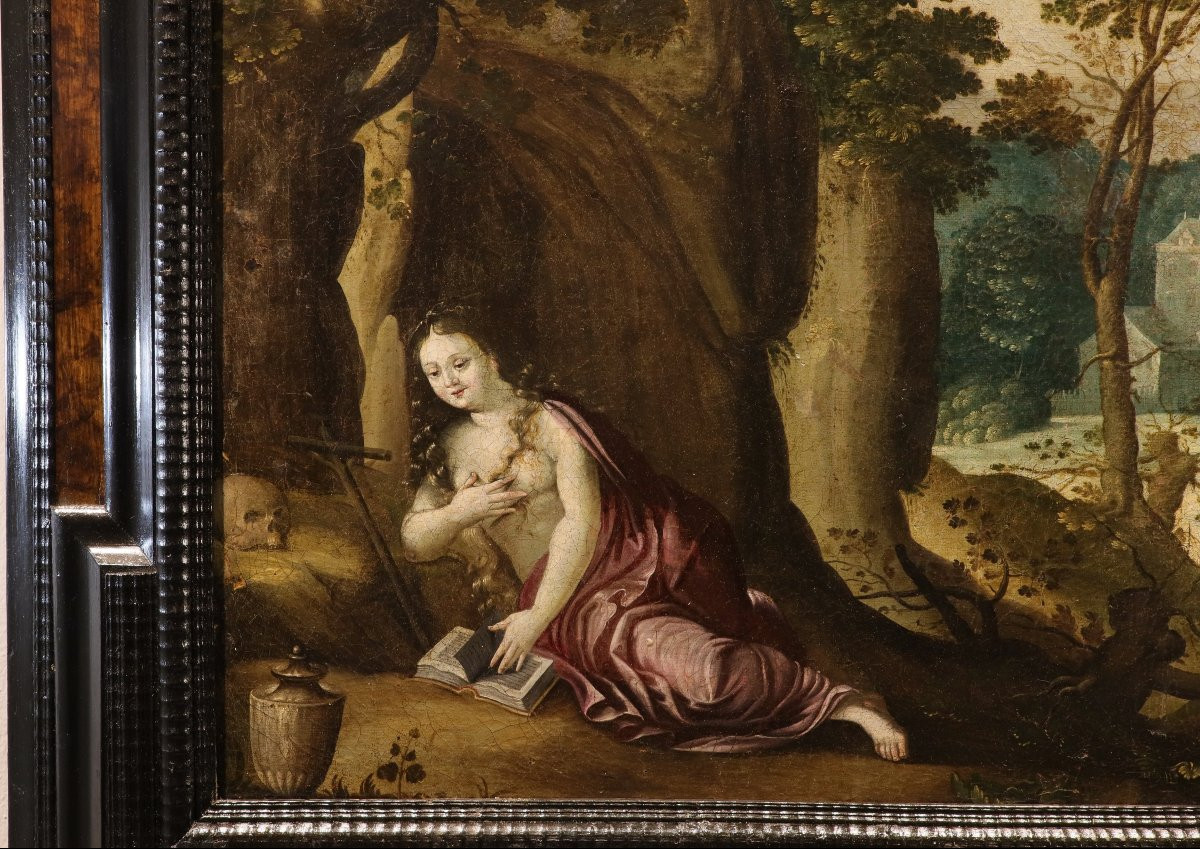
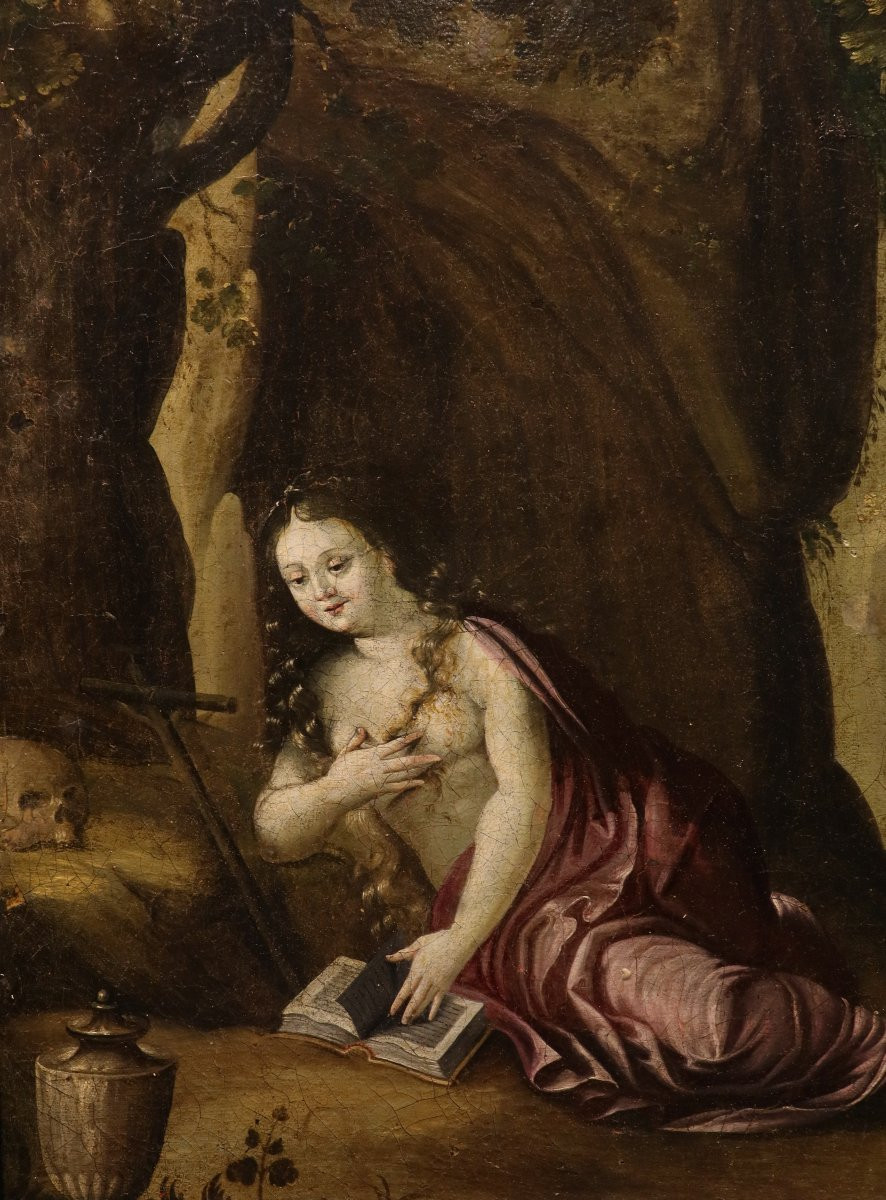
The master used to introduce religious figures into his fascinating landscapes: in this case, the protagonist of the work is a seductive Saint Mary Magdalene, semi-naked to recall her past as a sinner, with long hair falling over her body and a gaze full of emotion and repentance. Next to her are the skull, the cross and the ampoule of ointment, the three canonical symbols of her iconography.
The drawing is based on a famous print depicting the penitent Magdalene in a landscape, engraved by Raphael Sadler around 1583 and based on an invention by the Flemish painter Marten de Vos (1532–1603) (https://www.museodelprado.es/coleccion/obra-de-arte/magdalena-penitente/2f87bced-5715-4894-bb75-97c478a7733a).
We know that Paul Bril drew on de Vos's iconographic repertoire on numerous occasions, using his drawings as a thematic basis for his compositions, then integrating them with his typical landscape style, using his canonical “winged” landscape scheme, with dense vegetation in the foreground framing the sacred scene.
The effect is emphasised by the different palette, on the one hand playing on brown and warm tones, on the other characterised by the cool shades of blue used to render the mountains in the background and the sky, the latter crossed by a beam of light coming from the right corner of the painting and directed towards the figure.
Given the still archaic aspects of the composition, the canvas is inspired by works from his early painting phase (i.e. still from the 16th century), when the artist was still linked to the late Mannerist fantasy landscapes reminiscent of Pieter Brueghel the Elder.
For comparison, consider some of the master's works now housed in various museums, including:
Paul Bril, Landscape with Mary Magdalene, Bayerische Staatsgemäldesammlungen – Alte Pinakothek (fig. 1)
Paul Bril, Landscape with St Francis of Assisi, Galleria Borghese, Rome (fig. 2)
Paul Bril (circle), Seascape with Saint Jerome, Museo Civico Sarnico (fig. 3)
Paul Bril, Christ and the Disciples on the Road to Emmaus, Castello di Udine (fig. 4)
Paul Bril, Landscape with the Return of the Prodigal Son, Private collection (fig. 5)
(fig.1) https://www.sammlung.pinakothek.de/de/artwork/gR4k3ZN4Ee
(fig.2) https://www.collezionegalleriaborghese.it/opere/paesaggio-con-san-francesco-dassisi
(fig.3) https://catalogo.beniculturali.it/detail/HistoricOrArtisticProperty/0303271301
(fig.4) https://cbc-fe-collaudo.regione.fvg.it/opera/?s_id=482706
(fig.5) https://catalogo.fondazionezeri.unibo.it/entry/work/33136/
CONSERVATION: The canvas is distinguished by its bright colours and good condition, considering its age, with scattered retouching on the surface.
ADDITIONAL INFORMATION:
The work is sold complete with an attractive frame and comes with a certificate of authenticity and guarantee.
We take care of and organise the transport of purchased works, both in Italy and abroad, using professional and insured carriers. It is also possible to view the painting in our gallery in Riva del Garda. We would be delighted to welcome you and show you our collection of works.
Please contact us, without obligation, for any additional information.
Follow us on:
INSTAGRAM https://www.instagram.com/galleriacastelbarco/?hl=it
FACEBOOK https://www.facebook.com/galleriacastelbarco/
Paul Bril (Antwerp, 1554 – Rome, 1626) Workshop of
First half of the 17th century
Oil on canvas (76 x 96 cm - In antique frame 95 x 119 cm)
Full details of the artwork (click HERE)
The painting in question, a fascinating fantasy landscape whose characteristics immediately reveal the northern origins of its author, can be rightly attributed to the close circle of the Flemish artist Paul Bril (Antwerp, 1554 – Rome, 1626) and, in particular, to a talented painter active in the early 17th century.
The view is characterised by a marked imaginative and free vein, capable of transfiguring the realistic landscape into something absolutely dreamlike, almost oneiric, and is part of a landscape genre typical of 17th-century Flemish art, of which Paul Bril was the undisputed master.
In the distance, with a sloping effect, we can see a wide landscape composed of cities, waterways, castles, steep rocks and mountains: both the description of the details and the unfolding of the perspective and the chromatic tones, characterised by the evocative elegance of the colours, are unmistakable features that confirm the author's proximity.
The master used to introduce religious figures into his fascinating landscapes: in this case, the protagonist of the work is a seductive Saint Mary Magdalene, semi-naked to recall her past as a sinner, with long hair falling over her body and a gaze full of emotion and repentance. Next to her are the skull, the cross and the ampoule of ointment, the three canonical symbols of her iconography.
The drawing is based on a famous print depicting the penitent Magdalene in a landscape, engraved by Raphael Sadler around 1583 and based on an invention by the Flemish painter Marten de Vos (1532–1603) (https://www.museodelprado.es/coleccion/obra-de-arte/magdalena-penitente/2f87bced-5715-4894-bb75-97c478a7733a).
We know that Paul Bril drew on de Vos's iconographic repertoire on numerous occasions, using his drawings as a thematic basis for his compositions, then integrating them with his typical landscape style, using his canonical “winged” landscape scheme, with dense vegetation in the foreground framing the sacred scene.
The effect is emphasised by the different palette, on the one hand playing on brown and warm tones, on the other characterised by the cool shades of blue used to render the mountains in the background and the sky, the latter crossed by a beam of light coming from the right corner of the painting and directed towards the figure.
Given the still archaic aspects of the composition, the canvas is inspired by works from his early painting phase (i.e. still from the 16th century), when the artist was still linked to the late Mannerist fantasy landscapes reminiscent of Pieter Brueghel the Elder.
For comparison, consider some of the master's works now housed in various museums, including:
Paul Bril, Landscape with Mary Magdalene, Bayerische Staatsgemäldesammlungen – Alte Pinakothek (fig. 1)
Paul Bril, Landscape with St Francis of Assisi, Galleria Borghese, Rome (fig. 2)
Paul Bril (circle), Seascape with Saint Jerome, Museo Civico Sarnico (fig. 3)
Paul Bril, Christ and the Disciples on the Road to Emmaus, Castello di Udine (fig. 4)
Paul Bril, Landscape with the Return of the Prodigal Son, Private collection (fig. 5)
(fig.1) https://www.sammlung.pinakothek.de/de/artwork/gR4k3ZN4Ee
(fig.2) https://www.collezionegalleriaborghese.it/opere/paesaggio-con-san-francesco-dassisi
(fig.3) https://catalogo.beniculturali.it/detail/HistoricOrArtisticProperty/0303271301
(fig.4) https://cbc-fe-collaudo.regione.fvg.it/opera/?s_id=482706
(fig.5) https://catalogo.fondazionezeri.unibo.it/entry/work/33136/
CONSERVATION: The canvas is distinguished by its bright colours and good condition, considering its age, with scattered retouching on the surface.
ADDITIONAL INFORMATION:
The work is sold complete with an attractive frame and comes with a certificate of authenticity and guarantee.
We take care of and organise the transport of purchased works, both in Italy and abroad, using professional and insured carriers. It is also possible to view the painting in our gallery in Riva del Garda. We would be delighted to welcome you and show you our collection of works.
Please contact us, without obligation, for any additional information.
Follow us on:
INSTAGRAM https://www.instagram.com/galleriacastelbarco/?hl=it
FACEBOOK https://www.facebook.com/galleriacastelbarco/
8 900 €
Period: 17th century
Style: Louis 15th - Transition
Condition: Excellent condition
Material: Oil painting
Width: encadré 119 cm.
Height: encadré 95 cm.
Reference (ID): 1721998
Availability: In stock
Print