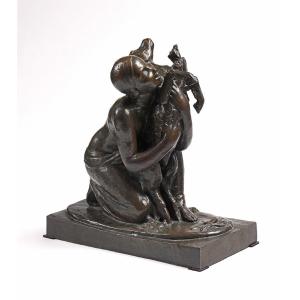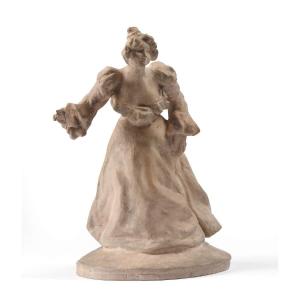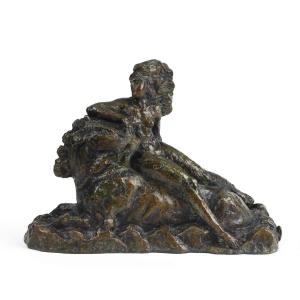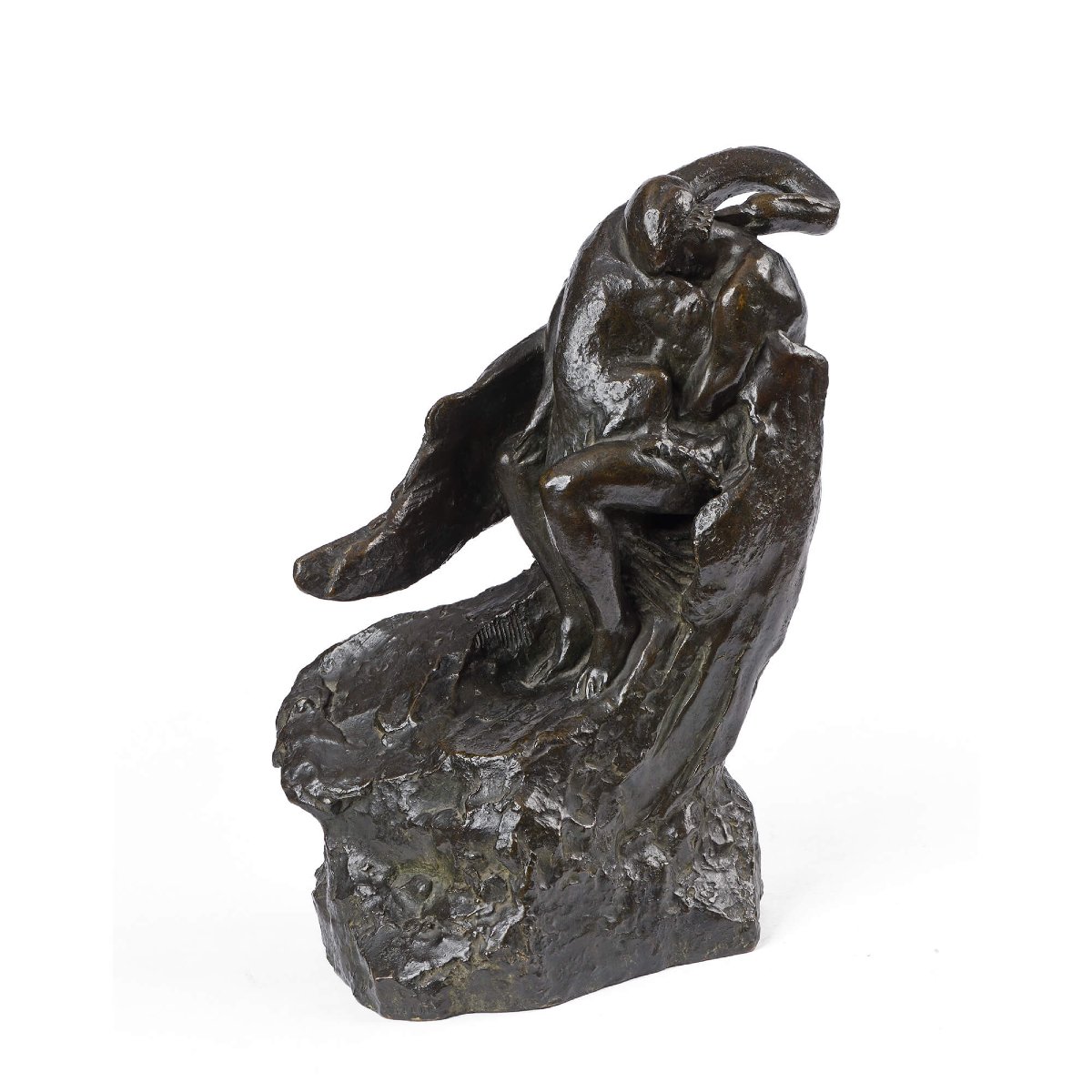
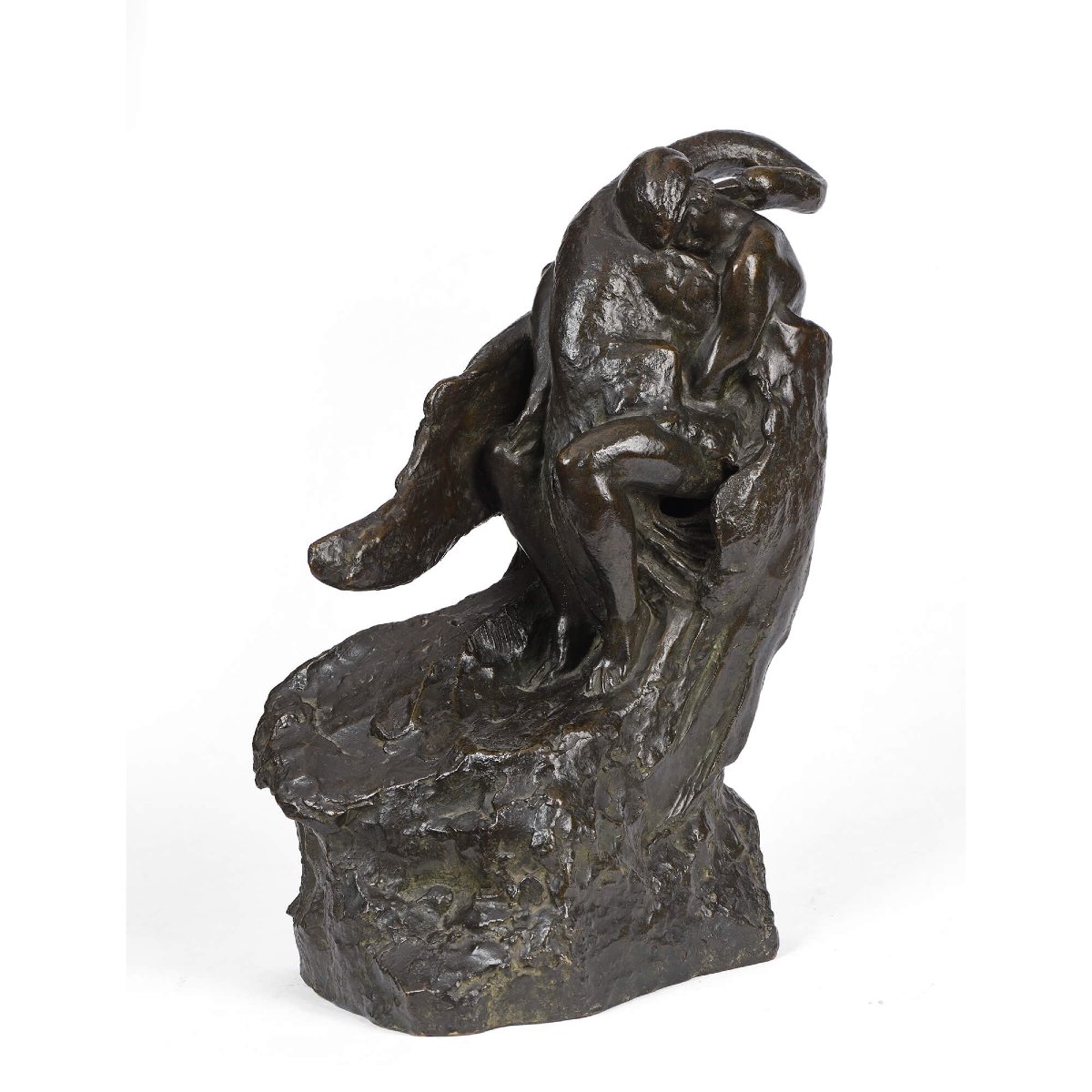
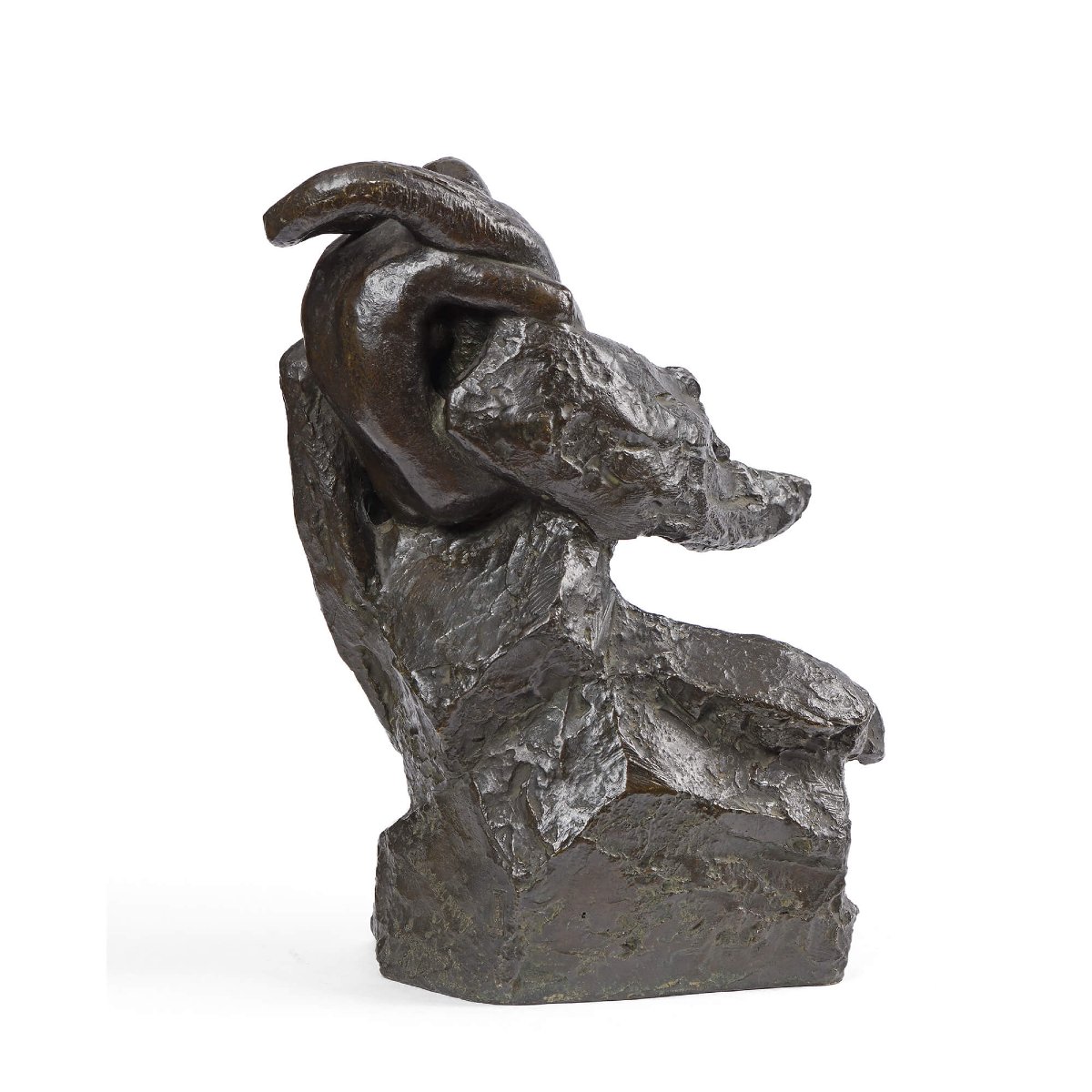
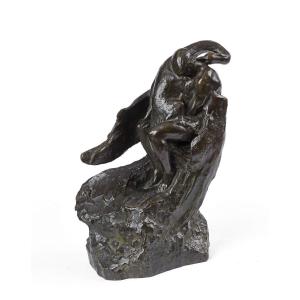


Charles Malfray (1887–1940) — "leda And The Swan"
Bronze cast with a dark brown patina with subtle variations
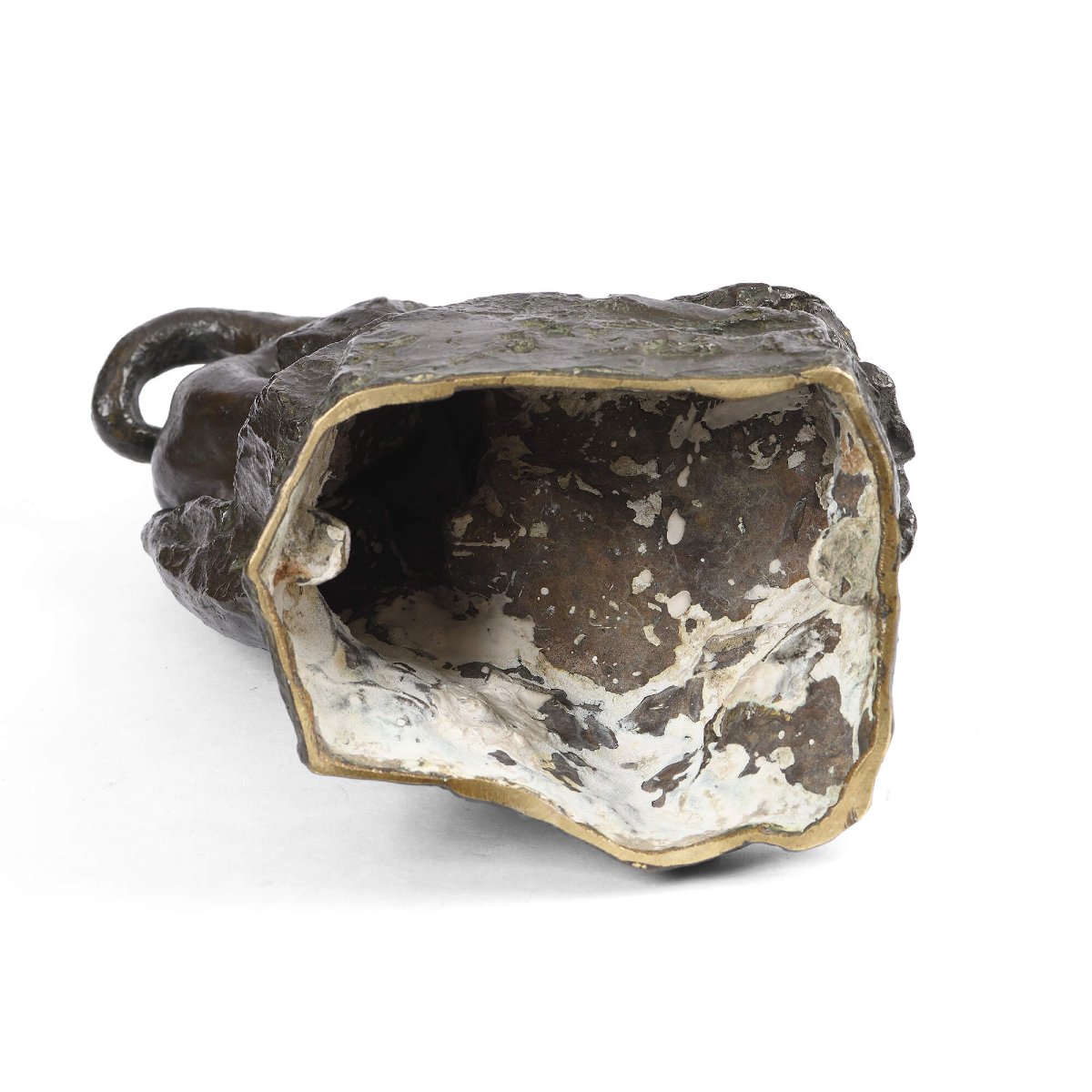
Lost-wax casting
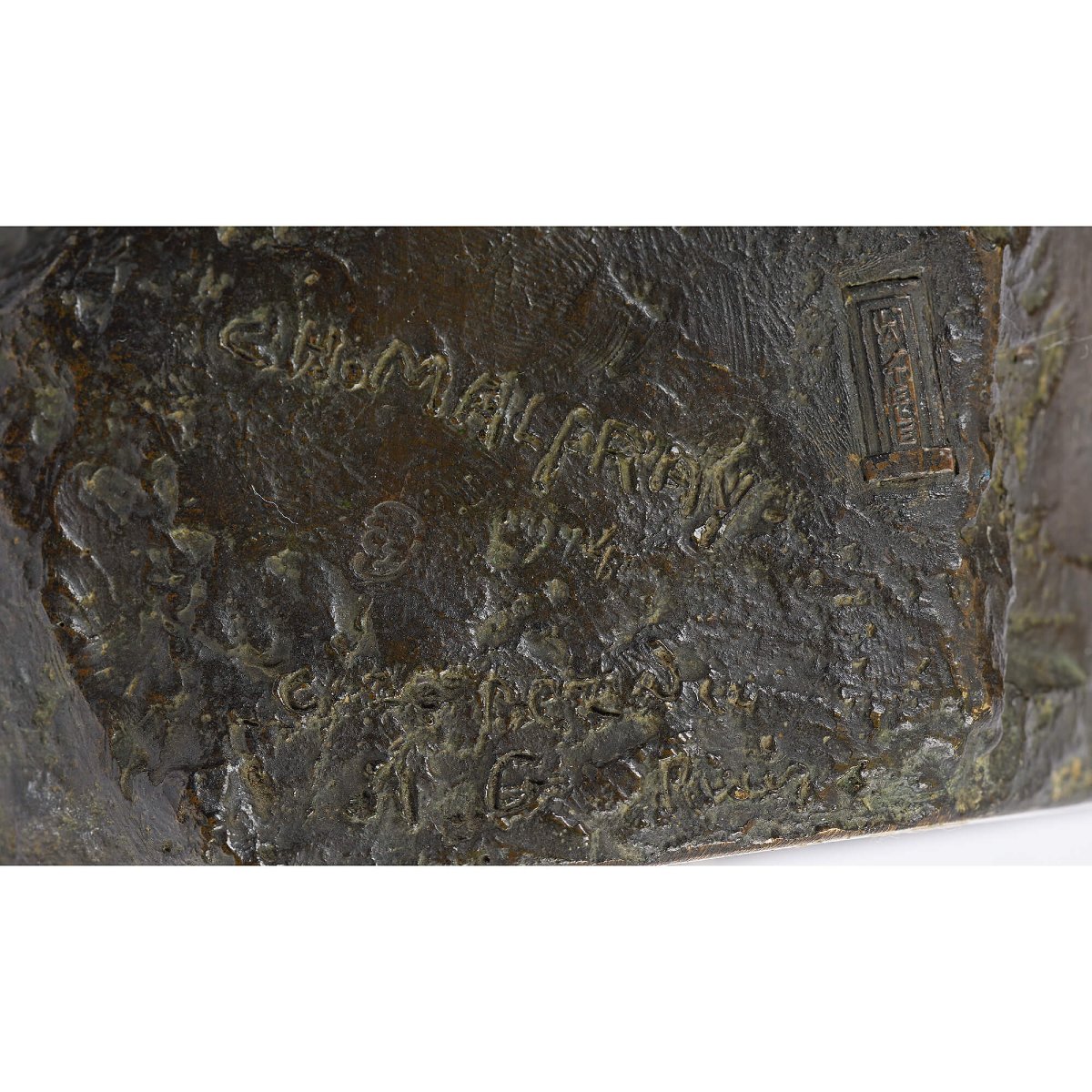
Signed in the wax and dated “CH MALFRAY – 1914” on the reverse
Produced by “La Stèle” around 1914 based on the original plaster model from 1912/1913
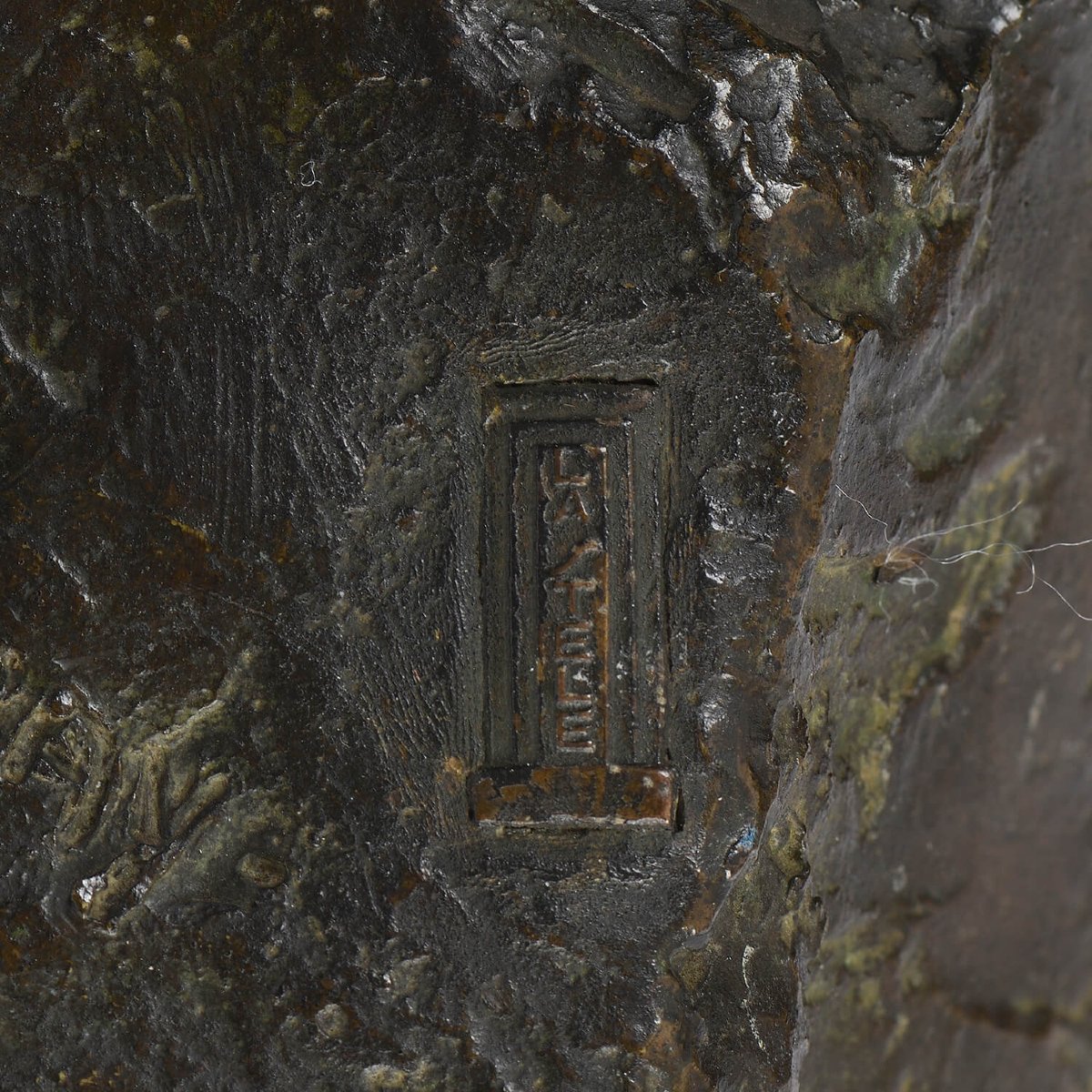
Bears the publisher’s cartouche ‘LA STELE’ on the back
Bears the foundry mark “Cire perdue AG Paris” for Arthur Goldscheider
Bears the notation “cire perdue” and the inscription “model 237”
Dimensions:
Height: 32 cm
Width: 16 cm – Depth: 25 cm
Bibliography: Model listed under Cat. No. 1, pp. 76 & 77, in the book “Charles Malfray, Sculptor,” exhibition of June 5, 2007 – Galerie Malaquais
In Greek mythology, Leda is the daughter of Thestios, king of Aetolia, and his wife Eurythemis. She becomes the wife of Tyndareus, the deposed king of Sparta, who had taken refuge at her father’s court. When he regains his throne, Leda returns with him to his city. Zeus then falls in love with the young woman and transforms himself into a swan both to deceive her guard and to seduce her. Some of her many children were fathered by Zeus.
Galerie Paris-Manaus
Biography:
Born July 19, 1887, in Orléans—Died May 28, 1940, in Dijon
Born into a family of stonemasons and architects, Alexandre Charles Malfray served his apprenticeship under the Orléans-based master Alfred Lanso.
A student at the Orléans School of Fine Arts, he graduated at the top of his class.
In 1904, he took courses at the École des Arts Décoratifs in Paris andthe École des Beaux-Arts in Paris and frequented the artistic circlesof Montmartre.
He was fascinated by the work of Auguste Rodin and Antoine Bourdelle.
In 1916, he survived the hell of the Battle of Verdun, where he was gassed and would remain in poor health for the rest of his life.
In 1920, he won the Second Prize of Rome; the First Prize went to Charles Georges Cassou.
That same year, he created the “Monuments to the Dead” in Pithiviers and Orléans, whose modernism was the subject of intense debate.
Bankrupted by these projects and suffering from the aftereffects of the war, he decided to give up sculpture. But in 1931, his friend Aristide Maillol appointed him as his successor at the Académie Ranson. There, he taught sculpture to students including Etienne Martin, François Stahly, and Jean Le Moal, and rediscovered his creative path.
With the support of Education Minister Jean Zay, Charles Malfray received several major commissions, notably in 1936 for the Palais de Chaillot (“Le Printemps”) and in 1938 for a public garden in Limoges (“La Source du Taurion”).
He died suddenly in 1940 while passing through Dijon, after stopping at a pharmacy to pick up something for his aunt.
Charles Malfray said: “Sculpture, no more than painting, aims to represent nature. On the contrary, nature is merely a pretext and a means of expressing one’s self. Art must be a pure creation of the mind and the heart.”
Period: 20th century
Style: Other Style
Condition: Perfect condition
Material: Bronze
Width: 16 cm
Height: 32 cm
Depth: 25 cm
Reference (ID): 1797283
Availability: In stock