

Polish-style Visiting Dress In Blue Silk Taffeta By Raymond Et Falbalas - France, Circa 1875
Circa 1875–1880
France, Third Republic period
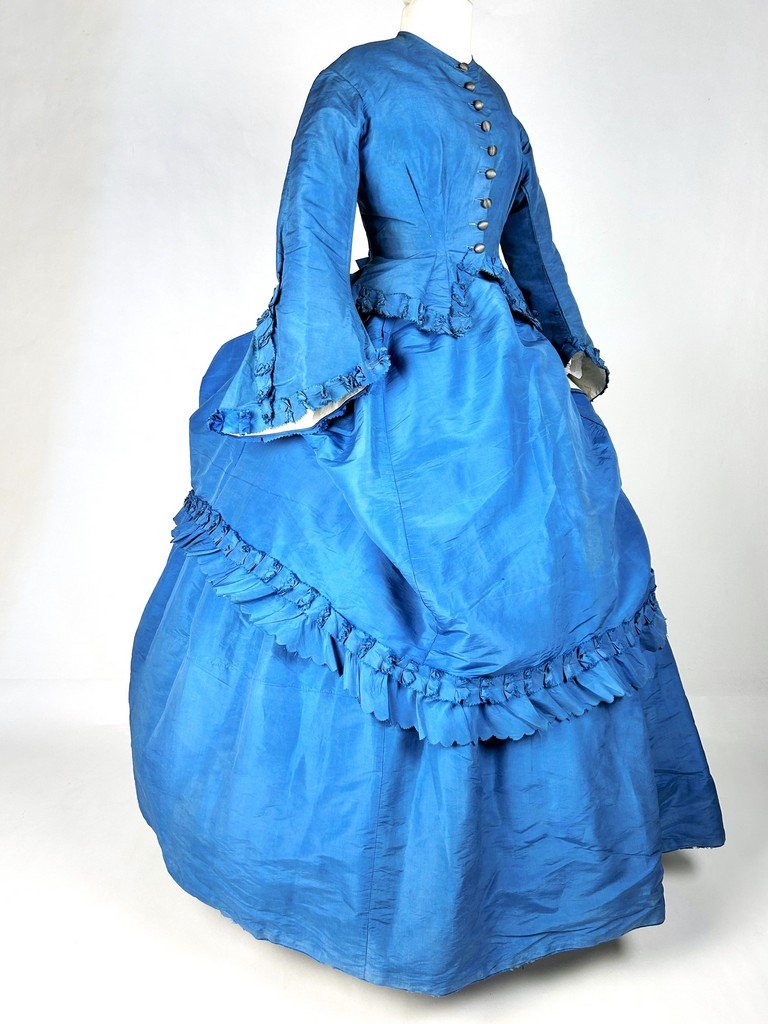
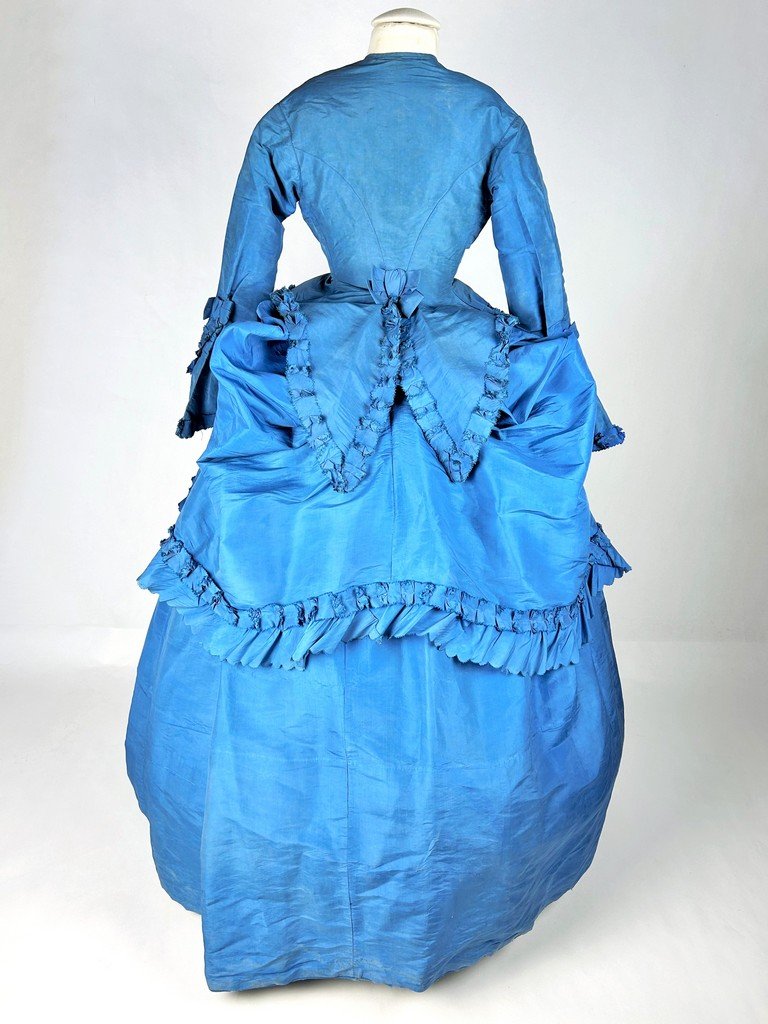
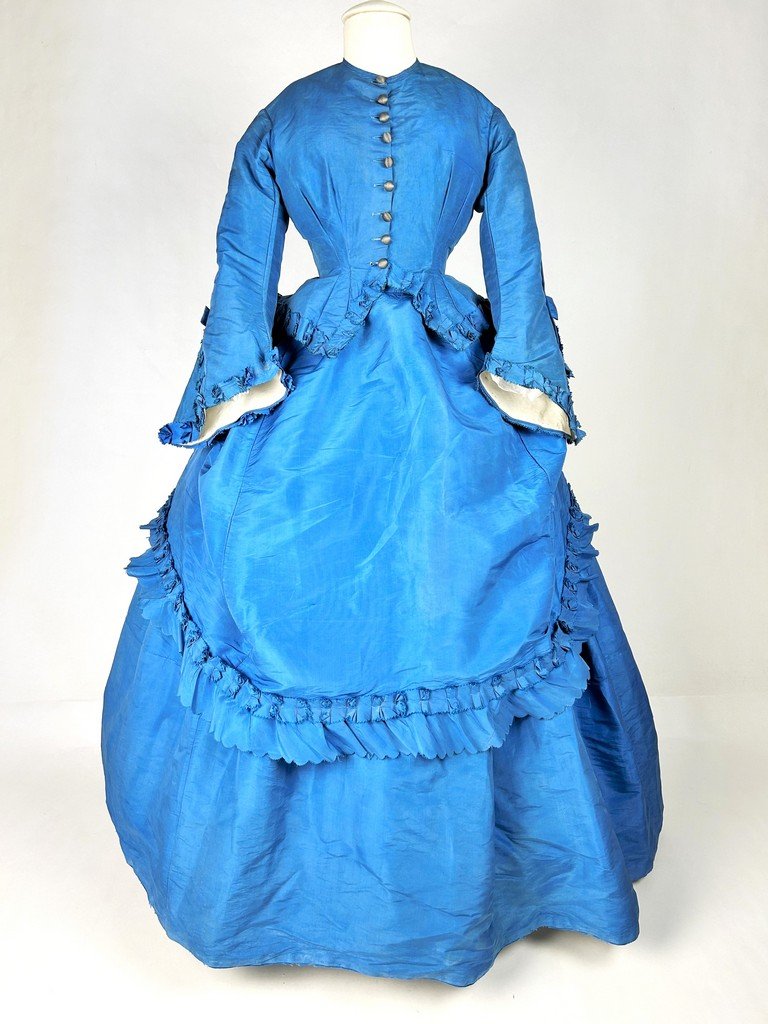
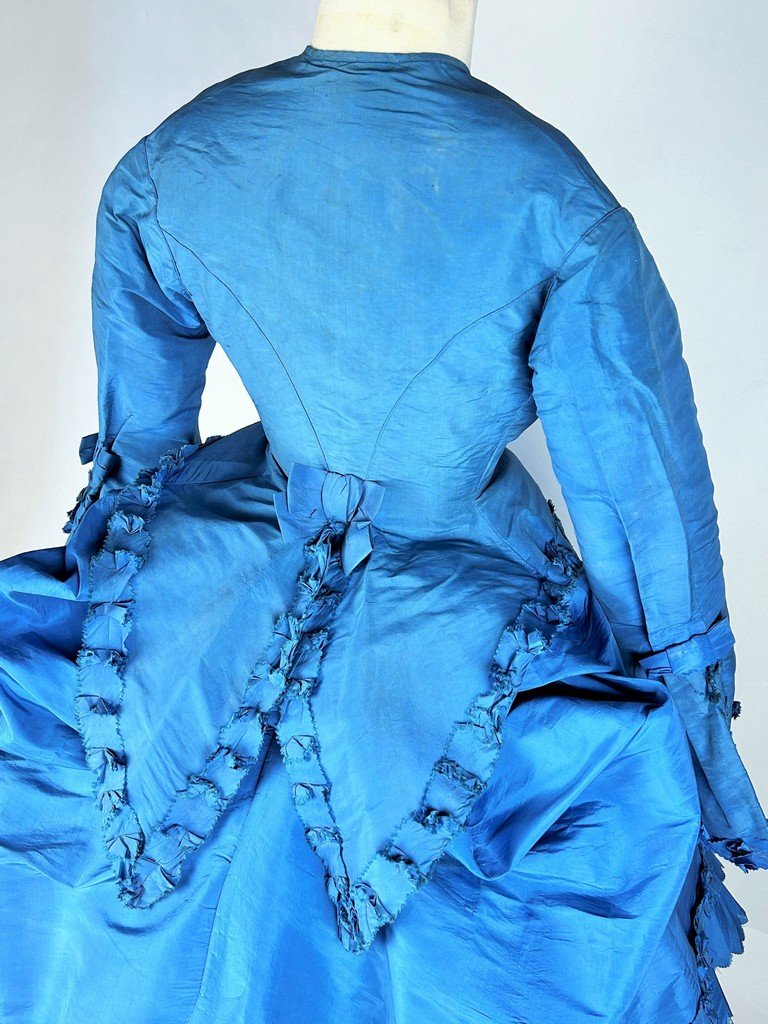
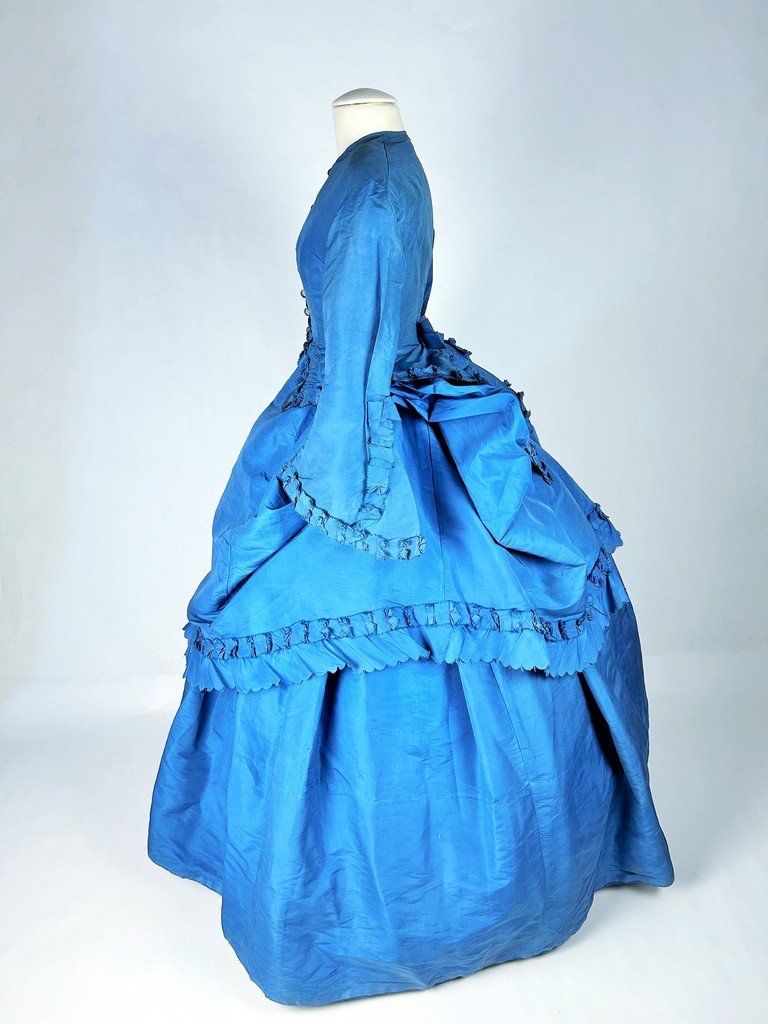
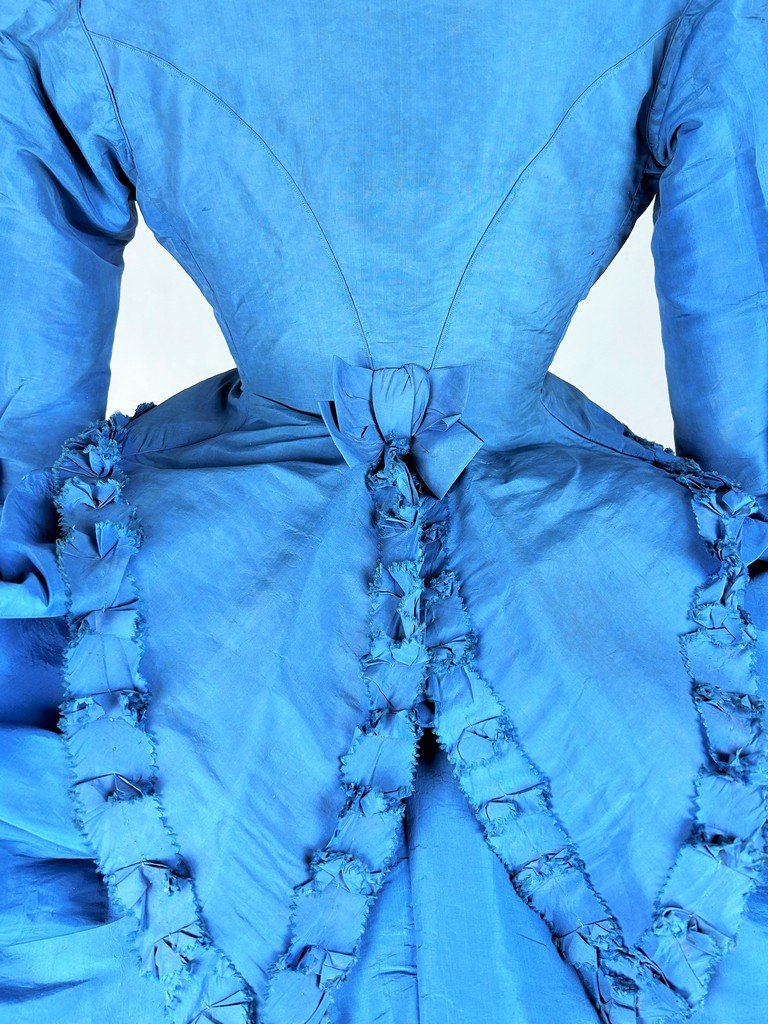
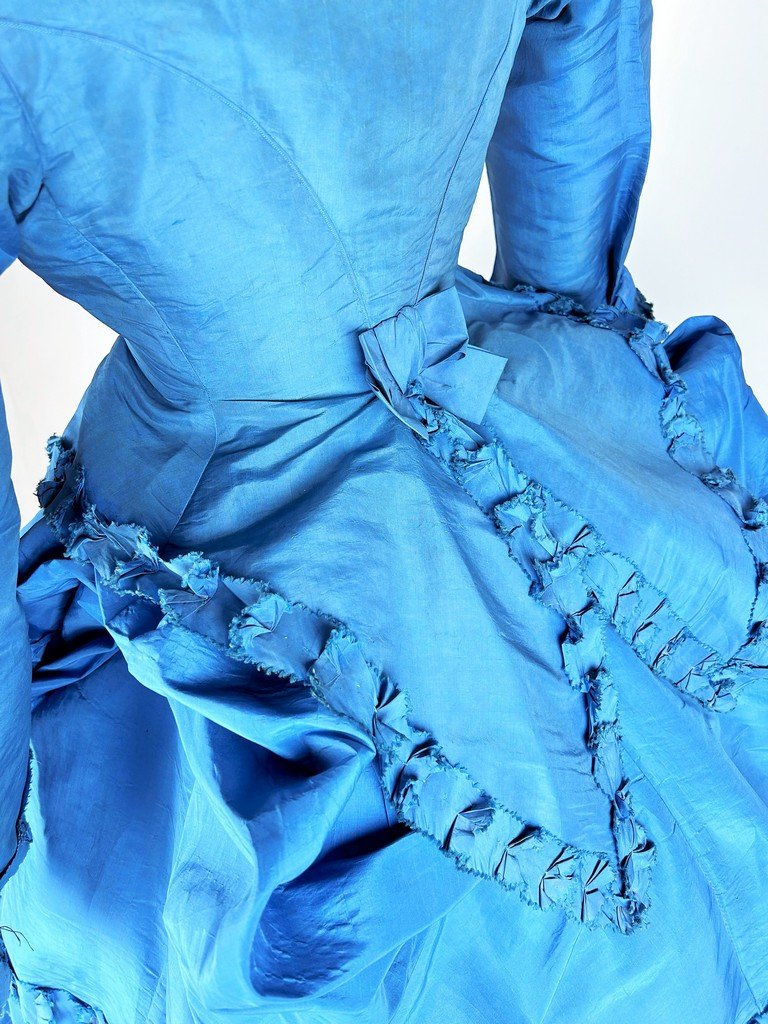
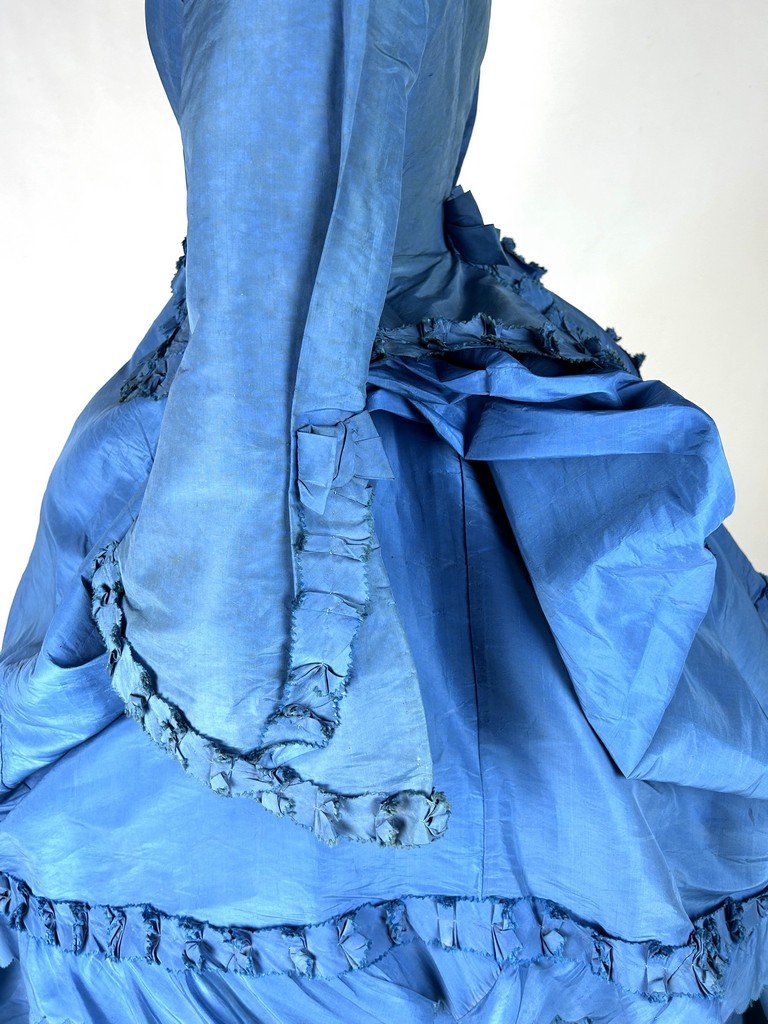
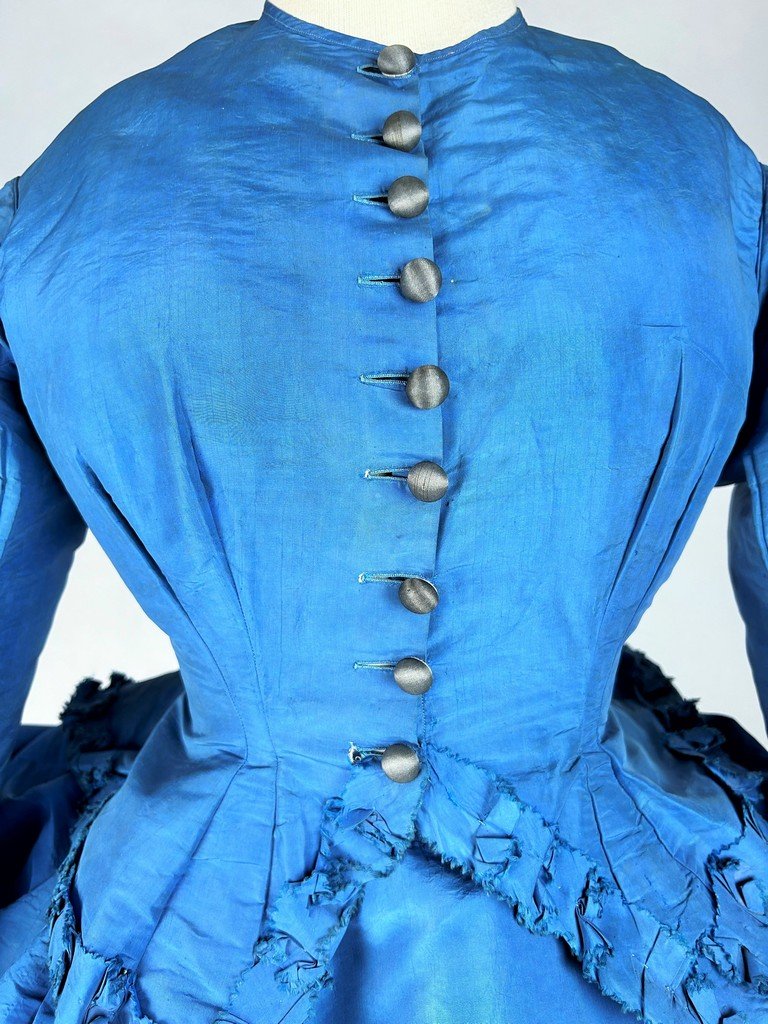
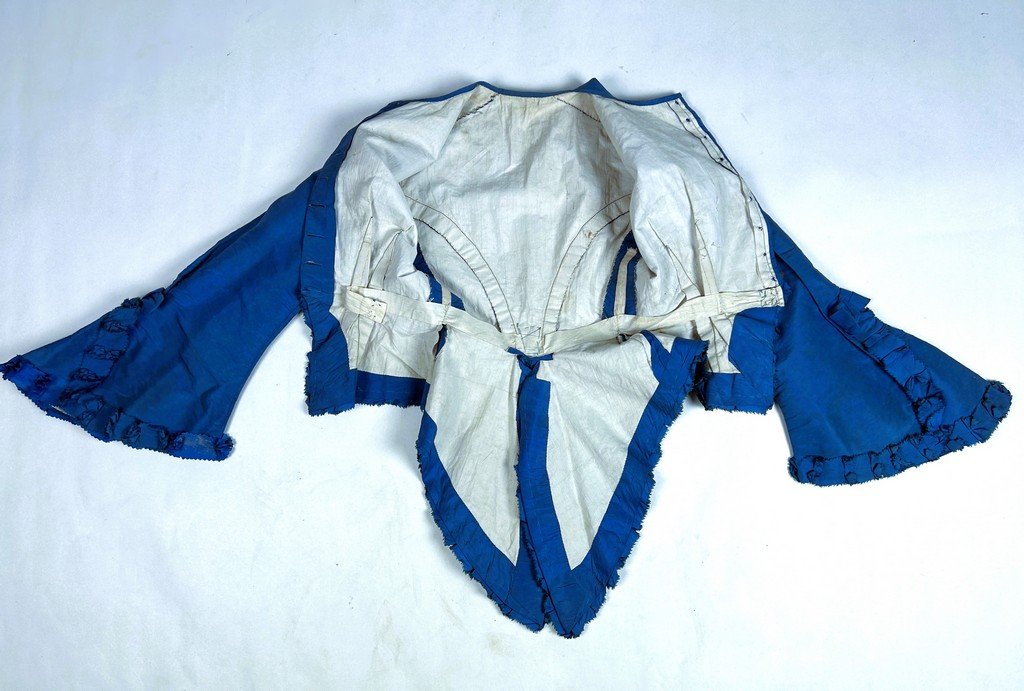
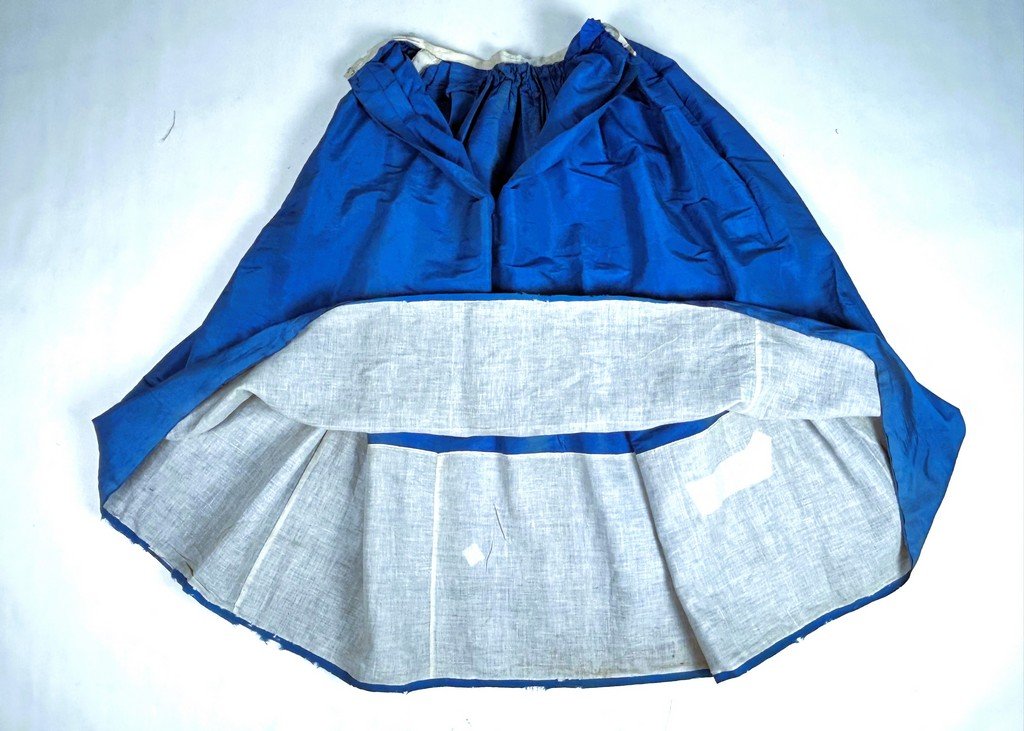
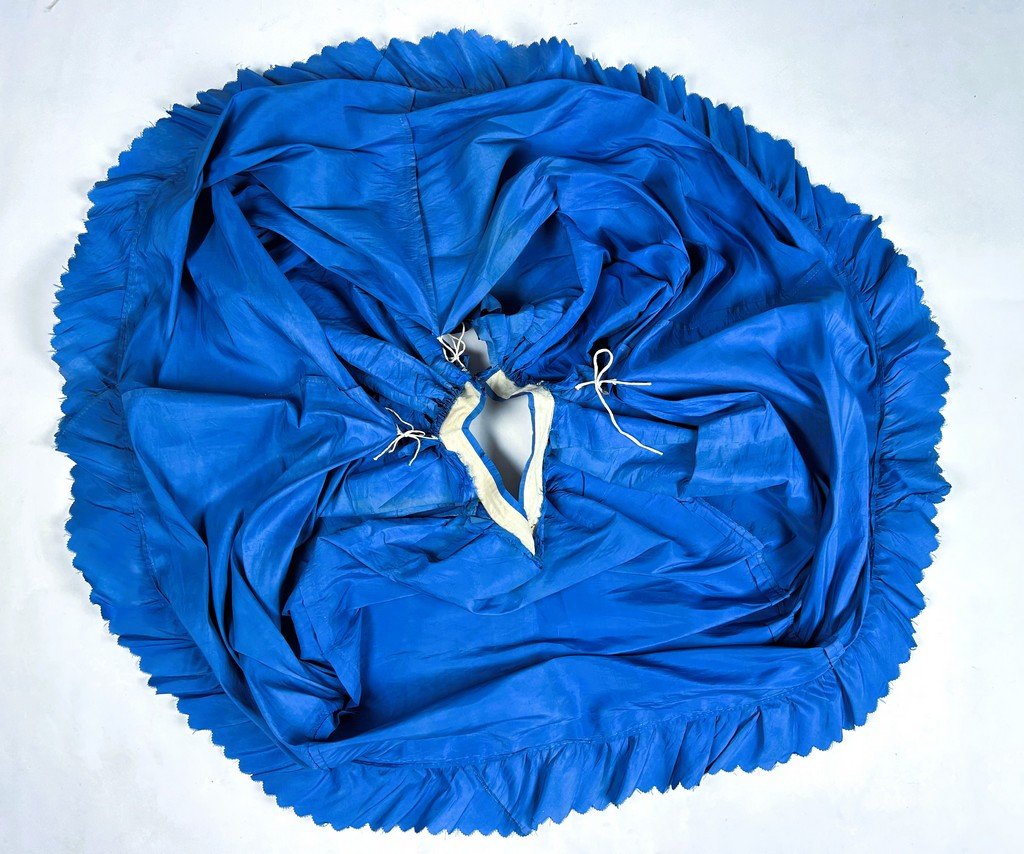
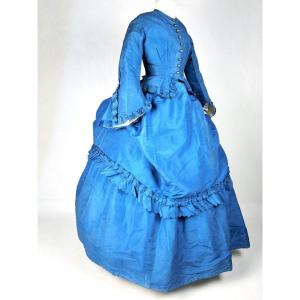
Three-piece formal or day dress in royal blue silk taffeta, with a boned bodice, skirt, and overskirt designed for a small crinoline or bustle, dating from the early Third French Republic. Fitted bodice with a crew neckline, long basques, and fastened at the front with gray silk bell-shaped buttons. Long, elbow-length sleeves ending in pagoda-shaped cuffs with ruffled falbalas, echoed on the pointed basques. The flounces are notched and bouilloned into rosettes in the 18th-century style. Skirt for a tournure hoop and a ruffled sack-shaped overskirt with internal ties that are knotted to create a Polonaise-style gathered effect. The back features a puffed volume effect. The bodice is lined with white cotton batiste and has a built-in waistband. The skirt has no lining other than a strip of unbleached tarlatan to reinforce the bottom of the skirt. No major flaws aside from discreet, slight whitish stains at the bottom of the train and on the peaks of the sleeve frills, as well as three repairs to the silk in the skirt. No holes or stains; the blue taffeta remains very sturdy. The dress is an original period piece and has not undergone any subsequent alterations. Overall good condition in terms of color and preservation.
Dimensions: Equivalent to French size 35–36.
Note regarding the blue color: Jean-Michel Raymond’s invention led to the creation of other prussiate-based blues, such as the “bleus de Lyon” discovered by Charles Girard and G. de Laire in 1860. Depending on the manufacturing method used, several varieties can be distinguished: direct blues, purified blues, and light blues. Their only drawback is that they are insoluble in water, which limits their use in dyeing. In 1862, Mr. Nicholson succeeded in overcoming this difficulty by discovering water-soluble blues through the treatment of Lyon blue with sulfuric acid.
France, Third Republic period
Three-piece formal or day dress in royal blue silk taffeta, with a boned bodice, skirt, and overskirt designed for a small crinoline or bustle, dating from the early Third French Republic. Fitted bodice with a crew neckline, long basques, and fastened at the front with gray silk bell-shaped buttons. Long, elbow-length sleeves ending in pagoda-shaped cuffs with ruffled falbalas, echoed on the pointed basques. The flounces are notched and bouilloned into rosettes in the 18th-century style. Skirt for a tournure hoop and a ruffled sack-shaped overskirt with internal ties that are knotted to create a Polonaise-style gathered effect. The back features a puffed volume effect. The bodice is lined with white cotton batiste and has a built-in waistband. The skirt has no lining other than a strip of unbleached tarlatan to reinforce the bottom of the skirt. No major flaws aside from discreet, slight whitish stains at the bottom of the train and on the peaks of the sleeve frills, as well as three repairs to the silk in the skirt. No holes or stains; the blue taffeta remains very sturdy. The dress is an original period piece and has not undergone any subsequent alterations. Overall good condition in terms of color and preservation.
Dimensions: Equivalent to French size 35–36.
Note regarding the blue color: Jean-Michel Raymond’s invention led to the creation of other prussiate-based blues, such as the “bleus de Lyon” discovered by Charles Girard and G. de Laire in 1860. Depending on the manufacturing method used, several varieties can be distinguished: direct blues, purified blues, and light blues. Their only drawback is that they are insoluble in water, which limits their use in dyeing. In 1862, Mr. Nicholson succeeded in overcoming this difficulty by discovering water-soluble blues through the treatment of Lyon blue with sulfuric acid.
1 900 €
Period: 19th century
Style: Napoleon 3rd
Condition: Good condition
Material: Linen
Reference (ID): 1795313
Availability: In stock
Print