THIS OBJECT WAS SOLD
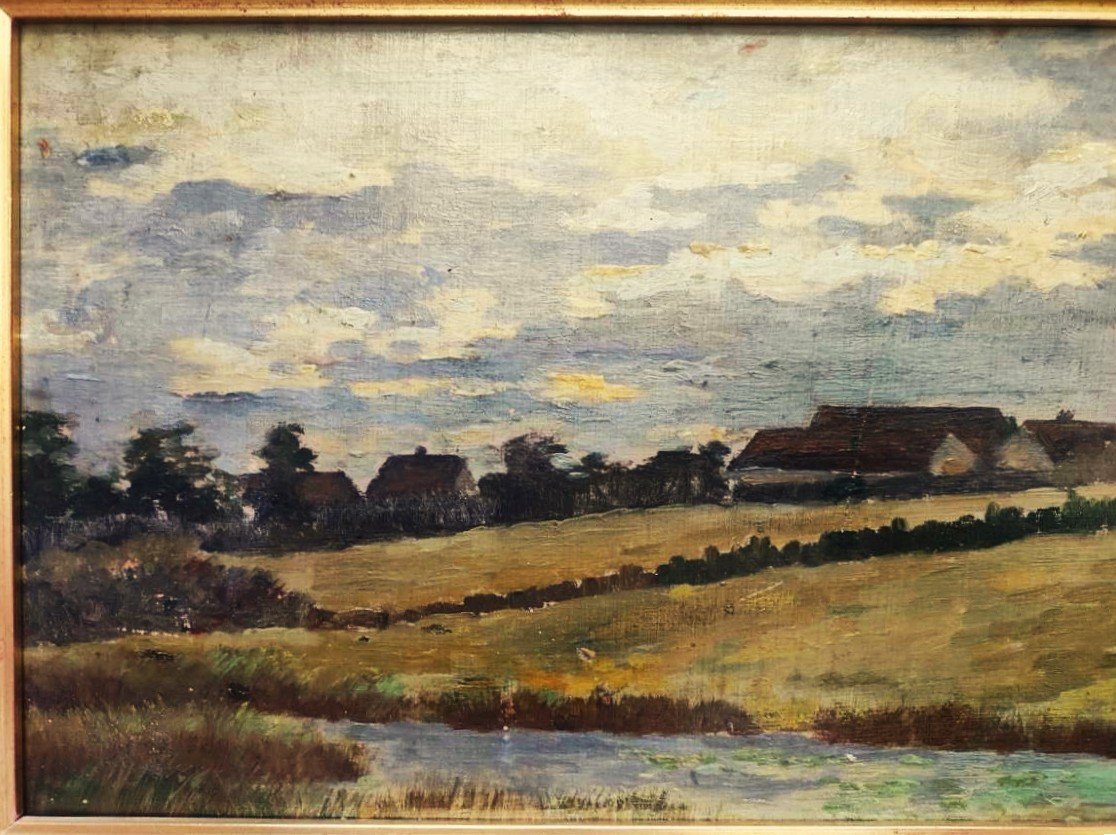
Lucien Mainssieux (1885–1958) Countryside Landscape At Dusk. Crozant, Voiron, Dauphiné
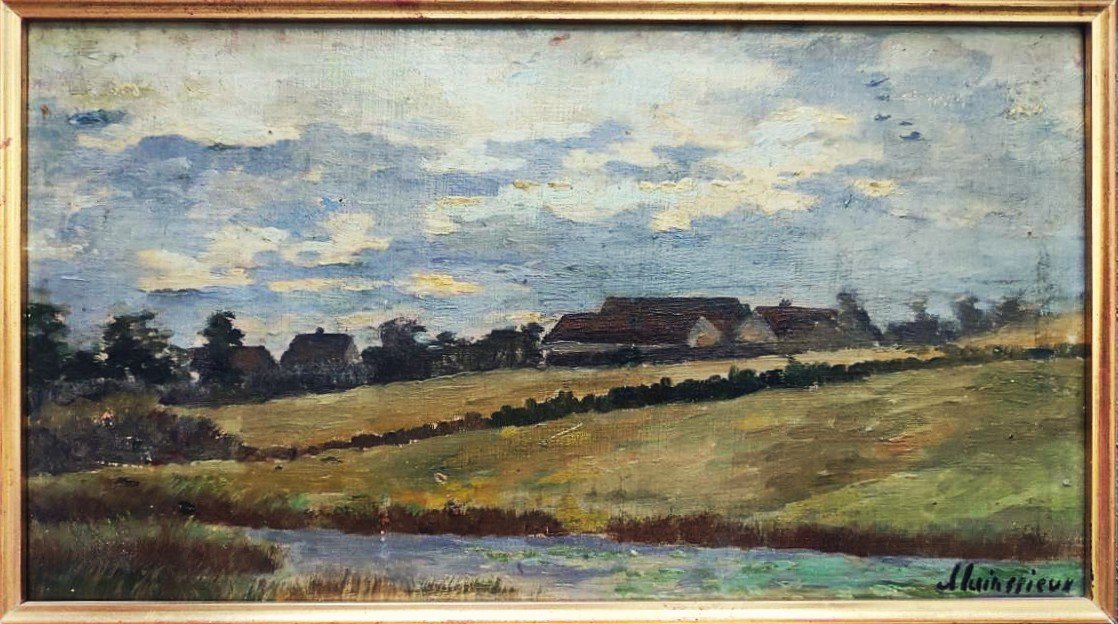
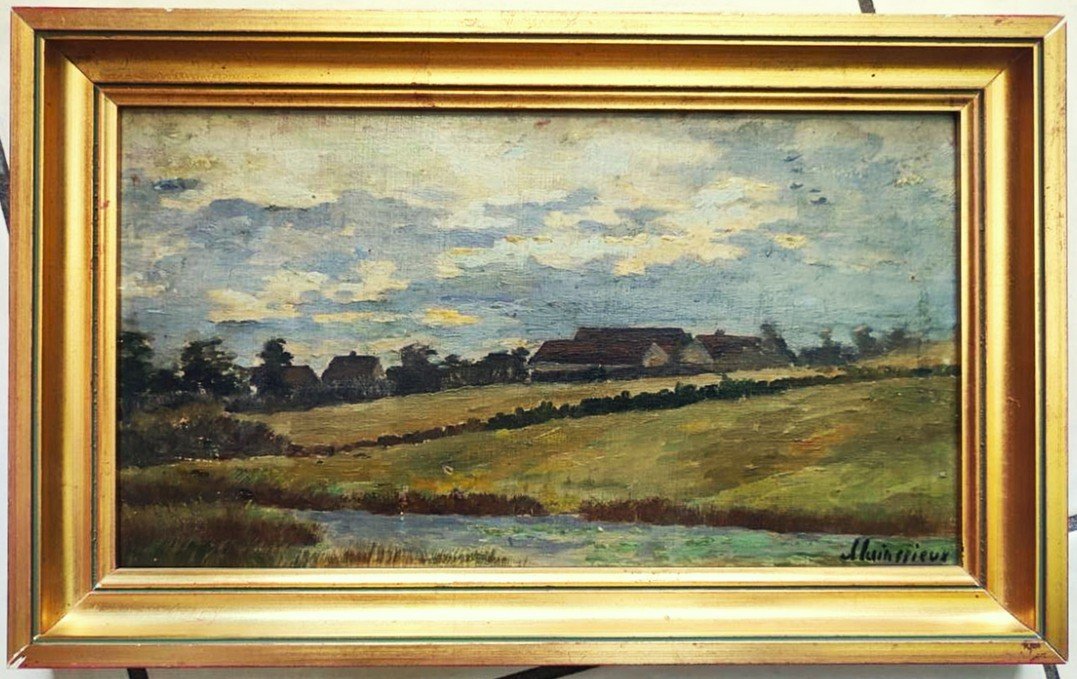
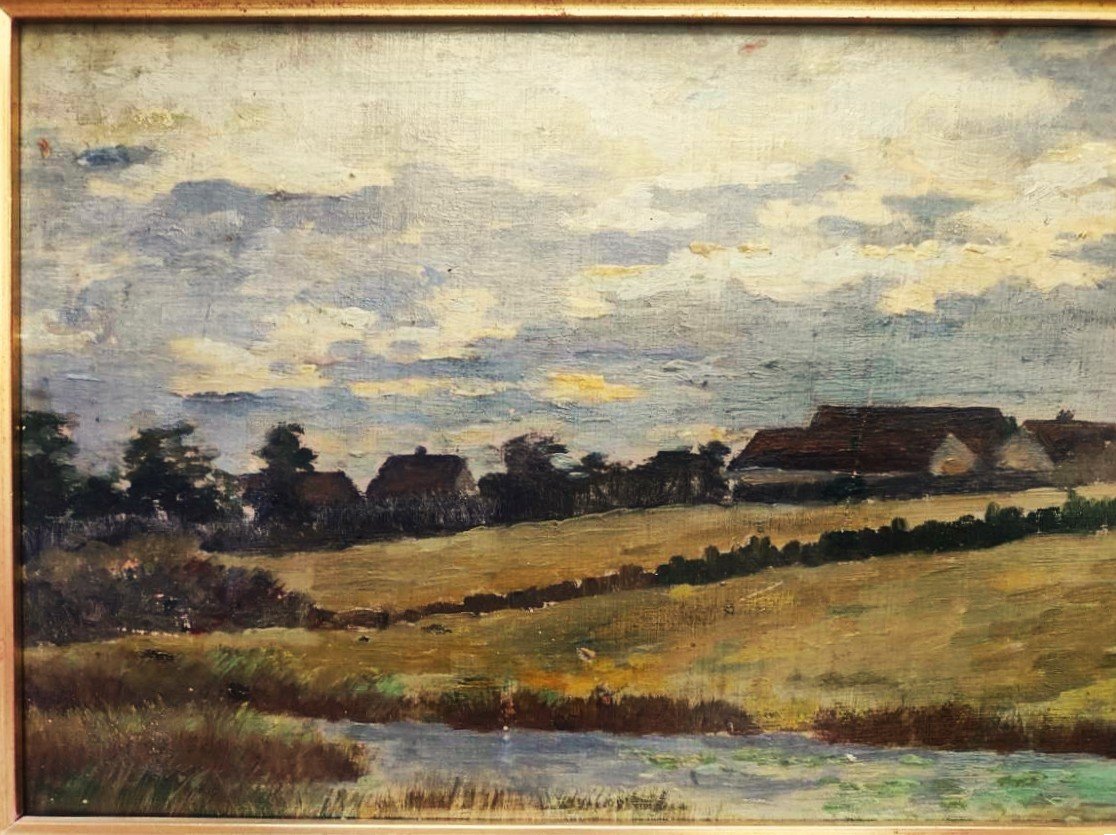
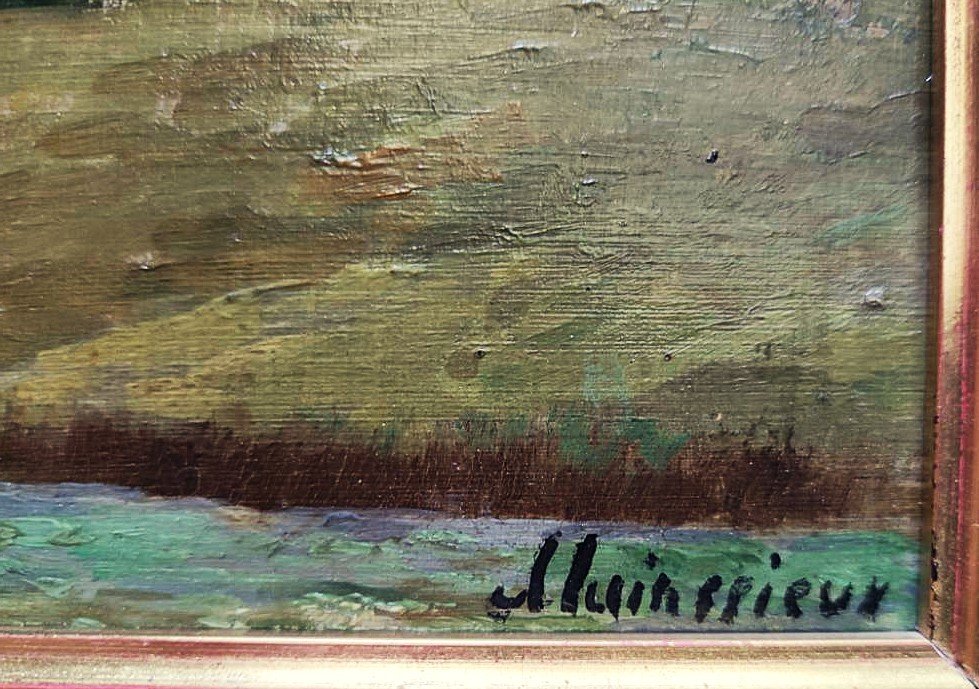
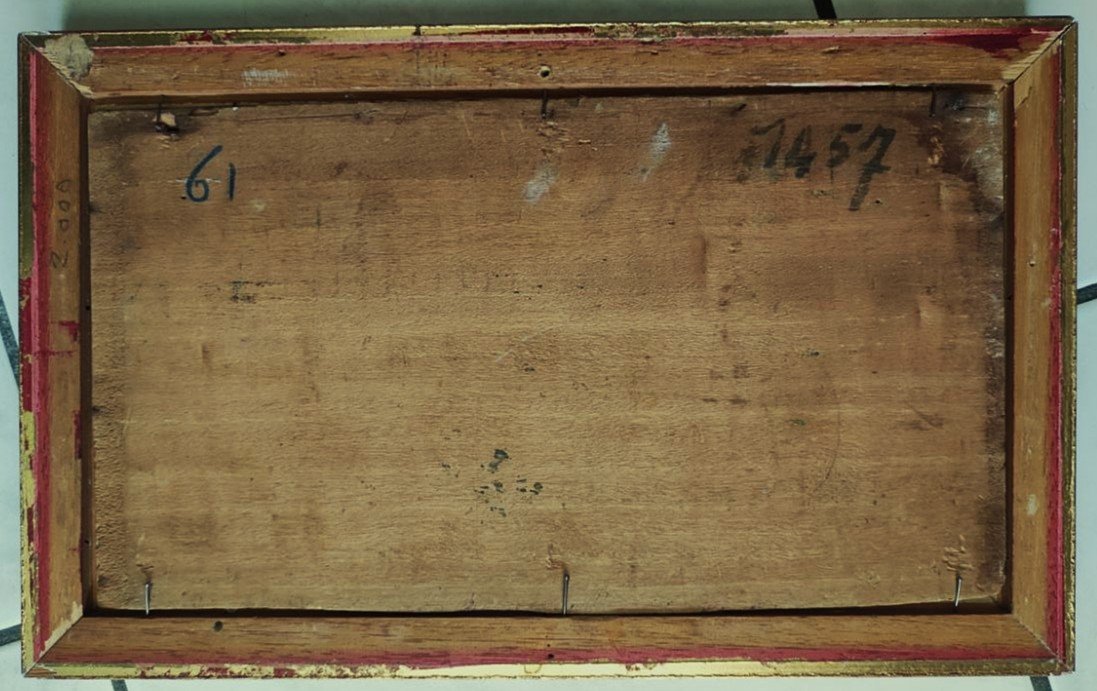


Dimensions of the painting alone (unframed): 18x32 cm; 23x37 cm including the frame
Delivered in an antique gilded frame
Authenticity guaranteed
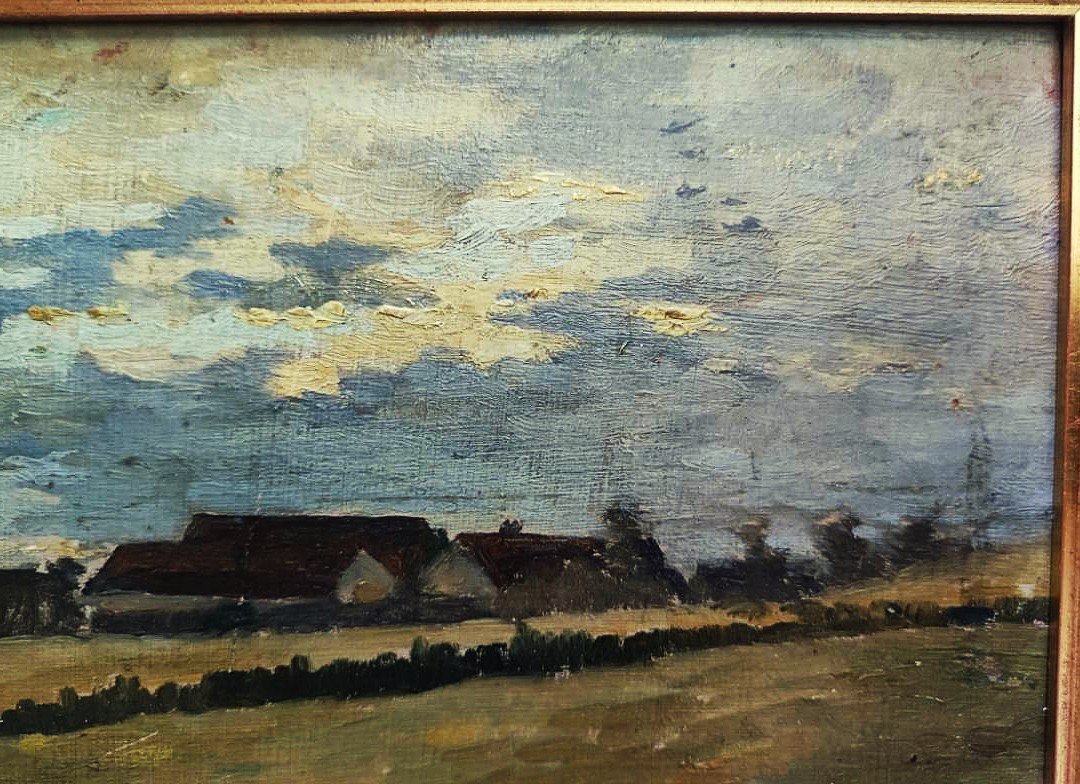
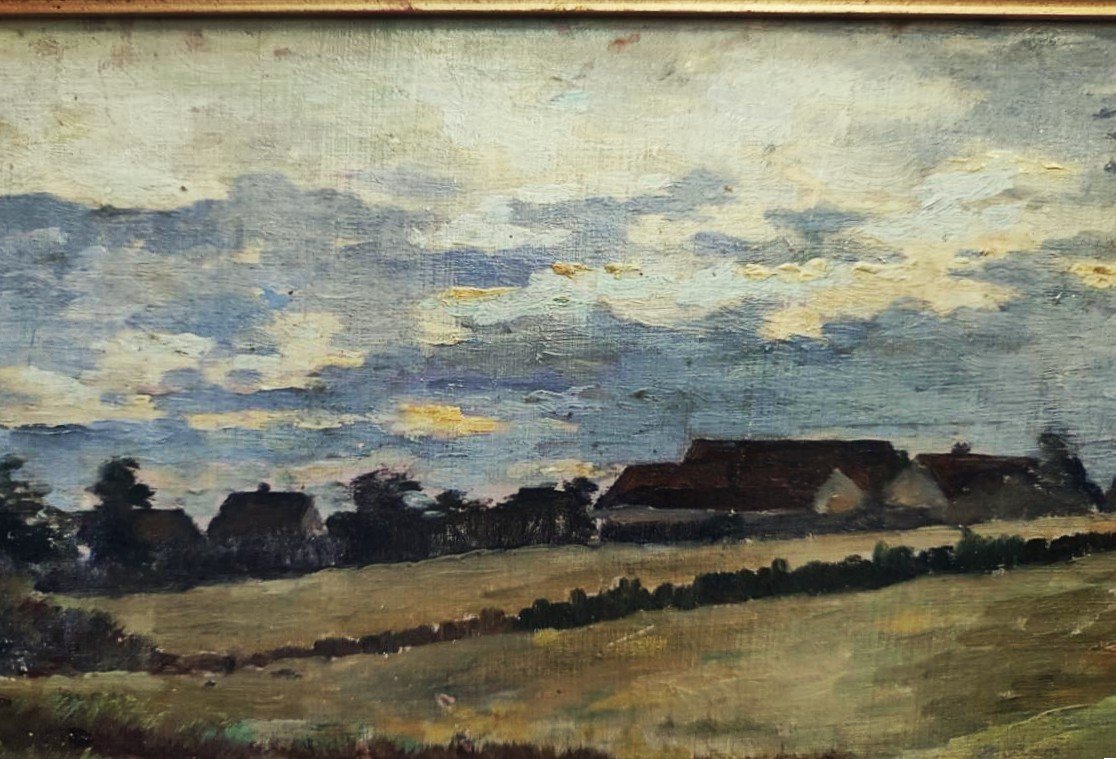
This is, therefore, a very lovely post-Impressionist composition by Lucien Mainssieux—a countryside landscape. In my opinion, this is a relatively early work. But is it set in the Dauphiné, the Creuse, or somewhere else???
Lucien Mainssieux needs no introduction; my clients have already seen many of his works in my gallery, among other things because he is one of the very best painters of the Crozant school.
Mainssieux is also known for his landscapes of the Dauphiné and southern France, for his Orientalist views of Algeria and Morocco, as well as for his superb portraits, still lifes, and more...
Orphaned by his mother at the age of 19 months, Lucien Mainssieux suffered from tuberculosis of the pelvic bones (or coxalgia). He spent his first twelve years bedridden and limped his entire life.
In Grenoble, François Joseph Girot was his first teacher, and Jules Flandrin his first significant influence.
Hearrived in Paris in 1905—the year of the Fauvist scandal—to work with Jean-Paul Laurens. At the Académie Julian, he met Dunoyer de Segonzac, who would become a loyal friend.
In Paris, he spent time with Max Weber; through him, he met Picasso, but also spent time with Matisse, Marquet, Jacqueline Marval, and Rouault. He was not part of any of the art movements of the time, particularly not Cubism. His sole absolute model was Cézanne.
Mainssieux undertook numerous trips throughout his life, notably throughout France. Although he lived in Paris, he returned to Voiron in the summer, where he could paint landscapes more easily.
His first trip outside France was to Rome in 1910. It was a revelation for him: the ancient monuments with their pinkish stone, the perfect architecture, and the sculpture fascinated him. When he saw the Palatine Hill, he decided to paint it, awed by the beauty of the landscape. He first saw this hill as “the sun was slowly sinking toward the horizon, and the city’s palaces and the distant hills were bathed in a golden mist.” In 1913, he exhibited the painting of this scene, The Palatine Hill, at the Salon d’Automne in Paris. He caught the attention of critics and the general public thanks to his style. He returned to Rome five more times between 1911 and 1926.
In 1921, after receiving a scholarship to study in Africa, Mainssieux left for Tunisia. His discovery of the Muslim world filled him with wonder, and he began painting marabouts, palm groves, sand dunes, and oases. He would return to that country many times.
He visited Morocco four times beginning in 1929, then wrote a book, Le Maroc secret,illustrated with drawings, but which he never published. His last trip was again to Morocco in 1958, to Agadir.Between 1942 and 1954, Mainssieux undertook four trips to Algeria, to Tipaza. He spent the last twelve years of his life between Voiron, Paris, and Tipaza. All these trips influenced his life, from his painting style to his personal life, since it was during these journeys that he met his wife. These trips inspired him to paint works that would bring him public recognition.
His works can be found at the Grenoble Museum and the Nantes Museum, but above all at the Mainssieux Museum in Voiron.
Explore similar pieces and discover your ideal find:
Landscapes