

émile Pouffier (1888–1940) - The Dead Christ
The Dead Christ
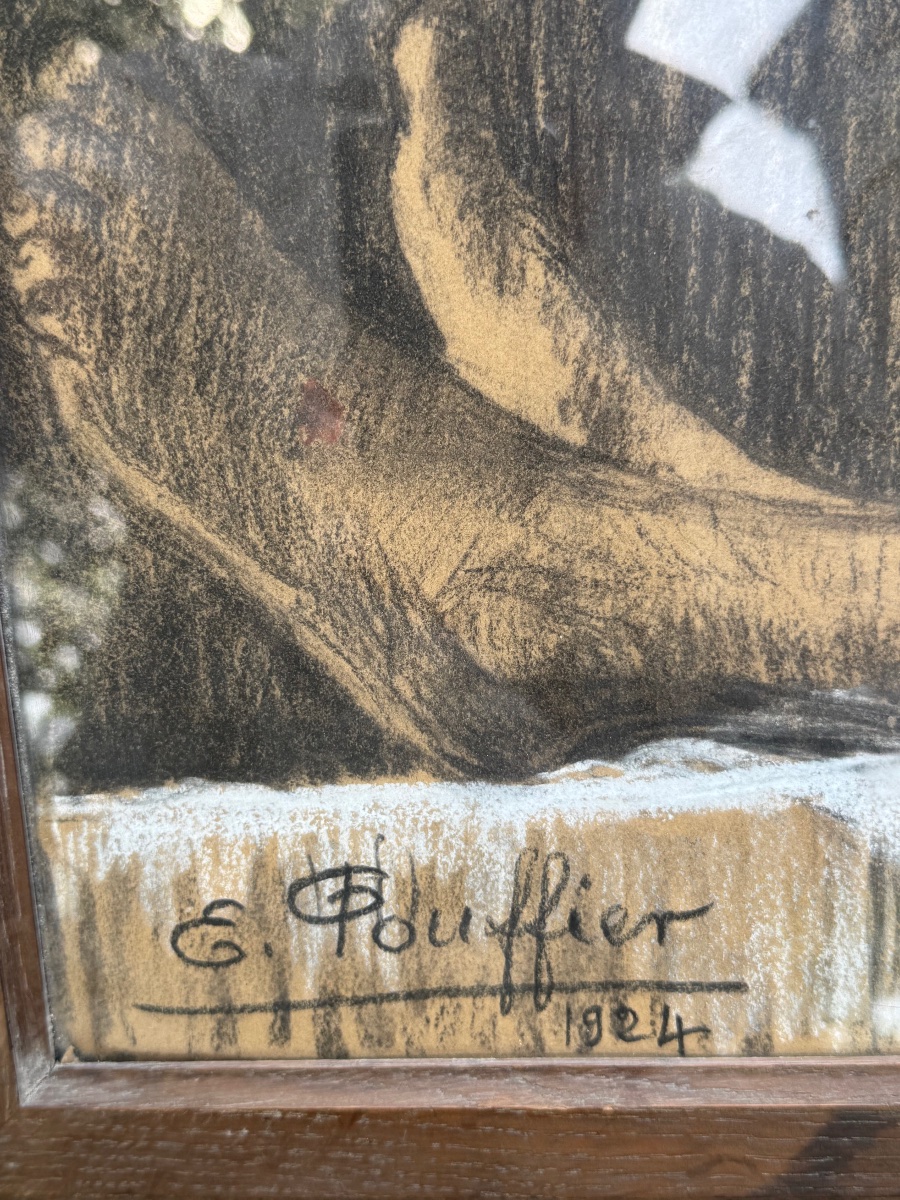
Émile Pouffier (1888–1940)
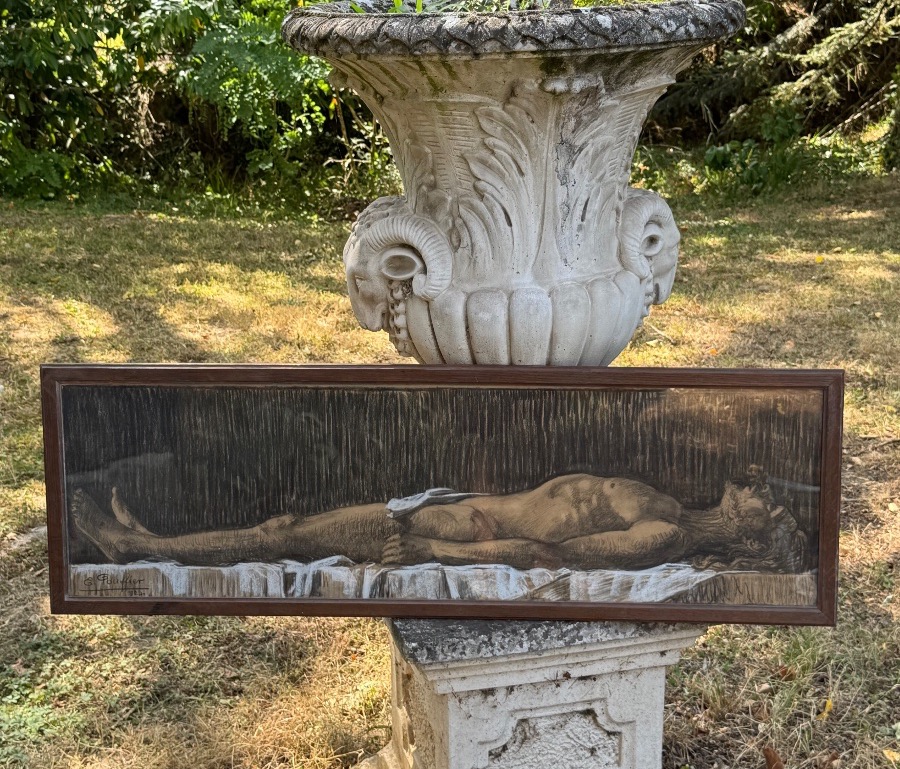
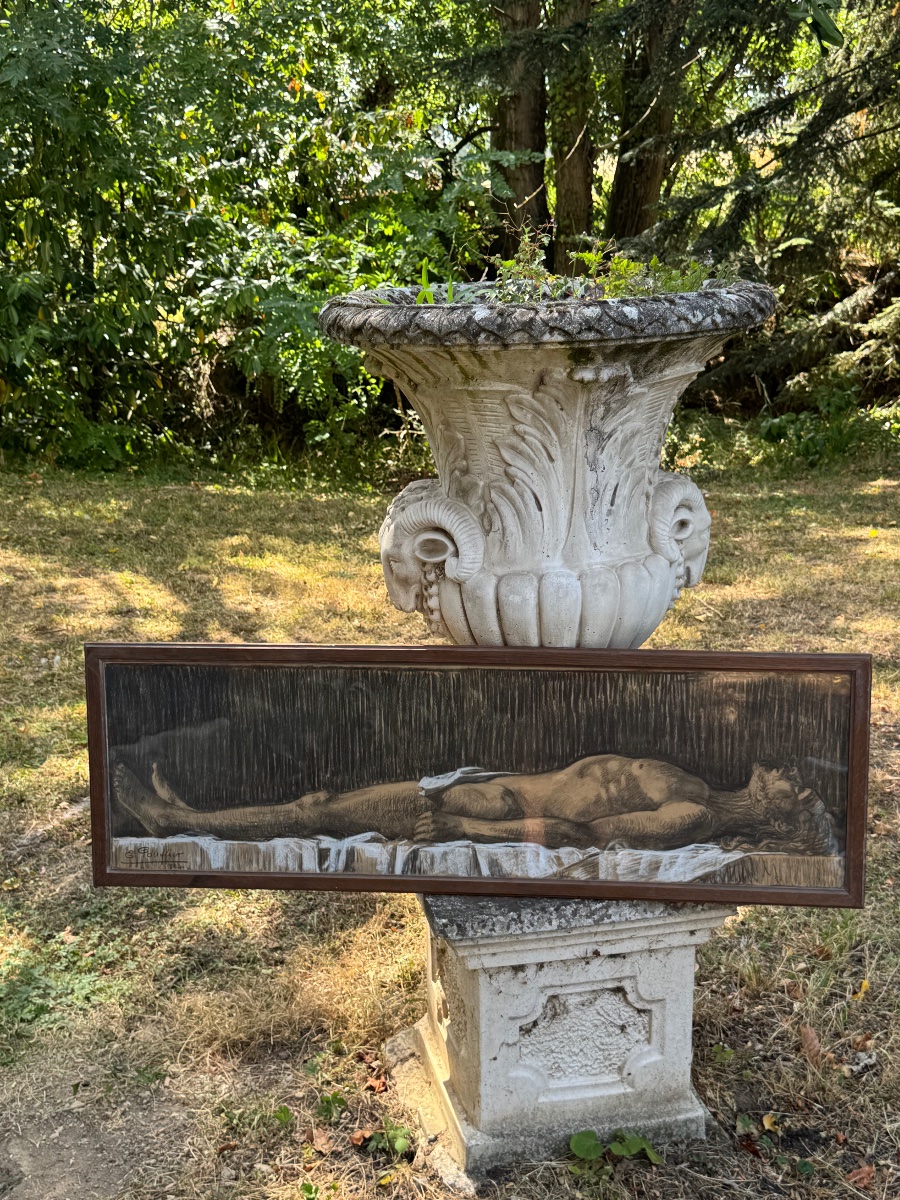
Charcoal and chalk highlights on paper, signed and dated 1924
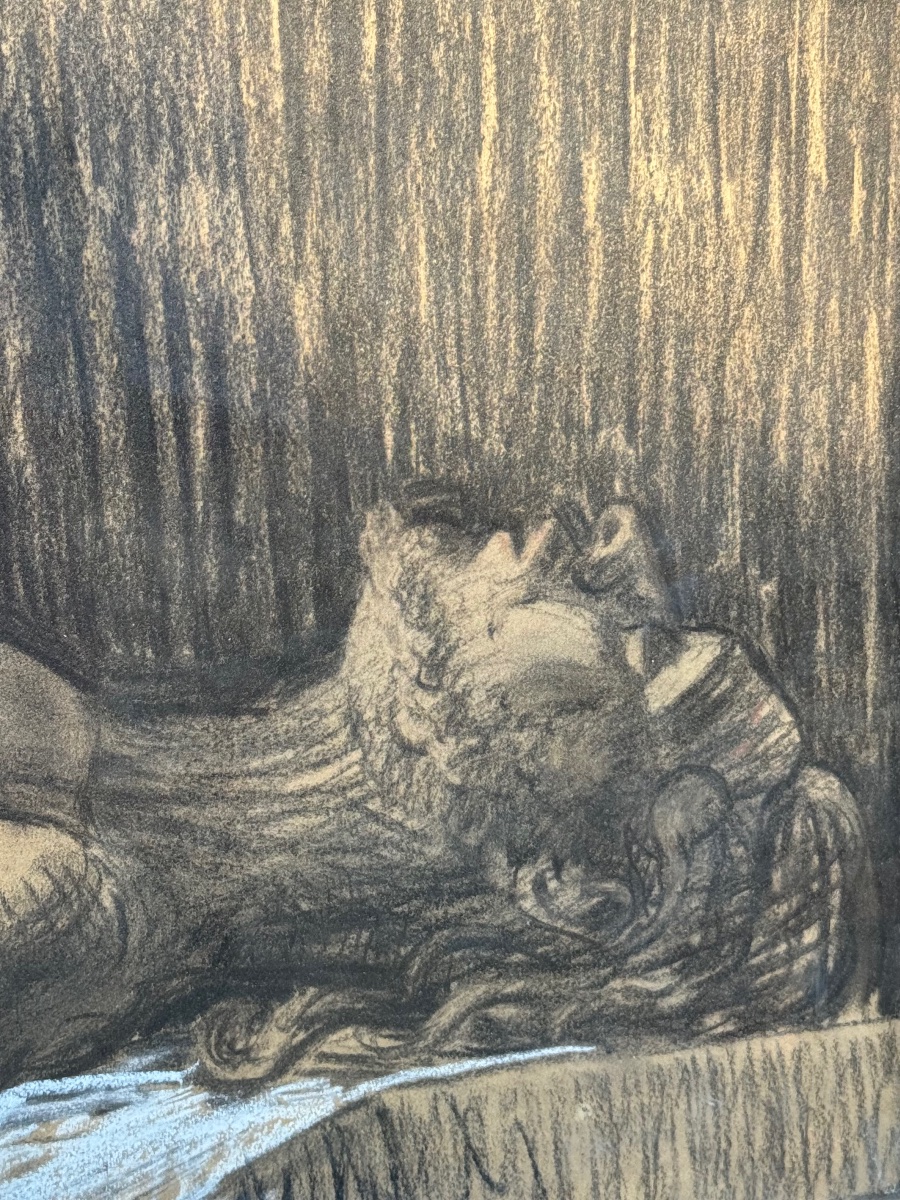
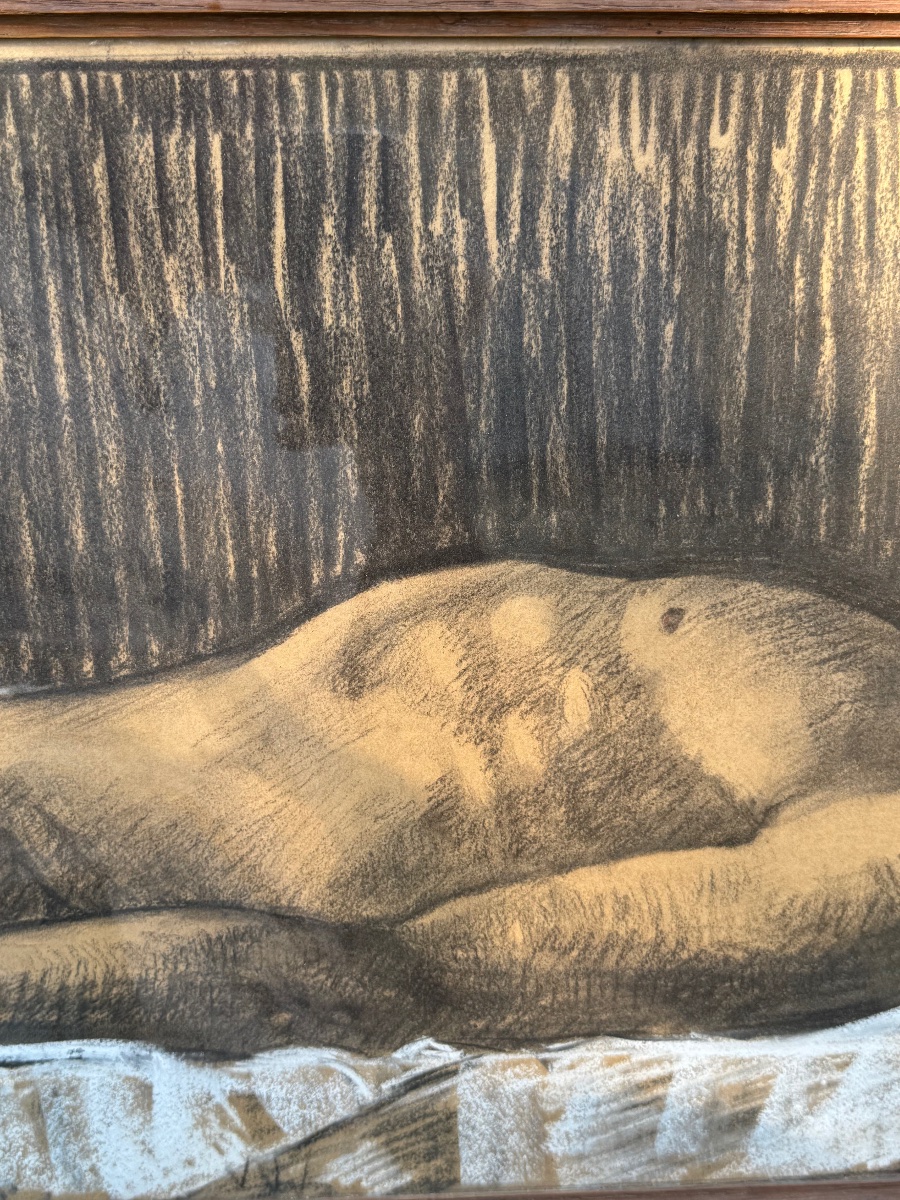
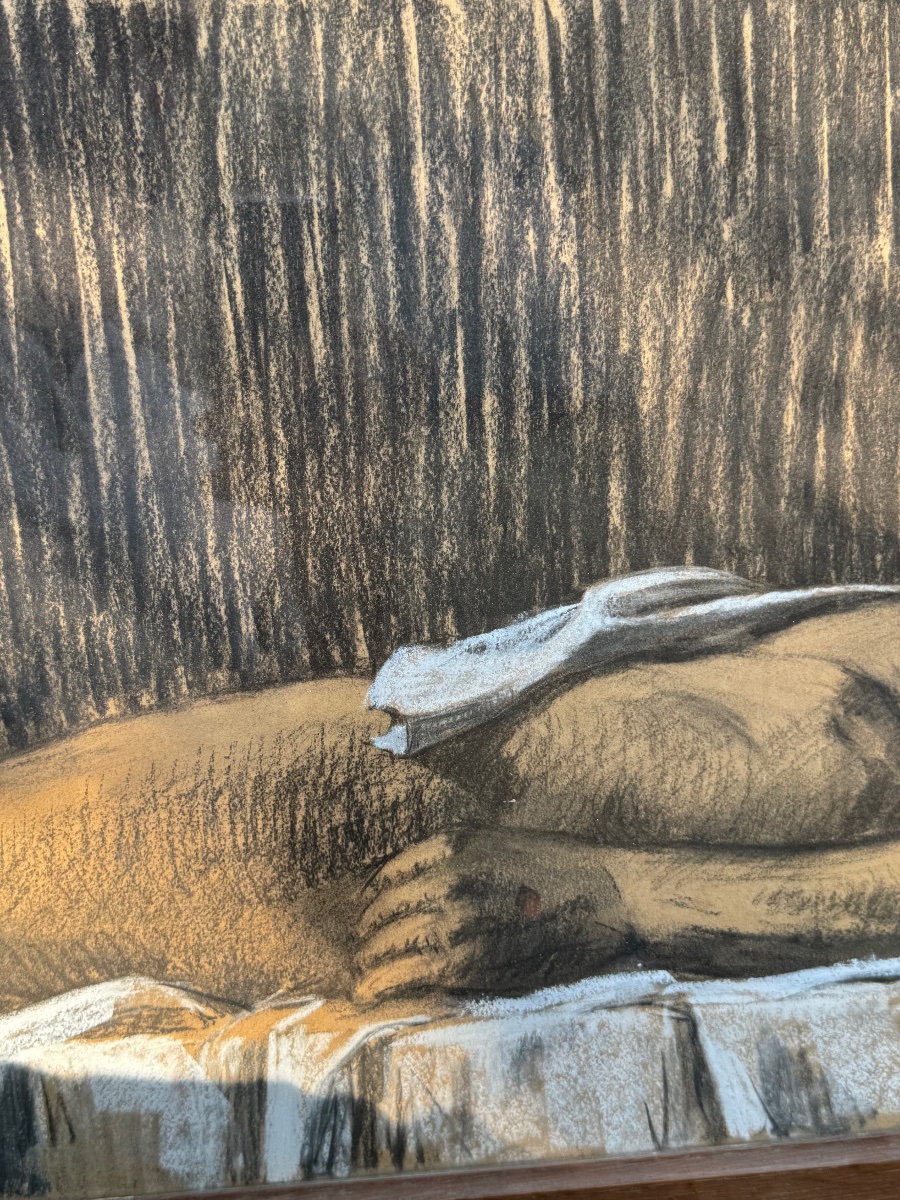
This work depicts Christ after the Crucifixion, lying on his shroud. The treatment of the body, shown in profile in a horizontal format, directly references The Body of the Dead Christ in the Tomb painted by Hans Holbein the Younger around 1521–1522. Émile Pouffier does not seek to reproduce the Renaissance painting, but offers a personal interpretation in which the drawing, light, and contrasts lend the subject a new presence.
The body occupies almost the entire composition. Chalk highlights bring out the light on the shroud and the flesh, while the dark background encloses the scene in a silent space. This contrast between shadow and light reinforces the work’s symbolic significance: Christ’s death also becomes the herald of the Resurrection.
Émile Pouffier (1888–1940) was a sculptor and stonemason from Dijon. He came from a family dedicated to funerary art—the son of stonemason Gustave Pouffier and the grandson of a caretaker at the Dijon cemetery—and married Marie-Louise Schanosky, daughter of sculptor Xavier Schanosky. He created numerous war memorials and funerary monuments in Burgundy. This familiarity with the themes of death, remembrance, and contemplation sheds light on the depth of this composition, created in 1924.
The subject of the dead Christ thus takes on a special resonance under his pencil. The work transcends the academic study to become a meditation on the human condition, sacrifice, and hope. With its simplicity and its deliberate reference to Holbein, this drawing is part of an iconographic tradition that spans the centuries, while reflecting the perspective of an artist shaped by the world of funerary art in the aftermath of World War I.
Period: 20th century
Style: Art Deco
Condition: En l'etat
Material: Paper
Width: 119
Height: 38,5
Reference (ID): 1793491
Availability: In stock