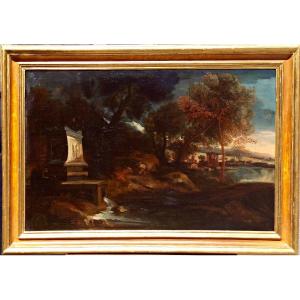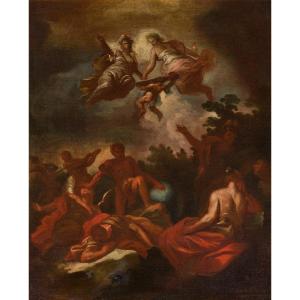


Esther And Ahasuerus - Oil On Canvas From The Second Half Of The 17th Century. Contemporary Sandblasted Roman Frame.
Artist: Atelier De Francesco Cozza (1605-1682)
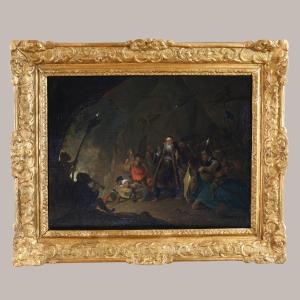
Oil painting on canvas depicting a scene from the Book of Esther, a text found in the Christian Old Testament and, above all, in the Hebrew Bible, which commemorates the event with the festival of Purim.
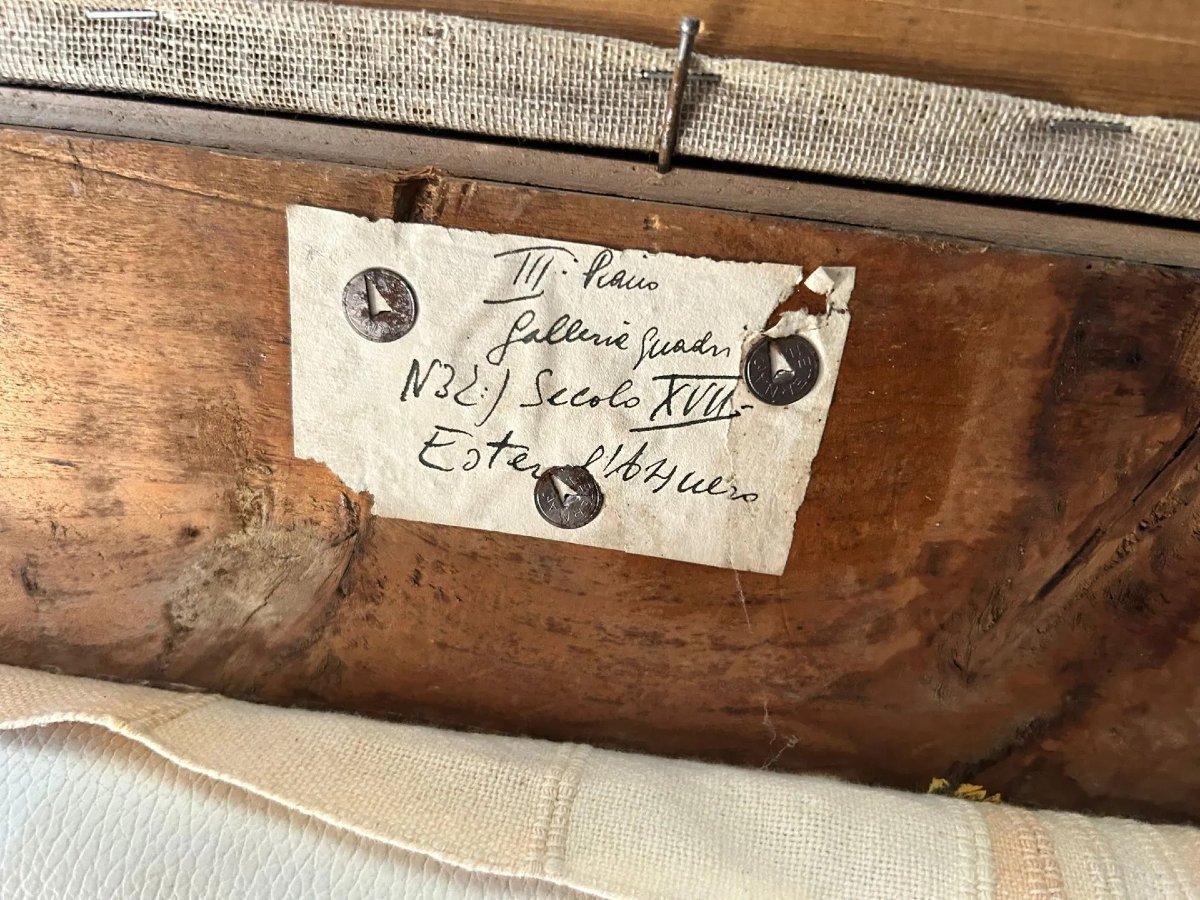
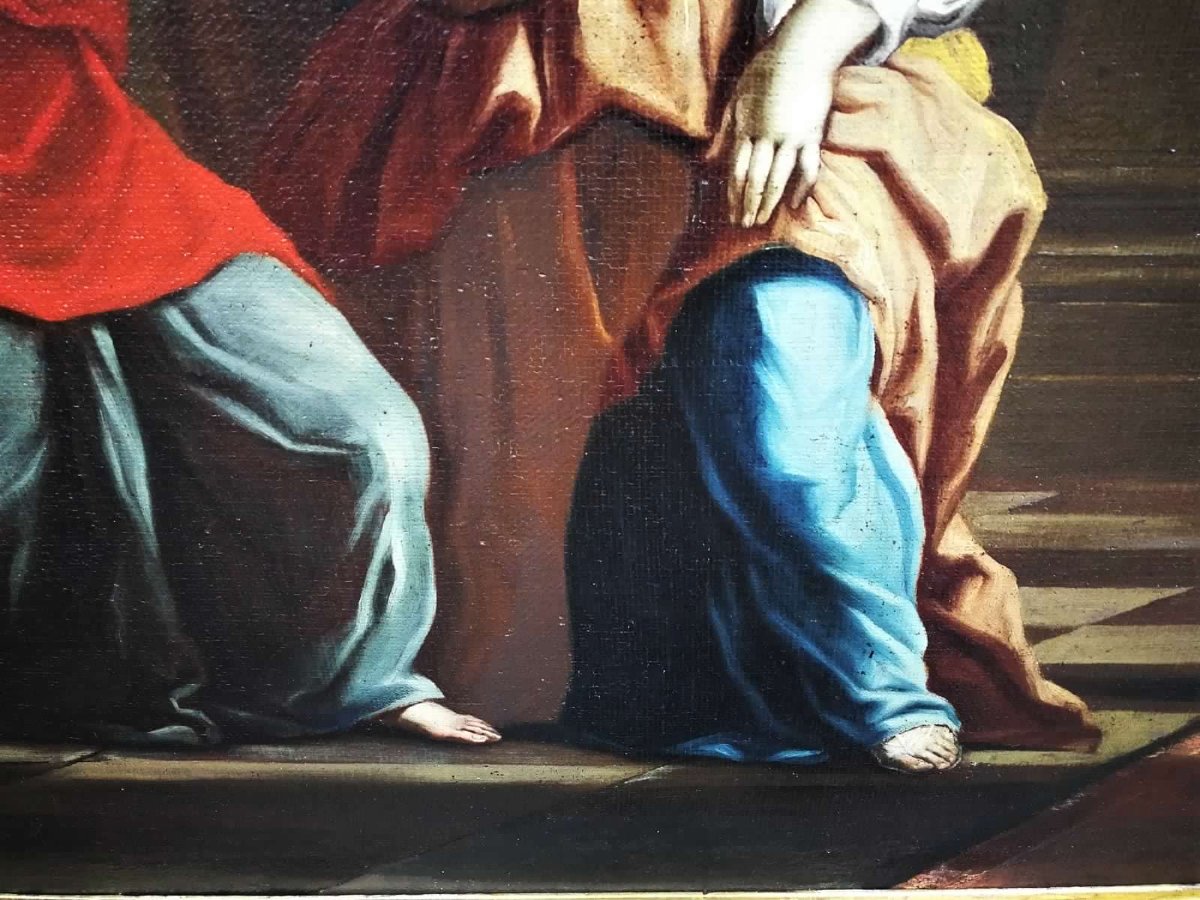
The painting can be attributed to the Calabrian painter Francesco Cozza (Stilo, 1605 – Rome, January 13, 1682) or to a talented student whose style closely resembles his. In fact, the skillful use of chiaroscuro, the natural perspective, and the chromatic richness of the colors seem to recall his marvelous works.
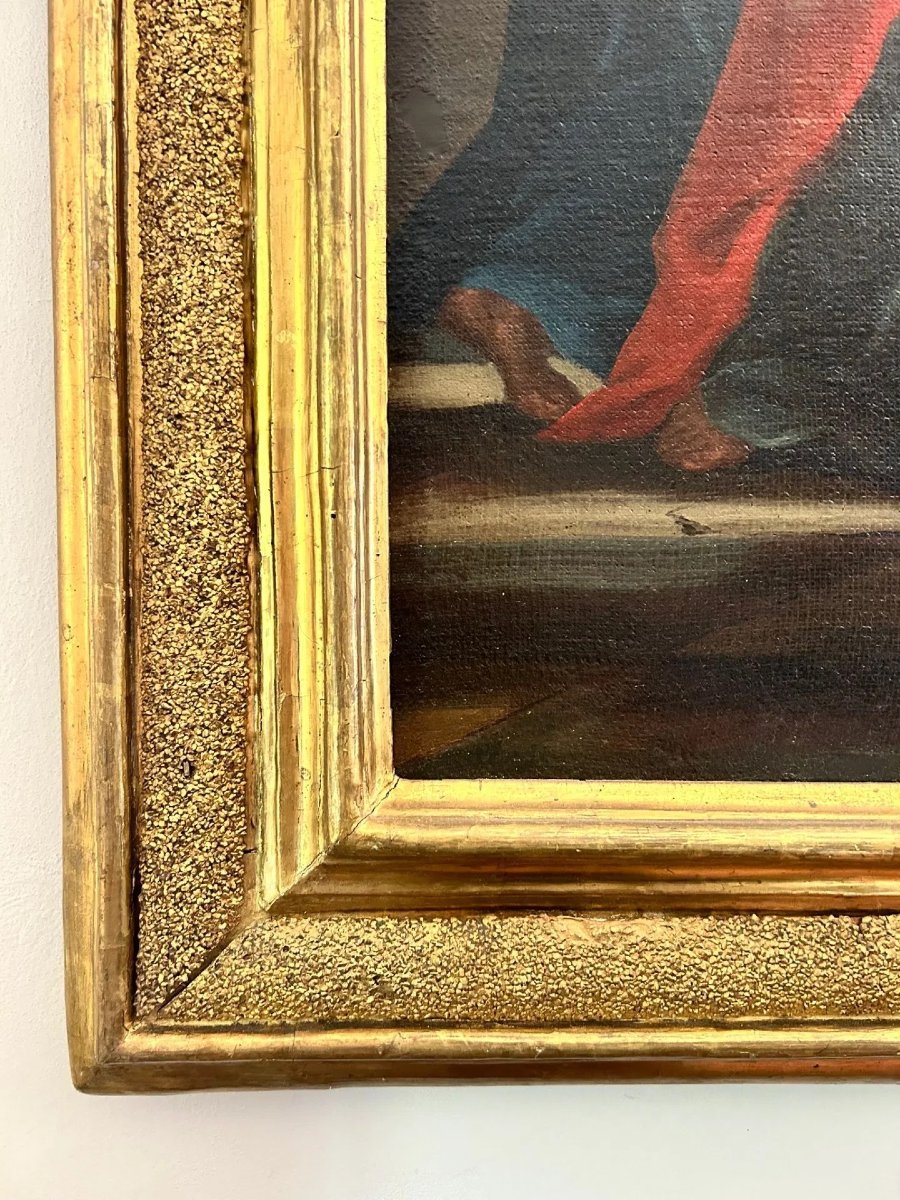
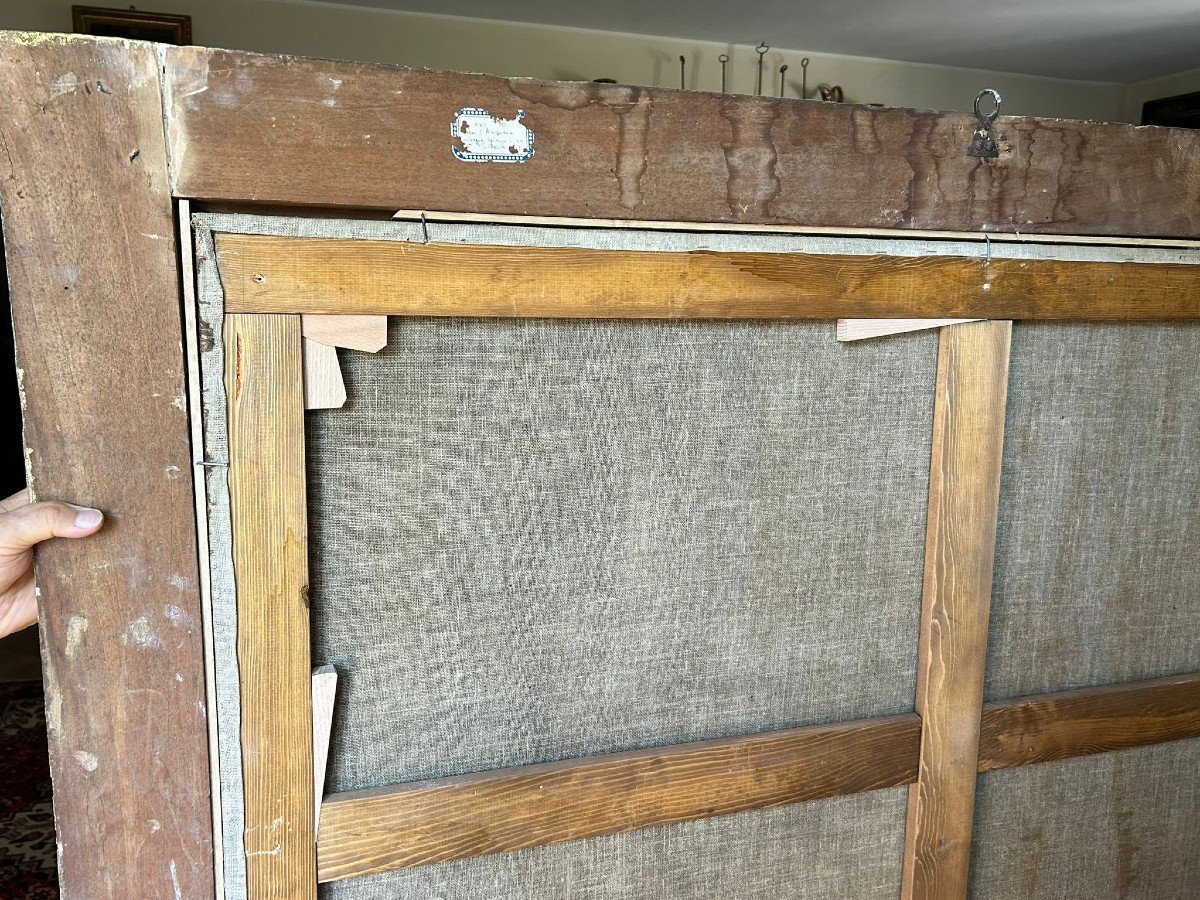
The canvas has recently been cleaned and restored and is therefore in perfect condition; the same applies to its period frame, which has been sandblasted and gilded.
Francesco Cozza (Stilo, 1605 – Rome, January 13, 1682)
After spending his youth in his native Calabria, Francesco Cozza traveled to Rome, where he served as an apprentice to Domenichino. His presence in Rome is documented at the parish of Sant’Andrea delle Fratte, where he was a guest of the Minims of St. Francis of Paola, shortly before 1630—the year Domenichino traveled to Naples. He remained a guest of the Minims until 1634; during this period, he followed Domenichino to Naples and Frascati. He remained in Rome and the surrounding area for the rest of his life. He died on January 13, 1682. In his later years, he was influenced by Lanfranco and Mattia Preti.
Description of the scene:
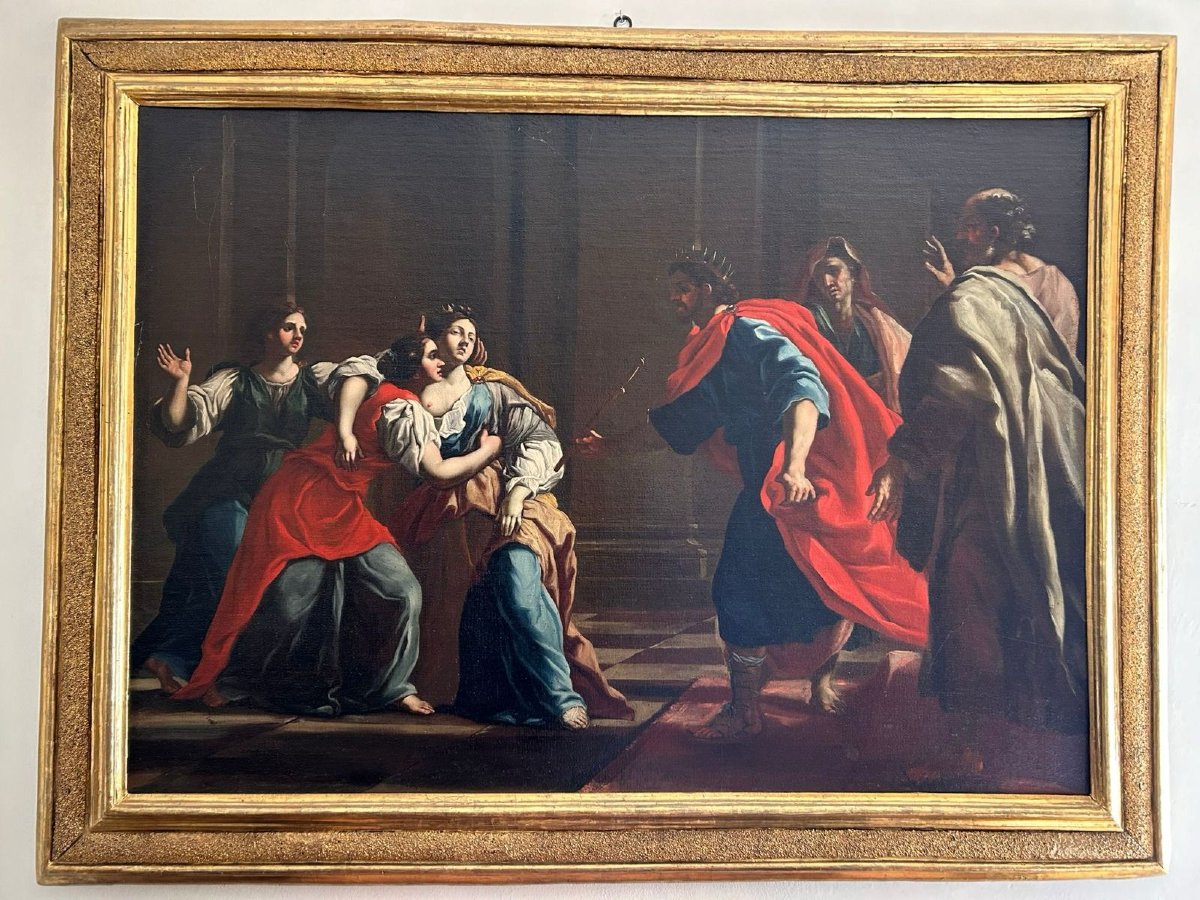
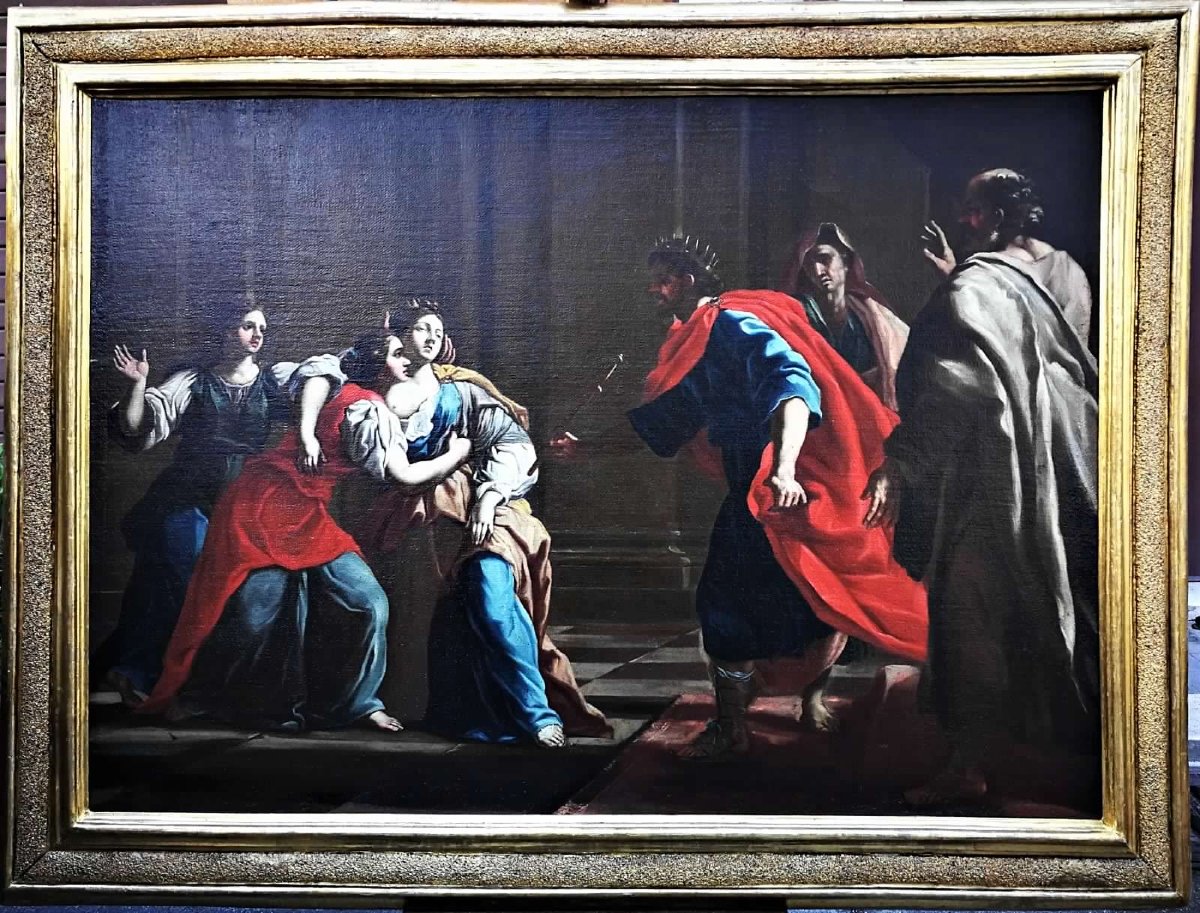
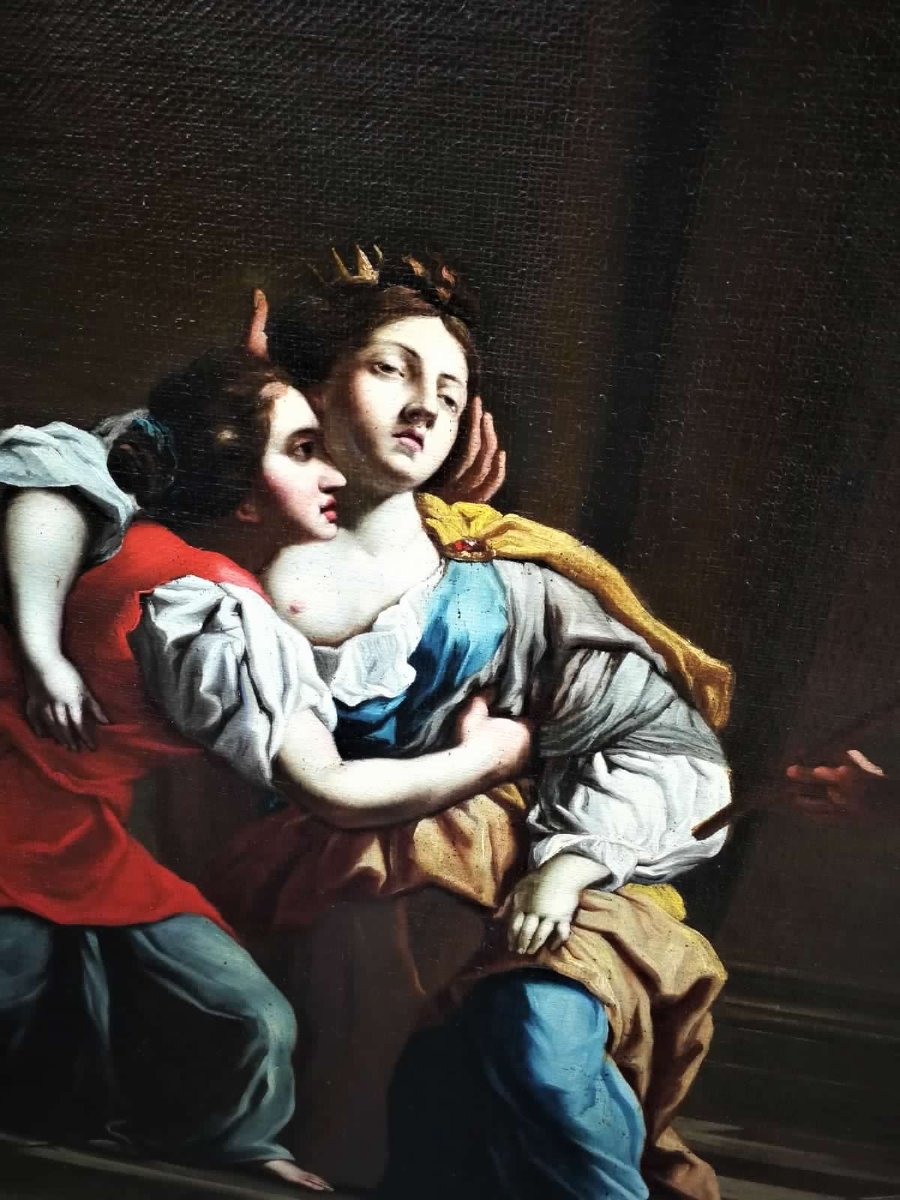
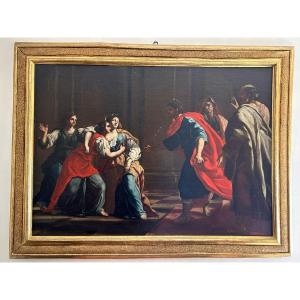
Esther, the young Jewish bride of King Ahasuerus, appears before him to plead for mercy for her people and faints from fear. The identities of the queen and King Ahasuerus are clearly indicated by their crowns.
Completing the scene on the left are the maids attending the queen, and on the right, two male figures: the elderly man with a beard and bare head is Mordecai, the relative who adopted Esther upon the death of her parents and who facilitated her marriage to the king by advising her to keep her religious identity hidden until the right moment.
Meanwhile, the man standing next to King Ahasuerus, with his head covered by a peach-colored cloak, can be identified as Haman, the prime minister who had ordered the extermination of the Jews and who, following Esther’s plea to Ahasuerus to save the Jewish people, will be hanged by order of the king.
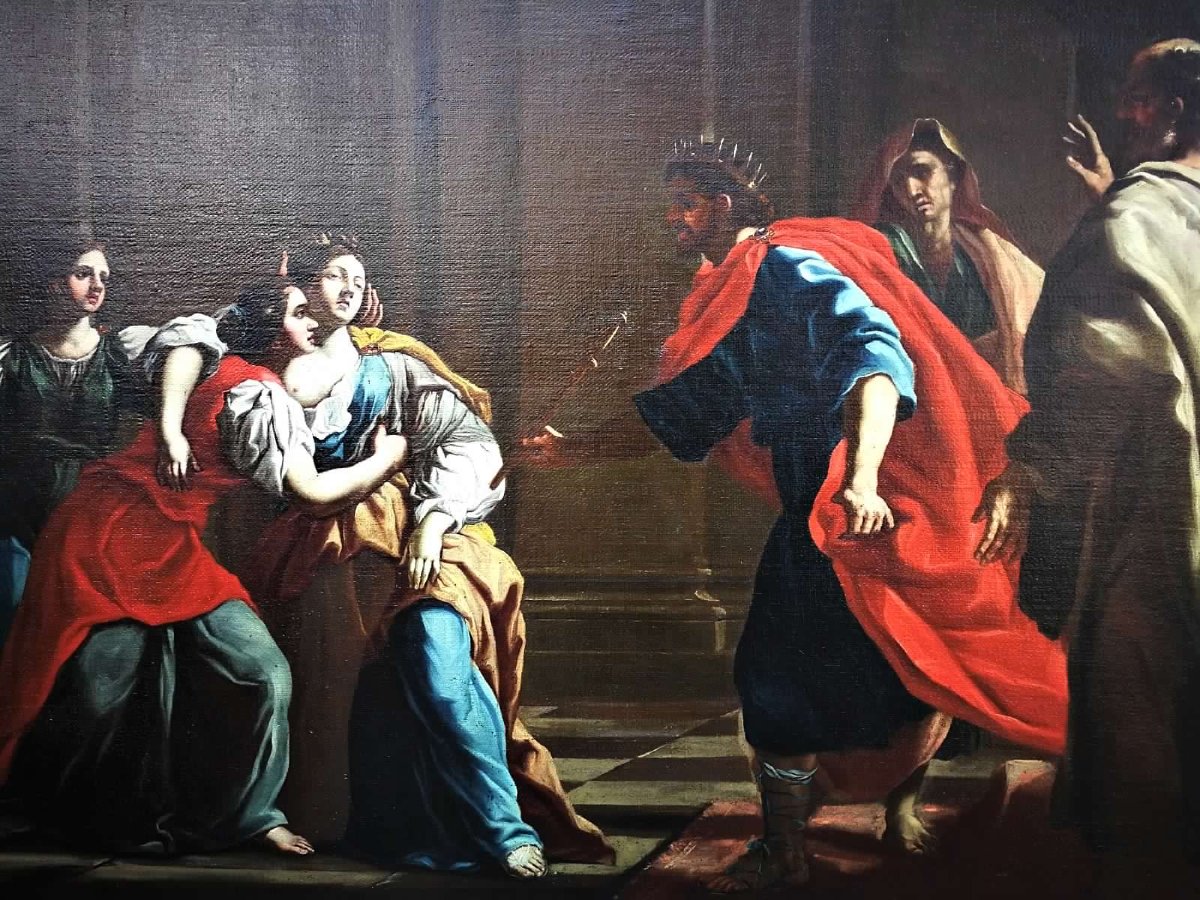
The painter’s interest in dramatic compositions and the carefully studied characterization of the figures are immediately apparent. In this work, the figure of Esther is bathed in a certain luminosity that sets her apart from the other characters in the scene.
Of particular interest is the drama the painter intends to convey through the characters’ expressions and movements, as seen, for example, in: the depiction of the maidservant on the right straining to support Esther as she was losing consciousness, and the instinctive movement of King Ahasuerus as he rises from his throne to offer her his golden scepter—a symbol of his willingness to grant all the desires of the woman he loves.
We include a certificate of authenticity from our antique gallery with the sale of this painting.
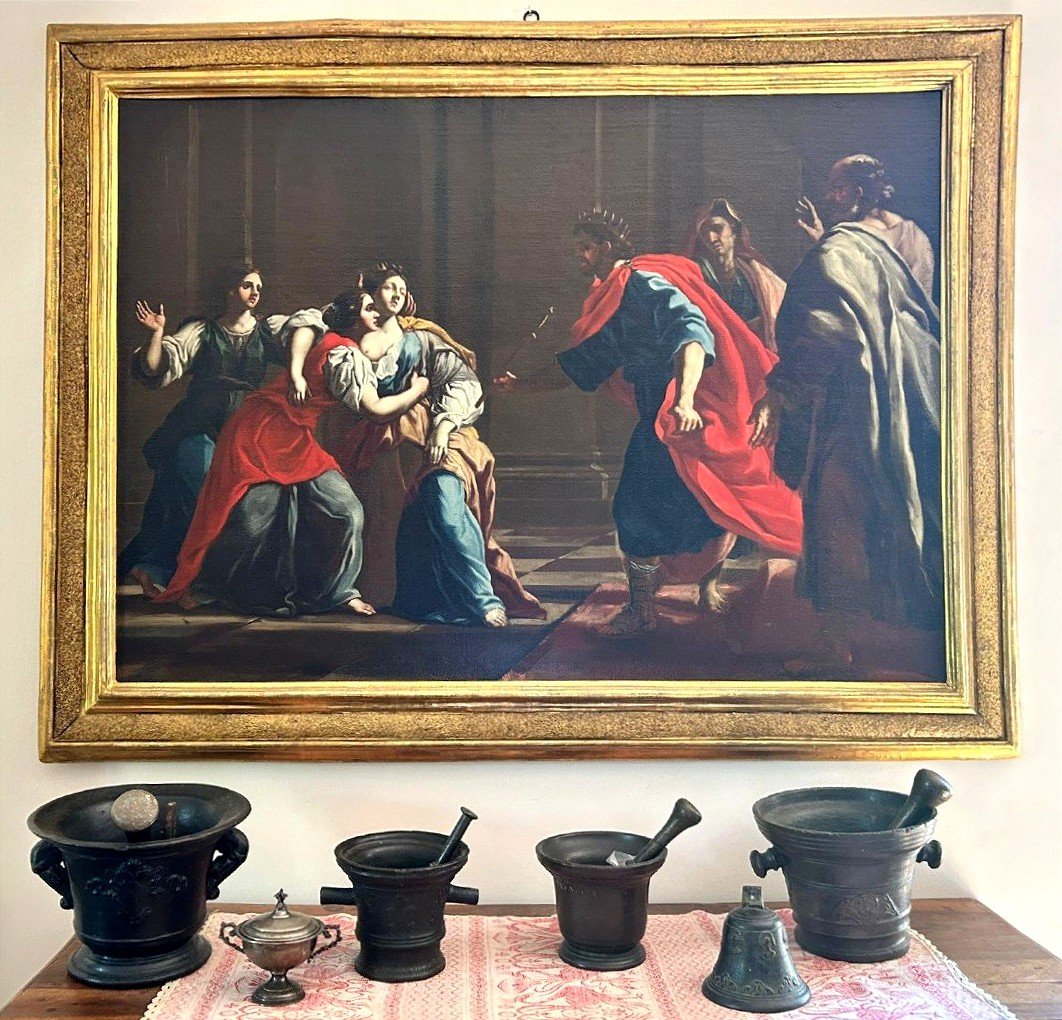
The dimensions of the canvas are 133 x 100, while those including its gilded and sandblasted Roman frame—contemporary to the painting—are 160 x 123.
The painting has recently been cleaned and relined by a trusted restorer.
We include a certificate of authenticity
For further information: 3356925388 or via email at info@antichitabompadre.com
The painting is on display at our antique gallery in Foligno (PG), in the heart of Umbria. Come visit us!
We look forward to welcoming you to our 180-square-meter exhibition space, which boasts an incredible assortment of antique and original furniture, paintings, and objects dating from the 15th to the 19th centuries.
If you’re looking for furnishings for renovations of commercial spaces, apartments, hotels, or farmhouses, we’d be happy to show you our spacious warehouses, where you’ll find every type of antique furniture to meet any need.
Our experience in the field allows us to guide you in your furnishing choices when you have the desire and taste to opt for antique and original furniture for your spaces—perhaps in harmony with more modern elements in your home.
BOMPADRE ANTIQUE GALLERY
FOLIGNO (PG), PIAZZA ETTORE GIACOMINI, 42.
Info: Phone/WhatsApp - 0039/3356925388 - 00393208015489 - Email: Galleriabompadre@proton.me
OPEN EVERY DAY FROM 9:00 AM TO 1:00 PM AND FROM 4:00 PM TO 7:00 PM (We recommend making an appointment by phone, especially on Saturdays and Sundays).
The painting can be attributed to the Calabrian painter Francesco Cozza (Stilo, 1605 – Rome, January 13, 1682) or to a talented student whose style closely resembles his. In fact, the skillful use of chiaroscuro, the natural perspective, and the chromatic richness of the colors seem to recall his marvelous works.
The canvas has recently been cleaned and restored and is therefore in perfect condition; the same applies to its period frame, which has been sandblasted and gilded.
Francesco Cozza (Stilo, 1605 – Rome, January 13, 1682)
After spending his youth in his native Calabria, Francesco Cozza traveled to Rome, where he served as an apprentice to Domenichino. His presence in Rome is documented at the parish of Sant’Andrea delle Fratte, where he was a guest of the Minims of St. Francis of Paola, shortly before 1630—the year Domenichino traveled to Naples. He remained a guest of the Minims until 1634; during this period, he followed Domenichino to Naples and Frascati. He remained in Rome and the surrounding area for the rest of his life. He died on January 13, 1682. In his later years, he was influenced by Lanfranco and Mattia Preti.
Description of the scene:
Esther, the young Jewish bride of King Ahasuerus, appears before him to plead for mercy for her people and faints from fear. The identities of the queen and King Ahasuerus are clearly indicated by their crowns.
Completing the scene on the left are the maids attending the queen, and on the right, two male figures: the elderly man with a beard and bare head is Mordecai, the relative who adopted Esther upon the death of her parents and who facilitated her marriage to the king by advising her to keep her religious identity hidden until the right moment.
Meanwhile, the man standing next to King Ahasuerus, with his head covered by a peach-colored cloak, can be identified as Haman, the prime minister who had ordered the extermination of the Jews and who, following Esther’s plea to Ahasuerus to save the Jewish people, will be hanged by order of the king.
The painter’s interest in dramatic compositions and the carefully studied characterization of the figures are immediately apparent. In this work, the figure of Esther is bathed in a certain luminosity that sets her apart from the other characters in the scene.
Of particular interest is the drama the painter intends to convey through the characters’ expressions and movements, as seen, for example, in: the depiction of the maidservant on the right straining to support Esther as she was losing consciousness, and the instinctive movement of King Ahasuerus as he rises from his throne to offer her his golden scepter—a symbol of his willingness to grant all the desires of the woman he loves.
We include a certificate of authenticity from our antique gallery with the sale of this painting.
The dimensions of the canvas are 133 x 100, while those including its gilded and sandblasted Roman frame—contemporary to the painting—are 160 x 123.
The painting has recently been cleaned and relined by a trusted restorer.
We include a certificate of authenticity
For further information: 3356925388 or via email at info@antichitabompadre.com
The painting is on display at our antique gallery in Foligno (PG), in the heart of Umbria. Come visit us!
We look forward to welcoming you to our 180-square-meter exhibition space, which boasts an incredible assortment of antique and original furniture, paintings, and objects dating from the 15th to the 19th centuries.
If you’re looking for furnishings for renovations of commercial spaces, apartments, hotels, or farmhouses, we’d be happy to show you our spacious warehouses, where you’ll find every type of antique furniture to meet any need.
Our experience in the field allows us to guide you in your furnishing choices when you have the desire and taste to opt for antique and original furniture for your spaces—perhaps in harmony with more modern elements in your home.
BOMPADRE ANTIQUE GALLERY
FOLIGNO (PG), PIAZZA ETTORE GIACOMINI, 42.
Info: Phone/WhatsApp - 0039/3356925388 - 00393208015489 - Email: Galleriabompadre@proton.me
OPEN EVERY DAY FROM 9:00 AM TO 1:00 PM AND FROM 4:00 PM TO 7:00 PM (We recommend making an appointment by phone, especially on Saturdays and Sundays).
7 500 €
Period: 17th century
Style: Louis 14th, Regency
Condition: Fully restored in our whorkshop
Material: Oil painting
Length: 133 - 160
Height: 100 - 123
Reference (ID): 1791930
Availability: In stock
Print