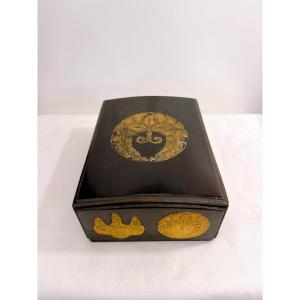


Gold-lacquered Box. Kobako. Chrysanthemum Design. Edo Period, Japan.
Artist: Edo Meiji
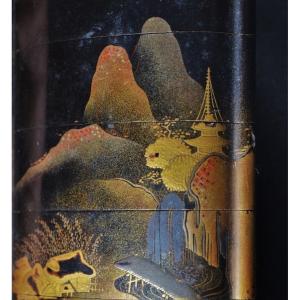
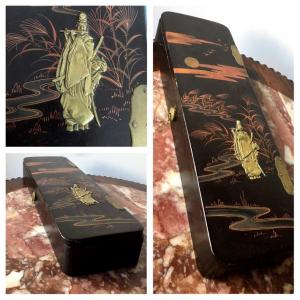
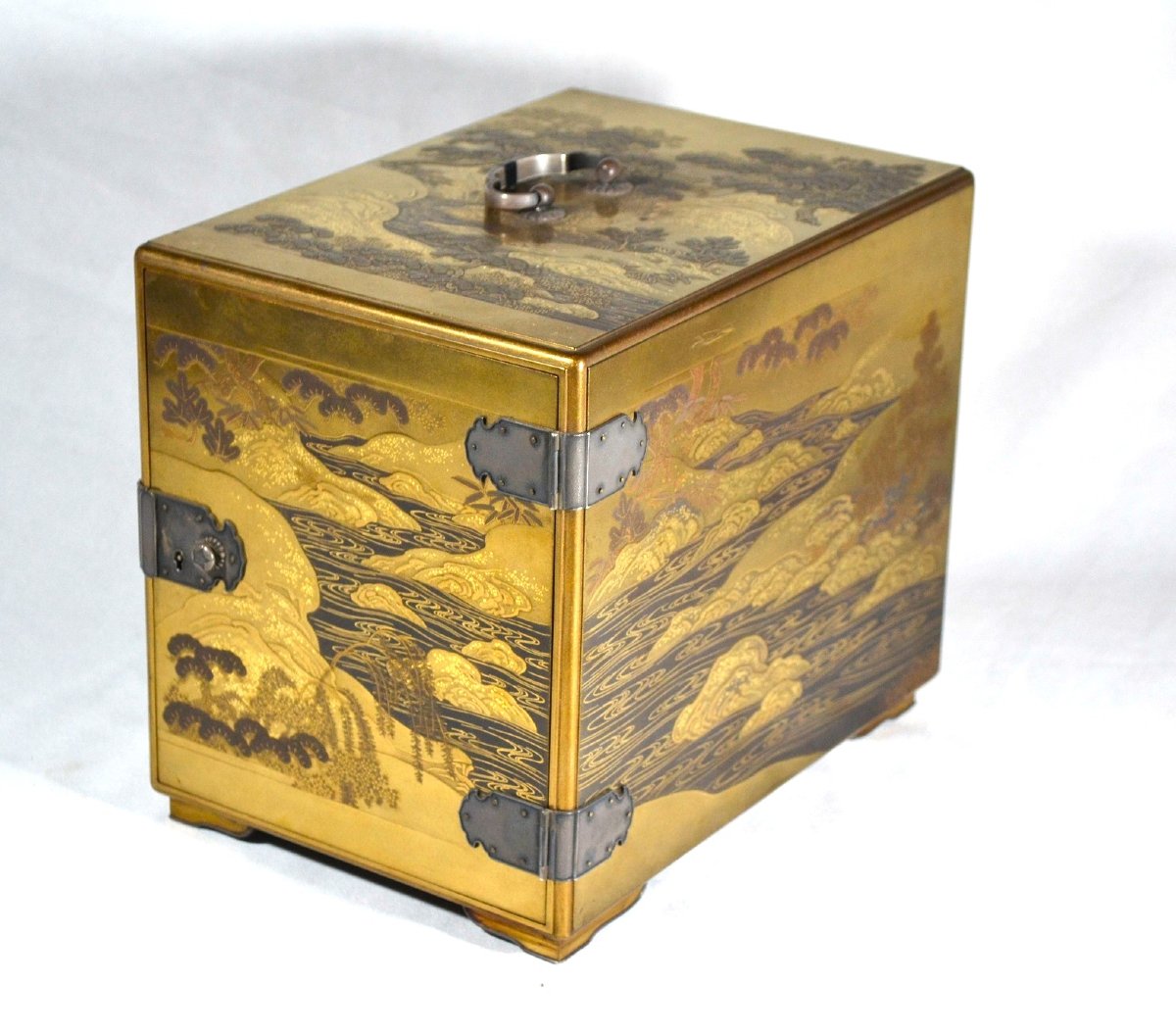
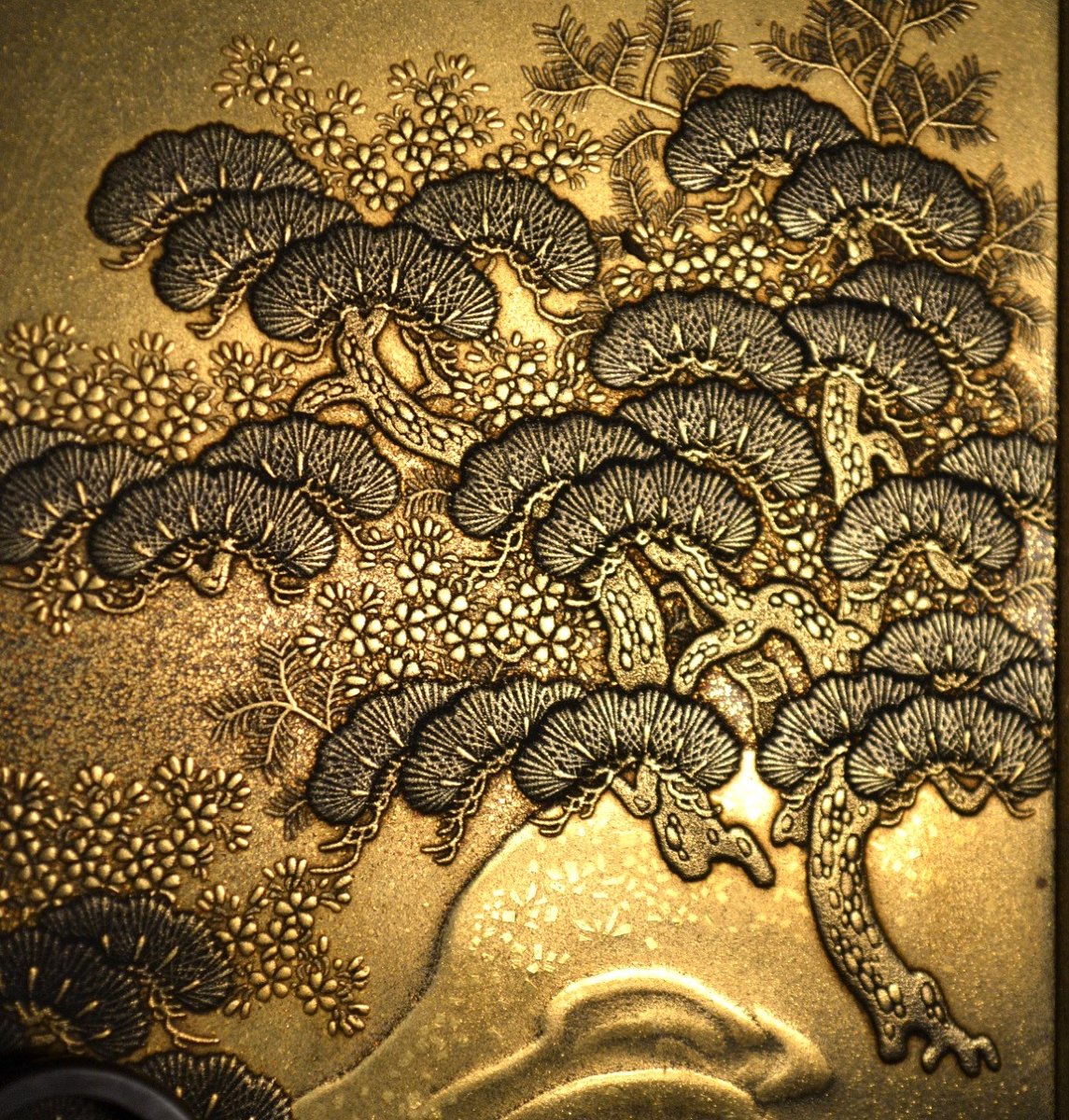
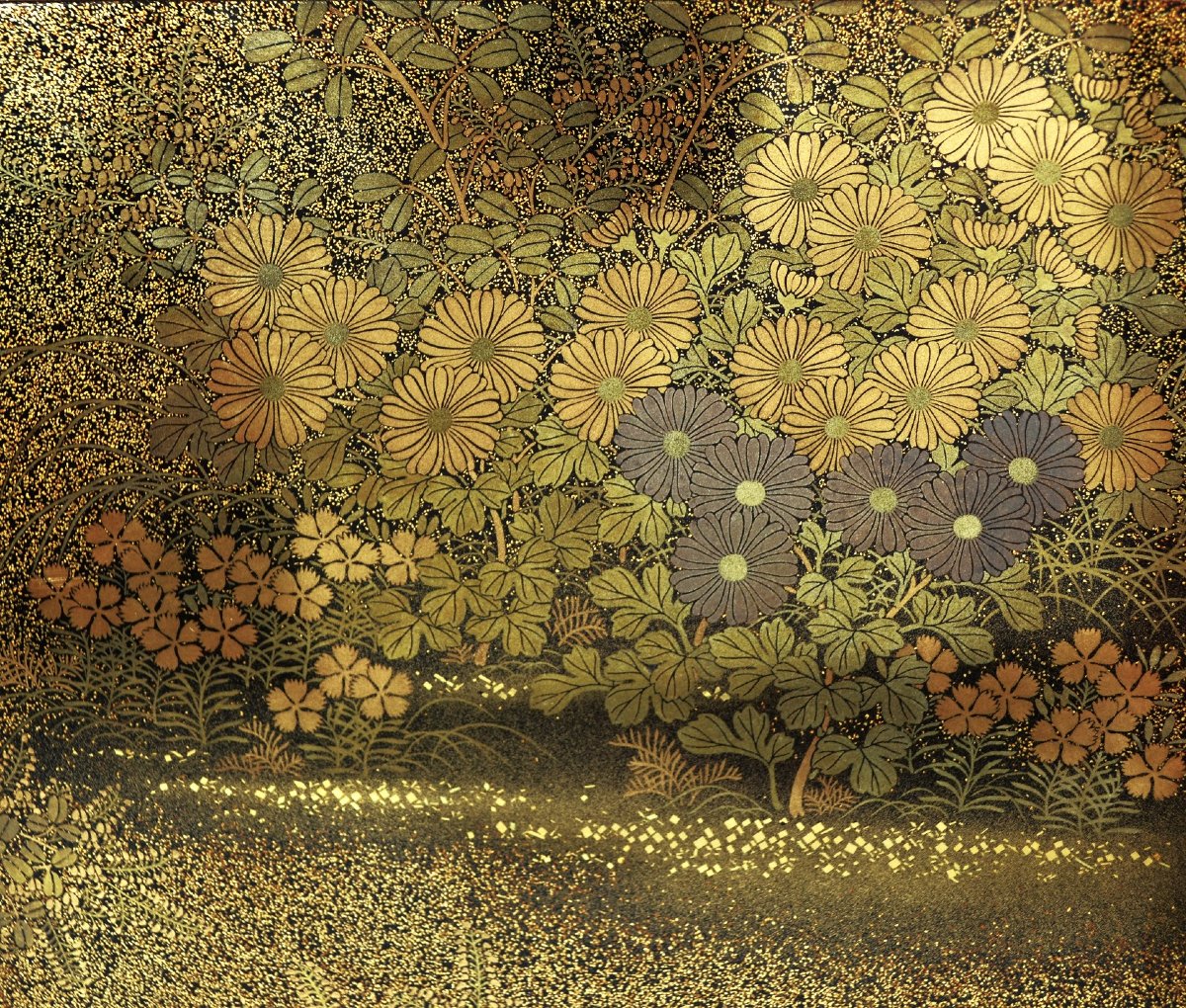
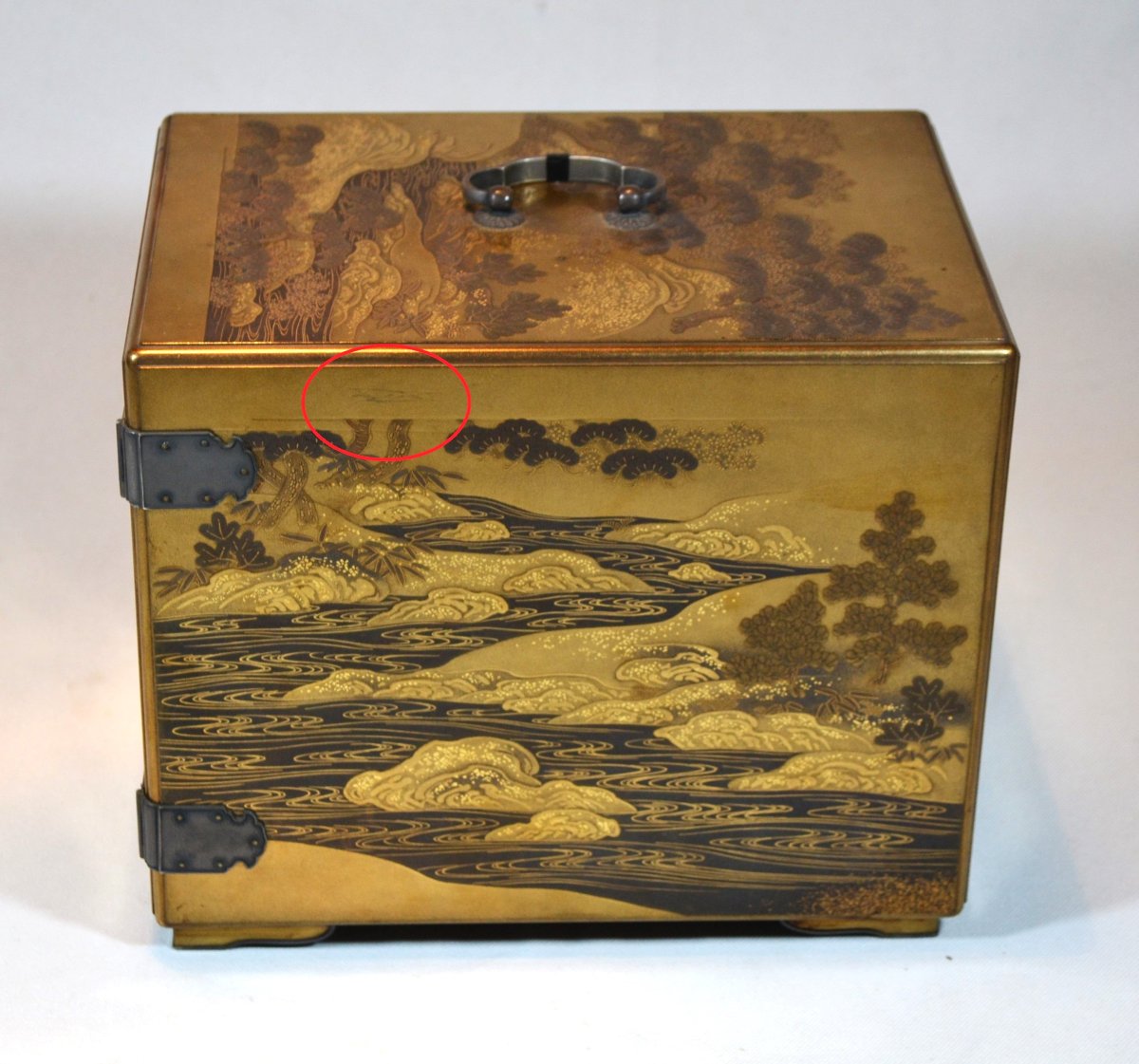
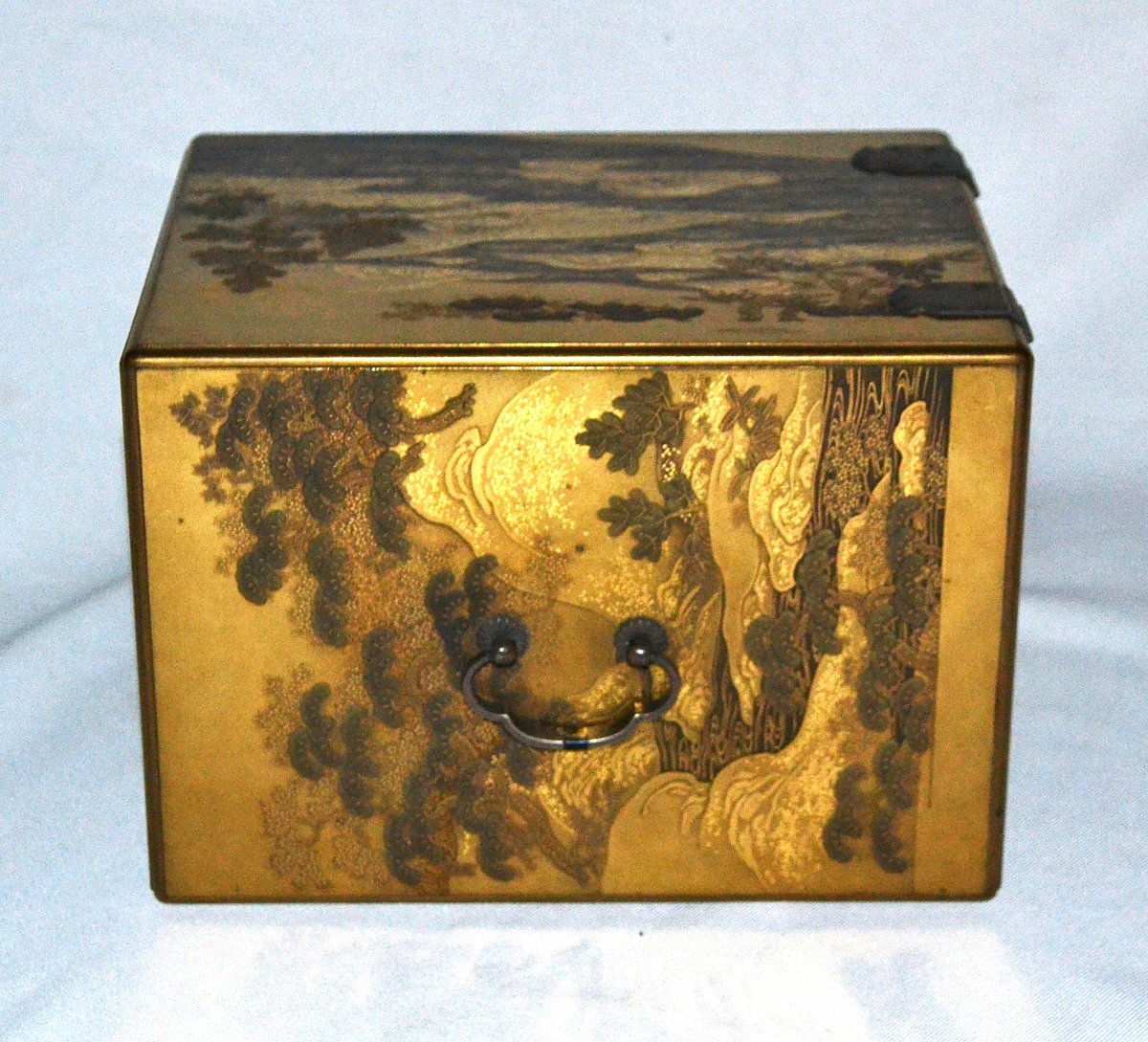
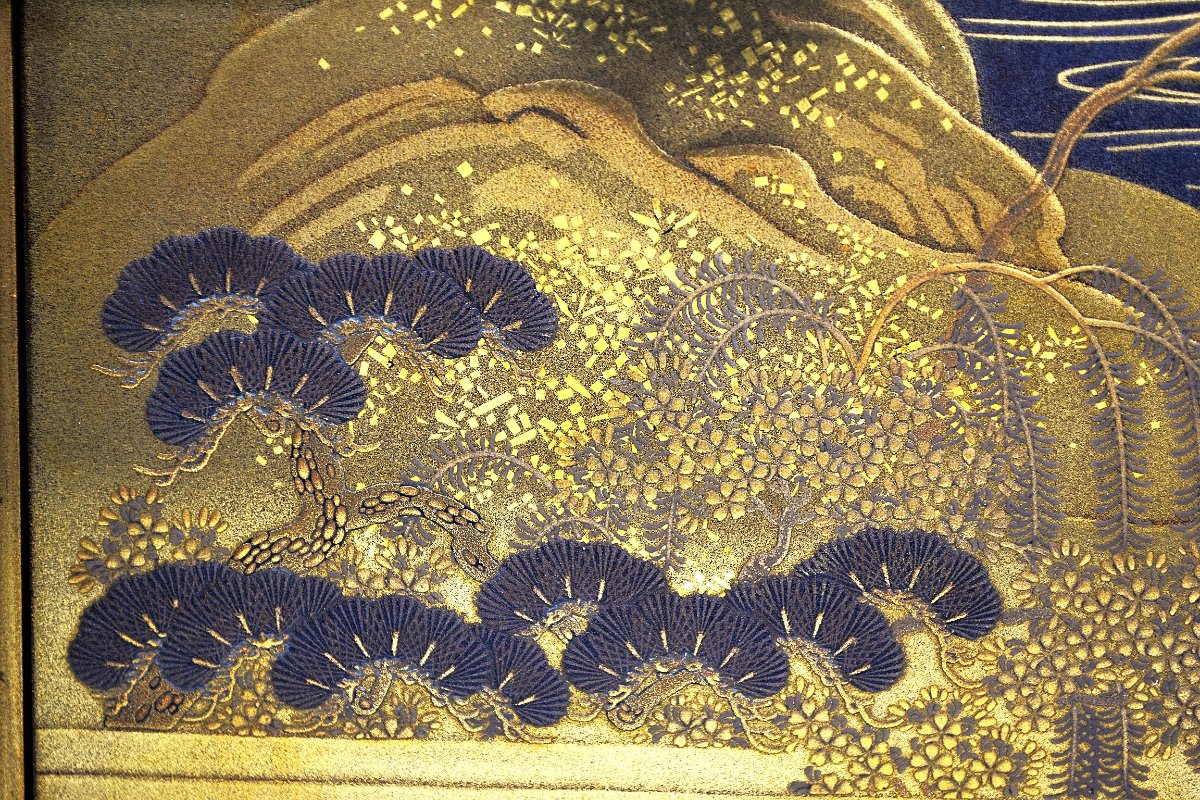
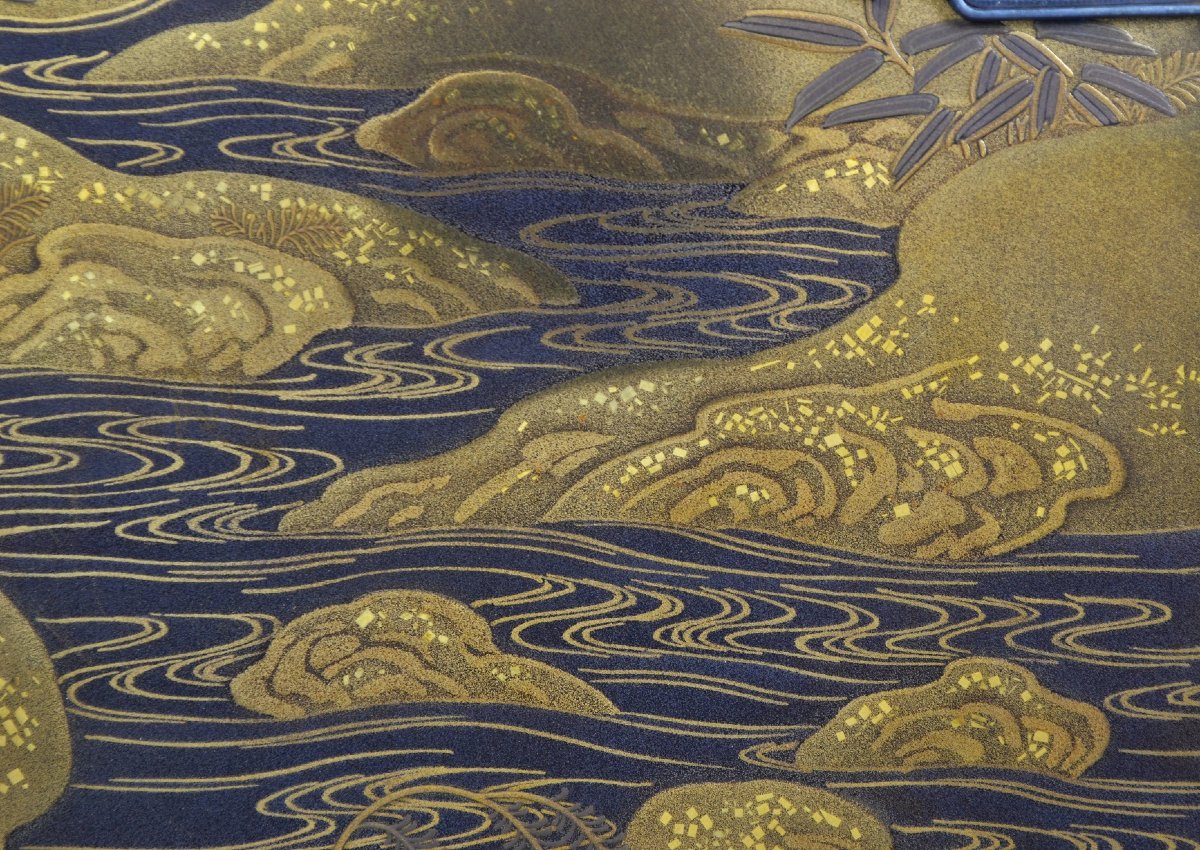
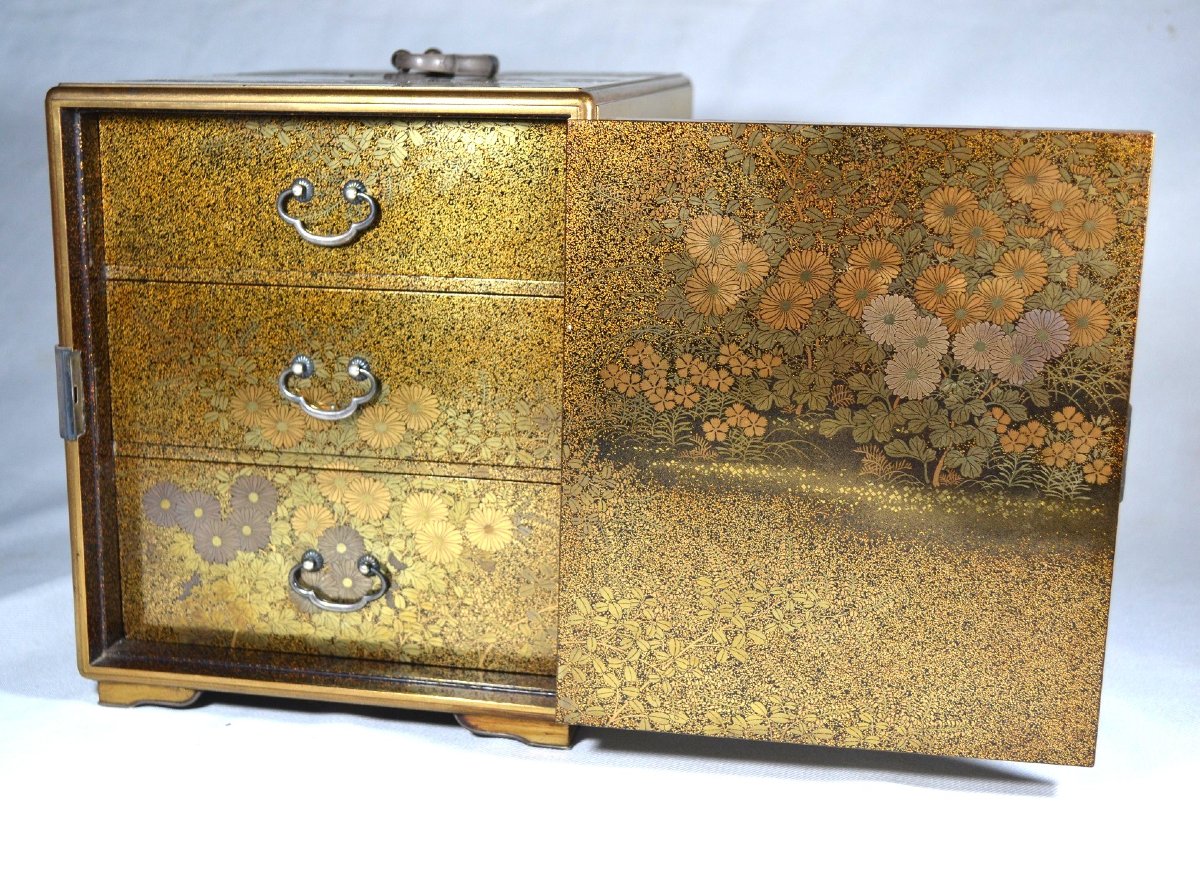
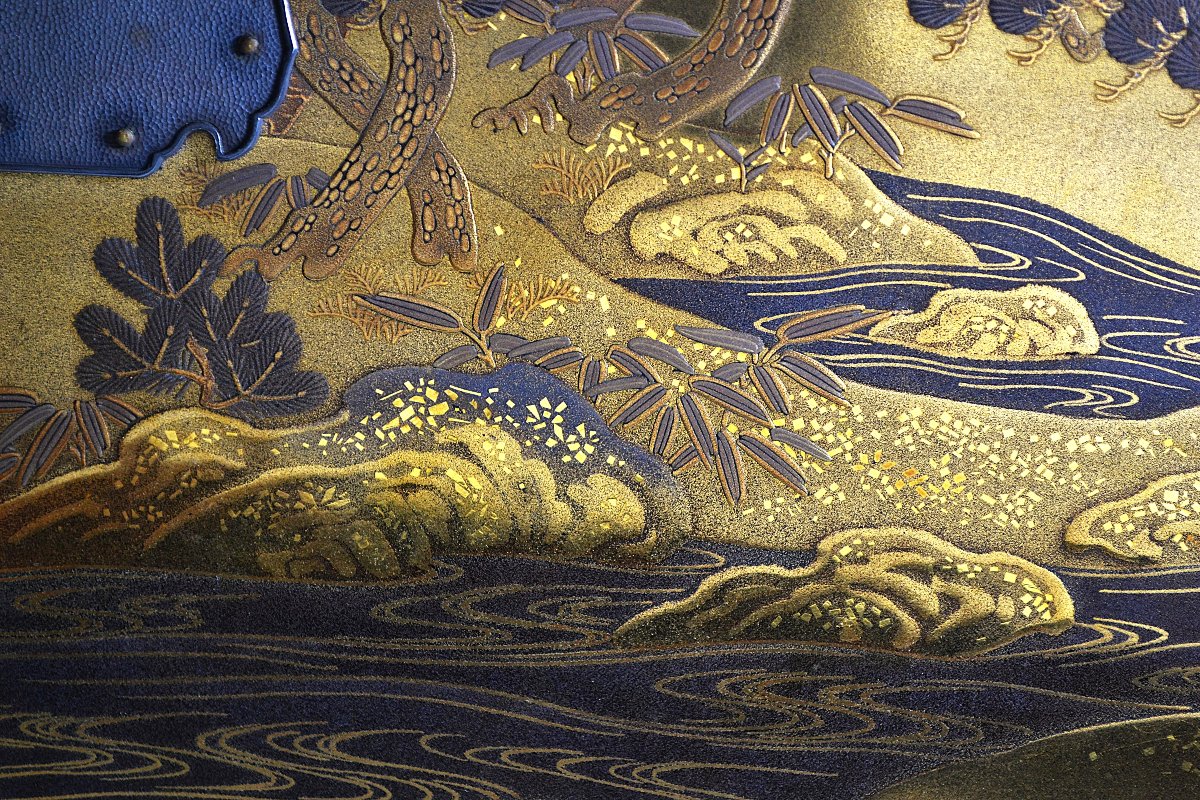
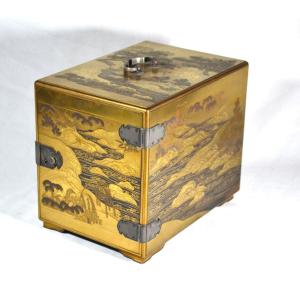
The box is made of wood lacquered with gold and silver powder; the design depicts calm, winding rivers lined with trees, rocks, and plants, with motifs rendered sometimes flat (Hiramaki-e) and sometimes in relief (Takamaki-e); the mosaic details of gold squares (Kirikane) add depth to the sandbars and rocks. The box opens via a door revealing three drawers; the interior is entirely covered with lovely Hiramaki-e flowers in three shades of gold—yellow, green, and rose gold—with some flowers rendered in silver to create a harmonious play of colors. Rare kodansu of this exceptional quality are always small—8 to 10 cm—but the one presented here, at 25 cm, is of exceptional size. We have found nothing comparable.
There is no signature, as is often the case with exceptional Japanese art objects, whereas in the 19th century, artists signed almost all of their creations—even those of mediocre quality. There are several theories explaining this fact. The simplest would be that, since these objects were often given as gifts and kept in a box, the artist’s name written on the box was sufficient. The second most credible theory is that, depending on the patron’s status, it was unthinkable that a mere artist—whoever he might be—would have the audacity to affix his signature. Finally, the third theory—more subtly Japanese in nature—is that the master had no need to sign his work, as he alone was capable of achieving such perfection in its execution.
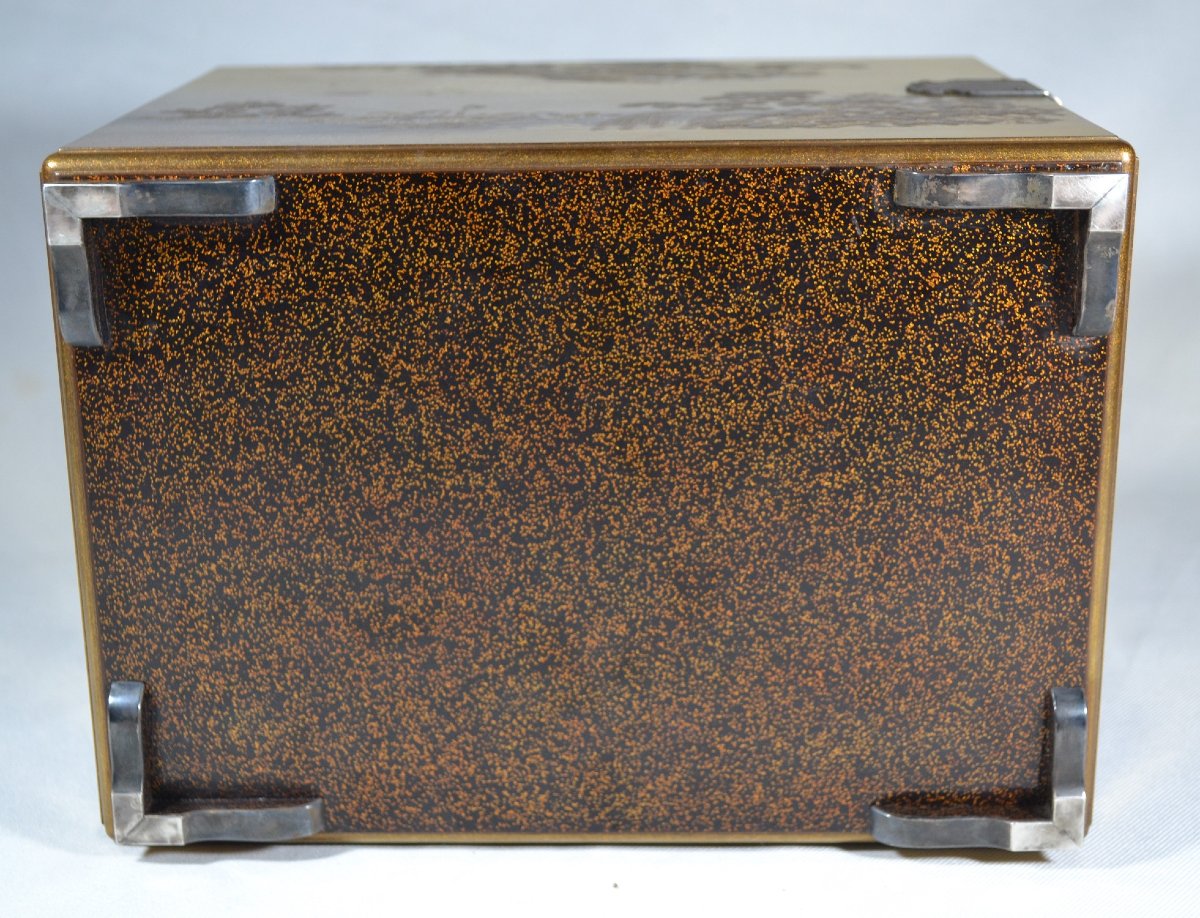
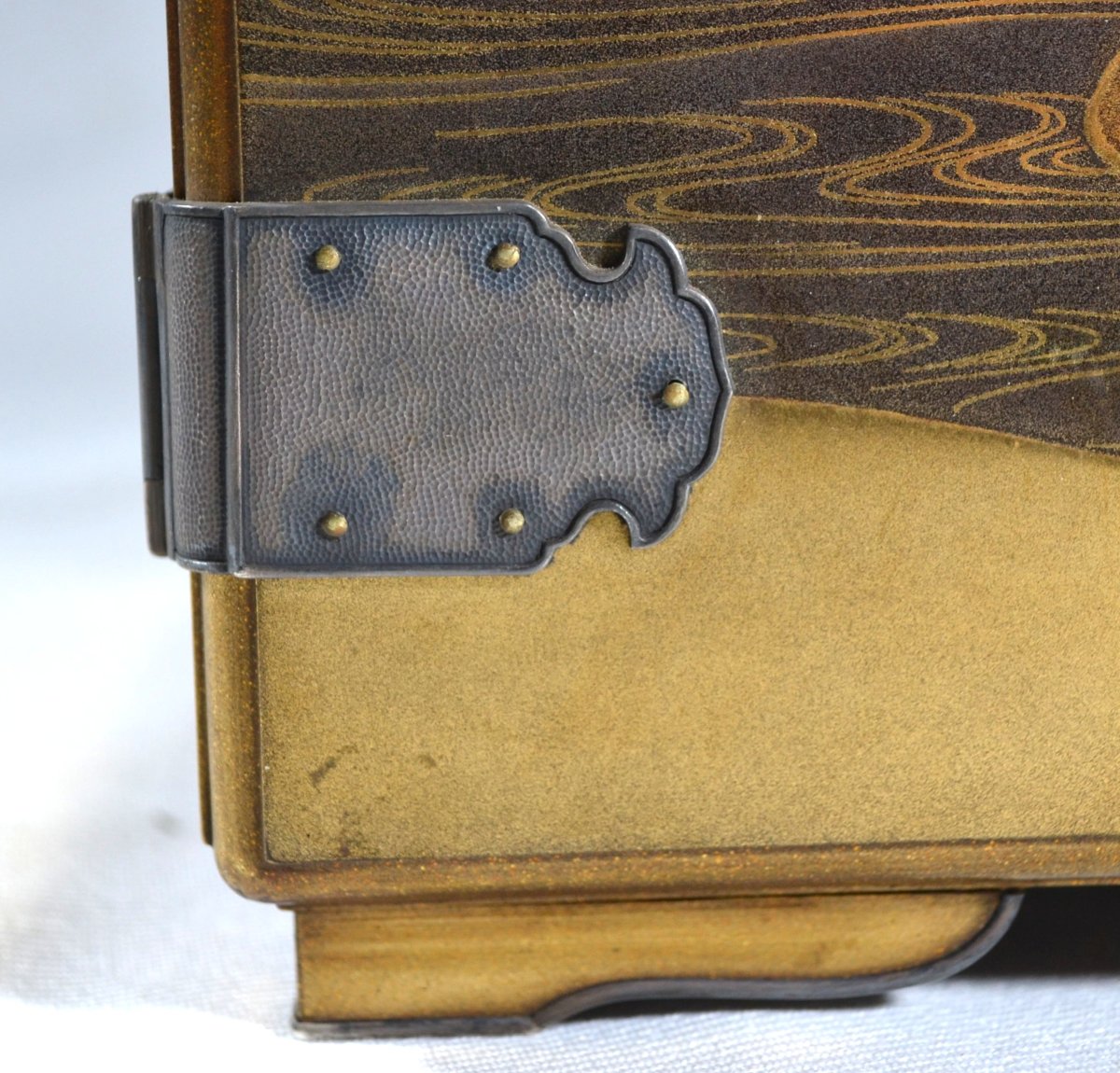
The silver mounts are finely chiseled, with a slight, irregular amati finish that mimics reptile skin. The interiors are lacquered with a rich, perfectly even nashiji finish.
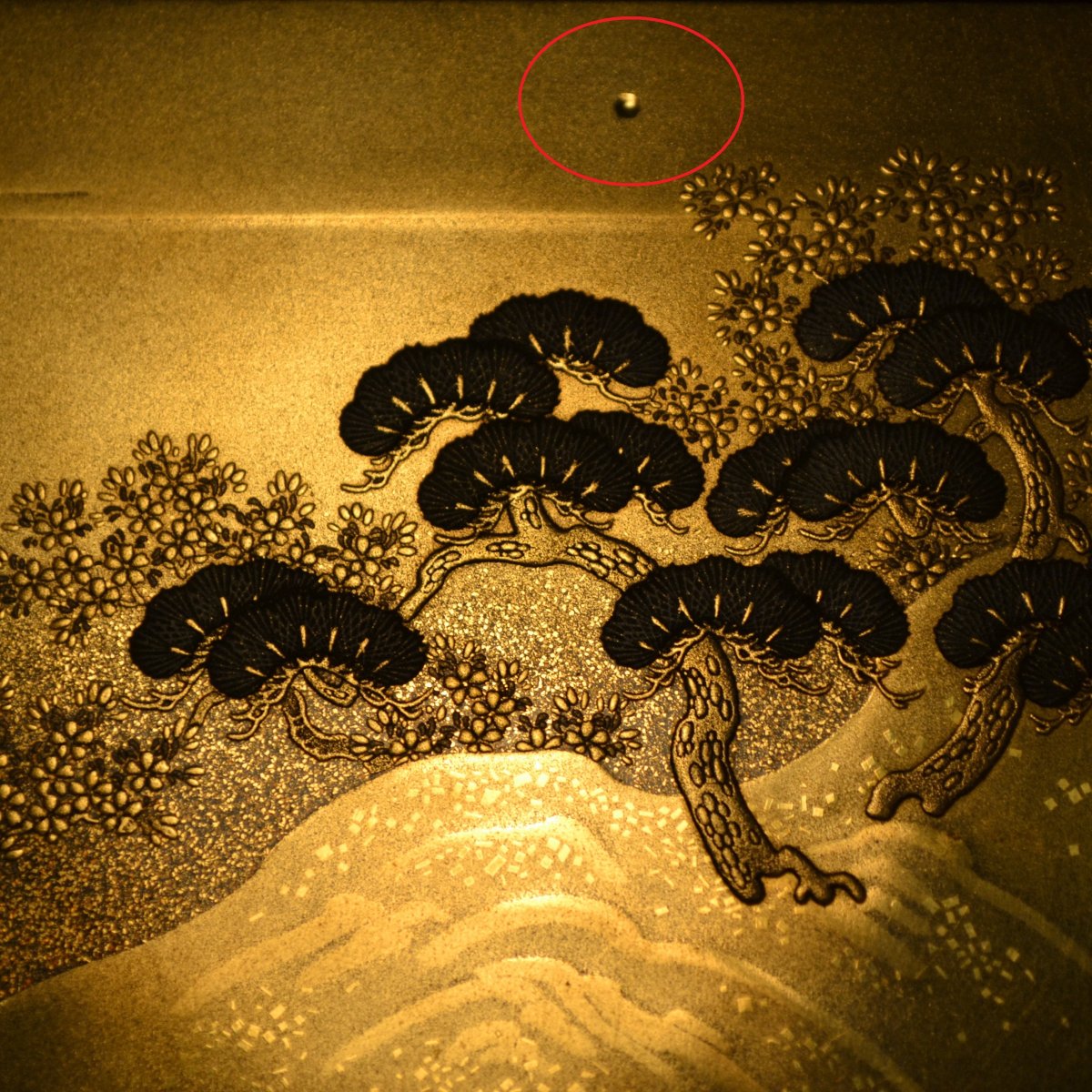
Excellent condition for such a fragile lacquer piece that is over a century old. Two imperfections to note. A 1mm round dent and a scratched area, both without any loss of color. We have highlighted these two imperfections in the photos.
25x21x18cm
This is an exceptional piece worthy of a place in the finest collections.
Let us keep in mind the famous proverb:
“If a good collector has 1,000 objects,
a great collector has only one.”
There is no signature, as is often the case with exceptional Japanese art objects, whereas in the 19th century, artists signed almost all of their creations—even those of mediocre quality. There are several theories explaining this fact. The simplest would be that, since these objects were often given as gifts and kept in a box, the artist’s name written on the box was sufficient. The second most credible theory is that, depending on the patron’s status, it was unthinkable that a mere artist—whoever he might be—would have the audacity to affix his signature. Finally, the third theory—more subtly Japanese in nature—is that the master had no need to sign his work, as he alone was capable of achieving such perfection in its execution.
The silver mounts are finely chiseled, with a slight, irregular amati finish that mimics reptile skin. The interiors are lacquered with a rich, perfectly even nashiji finish.
Excellent condition for such a fragile lacquer piece that is over a century old. Two imperfections to note. A 1mm round dent and a scratched area, both without any loss of color. We have highlighted these two imperfections in the photos.
25x21x18cm
This is an exceptional piece worthy of a place in the finest collections.
Let us keep in mind the famous proverb:
“If a good collector has 1,000 objects,
a great collector has only one.”
38 000 €
Period: 19th century
Style: Asian art
Condition: Good condition
Material: Lacquer
Length: 25cm
Width: 18cm
Height: 21cm
Reference (ID): 1790052
Availability: In stock
Print