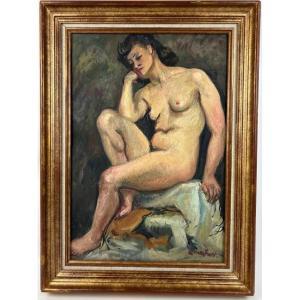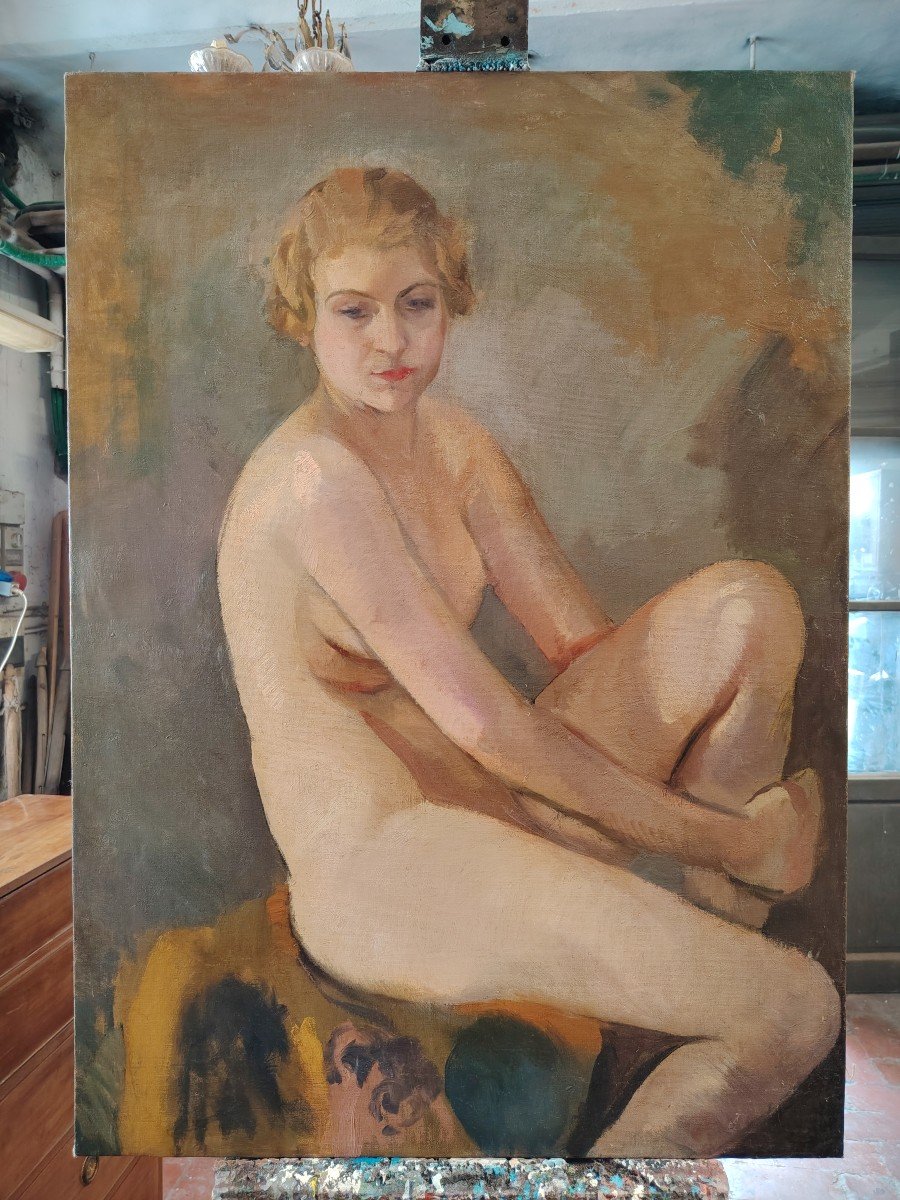
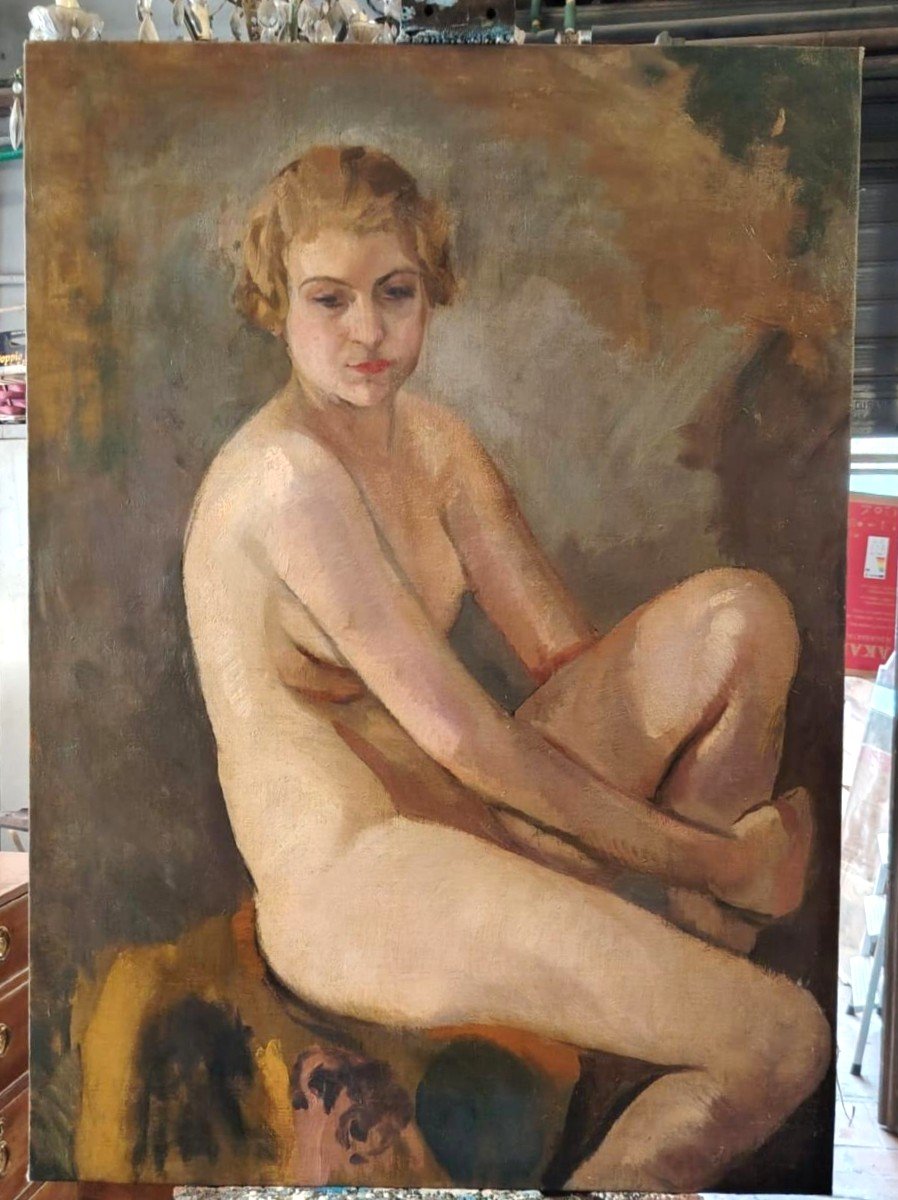
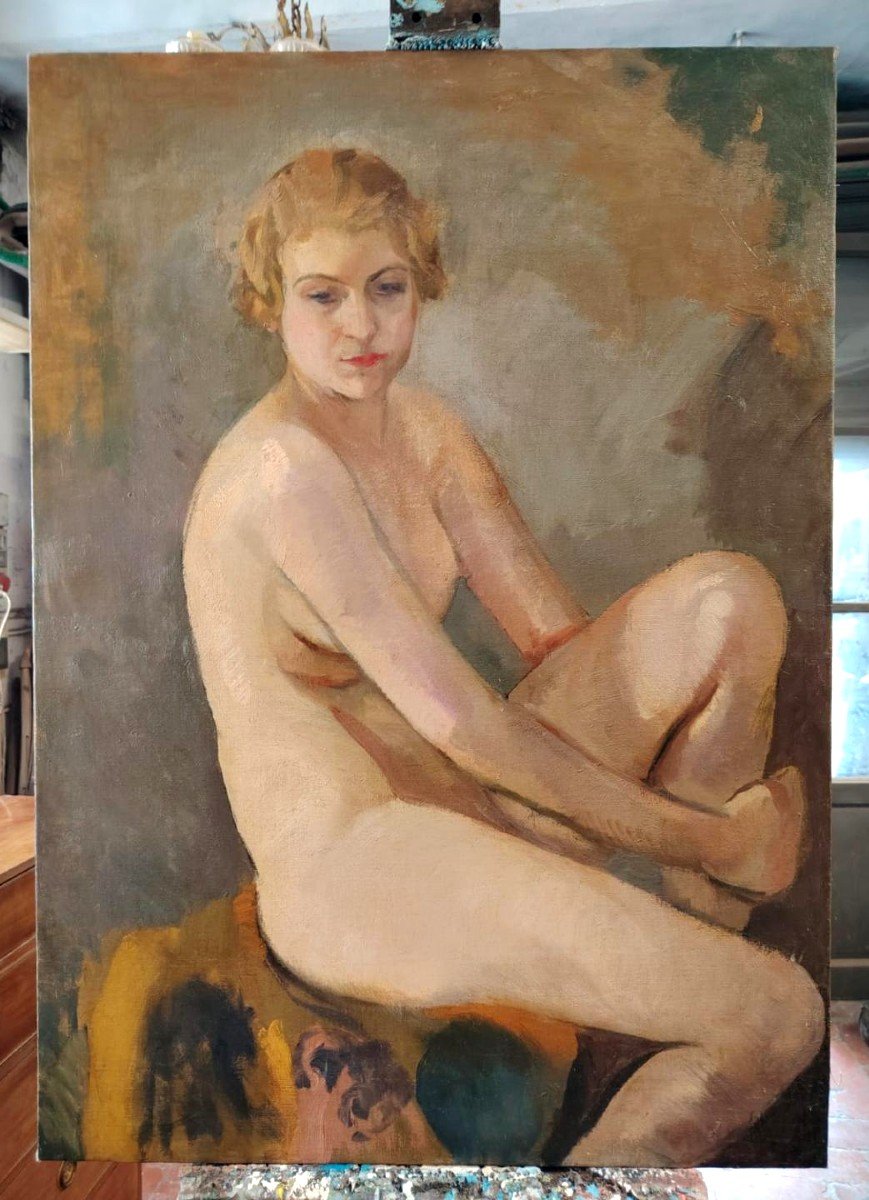
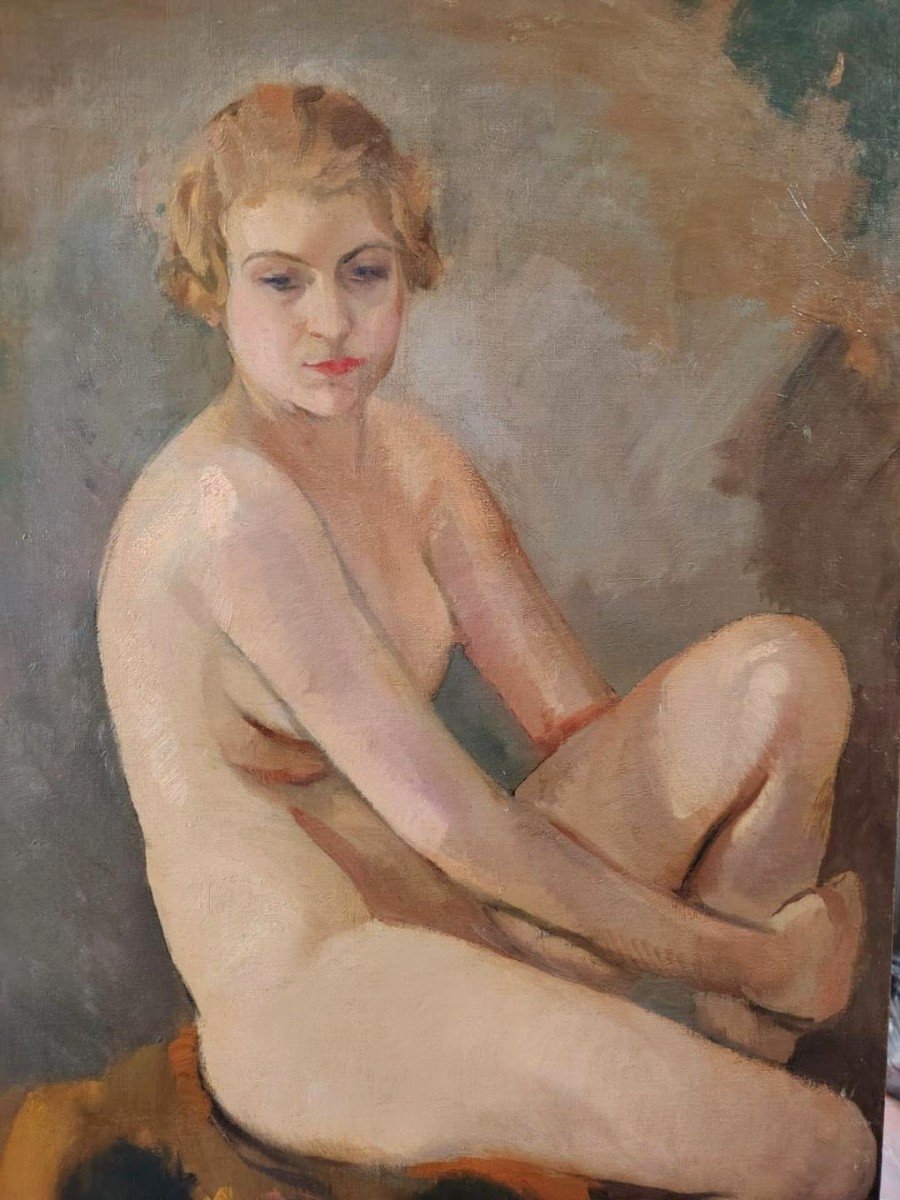
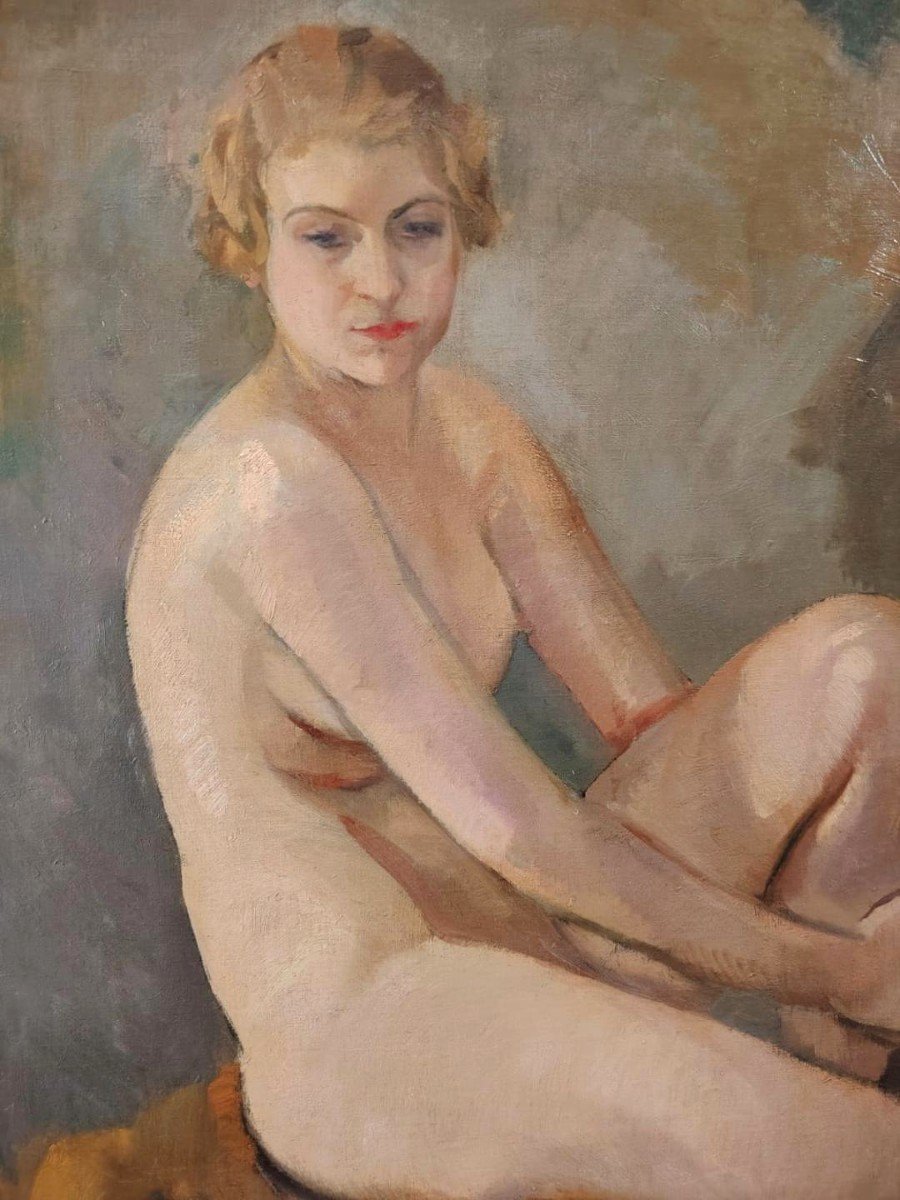
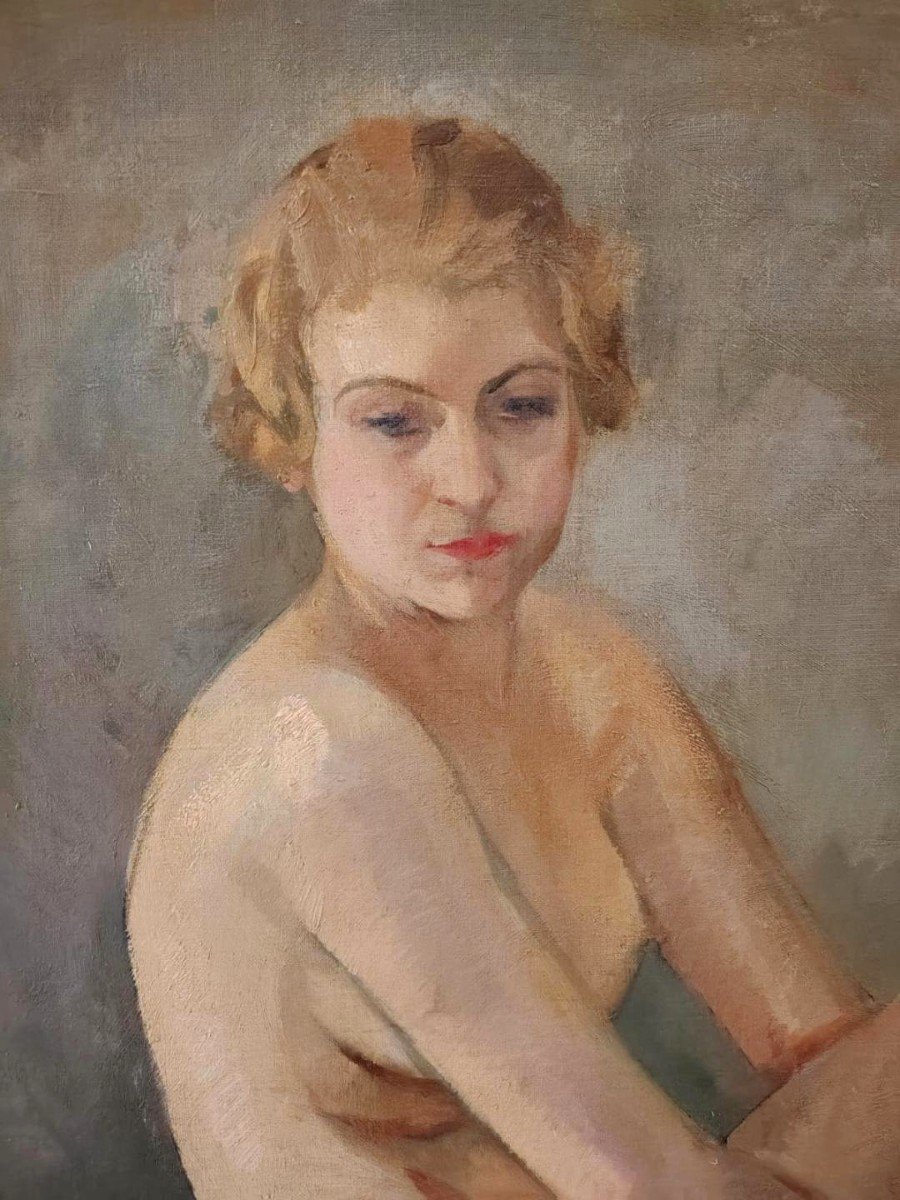
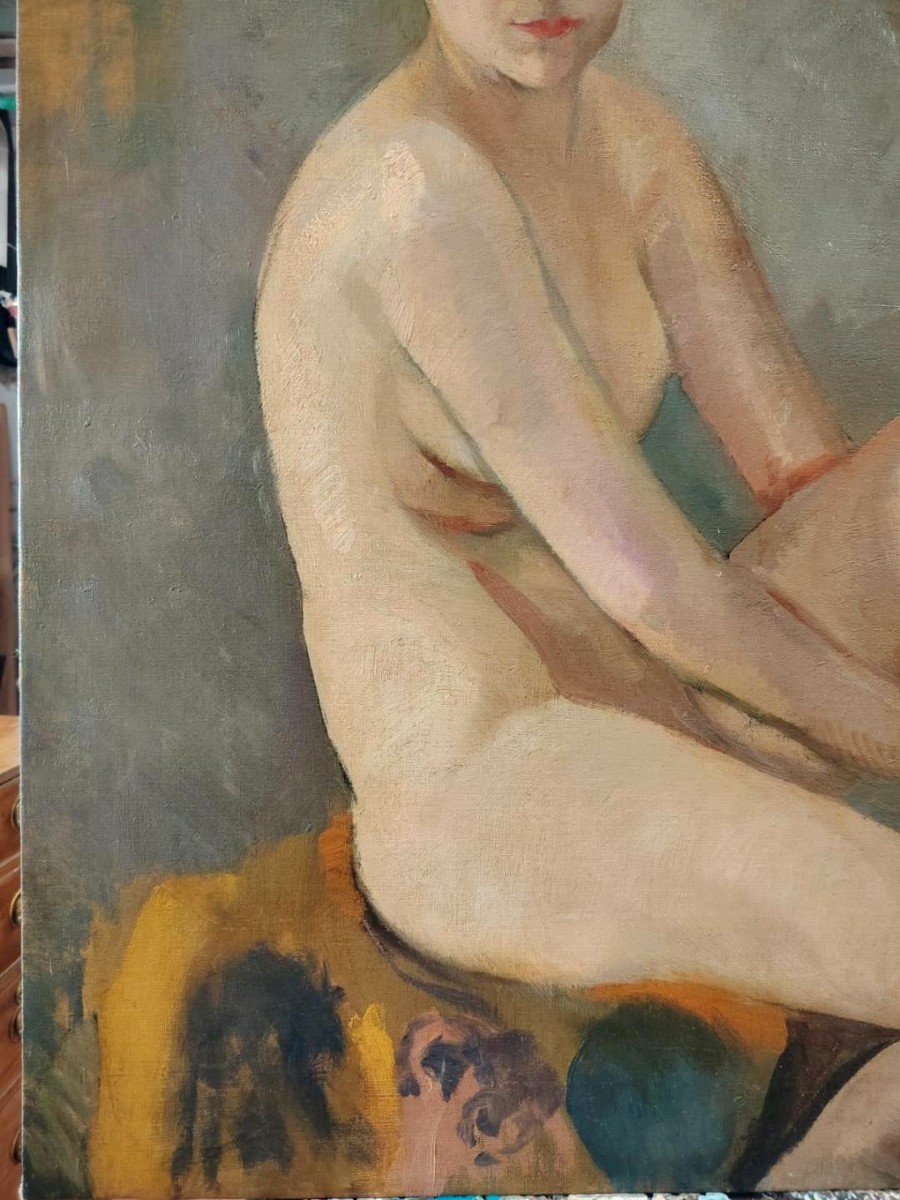
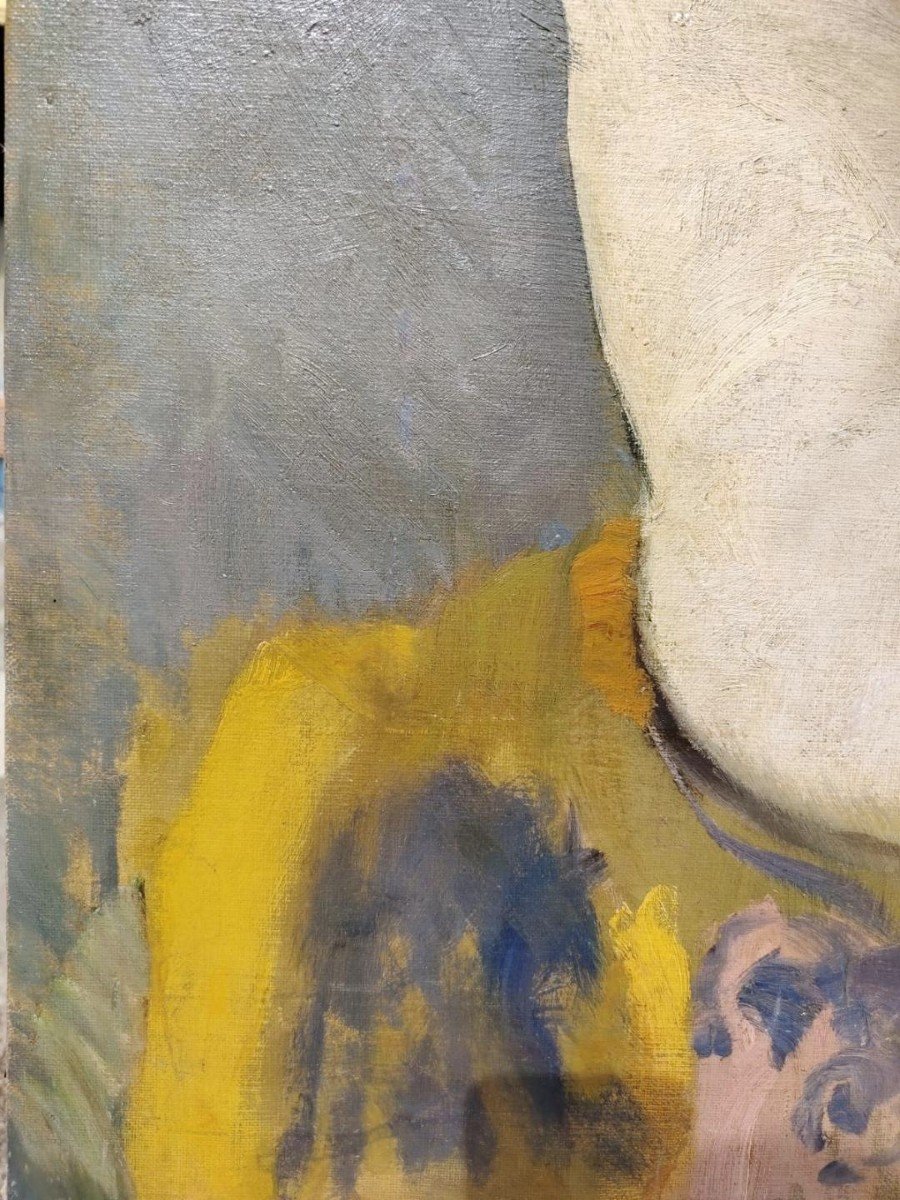
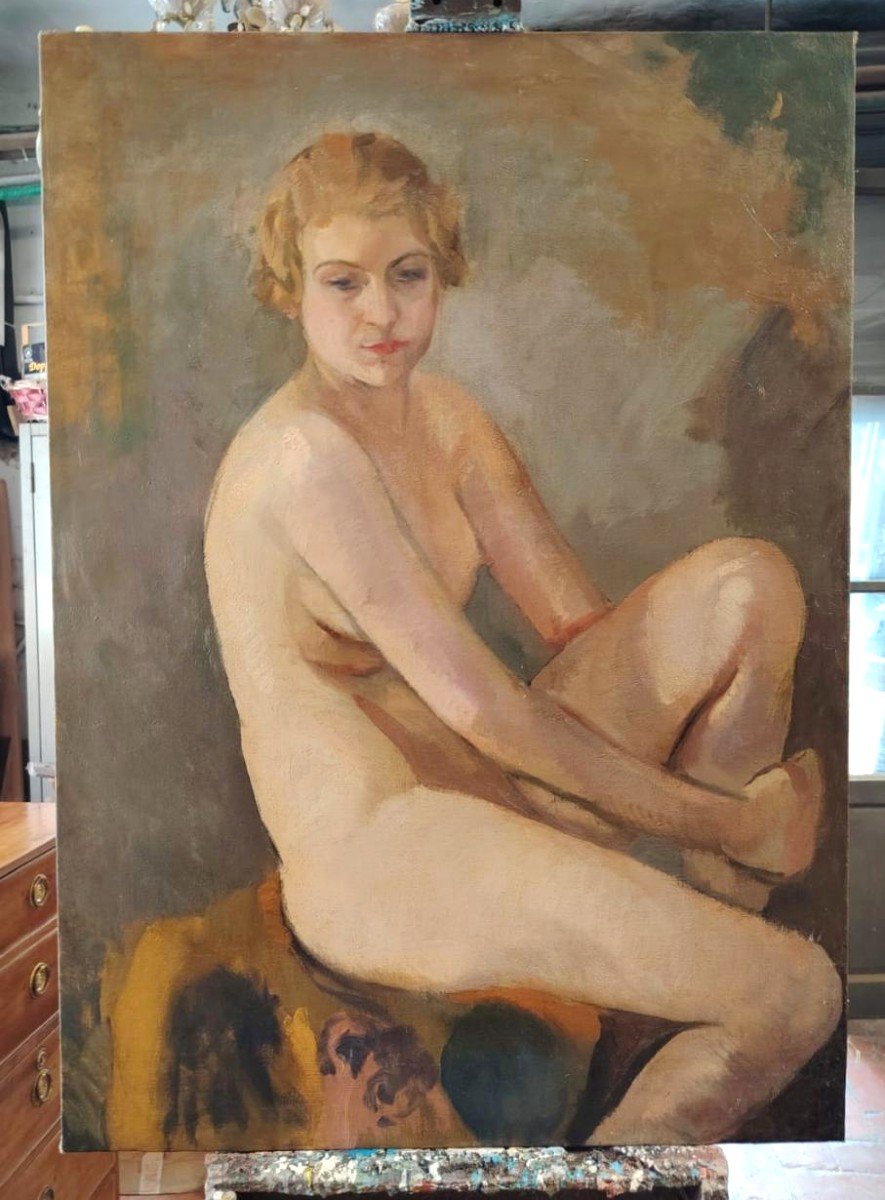


Oil On Canvas Depicting A Female Nude, By Armando Spadini (florence 1883 – Rome 1995) -
Artist: Armando Spadini
Oil on canvas—female nude—Armando Spadini (Florence 1883 – Rome 1995)
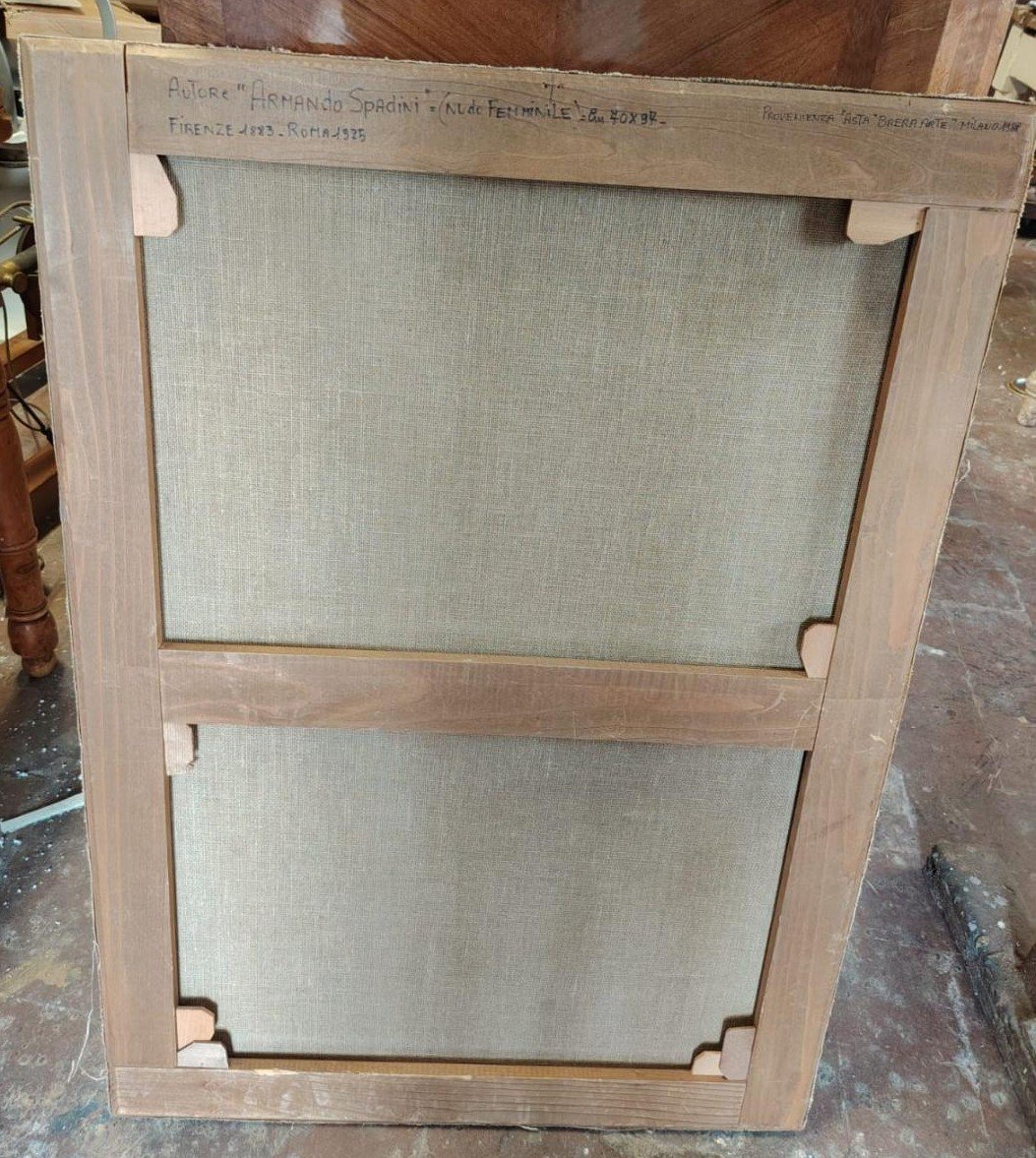
H: 97.00 P: 70.00
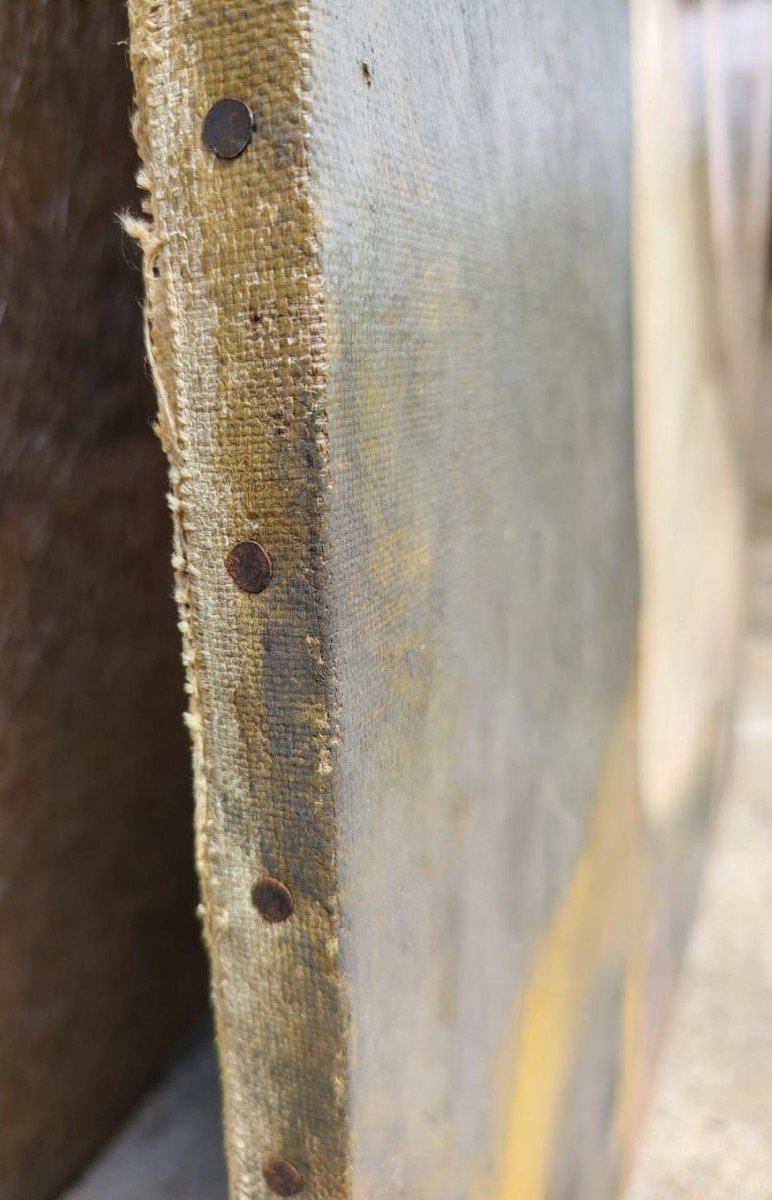
The painting has a frame,and when examined with a Wood’s lamp, it shows no signs of significant restoration to the paint layer
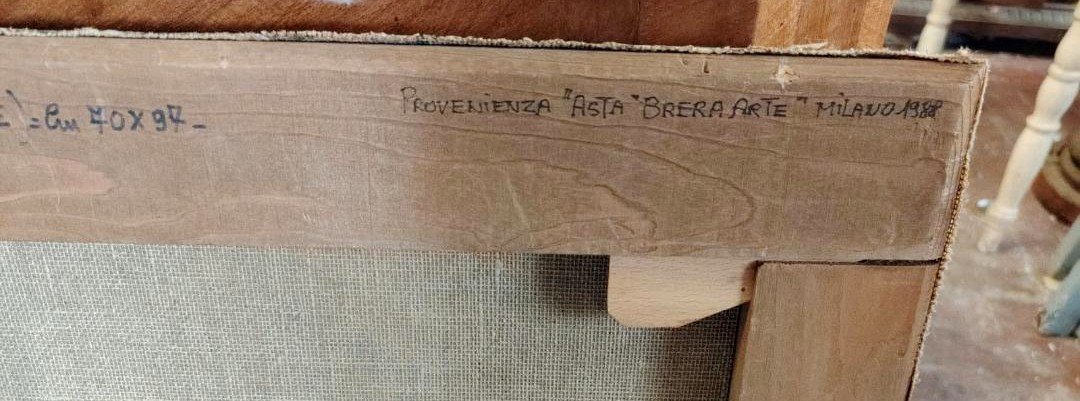
This painting has been auctioned twice (at Brerarte Auctions in 1988 and at Pace Auctions in 2019; it originally bore a certificate of authenticity based on a photograph. Authentication based on a photograph by Gimmi Stefanini, a court-appointed art expert (C.T.U.) for the courts of Milan and Lugano; unfortunately, the photograph has been lost.
Armando Spadini was born in Florence at Via della Chiesa No. 51, in the San Frediano neighborhood, in 1883.
He was known for his fiery and stubborn temperament.
In fact, after four years of apprenticeship at Jafet Torelli’s factory specializing in terracotta and artistic majolica, he enrolled in the Decorative Arts section of the Santa Croce vocational school.He remained there for three years
Ignoring the advice of his professors, who wanted him to become a chaser, Spadini attended the Scuola Libera di Nudo, where he met Ardengo Soffici.
In 1901, he entered the competition organized by Alinari to illustrate two cantos of the Divine Comedy.
He won second place behind Alberto Zardo.
Thanks to Adolfo De Carolis, professor of Ornamentation at the Academy of Fine Arts, he came into contact with Papini, Prezzolini, and Cecchi. He thus became an illustrator for their magazine *Leonardo*.
This commitment was not even curtailed by his military service (1904–05).
At the end of 1905, he designed the title page for Papini’s *Il Crepuscolo dei Filosofi*.
His entry in the 1907 competition for the National Artistic Residency did not win him the prize.
However, he received a cash prize, which he used to marry Pasqualina Cervone, a student of Giovanni Fattori at the Academy of Fine Arts.
His participation in the same competition three years later and the prize he won allowed him to settle in Rome.
There, he used his wife as a model for a series of important portraits.
Notable works include *La Fidanzata* (1906), *Portrait of His Wife in a Wedding Dress* (1908), *The Sleeper* (1909), and finally the two *Moses* paintings, in which each female figure is Pasqualina portrayed in different poses.
In 1911, thanks to the appointment of his friend Cecchi as editor of *La Tribuna*, Spadini managed to gain a foothold in the Roman art world centered around the Caffè Aragno.
Again thanks to Cecchi, he met Senator Olindo Malagodi.
Malagodi would prove to be more than just a collector, securing for Spadini in 1921 a monthly stipend of three thousand lire in exchange for a portion of his artistic output.
This allowed the Florentine artist to recover from numerous financial hardships, including having to give up the professorship he had won in 1920 at the Institute of Fine Arts in Florence due to his intolerance of the institute’s rules.
In 1922, he exhibited three paintings (Portrait of a Little Girl, Village, and Cattle in the Barn) at the Primaverile Fiorentina alongside the Valori Plastici group (Carlo Carrà, De Chirico, Giorgio Morandi, etc.).
The following year, he participated in the Italian Fine Arts Exhibition in Buenos Aires.
In 1924, he took part in the Venice Biennale with a solo exhibition held in Hall V of the Palazzo dell’Esposizione.
During the same period, Spadini offered his collaboration on the first issue of the magazine *Galleria* (a supplement to the *Corriere Italiano*).
Soffici, who was the editor, chose a drawing by Spadini for the cover and published an interview with the painter on the topic of “beautiful women.”
Armando Spadini died in Rome in 1925 of nephritis.
He is buried in the Poggio a Caiano cemetery.
H: 97.00 P: 70.00
The painting has a frame,and when examined with a Wood’s lamp, it shows no signs of significant restoration to the paint layer
This painting has been auctioned twice (at Brerarte Auctions in 1988 and at Pace Auctions in 2019; it originally bore a certificate of authenticity based on a photograph. Authentication based on a photograph by Gimmi Stefanini, a court-appointed art expert (C.T.U.) for the courts of Milan and Lugano; unfortunately, the photograph has been lost.
Armando Spadini was born in Florence at Via della Chiesa No. 51, in the San Frediano neighborhood, in 1883.
He was known for his fiery and stubborn temperament.
In fact, after four years of apprenticeship at Jafet Torelli’s factory specializing in terracotta and artistic majolica, he enrolled in the Decorative Arts section of the Santa Croce vocational school.He remained there for three years
Ignoring the advice of his professors, who wanted him to become a chaser, Spadini attended the Scuola Libera di Nudo, where he met Ardengo Soffici.
In 1901, he entered the competition organized by Alinari to illustrate two cantos of the Divine Comedy.
He won second place behind Alberto Zardo.
Thanks to Adolfo De Carolis, professor of Ornamentation at the Academy of Fine Arts, he came into contact with Papini, Prezzolini, and Cecchi. He thus became an illustrator for their magazine *Leonardo*.
This commitment was not even curtailed by his military service (1904–05).
At the end of 1905, he designed the title page for Papini’s *Il Crepuscolo dei Filosofi*.
His entry in the 1907 competition for the National Artistic Residency did not win him the prize.
However, he received a cash prize, which he used to marry Pasqualina Cervone, a student of Giovanni Fattori at the Academy of Fine Arts.
His participation in the same competition three years later and the prize he won allowed him to settle in Rome.
There, he used his wife as a model for a series of important portraits.
Notable works include *La Fidanzata* (1906), *Portrait of His Wife in a Wedding Dress* (1908), *The Sleeper* (1909), and finally the two *Moses* paintings, in which each female figure is Pasqualina portrayed in different poses.
In 1911, thanks to the appointment of his friend Cecchi as editor of *La Tribuna*, Spadini managed to gain a foothold in the Roman art world centered around the Caffè Aragno.
Again thanks to Cecchi, he met Senator Olindo Malagodi.
Malagodi would prove to be more than just a collector, securing for Spadini in 1921 a monthly stipend of three thousand lire in exchange for a portion of his artistic output.
This allowed the Florentine artist to recover from numerous financial hardships, including having to give up the professorship he had won in 1920 at the Institute of Fine Arts in Florence due to his intolerance of the institute’s rules.
In 1922, he exhibited three paintings (Portrait of a Little Girl, Village, and Cattle in the Barn) at the Primaverile Fiorentina alongside the Valori Plastici group (Carlo Carrà, De Chirico, Giorgio Morandi, etc.).
The following year, he participated in the Italian Fine Arts Exhibition in Buenos Aires.
In 1924, he took part in the Venice Biennale with a solo exhibition held in Hall V of the Palazzo dell’Esposizione.
During the same period, Spadini offered his collaboration on the first issue of the magazine *Galleria* (a supplement to the *Corriere Italiano*).
Soffici, who was the editor, chose a drawing by Spadini for the cover and published an interview with the painter on the topic of “beautiful women.”
Armando Spadini died in Rome in 1925 of nephritis.
He is buried in the Poggio a Caiano cemetery.
4 500 €
Period: 20th century
Style: Art Deco
Condition: Excellent condition
Material: Oil painting
Reference (ID): 1789908
Availability: In stock
Print