THIS OBJECT WAS SOLD
Bust Of Apollo Of The Belvedere In Silver-plated Bronze, By L. Oudry, 19th Century
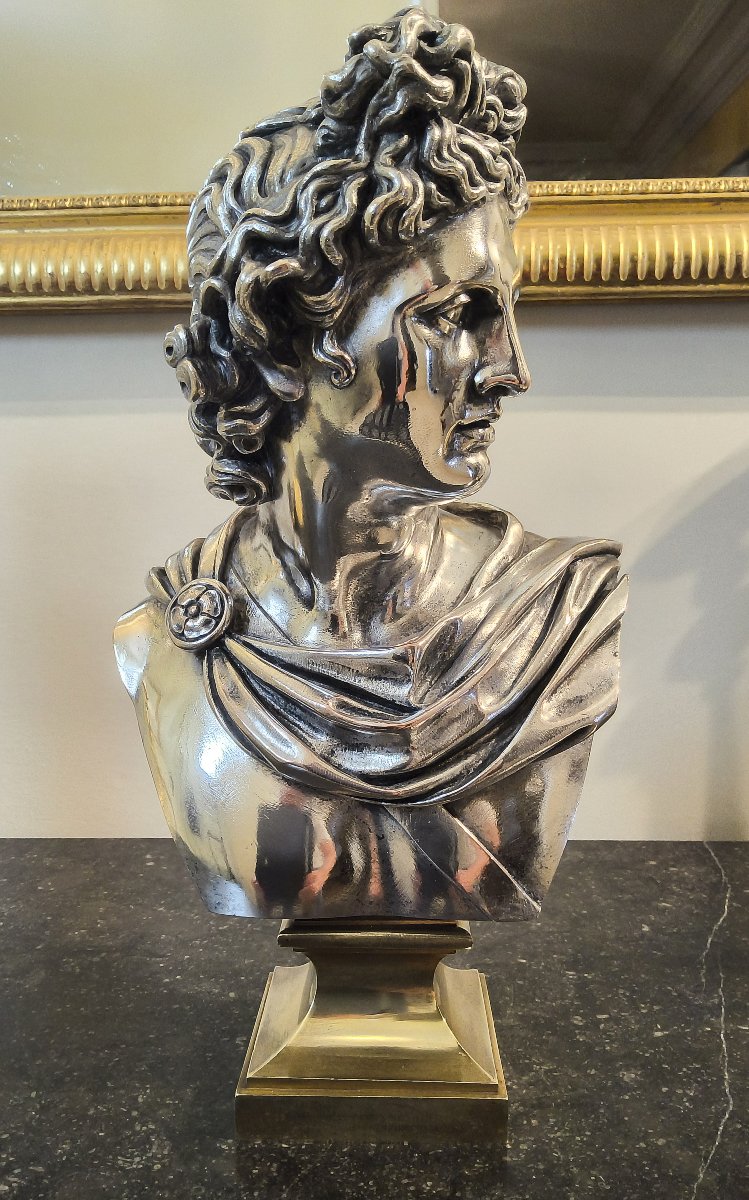
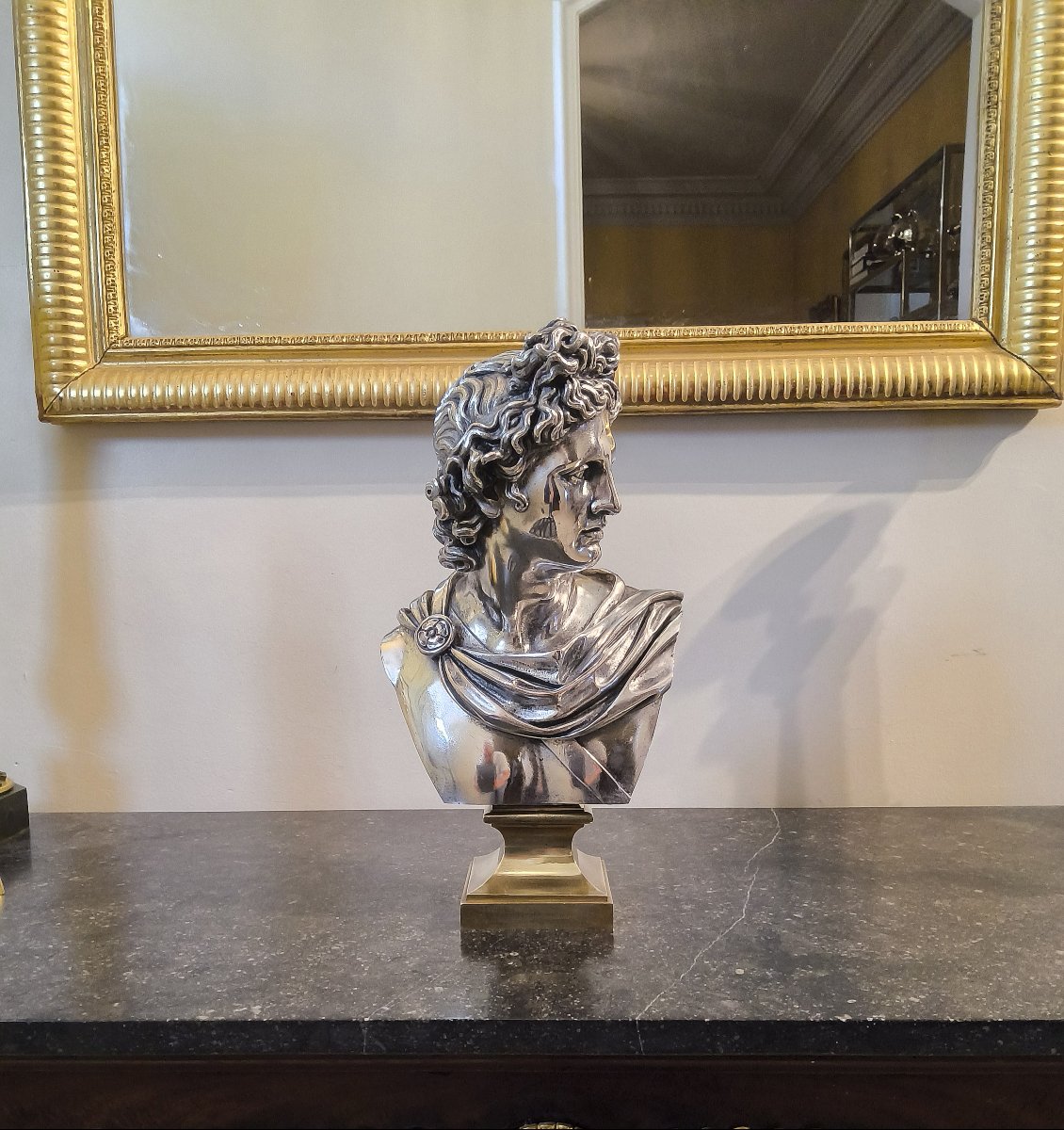
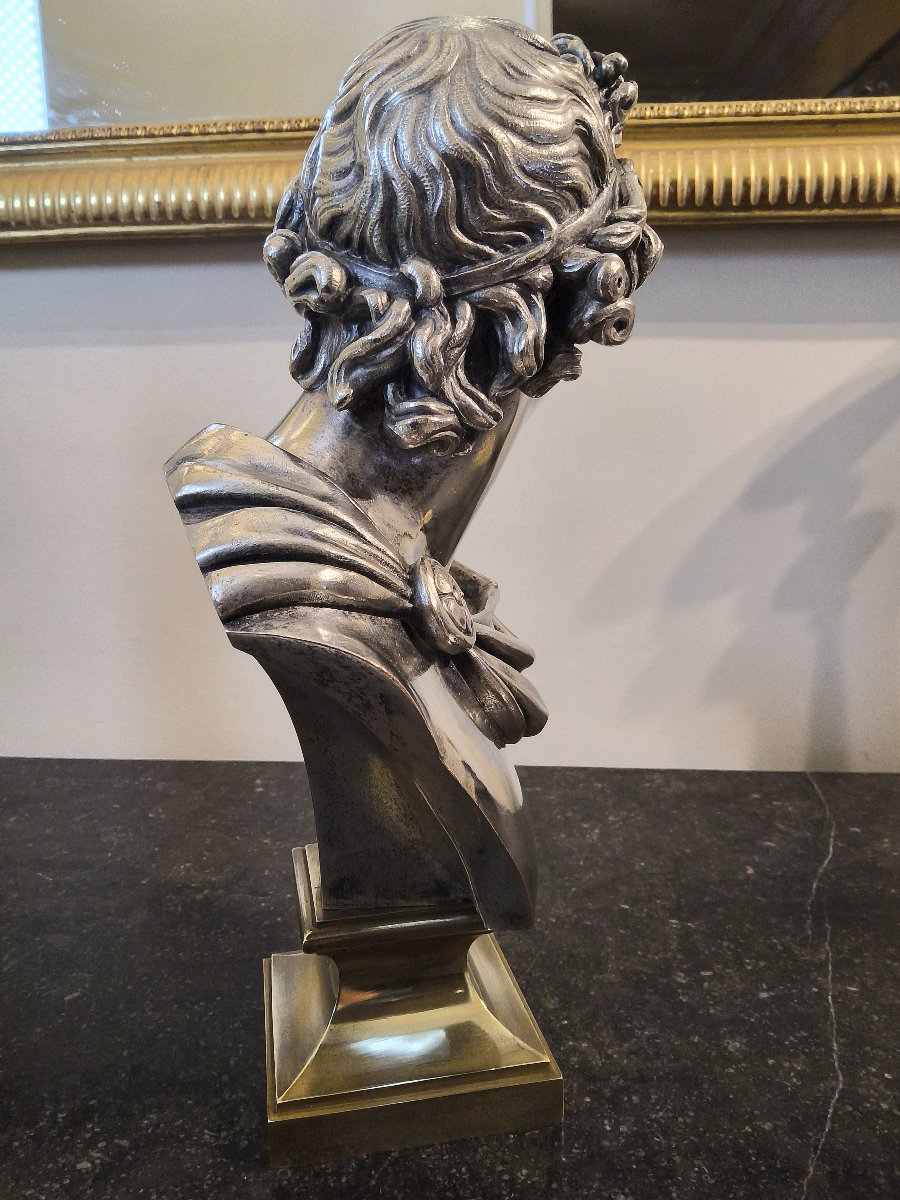
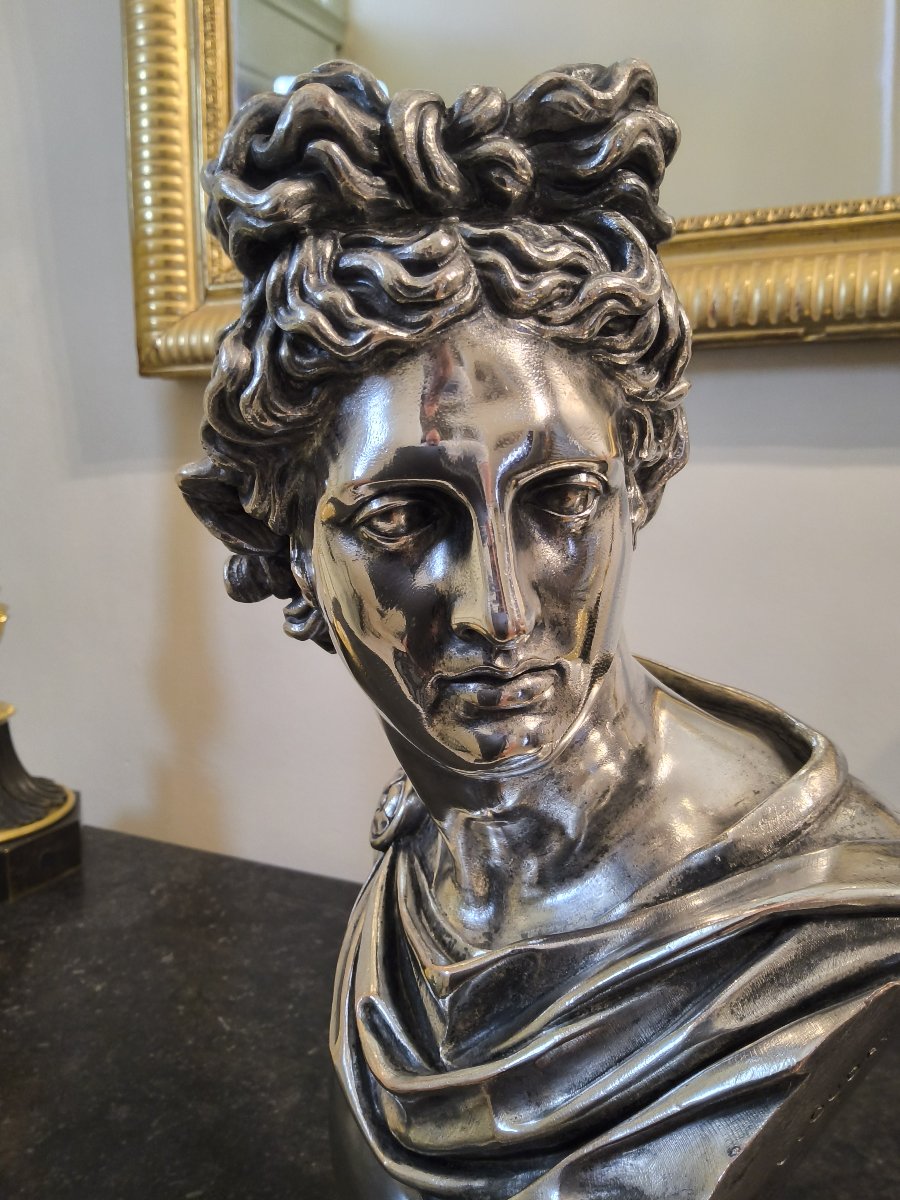
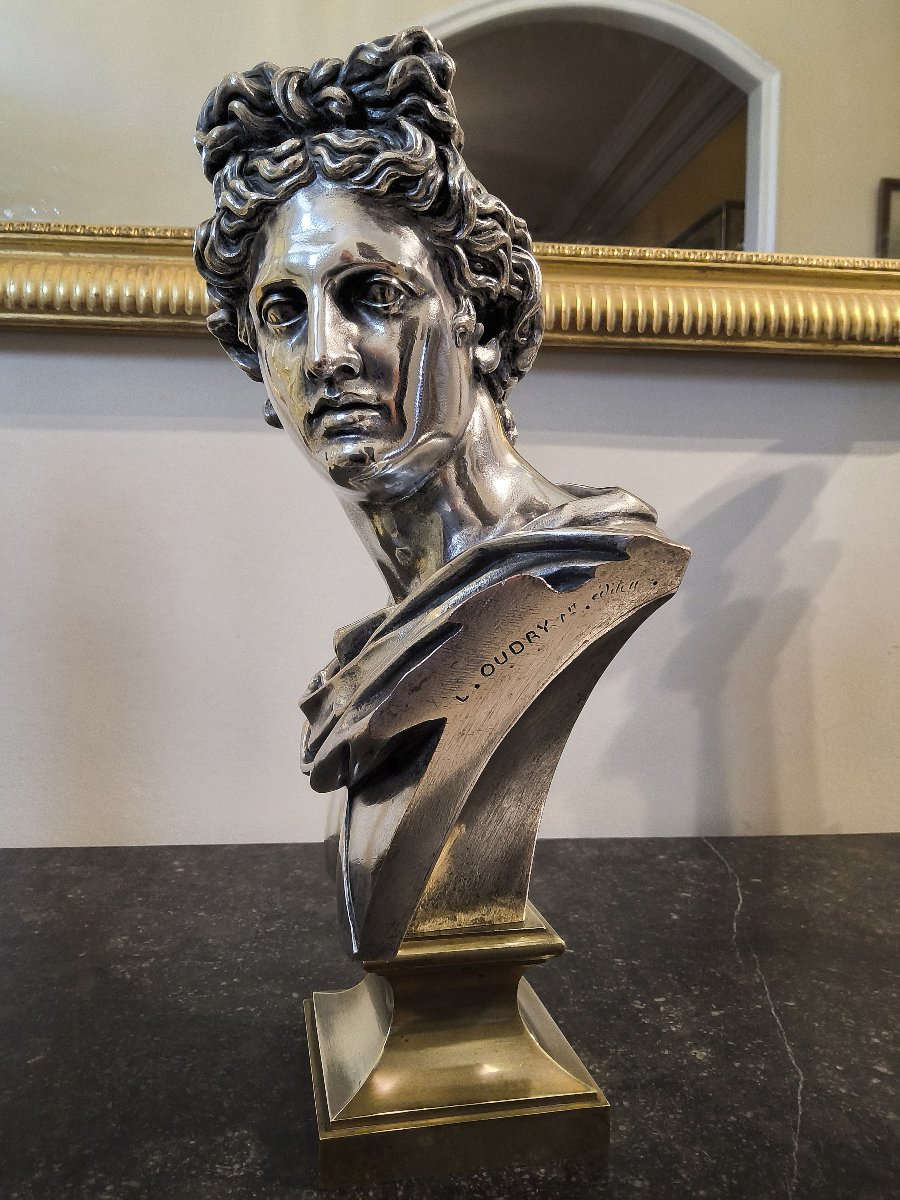
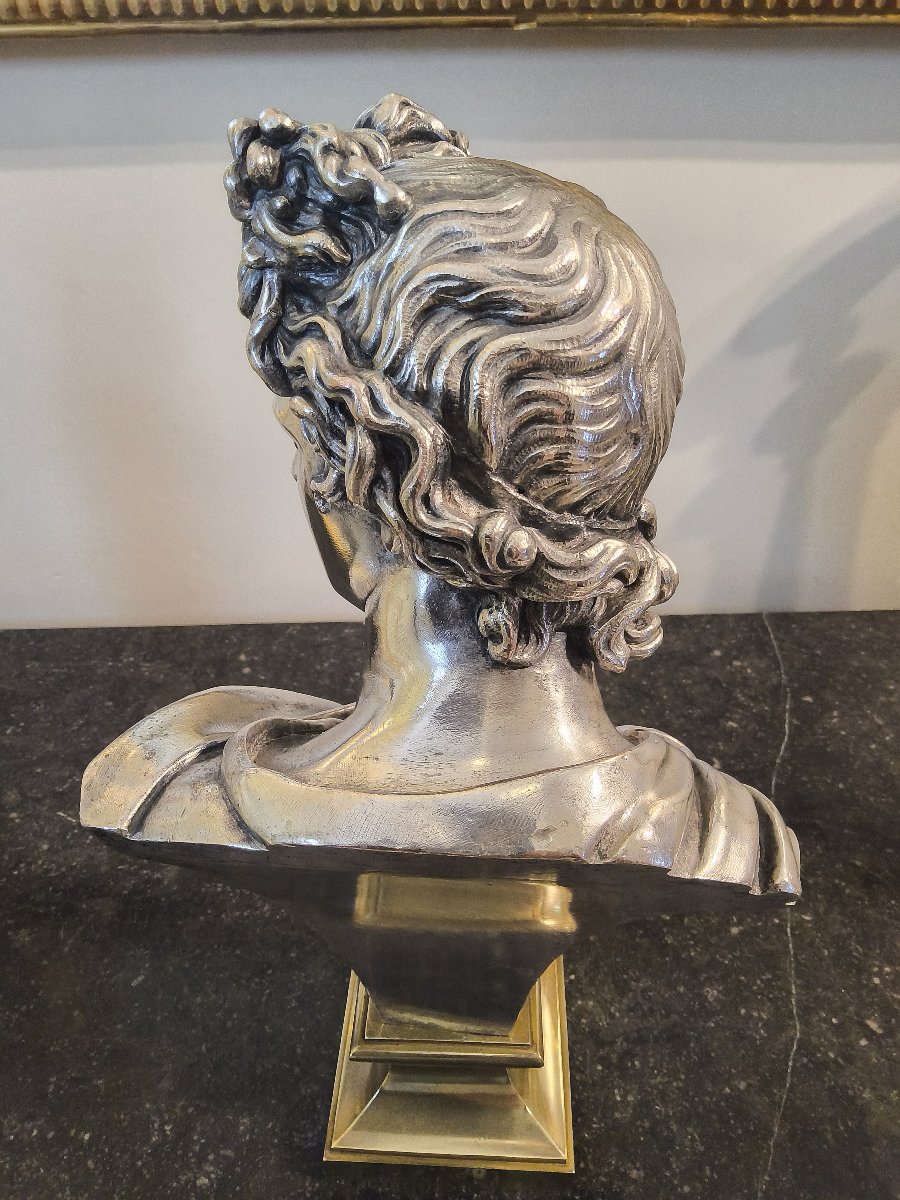
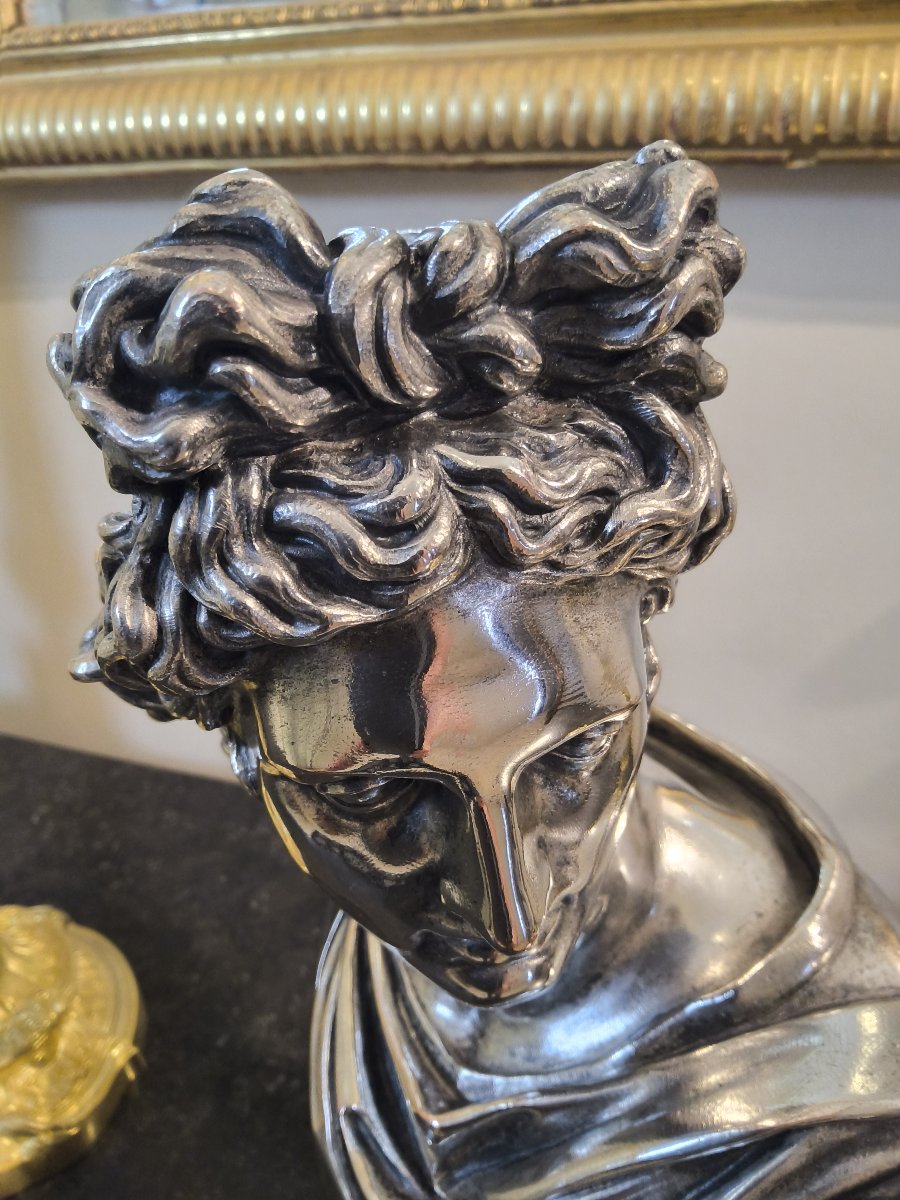
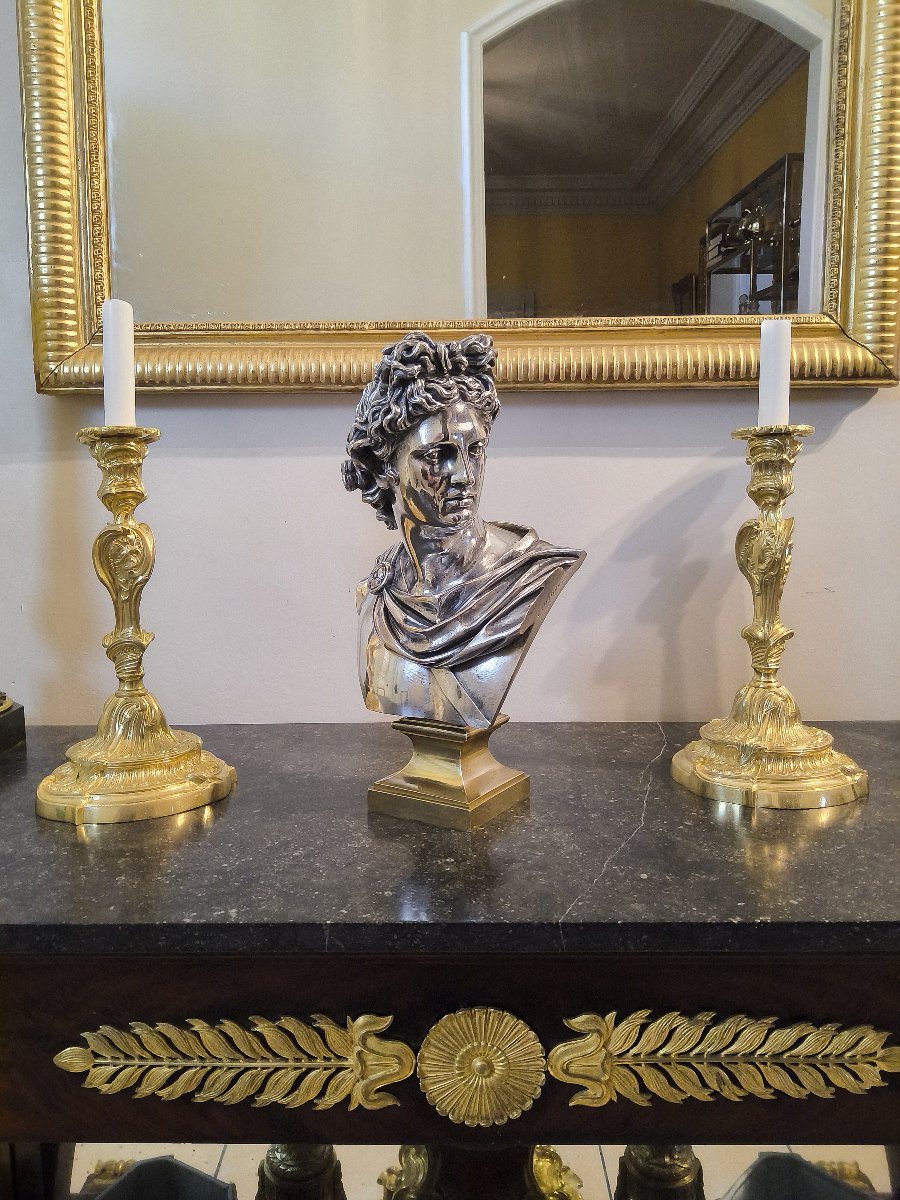
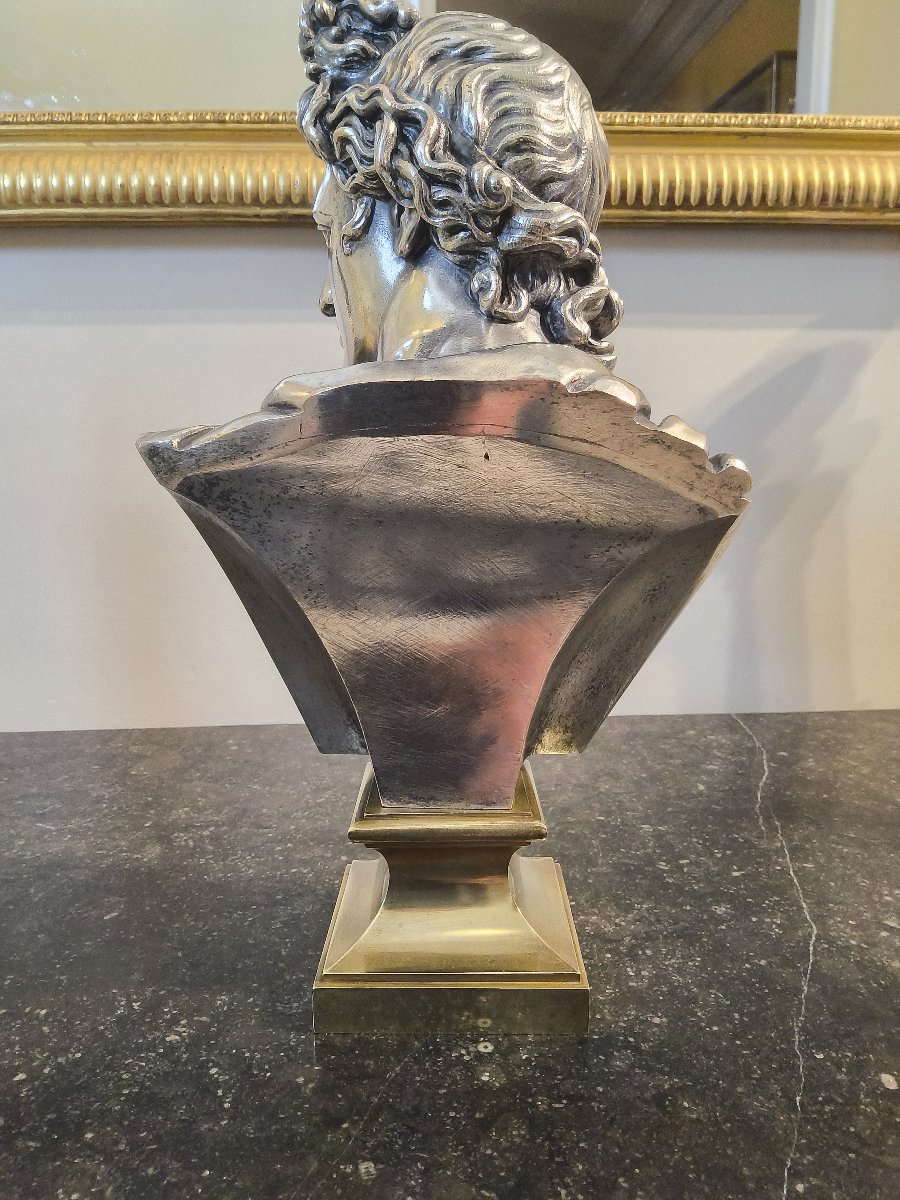
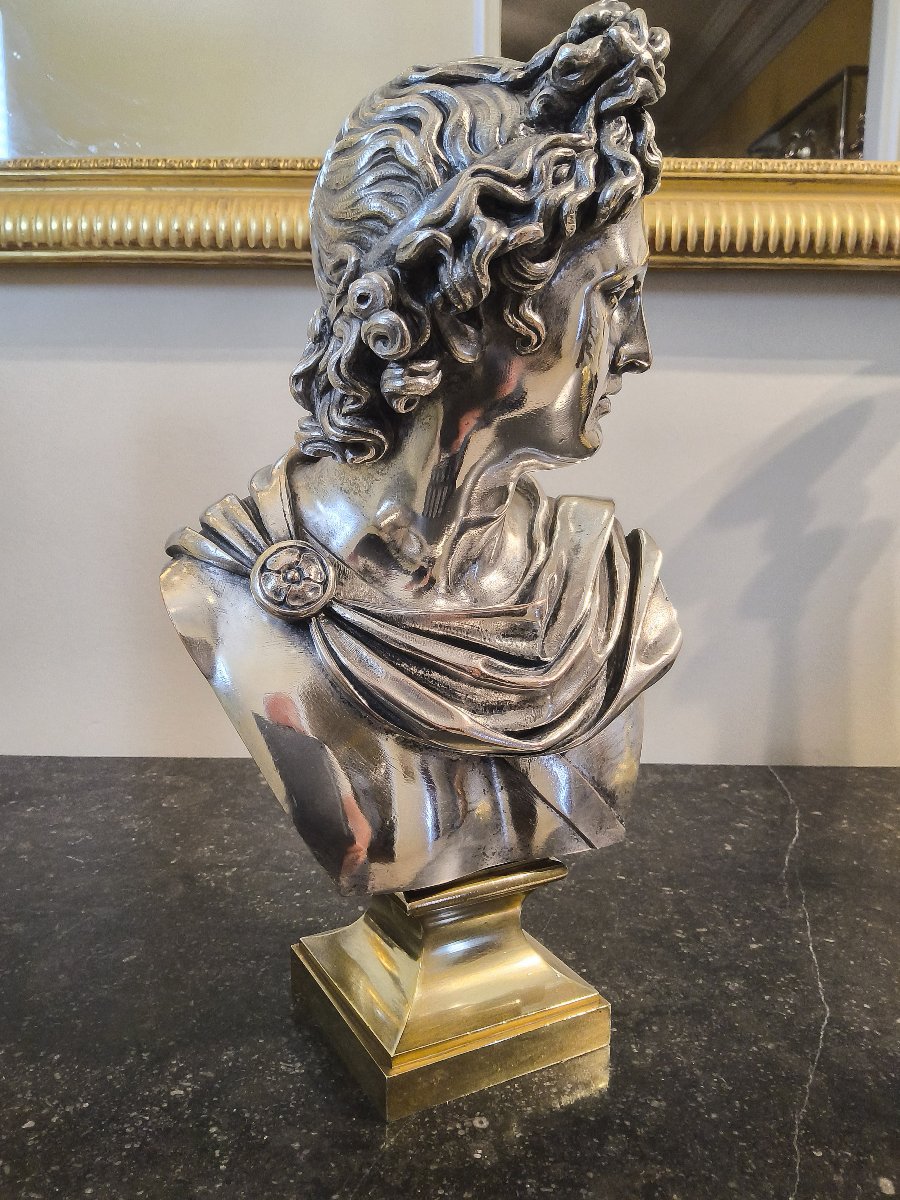
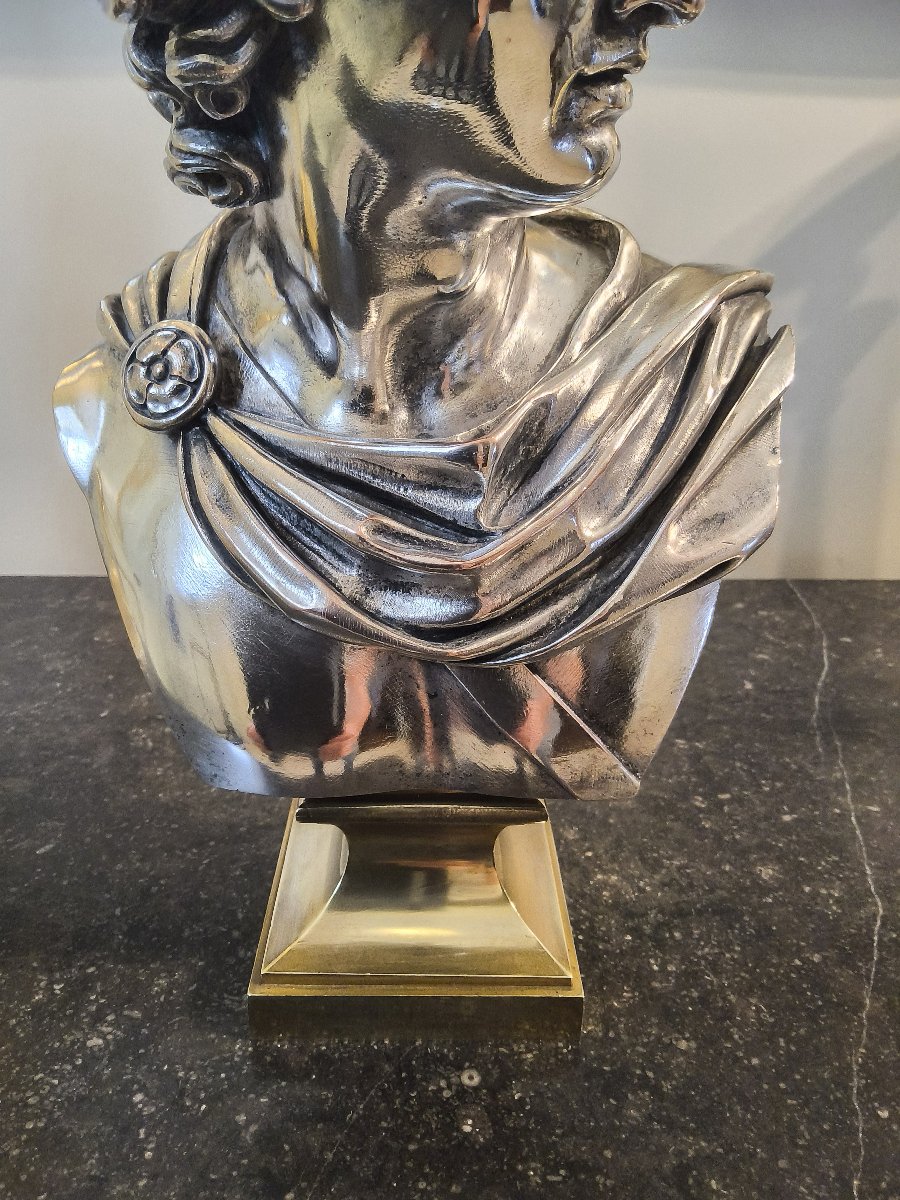
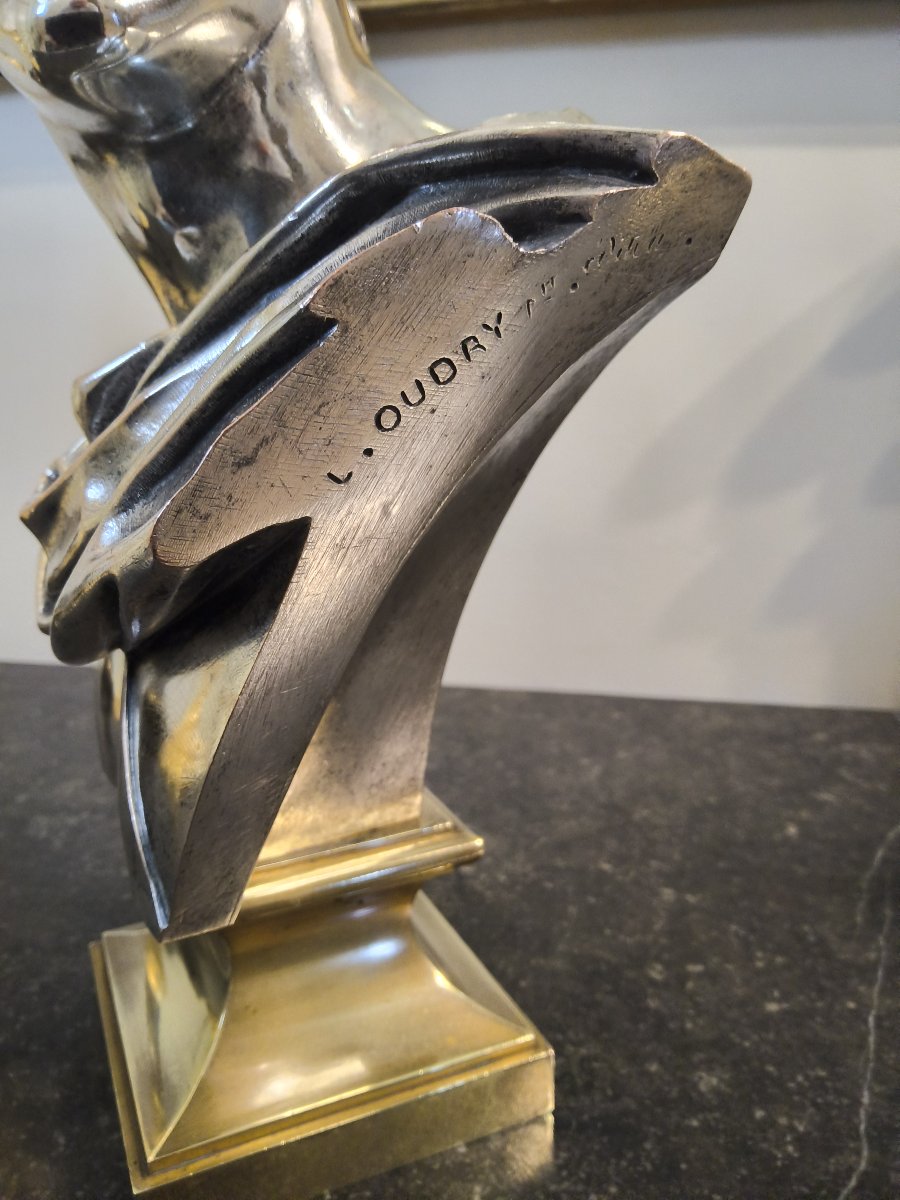


Bust of Apollo of the Belvedere in Silver-Plated Bronze, by L. Oudry, 19th century
Dimensions Height: 32 cm Width: 17 cm Depth: 12 cm
Condition Report: Magnificent original condition, with signs of use and age. Very high-quality bronze casting featuring exceptional chiseling, enhanced by its splendid original silver plating in both glossy and matte finishes. Original threaded mounting.
Depicted in profile, this bust of the Belvedere Apollo captivates with the finesse of its details. The classical buttoned drapery, which gracefully highlights the musculature of the torso, blends harmoniously with the sculpted strap of his quiver. The power of his face, with its ideally proportioned features, is enhanced by a thick, curly head of hair tied into an elegant bun. The modeling of the neck and torso attests to a work of great precision. The entire piece rests proudly on a molded and gilded pedestal, creating a refined contrast.
Léopold OUDRY (active 1854–1882) A goldsmith and publisher during the Second French Empire. A leading bronze foundry that collaborated with the great bronze casters of the 19th century. Oudry participated in the Paris World’s Fair and won a medal in 1855.
Bust—Apollo of the Belvedere. The Belvedere Apollo, also known as the Pythian Apollo, is a famous marble statue from classical antiquity. It was rediscovered in the late 15th century during the Renaissance and displayed in the Belvedere Courtyard of the Vatican, from which it derives its name. Since the mid-18th century, it has been regarded by Neoclassicism as the finest sculpture of antiquity, serving as a model, and for centuries it was considered the ideal of aesthetic perfection in Western European culture.
In Greek and Roman mythology, Apollo is one of the most important and versatile Olympian gods. Apollo is the son of Zeus and Leto and the twin brother of the virgin huntress Artemis. Depicted in iconography as the ideal of the kouros (a beardless youth), Apollo was worshiped in ancient Greece and Rome as the god of light and the sun, truth, and prophecy, inspiring and conveying messages through the priestesses of the Oracle of Delphi. He is also the patron of medicine and healing, the arts in general, and in particular music and poetry, often accompanied by the nine Muses. His attributes include the bow and arrows, the lyre, the laurel wreath, and his symbolic animals—the raven and the snake—which are associated with medicine.
Bibliography: Léopold Oudry founded his electrochemical company in 1854 at 10 Rue Cuissard in Paris. Oudry is known for his vases, statues, and small objects, which he coated with pure copper deposited byelectroplating, a technique already used by thefamous silversmith Christofle since the 1830s.Oudry was commissioned by the City of Paris to use his electroplating process to cast objects andmonuments for the capital.Oudry, for example, was commissioned to copper-plate themonumental fountains on the Place de la Concordein central Paris, designed by Jacques Ignace Hittorff in 1840, which had to be repainted every year. Buoyed by this new success, Oudry had to move to larger premises and opened his doors at10 Route de Versailles, where he employed 150 workers.
Oudry exhibited at numerous World’s Fairs and wonmedals in 1855 at the Paris World’s Fair and in 1862 in London.The famous Durenne foundry acquired Oudry’s company in the 1880s.
Worldwide shipping, secure packaging, detailed tracking, prompt communication.
Dimensions Height: 32 cm Width: 17 cm Depth: 12 cm
Condition Report: Magnificent original condition, with signs of use and age. Very high-quality bronze casting featuring exceptional chiseling, enhanced by its splendid original silver plating in both glossy and matte finishes. Original threaded mounting.
Depicted in profile, this bust of the Belvedere Apollo captivates with the finesse of its details. The classical buttoned drapery, which gracefully highlights the musculature of the torso, blends harmoniously with the sculpted strap of his quiver. The power of his face, with its ideally proportioned features, is enhanced by a thick, curly head of hair tied into an elegant bun. The modeling of the neck and torso attests to a work of great precision. The entire piece rests proudly on a molded and gilded pedestal, creating a refined contrast.
Léopold OUDRY (active 1854–1882) A goldsmith and publisher during the Second French Empire. A leading bronze foundry that collaborated with the great bronze casters of the 19th century. Oudry participated in the Paris World’s Fair and won a medal in 1855.
Bust—Apollo of the Belvedere. The Belvedere Apollo, also known as the Pythian Apollo, is a famous marble statue from classical antiquity. It was rediscovered in the late 15th century during the Renaissance and displayed in the Belvedere Courtyard of the Vatican, from which it derives its name. Since the mid-18th century, it has been regarded by Neoclassicism as the finest sculpture of antiquity, serving as a model, and for centuries it was considered the ideal of aesthetic perfection in Western European culture.
In Greek and Roman mythology, Apollo is one of the most important and versatile Olympian gods. Apollo is the son of Zeus and Leto and the twin brother of the virgin huntress Artemis. Depicted in iconography as the ideal of the kouros (a beardless youth), Apollo was worshiped in ancient Greece and Rome as the god of light and the sun, truth, and prophecy, inspiring and conveying messages through the priestesses of the Oracle of Delphi. He is also the patron of medicine and healing, the arts in general, and in particular music and poetry, often accompanied by the nine Muses. His attributes include the bow and arrows, the lyre, the laurel wreath, and his symbolic animals—the raven and the snake—which are associated with medicine.
Bibliography: Léopold Oudry founded his electrochemical company in 1854 at 10 Rue Cuissard in Paris. Oudry is known for his vases, statues, and small objects, which he coated with pure copper deposited byelectroplating, a technique already used by thefamous silversmith Christofle since the 1830s.Oudry was commissioned by the City of Paris to use his electroplating process to cast objects andmonuments for the capital.Oudry, for example, was commissioned to copper-plate themonumental fountains on the Place de la Concordein central Paris, designed by Jacques Ignace Hittorff in 1840, which had to be repainted every year. Buoyed by this new success, Oudry had to move to larger premises and opened his doors at10 Route de Versailles, where he employed 150 workers.
Oudry exhibited at numerous World’s Fairs and wonmedals in 1855 at the Paris World’s Fair and in 1862 in London.The famous Durenne foundry acquired Oudry’s company in the 1880s.
Worldwide shipping, secure packaging, detailed tracking, prompt communication.
Explore similar pieces and discover your ideal find:
bronze sculptures