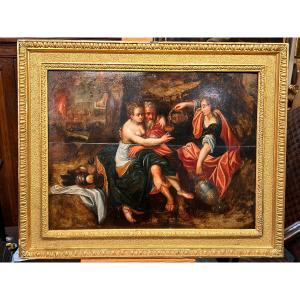


Lot And His Daughters. A Captivating Oil On Panel From The Flemish School, Dating From The Late 16th To Early 17th Century.
Artist: Ecòle De Frans Floris
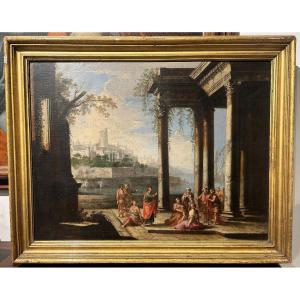
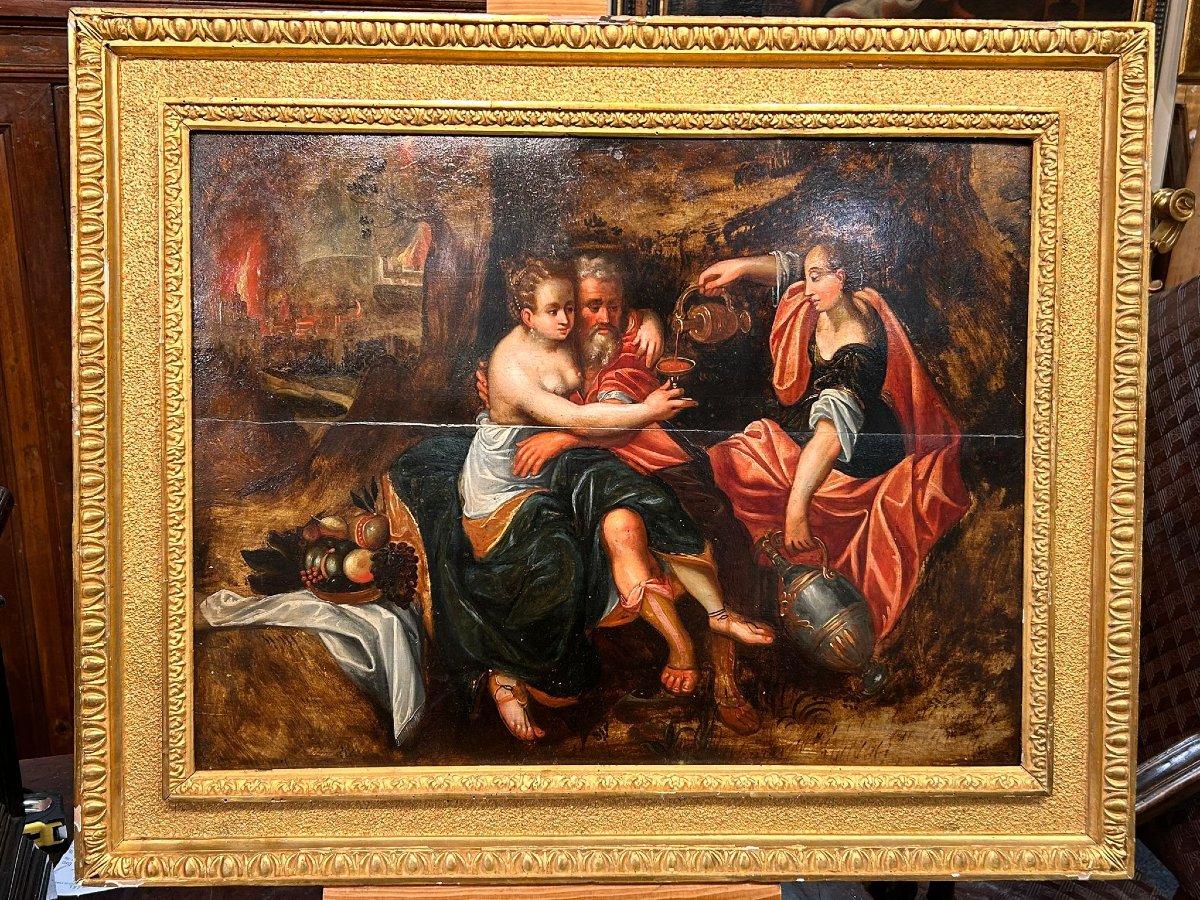
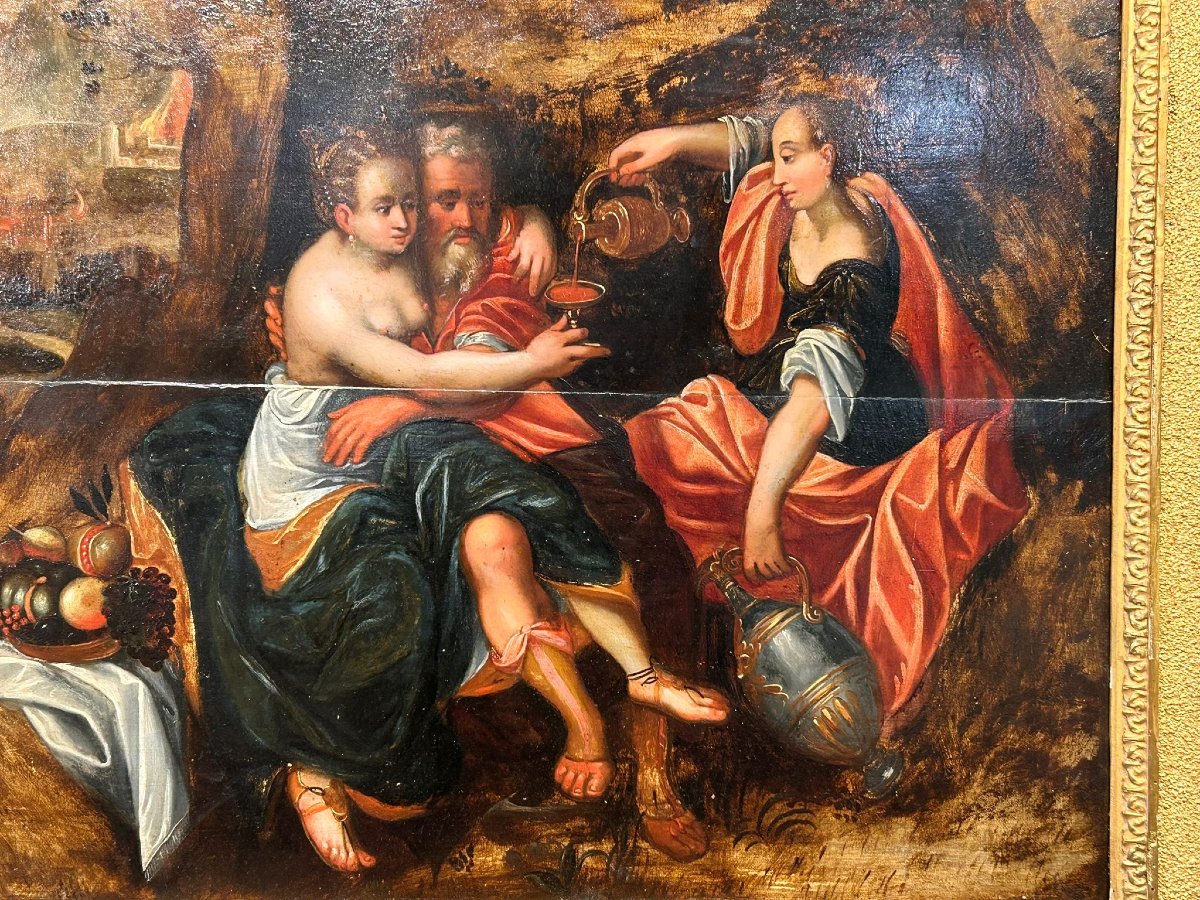
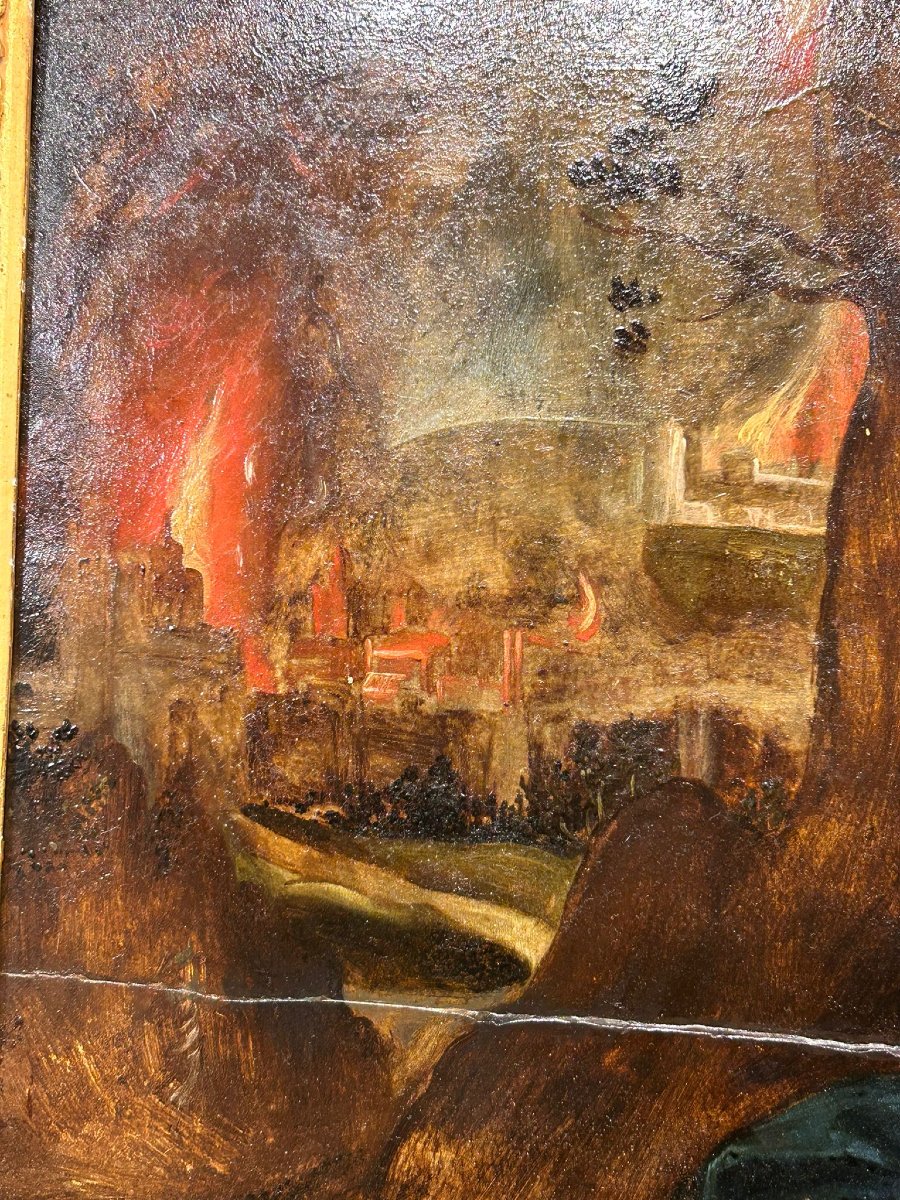
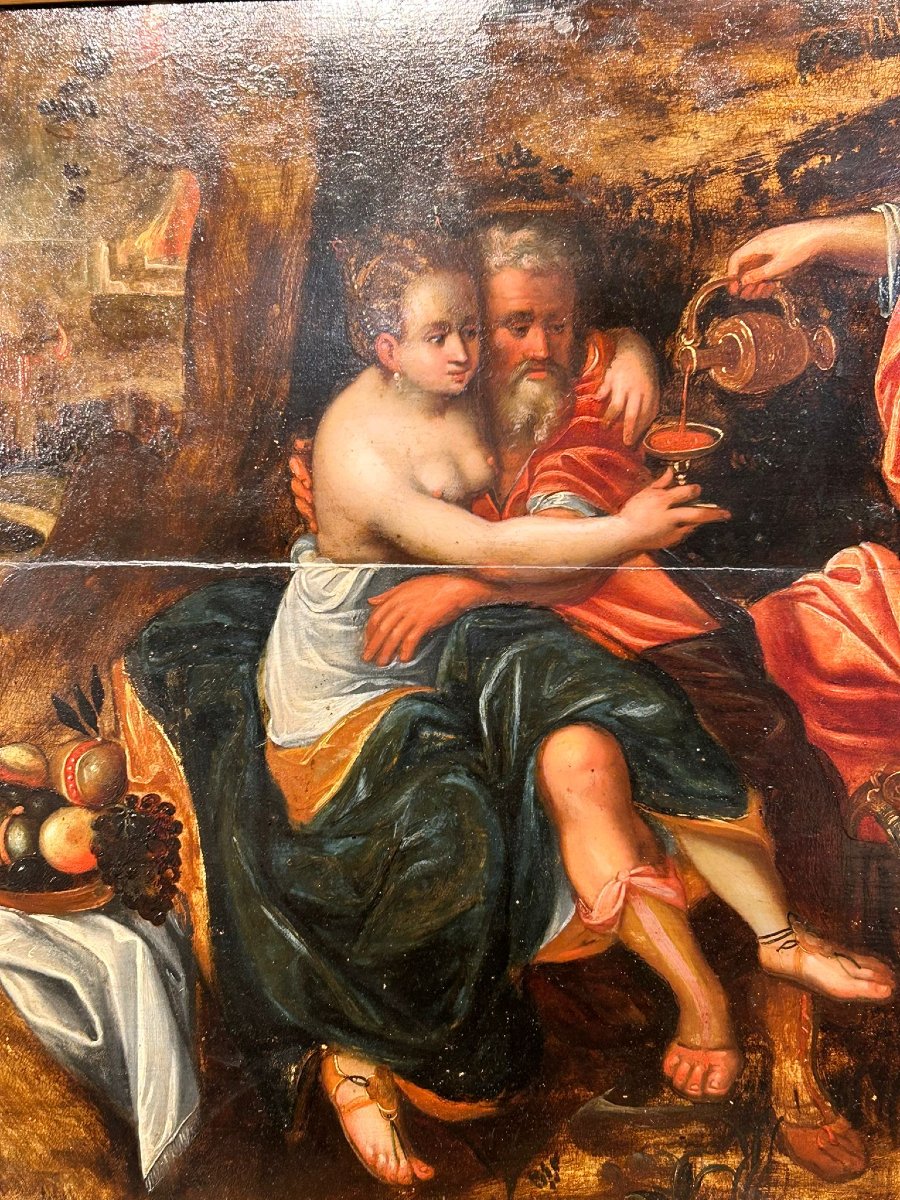
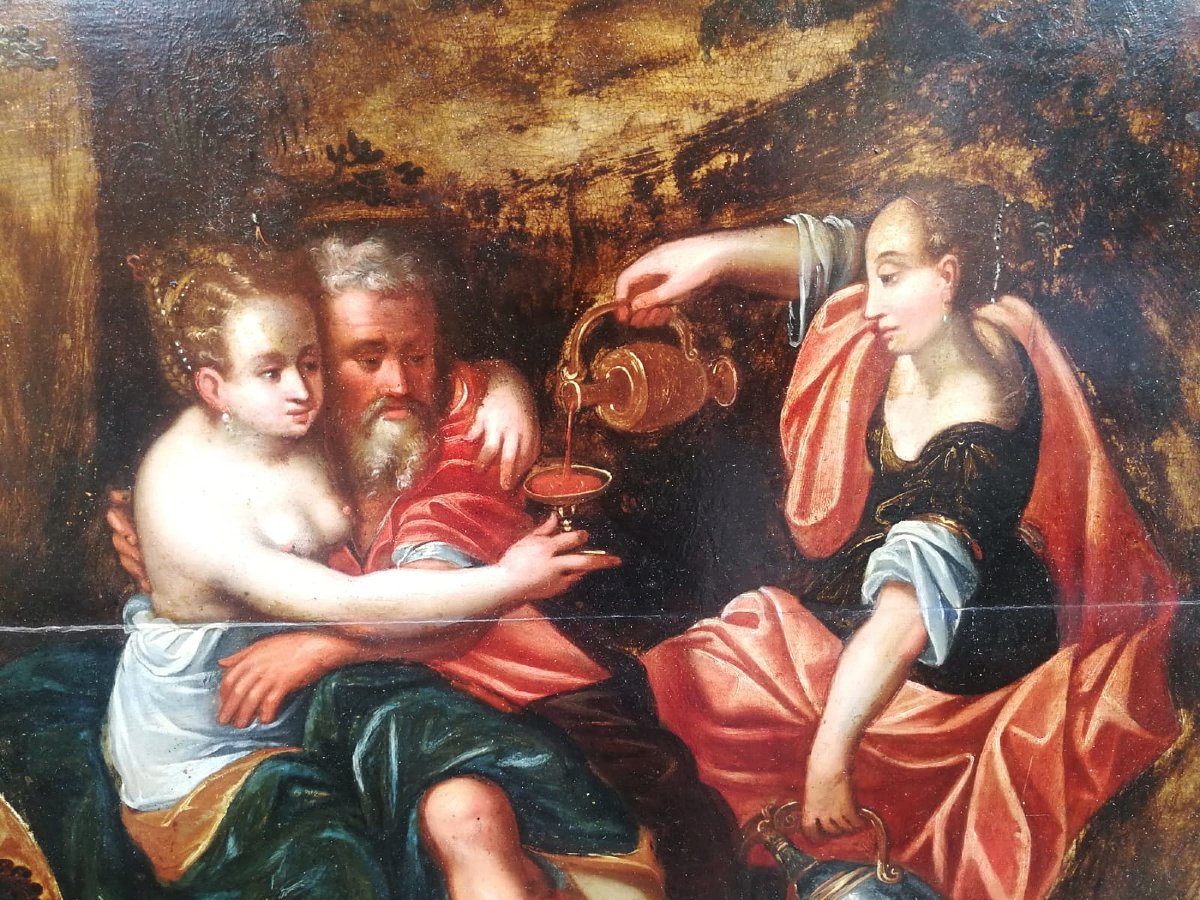
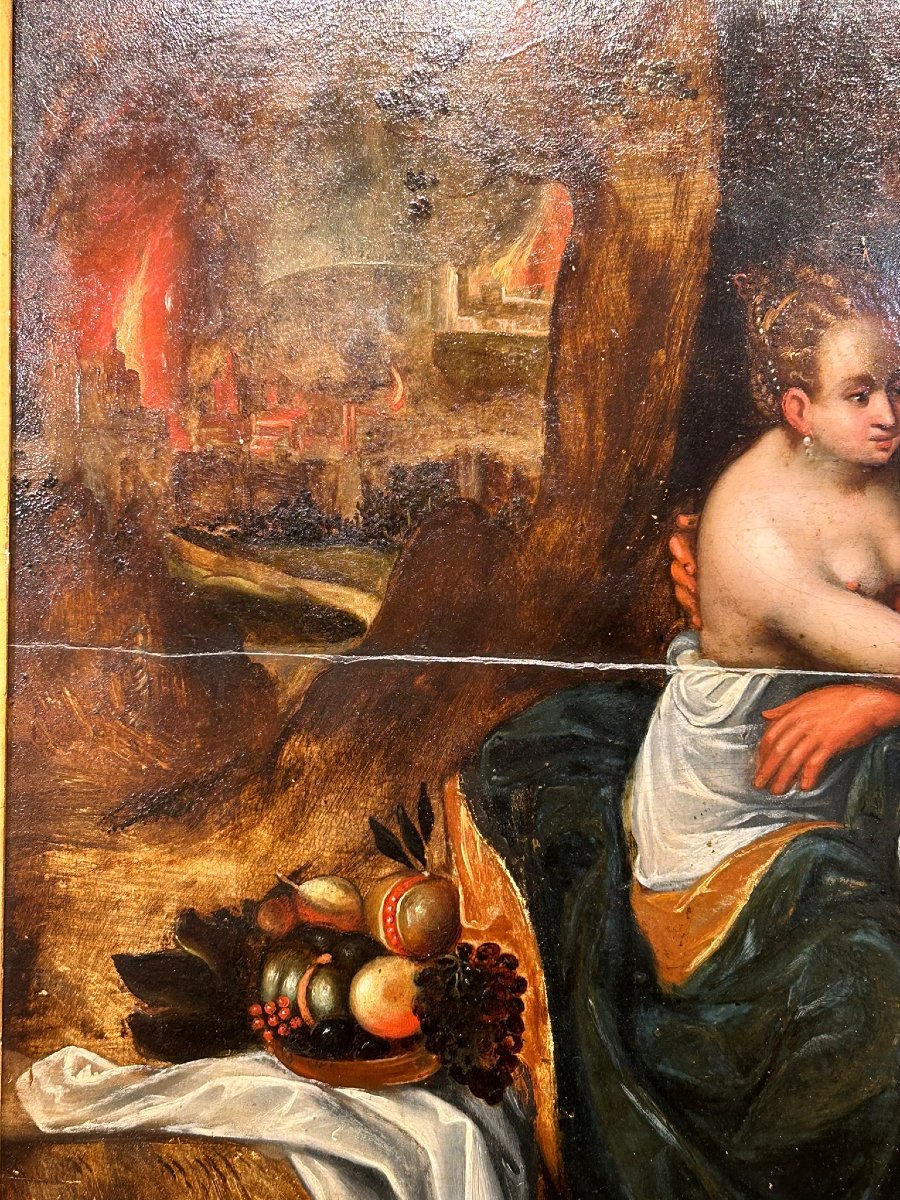
This oil painting on wood depicts a famous episode from the Bible as recounted in the Book of Genesis: Lot is fleeing the city of Sodom, which is burning in the background as divine punishment, and, having taken refuge in a cave while intoxicated by wine, he will find himself lying with two of his daughters to ensure his lineage.
This panel displays interesting painterly qualities, and stylistically, we can infer that it was produced between the last quarter of the sixteenth century and the first quarter of the seventeenth century in the Flemish tradition; more precisely, it was likely executed by a painter belonging to the flourishing Antwerp school. As early as the second half of the 16th century, Northern Europe’s largest commercial port was experiencing rapid economic and artistic development and was home to numerous important masters. Among them, Jan Matsys (Antwerp, 1510–1575) made a significant contribution to the renewal of sixteenth-century Flemish painting; a member of a dynasty of outstanding painters who first studied Mannerism in Italy—in Florence and Rome—and then at Fontainebleau, bringing this knowledge back to Flanders, where it gradually spread throughout the various Flemish art schools during the second half of the century. Another important master with a similar career path was Frans Floris (Antwerp 1517–1570), who, having fallen in love with Italian painting as seen in Rome and Venice, opened a studio with more than 100 students upon his return to the North, basing his teachings on the canons of Italian models. It is precisely in this large workshop that we find significant parallels—not only from an iconographic and figurative standpoint but also in the particularly enamel-like use of color.
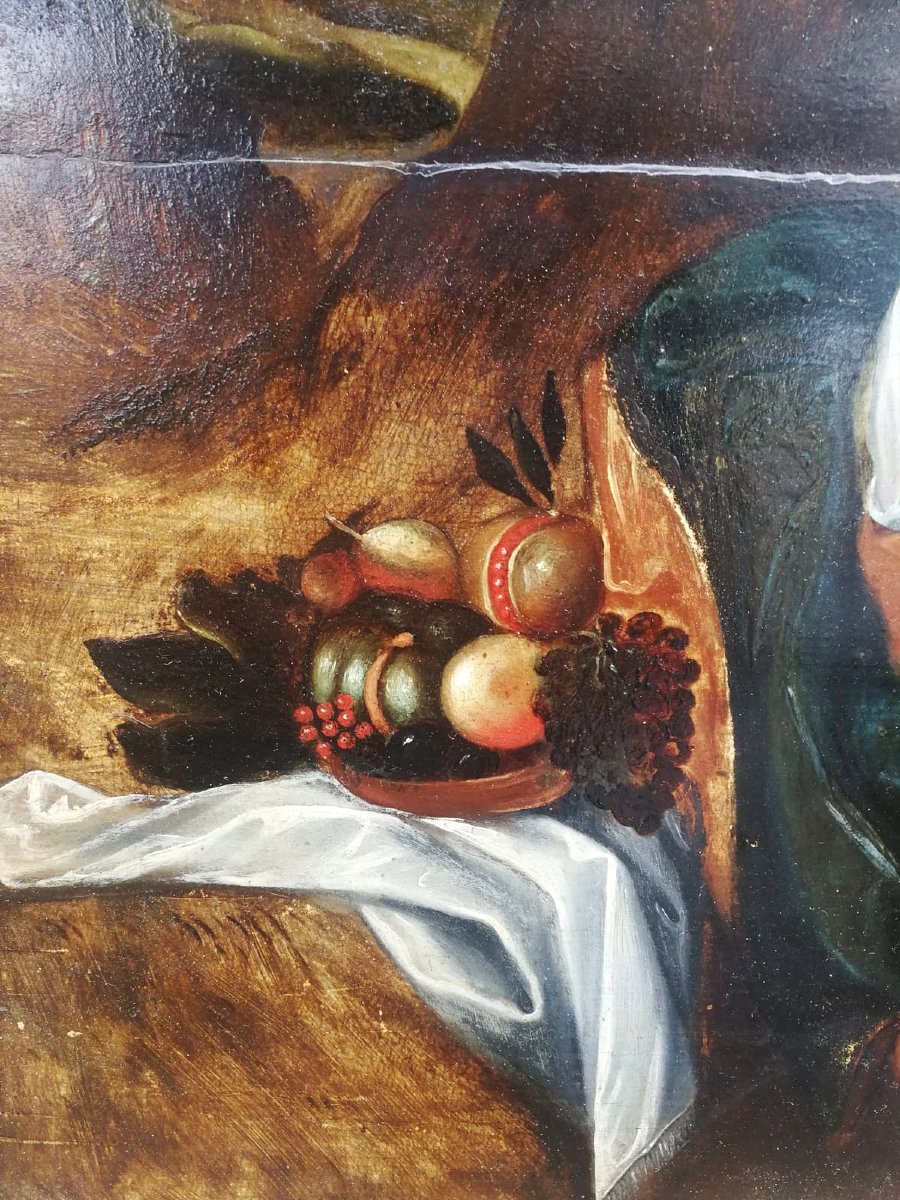
The painting reveals a keen attention to detail, for example in the figures’ skin tones or in the iridescent play of light that shimmers across the folds of the luxurious fabrics. Typical of this artistic tradition is the presence in the scene of a small still life of fruit, placed on a tray and exquisitely crafted.
The painting is in perfect condition and requires no restoration.
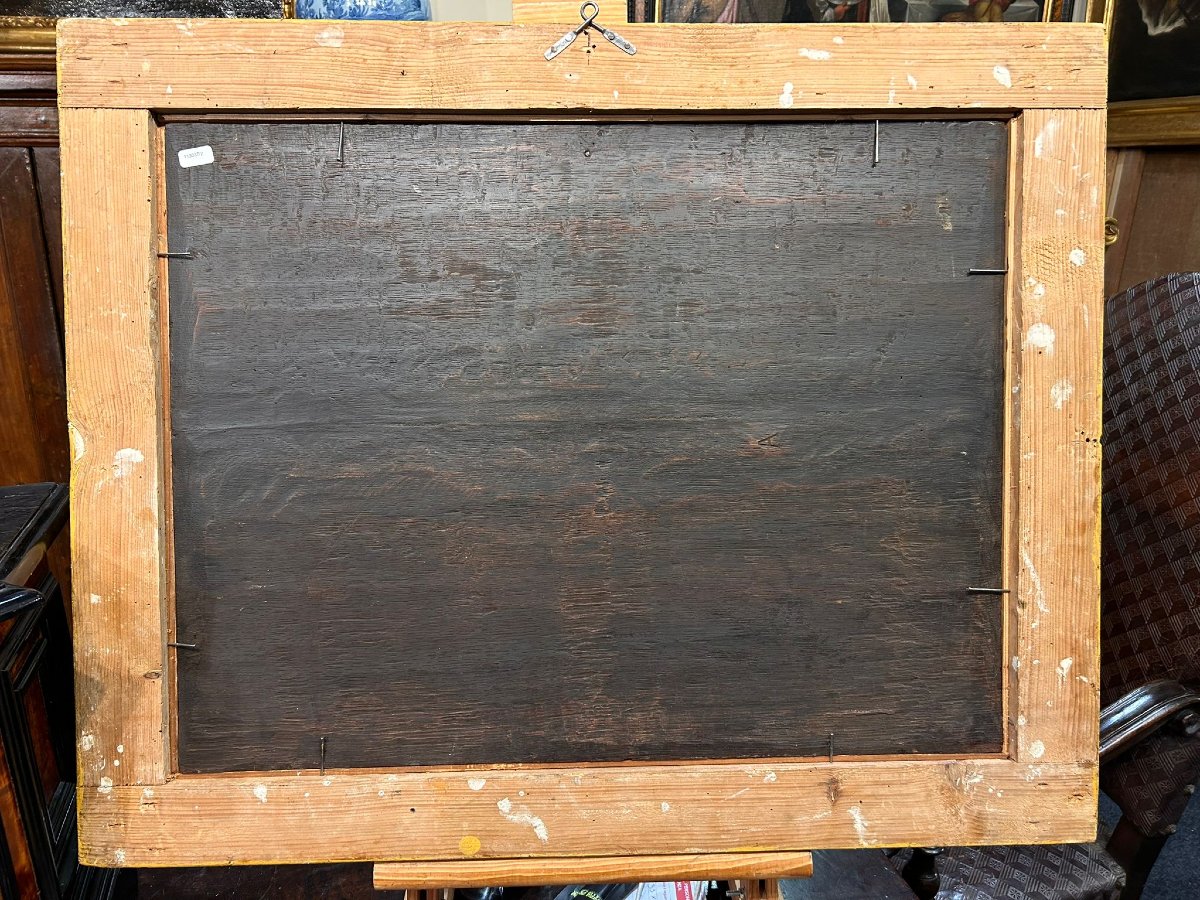
As can be seen, the panel exhibits the classic horizontal cracking typical of Flemish panels from this period, which helps confirm that the panel is antique and original.
Dimensions of the panel: 65 cm x 50 cm; with frame: 79 cm x 68 cm.
The sale will be accompanied by a certificate of historical authenticity issued by our antique gallery in accordance with the law.
This panel displays interesting painterly qualities, and stylistically, we can infer that it was produced between the last quarter of the sixteenth century and the first quarter of the seventeenth century in the Flemish tradition; more precisely, it was likely executed by a painter belonging to the flourishing Antwerp school. As early as the second half of the 16th century, Northern Europe’s largest commercial port was experiencing rapid economic and artistic development and was home to numerous important masters. Among them, Jan Matsys (Antwerp, 1510–1575) made a significant contribution to the renewal of sixteenth-century Flemish painting; a member of a dynasty of outstanding painters who first studied Mannerism in Italy—in Florence and Rome—and then at Fontainebleau, bringing this knowledge back to Flanders, where it gradually spread throughout the various Flemish art schools during the second half of the century. Another important master with a similar career path was Frans Floris (Antwerp 1517–1570), who, having fallen in love with Italian painting as seen in Rome and Venice, opened a studio with more than 100 students upon his return to the North, basing his teachings on the canons of Italian models. It is precisely in this large workshop that we find significant parallels—not only from an iconographic and figurative standpoint but also in the particularly enamel-like use of color.
The painting reveals a keen attention to detail, for example in the figures’ skin tones or in the iridescent play of light that shimmers across the folds of the luxurious fabrics. Typical of this artistic tradition is the presence in the scene of a small still life of fruit, placed on a tray and exquisitely crafted.
The painting is in perfect condition and requires no restoration.
As can be seen, the panel exhibits the classic horizontal cracking typical of Flemish panels from this period, which helps confirm that the panel is antique and original.
Dimensions of the panel: 65 cm x 50 cm; with frame: 79 cm x 68 cm.
The sale will be accompanied by a certificate of historical authenticity issued by our antique gallery in accordance with the law.
4 200 €
Period: 16th century
Style: Renaissance, Louis 13th
Condition: Excellent condition
Material: Oil painting on wood
Length: 65 - 79
Height: 50 - 68
Reference (ID): 1789687
Availability: In stock
Print