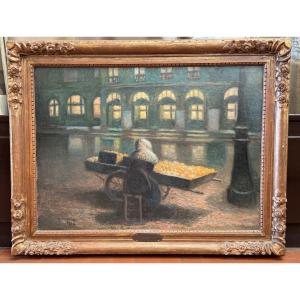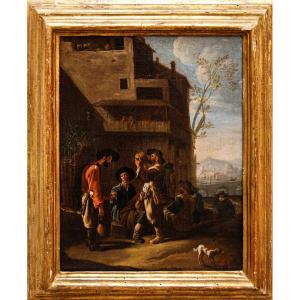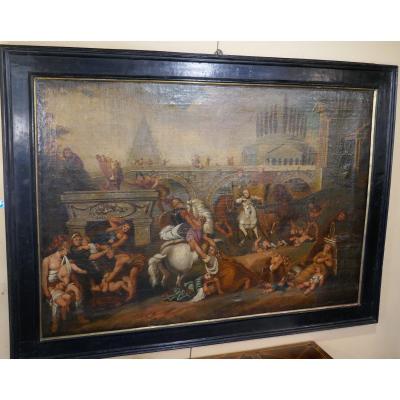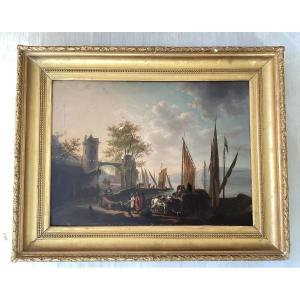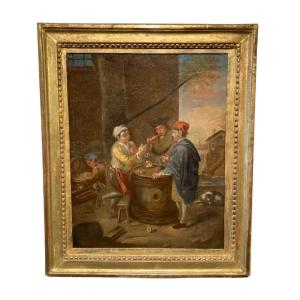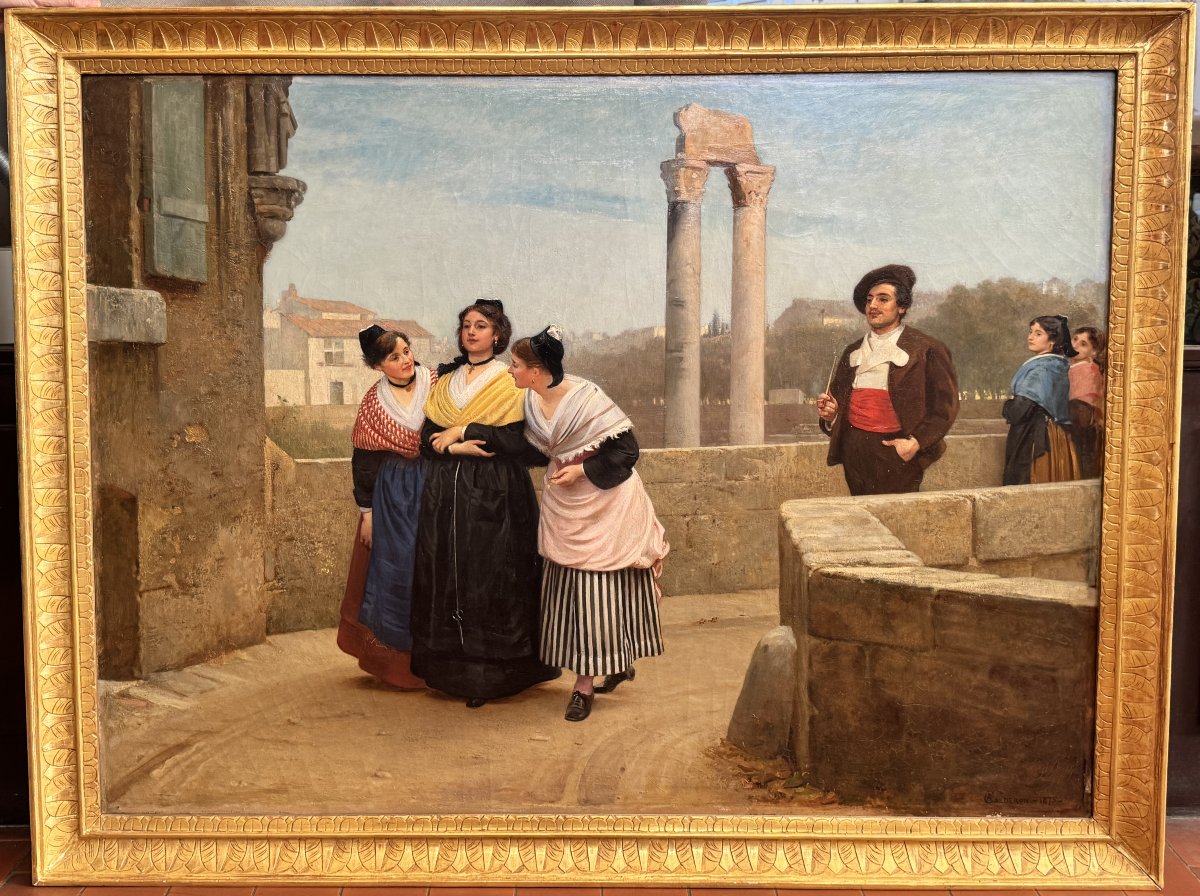
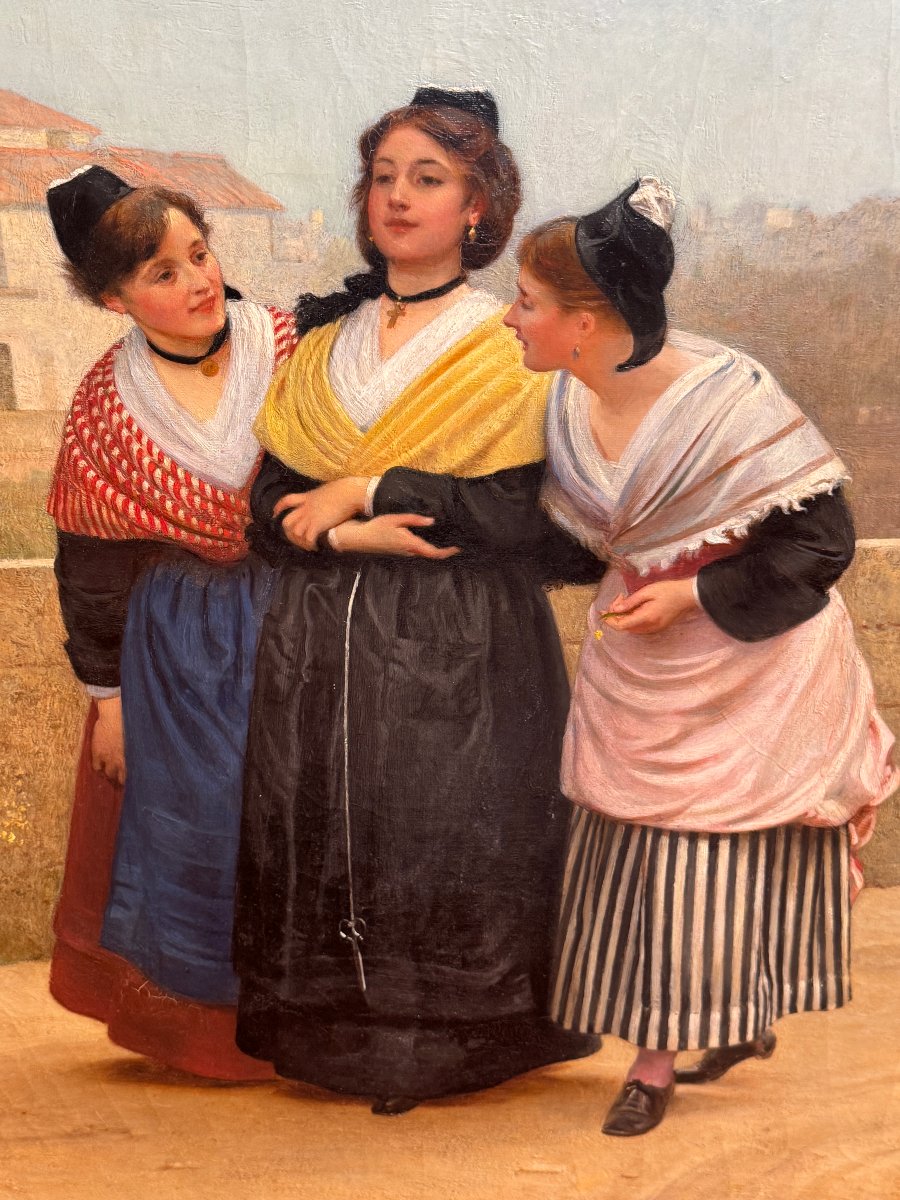
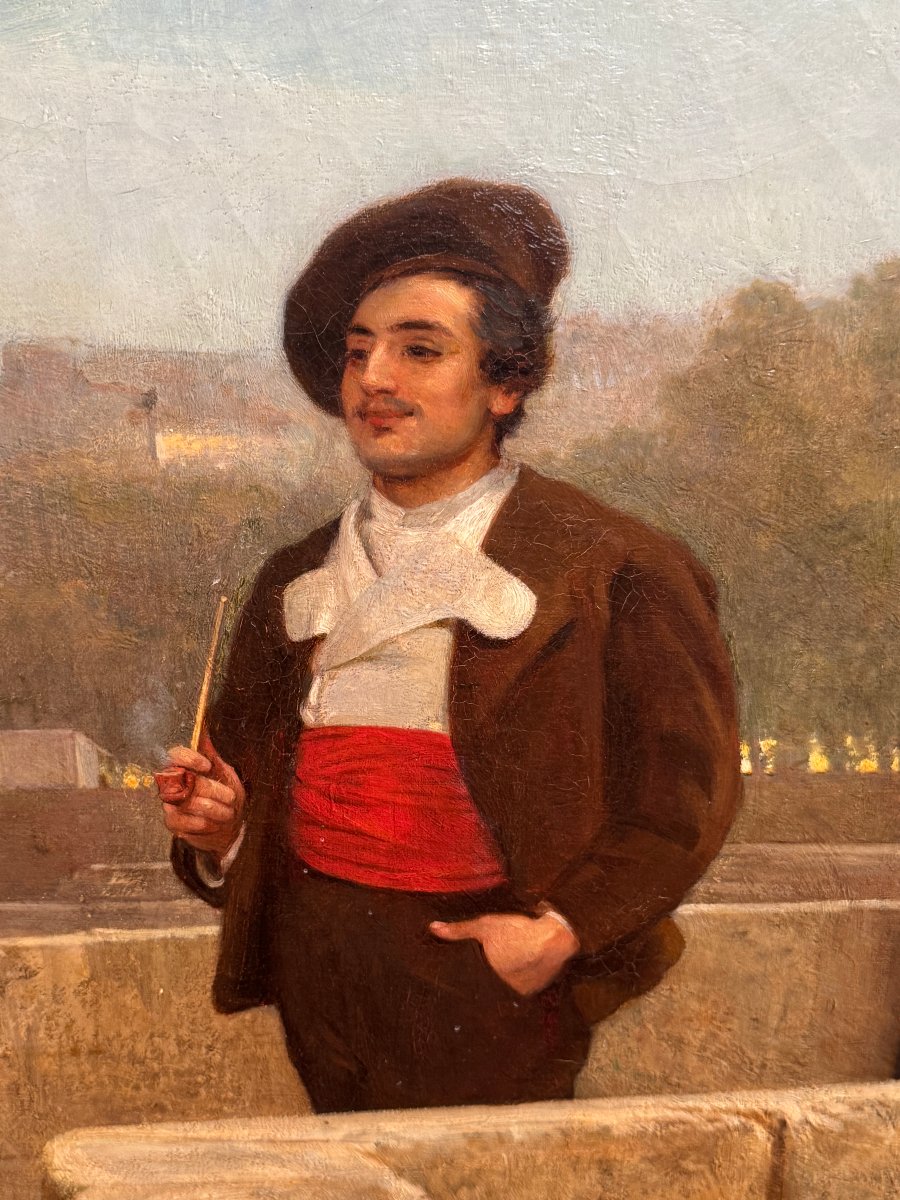
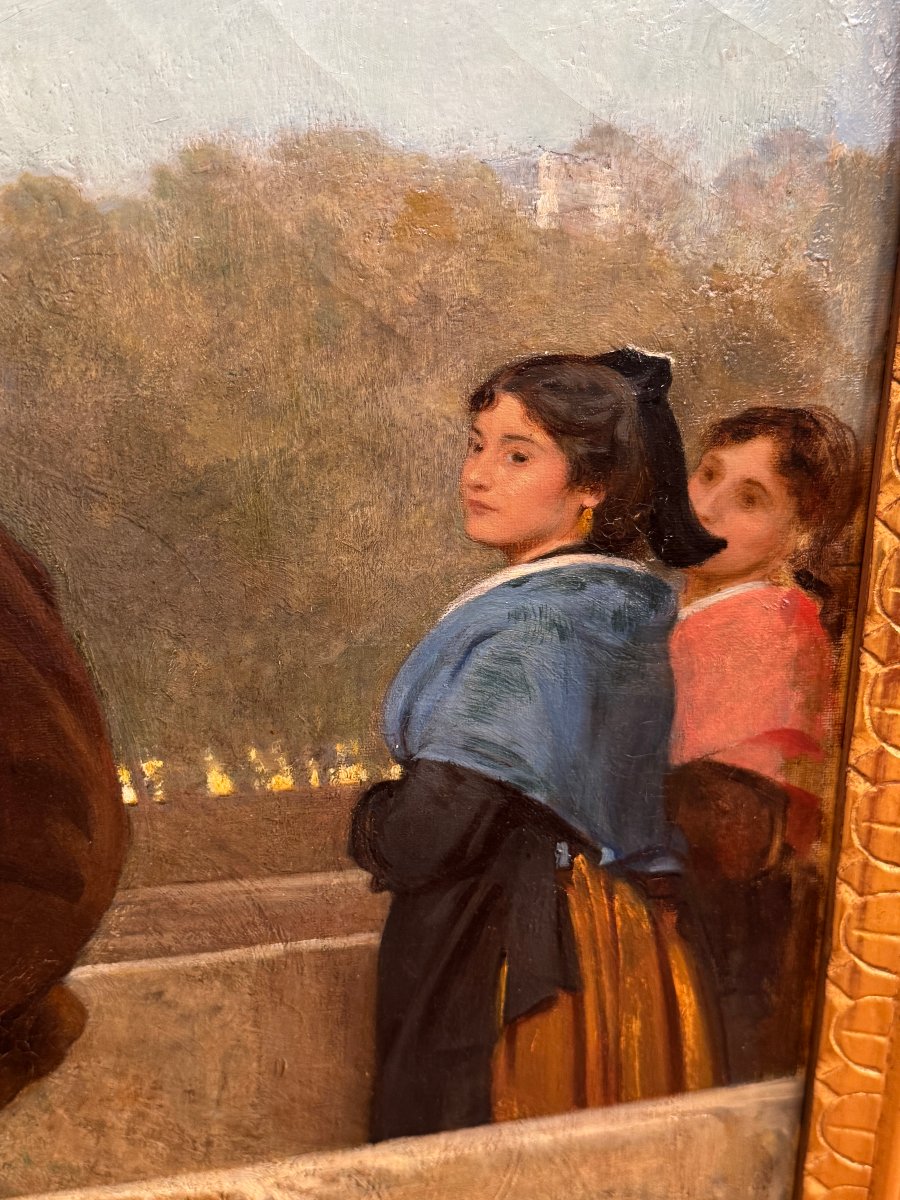
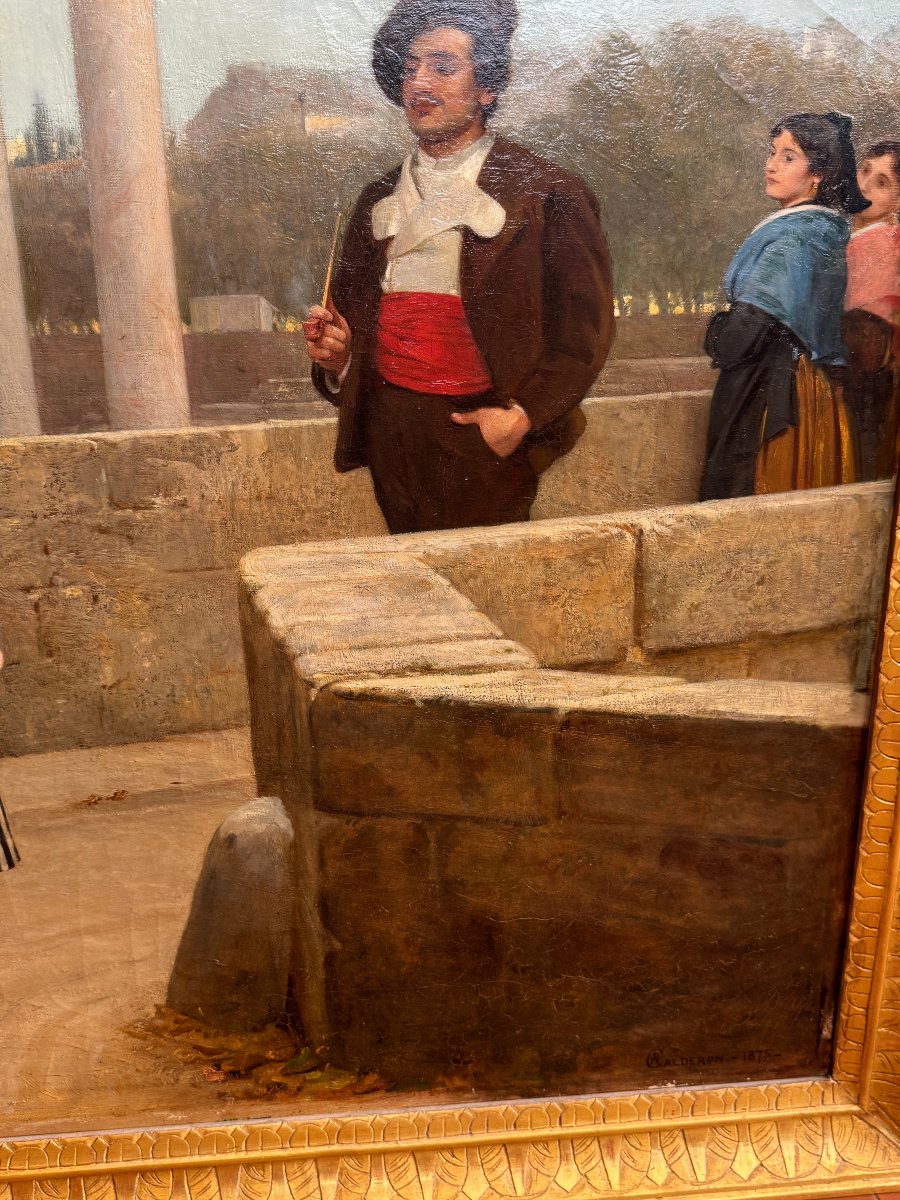

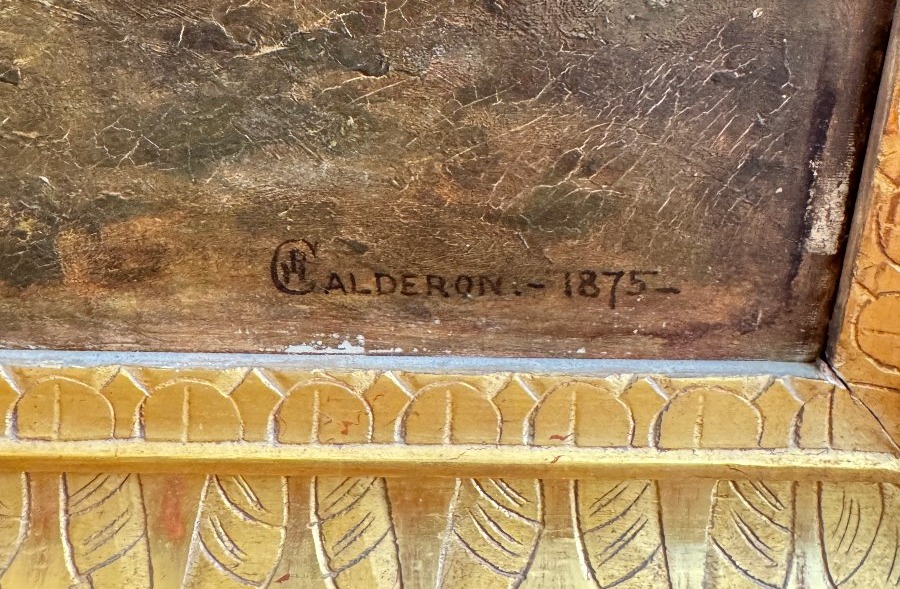
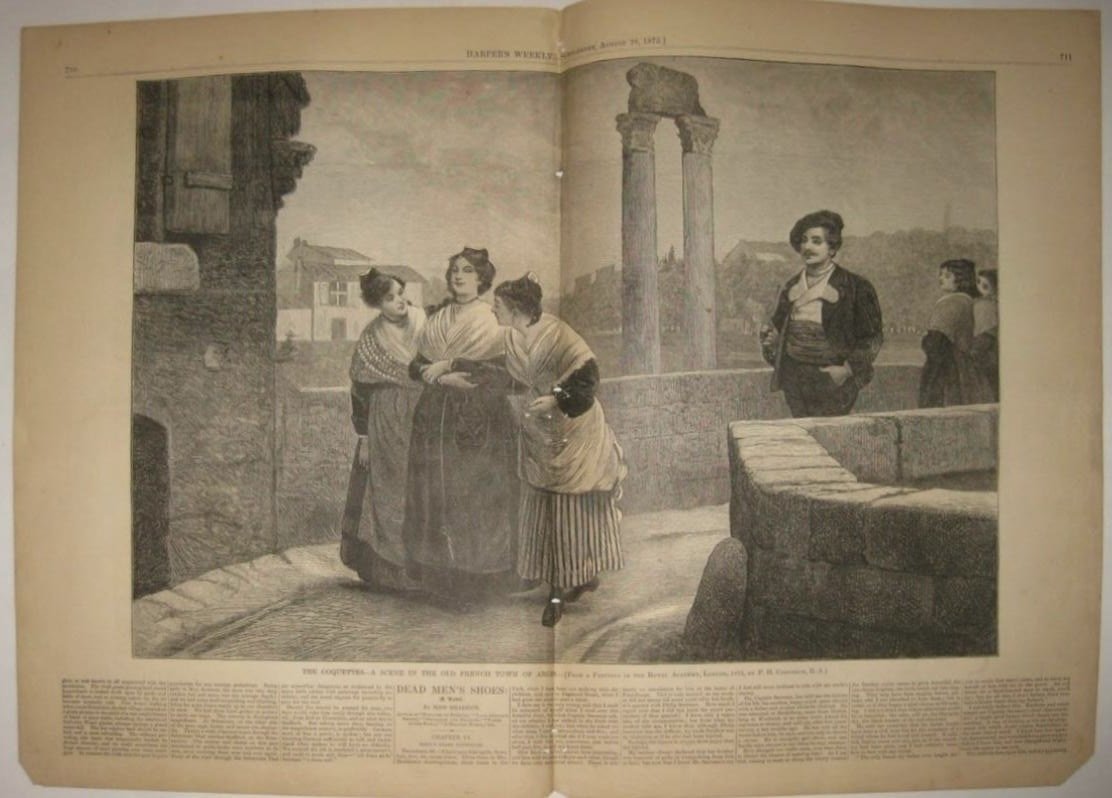


Philip Hermogenes Calderon (1833–1898) — “the Coquettes,” Arles, 1875 — Oil On Canvas, 19th Century
Artist: Philip Hermogenes Calderon (1833 - 1898)
Philip Hermogenes Calderon (Poitiers, 1833 – London, 1898)
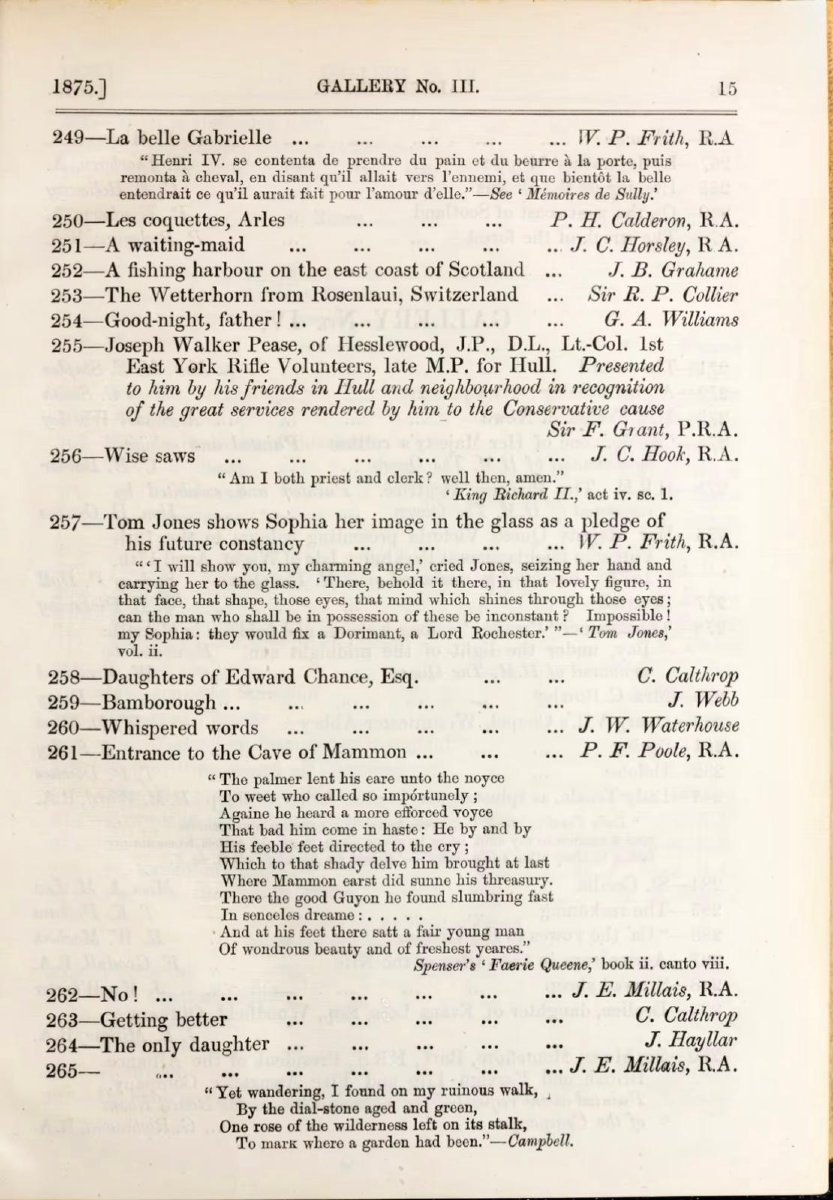
"Les coquettes" Arles.
Oil on canvas
Signed and dated 1875
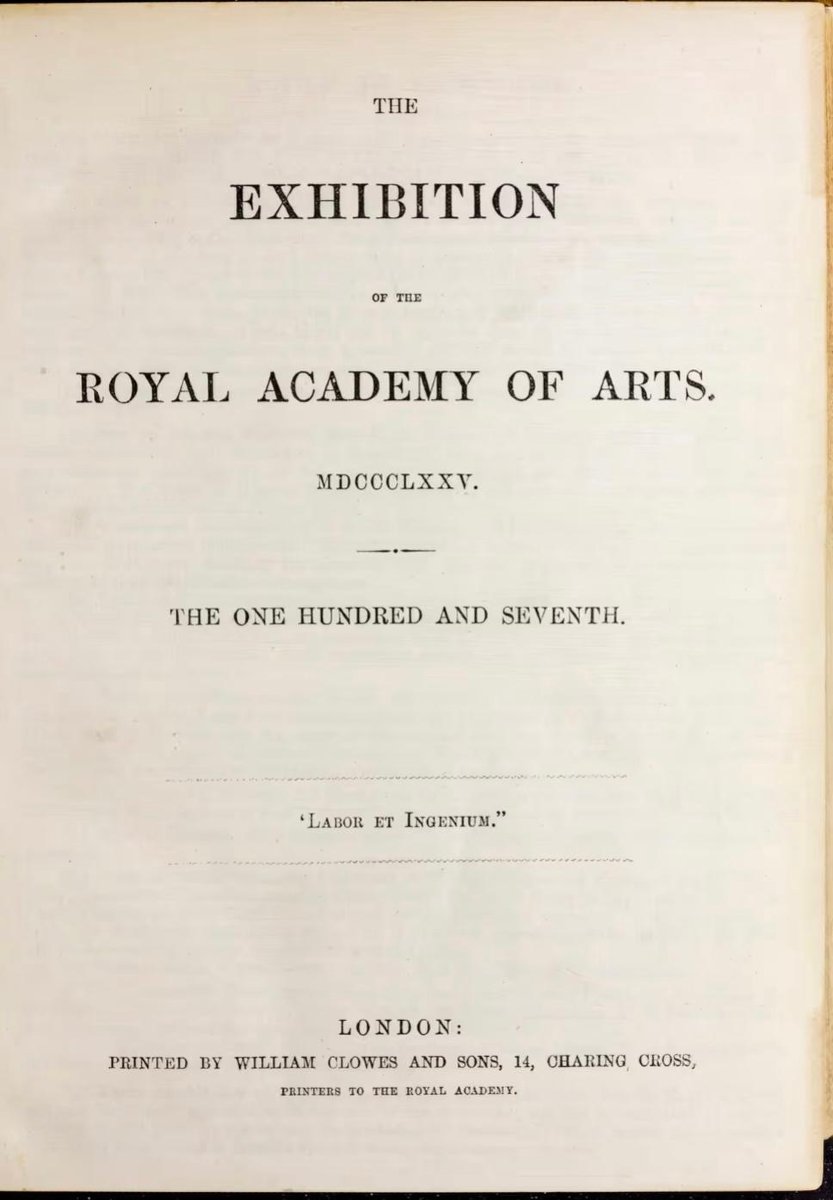
Royal Academy Exhibition, 1875, no. 250
Canvas dimensions: 89 x 119 cm
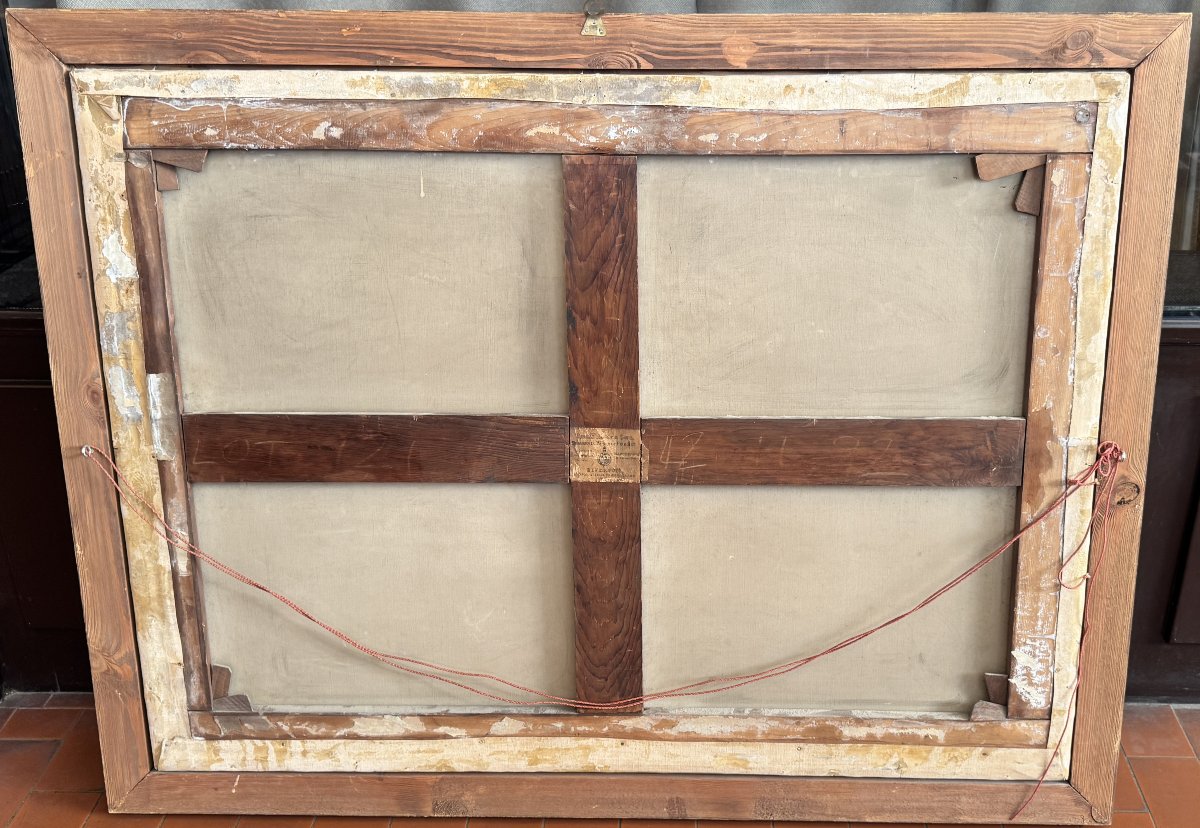
Frame dimensions: 102.5 x 133 cm
Philip Hermogenes Calderon (Poitiers, 1833 – London, 1898)
Philip Hermogenes Calderón (May 3, 1833 – April 30, 1898) was a British painter of Spanish-French origin who initially worked in the Pre-Raphaelite style before turning to historical genre painting.
He served as curator of the Royal Academy in London.
Calderón was born in Poitiers, France. His father, the Reverend Juan Calderón (born April 19, 1791, in Villafranca de los Caballeros—died January 28, 1854, in London), was a professor of Spanish literature and a former Catholic priest who had converted to Anglicanism. Calderón had intended to study engineering, but he became so interested in drawing technical figures and diagrams that he changed his mind and devoted himself to art. In 1850, he trained at the Leigh School of Art in London, then went to Paris to study under François-Édouard Picot in 1851.
His first successful painting was titled “By the Waters of Babylon” (1852), followed by a much more popular work titled “Broken Vows” (1856). From the outset, he drew inspiration from the Pre-Raphaelites, and some of his works displayed the attention to detail, deep colors, and realistic forms characteristic of that style. The artist Henry Stacy Marks was his friend and brother-in-law, and Calderon exhibited his portrait at the Royal Academy in 1872.
Calderon became one of the leading members of the “St. John’s Wood Clique,” a group of artists interested in modern genres and historical subjects who drew inspiration—both artistically and socially—from the Pre-Raphaelites. Historical, biblical, and literary themes are common in Calderon’s late work. Many of his paintings depict women dressed in rich, silky garments set against landscapes with soft colors.
His late paintings adopted a more classical style, comparable to that of Edward Poynter, a result of his close relationship with Frederic Leighton, then president of the Royal Academy.
Calderon became curator of the Royal Academy in 1887 and thereafter worked to promote the teaching of anatomy using nude models in the Royal Academy’s schools.
"Les coquettes" Arles.
Oil on canvas
Signed and dated 1875
Royal Academy Exhibition, 1875, no. 250
Canvas dimensions: 89 x 119 cm
Frame dimensions: 102.5 x 133 cm
Philip Hermogenes Calderon (Poitiers, 1833 – London, 1898)
Philip Hermogenes Calderón (May 3, 1833 – April 30, 1898) was a British painter of Spanish-French origin who initially worked in the Pre-Raphaelite style before turning to historical genre painting.
He served as curator of the Royal Academy in London.
Calderón was born in Poitiers, France. His father, the Reverend Juan Calderón (born April 19, 1791, in Villafranca de los Caballeros—died January 28, 1854, in London), was a professor of Spanish literature and a former Catholic priest who had converted to Anglicanism. Calderón had intended to study engineering, but he became so interested in drawing technical figures and diagrams that he changed his mind and devoted himself to art. In 1850, he trained at the Leigh School of Art in London, then went to Paris to study under François-Édouard Picot in 1851.
His first successful painting was titled “By the Waters of Babylon” (1852), followed by a much more popular work titled “Broken Vows” (1856). From the outset, he drew inspiration from the Pre-Raphaelites, and some of his works displayed the attention to detail, deep colors, and realistic forms characteristic of that style. The artist Henry Stacy Marks was his friend and brother-in-law, and Calderon exhibited his portrait at the Royal Academy in 1872.
Calderon became one of the leading members of the “St. John’s Wood Clique,” a group of artists interested in modern genres and historical subjects who drew inspiration—both artistically and socially—from the Pre-Raphaelites. Historical, biblical, and literary themes are common in Calderon’s late work. Many of his paintings depict women dressed in rich, silky garments set against landscapes with soft colors.
His late paintings adopted a more classical style, comparable to that of Edward Poynter, a result of his close relationship with Frederic Leighton, then president of the Royal Academy.
Calderon became curator of the Royal Academy in 1887 and thereafter worked to promote the teaching of anatomy using nude models in the Royal Academy’s schools.
17 000 €
Period: 19th century
Style: Other Style
Condition: Excellent condition
Material: Oil painting
Length: 119 cm
Height: 89 cm
Reference (ID): 1789631
Availability: In stock
Print