

Large Bronze Sculpture By Emmanuel Villanis: Art Nouveau Portrait Of A Nude Woman, "manon 2m
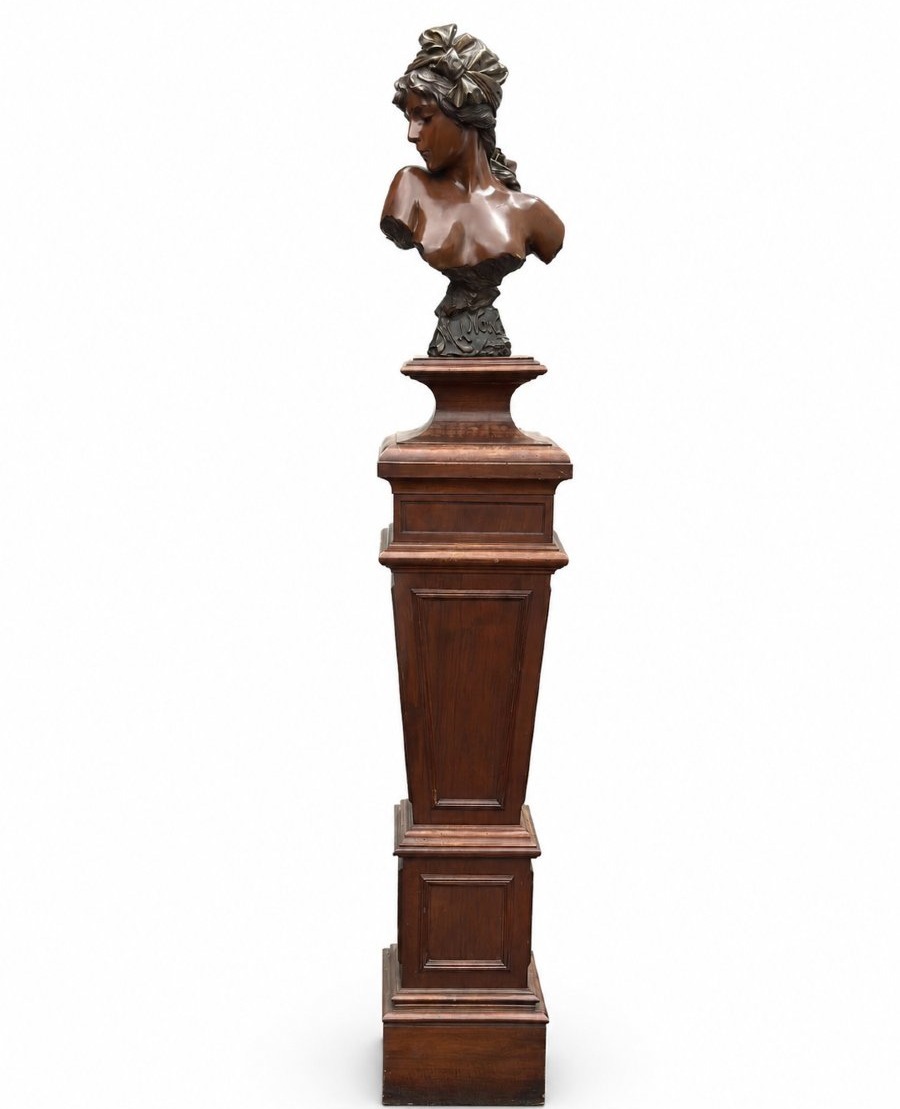
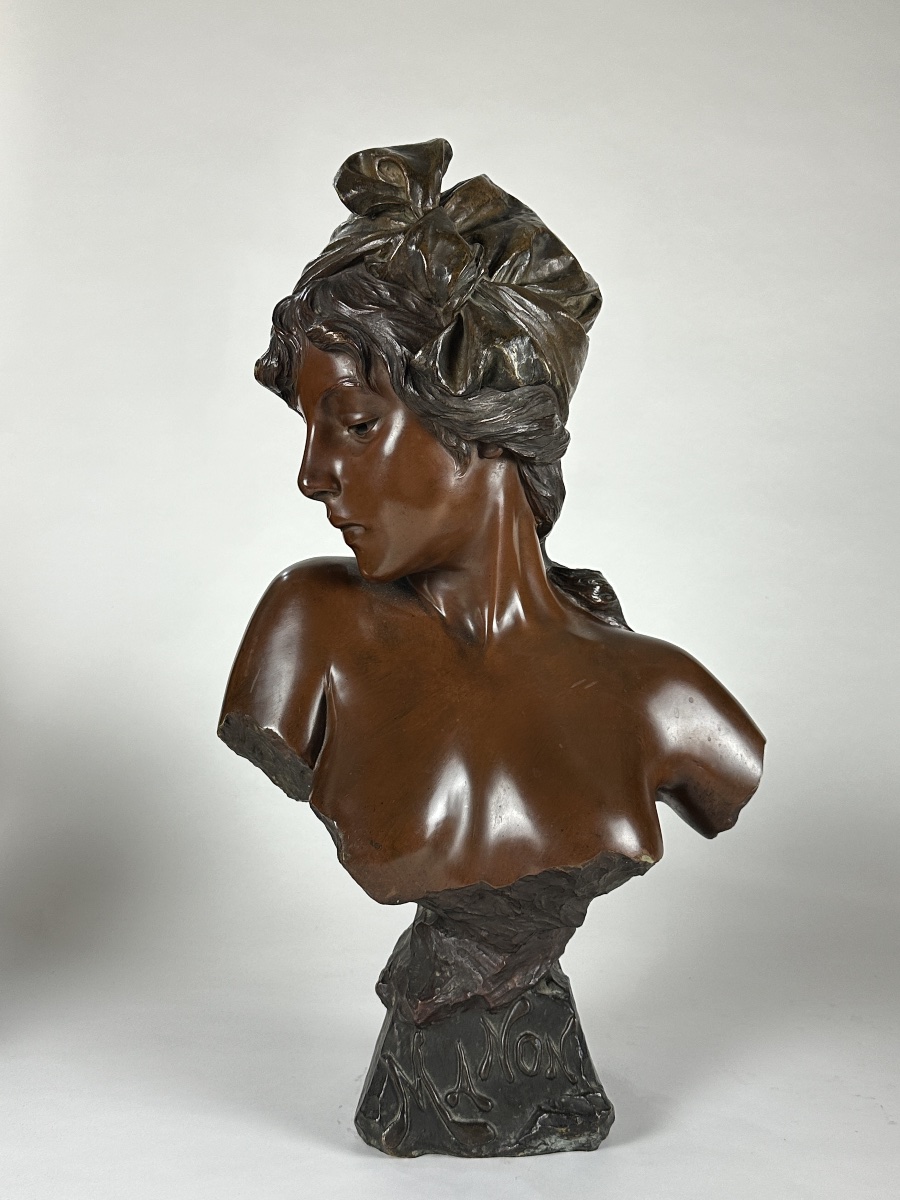
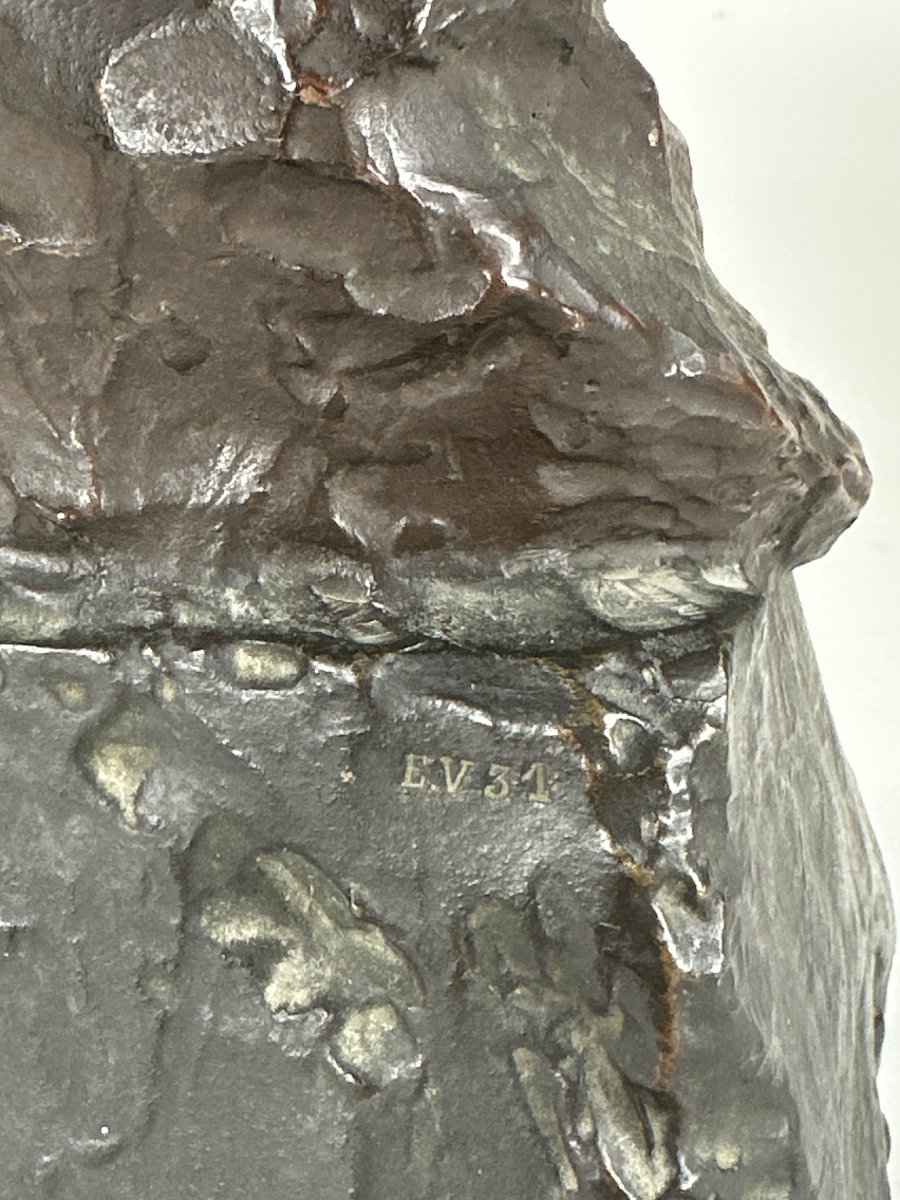
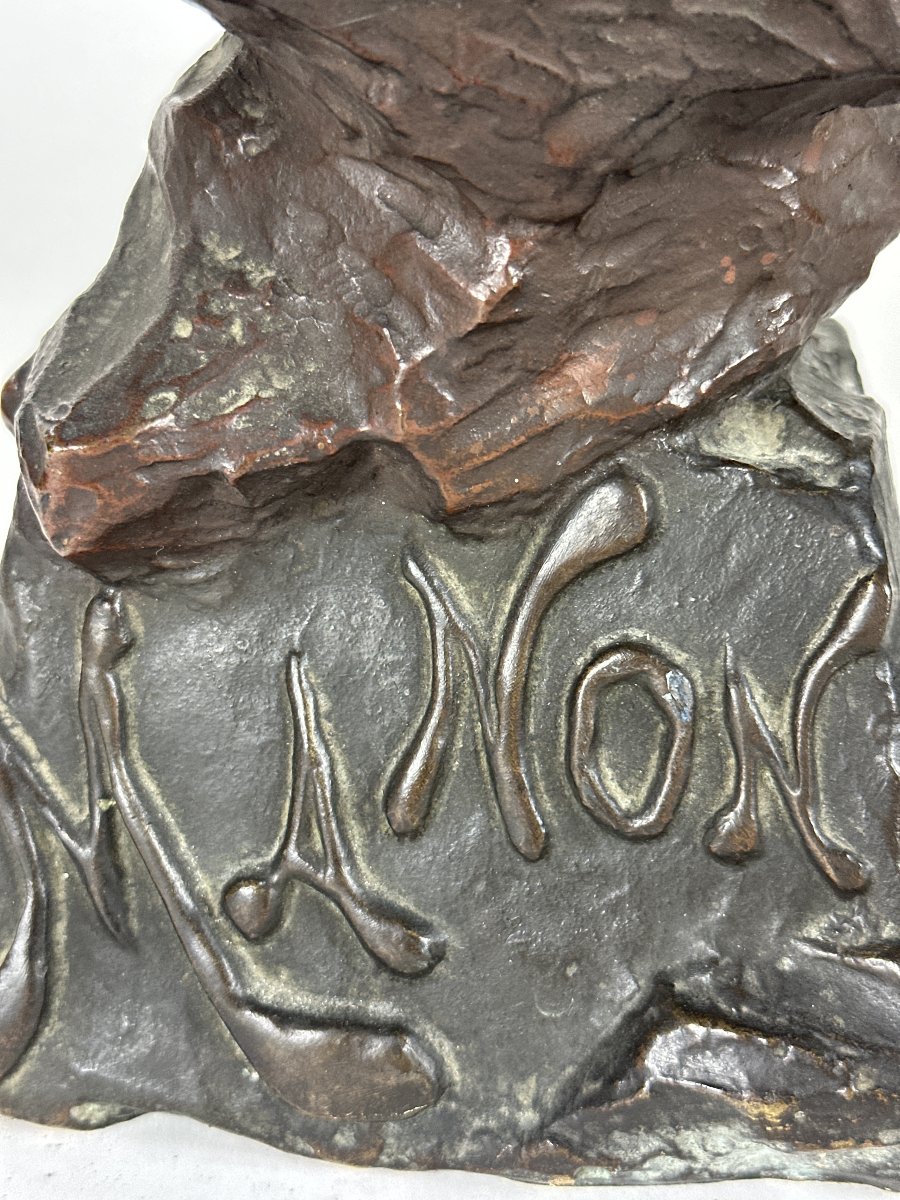
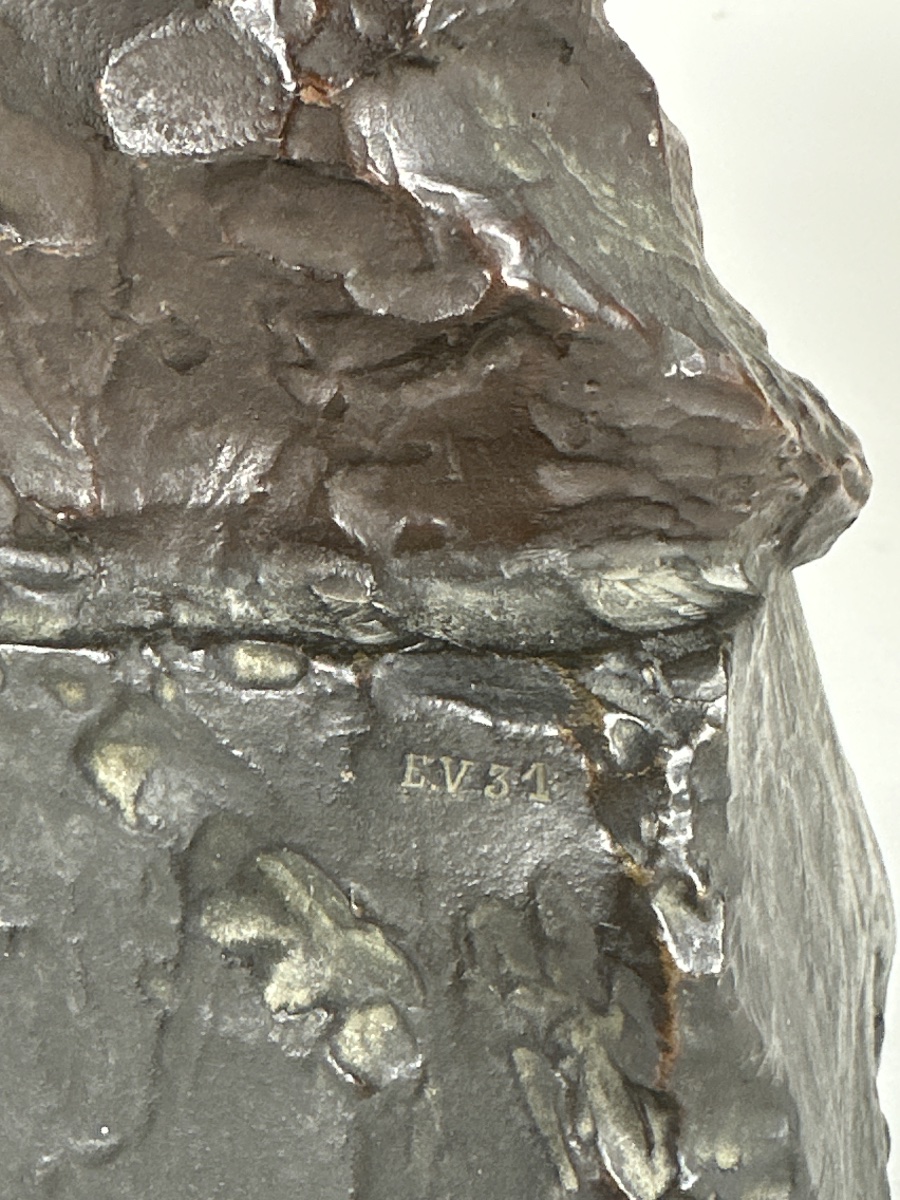
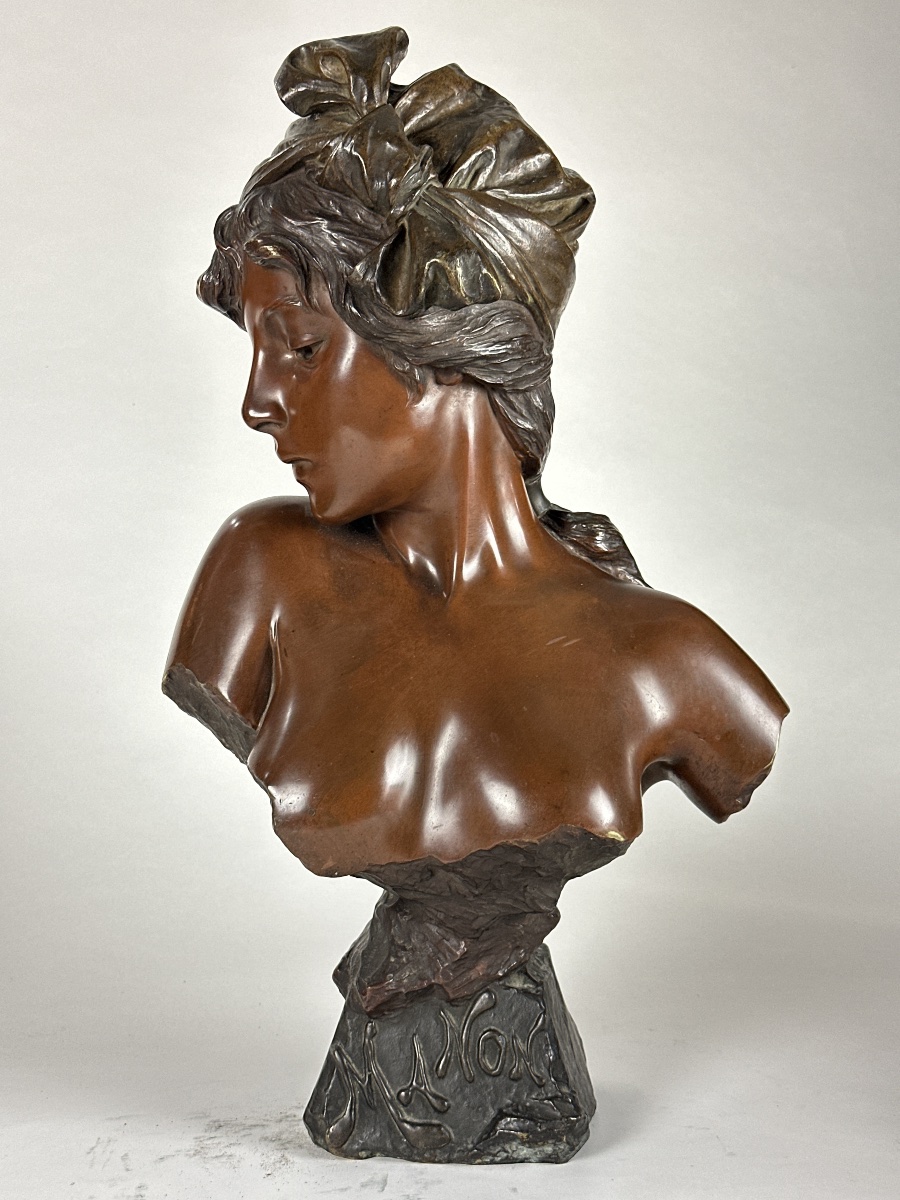
A rare, large, original bronze sculpture depicting Manon, one of the most iconic heroines of French literature and Belle Époque opera. This work is signed directly on the “Villanis” plaque and retains its beautiful original chocolate-brown patina. The base bears the marking E.V31 (Emmanuel Villanis 31 may indicate an edition number), which most likely corresponds to an internal model or studio reference.
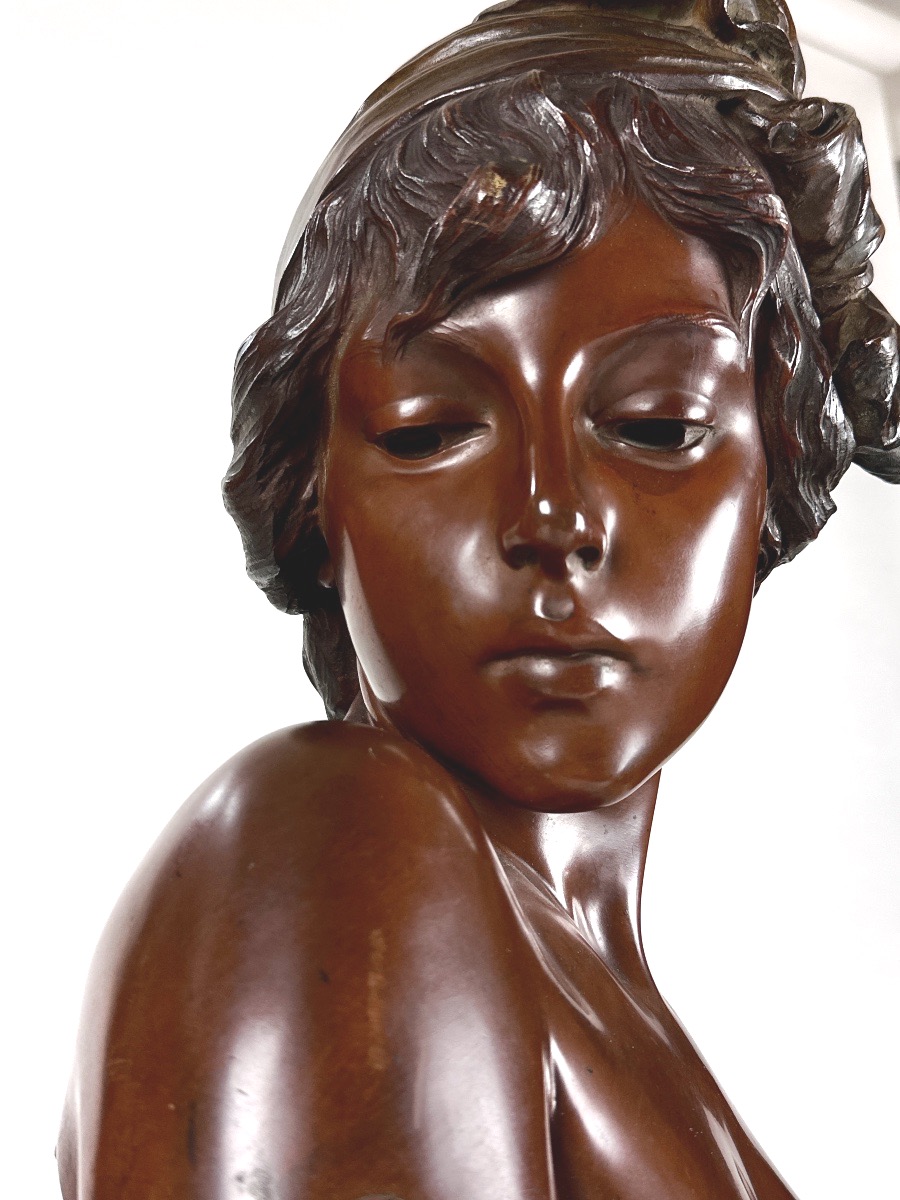
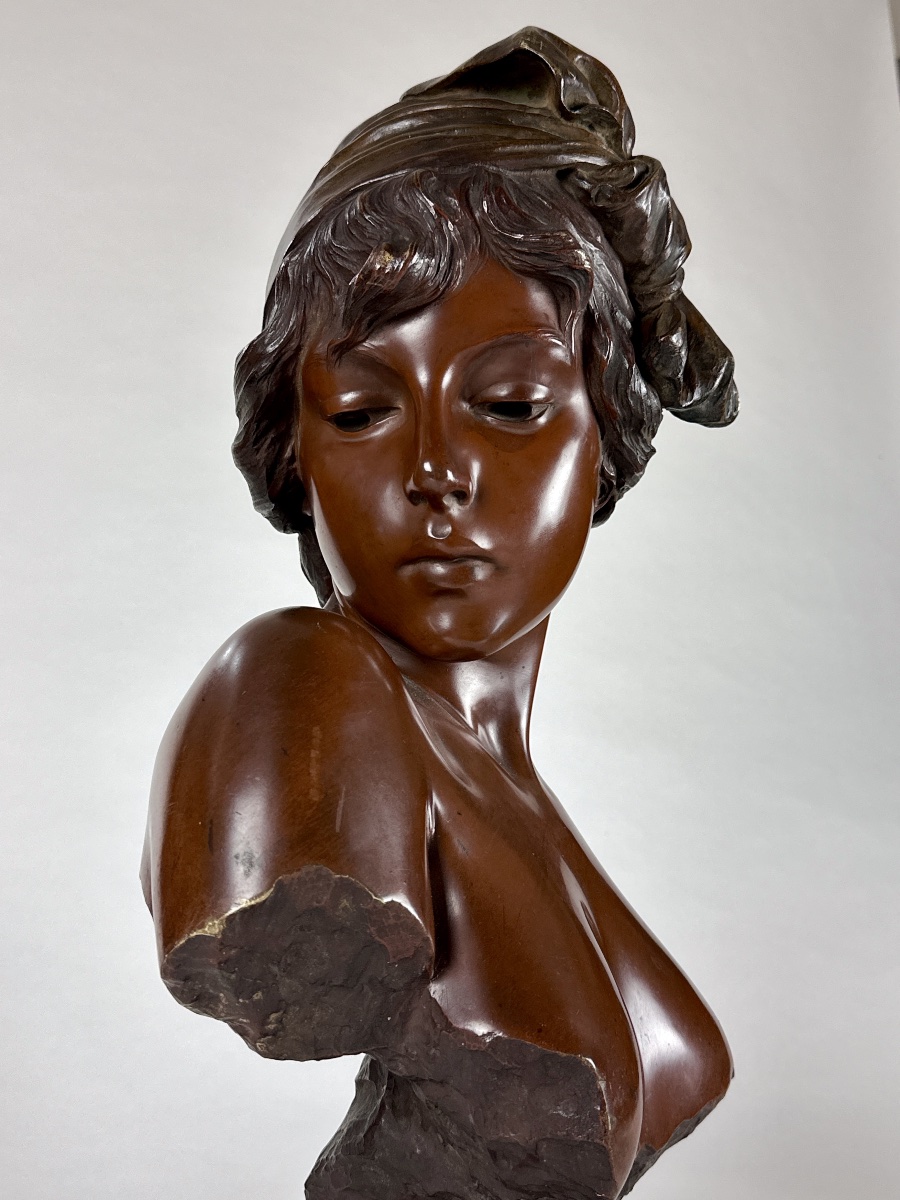
This sculpture perfectly illustrates Emmanuel Villanis’s artistic maturity. Here, the sculptor eschews all decorative excess to focus his work on the expressiveness of the face, the refinement of the modeling, and the contrasts between polished surfaces and areas deliberately left with a raw, textured finish.
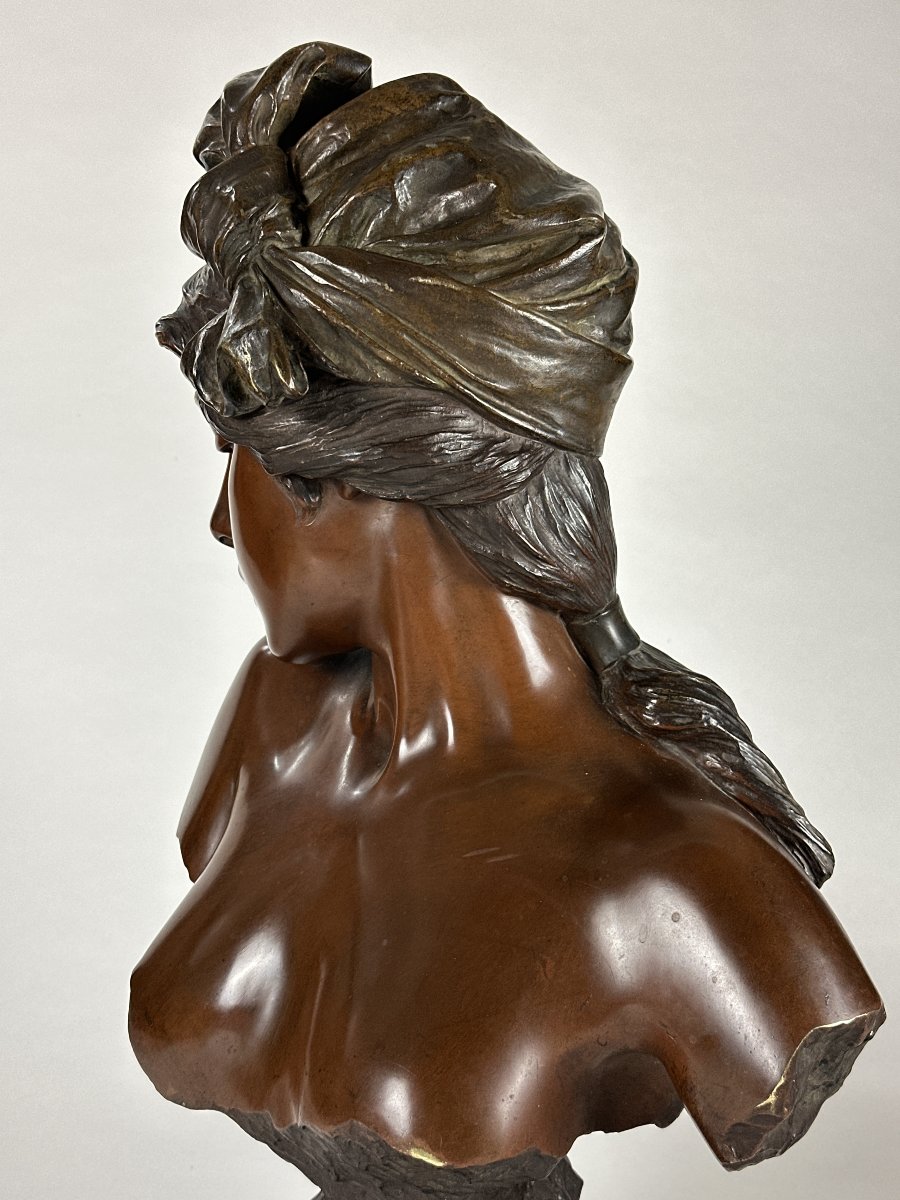
The bust is conceived as an ancient fragment, a technique highly prized in the late 19th century. The shoulders are deliberately interrupted by an irregular break that evokes a rediscovered archaeological marble fragment, while the rocky base reinforces this aesthetic of a classical relic so dear to Art Nouveau artists.
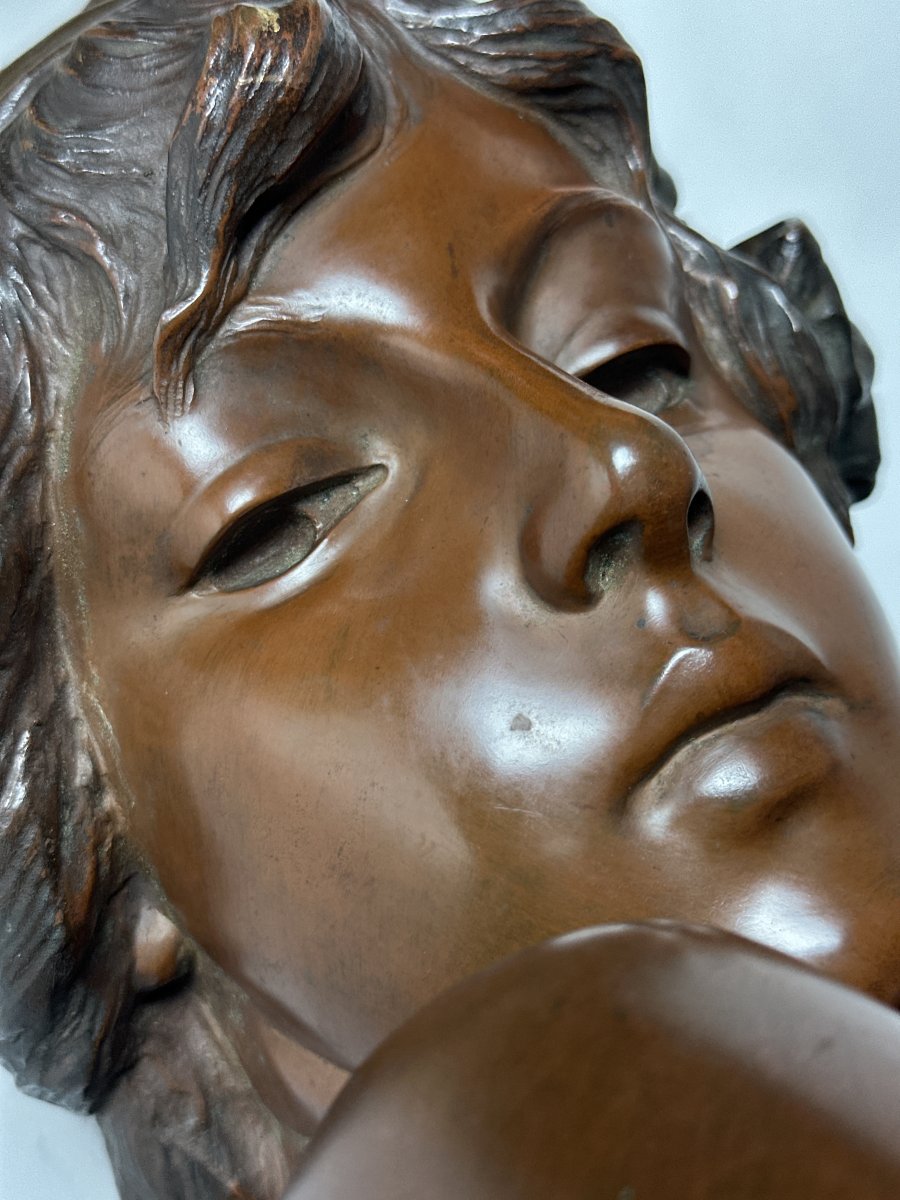
The face is a truly remarkable achievement. The slightly lowered eyelids, the gaze lost in inner meditation, the delicately parted lips, and the long, classical profile convey a restrained emotion tinged with melancholy. Here, Villanis achieves a remarkable balance between naturalism and idealization.
The hair, held in place by a loose oriental turban, reveals the sculptor’s full virtuosity. The folds of the fabric alternate with the supple strands of hair in a constant play of light. The extremely fine polish reserved for the face and torso contrasts with the freer modeling of the hairstyle and the rocky base, deliberately revealing the sculpture’s vigor.
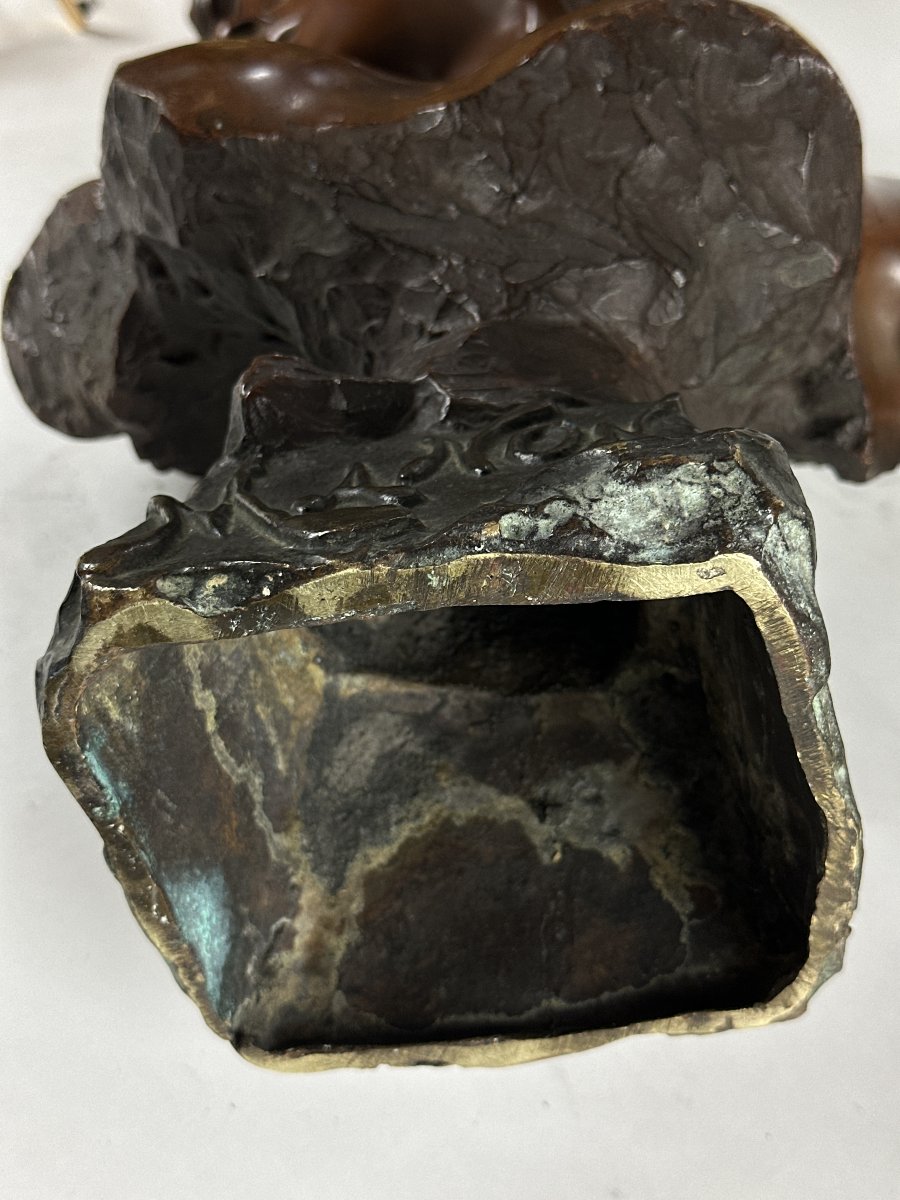
The piece as a whole displays a particularly high quality of casting. The interior reveals a uniform thickness of bronze, beautiful post-casting chiseling, and a consistent antique patina—characteristics of the great Parisian editions of the Belle Époque.
Manon: From Literature to Opera: Villanis very frequently draws his inspiration from heroines of literature, mythology, the Bible, or opera. His body of work notably includes Salome, Delilah, Judith, Aida, Selika, Scheherazade, and Cinderella.
This sculpture most likely refers to Manon Lescaut, a heroine created by Abbé Prévost in 1731, whose tragic fate enjoyed immense success in the late 19th century thanks to the opera Manon by Jules Massenet, which premiered at the Opéra-Comique in Paris in 1884, and later to Manon Lescaut by Giacomo Puccini in 1893. These two operas rank among the greatest triumphs of the Belle Époque and played a major role in popularizing this feminine figure in the decorative arts.
The young woman depicted by Villanis embodies precisely this image of the romantic woman: idealized beauty, discreet sensuality, a dreamy gaze, and a fate marked by emotion.
Emmanuel Villanis (1858–1914) was born in Lille to a family originally from the Italian region of Piedmont. He studied at the prestigious Accademia Albertina in Turin under Odoardo Tabacchi before moving to Paris in 1885. From then on, he exhibited regularly at the Salon des Artistes Français and quickly became one of the most sought-after decorative sculptors of his time.
His specialty was female busts inspired by the great heroines of history, literature, music, and opera. His works were produced by the leading Parisian foundries and enjoyed immense international success, particularly in the United States. His instantly recognizable style combines academic elegance, restrained sensuality, and emerging Art Nouveau influences. Even today, Villanis remains one of the leading figures in French decorative sculpture of the Belle Époque. In very good overall condition.
Well-preserved original patina with some very slight wear on the edges. A few discreet traces of internal oxidation visible in the cast iron. No restoration.
Early edition from the late 19th century, circa 1895–1905
Height: 60 cm – Width: 35 cm – Depth: 22 cm, weight approximately 20 kg
Period: 19th century
Style: Rome and Antic Greece
Condition: Excellent condition
Material: Bronze
Width: 35
Height: 60
Reference (ID): 1789379
Availability: In stock