




Daum Nancy And Croix De Lorraine, Orange Glass Vase With Black Markings, Circa 1925
Artist: Daum Nancy Et Croix De Lorraine
Daum Nancy Croix de Lorraine
Art Deco Glass Vase with Inclusions, circa 1925
A striking French art glass vase by Daum Nancy France
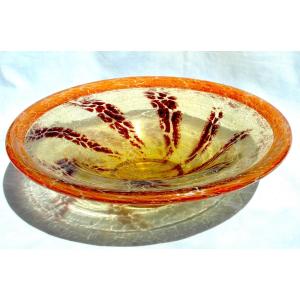
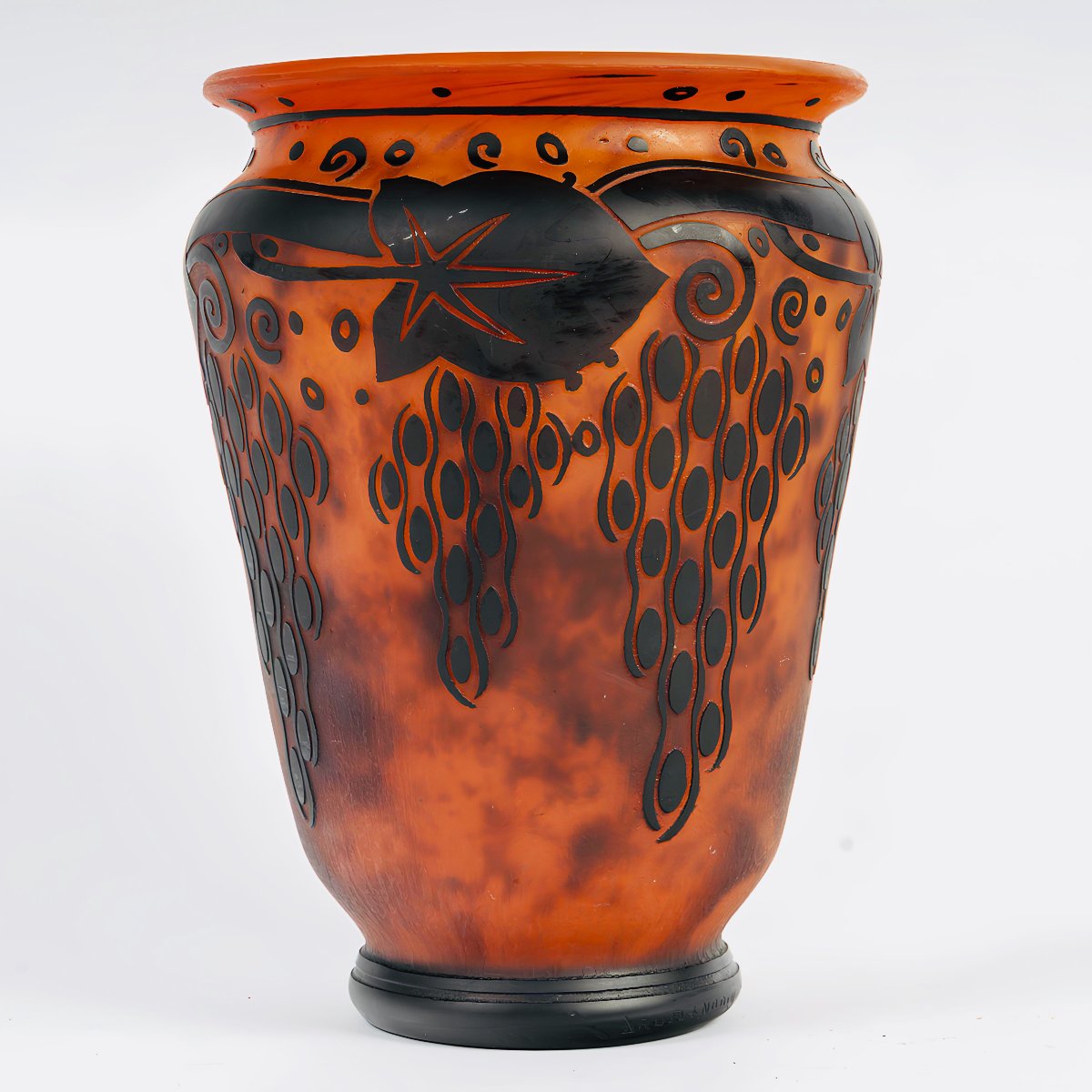
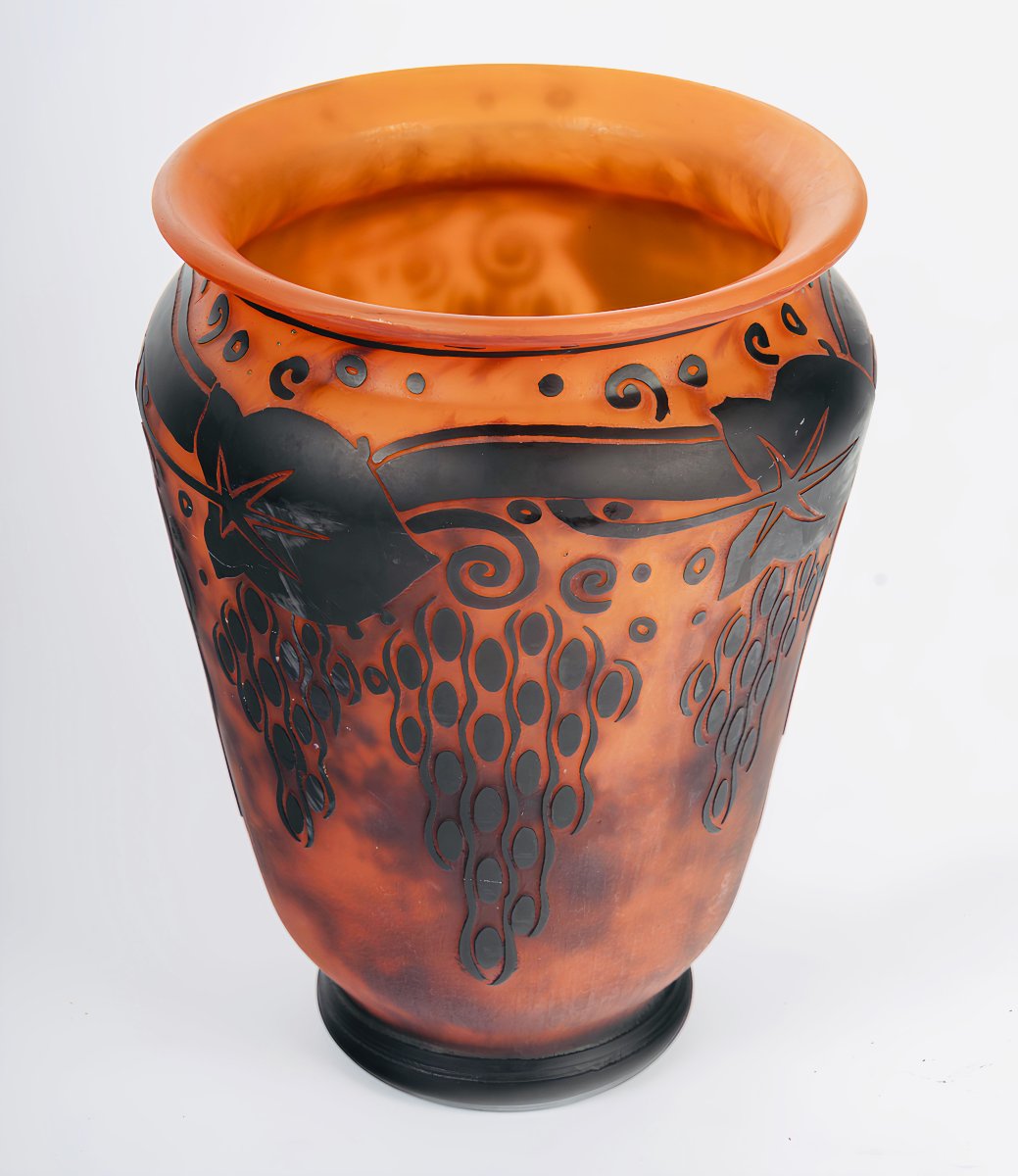
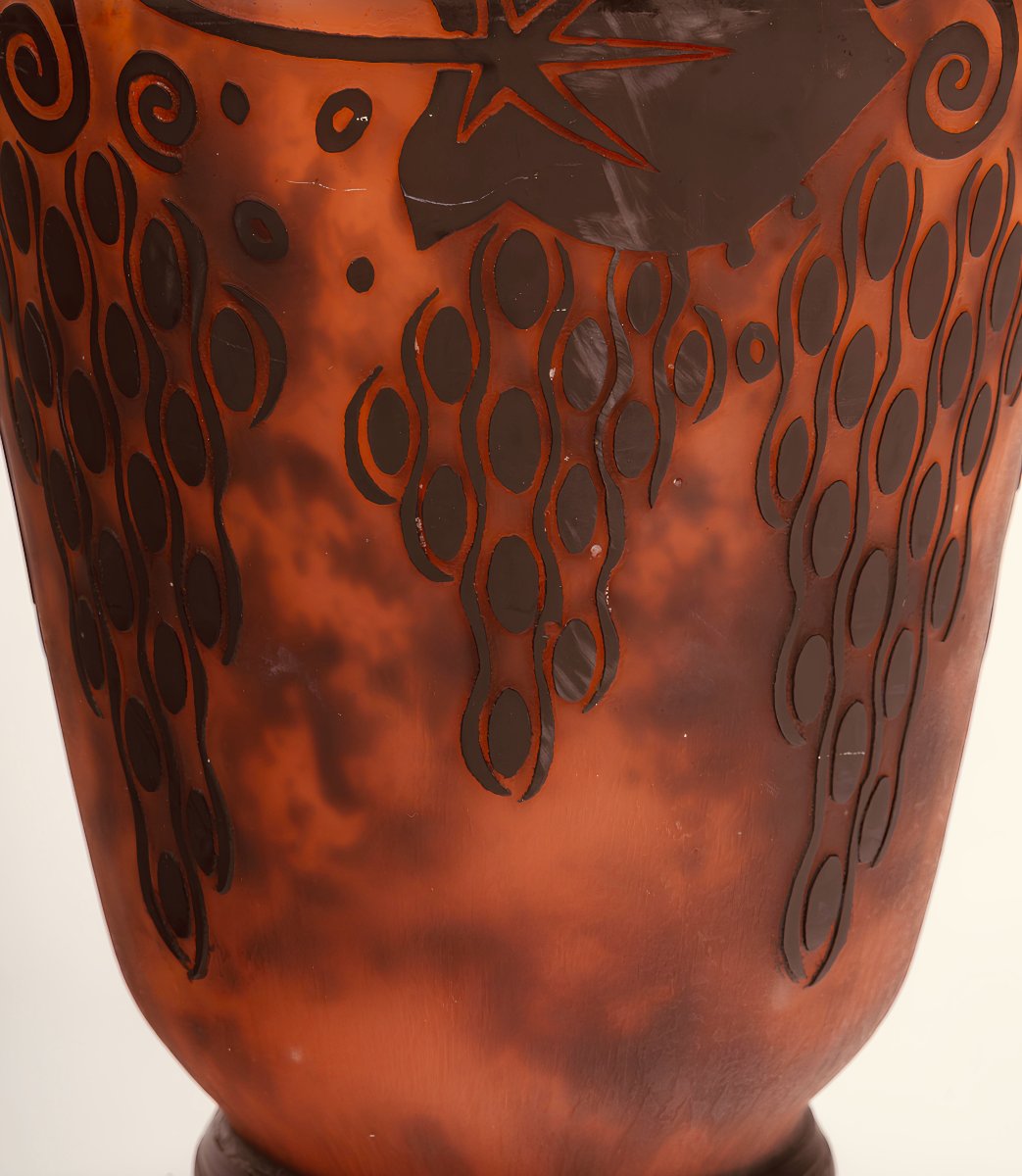
Executed in vibrant orange glass with dramatic black inclusions and marbled effects throughout the body. The organic interplay between the translucent orange and smoky black decoration gives the piece a bold, sculptural presence.
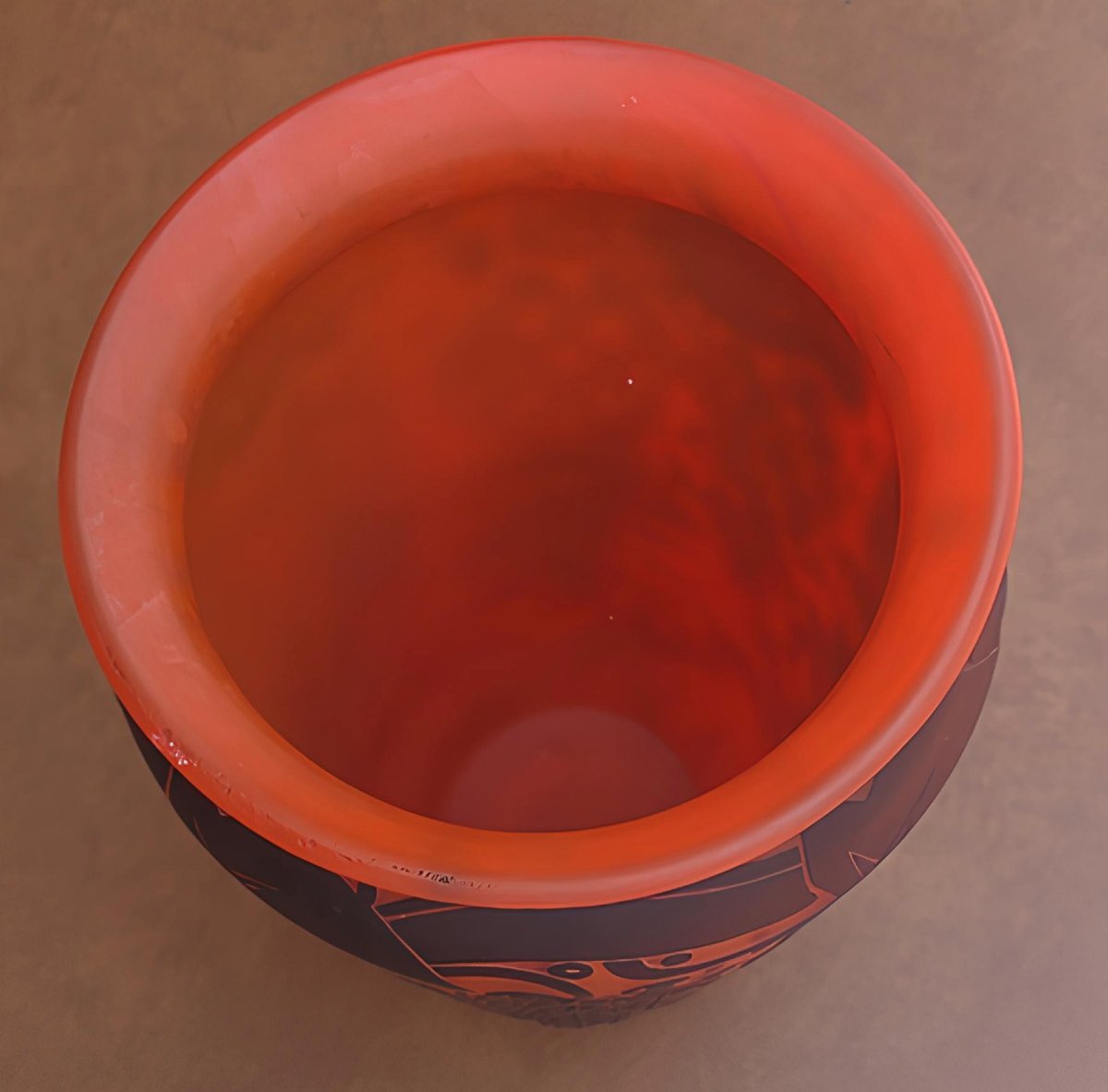
The vase features a gently flared rim and an elegant baluster form, showcasing the refined craftsmanship asso-ciated with Daum.
Signed "Daum Nancy France" on the base.
An eye-catching decorative object that complements Art Nouveau, Art Deco and contemporary interiors alike.
Daum Nancy is renowned for its innovative art glass production. This vase was made in blown glass, likely mold-blown and hot-worked to refine its form. The vibrant orange body incorporates black inclusions and marbled effects created by layering and fusing differently colored glass, producing exceptional depth and movement. The piece was then carefully annealed to ensure strength and durability
Daum (French establishment created in 1878) is a glass and crystal workshop located in Nancy. Founded by the industrialist and notary Jean Daum, the workshop was then taken over by his sons Auguste and Antonin, who ran it during the Art Nouveau period. It was not until the Universal Exhibition of 1900 that the company was at the forefront of the decorative art scene, when Daum received the prestigious Grand Prix medal.
At this time, Daum glass became more complex, acid treatment was often used in the cutting, enameling and etching of a piece to produce glass masterpieces. Daum also produces applied glass elements, such as handles and ornamental motifs in naturalistic shapes. The Daum brothers quickly became big names in Art Nouveau, rivaling the famous designer Émile Gallé, and established themselves as leaders in the field of decorative glass after his death.
In 1906, Daum revived glass paste, a process by which glass is transformed into paste, then it is applied to the surface of a mold and fired. This technique originates from ancient Egypt. Today, Daum is the only industrial crystal manufacturer that uses the glass paste process for its glass objects and crystal sculptures.
Following the First World War, Paul Daum began to develop works in the Art Deco style, moving away from naturalistic forms and turning to linear, angular, simplified forms and geometric patterns characteristic of the movement. After the Second World War, Henri and Michel Daum became interested in the transparency of glass and pure lines. Daum collaborates with a large number of famous artists, such as Louis Majorelle, Salvador Dalí, Hilton Mac Connico, Elizabeth Garouste and Mattia Bonetti to create glass paste objects.
Art Deco Glass Vase with Inclusions, circa 1925
A striking French art glass vase by Daum Nancy France
Executed in vibrant orange glass with dramatic black inclusions and marbled effects throughout the body. The organic interplay between the translucent orange and smoky black decoration gives the piece a bold, sculptural presence.
The vase features a gently flared rim and an elegant baluster form, showcasing the refined craftsmanship asso-ciated with Daum.
Signed "Daum Nancy France" on the base.
An eye-catching decorative object that complements Art Nouveau, Art Deco and contemporary interiors alike.
Daum Nancy is renowned for its innovative art glass production. This vase was made in blown glass, likely mold-blown and hot-worked to refine its form. The vibrant orange body incorporates black inclusions and marbled effects created by layering and fusing differently colored glass, producing exceptional depth and movement. The piece was then carefully annealed to ensure strength and durability
Daum (French establishment created in 1878) is a glass and crystal workshop located in Nancy. Founded by the industrialist and notary Jean Daum, the workshop was then taken over by his sons Auguste and Antonin, who ran it during the Art Nouveau period. It was not until the Universal Exhibition of 1900 that the company was at the forefront of the decorative art scene, when Daum received the prestigious Grand Prix medal.
At this time, Daum glass became more complex, acid treatment was often used in the cutting, enameling and etching of a piece to produce glass masterpieces. Daum also produces applied glass elements, such as handles and ornamental motifs in naturalistic shapes. The Daum brothers quickly became big names in Art Nouveau, rivaling the famous designer Émile Gallé, and established themselves as leaders in the field of decorative glass after his death.
In 1906, Daum revived glass paste, a process by which glass is transformed into paste, then it is applied to the surface of a mold and fired. This technique originates from ancient Egypt. Today, Daum is the only industrial crystal manufacturer that uses the glass paste process for its glass objects and crystal sculptures.
Following the First World War, Paul Daum began to develop works in the Art Deco style, moving away from naturalistic forms and turning to linear, angular, simplified forms and geometric patterns characteristic of the movement. After the Second World War, Henri and Michel Daum became interested in the transparency of glass and pure lines. Daum collaborates with a large number of famous artists, such as Louis Majorelle, Salvador Dalí, Hilton Mac Connico, Elizabeth Garouste and Mattia Bonetti to create glass paste objects.
4 800 €
Period: 20th century
Style: Art Deco
Condition: Good condition
Material: Glass
Diameter: 22,5 cm
Height: 30 cm
Reference (ID): 1785787
Availability: In stock
Print