THIS OBJECT WAS SOLD
Genryūsai Seiya – Large Group Of Bronze Hares, Japan, Meiji Period.
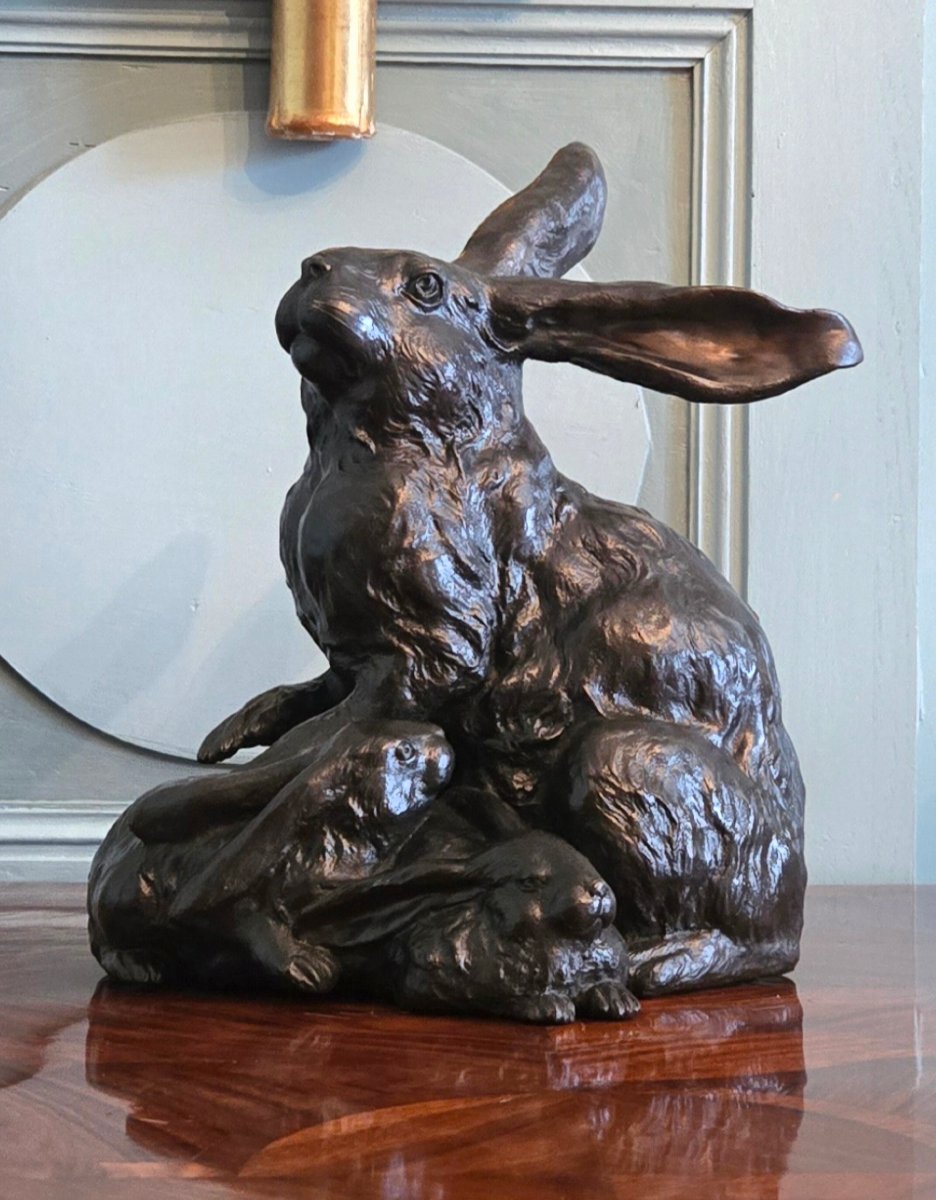
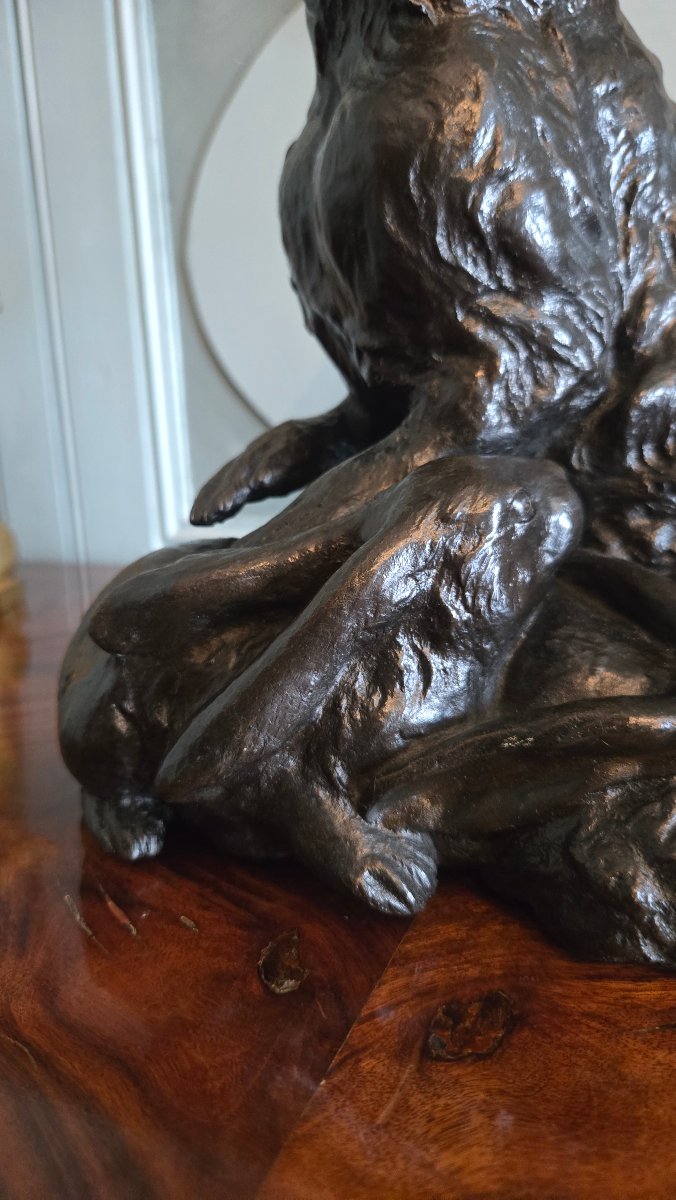
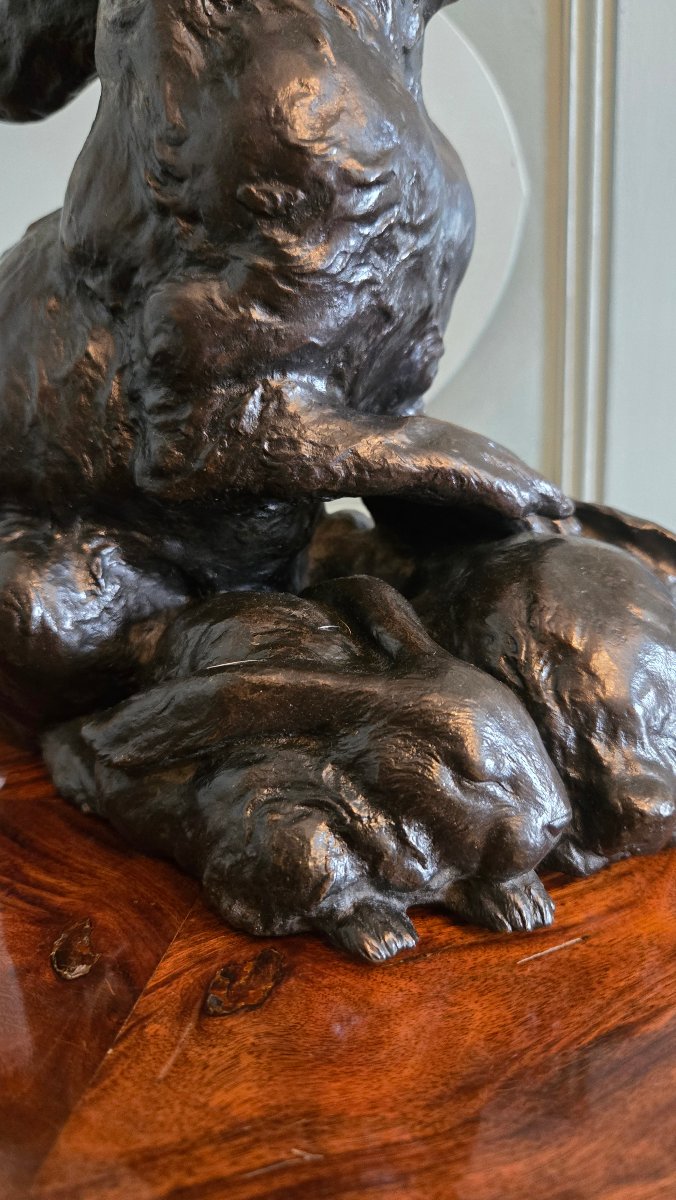
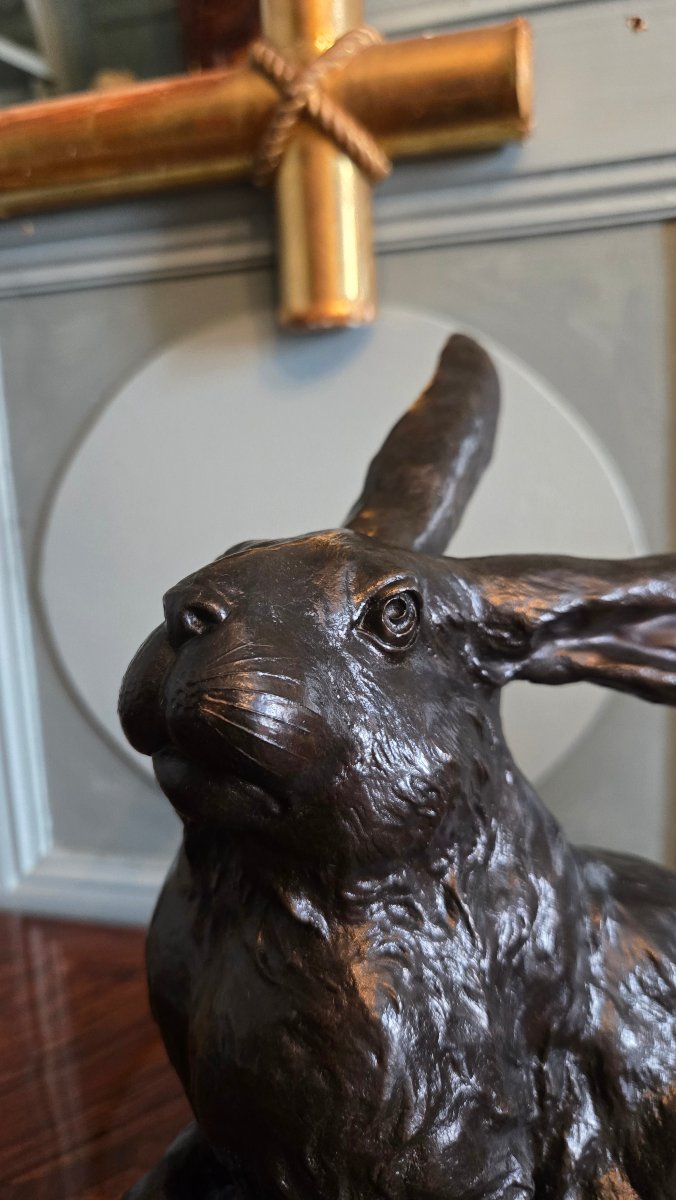
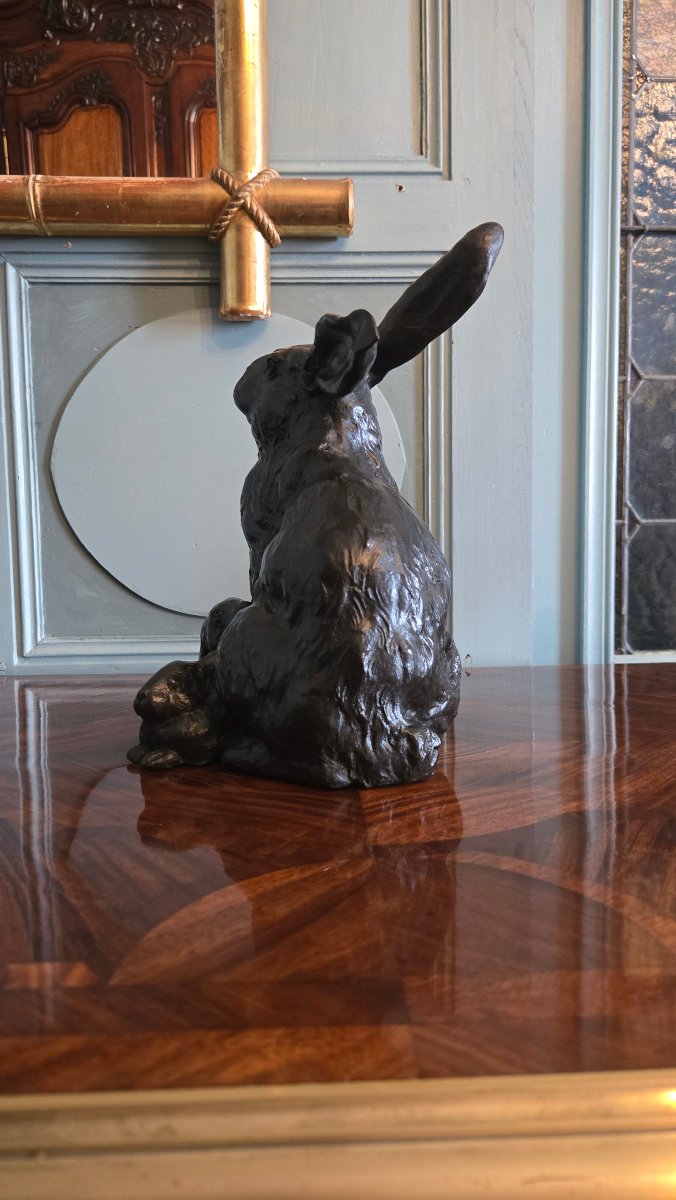
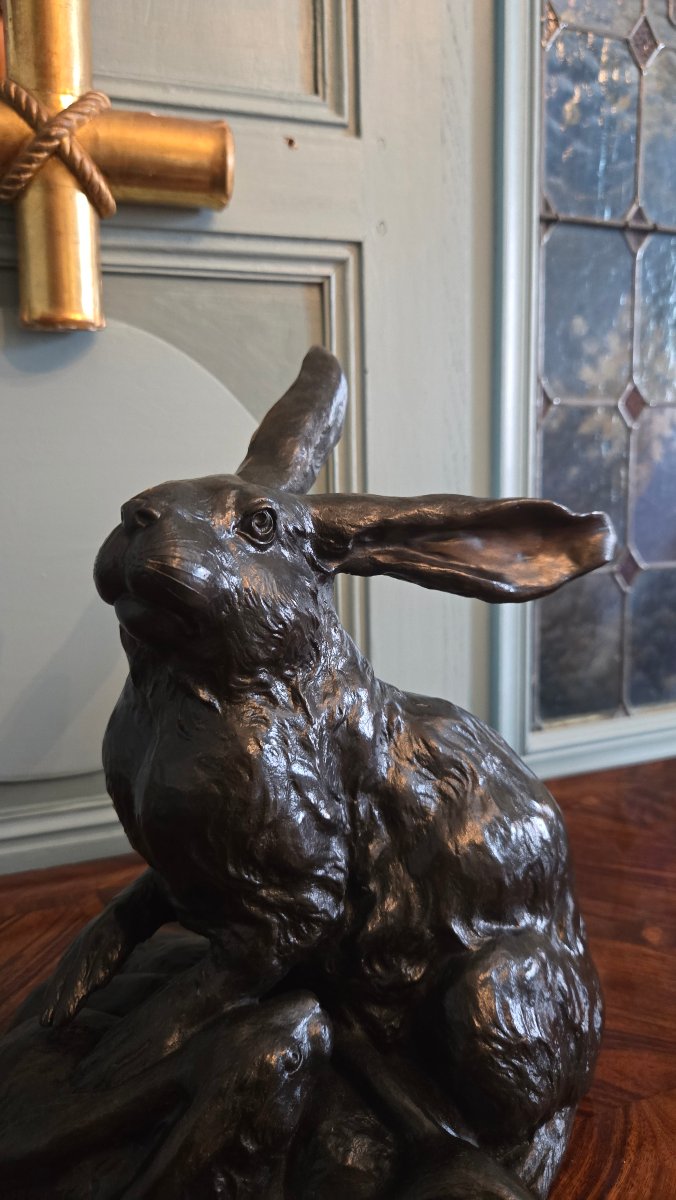
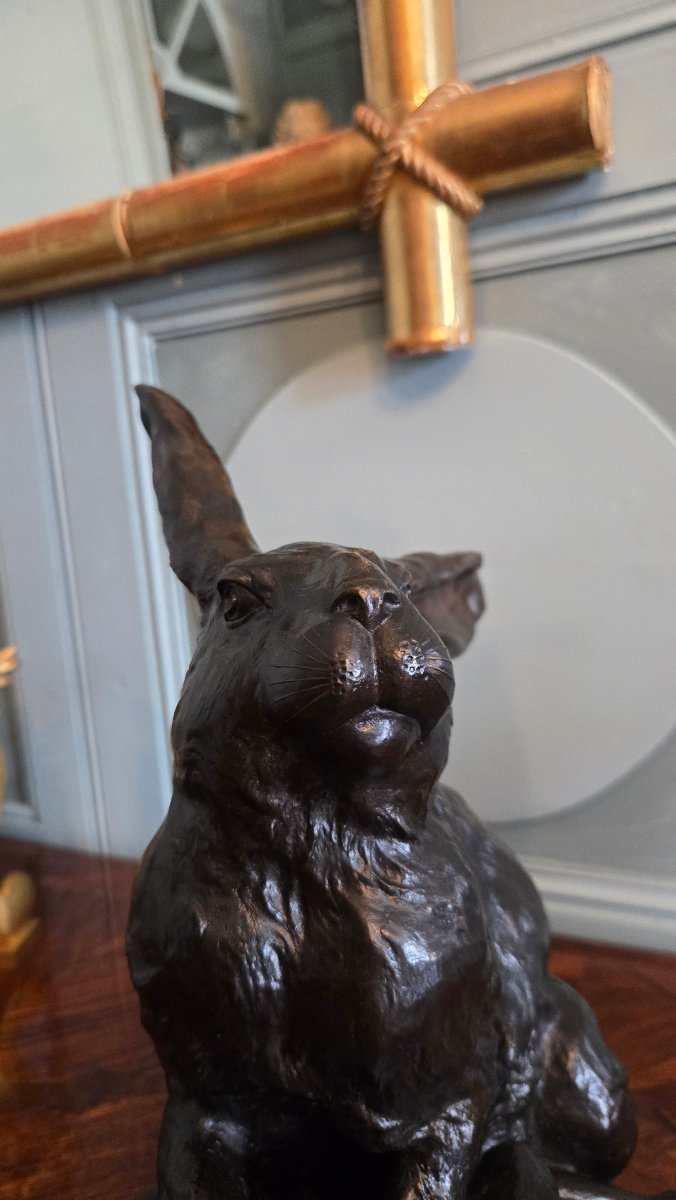
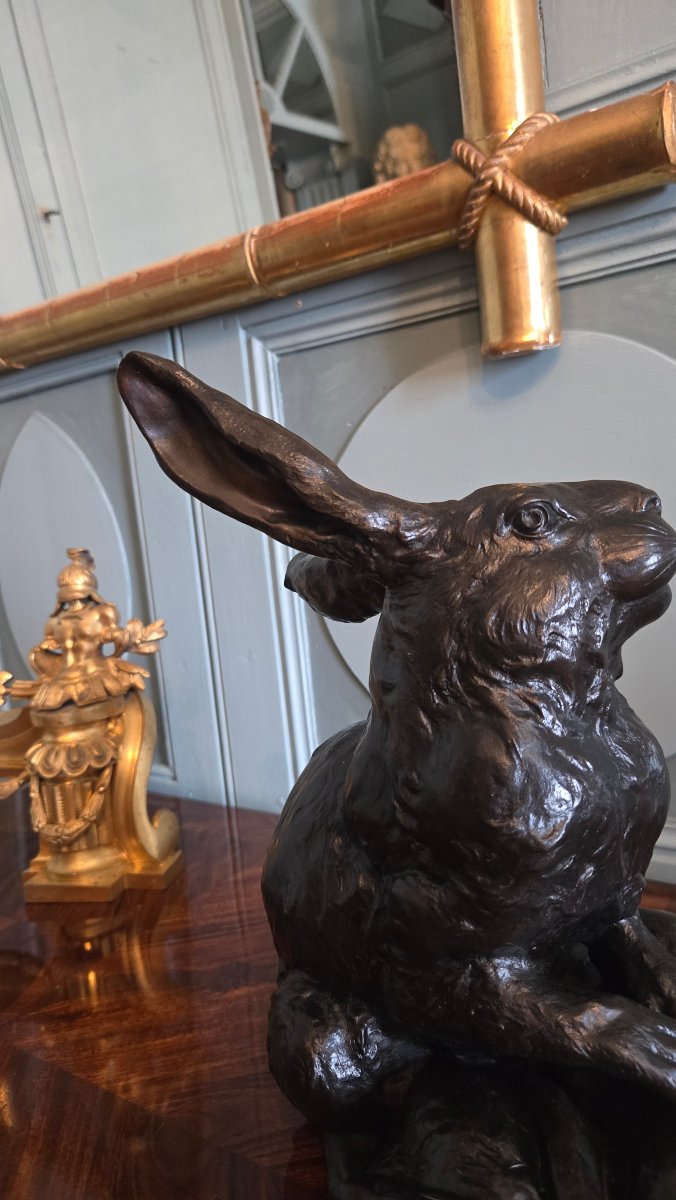
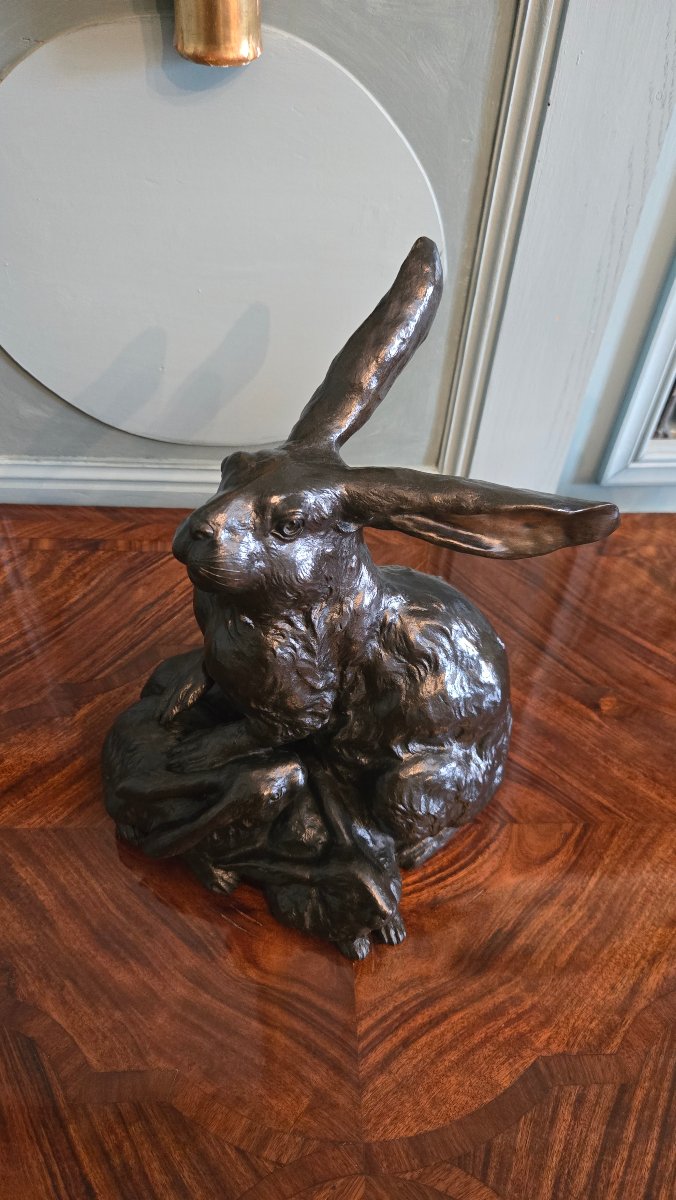
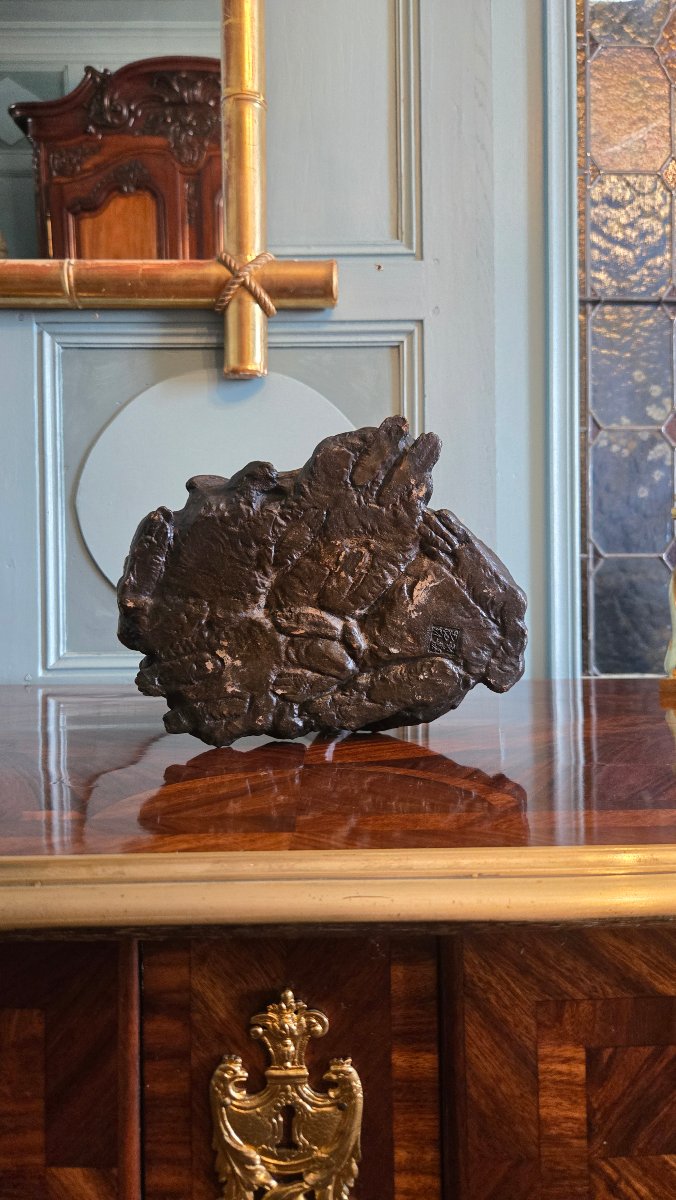
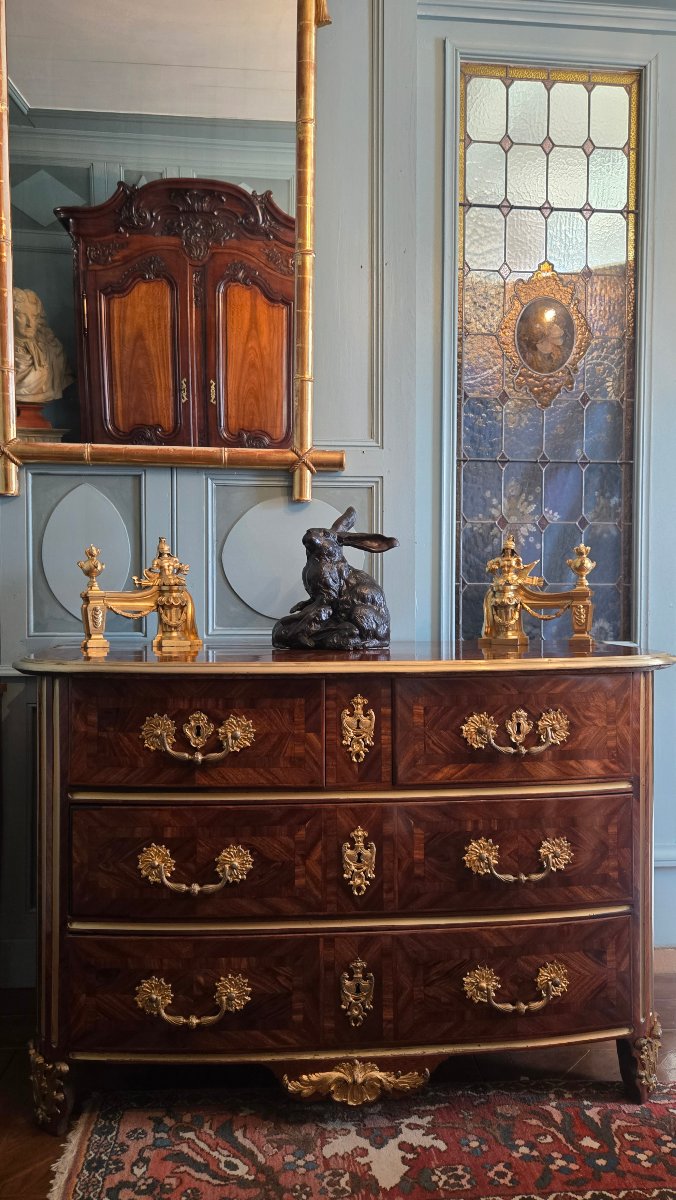


An important bronze okimono with a brown patina depicting a hare protecting her three kits, signed on the base with the seal of Genryūsai Seiya, a Japanese artist and workshop master active in Tokyo in the late 19th century, during the Meiji era.
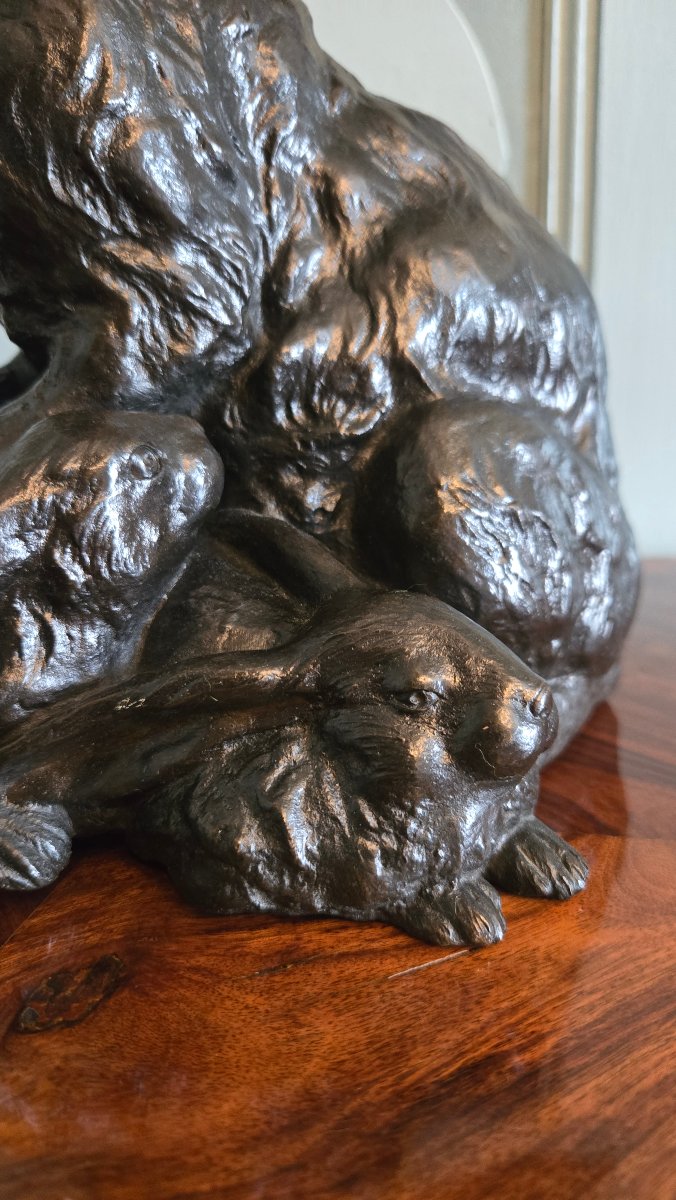
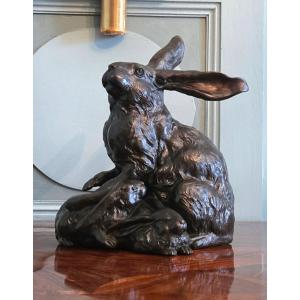
The composition depicts a seated hare, ears pricked, in a pose that is both calm and alert. Around her, three baby hares snuggle close to her body. The artist does not settle for a simple depiction of animals: he constructs an intimate, familial, almost silent scene, in which the motherly presence of the doe gives the group its full meaning. Each young rabbit is treated differently, with its own posture, movement, and expression.
This subject stands in stark contrast to the Seiya studio’s best-known animal works, which often feature exotic or spectacular animals: tigers, lions, elephants, crocodiles, camels, eagles, or monkeys. Here, the choice of the hare lends the work a more sensitive and poetic character. In Japanese culture, the hare is an animal steeped in symbolism, associated in particular with the moon, renewal, and fertility. The presence of the three baby hares reinforces this interpretation centered on protection, the passing down of traditions, and family life.
The quality of the craftsmanship is remarkable. The casting is dense and precise without being heavy, allowing for great flexibility in the forms. The texture of the fur varies across different parts of the body: shorter on the muzzle, thicker around the neck and flanks, and more delicate on the young. The ears are finely ribbed, the legs are meticulously rendered, the muzzles are detailed, and the whiskers are precisely engraved. The eyes, which are very expressive, give the doe a particularly lively presence.
Genryūsai Seiya is recognized as one of the great names in Japanese bronze casting of the Meiji era. His workshop, active in Tokyo during the 1880s and 1890s, produced okimono, figurines, vases, and animal groups intended for both the Japanese market and export. His works are sought after for their naturalism, the quality of their casting, their chiseling, and the care taken with the patinas. Several of Seiya’s bronzes are now held in public collections, notably at the Victoria and Albert Museum in London.
Seiya’s groups of hares appear to be much less common than his depictions of exotic animals. A group of five hares by Genryūsai Seiya, signed with a seal, was offered at Sotheby’s London in 2004, confirming the existence of this theme in the studio’s output. This particular piece differs in that it features a more vertical and intimate composition, centered on the relationship between the mother and her young.
In terms of its subject matter, dimensions, weight, and the quality of its craftsmanship, this sculpture is a fine example of the refined naturalism of Japanese bronzes from the Meiji period.
Japan, Meiji period, late 19th century, circa 1890.
Bronze with a brown patina.
Genryūsai Seiya’s seal on the base.
Dimensions:
Height: 31.5 cm
Width: 25.5 cm
Depth: 19 cm
Weight: 8.92 kg
In very good condition. Beautiful antique patina with slight signs of wear.
The composition depicts a seated hare, ears pricked, in a pose that is both calm and alert. Around her, three baby hares snuggle close to her body. The artist does not settle for a simple depiction of animals: he constructs an intimate, familial, almost silent scene, in which the motherly presence of the doe gives the group its full meaning. Each young rabbit is treated differently, with its own posture, movement, and expression.
This subject stands in stark contrast to the Seiya studio’s best-known animal works, which often feature exotic or spectacular animals: tigers, lions, elephants, crocodiles, camels, eagles, or monkeys. Here, the choice of the hare lends the work a more sensitive and poetic character. In Japanese culture, the hare is an animal steeped in symbolism, associated in particular with the moon, renewal, and fertility. The presence of the three baby hares reinforces this interpretation centered on protection, the passing down of traditions, and family life.
The quality of the craftsmanship is remarkable. The casting is dense and precise without being heavy, allowing for great flexibility in the forms. The texture of the fur varies across different parts of the body: shorter on the muzzle, thicker around the neck and flanks, and more delicate on the young. The ears are finely ribbed, the legs are meticulously rendered, the muzzles are detailed, and the whiskers are precisely engraved. The eyes, which are very expressive, give the doe a particularly lively presence.
Genryūsai Seiya is recognized as one of the great names in Japanese bronze casting of the Meiji era. His workshop, active in Tokyo during the 1880s and 1890s, produced okimono, figurines, vases, and animal groups intended for both the Japanese market and export. His works are sought after for their naturalism, the quality of their casting, their chiseling, and the care taken with the patinas. Several of Seiya’s bronzes are now held in public collections, notably at the Victoria and Albert Museum in London.
Seiya’s groups of hares appear to be much less common than his depictions of exotic animals. A group of five hares by Genryūsai Seiya, signed with a seal, was offered at Sotheby’s London in 2004, confirming the existence of this theme in the studio’s output. This particular piece differs in that it features a more vertical and intimate composition, centered on the relationship between the mother and her young.
In terms of its subject matter, dimensions, weight, and the quality of its craftsmanship, this sculpture is a fine example of the refined naturalism of Japanese bronzes from the Meiji period.
Japan, Meiji period, late 19th century, circa 1890.
Bronze with a brown patina.
Genryūsai Seiya’s seal on the base.
Dimensions:
Height: 31.5 cm
Width: 25.5 cm
Depth: 19 cm
Weight: 8.92 kg
In very good condition. Beautiful antique patina with slight signs of wear.
Explore similar pieces and discover your ideal find:
Bronze Animal Sculptures