
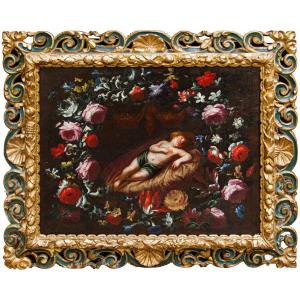


Pier Francesco Cittadini (1616–1681), Attributed To, Garland With The Sleeping Jesus
Pier Francesco Cittadini (Milan, 1616 – Bologna, September 20, 1681), attributed to
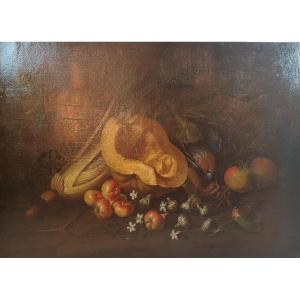
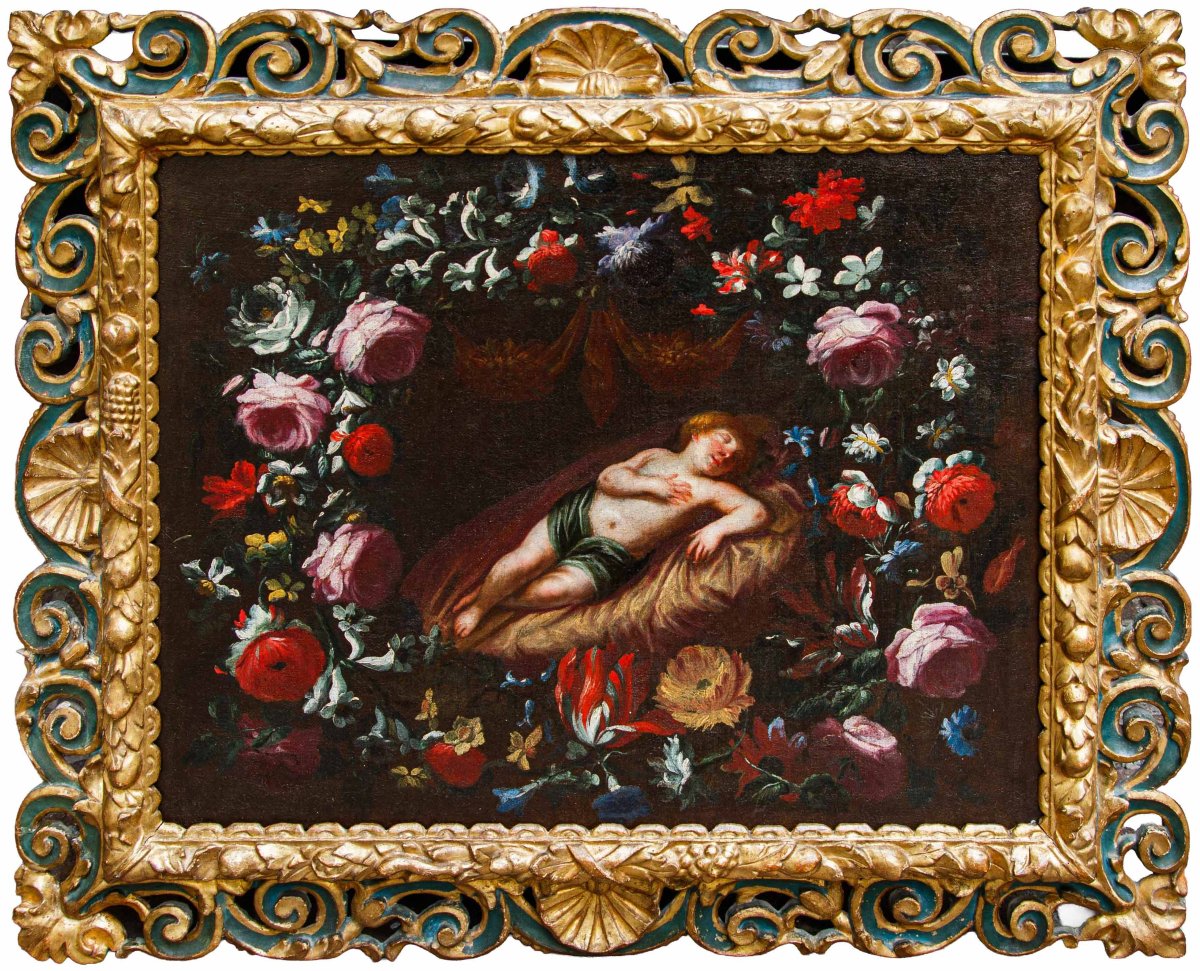
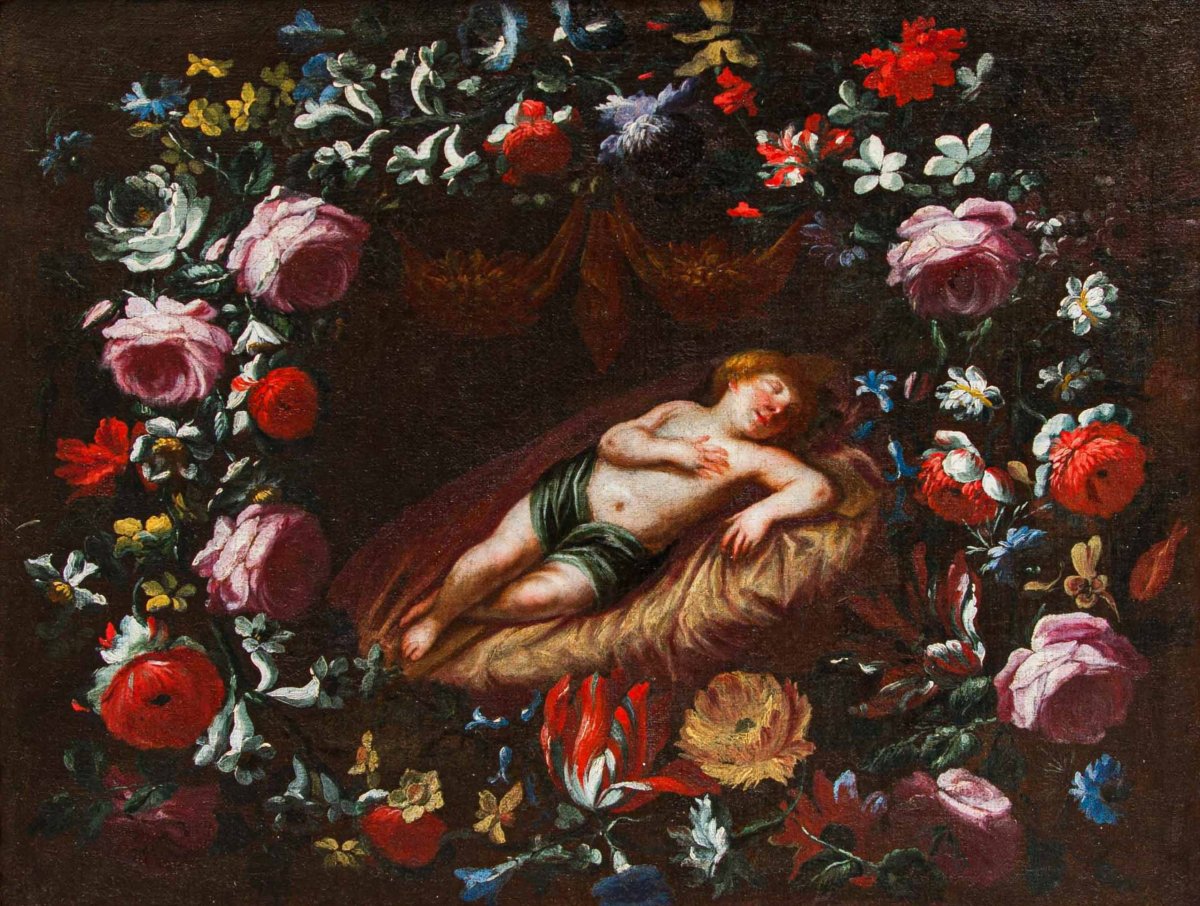
Garland with the Sleeping Infant Jesus
Oil on canvas, 83 x 97 cm
With frame, 57 x 71.5 cm
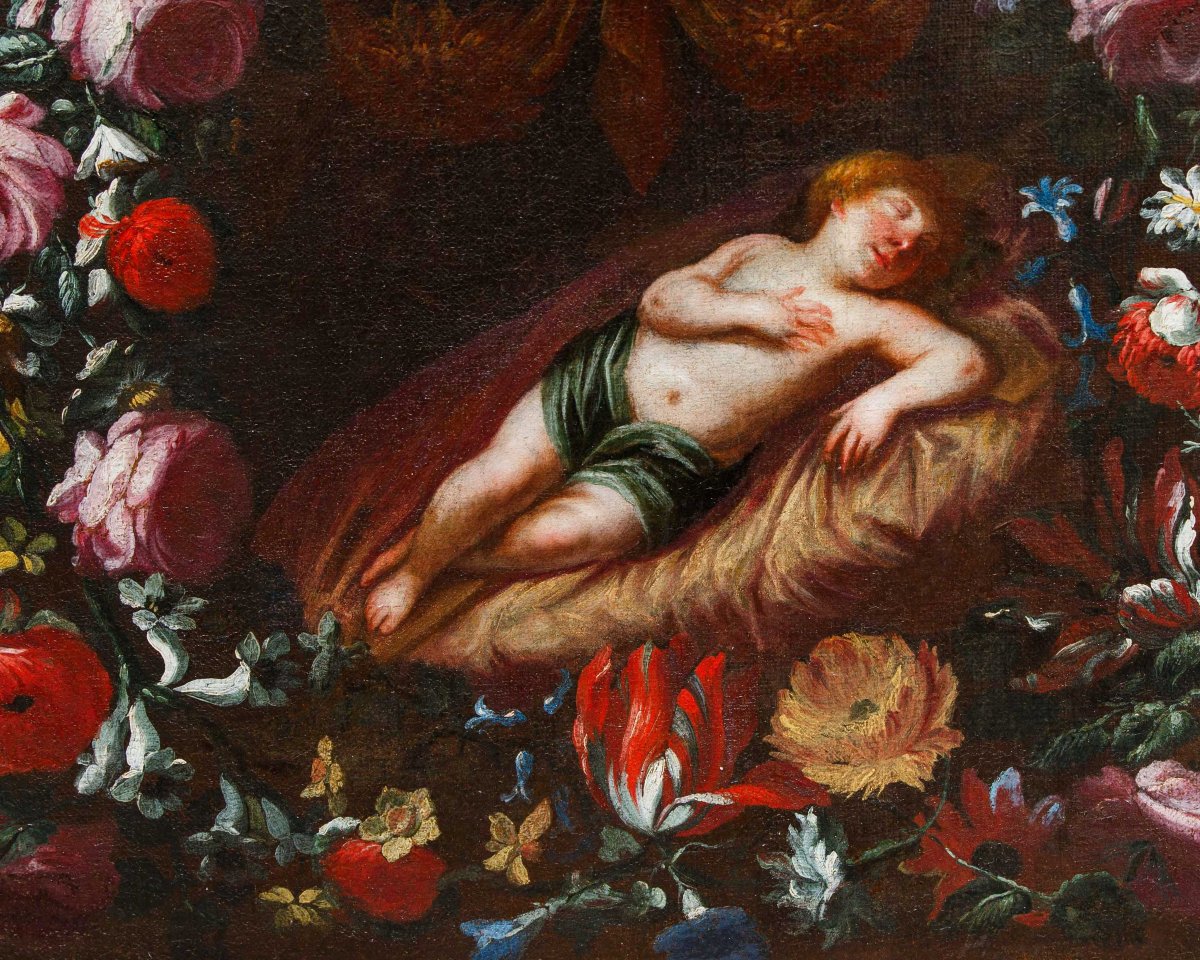
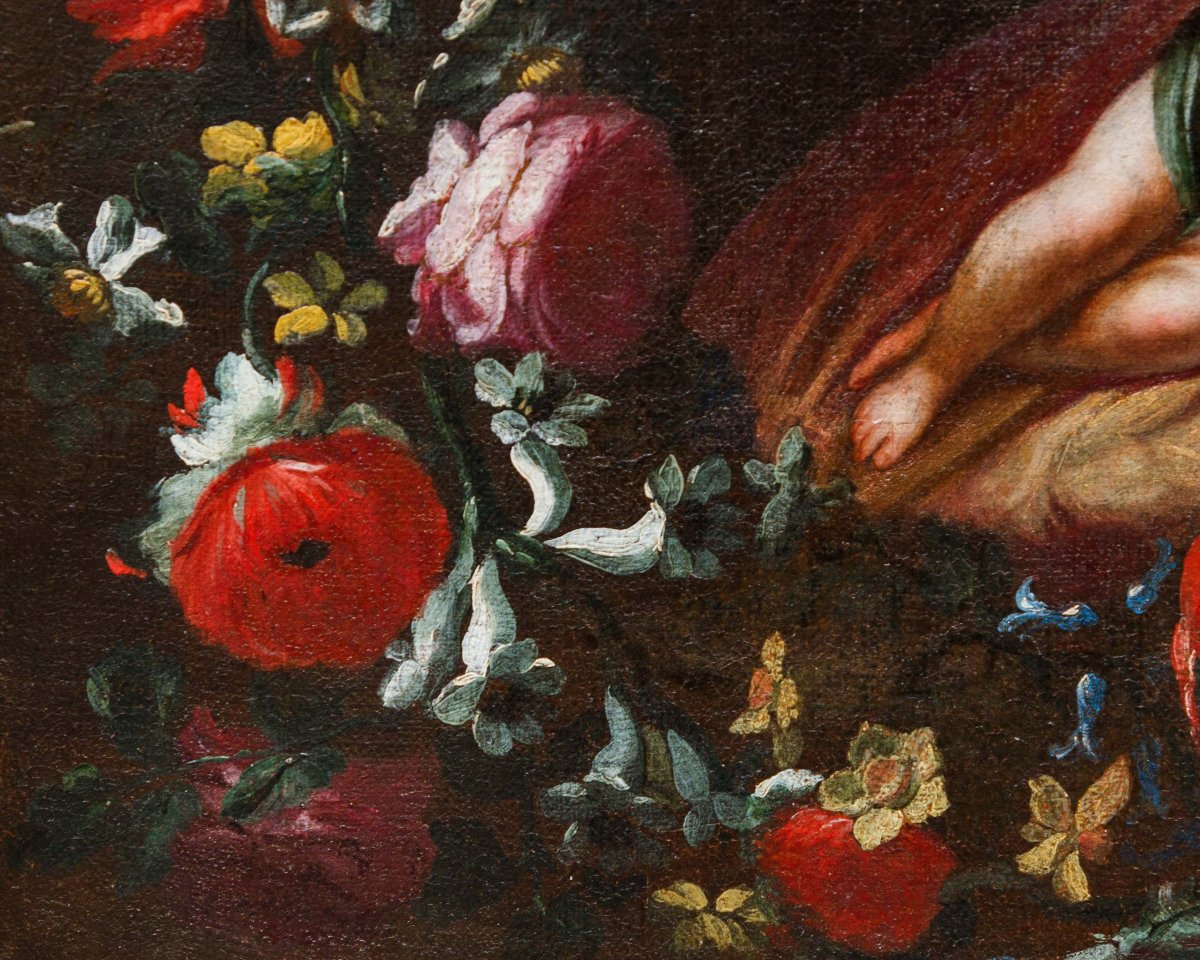
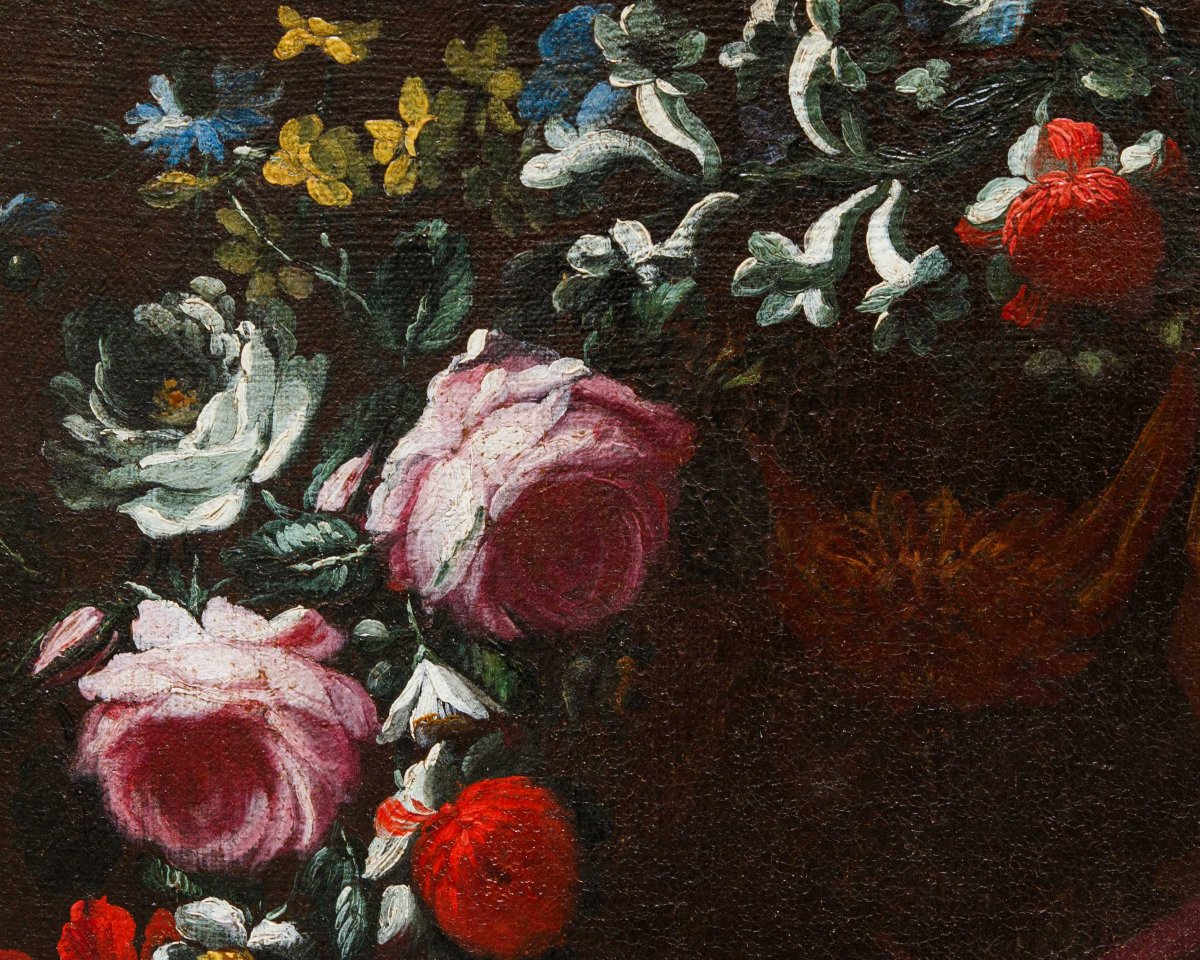
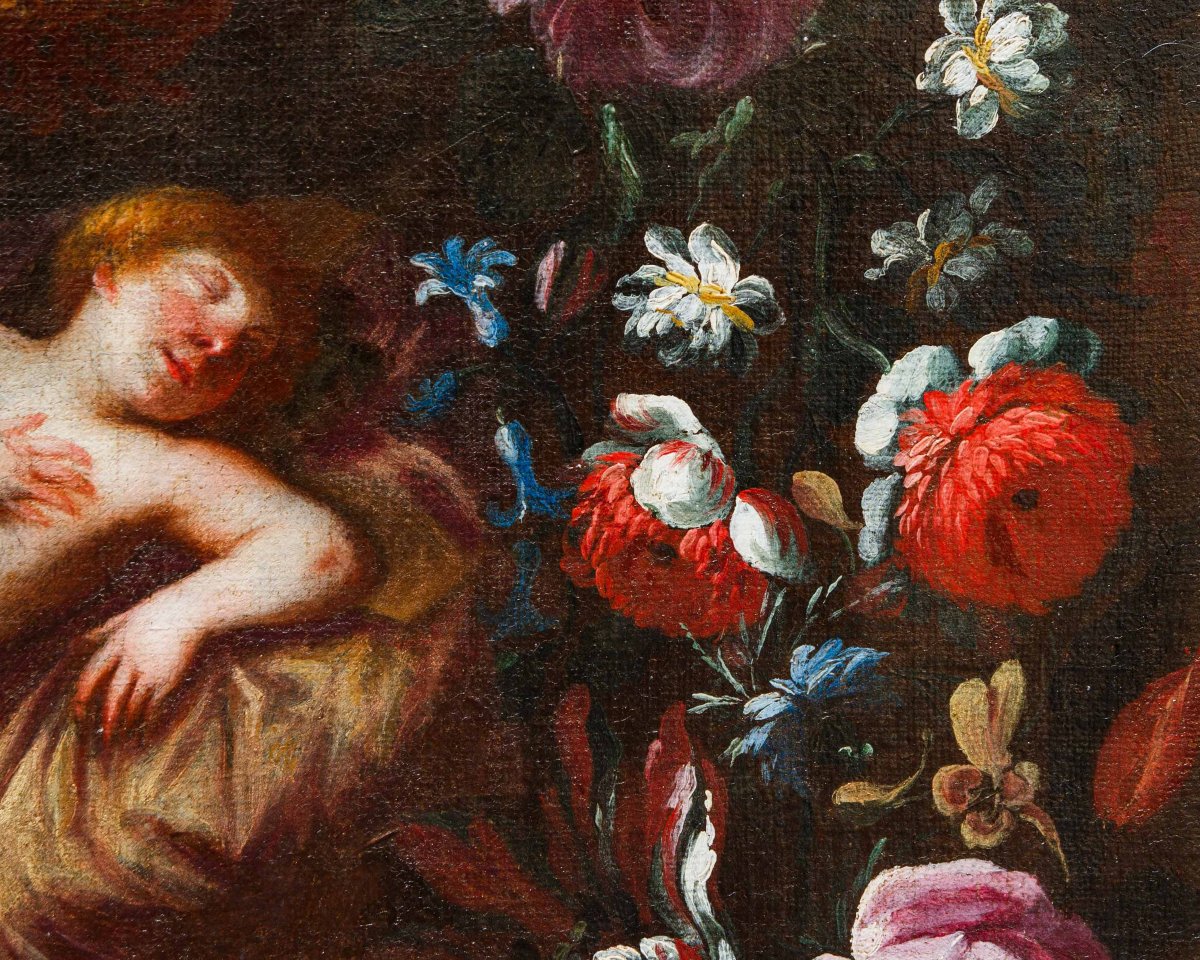
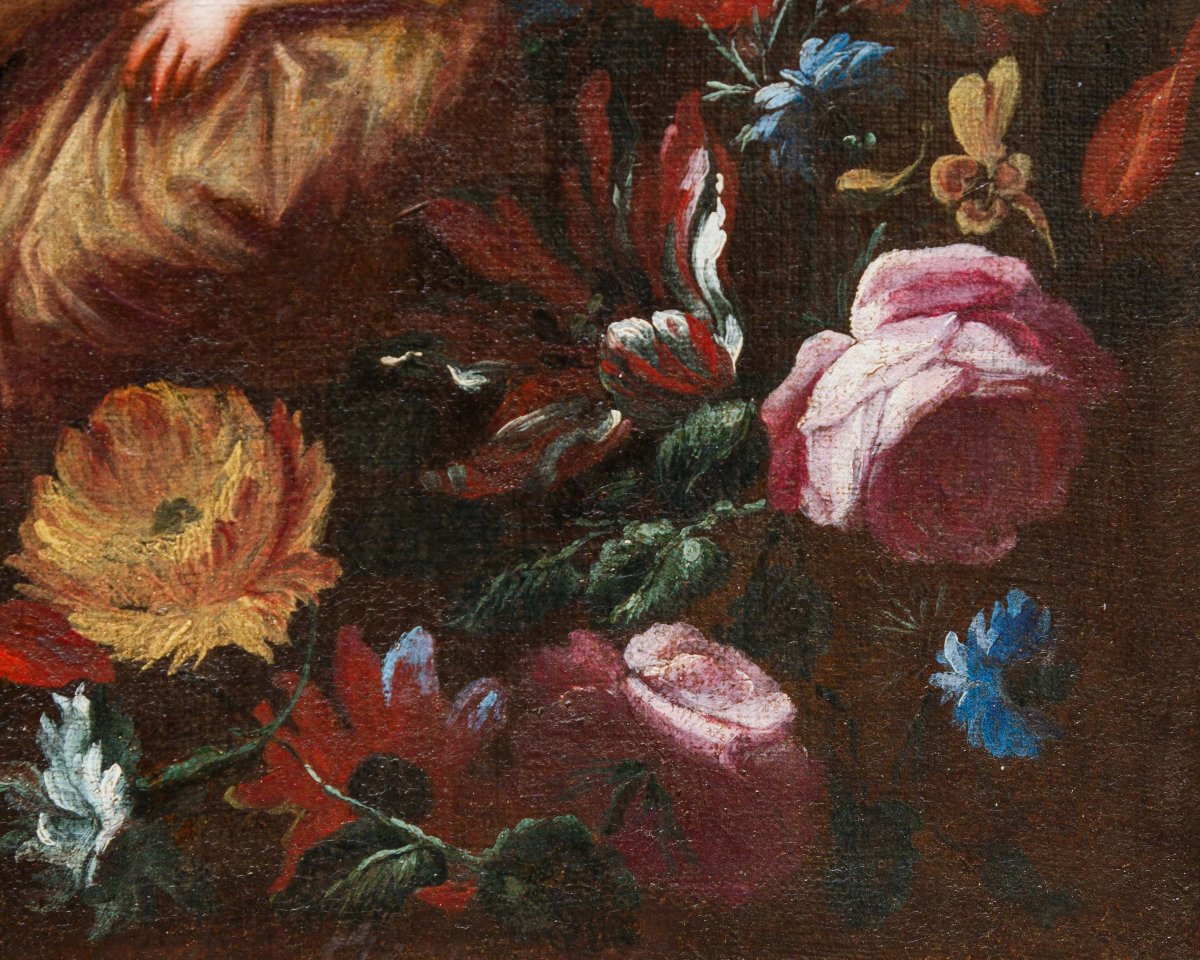
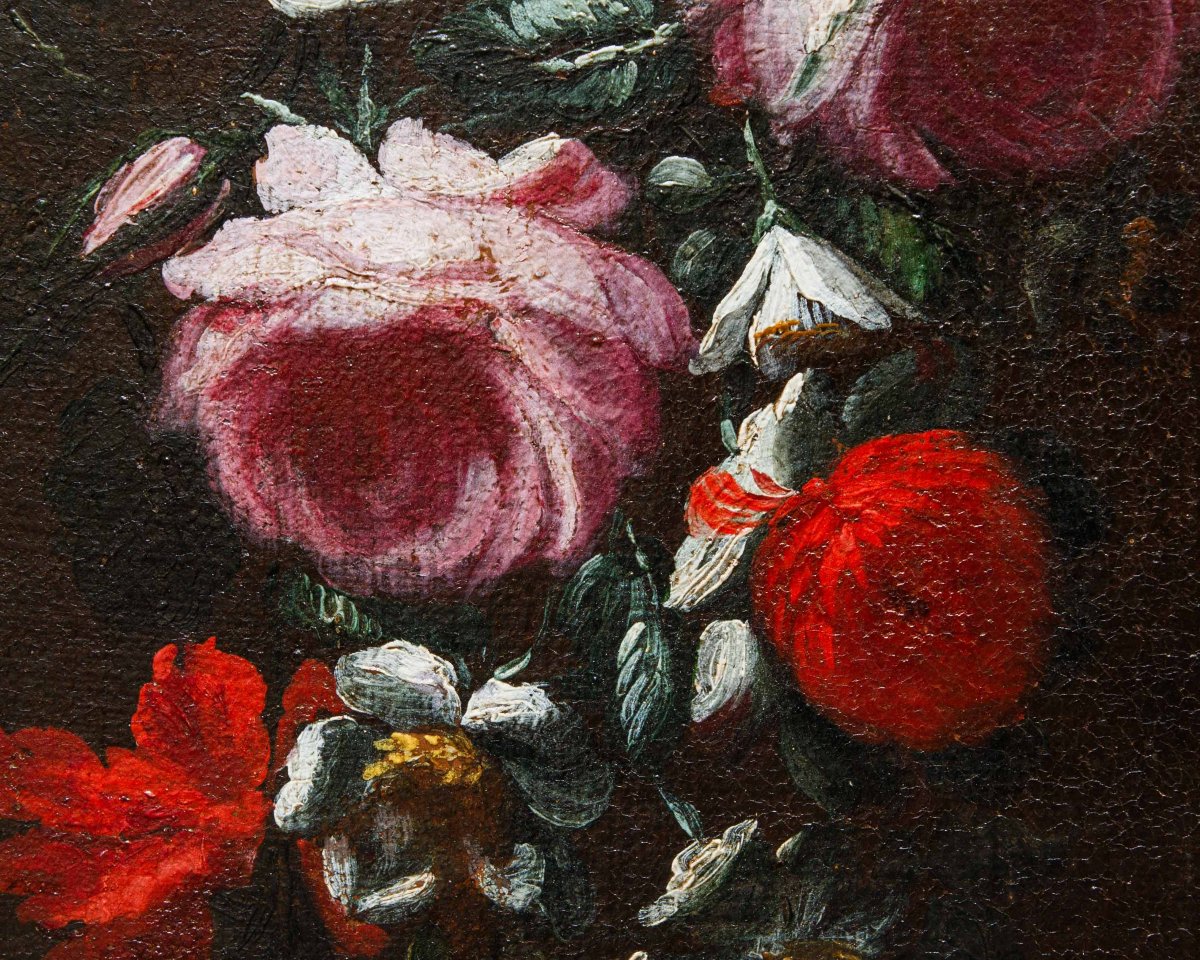
The painting depicts a lavish garland of flowers—roses, tulips, carnations, anemones, and wildflowers—arranged in a crown, within which a sort of natural niche opens up to cradle the sleeping Infant Jesus. The infant lies on a bundle of straw, his head resting on his arm, his body partially covered by a dark green cloth that highlights his warm, luminous complexion. The soft, nuanced rendering of the complexion contrasts with the denser, more vibrantly colored flowers, painted with quick brushstrokes and bathed in a warm light that accentuates their relief. This is a genre that was very widespread in 17th-century Lombardy and Emilia, in which the floral still life—distinct in both technique and style—frames a small-format devotional subject intended for private worship.
Pier Francesco Cittadini initially trained in Milan under Daniele Crespi; after moving to Bologna around 1634, he studied under Guido Reni, whose influence deeply shaped his early works. After his master’s death, the artist delved deeper into the Bolognese tradition, beginning with the classicism of the Carracci school. Toward the middle of the century, he stayed in Rome, where he came into contact with French artists devoted to genre painting, and secured commissions even from Louis XIV thanks to the success of his still lifes and landscapes. Upon his return to Bologna in 1650, he married Giulia Ballarini in 1653; they had numerous children, at least three of whom—Carlo Antonio, Angelo Michele, and Giovanni Battista—followed in their father’s footsteps.
The painting finds significant parallels in the artist’s other works dedicated to the theme of the floral garland. See the *Ghirlanda di fiori* (Flower Garland) housed at the Pinacoteca Nazionale in Bologna, which features a similar compositional structure centered on a wreath of foliage. Even more striking is the comparison with another *Garland with the Sleeping Infant Jesus*, now in a private collection, which reproduces the same composition with minimal variations in the arrangement of the flowers and the drapery. Finally, the *Garland with Mary Magdalene*, also in a private collection, is similar in terms of floral typology; its flowers are virtually identical to those examined here, confirming a recurring decorative repertoire in the artist’s workshop.
Period: 17th century
Style: Other Style
Condition: Good condition
Material: Oil painting
Width: 97
Height: 83
Reference (ID): 1783195
Availability: In stock