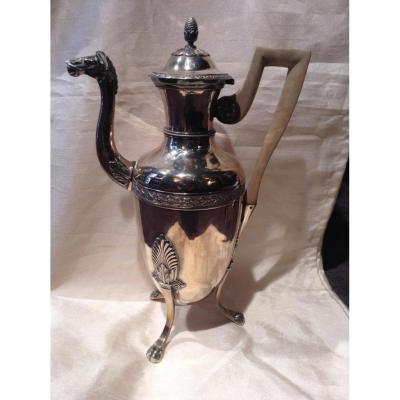
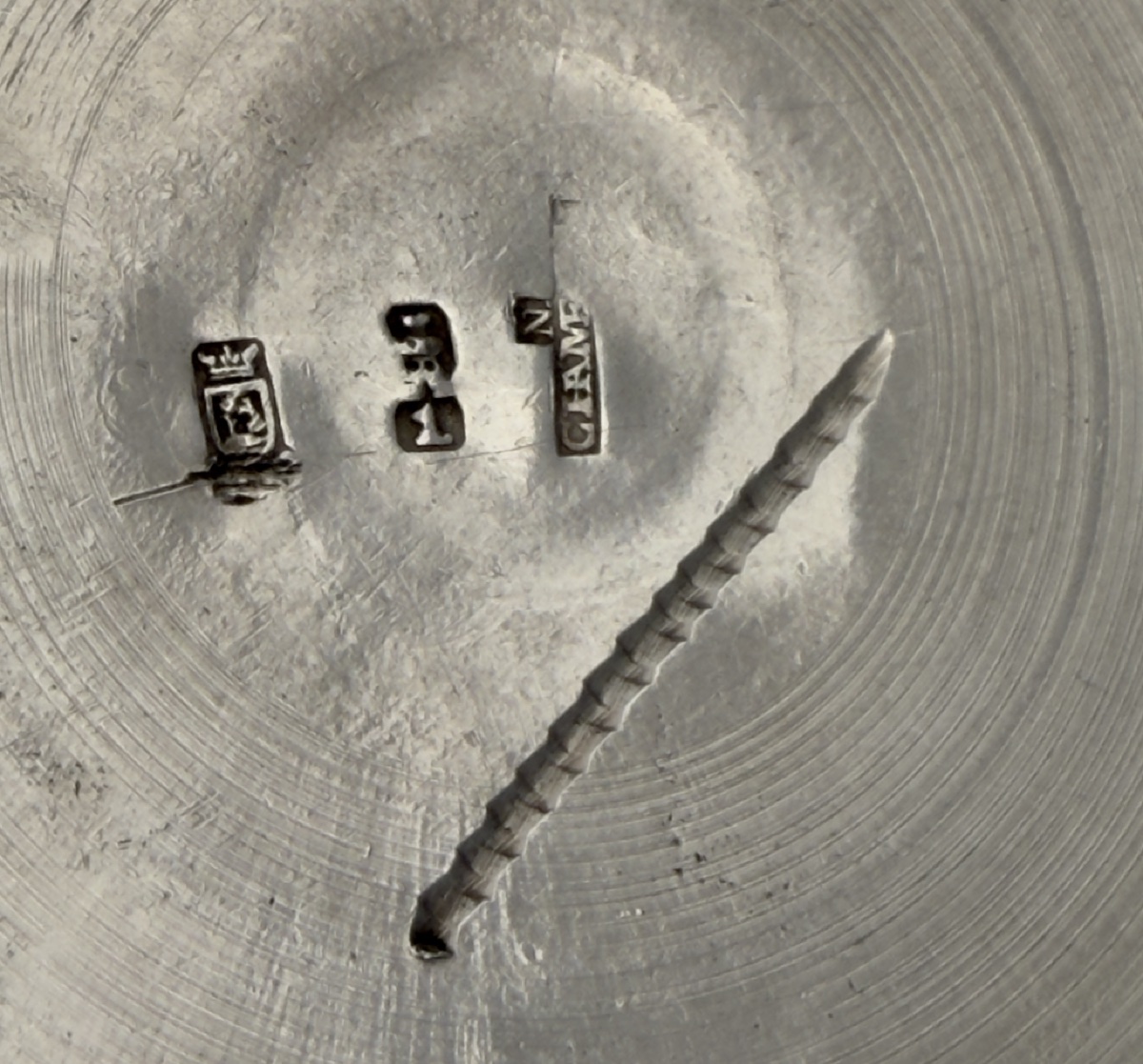
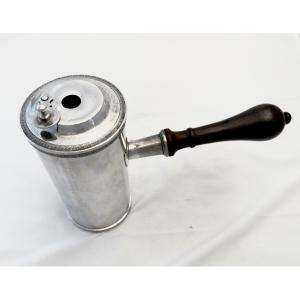


Madrid, 1800–1812, Chocolate Pot, Crafted By Nicolas Chameroy, Silversmith To King Joseph Bonaparte, Silver
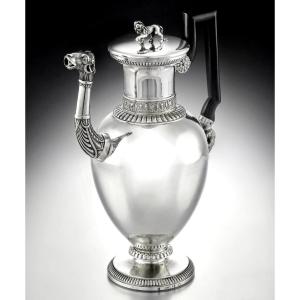
This silver travel chocolate pot was crafted by the French silversmith Nicolas Chameroy, who arrived in Madrid and settled there around 1798. The object is what is known as a “conversation piece.” It relates to several interesting topics: travel silverware—often intended for officers—the consumption of hot chocolate, the French occupation of Spain and the brief reign of Joseph Bonaparte, the massive melting down of confiscated treasures, and the role of a humble French craftsman from Troyes in all of this.....
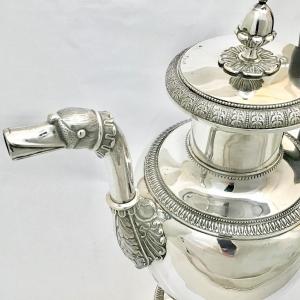
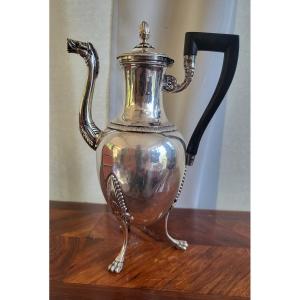
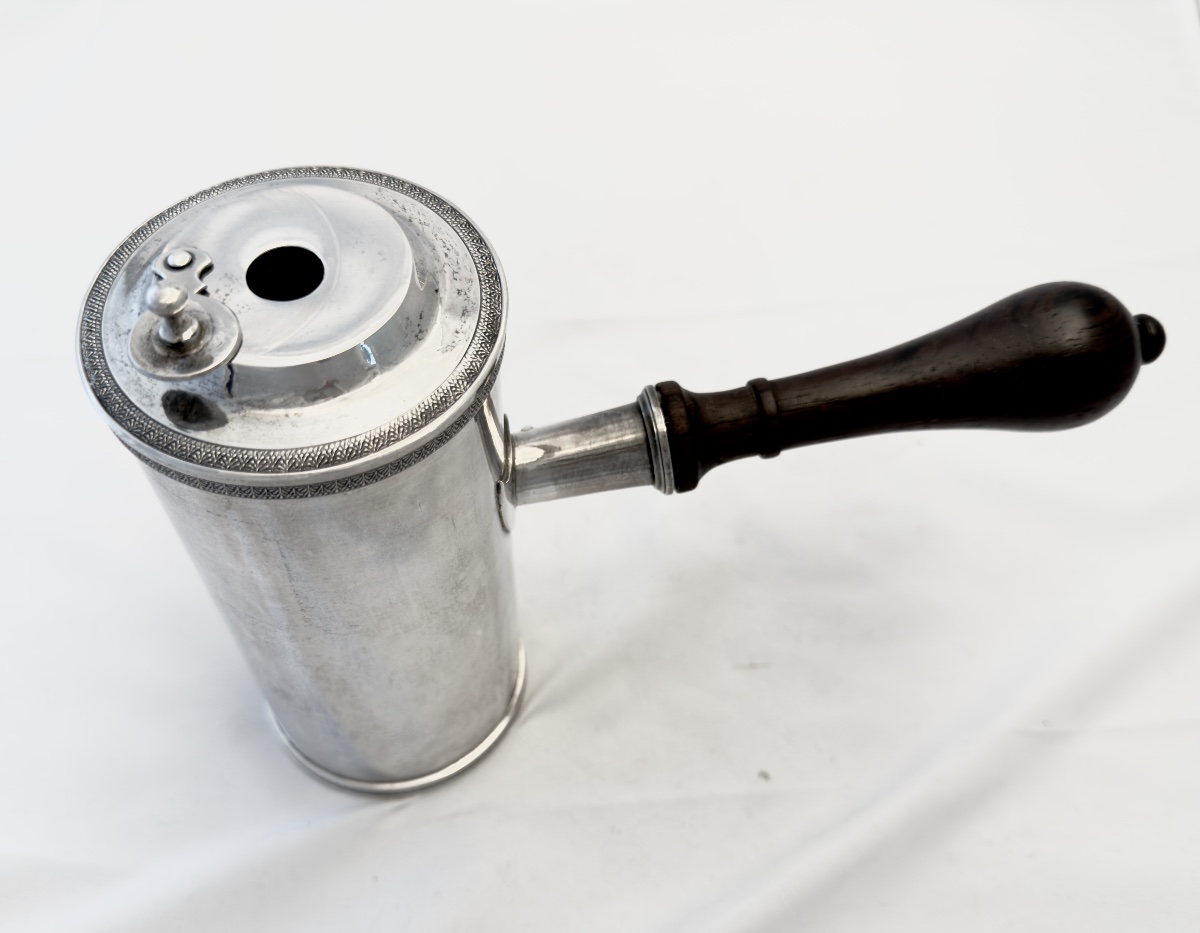
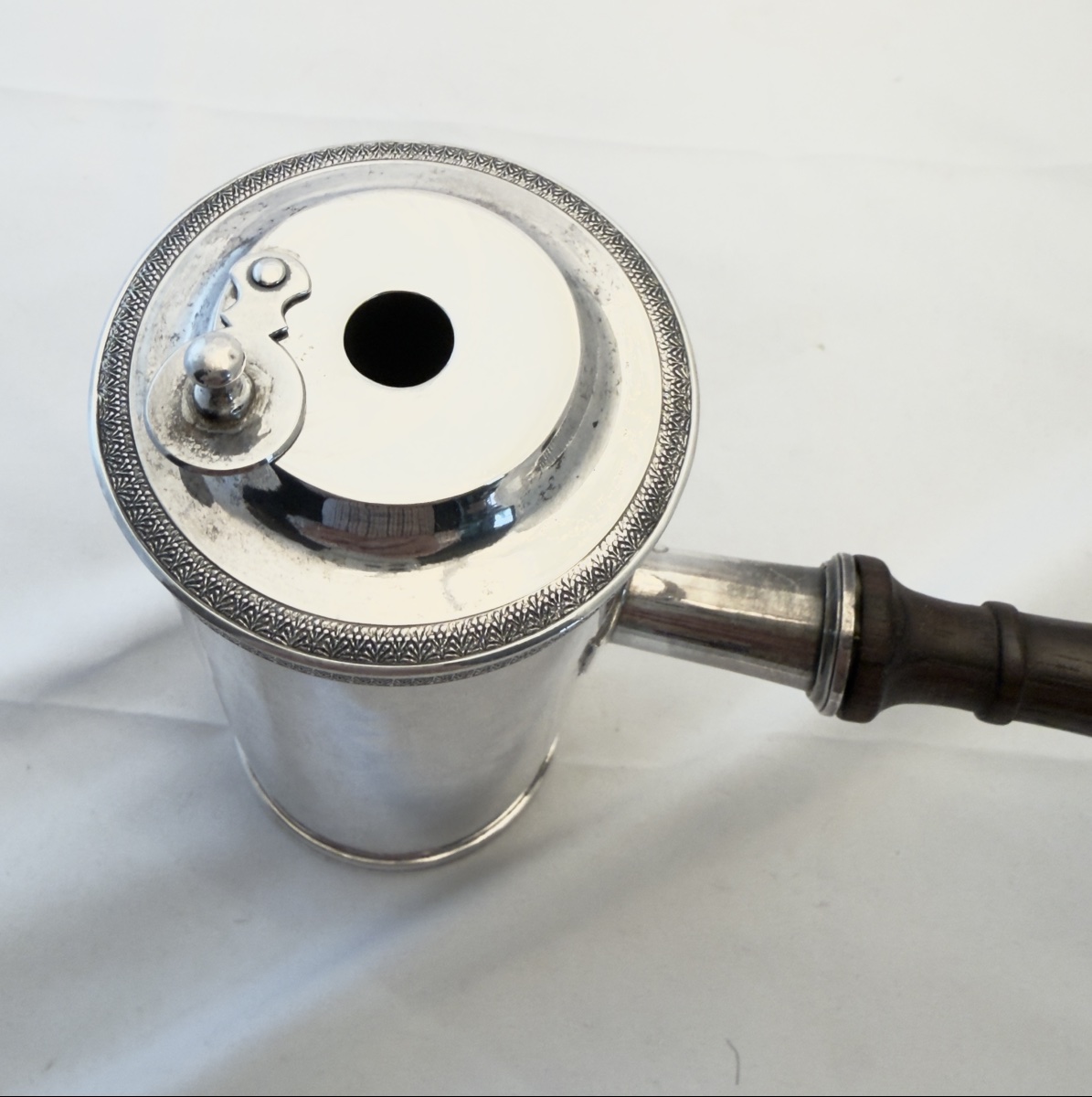
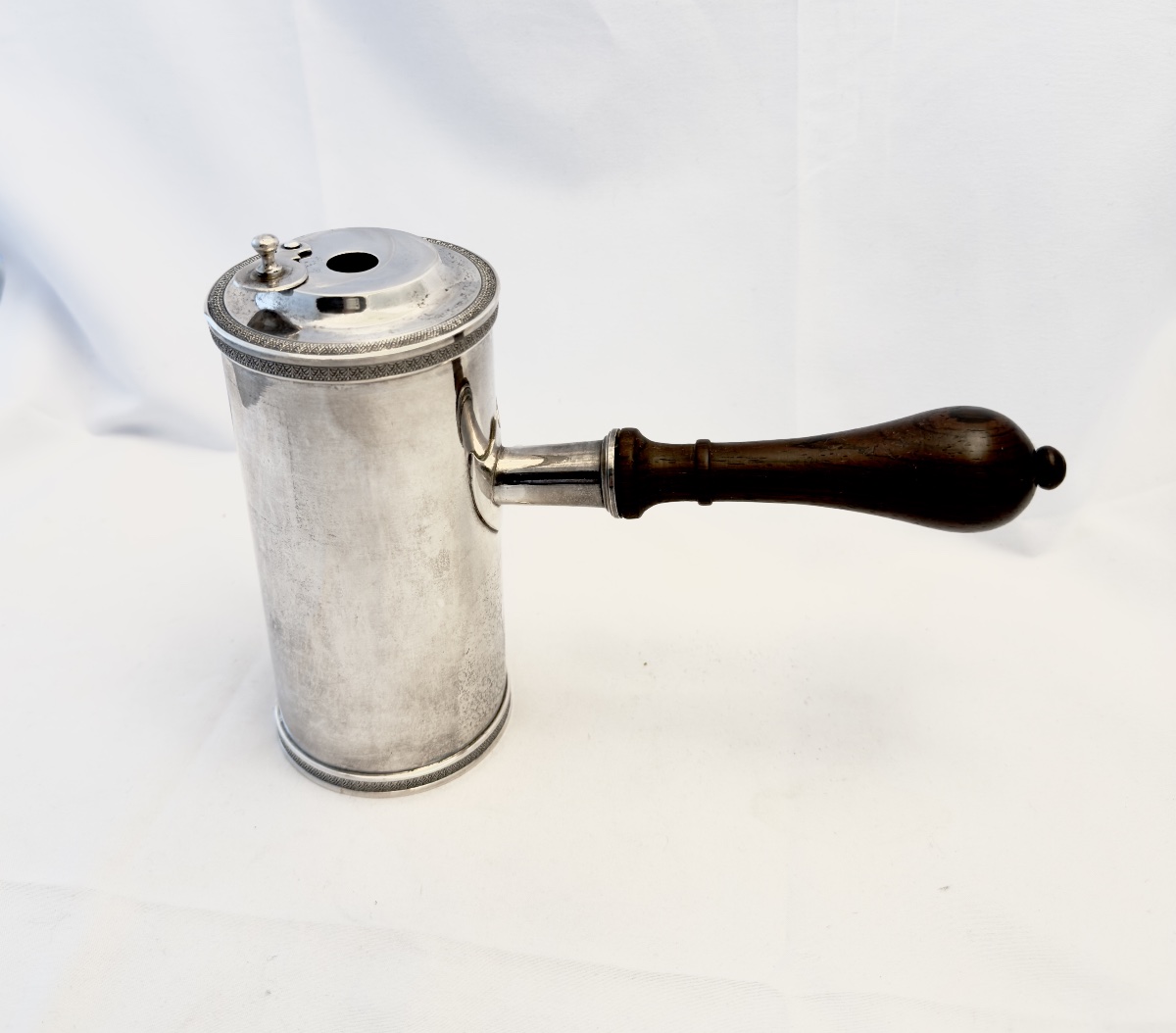
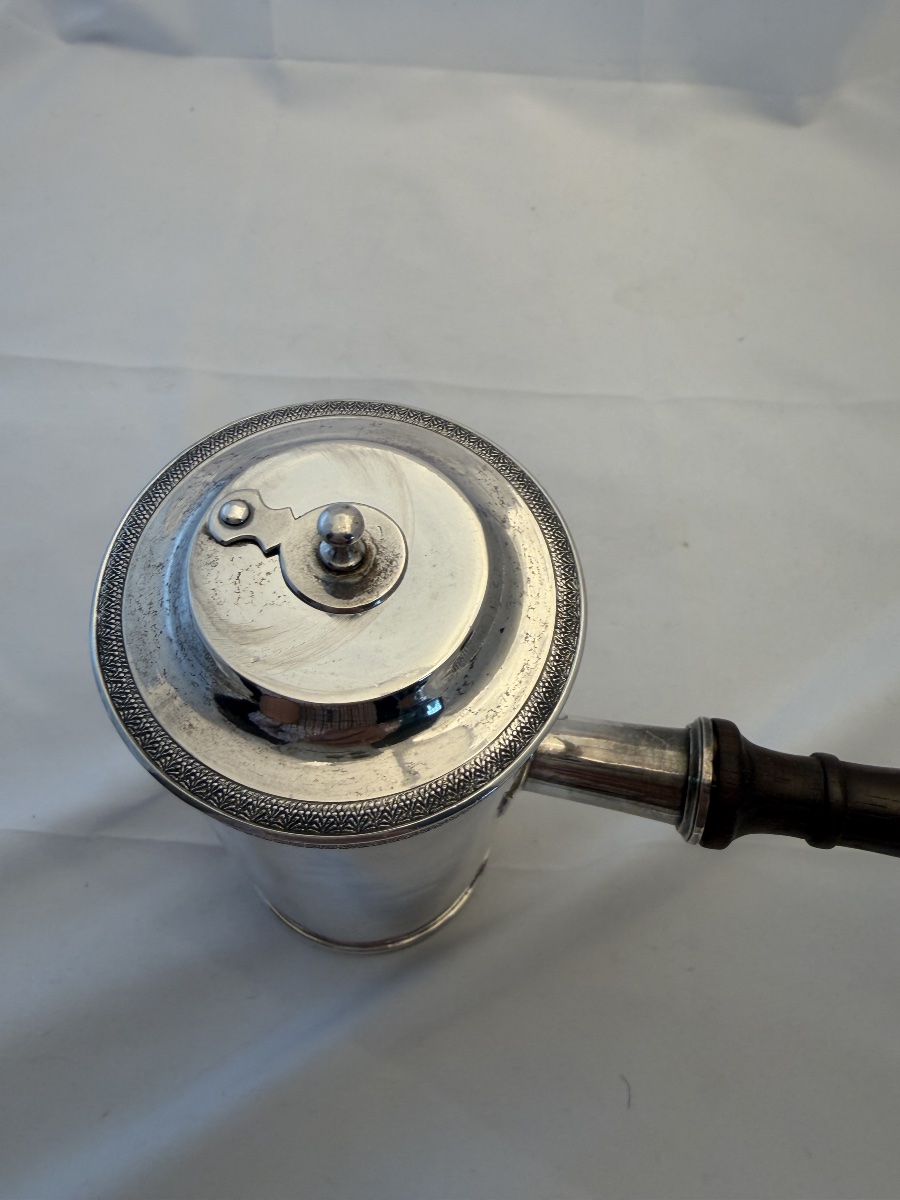
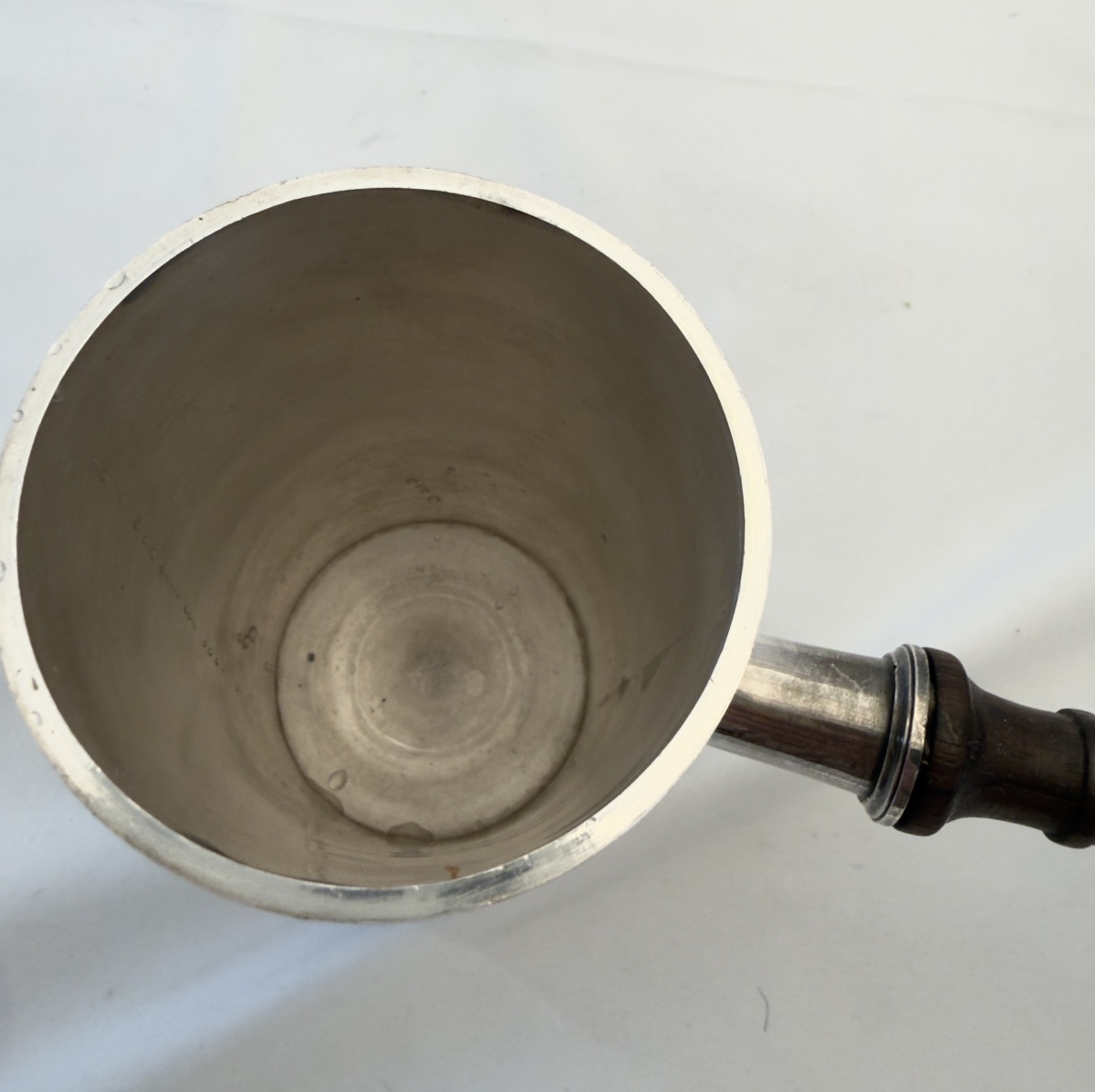
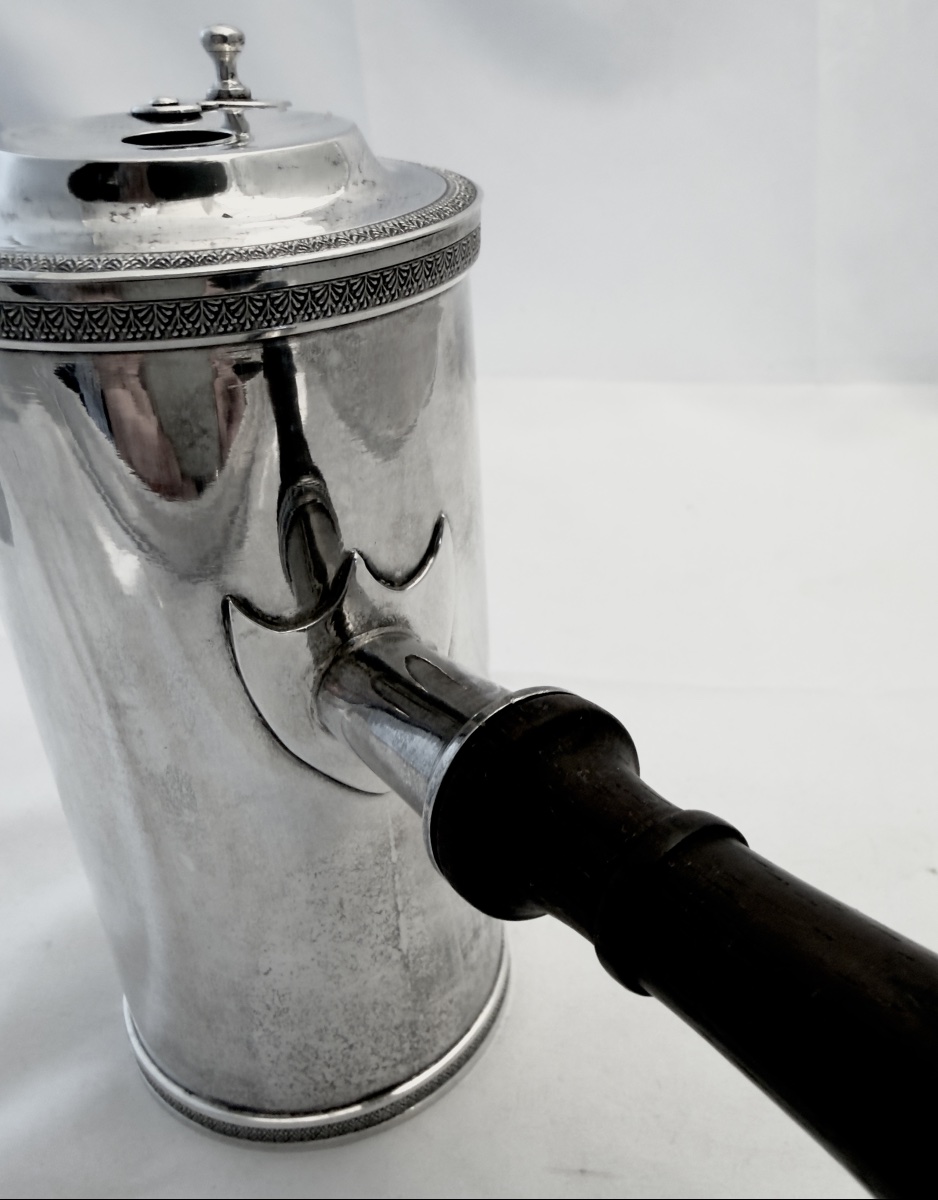
This pitcher features a side handle made of rosewood and is classified as a travel item for personal use. Its cylindrical shape, lid with a hole for the chocolate whisk, and removable handle reflect a practical design, facilitating transport in a compartmentalized case.
Intended for an officer or a high-ranking traveler, it allowed for the preservation of the ritual of drinking hot chocolate, a beverage associated with the elite. The object had to be at once precious, compact, and sturdy.
The nobility of the materials contrasts with the simplicity of the forms. The silver affirms the owner’s status, while the rosewood, acting as an insulator, ensures a comfortable grip. The decoration is limited to a few moldings and precise details, revealing great mastery of proportions and construction.
A Madrid-made piece marked by French taste
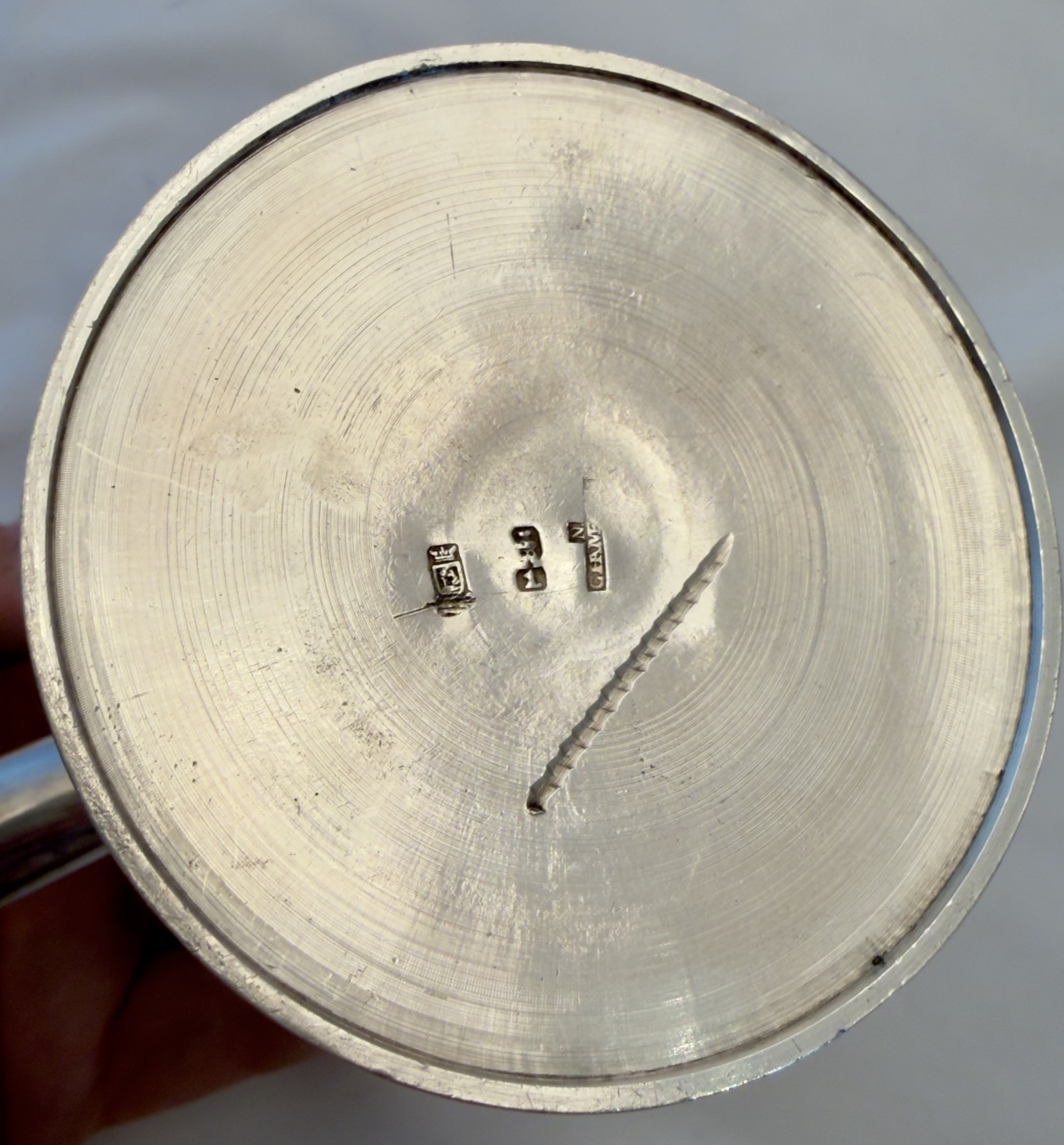
Although bearing the Madrid hallmarks of Nicolas Chameroy, this chocolate pot reflects a strong French influence. Its refined form and balance evoke late 18th-century Neoclassicism.
Cruz Valdovinos highlights these “French resonances” in Chameroy’s work, whose designs draw inspiration from Parisian creations without copying them. The chocolate pot exemplifies this approach: simple geometry, minimal decoration, and harmony of materials.
The lid features an opening for the frother, closed by a movable mechanism. Each element combines functionality and elegance.
Chameroy thus embodies the convergence of French craftsmanship and Spanish practices, adopting Madrid’s conventions while preserving a French formal tradition.
Nicolas Chameroy, a French silversmith in Madrid
Born in Troyes in 1762, Nicolas Chameroy likely trained in France, perhaps in Paris. After settling in Madrid, he became part of the local goldsmithing community, possibly associated with the Real Fábrica de Platería.
In 1800, he became a master craftsman after passing an exam and being admitted to the Colegio-Congregación de San Eloy, which allowed him to open a workshop and shop. He trained several apprentices and helped spread French tastes.
An advertisement from 1800 mentions his shop, where he sold, among other items, medals of Bonaparte.
Joseph Bonaparte and the melting down of requisitioned items:
During the reign of Joseph Bonaparte, Chameroy was not only a silversmith but was also tasked with melting down precious metals obtained through requisitions. These objects, often pieces of goldsmith’s work, were transformed into ingots for the Mint.
A hostile report from 1818 describes this activity, in a political context marked by the restoration of Ferdinand VII. While the facts appear to be true, judgments must be qualified.
Chameroy appears to have been a skilled craftsman, but this role earned him a controversial reputation after the regime’s fall.
Leaving Madrid and a difficult return:
Chameroy left Madrid in 1812 and sold his equipment before his departure. Upon his return in 1818, he attempted to reopen his workshop, despite opposition from the guild.
Despite the accusations, he managed to resume his business, appeared in tax records, and trained new apprentices. He thus succeeded in rebuilding his career.
A Rare and Important Body of Work
There are few works attributed to Chameroy. They consist mainly of refined civilian objects, characterized by their quality and elegance.
His style evolved from a refined neoclassicism toward an aesthetic closer to the Empire style, featuring classical motifs.
The chocolate pot perfectly illustrates his work: a collapsible, compact, and functional object designed for travel. It combines noble materials, rigorous design, and French influence.
It bears witness to Chameroy’s unique journey—a French silversmith who became a master craftsman in Madrid, a career marked by political upheavals yet one in which he was able to establish a lasting presence.
The chocolate pot weighs 485 grams.
Notes and Sources
[1] José Manuel Cruz Valdovinos, “El platero francés Nicolás Chameroi…,” Anales del Instituto de Estudios Madrileños, 1982.
Period: 19th century
Style: Consulat, Empire
Condition: Excellent condition
Material: Sterling silver
Diameter: 7,5 cm
Height: 17 cm
Reference (ID): 1783093
Availability: In stock