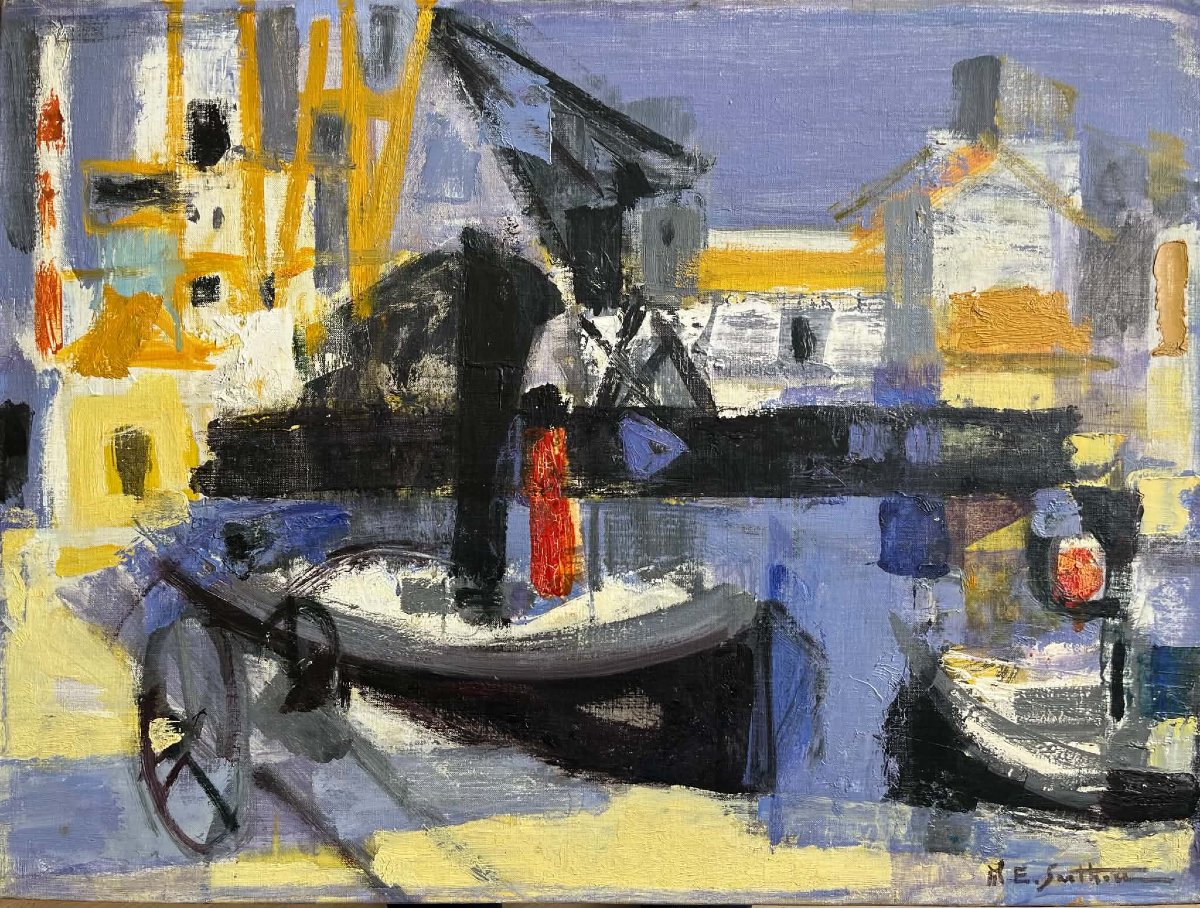
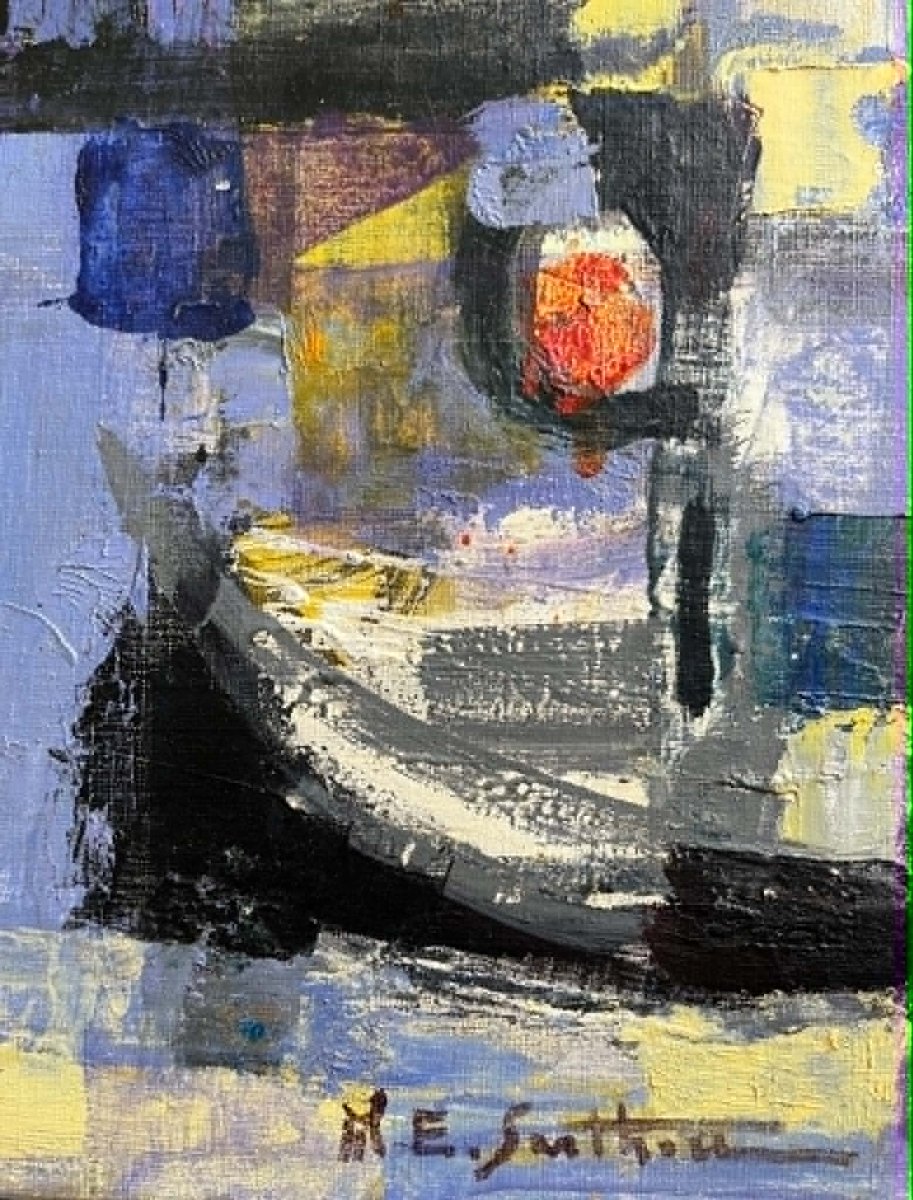
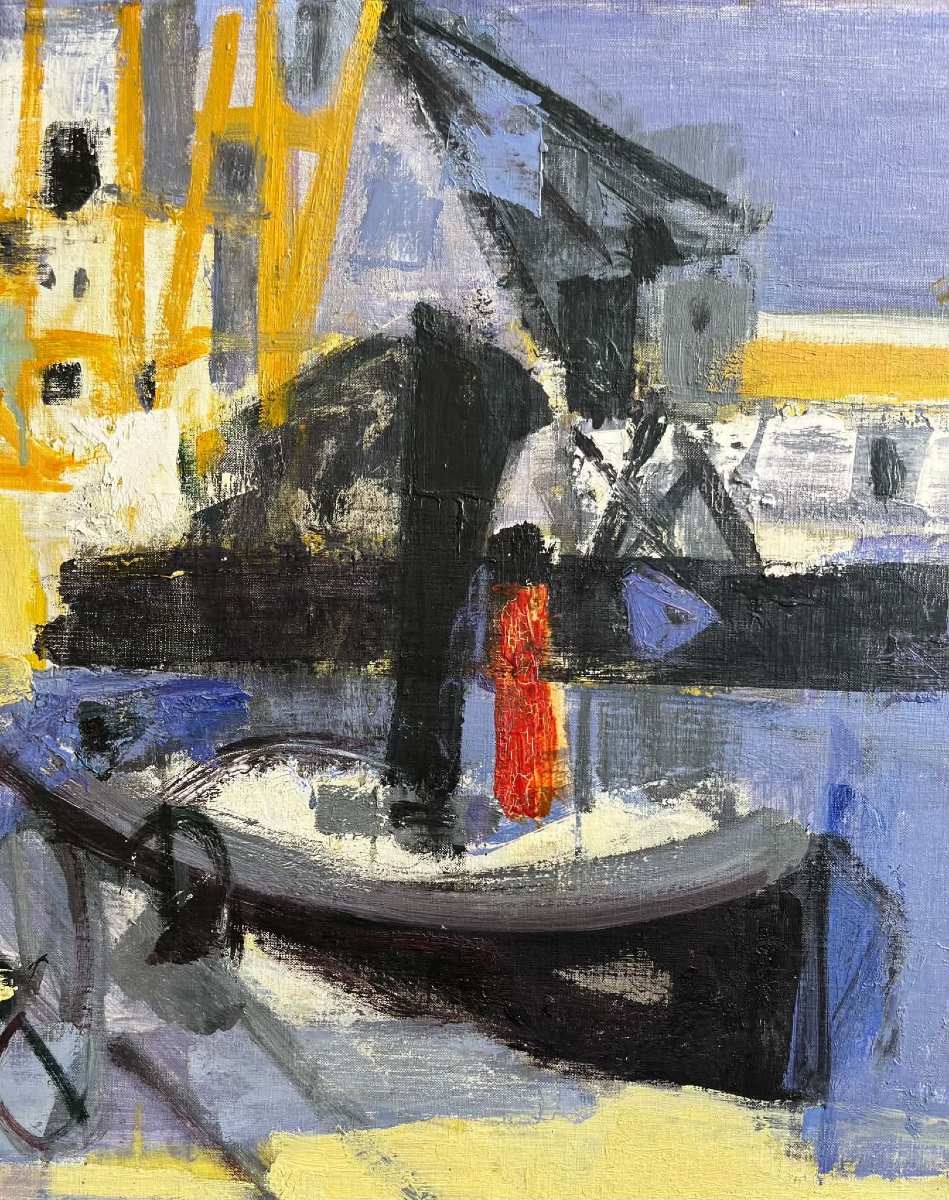


Maurice-elie Sarthou (1911 – 1999) The Canal (tugboat In A Violet Sky) Oil / Canvas 54x73 Cm
Maurice-Elie SARTHOU (Bayonne 1911 – Paris 1999)
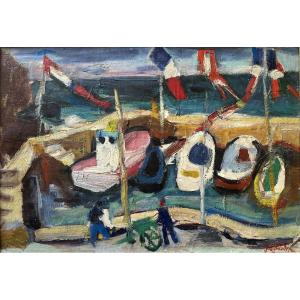
The Canal (Tugboat in a Violet Sky)
Oil on canvas, signed lower right and titled on the back
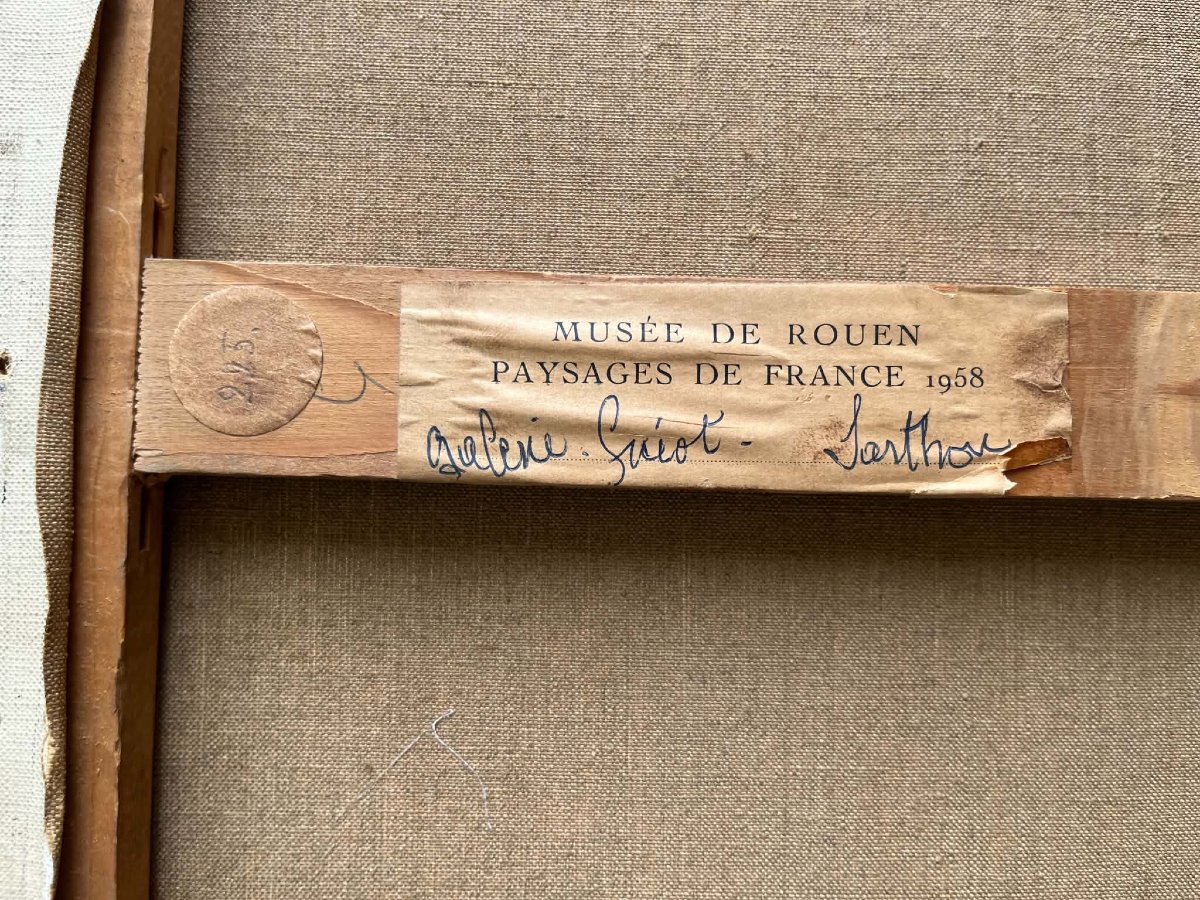
Exhibition label on the back: Rouen Museum, Landscapes of France, 1958
Dimensions: 54 x 73 cm
Sold unframed
His friend Picasso called him “the painter of light.” A member of the Nouvelle École de Paris, Maurice-Elie Sarthou (1911–1999) created landscapes of great sensuality—among others beaches, ponds, and splendid fires—blending figuration and abstraction. After studying at the Beaux-Arts in Montpellier and then in Paris, he settled in Bordeaux in 1937 and became a member of the Société des Indépendants Bordelais, which regularly organized exhibitions of Parisian artists (Bissière, Lhote, etc.). This artistic competition allowed him to develop his own style, which was rather realistic early in his career—a period during which he enjoyed painting the Basque coast and the Arcachon Basin (1937–1950). Sarthou moved to Paris in 1950, where he was appointed art teacher at the Lycée Henri-IV, which allowed him to exhibit in the capital’s art salons and gain greater recognition .François Desnoyer, whom he met in 1951 at the Salon de Mai, introduced him to the Parisian art dealer Marcel Guiot, with whom he developed a friendship; beginning in 1955, Sarthou exhibited his new works very regularly at Marcel Guiot’s gallery, to which he remained loyal. This did not prevent him from holding numerous other solo exhibitions in France and abroad. He also participated in many art shows: Salon de Mai; Salon d’Automne, which paid tribute to Sarthou in 1979; Salon Comparaisons; “Painters as Witnesses of Their Time”; the Group of 109; the Grand Prix at the Menton Biennale; the Yvelines Biennale, etc. In 1952, he settled in Sète. In 1958, he gave up teaching art to devote himself entirely to his painting. In 1961, Jean-Albert Cartier organized an exhibition titled “Ten French Painters Around Jacques Villon” at the Palais de la Méditerranée in Nice. This exhibition was subsequently shown at the Museum of Fine Arts in Nancy, in Tours, and in Luxembourg. In Arles, he met Michel Tournier, who wrote several pieces about him, including a preface for the exhibition at the Findlay Gallery in New York in 1974. In 1966, he illustrated Paul Valéry’s *Regards*sur la mer, followed in 1967 by Arthur Rimbaud’s *Le Bateau ivre*. On September 25, 1972, filming began for the FR3 Toulouse documentary *Sarthou, or the Painterof the Elements*, directed by Josée Dayan. In 1976, he was part of the French delegation for the traveling exhibition in Japan titled “Selection from the Paris Salon d’Automne: ‘Contemporary Masters.’” His plane trip over the North Pole inspired a new theme: the pack ice. In 1977, at the opening of the Centre Georges-Pompidou, one of the preparatory wash drawings for his canvas *Les Dunes* (1971) was exhibited in the drawings gallery; the painting had been acquired by the French government. Maurice-Élie Sarthou creates sensory painting; he straddles the line between figuration and abstraction. In the preface to the exhibition“Sarthou” at the Paul-Valéry Museum in Sète in 1973, it is written:“From Villon’s work, he captured the essence: the lyrical vision of nature, expressed through colorful geometry, stemming from Orphism and the Golden Section. Villon, incidentally, was very fond of his painting: he told me so on several occasions, and I am happy to bear witness to it… Picasso said: ‘It takes a long time to become young.’ Sarthou was fortunate enough to experience—or rediscover—the fire of adolescence at an age when others become set in their ways. He possesses its spontaneity and ardor, without the clumsiness. Instinct, no doubt, gives rise to the bursts, splatters, streaks, and drips of paint that sometimes make his paintings resemble the finest examples of gestural Tachism, but instinct alone would not suffice. Here comes into play the reference—distant, intuitive, yet constant—to nature.”
The Canal (Tugboat in a Violet Sky)
Oil on canvas, signed lower right and titled on the back
Exhibition label on the back: Rouen Museum, Landscapes of France, 1958
Dimensions: 54 x 73 cm
Sold unframed
His friend Picasso called him “the painter of light.” A member of the Nouvelle École de Paris, Maurice-Elie Sarthou (1911–1999) created landscapes of great sensuality—among others beaches, ponds, and splendid fires—blending figuration and abstraction. After studying at the Beaux-Arts in Montpellier and then in Paris, he settled in Bordeaux in 1937 and became a member of the Société des Indépendants Bordelais, which regularly organized exhibitions of Parisian artists (Bissière, Lhote, etc.). This artistic competition allowed him to develop his own style, which was rather realistic early in his career—a period during which he enjoyed painting the Basque coast and the Arcachon Basin (1937–1950). Sarthou moved to Paris in 1950, where he was appointed art teacher at the Lycée Henri-IV, which allowed him to exhibit in the capital’s art salons and gain greater recognition .François Desnoyer, whom he met in 1951 at the Salon de Mai, introduced him to the Parisian art dealer Marcel Guiot, with whom he developed a friendship; beginning in 1955, Sarthou exhibited his new works very regularly at Marcel Guiot’s gallery, to which he remained loyal. This did not prevent him from holding numerous other solo exhibitions in France and abroad. He also participated in many art shows: Salon de Mai; Salon d’Automne, which paid tribute to Sarthou in 1979; Salon Comparaisons; “Painters as Witnesses of Their Time”; the Group of 109; the Grand Prix at the Menton Biennale; the Yvelines Biennale, etc. In 1952, he settled in Sète. In 1958, he gave up teaching art to devote himself entirely to his painting. In 1961, Jean-Albert Cartier organized an exhibition titled “Ten French Painters Around Jacques Villon” at the Palais de la Méditerranée in Nice. This exhibition was subsequently shown at the Museum of Fine Arts in Nancy, in Tours, and in Luxembourg. In Arles, he met Michel Tournier, who wrote several pieces about him, including a preface for the exhibition at the Findlay Gallery in New York in 1974. In 1966, he illustrated Paul Valéry’s *Regards*sur la mer, followed in 1967 by Arthur Rimbaud’s *Le Bateau ivre*. On September 25, 1972, filming began for the FR3 Toulouse documentary *Sarthou, or the Painterof the Elements*, directed by Josée Dayan. In 1976, he was part of the French delegation for the traveling exhibition in Japan titled “Selection from the Paris Salon d’Automne: ‘Contemporary Masters.’” His plane trip over the North Pole inspired a new theme: the pack ice. In 1977, at the opening of the Centre Georges-Pompidou, one of the preparatory wash drawings for his canvas *Les Dunes* (1971) was exhibited in the drawings gallery; the painting had been acquired by the French government. Maurice-Élie Sarthou creates sensory painting; he straddles the line between figuration and abstraction. In the preface to the exhibition“Sarthou” at the Paul-Valéry Museum in Sète in 1973, it is written:“From Villon’s work, he captured the essence: the lyrical vision of nature, expressed through colorful geometry, stemming from Orphism and the Golden Section. Villon, incidentally, was very fond of his painting: he told me so on several occasions, and I am happy to bear witness to it… Picasso said: ‘It takes a long time to become young.’ Sarthou was fortunate enough to experience—or rediscover—the fire of adolescence at an age when others become set in their ways. He possesses its spontaneity and ardor, without the clumsiness. Instinct, no doubt, gives rise to the bursts, splatters, streaks, and drips of paint that sometimes make his paintings resemble the finest examples of gestural Tachism, but instinct alone would not suffice. Here comes into play the reference—distant, intuitive, yet constant—to nature.”
1 200 €
Period: 20th century
Style: Modern Art
Condition: Excellent condition
Material: Oil painting
Width: 73
Height: 54
Reference (ID): 1782751
Availability: In stock
Print