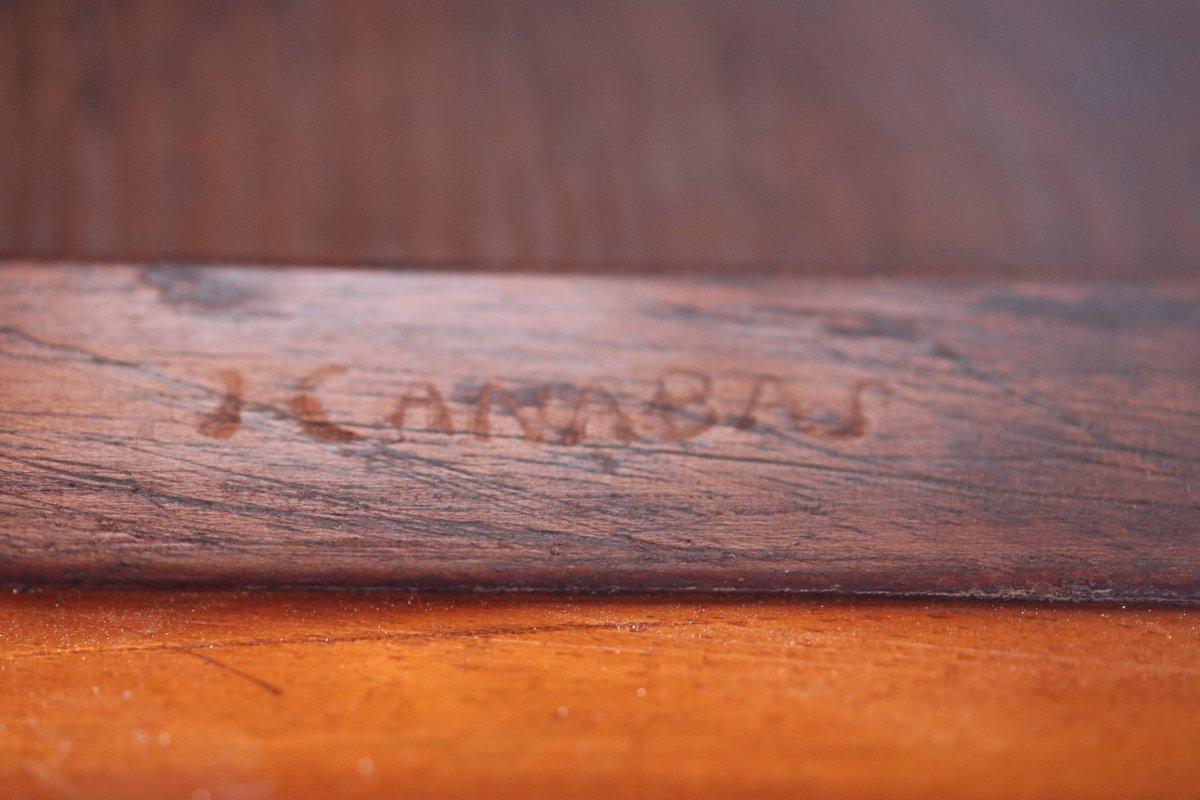
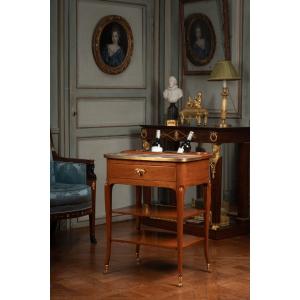


Vintage Transition-era Ice Bucket, Stamped “canabas”
Artist: Canabas
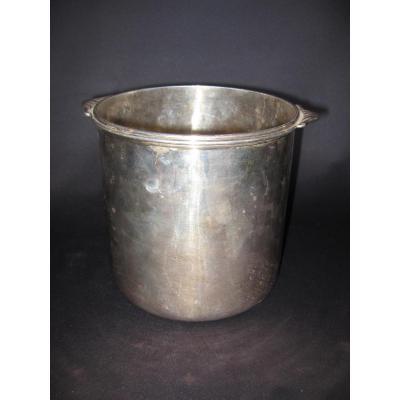
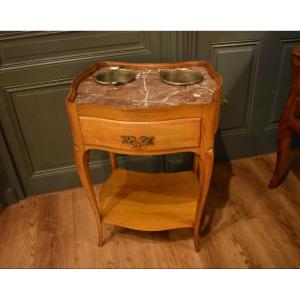
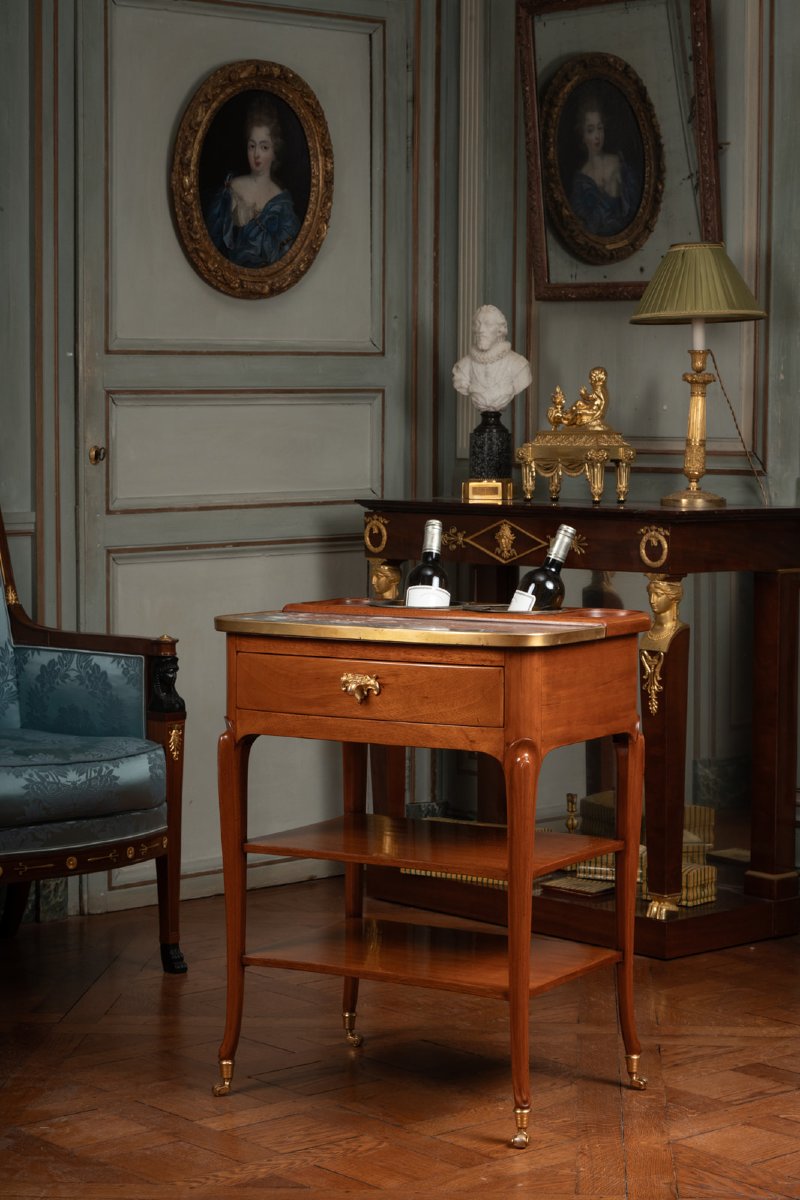
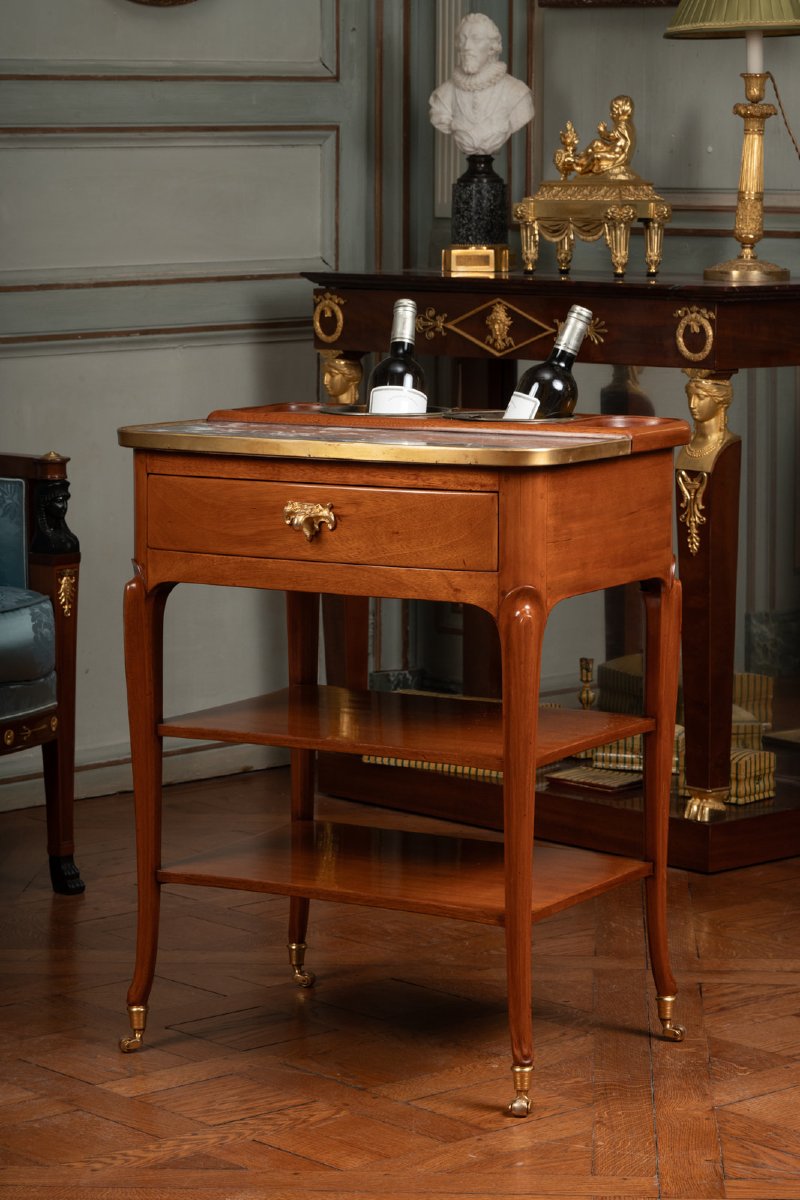
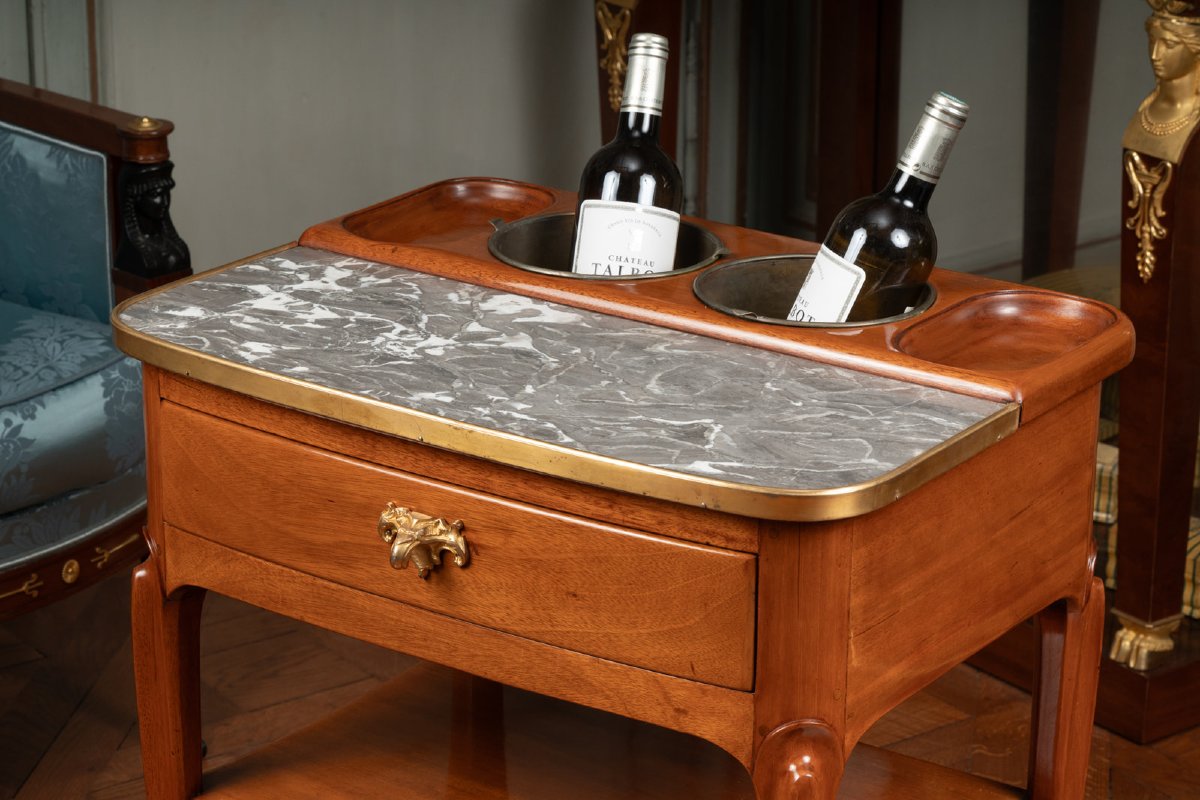
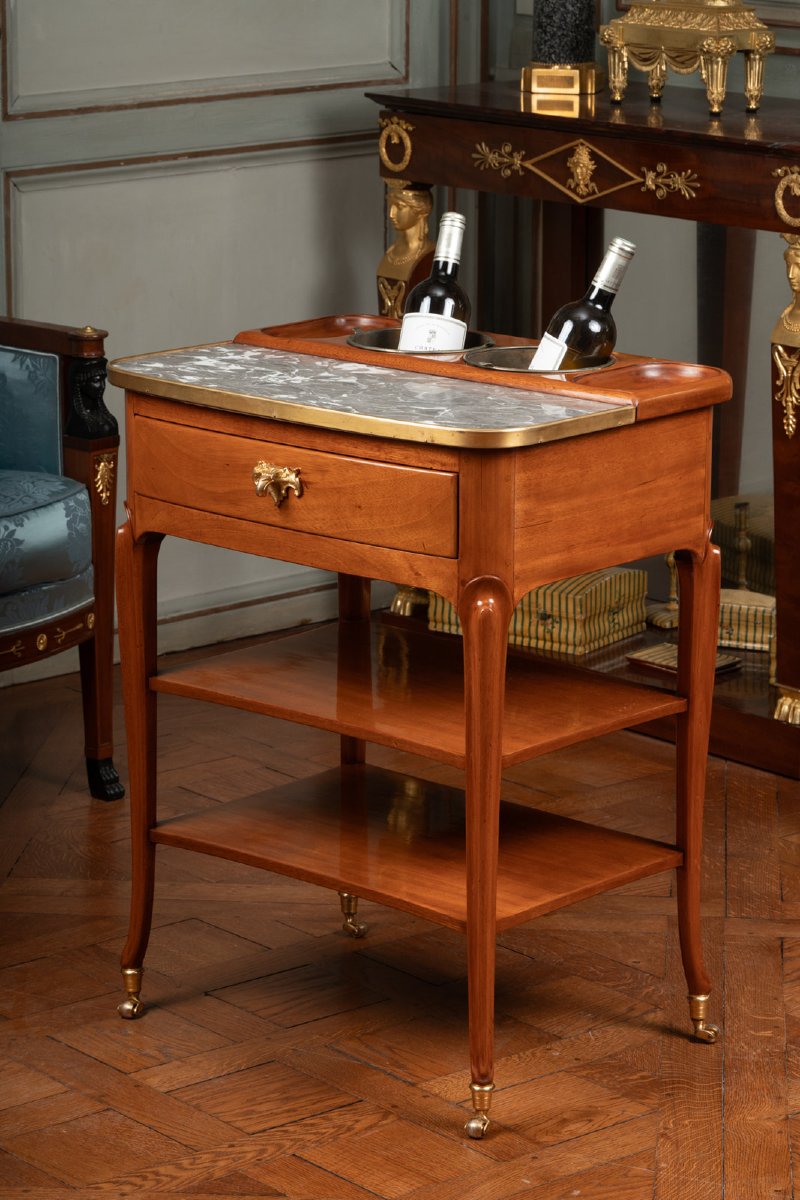
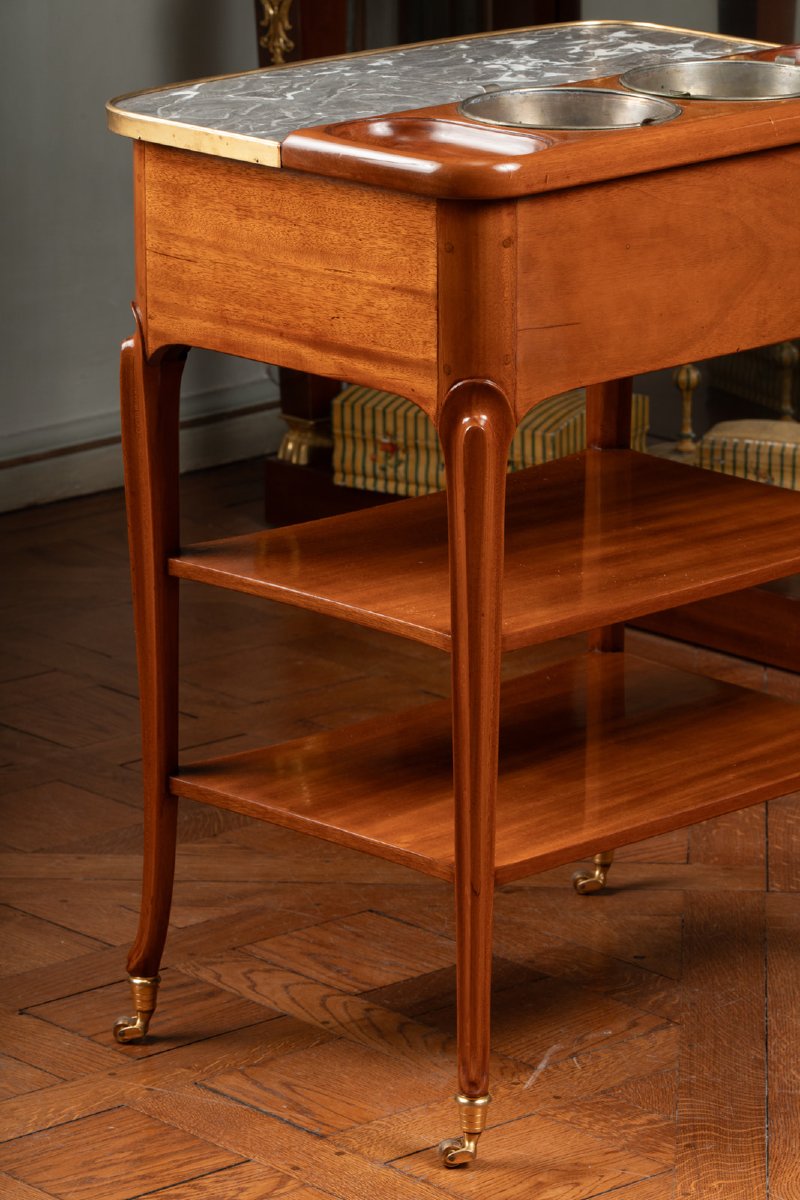
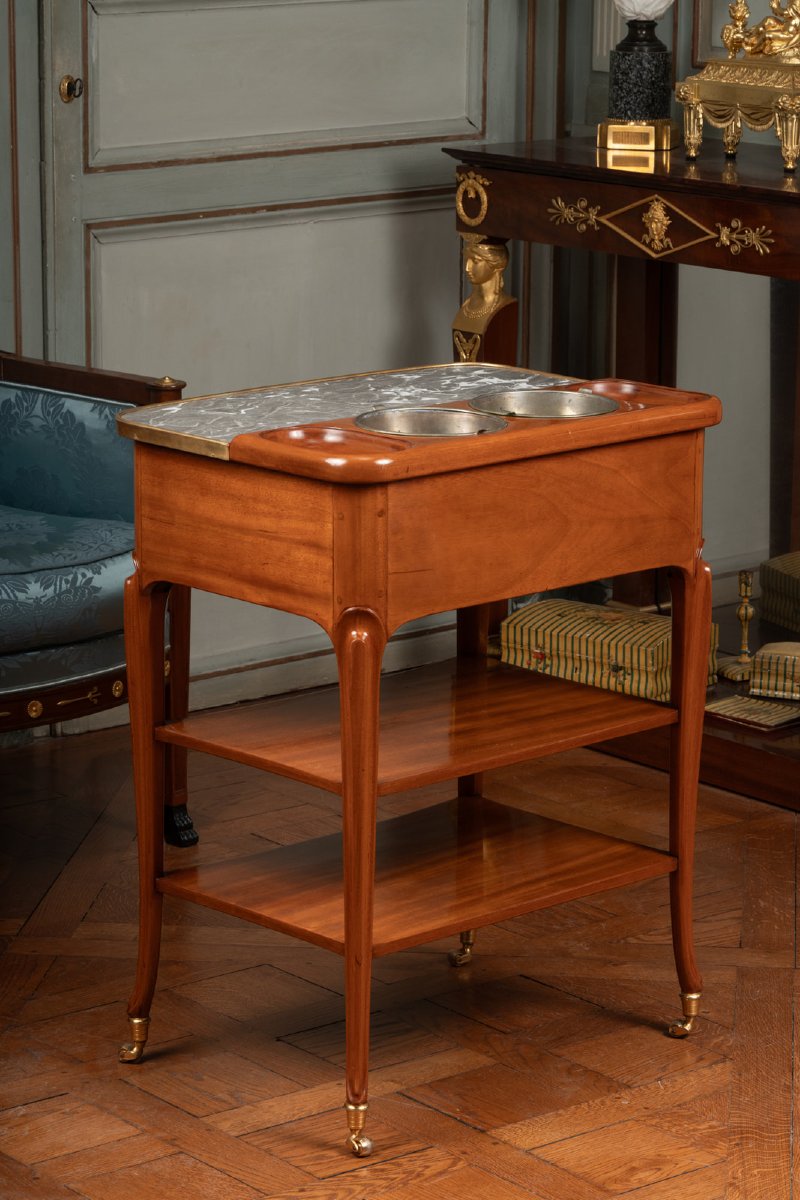
The cooler opens with a drawer and rests on four tapered, elegantly hollowed-out legs, joined by two crossbars. Crafted from Cuban mahogany and gray Ardennes marble, it features a gilded bronze ingot mold that echoes the chiseled, foliage-adorned handle of the drawer and the casters. The top is fitted with two silver-plated metal buckets.
Transitional Period
Restored to working condition
Dimensions: 78.5 x 56 x 51 cm
Joseph Gengenbach, known as Canabas (1715–1797), obtained his master’s certificate on April 1, 1766. Of German origin, Canabas—whose real name was Joseph Gengenbach—arrived in Paris in the 1740s. Both a cabinetmaker and a carpenter, he worked with both veneer and solid wood.
At that time, his talents were employed by famous cabinetmakers such as Jean-François Oeben and Pierre Migeon, while he worked as a privileged craftsman on Rue de Charonne. The ledger of the latter—who was also a merchant—documents the furniture deliveries made by Canabas up until 1761.
Once he obtained his master’s certificate, he established his business on the Grande Rue du Faubourg Saint-Antoine, serving a private clientele and several renowned merchants, such as the Presle brothers.
Canabas established himself as a specialist in fanciful, practical, and often innovatively designed furniture. He thus produced a large number of small, meticulously crafted pieces throughout his career. His style is highly distinctive: he used mahogany of rare quality—as in our wine cooler—with a remarkable color and very fine grain, and he distinguished himself through the perfection of his cabinetmaking. Extreme simplicity is the hallmark of his work, leaving room for decoration only in the form of a few discreet moldings. Bronze accents are often virtually absent.
Some models belong to the Transition style, still featuring slightly curved legs. But the majority of them belong to the Louis XVI style. They are meticulously designed for specific uses.
Among the first in France, Canabas designed furniture intended for use during meals or gatherings in the absence of servants—lightweight pieces that were easy to move, most often equipped with casters. The most typical examples exist in fairly large numbers: the refreshment stand, the guéridon, the music stand, the “silent servant” or “servante,” the reading table, and the jardinière.
After the Revolution, prosperity returned to Canabas until his death during the Directory.
At the time of his estate sale, according to posters and notices, his workshop still contained a whole range of “secretaries, chests of drawers, pedestal tables, desks, sliding and glide-leg tables, cylinder-style nightstands, console tables, men’s and women’s dressing tables, linen chests, office chairs, and other items, mostly made of solid mahogany, adorned with brass, and in the finest taste.”
Finally, it should be noted that one example is preserved in the porcelain cabinet at the Hôtel Nissim de Camondo (see S. Legrand-Rossi, *Le Mobilier du Musée Nissim de Camondo*, Éditions Faton, 2009, p. 65), while a pair is held in the collections of the Louvre Museum (INV. OA 11773-OA 11774).
BIBLIOGRAPHY
French Furniture of the 18th Century - Pierre Kjellberg - Les Editions de l'Amateur - 1989
18th-Century Cabinetmakers - Count François de Salverte - Les éditions d'Art et d'Histoire - 1934
The Art and Style of the French Master Cabinetmakers of the 18th Century - Nicolay Jean - Pygmalion - 1976
Transitional Period
Restored to working condition
Dimensions: 78.5 x 56 x 51 cm
Joseph Gengenbach, known as Canabas (1715–1797), obtained his master’s certificate on April 1, 1766. Of German origin, Canabas—whose real name was Joseph Gengenbach—arrived in Paris in the 1740s. Both a cabinetmaker and a carpenter, he worked with both veneer and solid wood.
At that time, his talents were employed by famous cabinetmakers such as Jean-François Oeben and Pierre Migeon, while he worked as a privileged craftsman on Rue de Charonne. The ledger of the latter—who was also a merchant—documents the furniture deliveries made by Canabas up until 1761.
Once he obtained his master’s certificate, he established his business on the Grande Rue du Faubourg Saint-Antoine, serving a private clientele and several renowned merchants, such as the Presle brothers.
Canabas established himself as a specialist in fanciful, practical, and often innovatively designed furniture. He thus produced a large number of small, meticulously crafted pieces throughout his career. His style is highly distinctive: he used mahogany of rare quality—as in our wine cooler—with a remarkable color and very fine grain, and he distinguished himself through the perfection of his cabinetmaking. Extreme simplicity is the hallmark of his work, leaving room for decoration only in the form of a few discreet moldings. Bronze accents are often virtually absent.
Some models belong to the Transition style, still featuring slightly curved legs. But the majority of them belong to the Louis XVI style. They are meticulously designed for specific uses.
Among the first in France, Canabas designed furniture intended for use during meals or gatherings in the absence of servants—lightweight pieces that were easy to move, most often equipped with casters. The most typical examples exist in fairly large numbers: the refreshment stand, the guéridon, the music stand, the “silent servant” or “servante,” the reading table, and the jardinière.
After the Revolution, prosperity returned to Canabas until his death during the Directory.
At the time of his estate sale, according to posters and notices, his workshop still contained a whole range of “secretaries, chests of drawers, pedestal tables, desks, sliding and glide-leg tables, cylinder-style nightstands, console tables, men’s and women’s dressing tables, linen chests, office chairs, and other items, mostly made of solid mahogany, adorned with brass, and in the finest taste.”
Finally, it should be noted that one example is preserved in the porcelain cabinet at the Hôtel Nissim de Camondo (see S. Legrand-Rossi, *Le Mobilier du Musée Nissim de Camondo*, Éditions Faton, 2009, p. 65), while a pair is held in the collections of the Louvre Museum (INV. OA 11773-OA 11774).
BIBLIOGRAPHY
French Furniture of the 18th Century - Pierre Kjellberg - Les Editions de l'Amateur - 1989
18th-Century Cabinetmakers - Count François de Salverte - Les éditions d'Art et d'Histoire - 1934
The Art and Style of the French Master Cabinetmakers of the 18th Century - Nicolay Jean - Pygmalion - 1976
14 500 €
Period: 18th century
Style: Louis 15th - Transition
Condition: Condition of use
Material: Mahogany
Reference (ID): 1782646
Availability: In stock
Print