THIS OBJECT WAS SOLD
A Consulate-era Frame With Rich Neoclassical Decoration In The Style Of Percier And Fontaine.
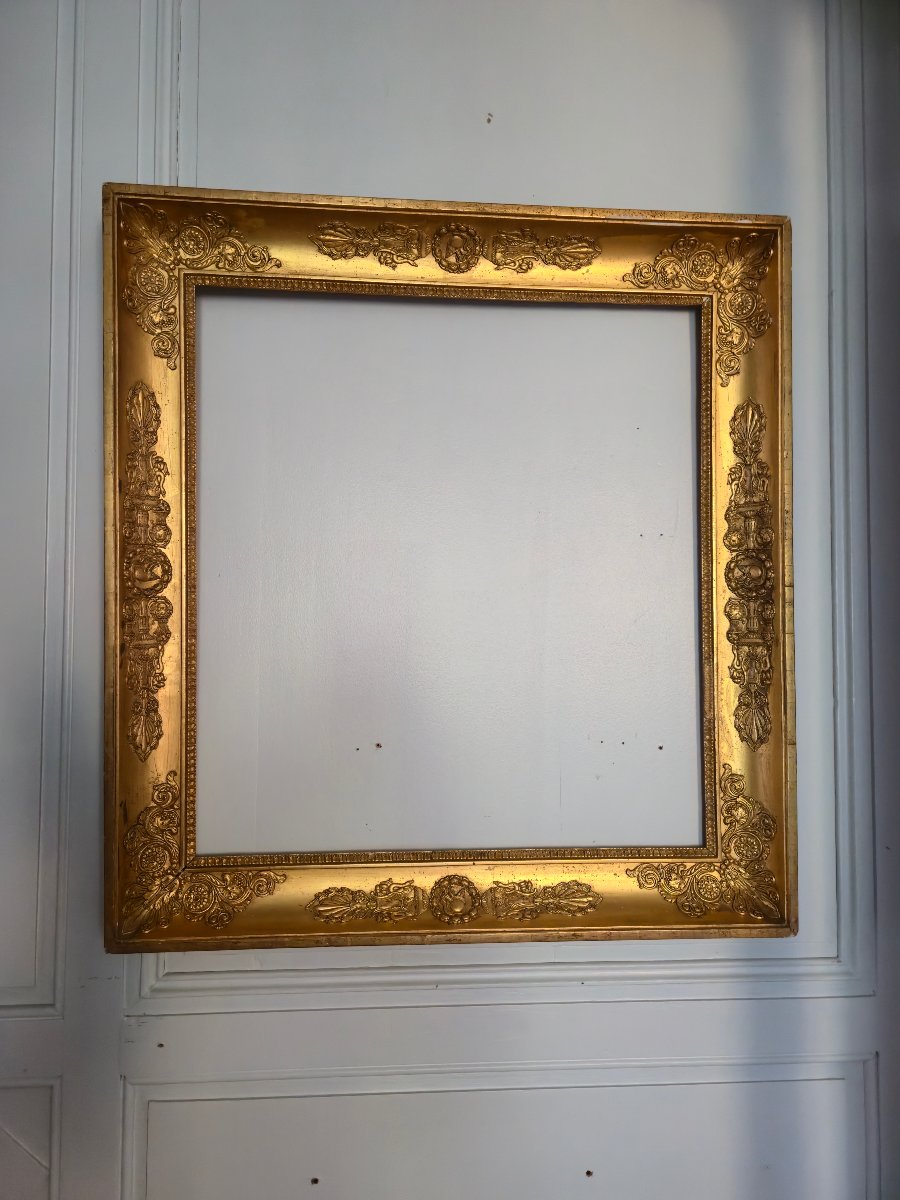
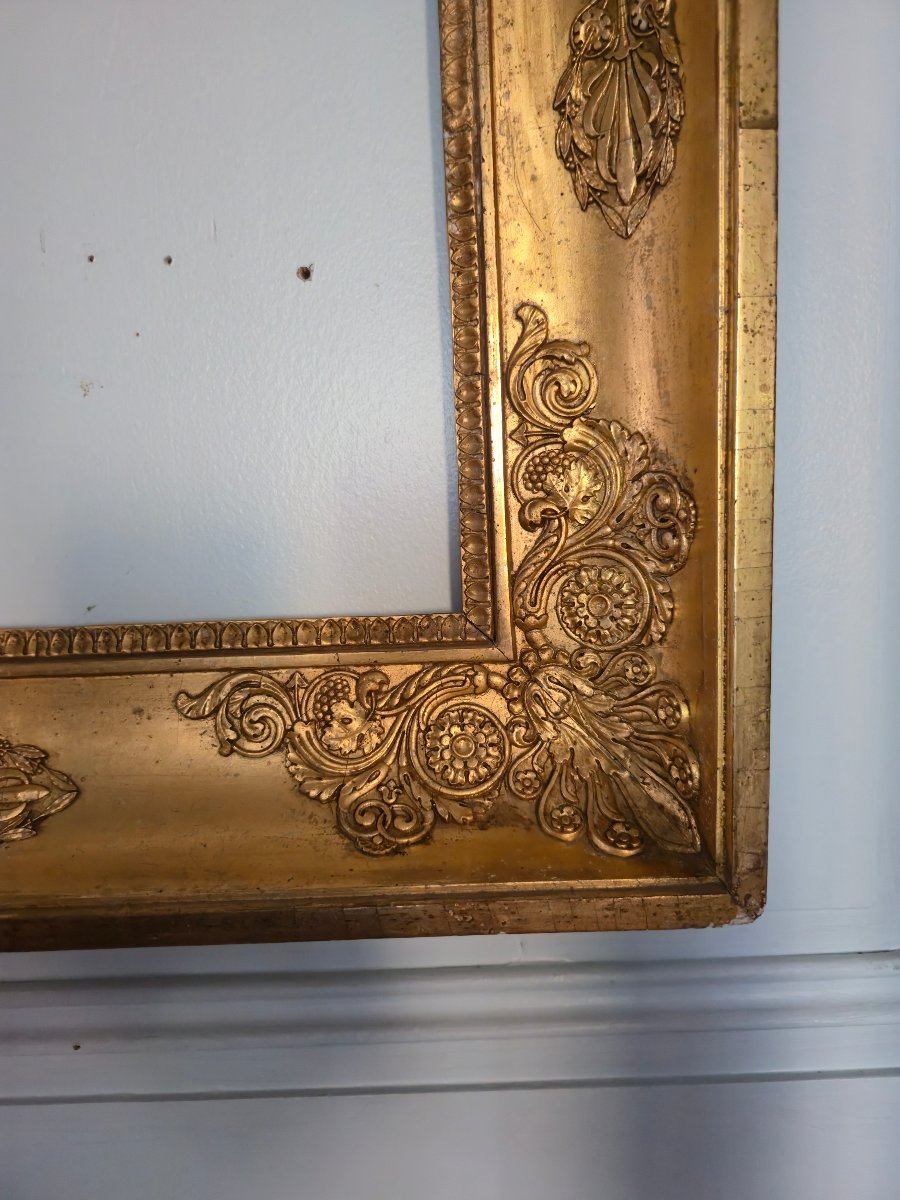
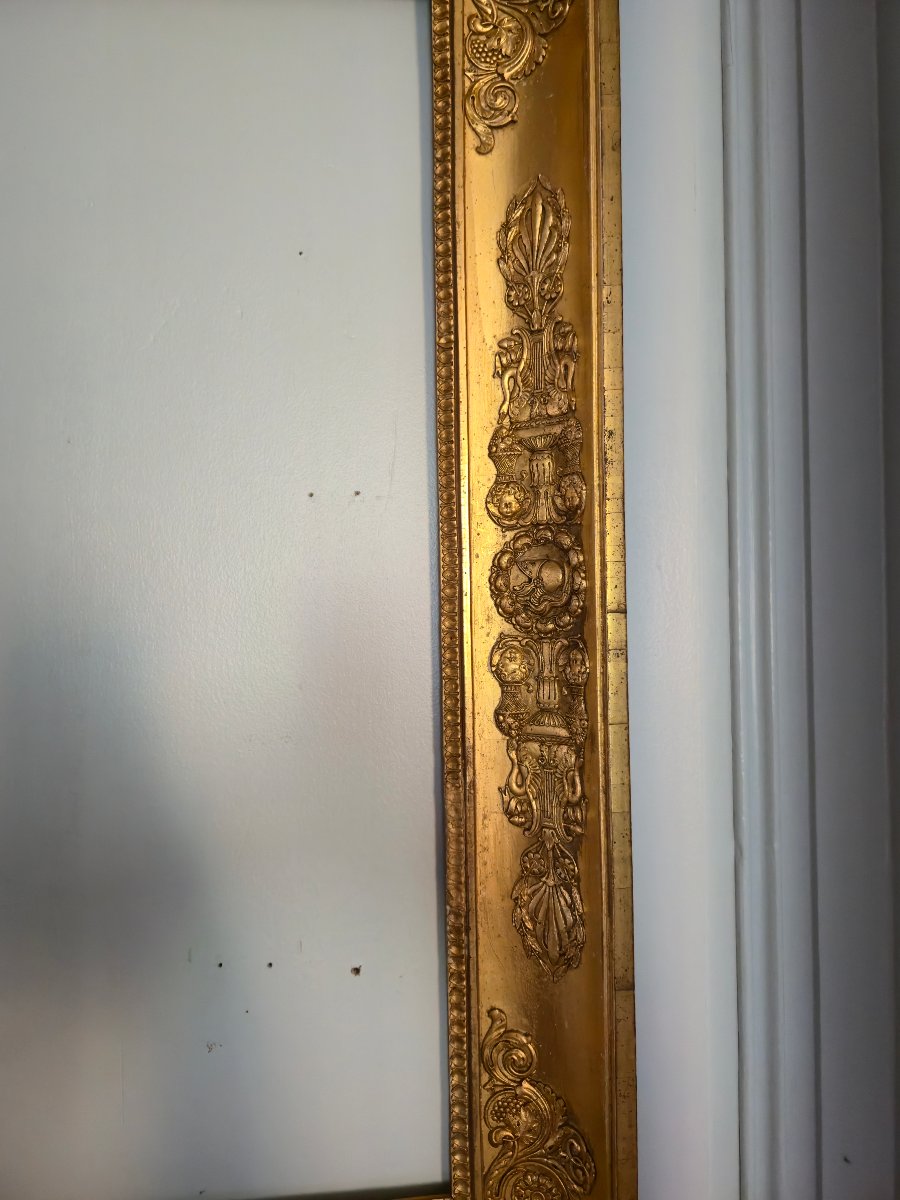
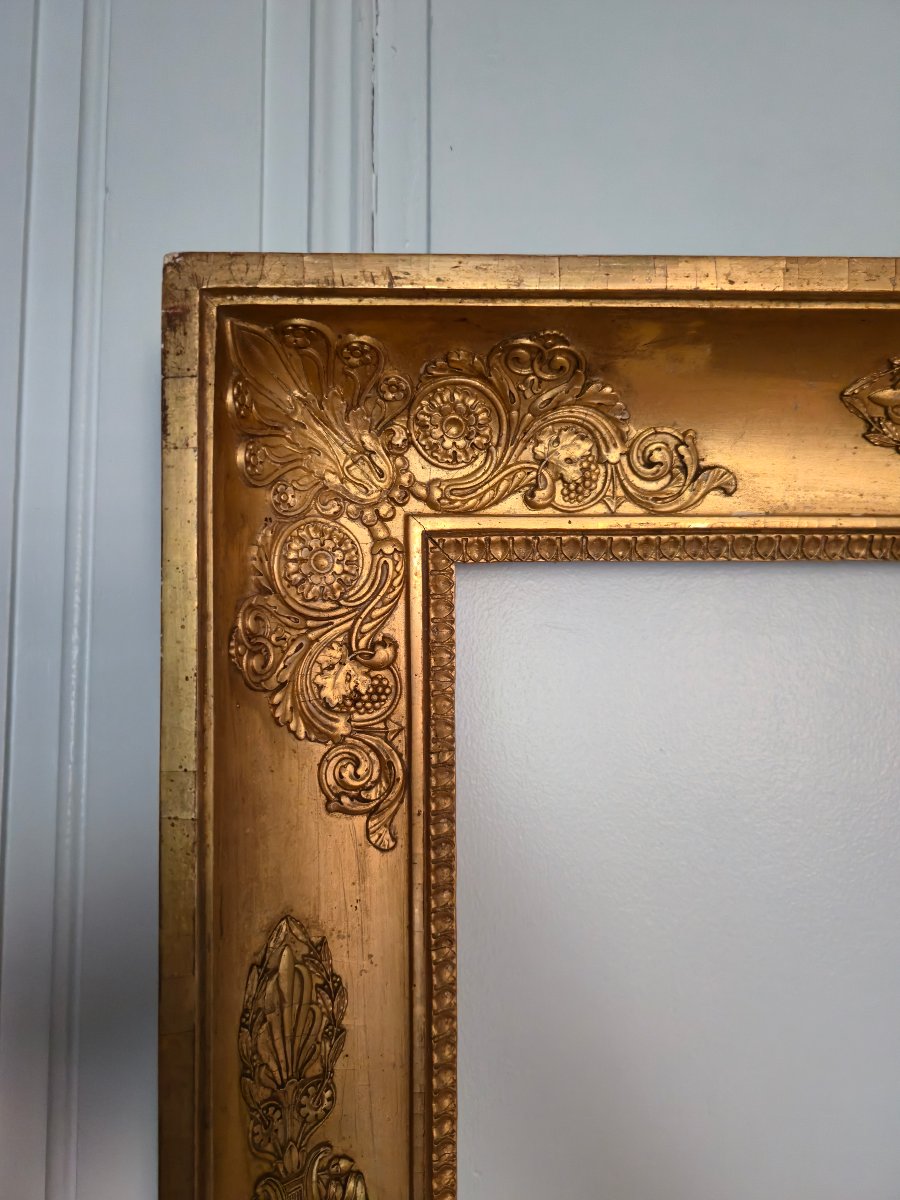
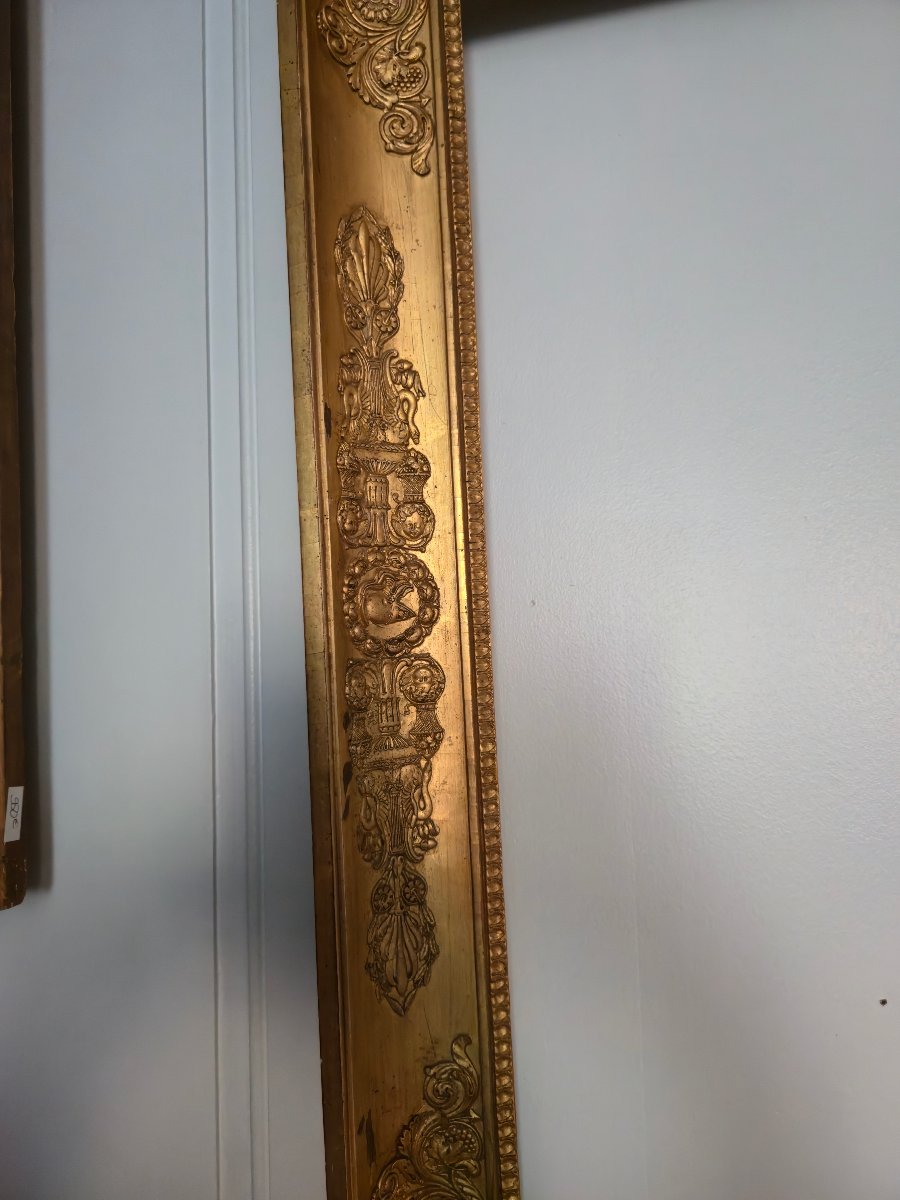
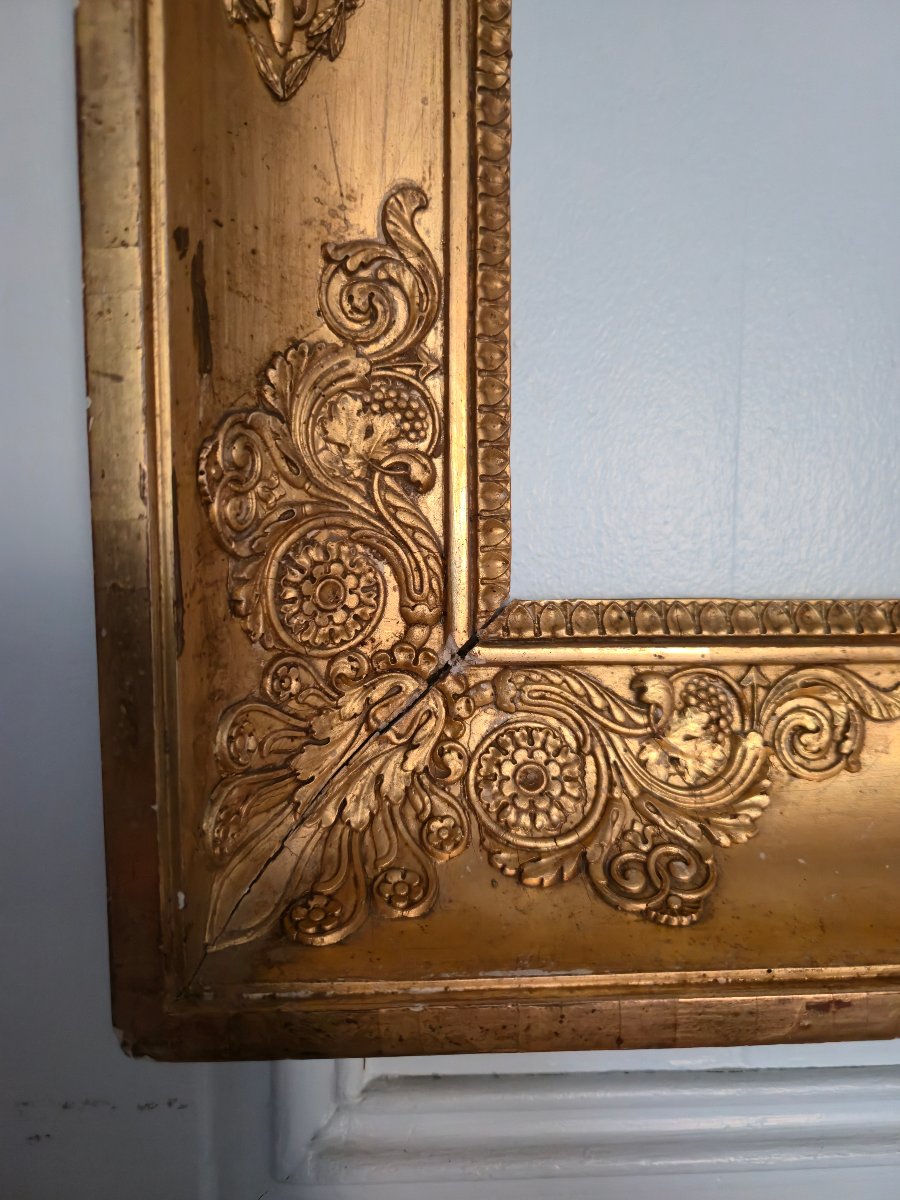
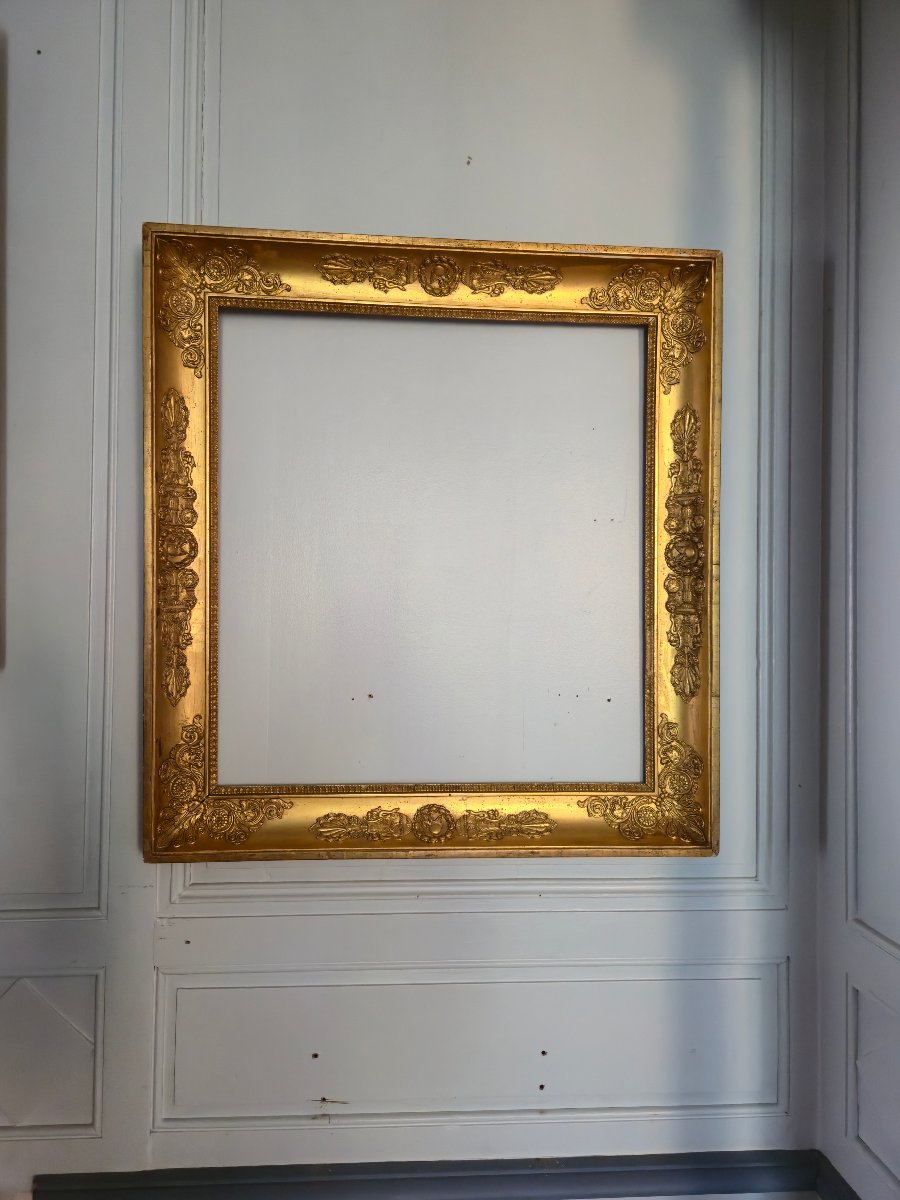


An elegant Consulate-period frame in wood and gilded stucco, made around 1800, notable for the richness of its ornamentation and the quality of its craftsmanship.
With its highly developed decorative vocabulary, this frame is fully in keeping with the great artistic revival that marked the late 18th century and the early 19th century. It belongs to this transitional period that saw the last vestiges of the Louis XVI style gradually fade away in favor of a new aesthetic directly inspired by Greco-Roman antiquity. Its decoration immediately evokes the world of the architects Charles Percier (1764–1838) and Pierre-François-Léonard Fontaine (1762–1853), major figures in the birth of the Consulate style and later the Empire style.
After their stay in Rome, Percier and Fontaine helped spread throughout France a vast repertoire of forms and ornaments borrowed from ancient architecture, from Roman bas-reliefs, the rediscovered monuments of Herculaneum and Pompeii, as well as the major collections of ornamentation published at the end of the 18th century. As Jean-Pierre Samoyault notes in his seminal work *Mobilier français Consulat et Empire* (Éditions Gourcuff Gradenigo), the designers of this generation developed a vocabulary based on lyres, palmettes, trophies, swans, putti, crowns, foliage, acanthus leaves, rosettes, and other motifs inspired by antiquity. This frame constitutes a remarkable synthesis of this decorative universe.
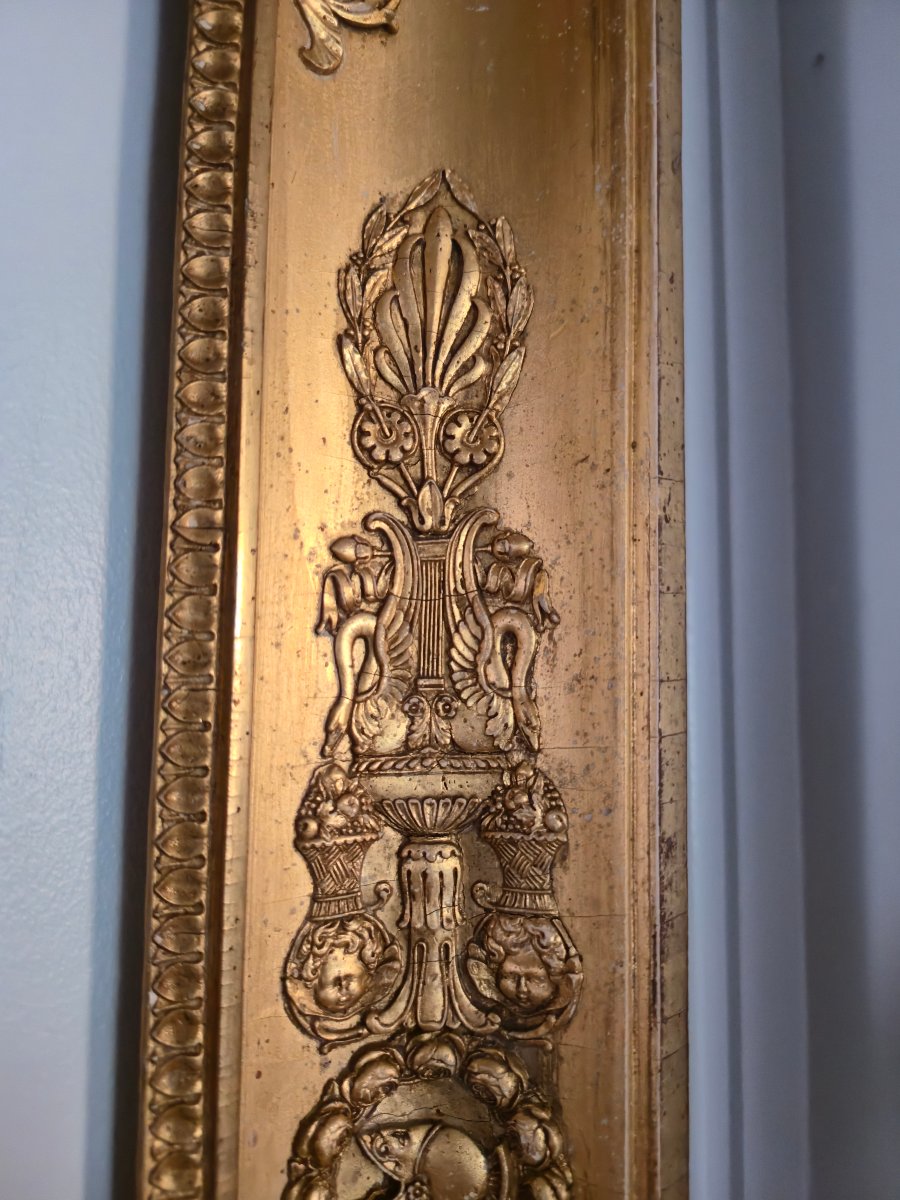
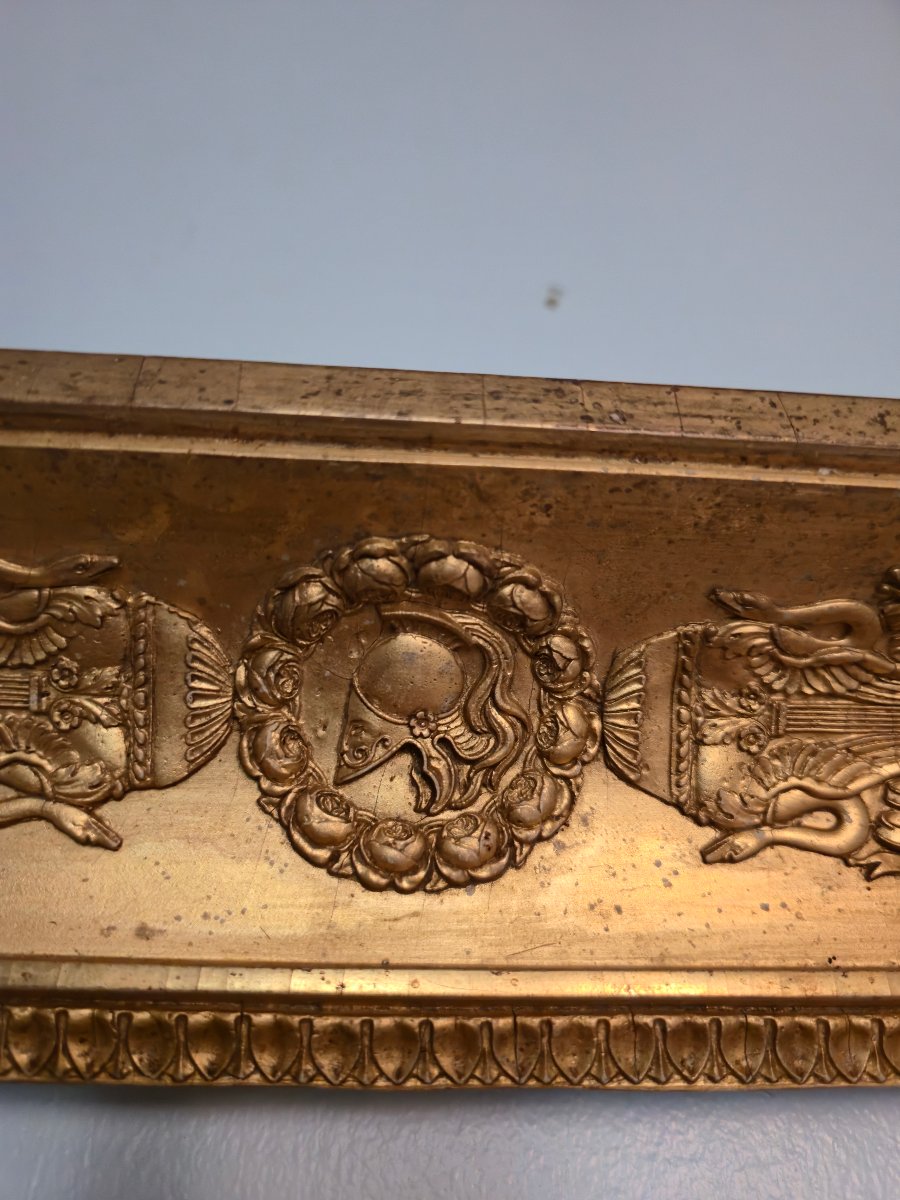
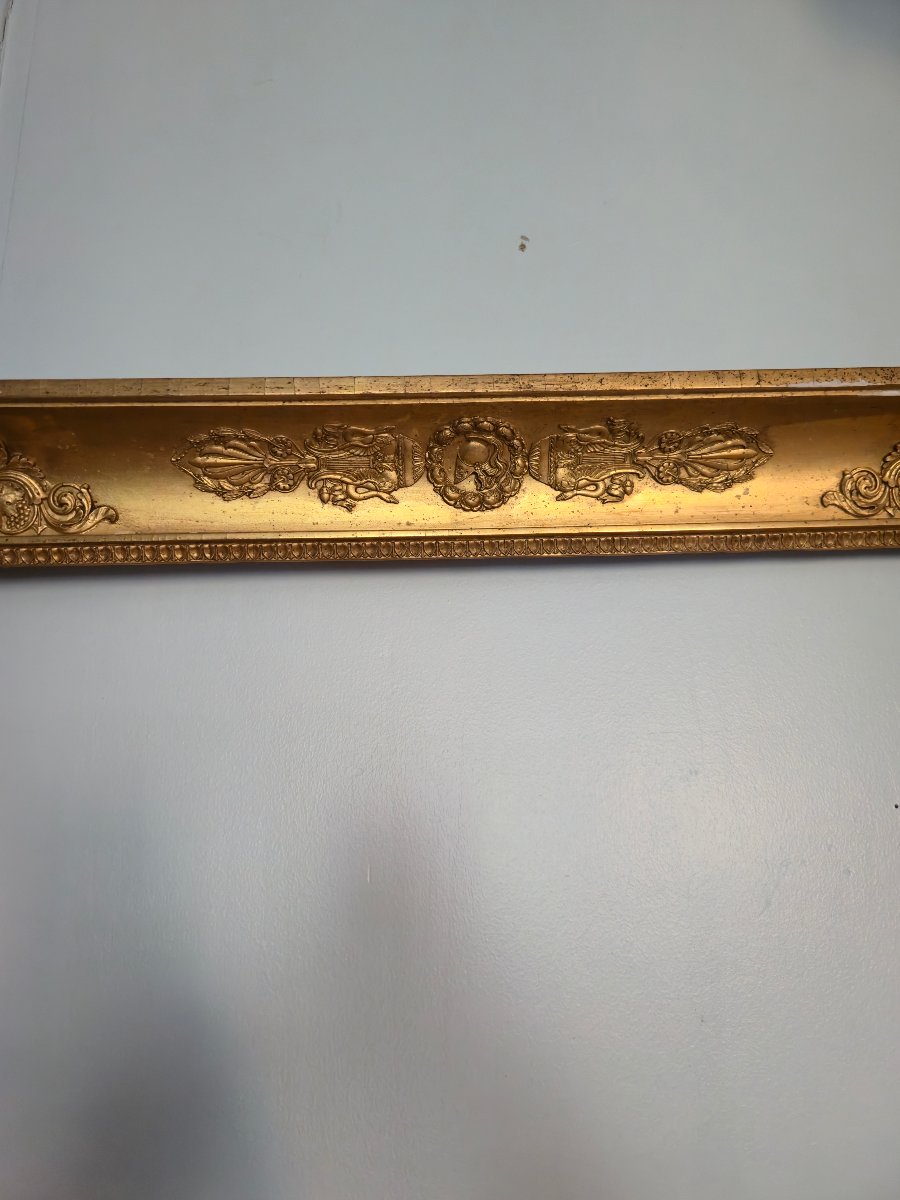
The ornamentation is organized according to a principle of rigorous symmetry, characteristic of the neoclassical style. Each of the four sides is centered by a large sculpted trophy consisting of an elegant fluted lyre, a traditional attribute of Apollo and a symbol of the arts, poetry, and harmony. This is framed by two swans standing back-to-back—another reference to the god of the arts—resting on a fluted basin inspired by ancient models.
Above this ensemble rises a large, radiating palmette surrounded by leafy branches, an emblematic motif from the classical repertoire that was revived in the late 18th century. In the lower section, two heads of winged putti support richly woven baskets overflowing with fruit, a traditional symbol of prosperity, fertility, and abundance.
The crossbars are punctuated by medallions depicting ancient-style helmets or heroic headgear set within wreaths of roses. This particularly refined motif combines the idea of glory and heroic virtue with a delicate decorative treatment inspired by ancient cameos and medallions, which were highly prized during the Consulate.
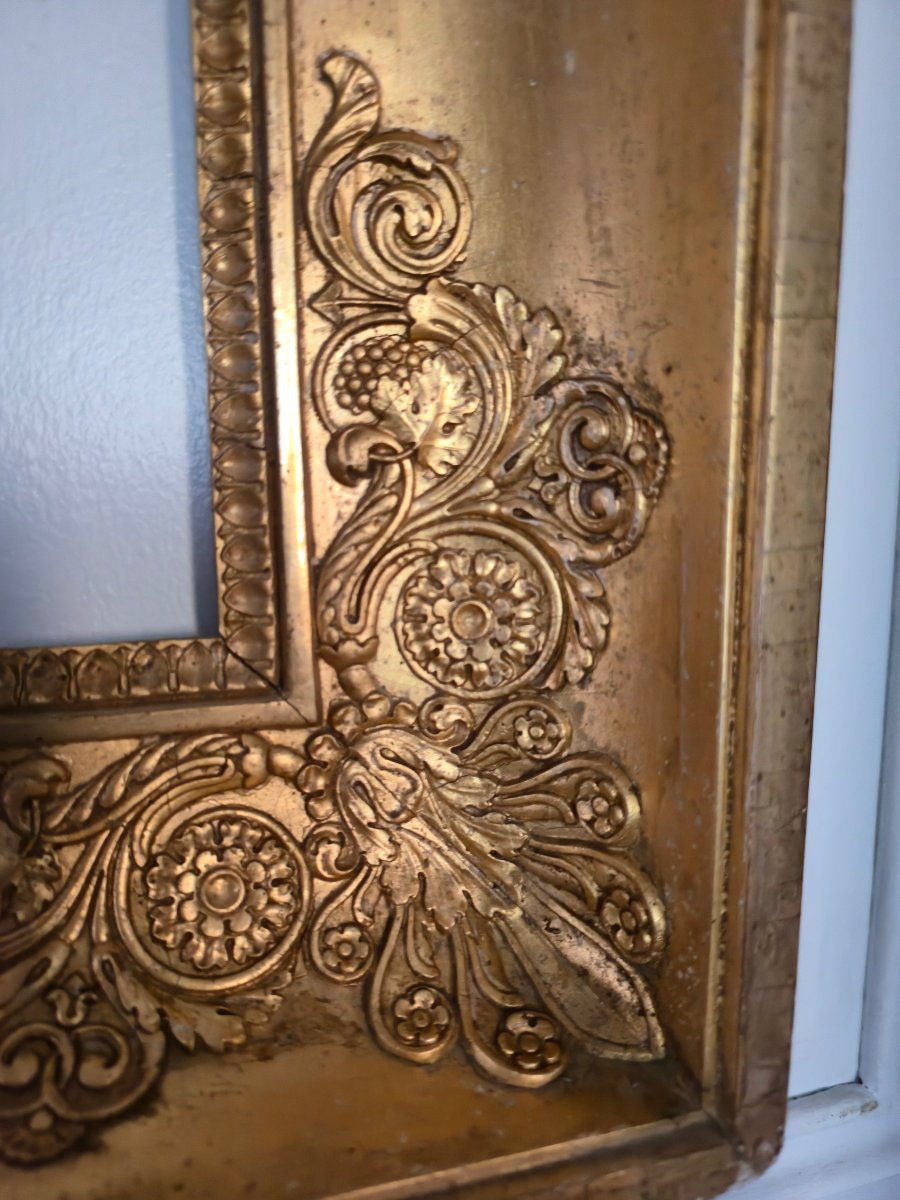
The corners, meanwhile, feature a particularly rich composition combining large palmettes, rosettes, foliage, stylized acanthus leaves, plant scrolls, vine leaves, and grape clusters. Their design evokes more a fragment of interior architecture or monumental decor than a simple frame ornament. This decorative abundance directly recalls the ornament collections published at the same time by Percier and Fontaine, as well as the plates reproduced and studied by Jean-Pierre Samoyault in Mobilier français Consulat et Empire.
The opening is framed by a delicate continuous frieze of finely carved water leaves, another motif inherited from ancient architecture that elegantly highlights the artwork intended to be displayed within this frame.
Beyond its primary function, this frame stands as a true testament to the aesthetics of the Consulate period. It perfectly illustrates the moment when French artists, inspired by archaeological discoveries and travels to Italy, developed a new decorative language based on the study of Antiquity but adapted to modern tastes. The exceptional richness of its iconography, combining the arts, harmony, prosperity, abundance, and heroic virtues, makes it a particularly representative example of the most ambitious ornamental explorations of this period.
The frame retains its original antique gilding, which has a beautiful patina and a pleasant sheen. It shows the normal wear and signs of age expected for a work over two centuries old, with no significant restoration or major damage. It is key-mounted on the reverse and has not been recut.
Image dimensions: 61 x 56 cm
Frame dimensions: 77 x 72 cm
With its highly developed decorative vocabulary, this frame is fully in keeping with the great artistic revival that marked the late 18th century and the early 19th century. It belongs to this transitional period that saw the last vestiges of the Louis XVI style gradually fade away in favor of a new aesthetic directly inspired by Greco-Roman antiquity. Its decoration immediately evokes the world of the architects Charles Percier (1764–1838) and Pierre-François-Léonard Fontaine (1762–1853), major figures in the birth of the Consulate style and later the Empire style.
After their stay in Rome, Percier and Fontaine helped spread throughout France a vast repertoire of forms and ornaments borrowed from ancient architecture, from Roman bas-reliefs, the rediscovered monuments of Herculaneum and Pompeii, as well as the major collections of ornamentation published at the end of the 18th century. As Jean-Pierre Samoyault notes in his seminal work *Mobilier français Consulat et Empire* (Éditions Gourcuff Gradenigo), the designers of this generation developed a vocabulary based on lyres, palmettes, trophies, swans, putti, crowns, foliage, acanthus leaves, rosettes, and other motifs inspired by antiquity. This frame constitutes a remarkable synthesis of this decorative universe.
The ornamentation is organized according to a principle of rigorous symmetry, characteristic of the neoclassical style. Each of the four sides is centered by a large sculpted trophy consisting of an elegant fluted lyre, a traditional attribute of Apollo and a symbol of the arts, poetry, and harmony. This is framed by two swans standing back-to-back—another reference to the god of the arts—resting on a fluted basin inspired by ancient models.
Above this ensemble rises a large, radiating palmette surrounded by leafy branches, an emblematic motif from the classical repertoire that was revived in the late 18th century. In the lower section, two heads of winged putti support richly woven baskets overflowing with fruit, a traditional symbol of prosperity, fertility, and abundance.
The crossbars are punctuated by medallions depicting ancient-style helmets or heroic headgear set within wreaths of roses. This particularly refined motif combines the idea of glory and heroic virtue with a delicate decorative treatment inspired by ancient cameos and medallions, which were highly prized during the Consulate.
The corners, meanwhile, feature a particularly rich composition combining large palmettes, rosettes, foliage, stylized acanthus leaves, plant scrolls, vine leaves, and grape clusters. Their design evokes more a fragment of interior architecture or monumental decor than a simple frame ornament. This decorative abundance directly recalls the ornament collections published at the same time by Percier and Fontaine, as well as the plates reproduced and studied by Jean-Pierre Samoyault in Mobilier français Consulat et Empire.
The opening is framed by a delicate continuous frieze of finely carved water leaves, another motif inherited from ancient architecture that elegantly highlights the artwork intended to be displayed within this frame.
Beyond its primary function, this frame stands as a true testament to the aesthetics of the Consulate period. It perfectly illustrates the moment when French artists, inspired by archaeological discoveries and travels to Italy, developed a new decorative language based on the study of Antiquity but adapted to modern tastes. The exceptional richness of its iconography, combining the arts, harmony, prosperity, abundance, and heroic virtues, makes it a particularly representative example of the most ambitious ornamental explorations of this period.
The frame retains its original antique gilding, which has a beautiful patina and a pleasant sheen. It shows the normal wear and signs of age expected for a work over two centuries old, with no significant restoration or major damage. It is key-mounted on the reverse and has not been recut.
Image dimensions: 61 x 56 cm
Frame dimensions: 77 x 72 cm
Explore similar pieces and discover your ideal find:
old frames