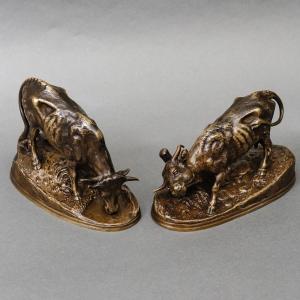
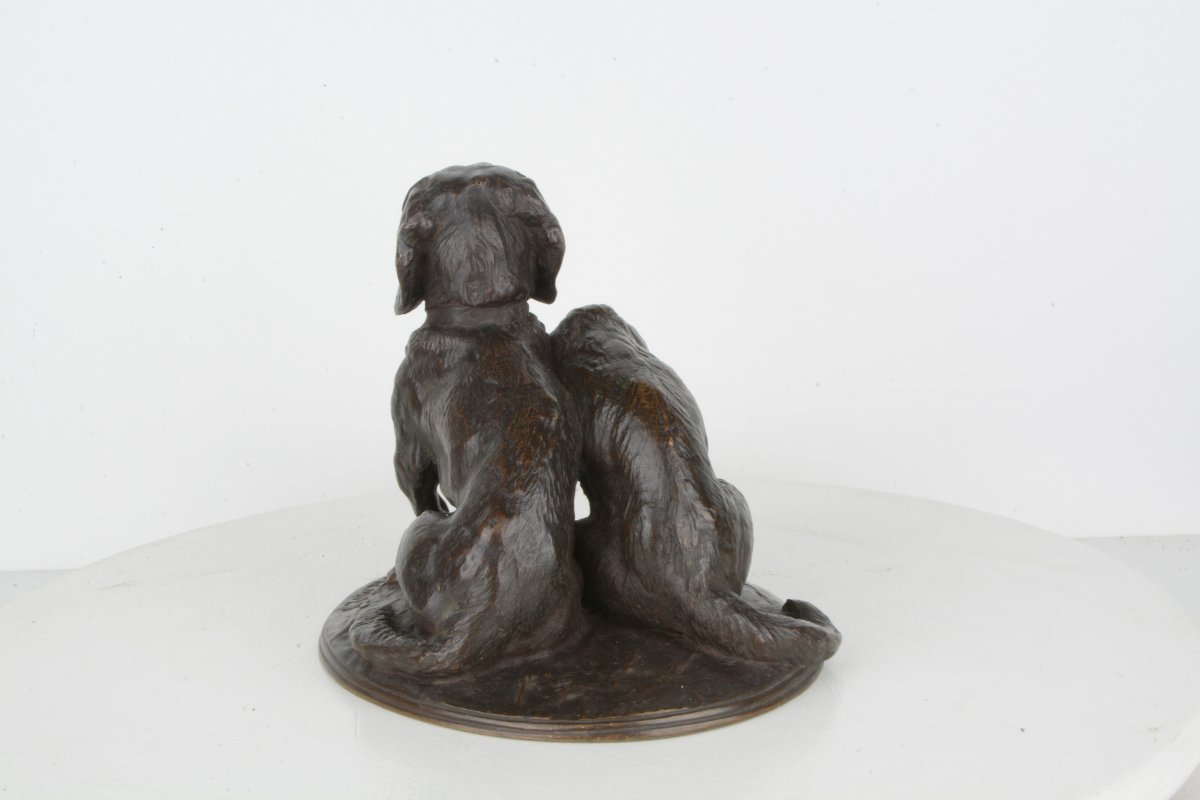
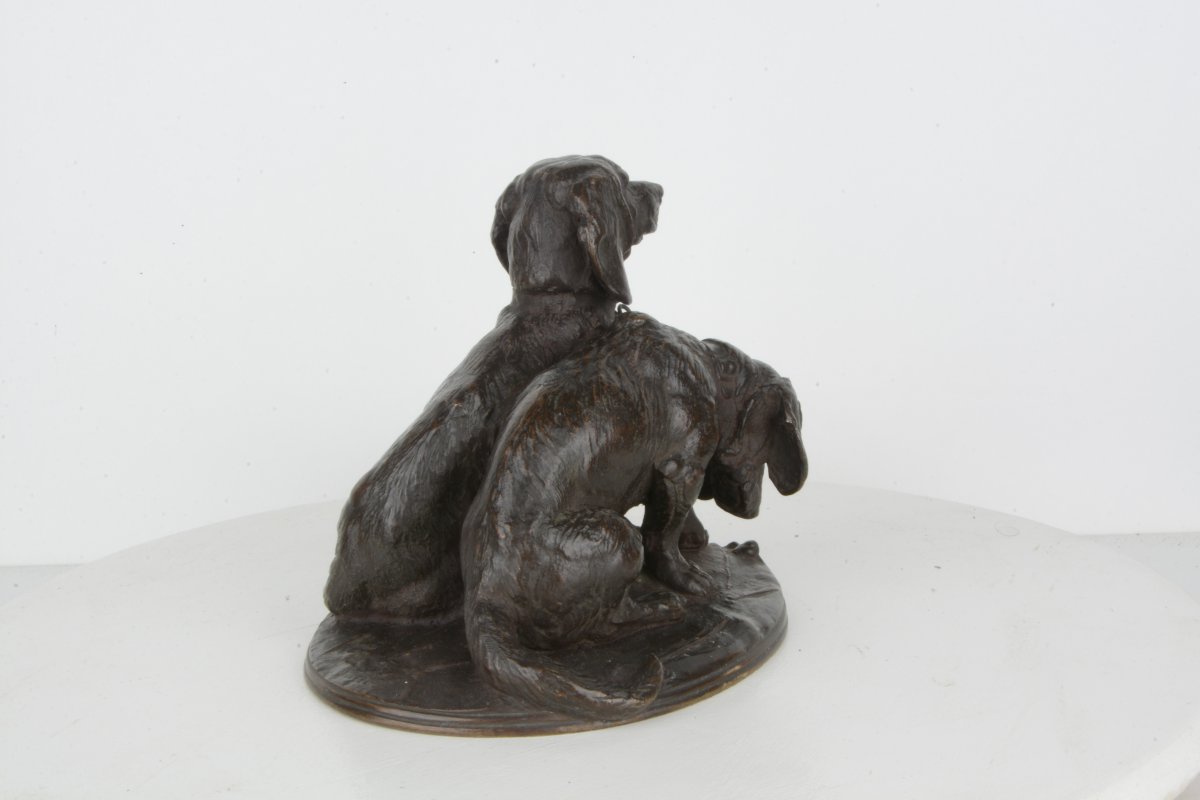
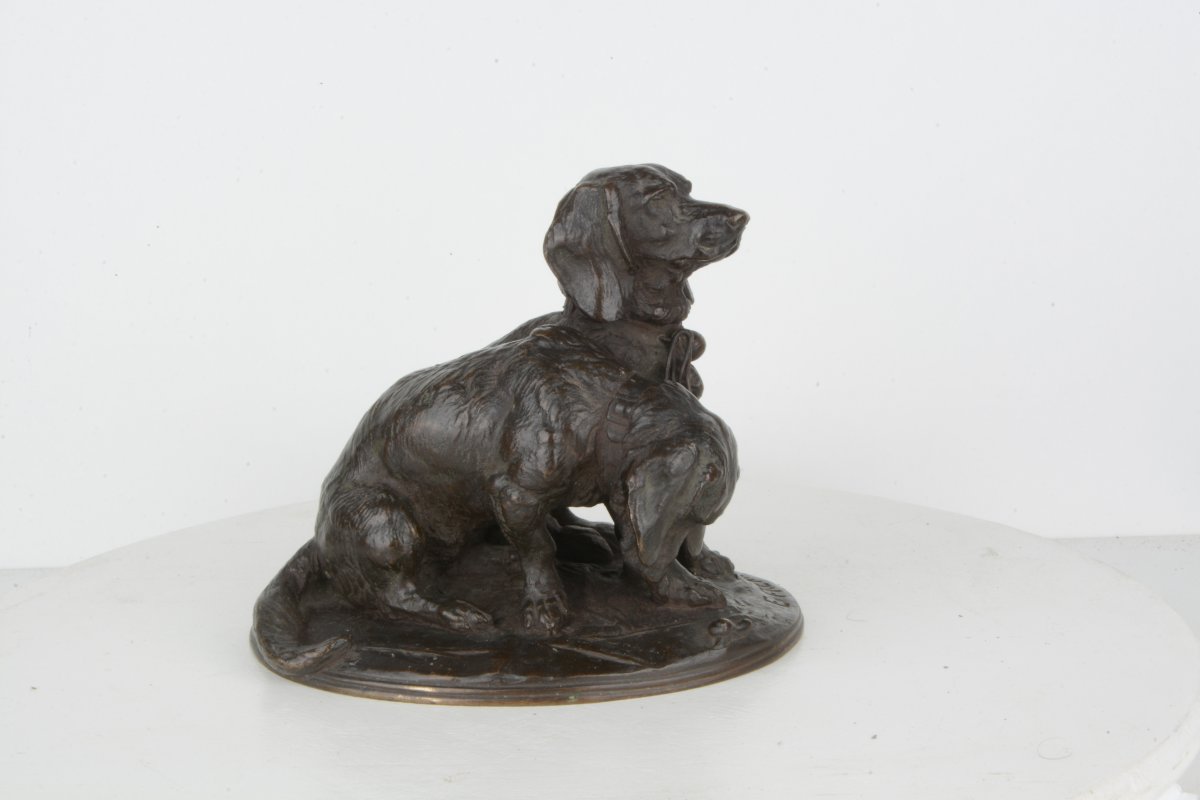
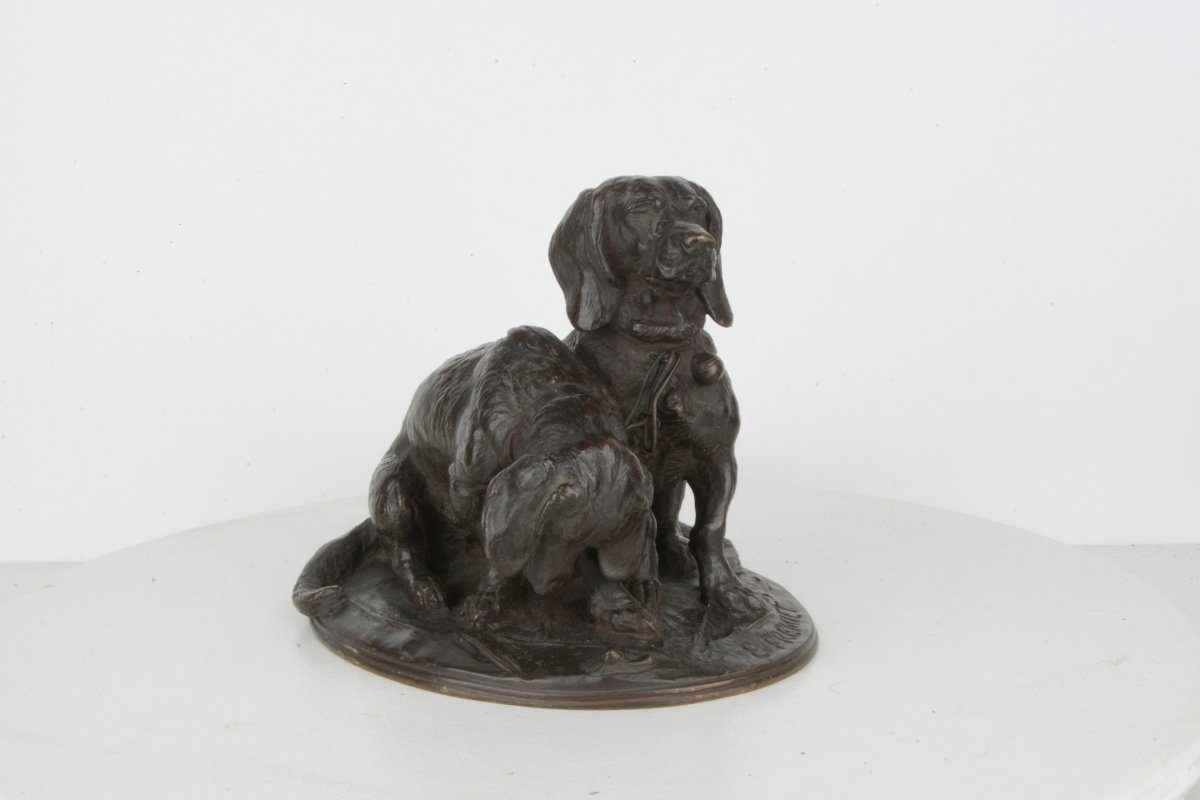
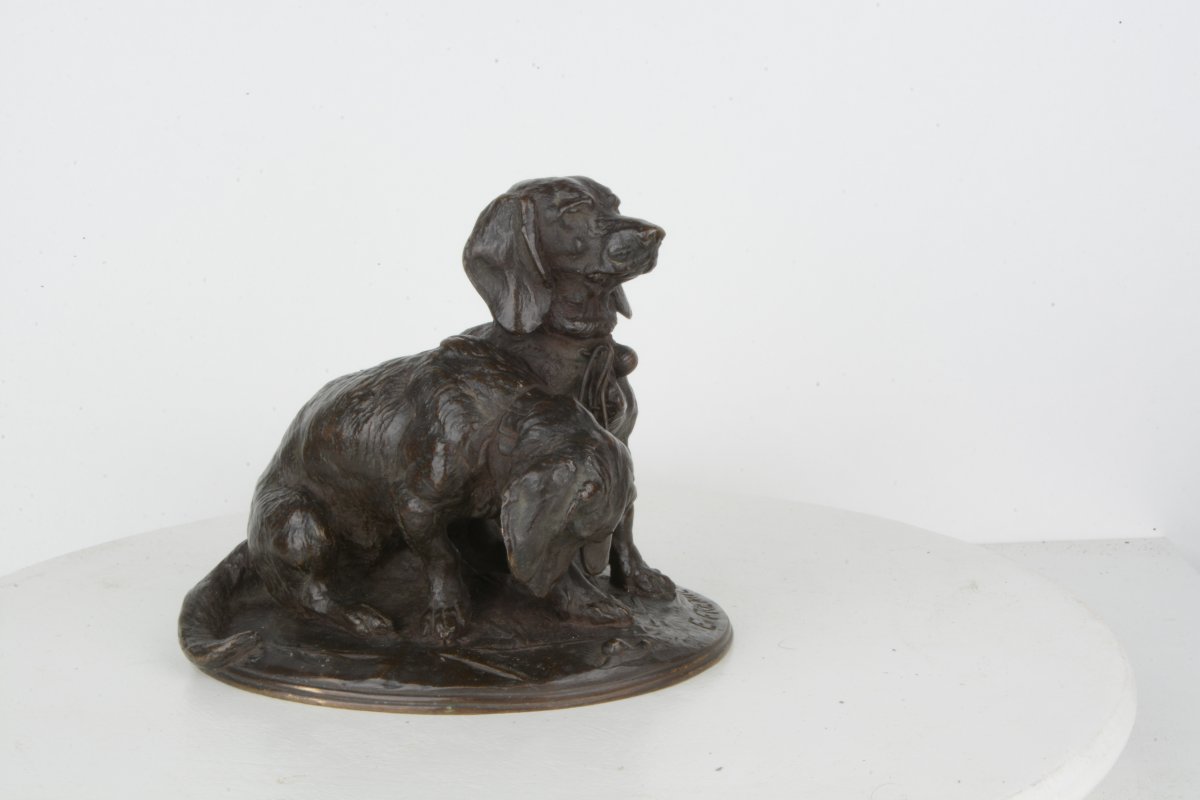


Ravageot And Ravageode - E. Fremiet 1824-1910
Sculptor
Emmanuel Fremiet
1824 - 1910
Era
1853 for the chief model
Provenance
France
School
French School of Animal Sculpture
Dimensions
Height: 14.5 cm
Length: 16.5 cm
Depth = 14 cm
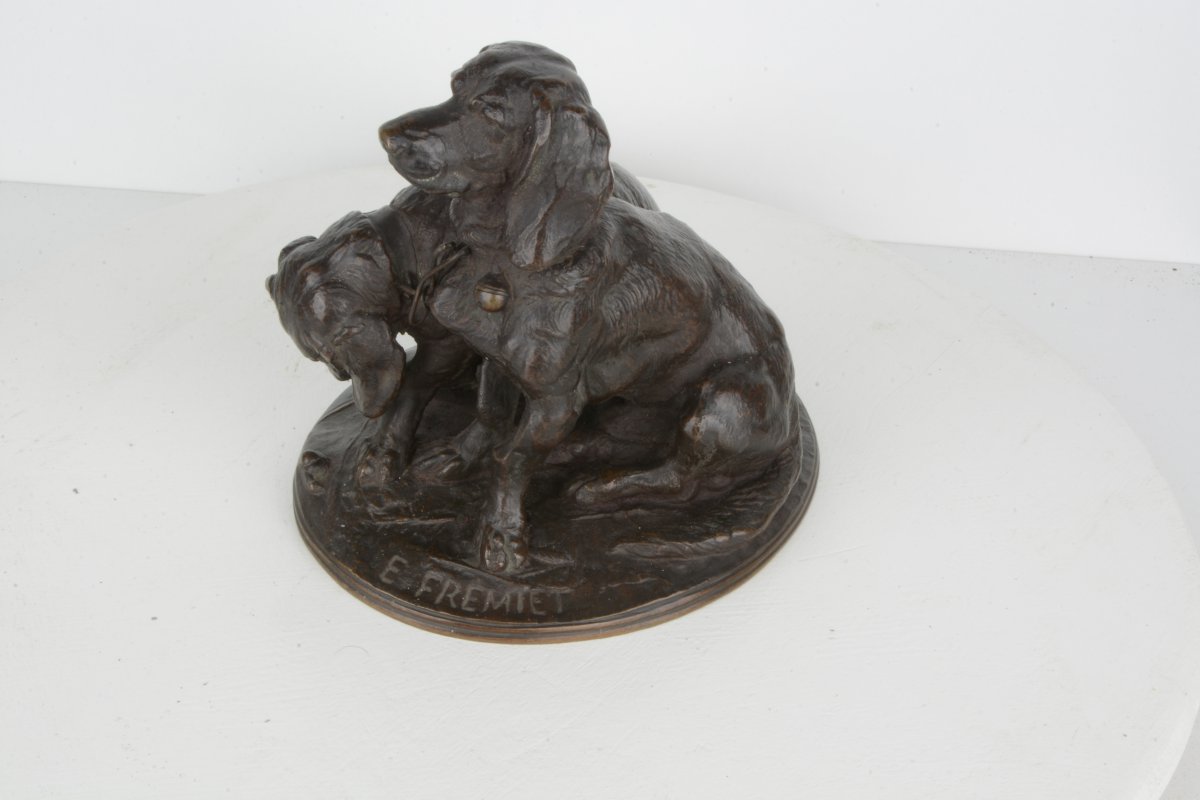
Signature
On left side of terrace:
E. FREMIET
Numbered 226
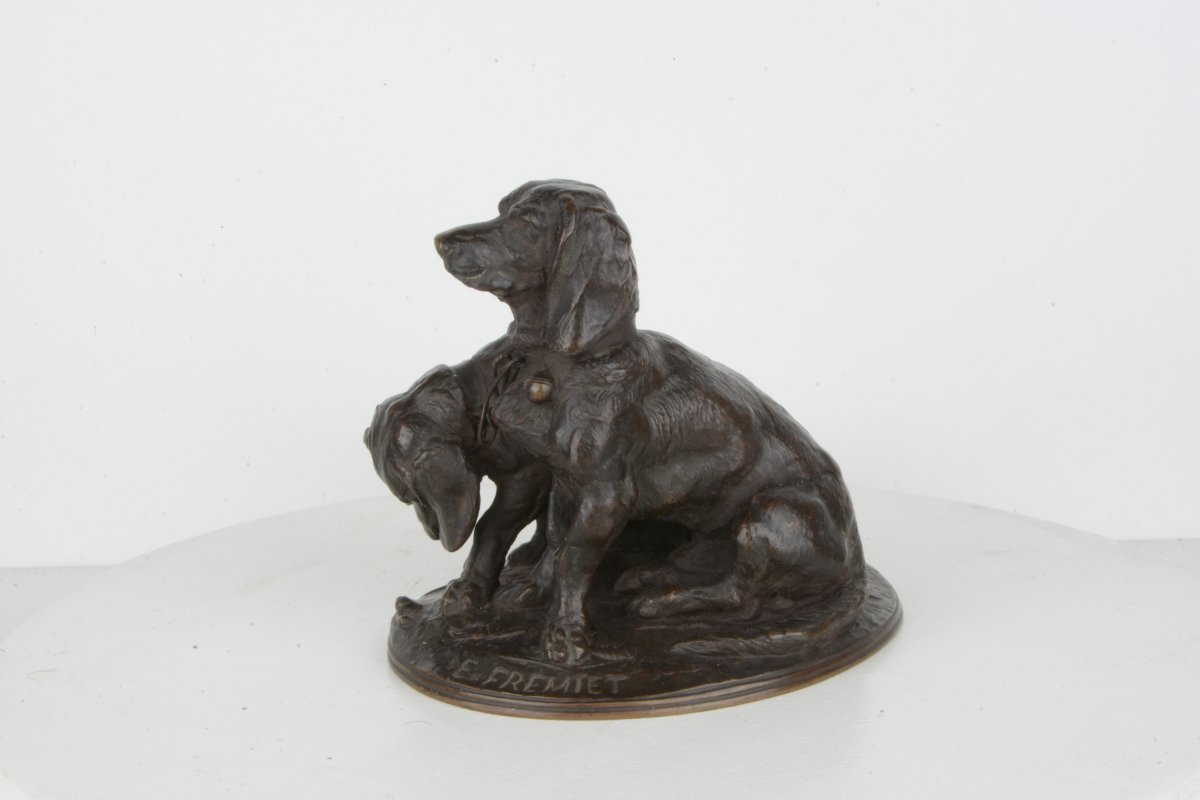
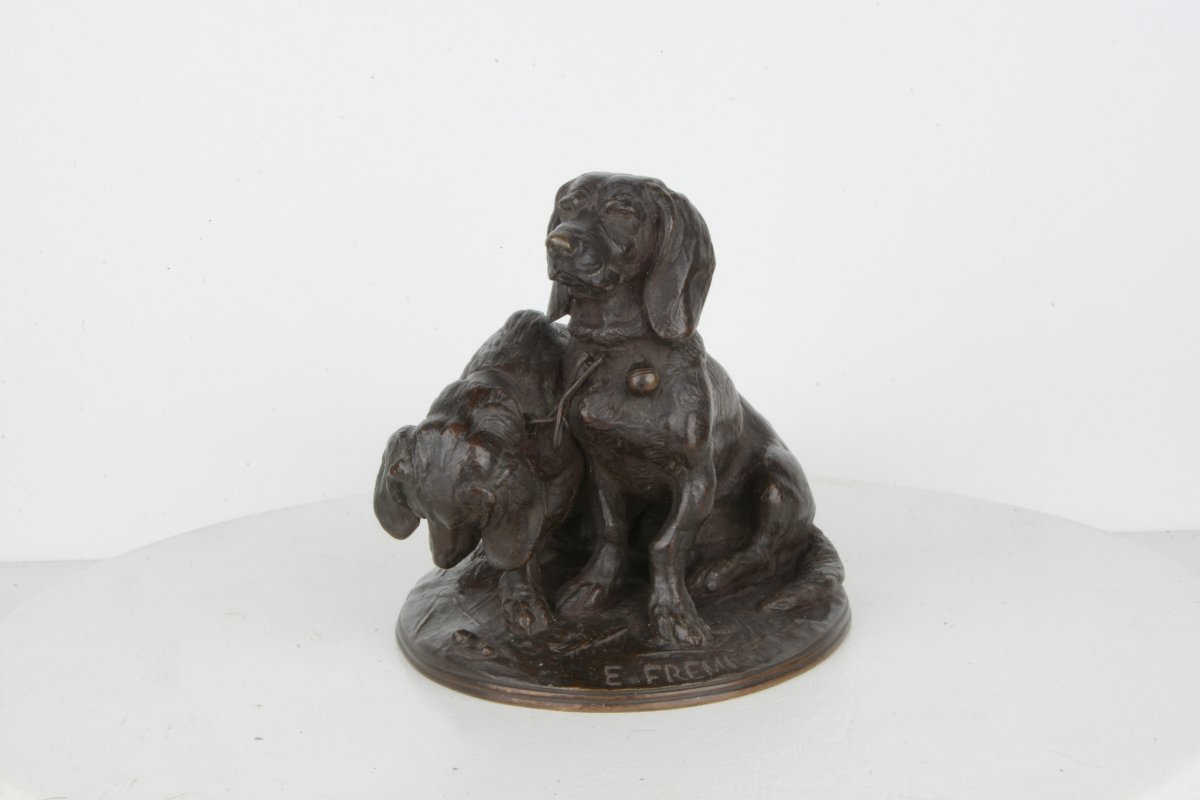
After his early successes brought him financial comfort,Emmanuel FREMIET, as he himself confessed, "was suffocated by so muchmoney". "I thought I was a millionaire and indulged in mad profligacy (...).prodigality (...). Three months later, I didn't have a penny left. I beganall the more feverishly to work, as it was my only means of support (...). of existence (...)." And so, taking over a previous group ofbasset hounds he had exhibited at the 1848 Salon, Ravaude and Mascareau, hounds of M. de V.'s crew, he sculpted his Ravageot and Ravageode to fulfill a life-saving commission from the State.
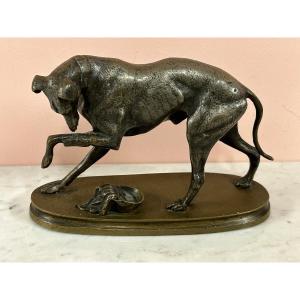
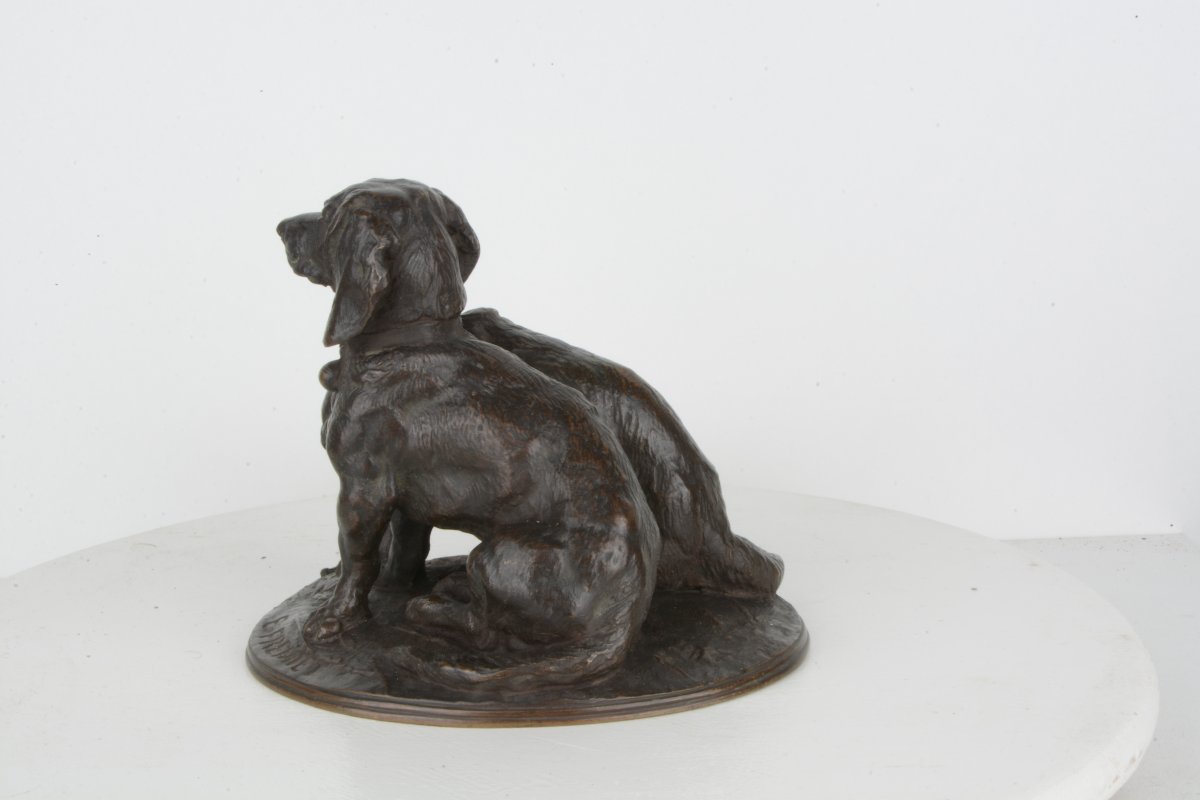
Emmanuel FREMIET gave his small group a pyramidal structure that might havemight have appeared a tad massive had he not introduced a slightimbalance due to the opposite movement of the two bassets. It's true that both sit on their hindquarters, while their tails, in a counter-movementmovement encompass the rear of the terrace. However, Ravageot rears his head, seemingly waiting for the slightest sign to set off on a mop. Ravageode, herself, bows low to observe the funny little thing that moveson her feet, a snail. Later, the sculptor enjoyed introducing to introduce his trademark touch of humor into his sculpturesas a quirky naturalist wink, as seen in his Curlew and Frog. can be seen in his Curlew and Frog, his Griffon Dog and Tortoise, his monkey with a snail or his Griffonne with a fly...
Si Today, Emmanuel Fremiet is known only to a few enlightened amateurs.enthusiasts, he was, in his day, a sculptor whose reputation even
At the age of 13, young Emmanuel was admitted to the prestigiousthe prestigious École des Arts Décoratifs. He graduated three yearsthree years later to join the studio of Jean-Jacques WERNER (1798-1856),official painter at the Jardin des Plantes Natural History Museum.It just so happened that the young boy had an aunt, Sophie, whosean honorable career as a painter. In reality, she wasa cousin of his father, Auguste-Théophile FREMIET. Sophie FREMIEThad married François RUDE, a Dijon man like herself. But François RUDE was in the years 1837-40 at the height of his artistic fame. On the adviceadvice of his wife Sophie, who had detected in her young nephew a certaintalent, he opened the doors of his studio on rue d'Enfer to the boy.d'Enfer. François RUDE was soon convinced of the boy's talent, especially sinceas soon as he left WERNER's every evening, Emmanuel rushed to Rude's studio in the Rude studio, where he works relentlessly. His perseverancewas rewarded when, in 1843, he was officially accepted as one of thestudents of the great François RUDE. At the Salon of 1849, he won his very firstfirst of his rewards, a third medal, thanks to his Matadorand Family of Cats. A prolific career begins...
Il greedily sculpts small animal bronzes full of charmwith charm, freshness and humor, and soon won the heartsquickly win over enthusiasts. The charm of his sculptures, their expressivenessexpressiveness, the quality of his work and the finesse of his execution,his sense of observation and detail to the extreme. him a great success with the public and a lasting reputation, which he maintainedhis career.
Period: 19th century
Style: Napoleon 3rd
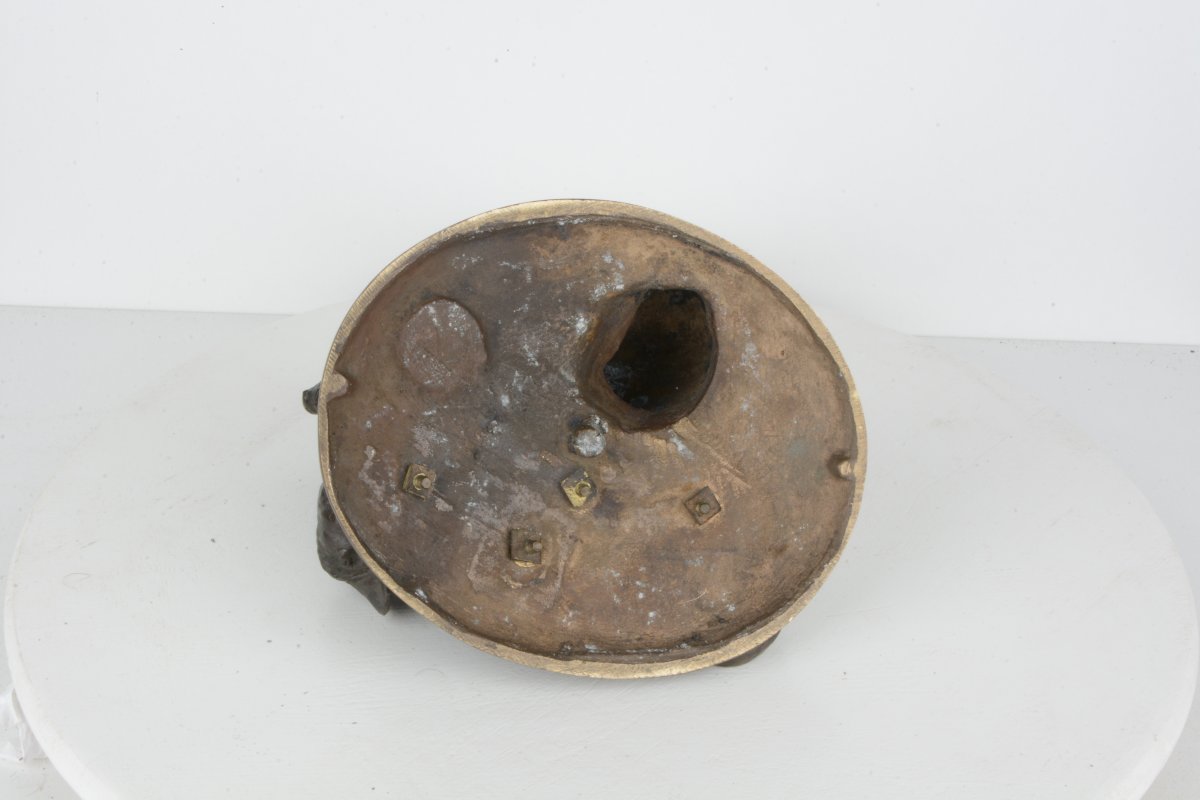
Condition: Good condition
Length: 16.5
Width: 14
Height: 14.5
Reference (ID): 1776088
Availability: In stock