THIS OBJECT WAS SOLD
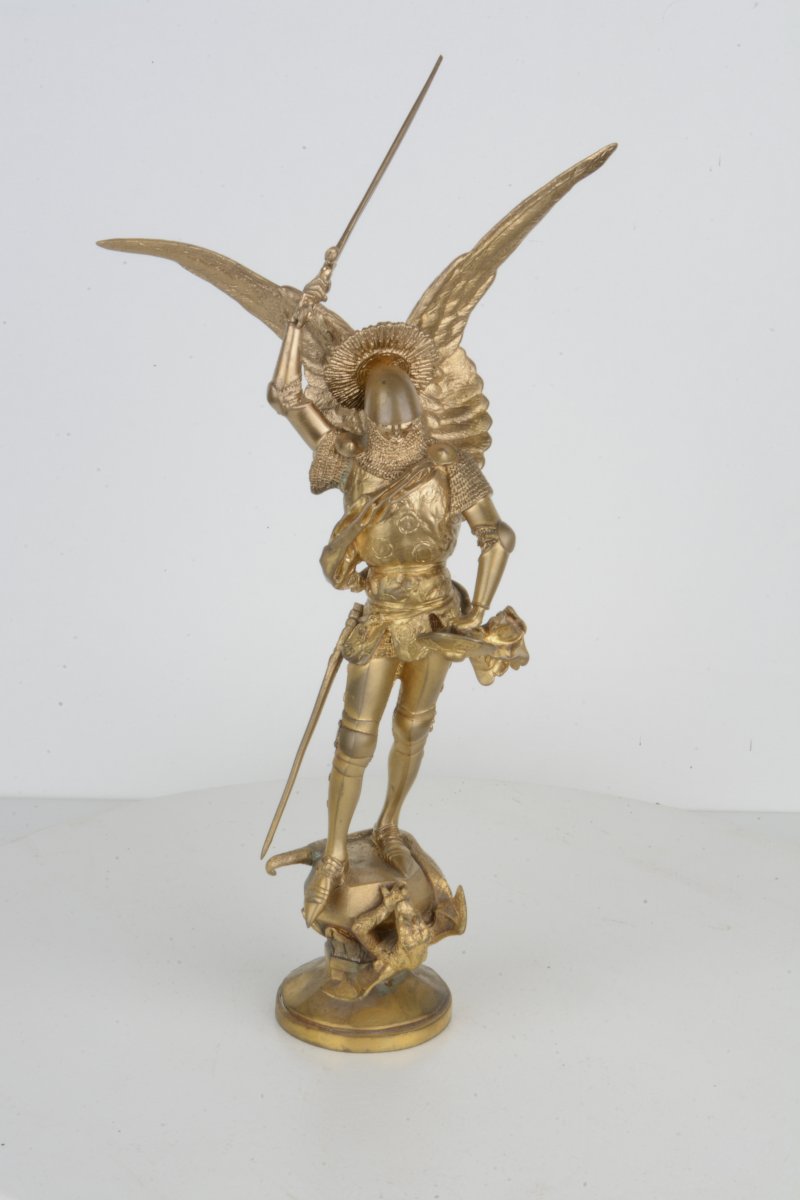
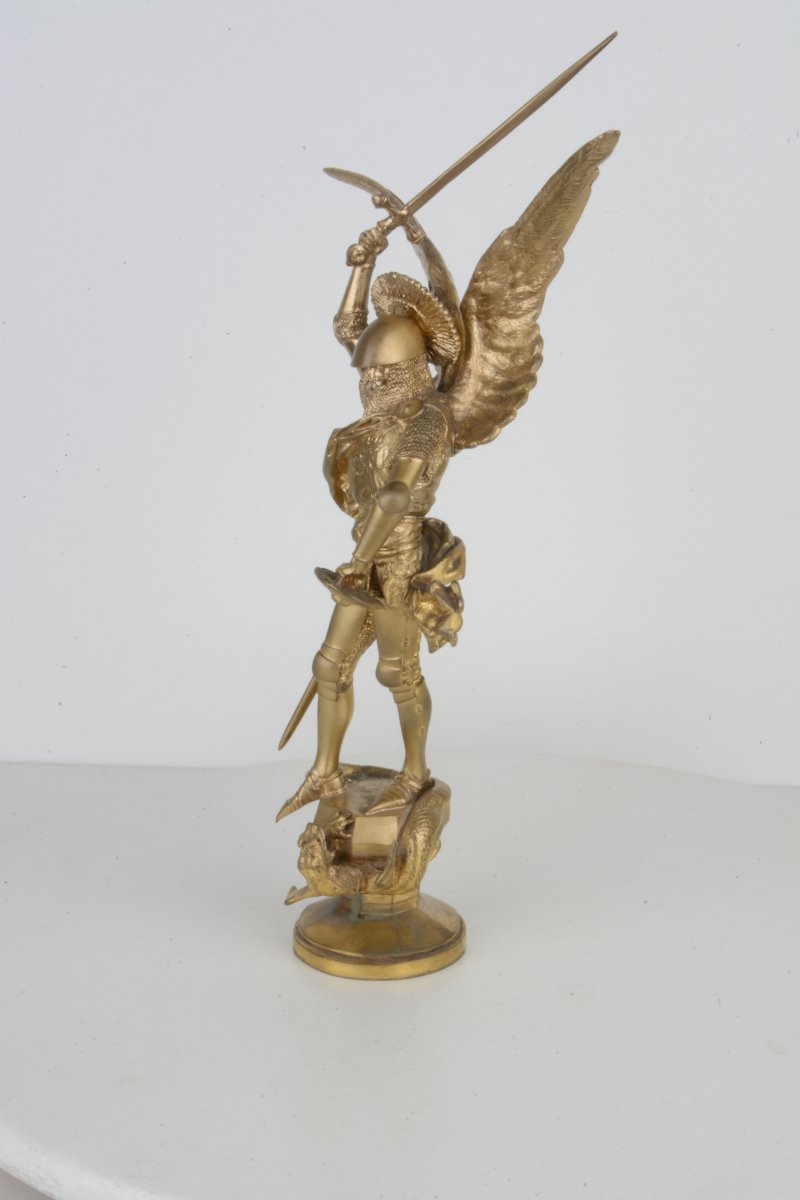
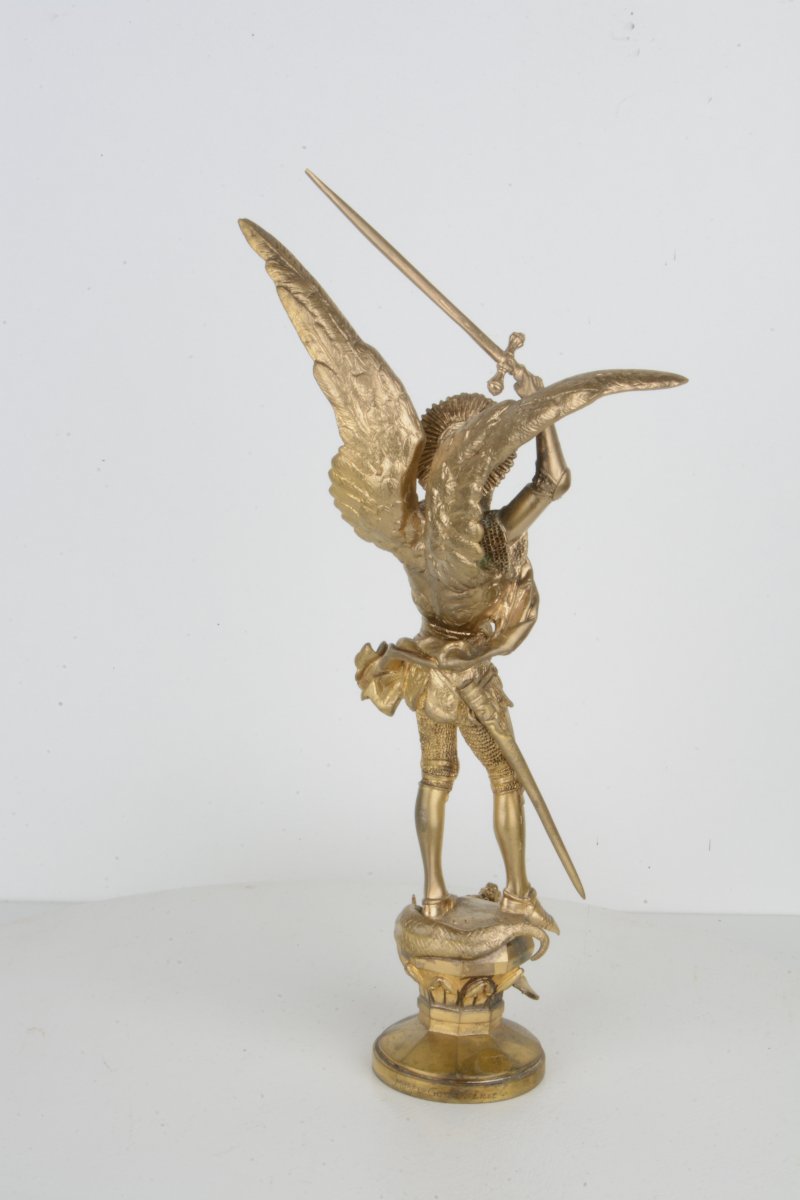
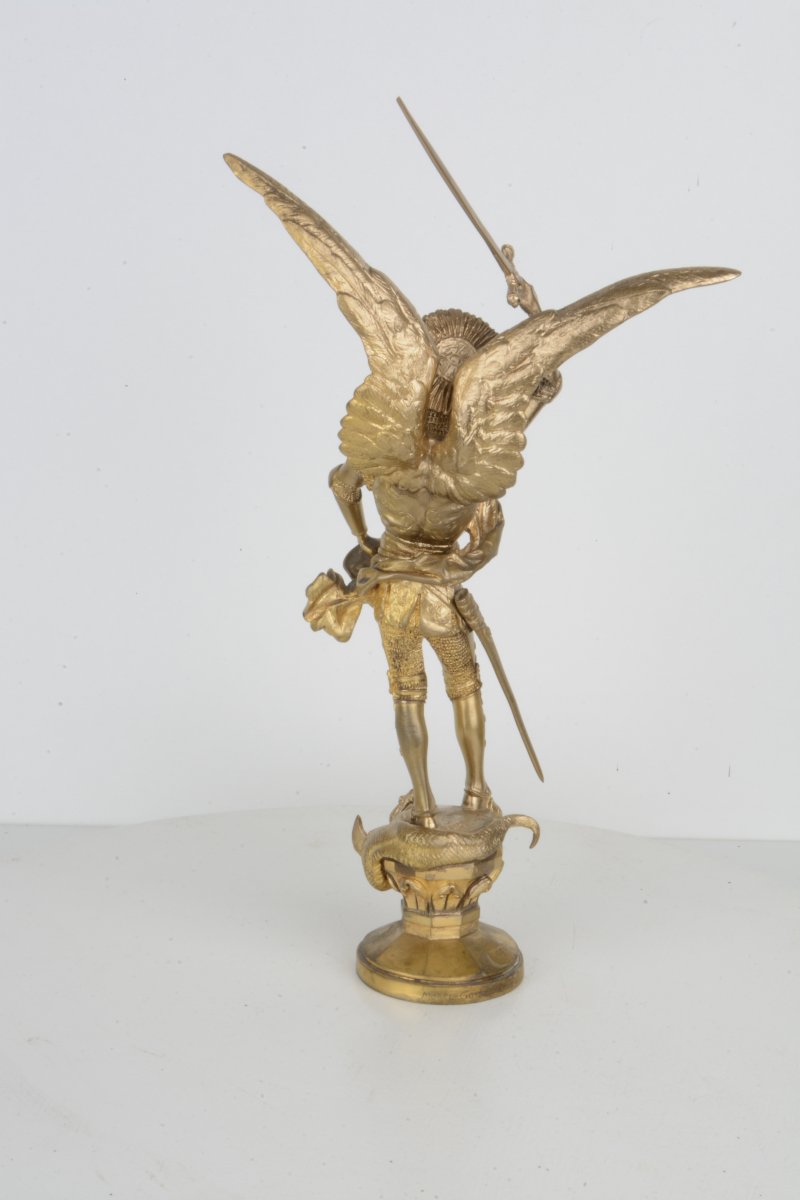
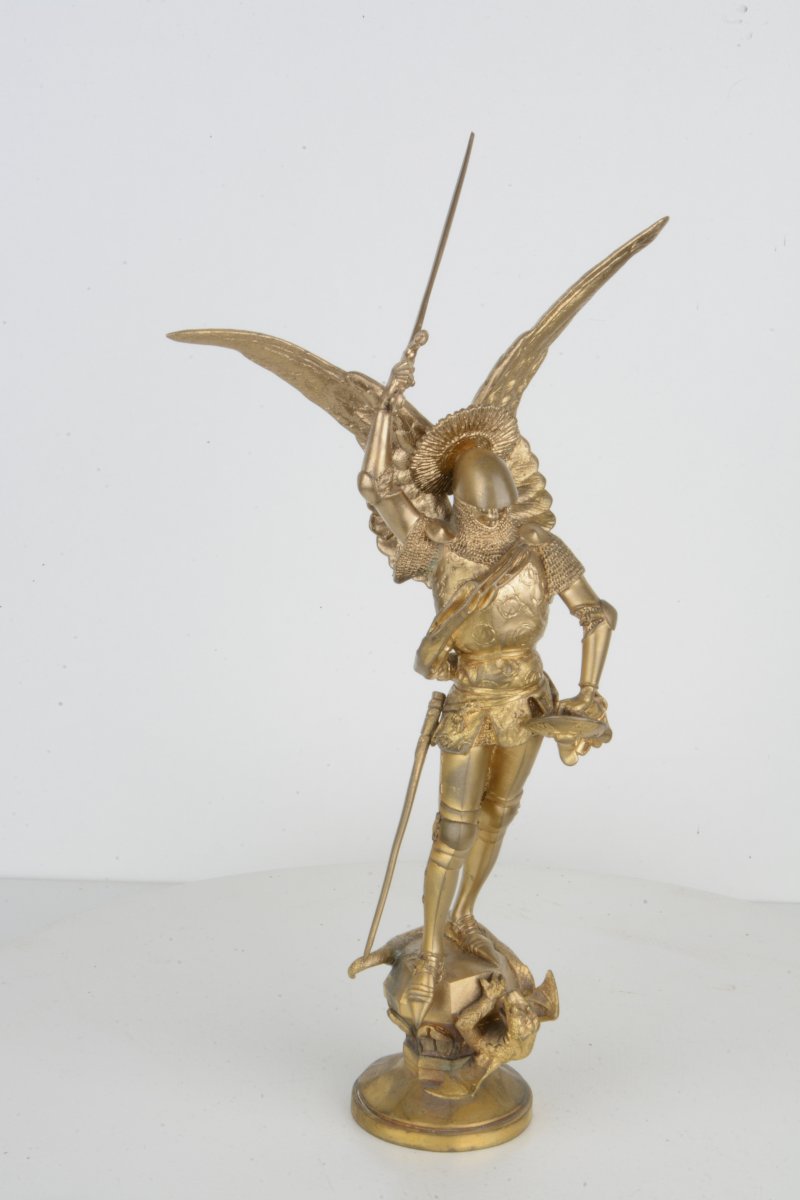
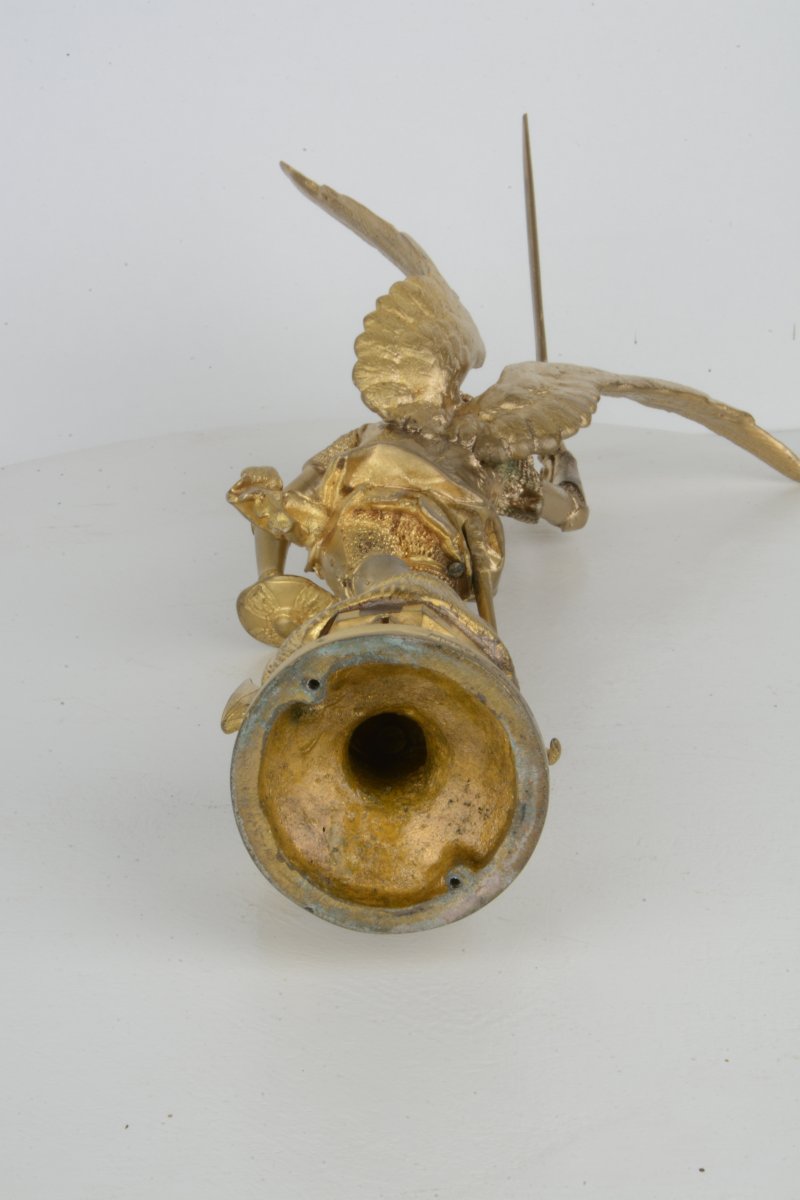
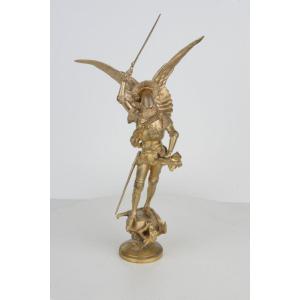
Saint Michel - E. Frémiet, 1824–1910


School
French School of Sculpture
Height: approximately 30 cm
Width: approx. 15 cm
Depth: 9 cm
Period
1875: creation of the bronze master model, exhibited at the 1879 Salon
Emmanuel Frémiet modified his model in 1897
Signature
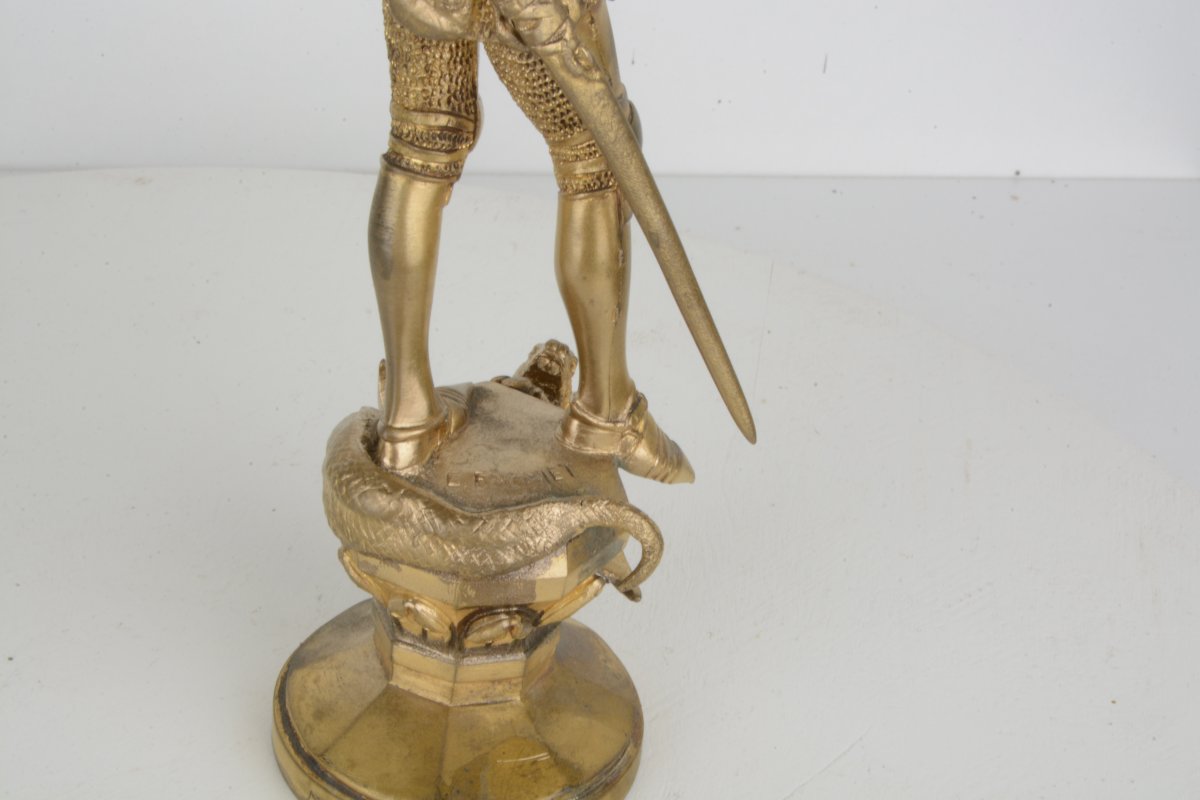
At the feet of Saint Michael: E. FREMIET
Number 96
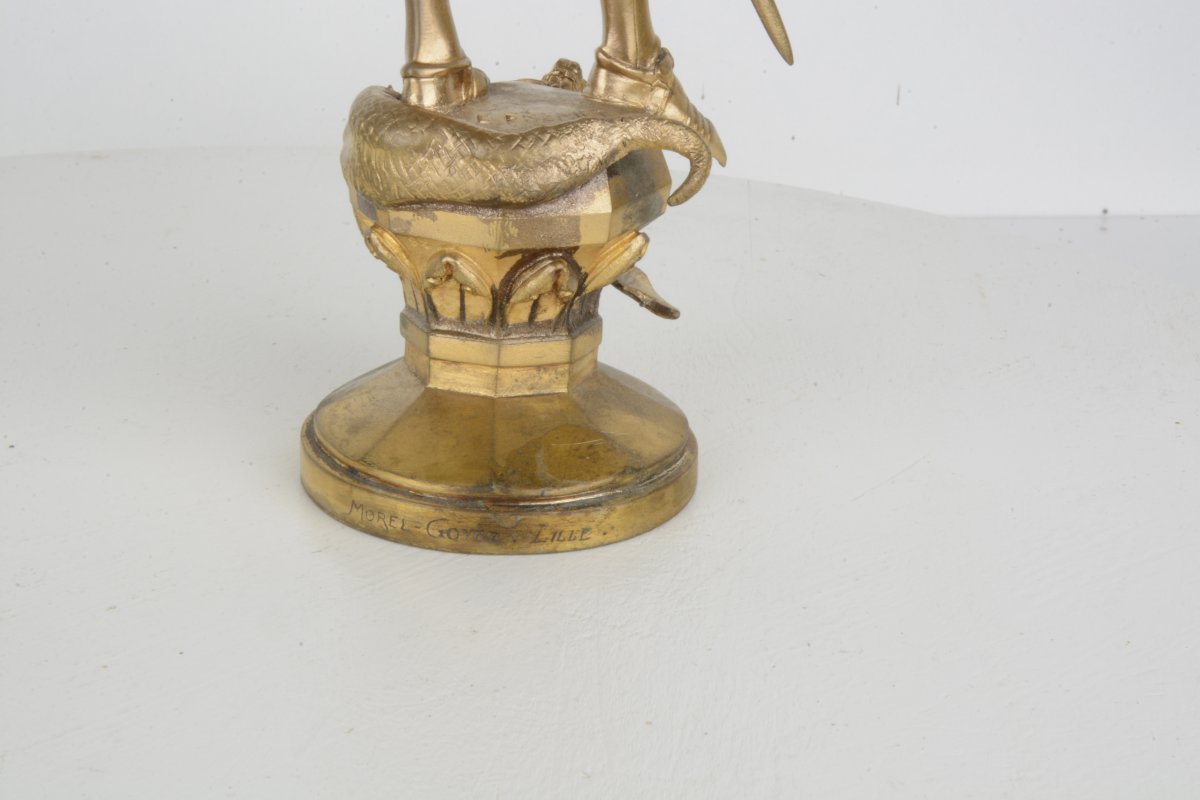
Note the inscription: Morel - Goyez Lille (referring to the Lille-based retailer of bourgeois interior furnishings in the late 19th century, which affixed its stamp).
Saint Michael, a statuette intended for commercial sale
In 1879, Emmanuel Frémiet produced a statue of Saint Michael vanquishing evil. Saint Michael is a patron figure of France. As the great archangel of God, he is the most powerful and the most beautiful of all the angels in Heaven. During the rebellion of the fallen angels, he fought Lucifer and cast him out of Heaven.
He is the guardian angel; by watching over the Abbey of Mont Saint-Michel, he extends his aura over all of France. It was he who guided Joan of Arc when she set out to reconquer the Kingdom of France for Charles VII.
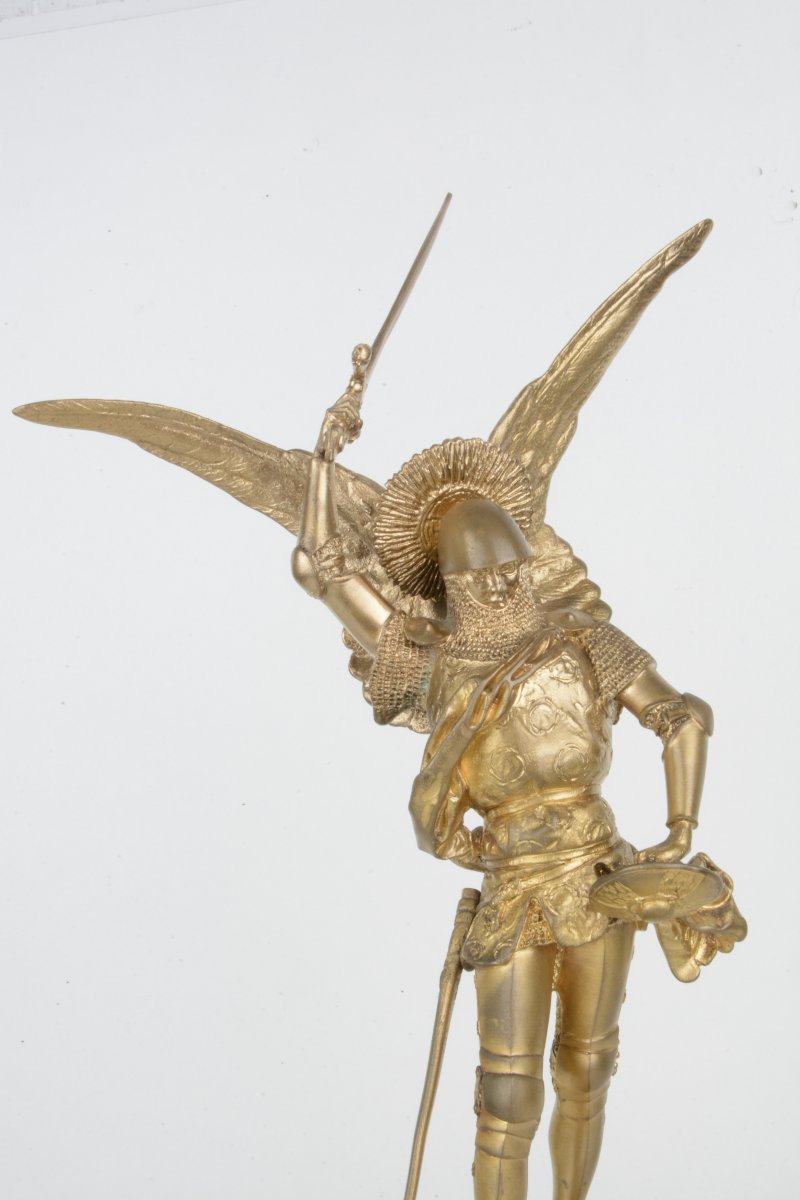
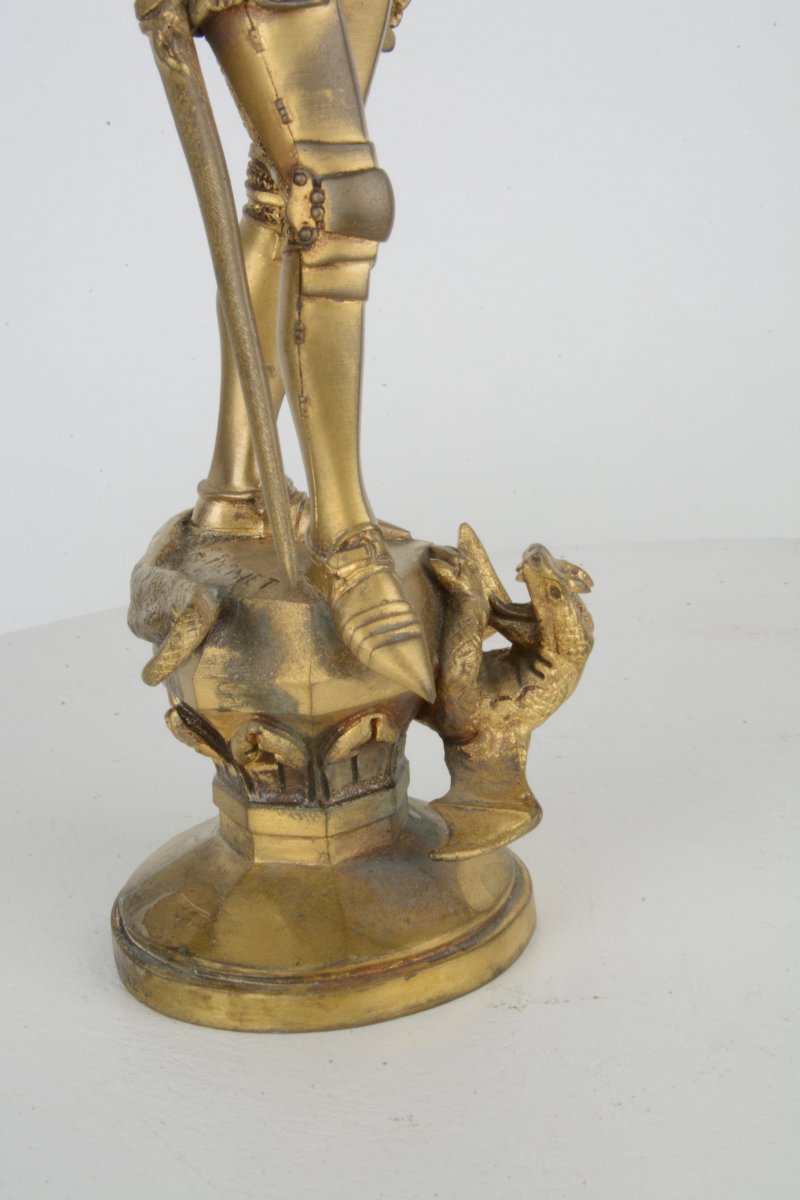
A slender and dynamic figure, Saint Michael—clad in a breastplate and a chain mail coat, his wings majestically spread—raises his sword high with a confident gesture of his right hand. With his left hand, he holds out his targe (small shield) toward the serpent with a human head adorned with two horns, which represents Lucifer, the fallen angel, and evil. The statue, created by Charles More, was exhibited at the 1879 Paris Exposition and was well received. Thus, architect Victor Petitgrand (1841–1898), who was in charge of the restoration of Mont Saint-Michel, commissioned Emmanuel Frémiet to create a statue of Saint Michael that would stand 2.20 meters tall. To meet the architectural requirements, the sculptor modified the base and transformed the serpent with a human head into a fearsome dragon.
Emmanuel Frémiet, “a master of imagery”A highly regarded and recognized artist, Emmanuel Frémiet was a hard worker. He leads a modest and unassuming life, away from the crowds and honors,devoted entirely to sculpture and his family.
Tall instature, his face is calm and expressionless, his thick mustache perfectly trimmed. He is always dressed with taste, yet with great simplicity. With a reserve bordering on austerity, the sculptor cultivates discretion and modesty, as well as great moral discipline.
The very opposite of a show-off, he never reveals himself to the public except through his works. No idle chatter, just a considerable body of work producing magnificent sculptures; he has no fewer than 230 works to his credit. Gustave Larroumet (1852–1903), an art historian who associated with him at the Institute (Emmanuel Frémiet enrolled there in 1892), said of him that, “at first glance, he seems rather cold, and his speech does not actively engage the listener; though very polite, he may give those who know him little the impression of being shy and silent. This reserve is merely self-respect: when there is no need for it—in the intimacy of colleagues, for example—it gives way to a confident courtesy. Then he answers willingly when asked, and he recounts his life with a delightful blend of benevolent irony and quiet modesty.”
Although his name was well known among his peers as early as 1874, it was the unveiling of his monumental equestrian statue of Joan of Arc at Place des Pyramides in Paris that brought him to the attention of the general public. The brilliant animal sculptor that he was—considered the equal of the man who had so profoundly influenced the genre, the great master Antoine-Louis Barye (1795–1875)—made a grand entrance into the inner circle of monumental sculptors. TheSecond Empire, but above all the Third Republic, awarded him numerous commissions.
A masterof imagery, to borrow the phrase of his biographer Jacques de Biez, Emmanuel Frémiet sculpted with equal skill and humor, whatever the subject. His deft fingers brought to life a whole world of graceful, elegant statuettes, each of which tells a little of French history with great picturesqueness but, above all, with remarkable realism and a keen eye for historical detail. Moreover, Emmanuel Frémiet does not work in a vacuum. Before picking up his chisel, he gathers his sources and diligently visits libraries. Nothing is left to chance…
Copyright Les Trésors de GamalieExplore similar pieces and discover your ideal find:
bronze sculptures