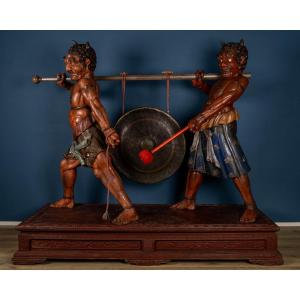


Important Japanese Processional Group, Edo Period, References Metropolitan Museum New York
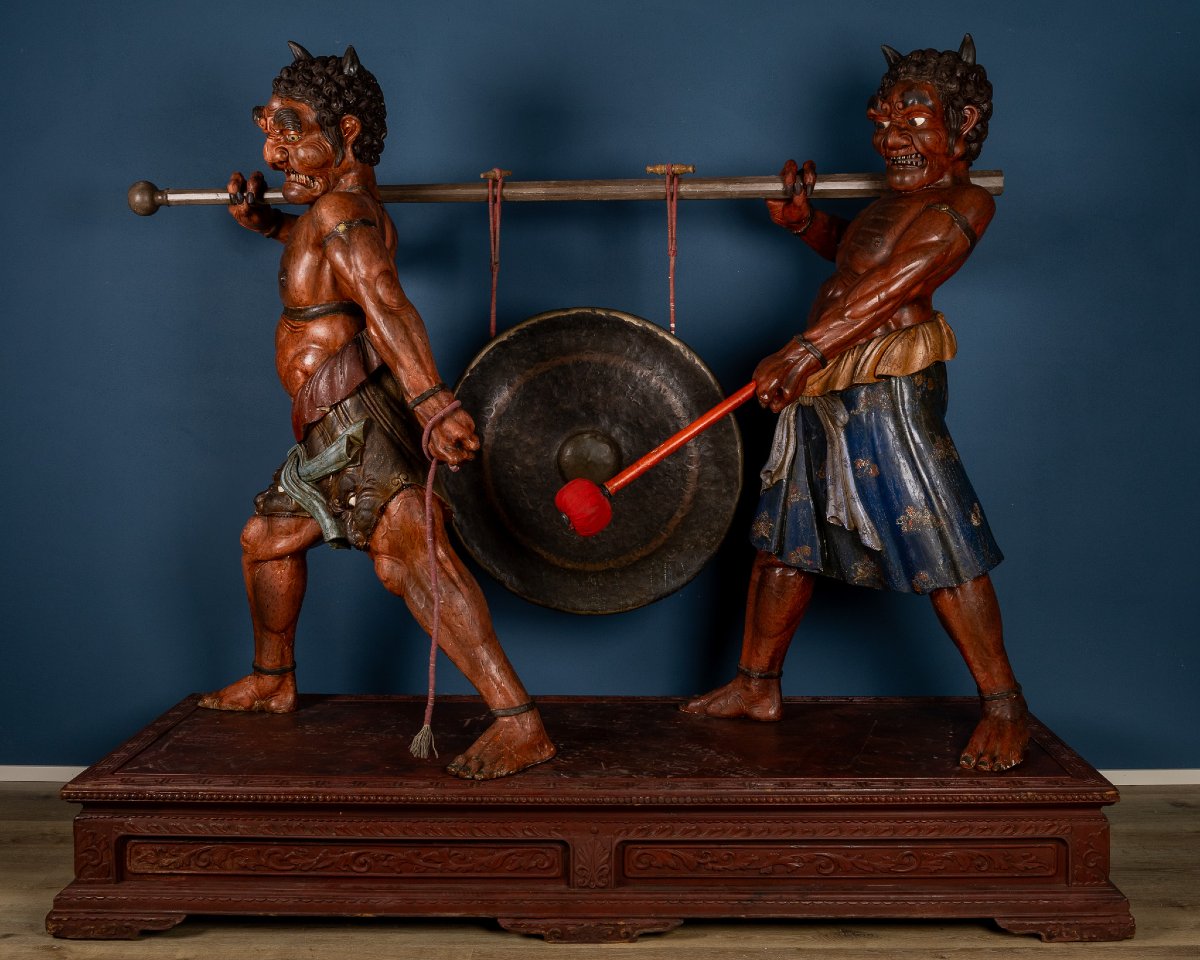
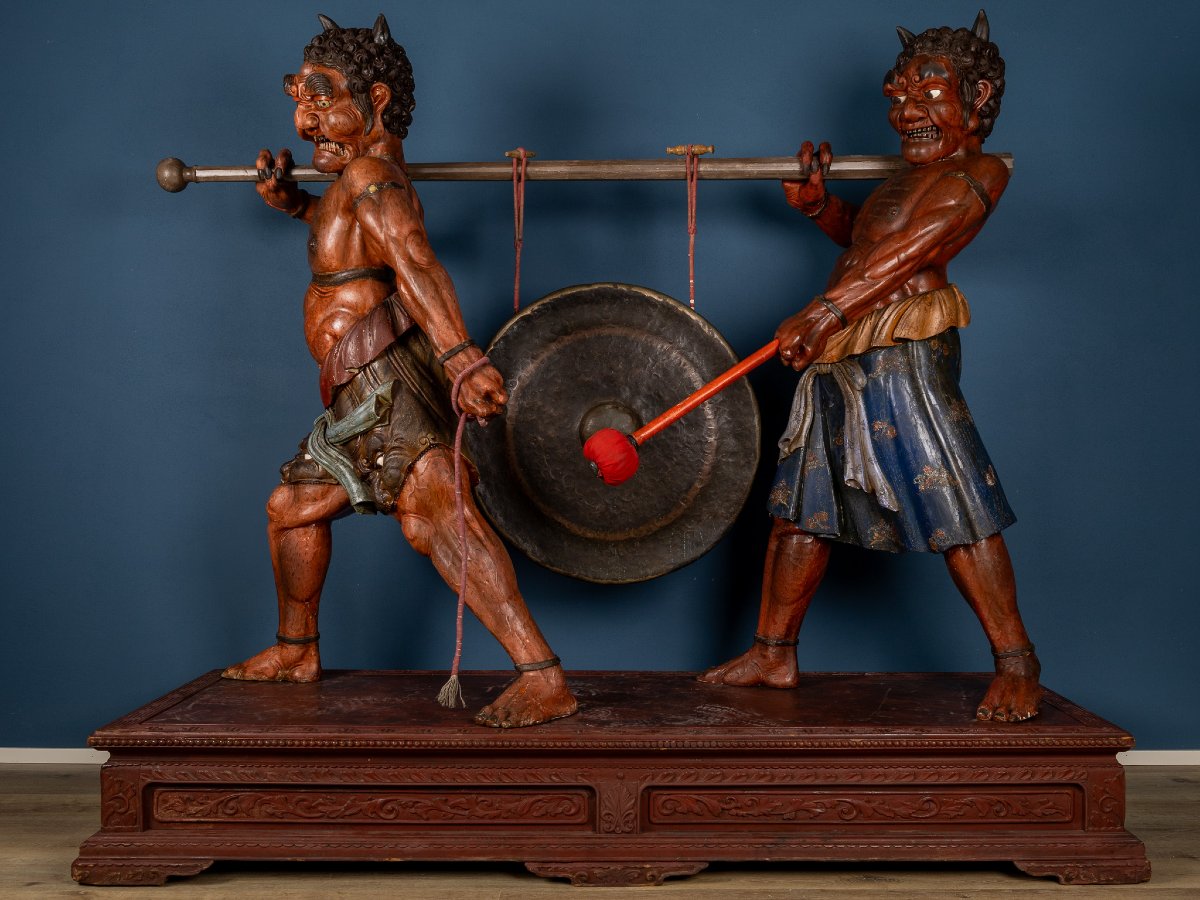
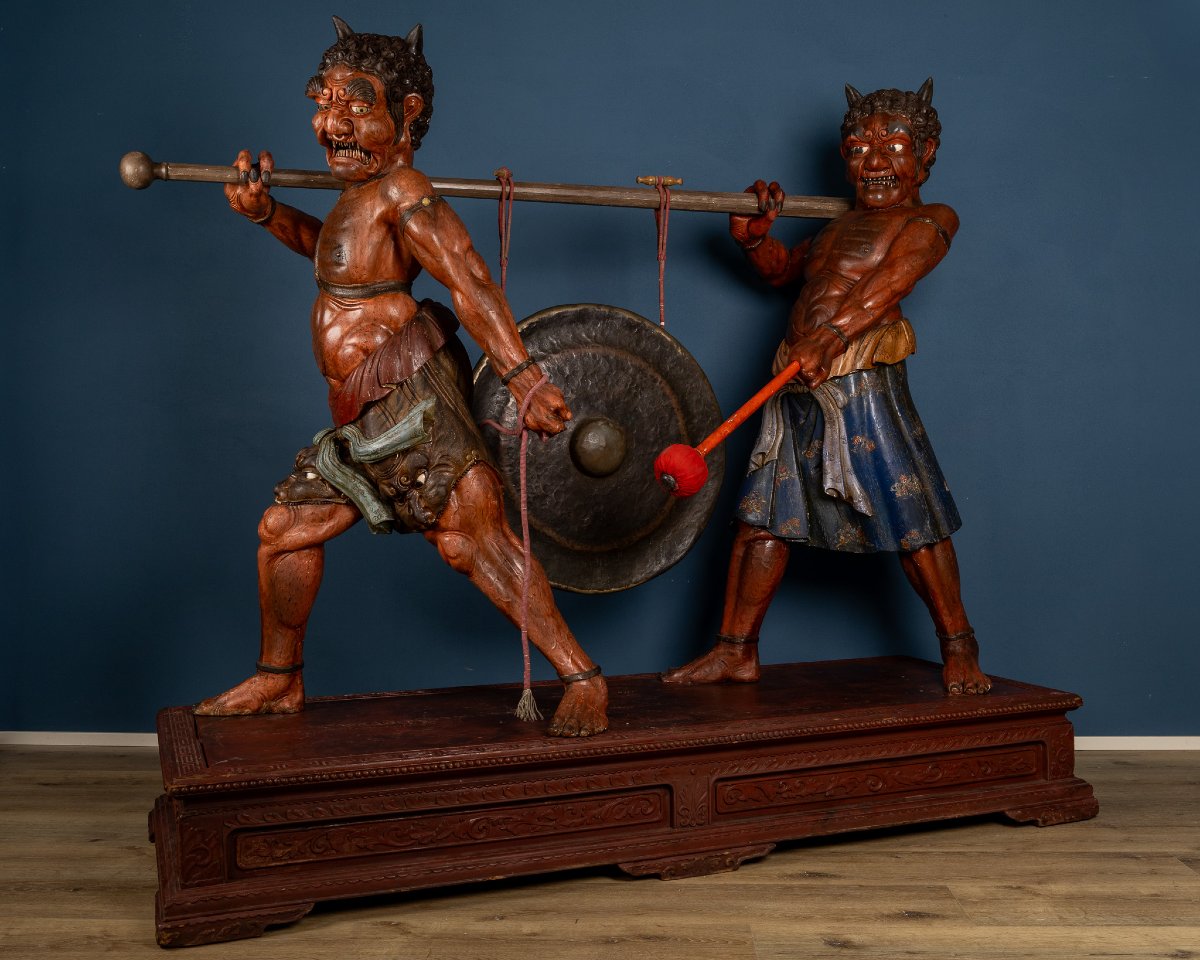
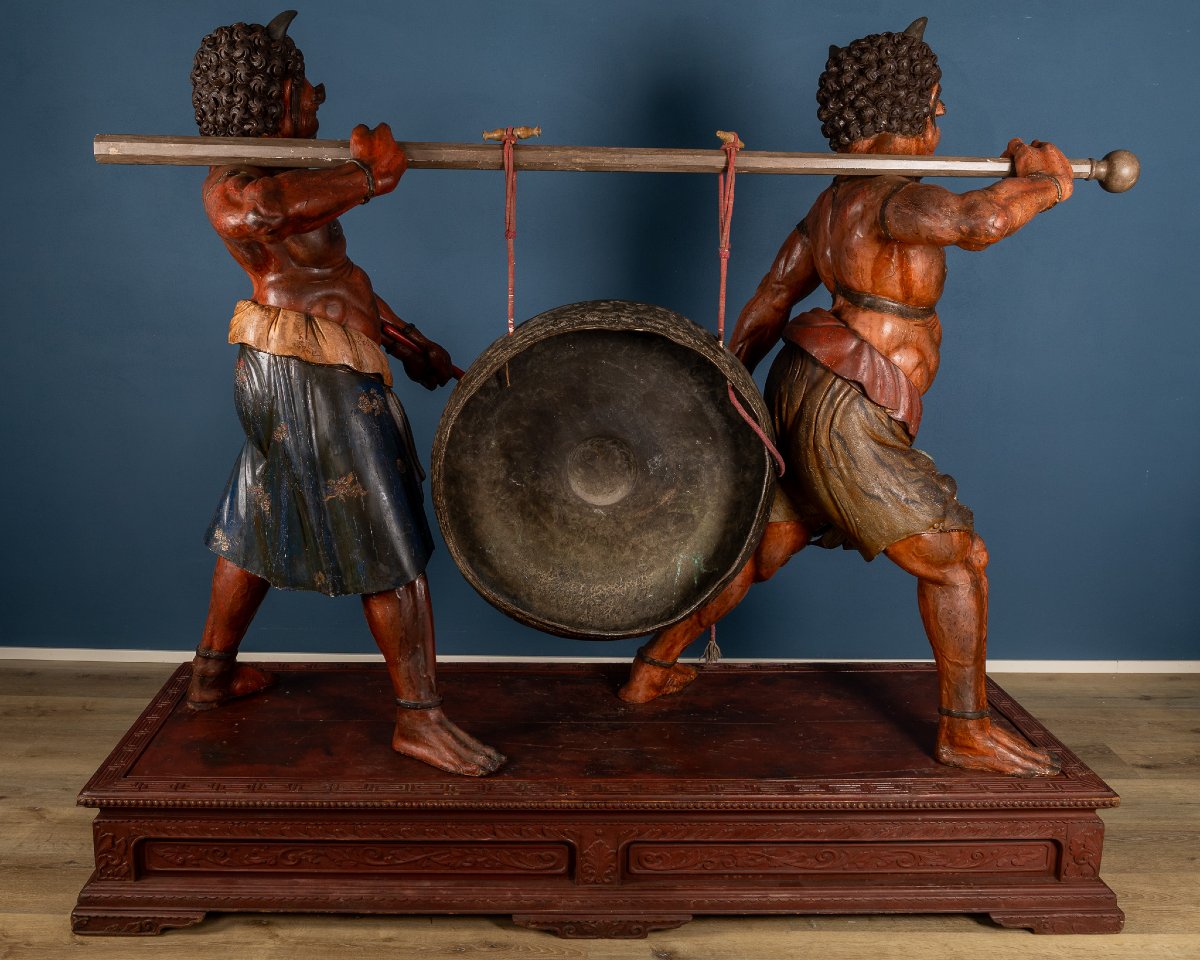
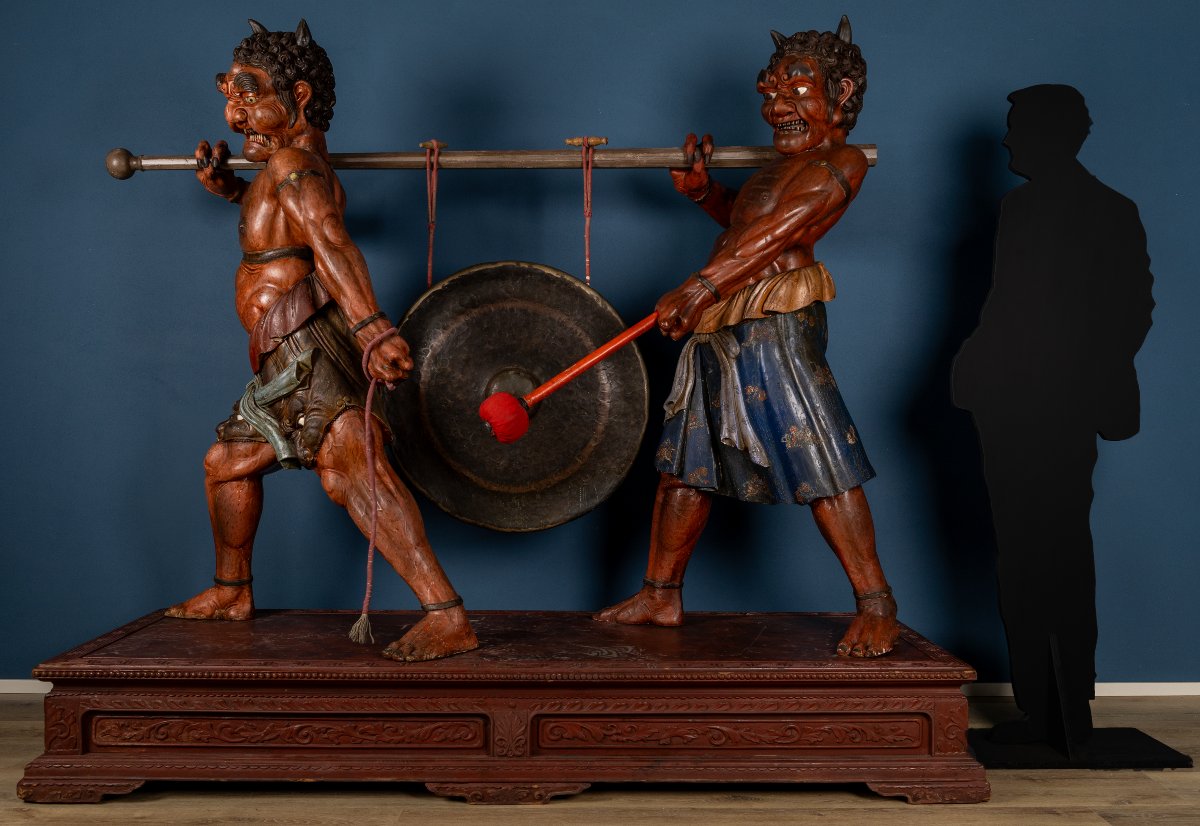
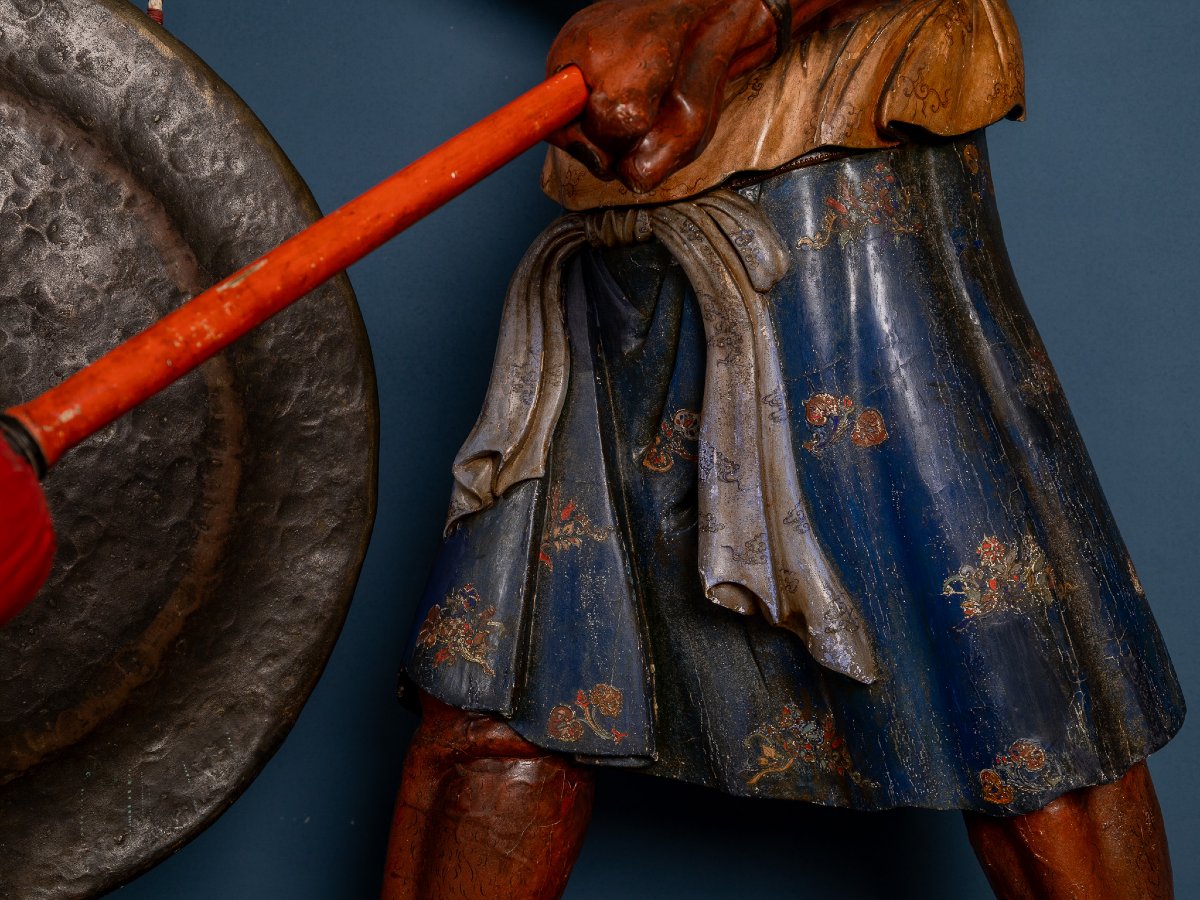
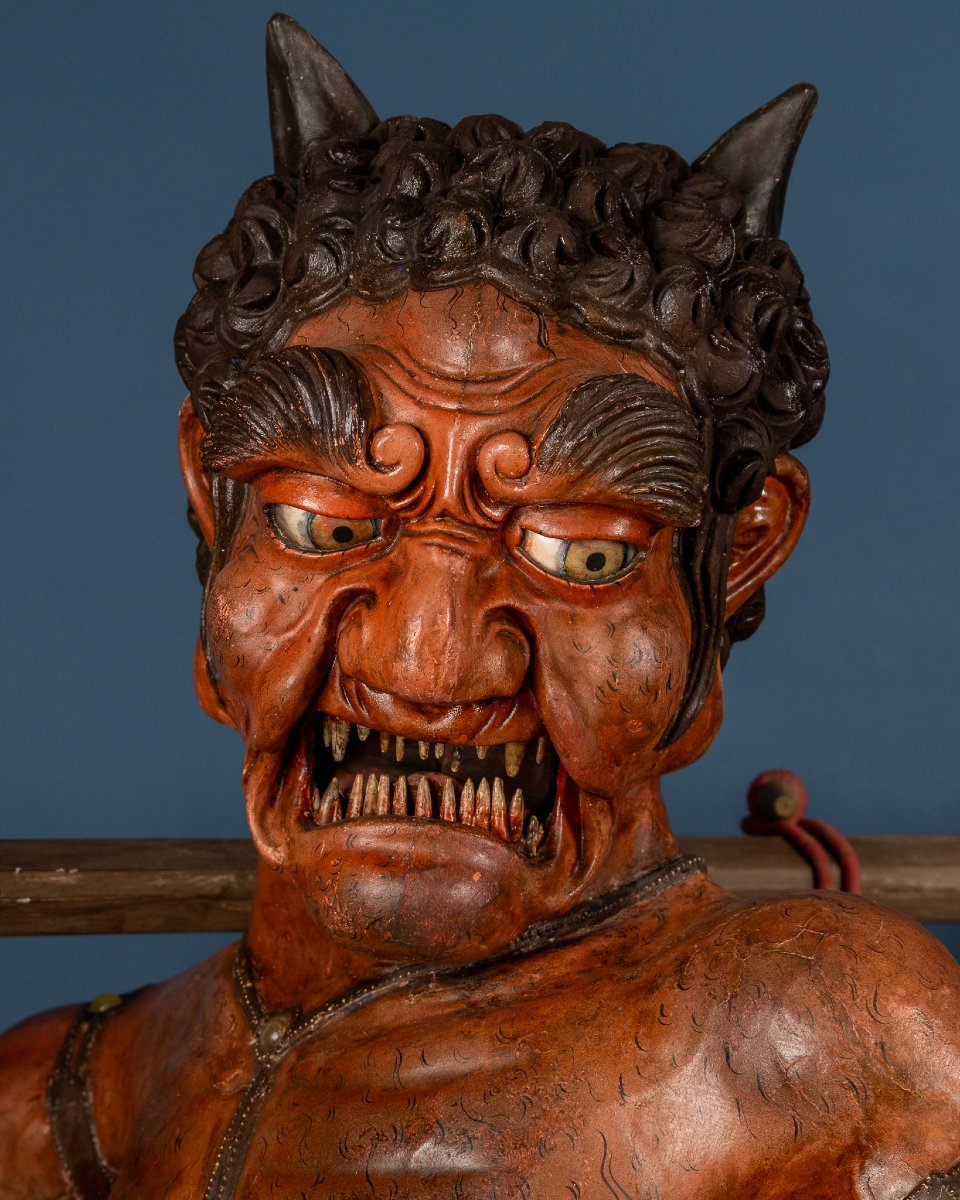
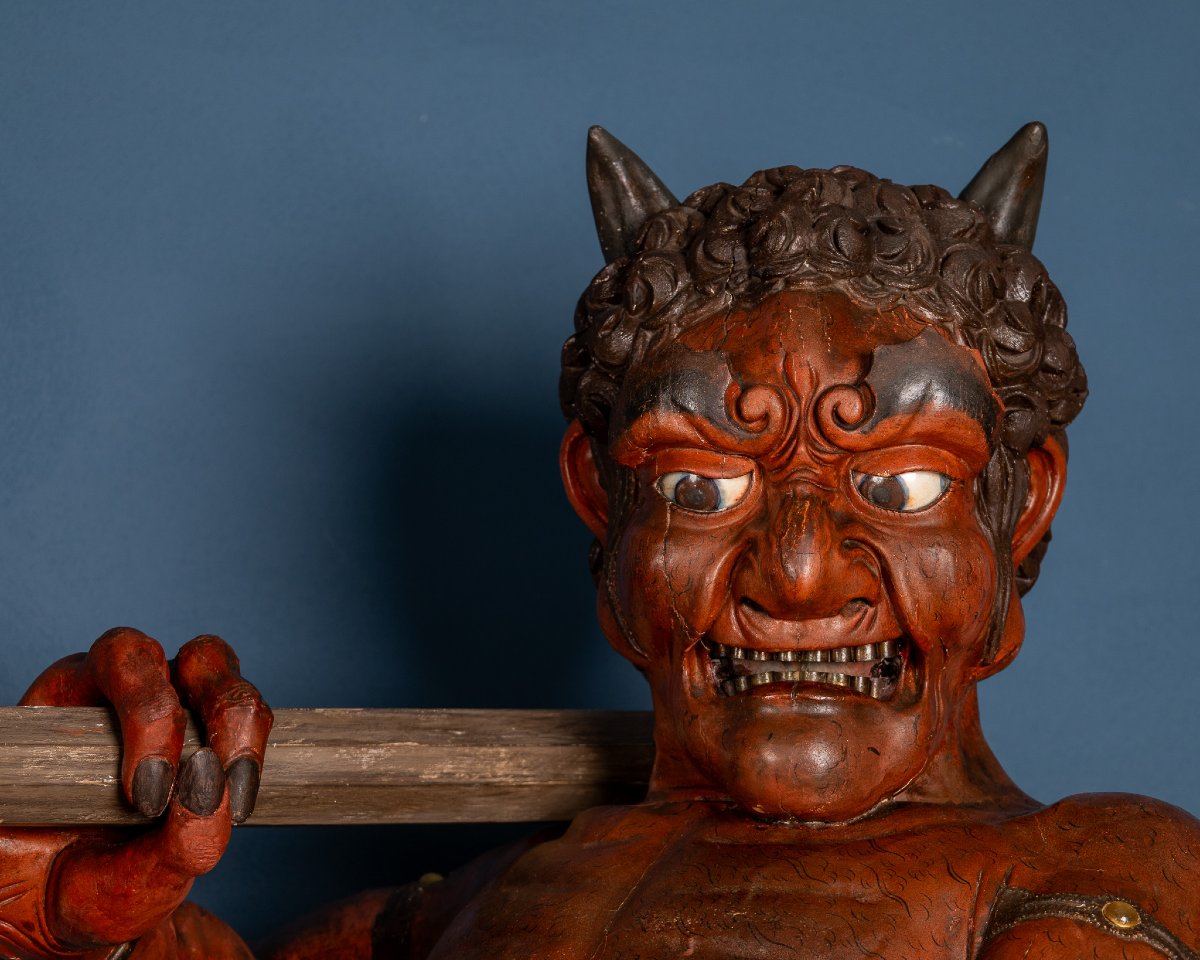
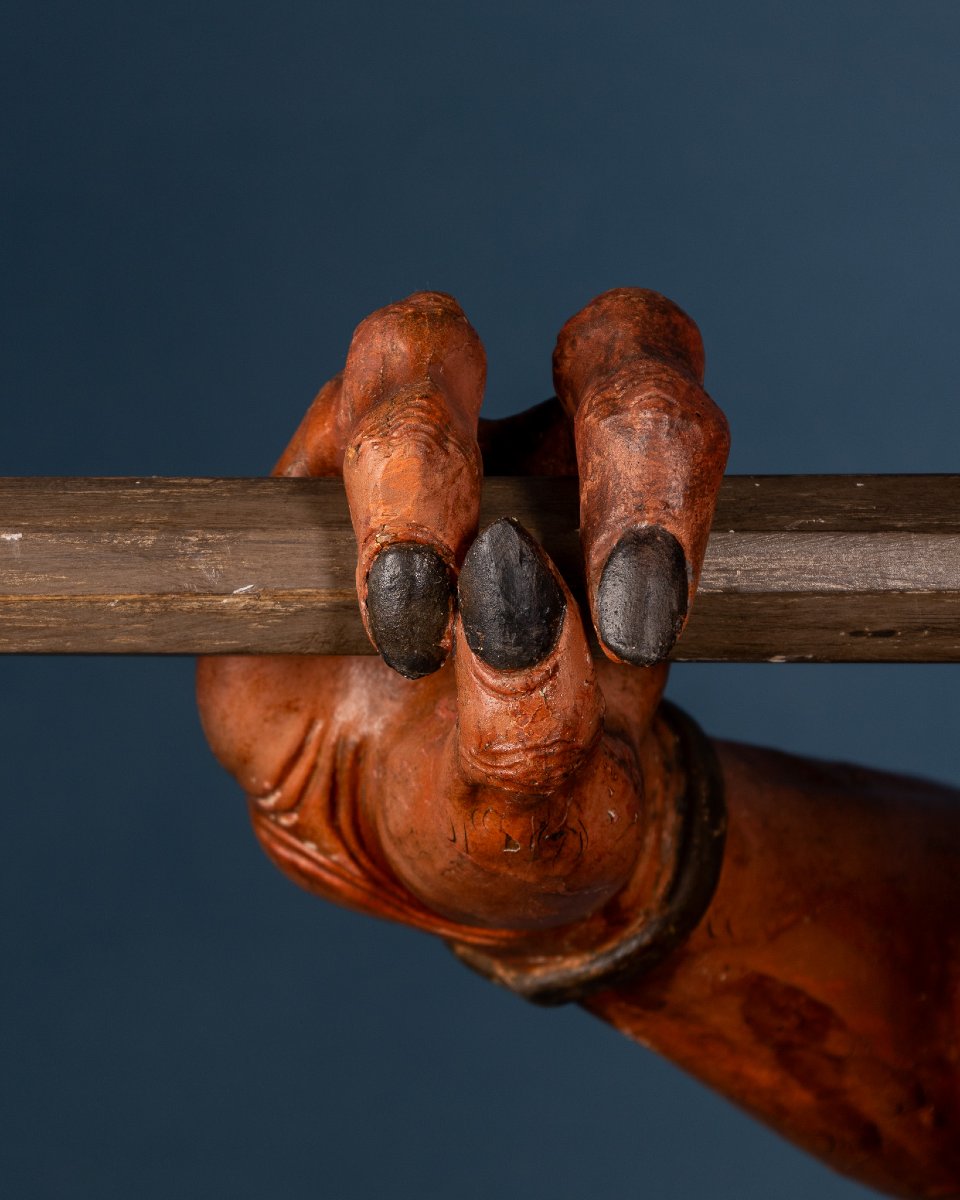
Rare Japanese sculptural group depicting two Oni carrying a ritual gong (dora) suspended from a long processional pole. Executed in carved, lacquered and polychromed wood, the ensemble retains its original carved wooden base, a feature that significantly enhances both its historical importance and collector appeal.
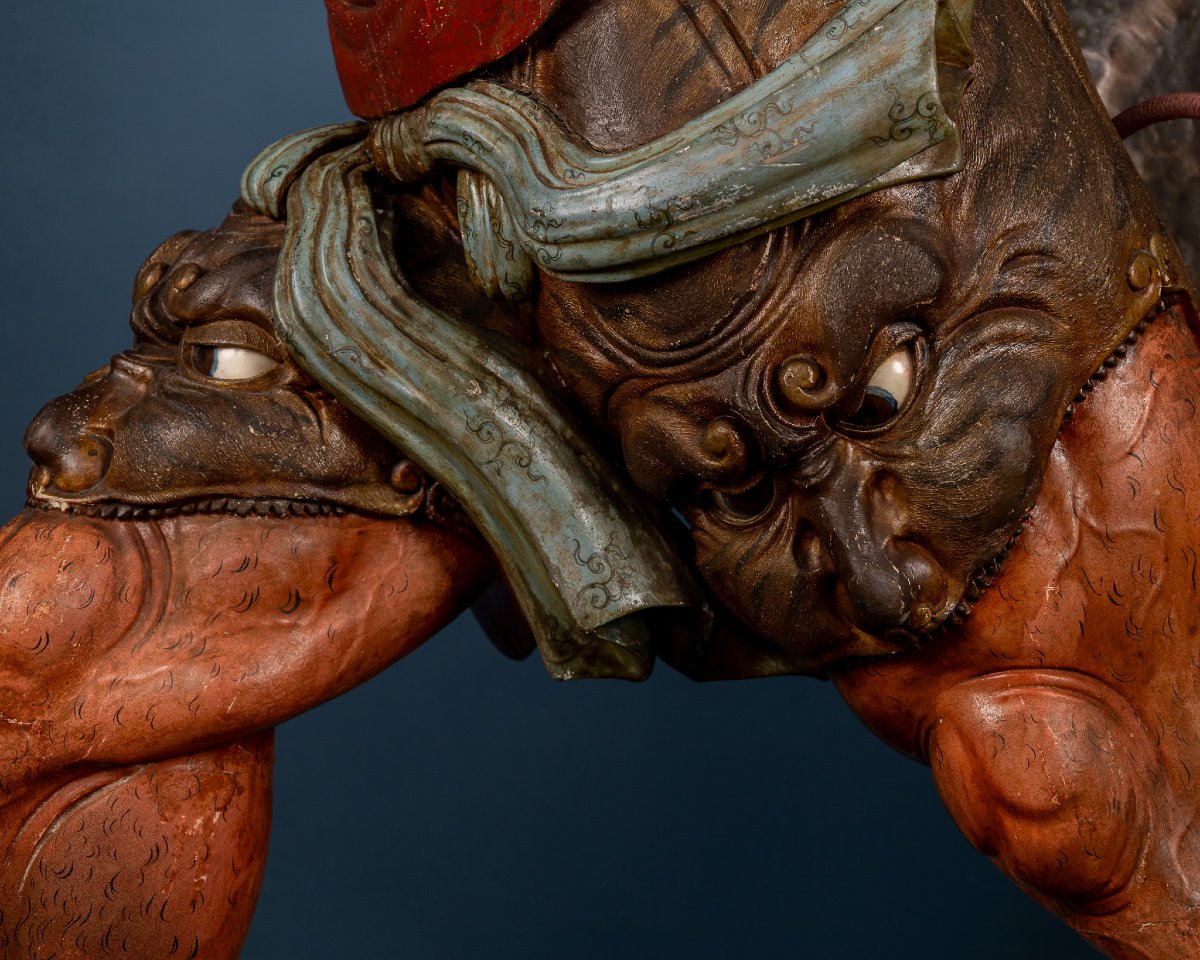
For its quality of execution and striking visual impact, this work represents one of the most fascinating expressions of Japanese ritual and ceremonial sculpture. The two figures advance with powerful sculptural energy; the anatomical modelling demonstrates exceptional skill in the rendering of musculature, veins, wrinkles and facial expressions, giving the characters an almost tangible presence.
In Japanese culture, Oni occupy a complex and fascinating role. They often serve a protective and apotropaic function, associated with purification and the warding off of harmful influences. Their presence is documented in Buddhist rituals, religious processions and theatrical traditions, where they embody supernatural forces charged with protecting the human world.
Groups of this type are extremely rare. A significant comparison may be drawn with a pair of gong-bearing Oni preserved in the collection of the Metropolitan Museum of Art, New York, attributed to the Kyoto area and published by Sally B. Brown in A Gift of Sound: The Crosby Brown Collection of Musical Instruments (2018).
The present example is distinguished by the survival of its original base and by the exceptional visual impact of the ensemble.
Japan, Edo Period, 18th–19th century.
ADDITIONAL INFORMATION:
The artwork is sold with a
certificate of authenticity and guarantee.
We take care of and organize the
shipping of purchased artworks, both within Italy and internationally, through
professional and insured couriers.
No additional costs will be
charged if the artwork is collected directly by the buyer at our gallery.
For shipments outside Italy,
delivery times are estimated at a minimum of 15 days, which may vary depending
on the export permit procedures.
The artwork can be viewed at our
gallery in Orzinuovi (BS), where we will be pleased to welcome you and present
our collections.
We remain at your complete
disposal, also by phone, at the following numbers:
+39 347 062 3784
+39 340 241 7919
FOLLOW US ON INSTAGRAM: https://www.instagram.com/barbierifineart/
Period: 18th century
Style: Asian art
Condition: Good condition
Material: Painted wood
Width: 217
Height: 191
Depth: 80
Reference (ID): 1774358
Availability: In stock