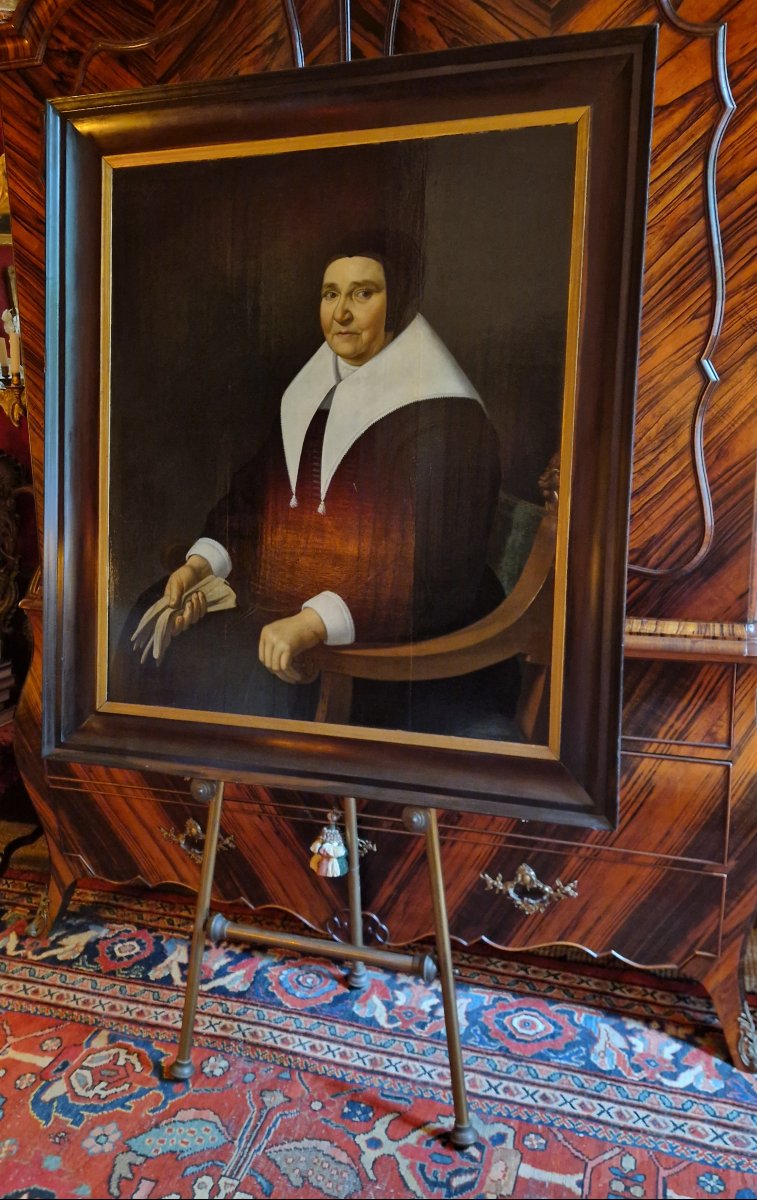
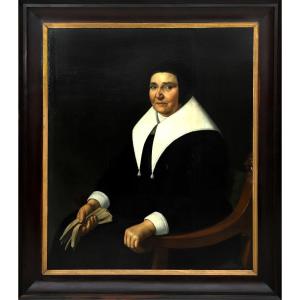


17th C Old Master Painting By Cornelis De Man (delft 1621-1706) Portrait Of A Lady - Dated 1659
Cornelis de Man (Delft 1621 – 1706 Delft)
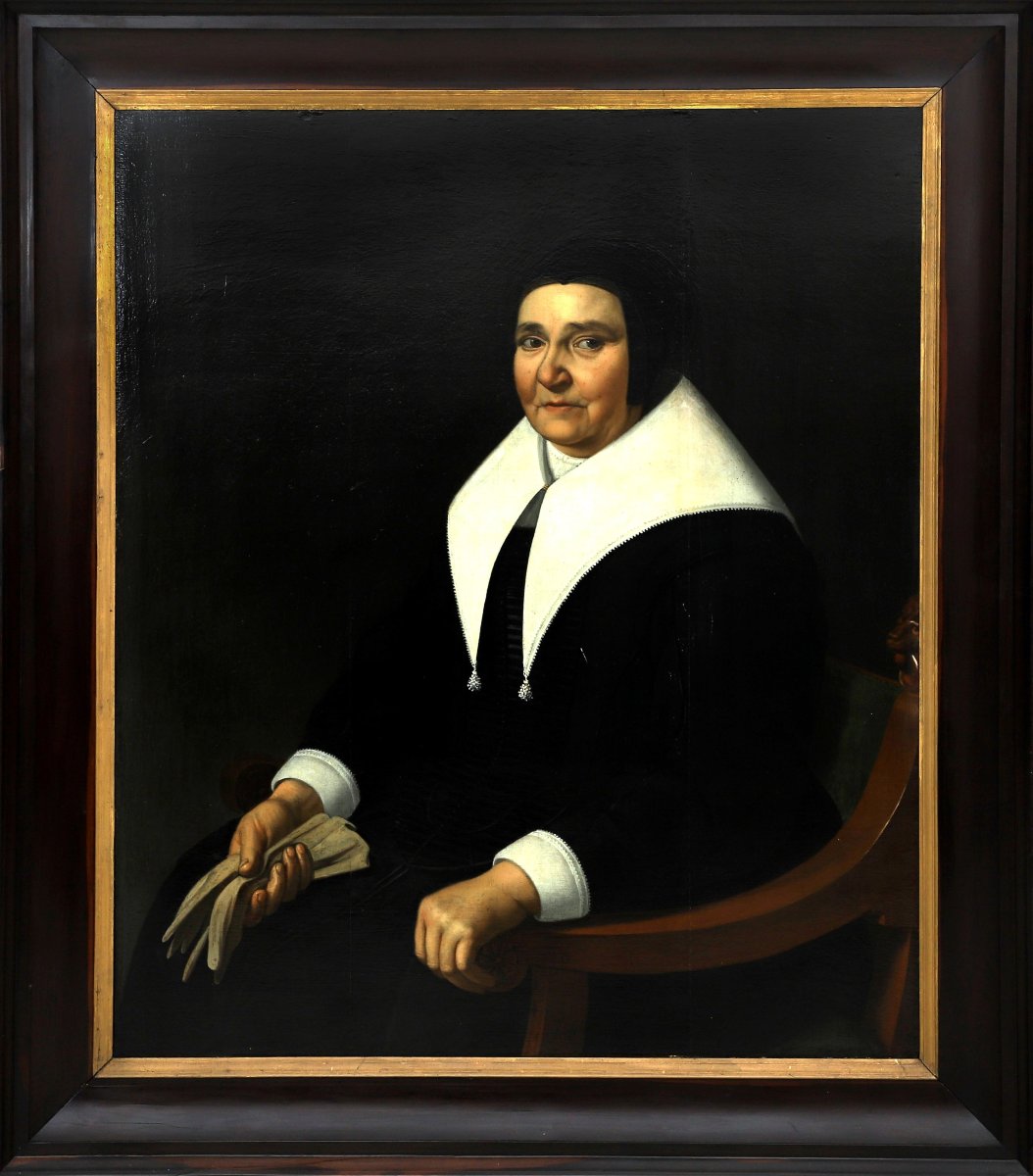
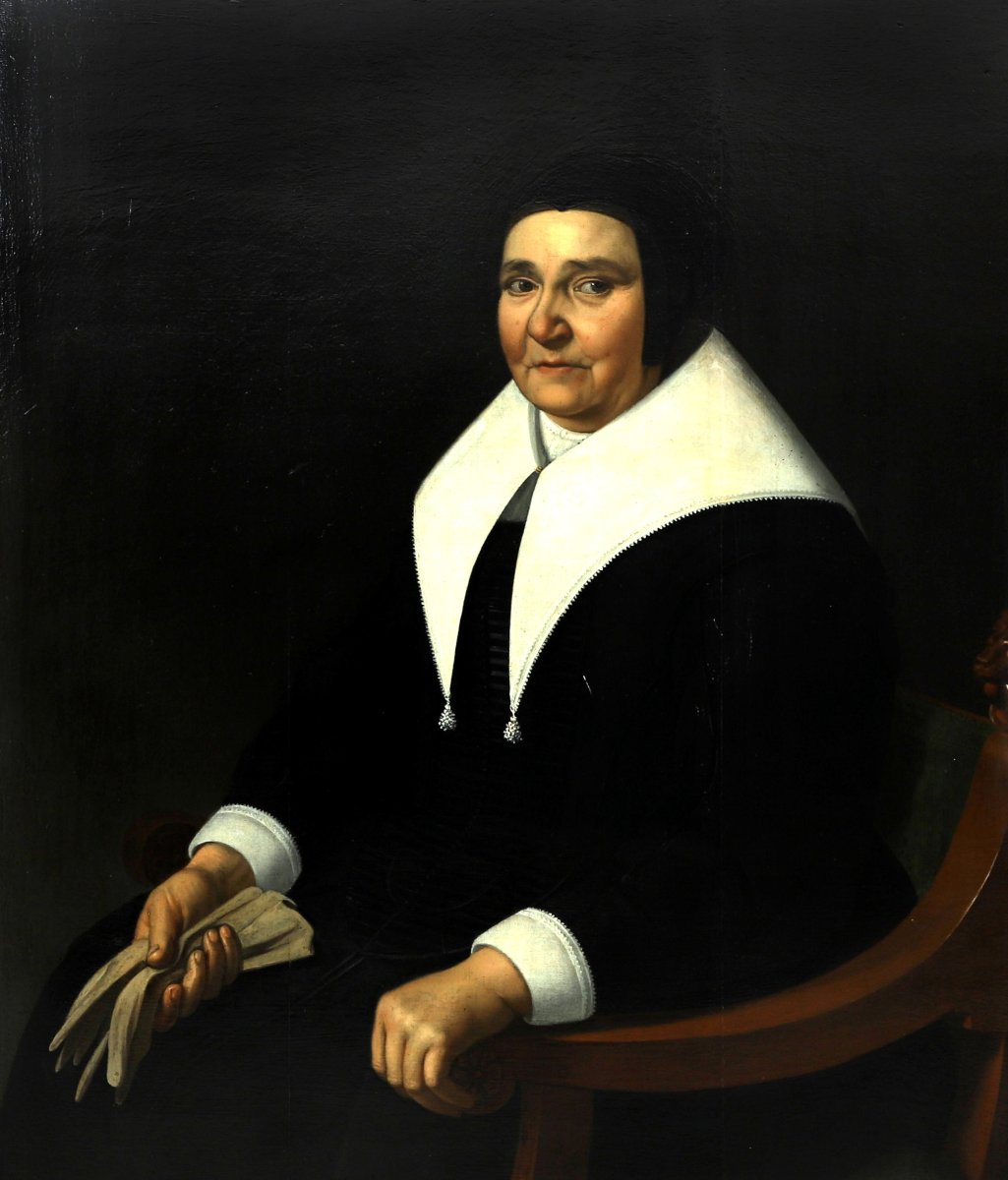
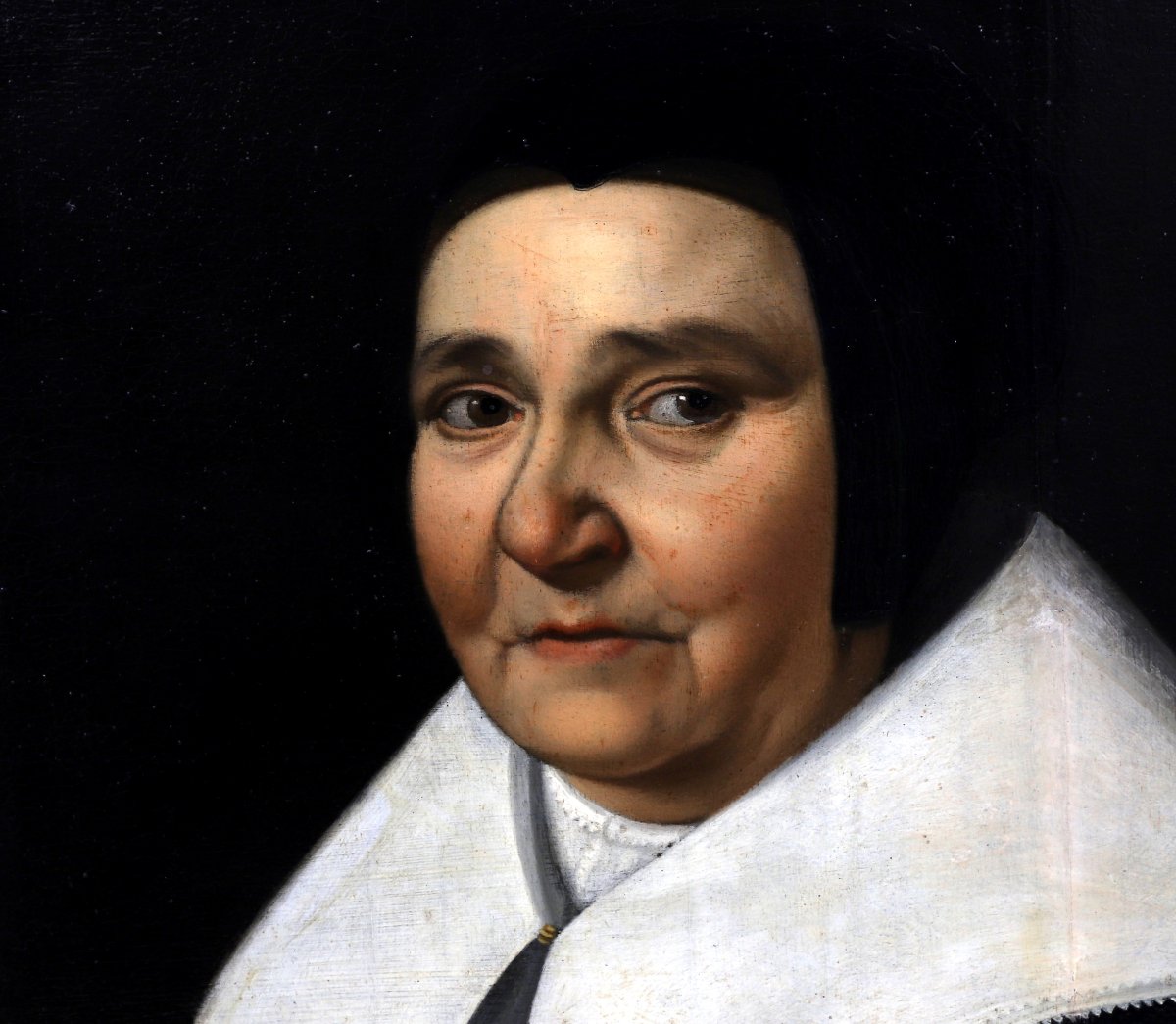
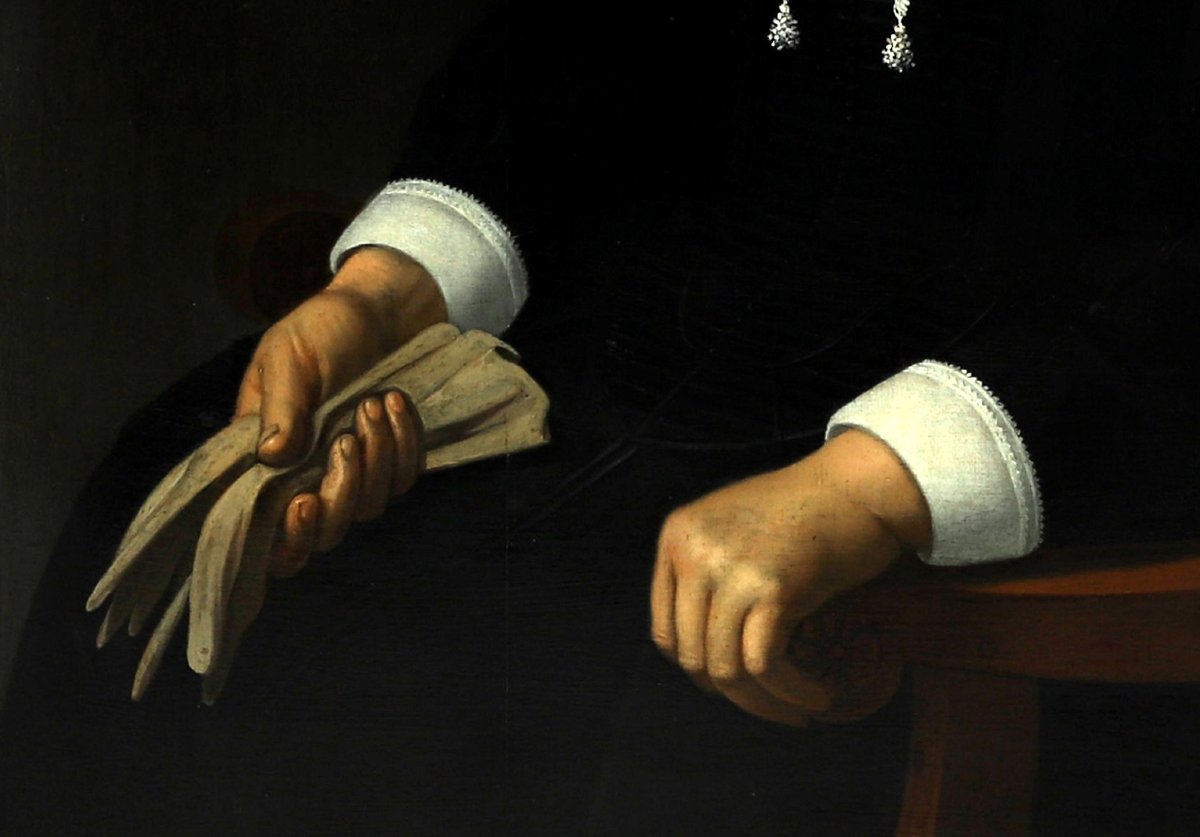
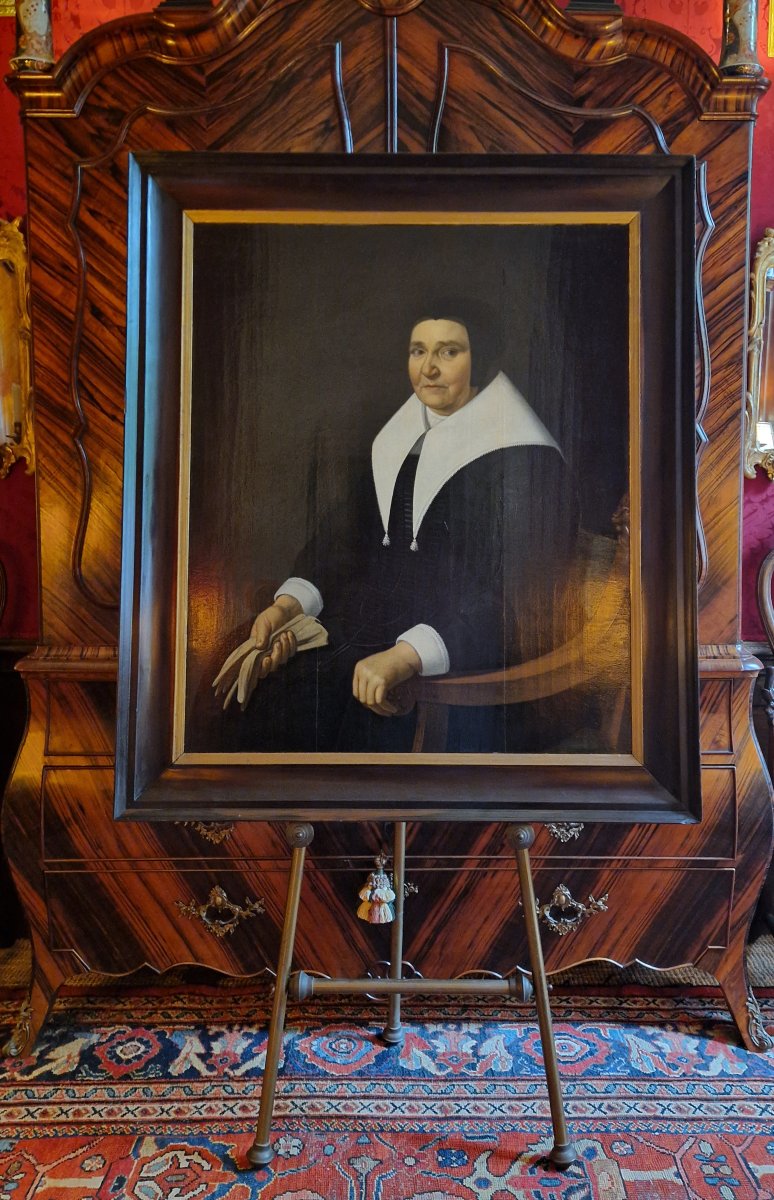
Portrait of a Lady Seated in an Armchair
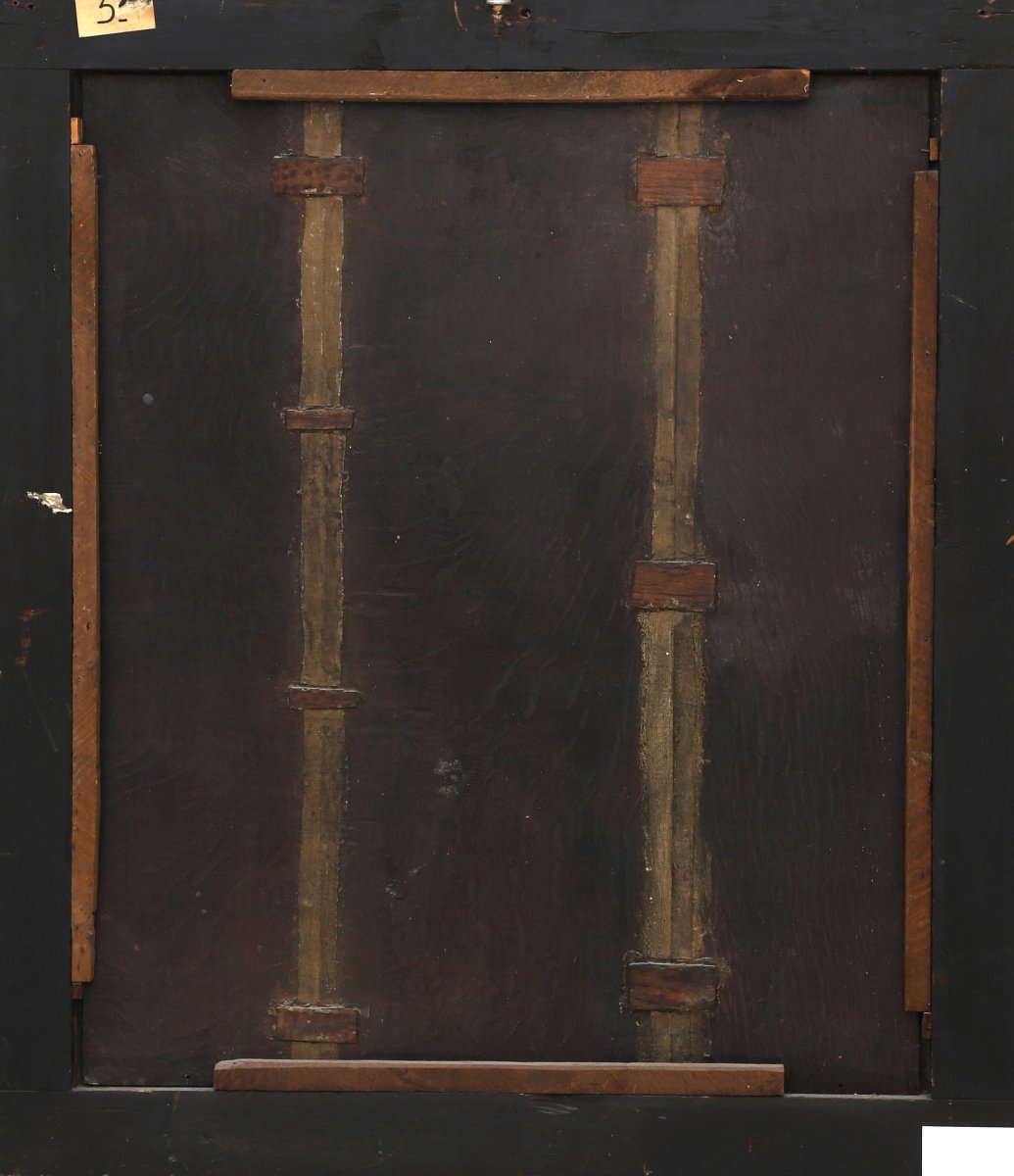
Oil on panel, 101.5 x 84.5 cm (40 x 33.3 inch)
Contained in a dark-stained frame with gilded inner slip (possibly the original frame), outer dimensions 120 x 107 cm
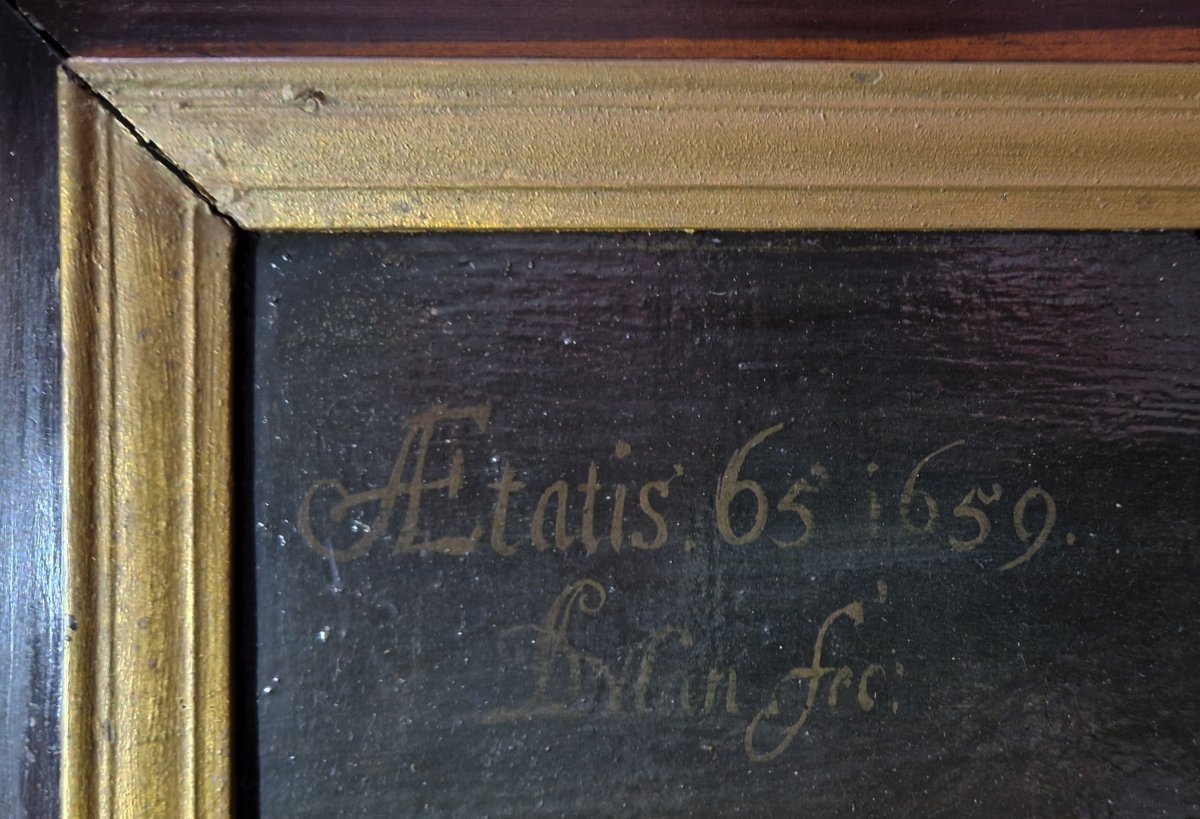
Signed, annotated and dated ‘AEtatis 65 i659 / CDMan fec:’ (in ligature, upper left)
Provenance
~ Collection Dr J. Nuyten, Arendonk, Belgium
~ Private collection, The Netherlands
***
Cornelis de Man was the son of the gold- and silversmith Willem Cornelisz de Man and Sara Doendochter de Vries, who had six other children.1 His parental home was called ‘De Gekroonde Pelicaan’, ‘the crowned pelican’, and stood on the west side of the Markt square, the present numbers 13 and 15. Cornelis inherited the house from his parents and lived there from 1653 until his death in 1706 – his extensive collection of etchings and engravings was auctioned on 4 September of that year.
It is uncertain where De Man took his artistic training, which was completed by December 1642, when he joined the Delft Guild of St Luke. Shortly thereafter however he departed South, travelling via Paris and Lyon to Venice, Florence and Rome, where he studied the works of Antiquity and of the modern painters, as was documented by the artists’ biographer Arnold Houbraken in his Groote Schouburgh of 1718-1721.2 In the Eternal City, De Man shared a house with Johannes Lingelbach and Abraham Janssens II, and was known as ‘Cornelio Denan’. A self-portrait annotated ‘Romae’ and dated 23 June 1646 is part of the collection of the Prinsenhof Museum in Delft.3 According to Houbraken, De Man’s Grand Tour took no less than nine years, and he travelled back home on foot, over the Alps.
De Man is documented again in Delft from 1654 and became an active member of the Guild, serving as headman in various years. He quickly rose to prominence and painted church interiors and interiors in the manner of his townsman Pieter de Hooch, but is best known for his portraits of the town’s elite, including several large-scale group portraits, such as the painting Anatomical Lesson of Dr Cornelis ‘s-Gravesande, also in the Prinsenhof Museum in Delft.4
This delicate portrait is likely to have been originally accompanied by a portrait of the sitter’s husband. Almost certainly this is portrait of nearly identical size of a seated gentleman, also dated 1659, formerly in a private collection in York (fig.).5
1. For the artist, see the biography in Saur Allgemeines Künstlerlexikon: die bildenden Künstler aller Zeiten und Völker, Munich 1992- , vol. 86 (2015) p. 522.
2. Arnold Houbraken, De groote schouburgh (…), The Hague 1718-1721, vol. II (1719), pp. 99-100.
3. Oil on paper, mounted on panel, 16.2 x 11.7 cm, inv. no. PDS 279.
4. Oil on canvas, 173 x 212 cm, signed and dated 1681, inv. no. PDS 276.
5. Oil on panel, 99 x 82.5 cm, similarly signed, annotated and dated ‘AEtatis 61 i659 / CDMan’, observed by Dr H. Gerson in a collection in York in 1964, and documented by a black-and-white photograph in the Rijksbureau voor Kunsthistorische Documentatie, The Hague.
Period: 17th century
Style: Renaissance, Louis 13th
Condition: Good condition
Material: Oil painting on wood
Reference (ID): 1771936
Availability: In stock