

Russian Porcelain Figurine Depicting A Yakut Woman, By Pavel Kamensky
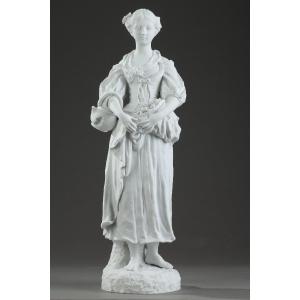
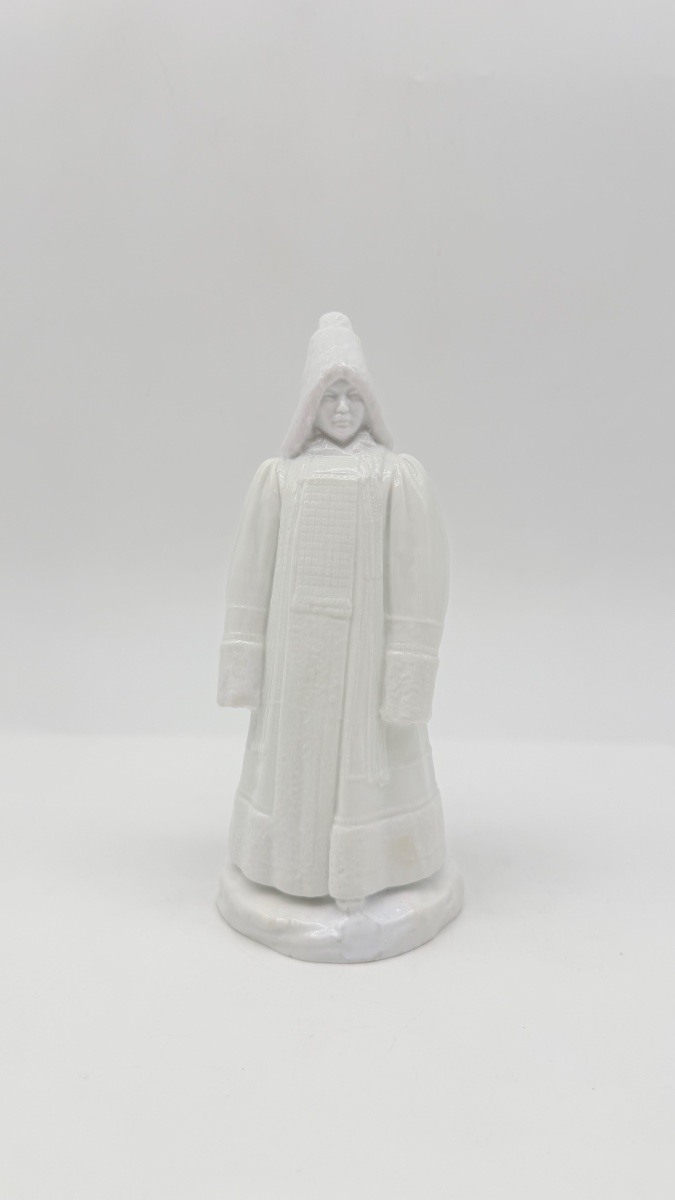
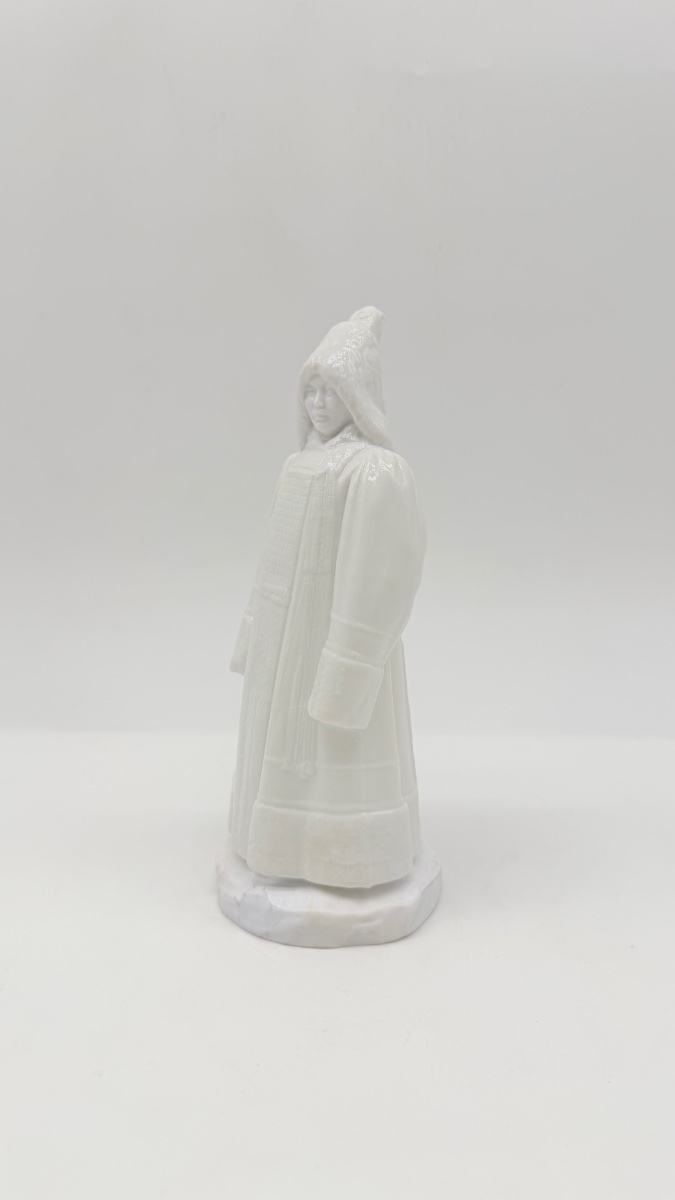
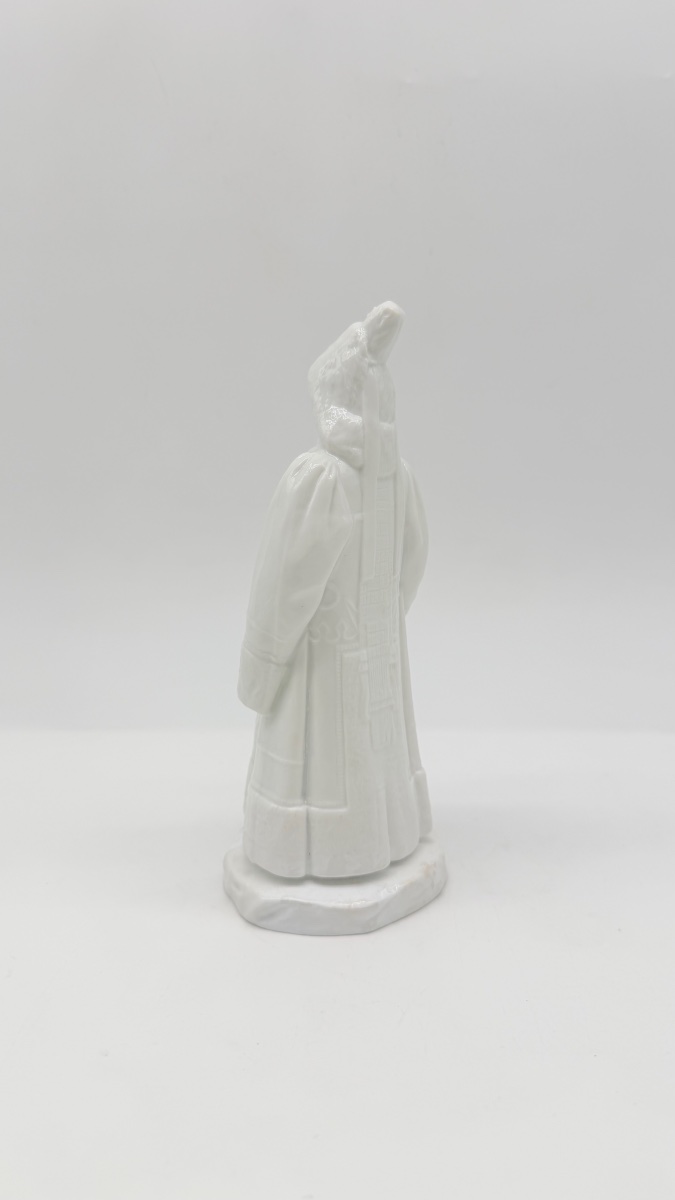
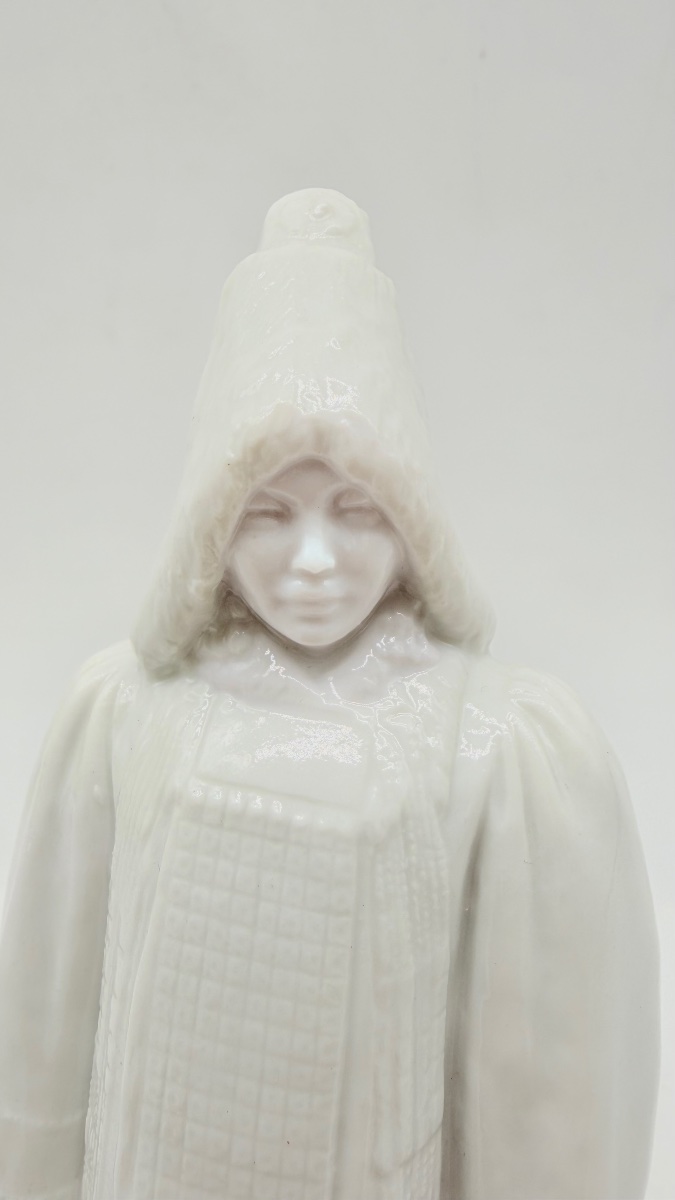
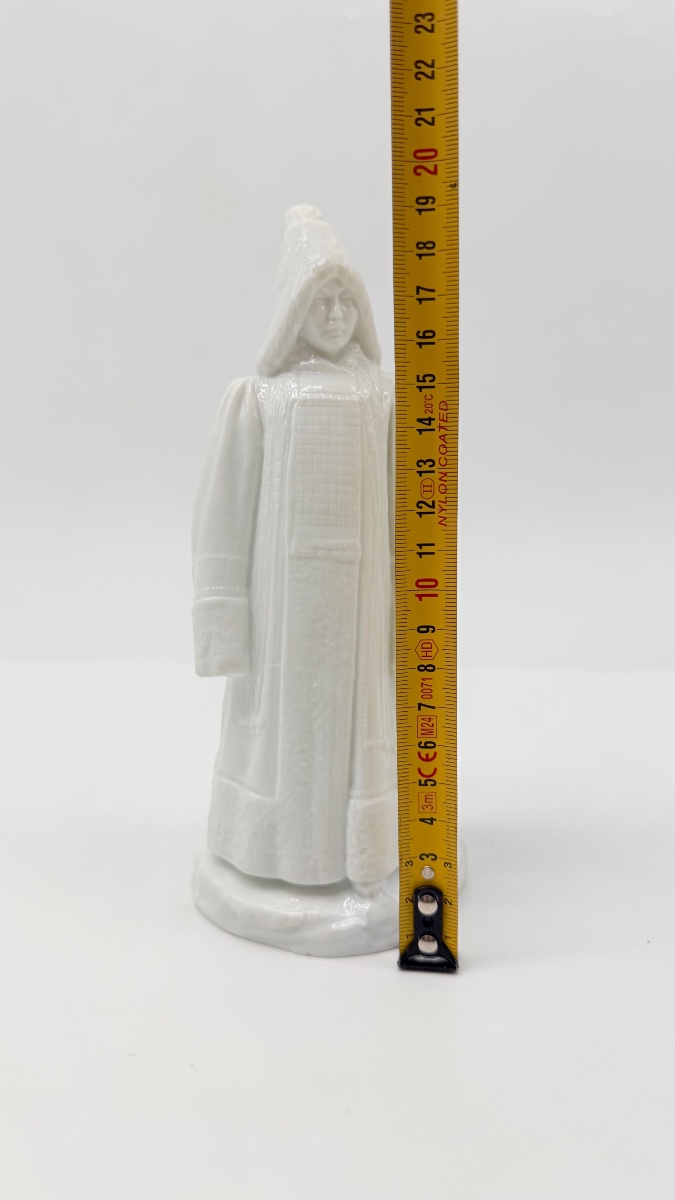
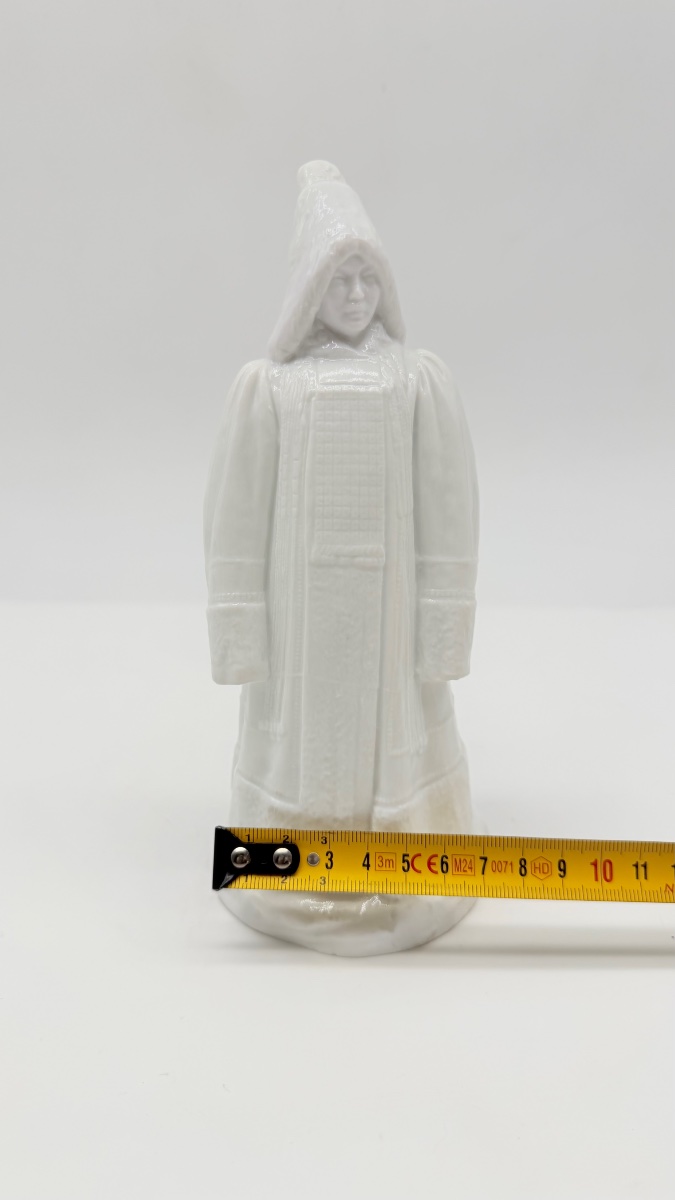
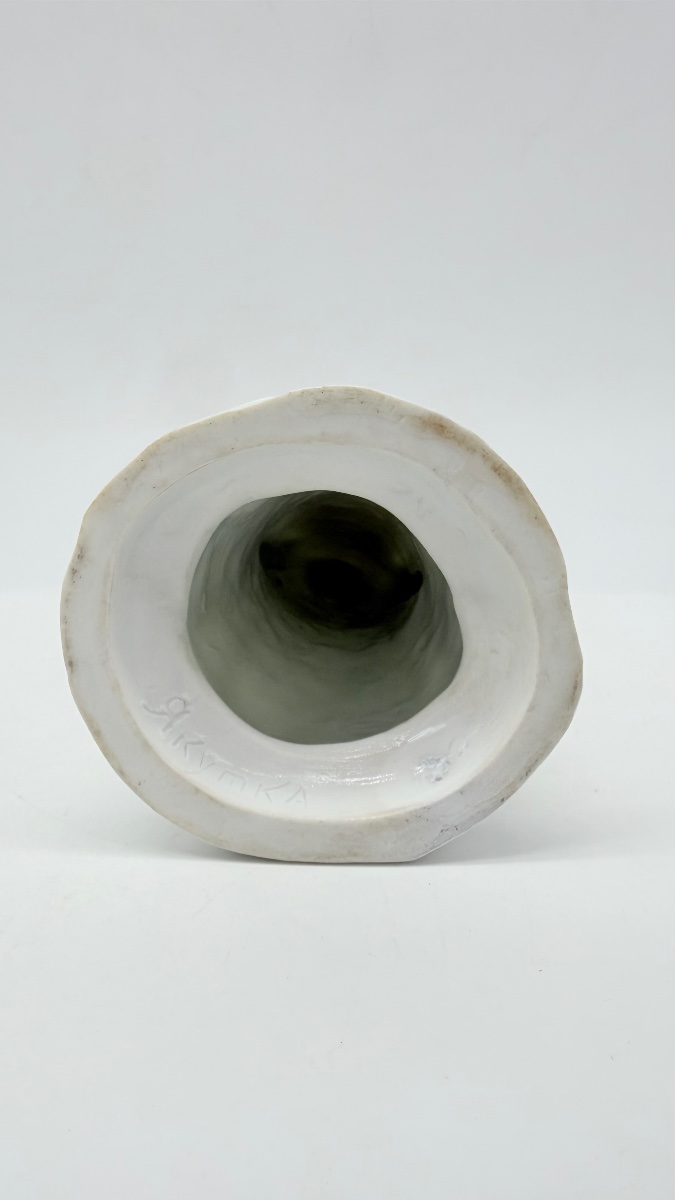
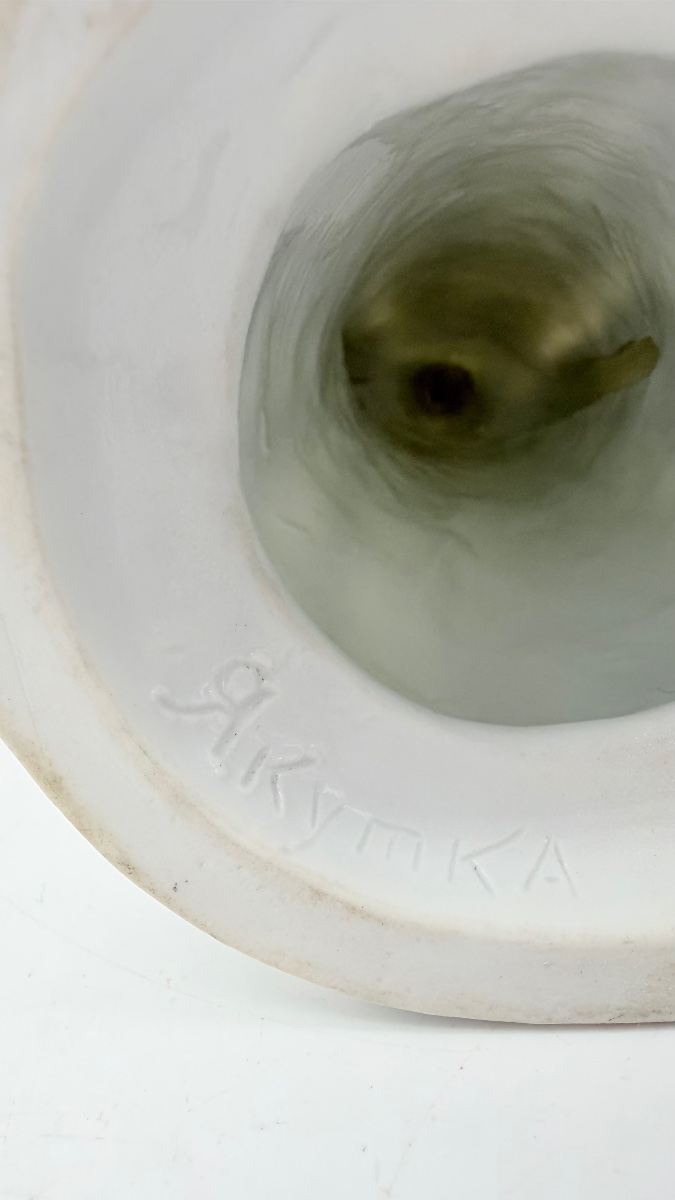
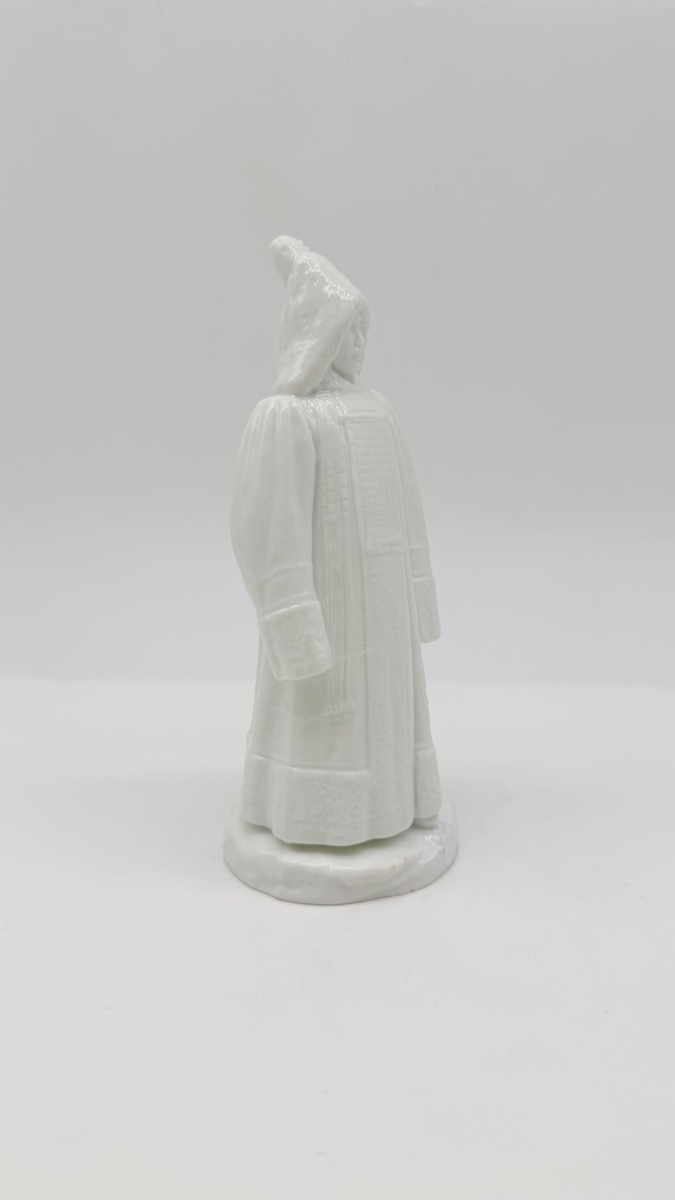
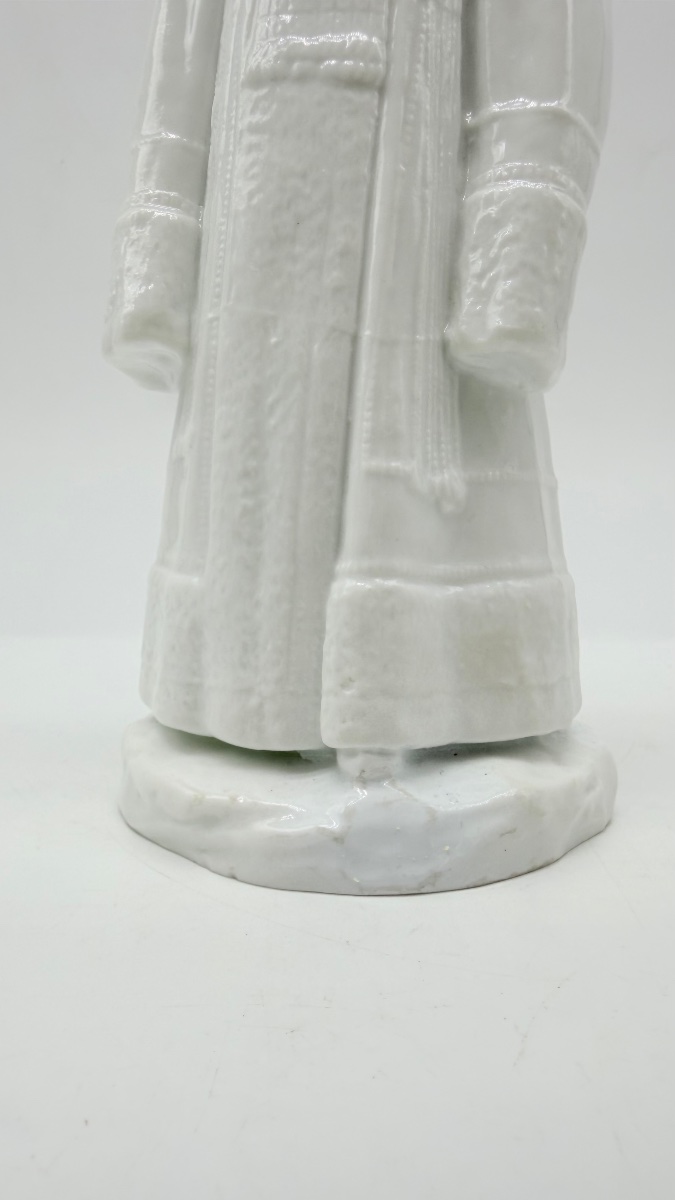
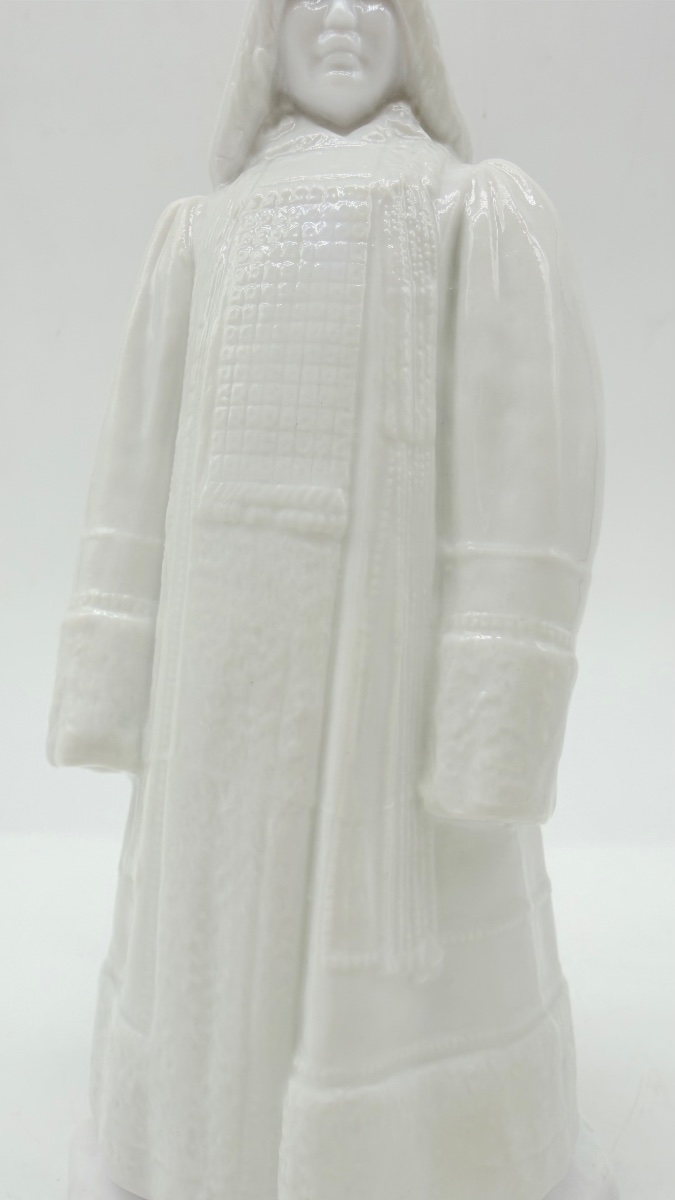
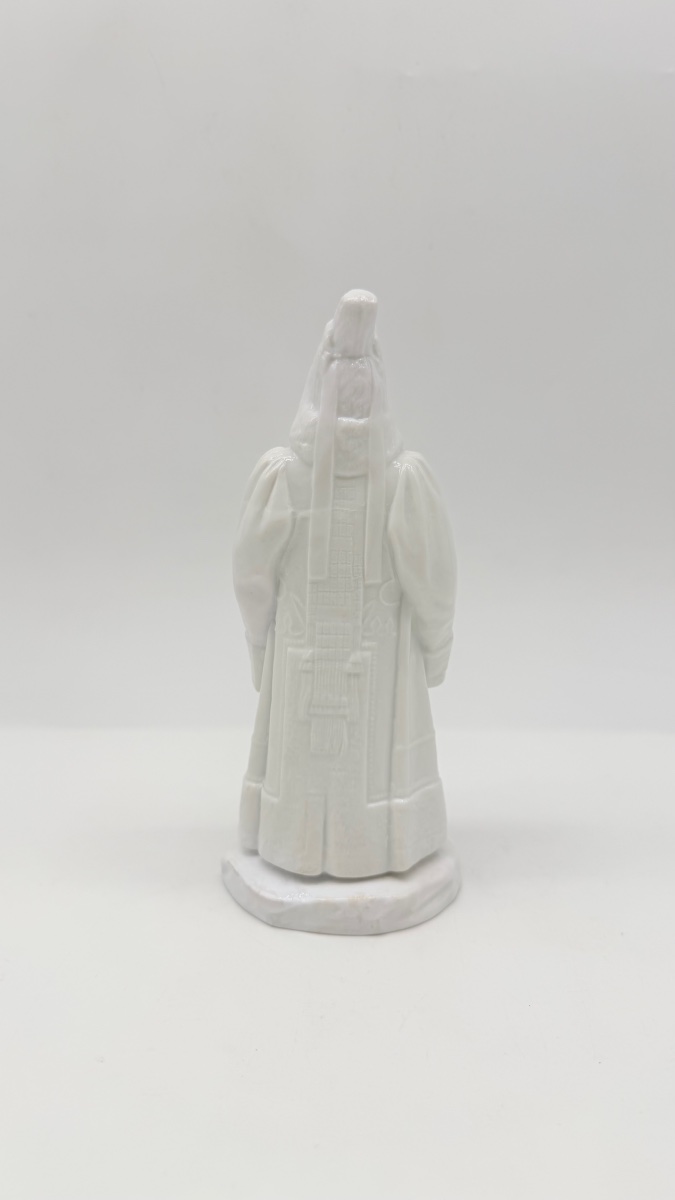
Yakut woman in traditional costume made at the Imperial Porcelain Manufactory in St. Petersburg, period of Nicholas II, YAKUTKA FROM THE “PEOPLES OF RUSSIA”, a realistically modeled female figure based on a design by Pavel Kamensky, wearing a fur-lined coat and cap, on a round white base with the inscription “Yakutka” in Cyrillic script, H. 21 cm
Provenance: Private collection.
In 1907, the general manager of the porcelain factory, N.B. Wolf received an order from Emperor Nicholas II for the execution of a series of figurines “Peoples of Russia”. Taking into consideration the forthcoming large-scale work, he offered P.P. Kamenskiy the position of the chief sculptor of this series. Pavel Kamenskiy actively soaked in this work.
Series "Nationalities of Russia" (1858-1922), created by P.P. Kamenskiy at the Imperial Porcelain Factory, turned out to be the epitome of the main wealth of Russia - the culture of the peoples inhabiting it - embodied in porcelain. It has no analogues in the world porcelain practice, since a unique method was developed for its creation. Each figure was modeled on the basis of the latest historical, ethnographic and anthropological data, with the help of scientific consultants from the leading historical and cultural institutions of the time: the Museum of Anthropology and Ethnography (now the Peter the Great Museum of the Russian Academy of Sciences) and the Ethnographic Department of the Alexander III Museum (now the Russian ethnographic museum).
REFERENCES:
1. Khmelnitskaya E. "Porcelain Russia" P.P. Kamenskiy, M., 2014 "Favorite Book", IP Media Inc.
2. Trofimova E. Memoirs of M.F. Kamenskaya, // The philologist, 1993 No 1-2.
3. Imperial collections in the collection of the Russian Ethnographic Museum. Exhibition catalog. M.; St. Petersburg, 1995.
4. Sergei Witte. Selected memories. M., 1991.
Nationalities of Russia”, “Peoples of Russia” is a series of porcelain figurines of the Russian Imperial Porcelain Factory (IPZ), created in 1907-1917.
The author of most of the models was the sculptor Pavel Pavlovich Kamensky.
At present, the existence of the original 74 figures is known. The series is presented in its most complete form in the Porcelain Museum of the Hermitage, while the collection of the Russian Ethnographic Museum contains part of a series of 47 figures.
The series, which turned out to be the largest cycle of IPM figurines, was launched in 1907 at the initiative of Emperor Nicholas II and timed to coincide with the celebration of the 300th anniversary of the Romanov dynasty
The initial work on the preparation of the concept fell on the director of the plant, Baron N. B. Wolf .Unlike previous porcelain figurines depicting the peoples of Russia, it was decided to create this series based on scientific data, relying on the latest ethnographic research (as well as on the results of the first general population census in 1897 - it was she who served as the criterion for compiling the list. The director of the Museum of Anthropology and Ethnography, Academician VV Radlov, was invited to the plant as a consultant.
The management of the project was entrusted to the sculptor Pavel Kamensky (1858-1922), who for many years served as the head of the prop workshop of the imperial theaters. He was assisted by a team of molders and painters - Anatoly Lukin, Pavel Shmakov, Ivan Zotov, Andrey Dietrich, Lyudmila Midina and others.
The numerous series was intended to illustrate all the nationalities that lived on the territory of the Russian Empire, and thus emphasize its greatness. Sketches were made on the basis of the exhibits of the Museum of Anthropology and Ethnography named after Peter the Great and the ethnographic department of the Russian Museum of Emperor Alexander III.
Kamensky had at his disposal the latest results of scientific research comparing the facial features, height and physique of individual ethnic groups, as well as numerous photographs of representatives of different peoples and anthropological mannequins. […] When selecting images, scientific achievements in the study of the culture of the peoples of Siberia, the Far East, and Central Asia were of great importance. This explains the predominance of sculptures representing the peoples of precisely these territories in the series “Peoples of Russia”
The preliminary list included 400 male and female figures of different nationalities living in Russia, however, “taking into account that some nationalities have common clothes and slightly differ in type, for others there are serious difficulties in finding samples of clothing at the present time, first of all 73 nationalities and types of nationalities are scheduled for execution, that is, 146 separate figures ” (each nationality, apparently, had to be represented by both sexes). “In the list of“ nationalities ”slated for execution, in the first place, there were more than 60 figures. According to the project, this series was supposed to be the largest work of the sculptural workshop of the St. Petersburg enterprise in recent decades. In an abbreviated form, it took 18-25 years to produce a series with the creation of 3-4 figures per year, according to the estimates of the plant manager.
By 1915, almost all currently existing models were ready. Museums received copies of the models, and half-sized figurines went on sale.
Period: 19th century
Style: Other Style
Condition: Excellent condition
Material: Porcelain
Height: 21cm
Reference (ID): 1769550
Availability: In stock