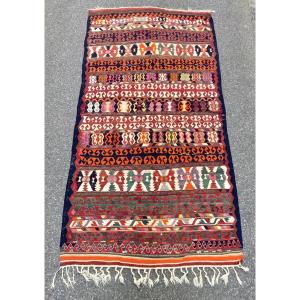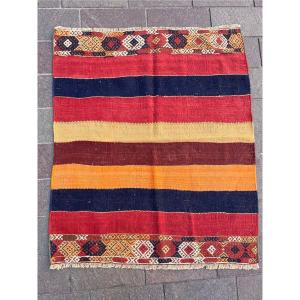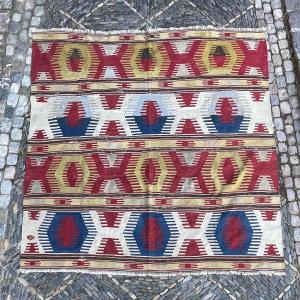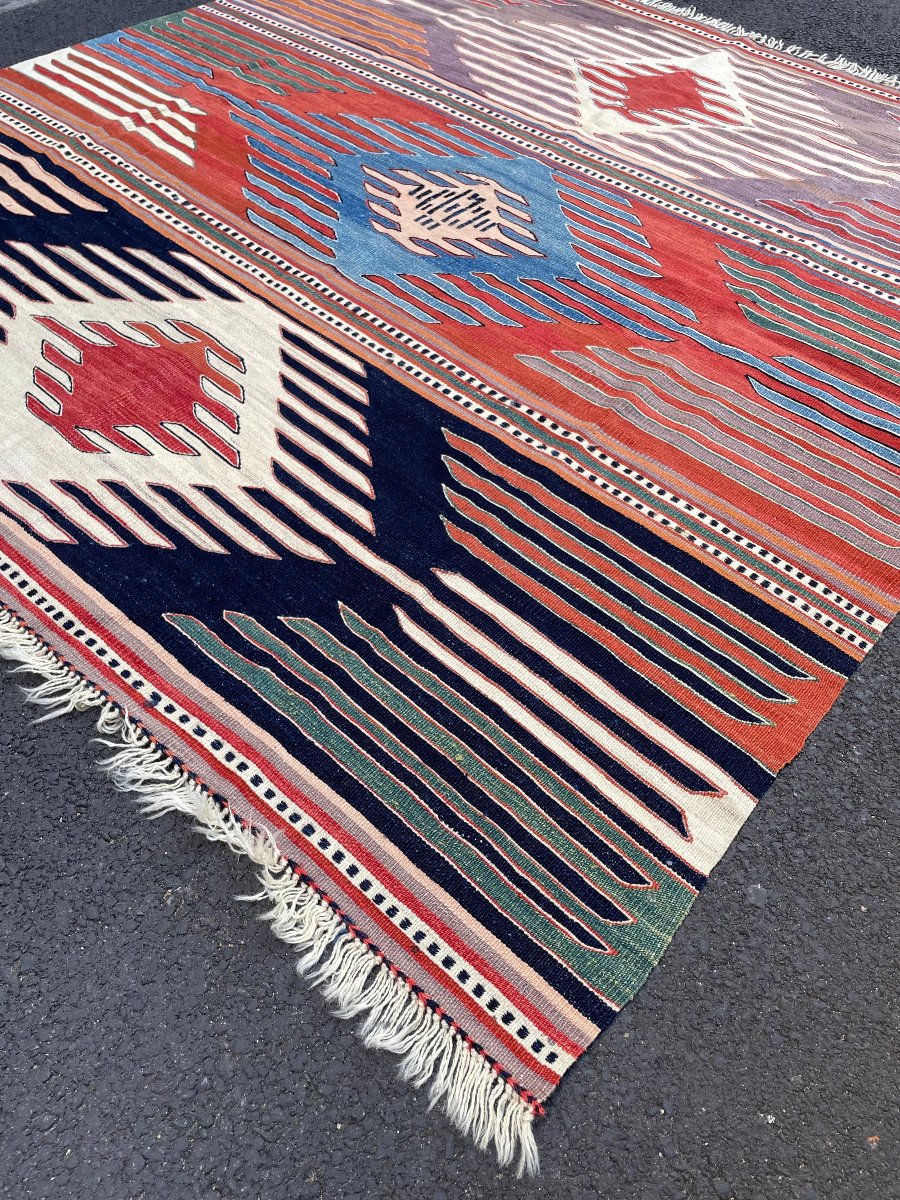
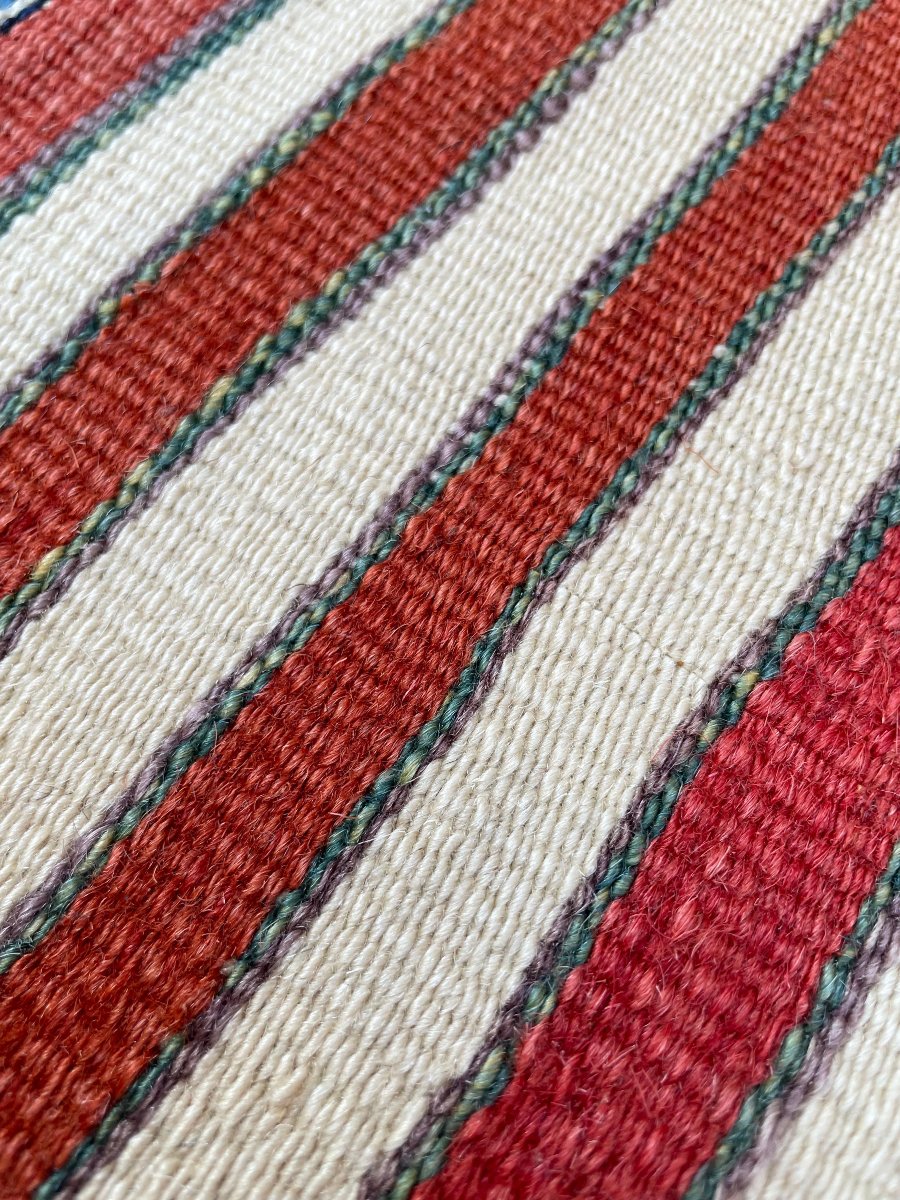
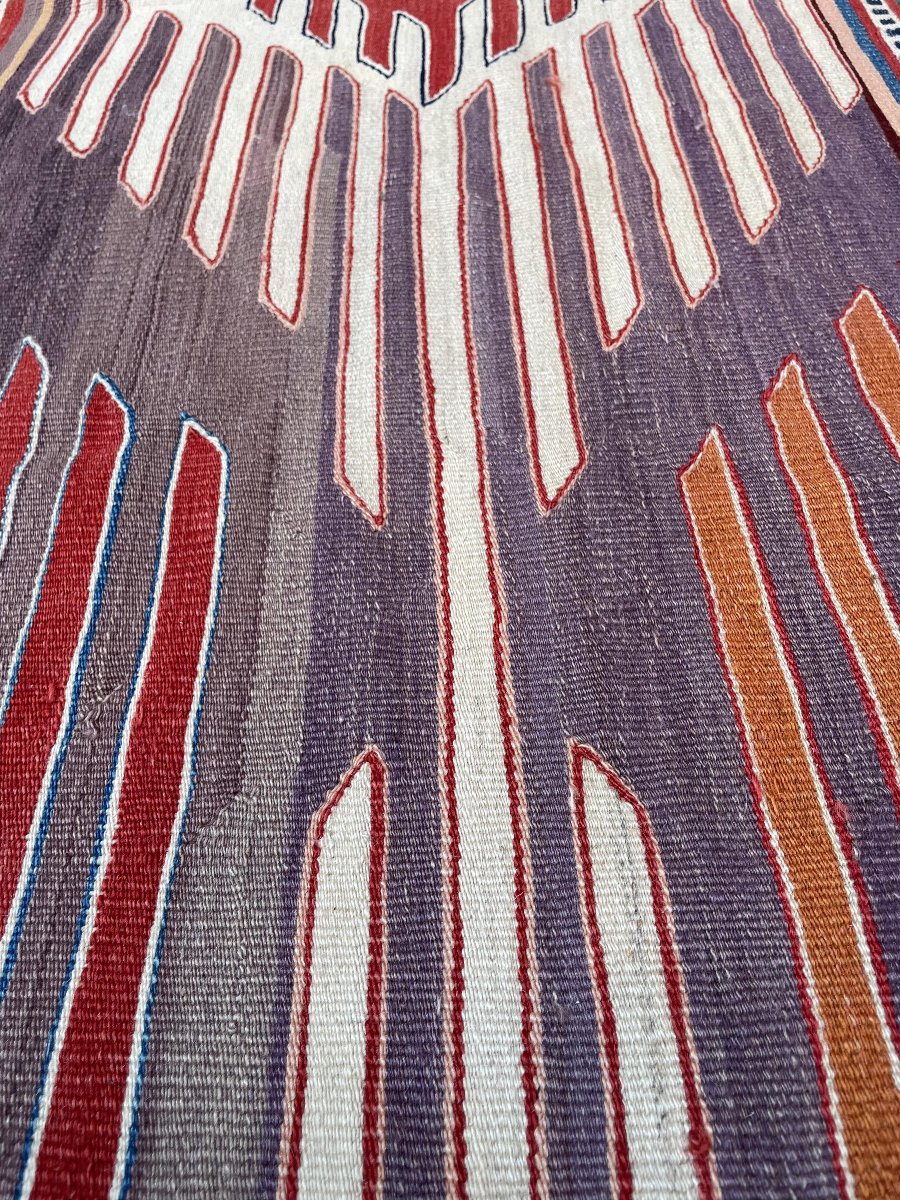
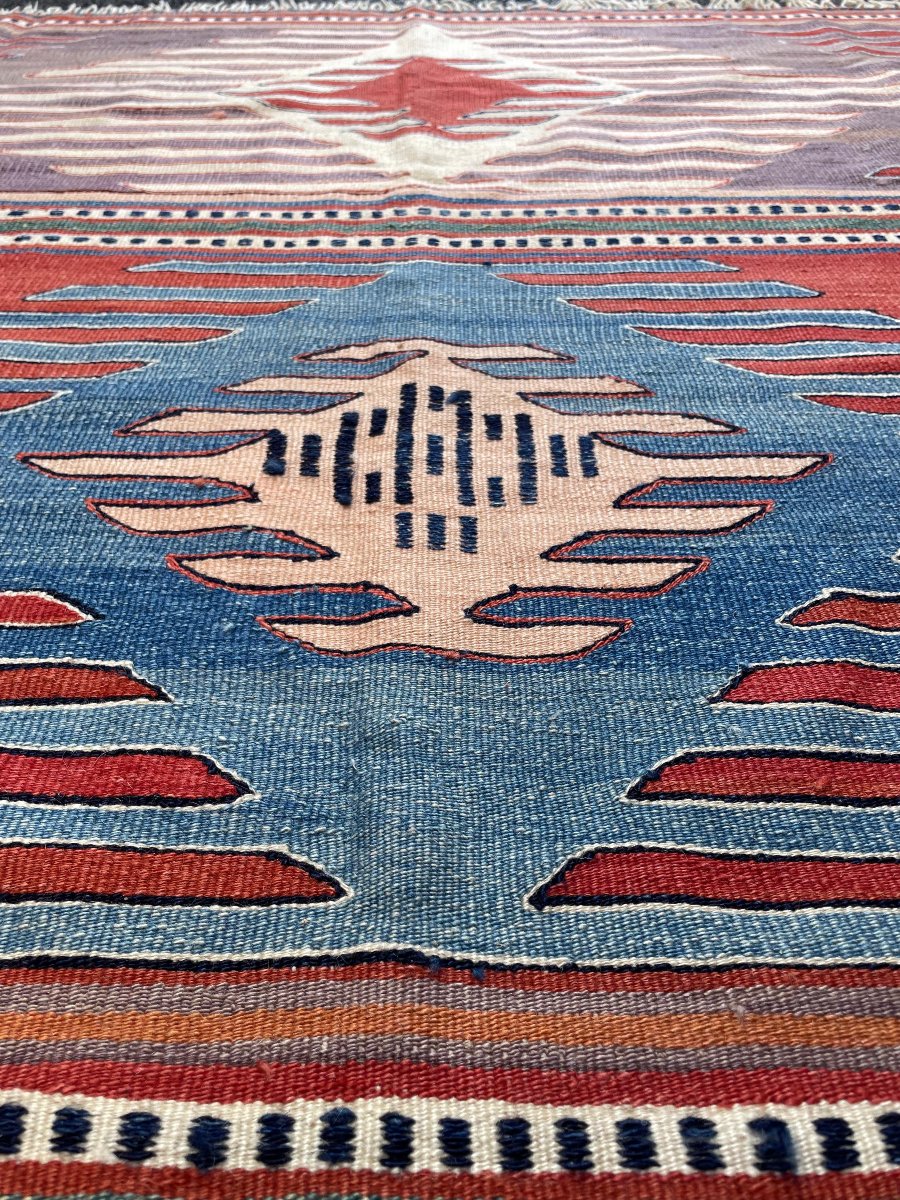
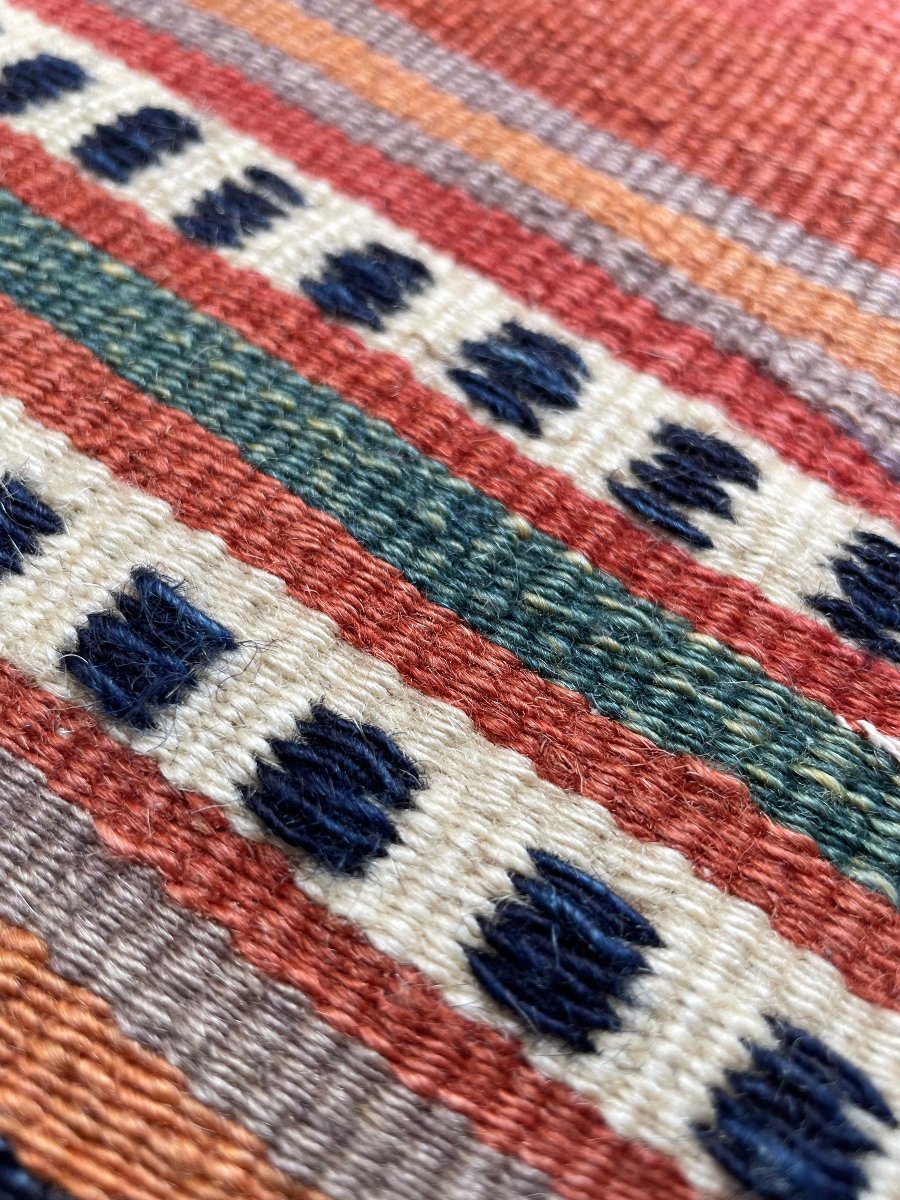
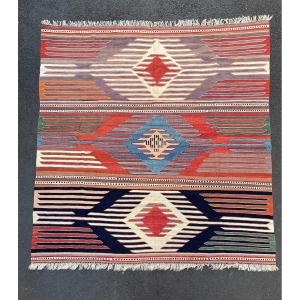


Kilim Parmaklı - Afyon. Anatolia. Circa 1980. 205 X 195 Cm
I'm often asked about the quality of today's production. To my great regret, I have to admit that this craft has gradually lost its letters of nobility over the years! The use of chemical dyes, which appeared at the beginning of the 20th century, has spread to the point where they now account for almost all recent weavings. Too long, too complex, too expensive. Worse still, we've seen the emergence of what some call synthetic wool! I'll leave you with the image of the sheep in its plastic jacket... What we need to understand is that societies have changed, they've apparently evolved. Once nomadic, weavers used to combine time and pleasure to create the most beautiful works, putting their heart and soul into them. Today, everything has been simplified. We have to produce quickly and then move on to the next one. I'm saddened. Maybe I'm being harsh, but I think today's products are nothing but pale imitations. Do you know a collector on this planet of recent pieces?
It's like French grammar, yes, with a few exceptions!
There are still some very fine weavings to be found today, the result of a fierce determination, an unwavering commitment to keep the art of weaving alive.
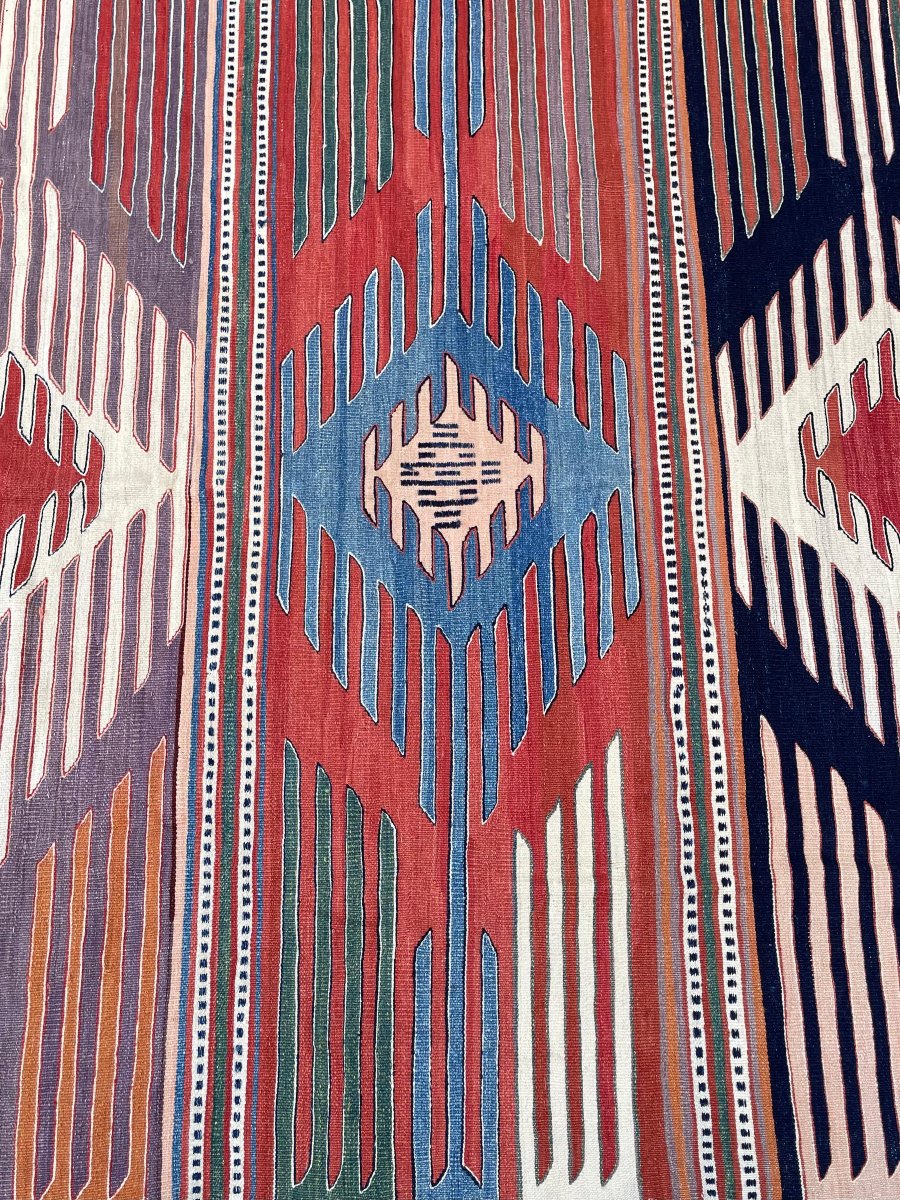
Let's turn our attention to this kilim. In fact, it has absolutely all the characteristics of the old pieces except for the age.
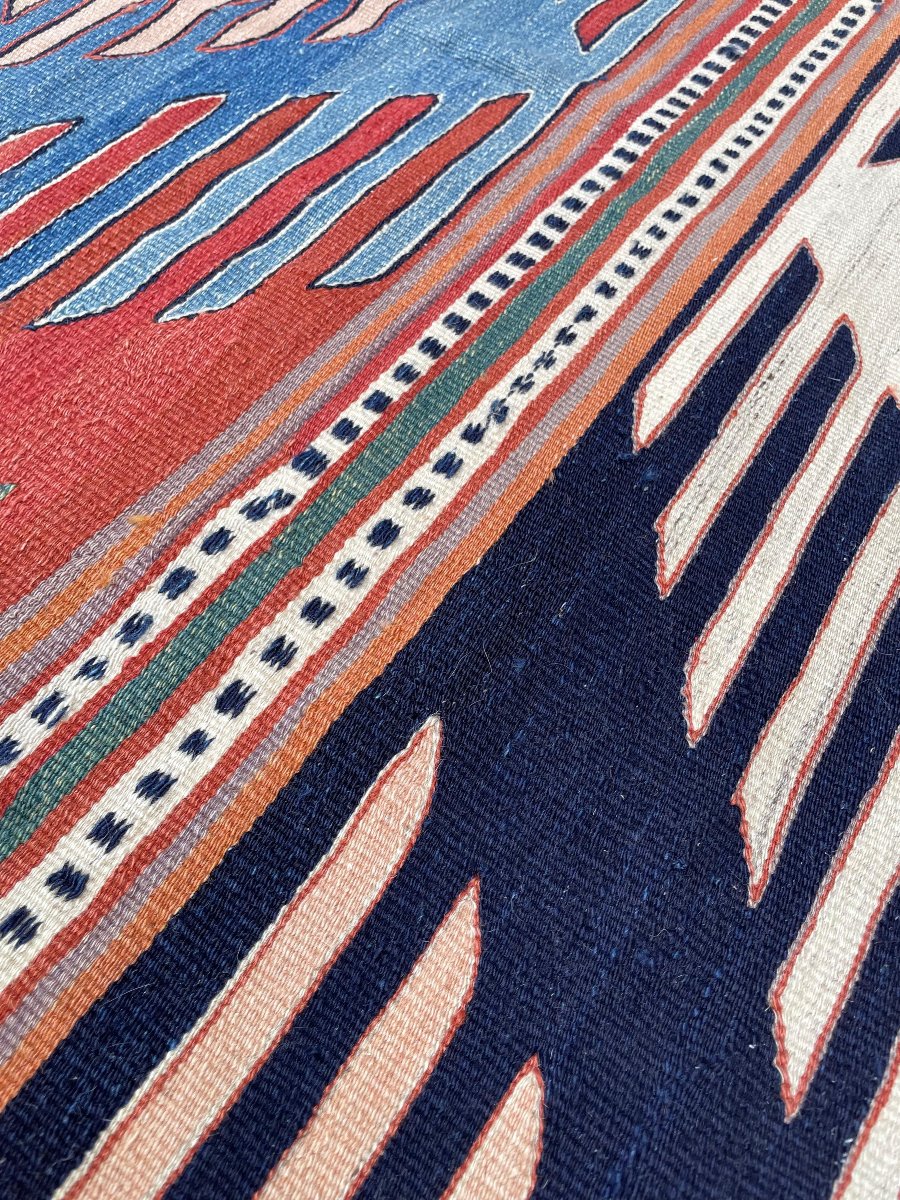
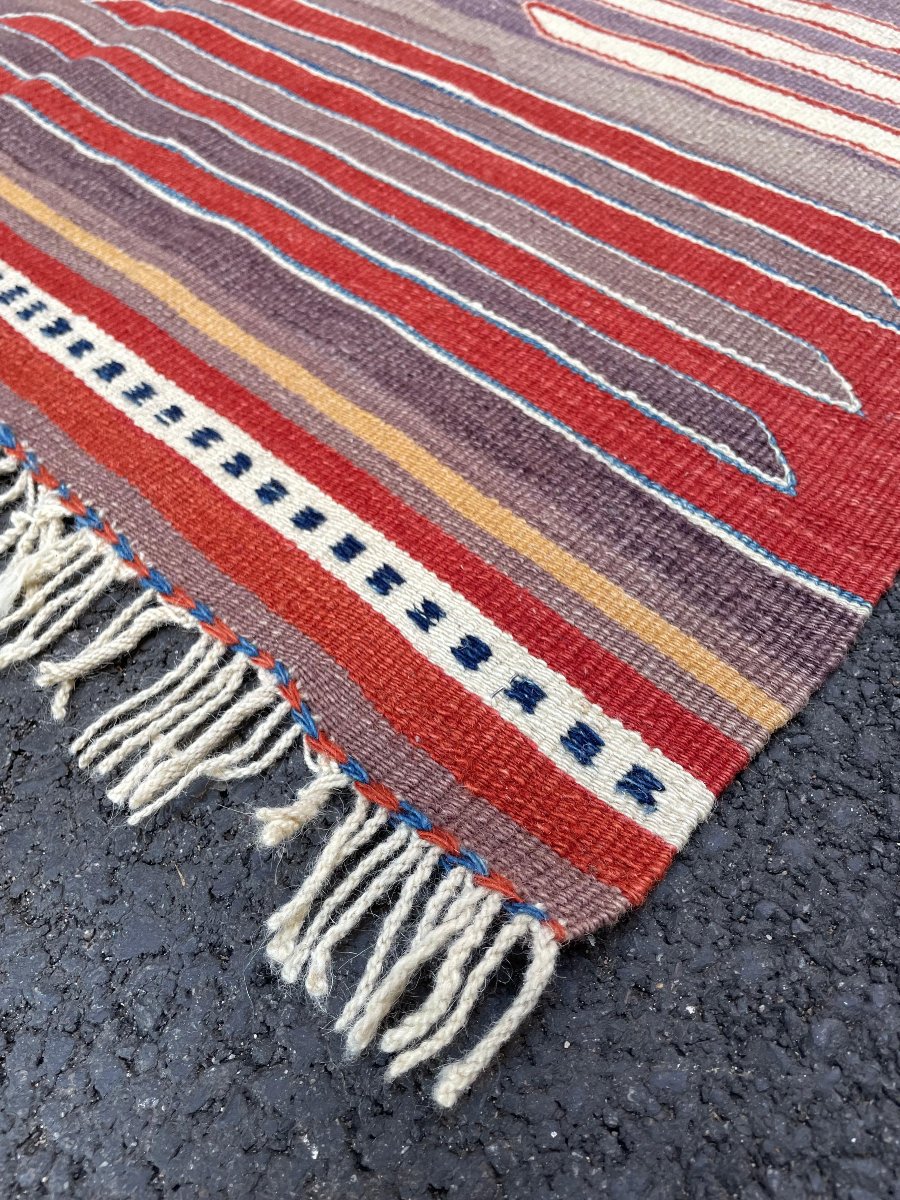
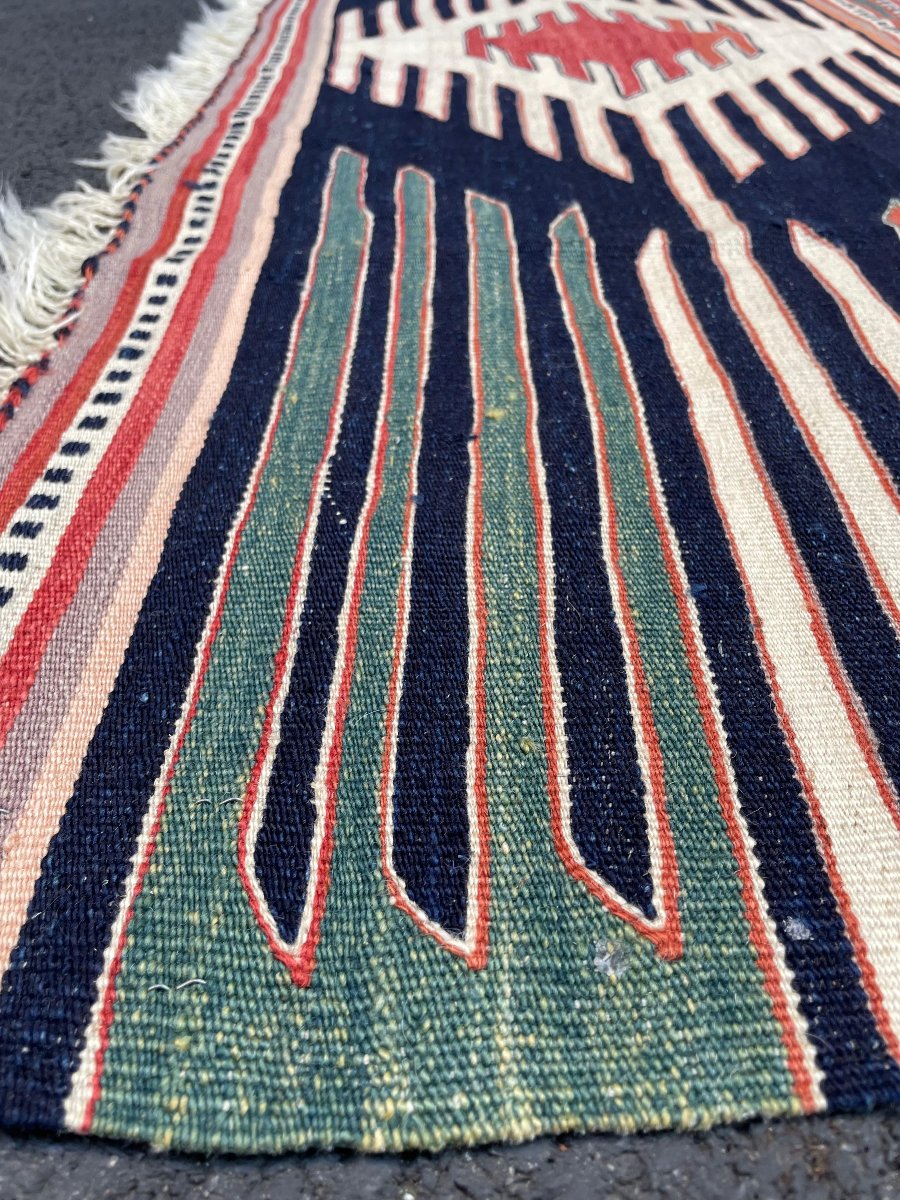
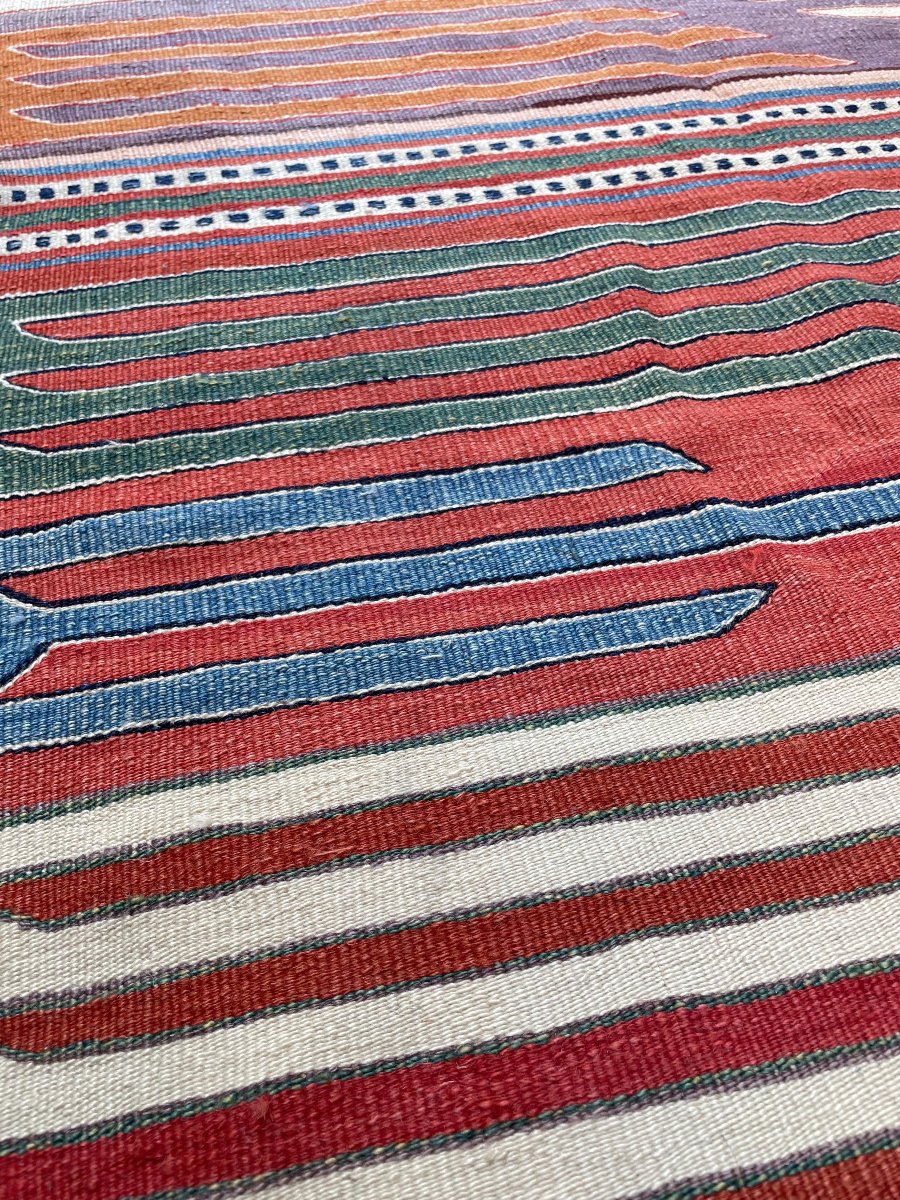
Fine, precise and regular weaving. High-quality handspun wool and, to top it all off, exclusively vegetable dyes. The motifs are perfectly executed, with numerous abrashs, and the composition is both subtle and balanced. A century of patience and it too will enter the great family of antique pieces.
The work is extremely graphic and in a very rare compact format.
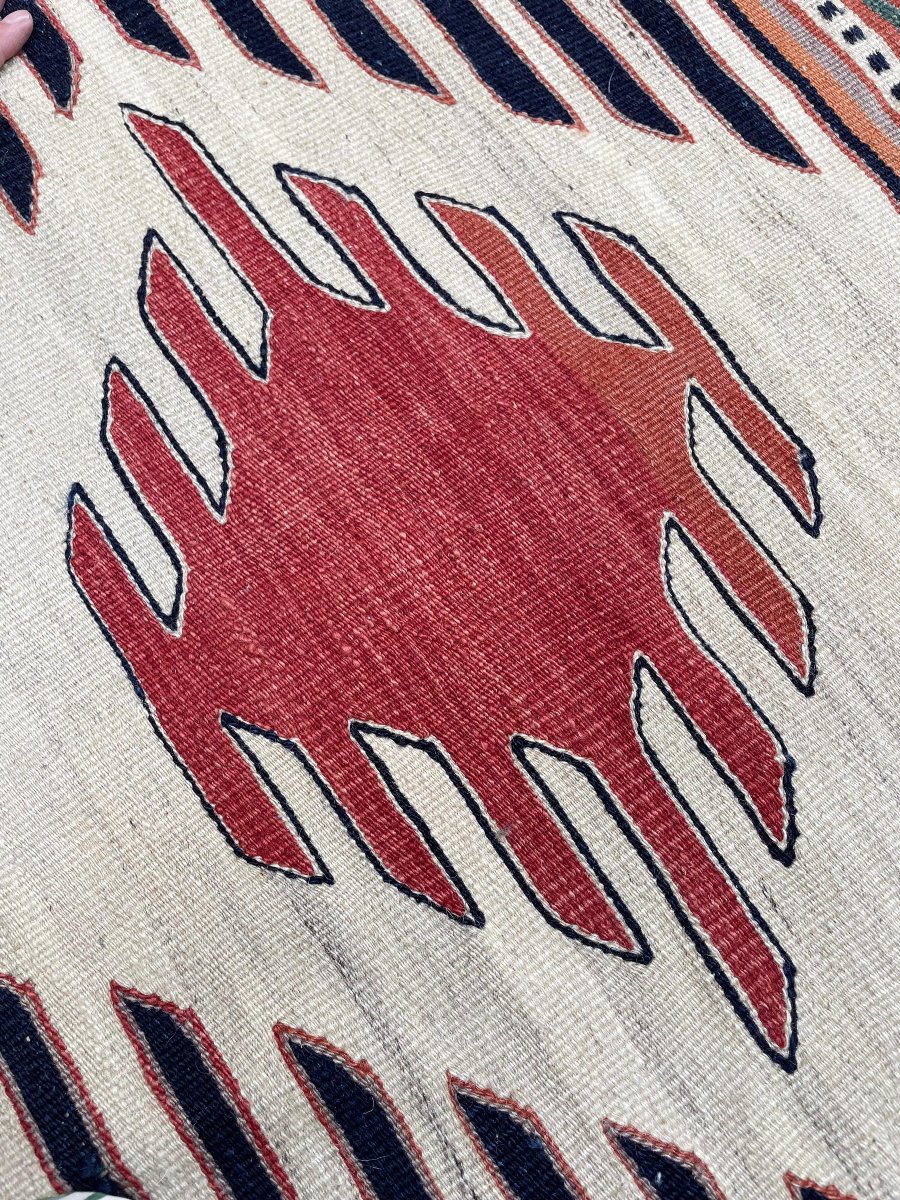
Here's the story of the motif repeated symmetrically across the surface.
The piece belongs to the "Parmaklı" kilim family, which means "finger" in Turkish, and originates from the Afyon region in south-west Anatolia.
Its graphic power and instant reading give the eye a multi-dimensional field centered on multiple symmetries.
The ingenuity lies in the space, in the combinations and in the succession. The whole is totally free and yet absolutely masterful. The simple fact that there are no borders gives this piece an infinite dimension in space.
The parmaklı motif evokes a host of subjects around balance. That of the family, brotherhood, harmony between the occupants of the nomadic habitat as well as solidarity between its members.
Woven wool on wool
Late 20th
Perfect condition
Dim: 205 x 195 cm
Laurent
Beauty of Kilims
It's like French grammar, yes, with a few exceptions!
There are still some very fine weavings to be found today, the result of a fierce determination, an unwavering commitment to keep the art of weaving alive.
Let's turn our attention to this kilim. In fact, it has absolutely all the characteristics of the old pieces except for the age.
Fine, precise and regular weaving. High-quality handspun wool and, to top it all off, exclusively vegetable dyes. The motifs are perfectly executed, with numerous abrashs, and the composition is both subtle and balanced. A century of patience and it too will enter the great family of antique pieces.
The work is extremely graphic and in a very rare compact format.
Here's the story of the motif repeated symmetrically across the surface.
The piece belongs to the "Parmaklı" kilim family, which means "finger" in Turkish, and originates from the Afyon region in south-west Anatolia.
Its graphic power and instant reading give the eye a multi-dimensional field centered on multiple symmetries.
The ingenuity lies in the space, in the combinations and in the succession. The whole is totally free and yet absolutely masterful. The simple fact that there are no borders gives this piece an infinite dimension in space.
The parmaklı motif evokes a host of subjects around balance. That of the family, brotherhood, harmony between the occupants of the nomadic habitat as well as solidarity between its members.
Woven wool on wool
Late 20th
Perfect condition
Dim: 205 x 195 cm
Laurent
Beauty of Kilims
1 600 €
Period: 20th century
Style: Design 50's and 60's
Condition: Perfect condition
Material: Wool
Length: 205 cm
Width: 195 cm
Reference (ID): 1767797
Availability: In stock
Print