



Gilded Bronze Marechaux Hanger 18th Century
Les Maréchaux" clock
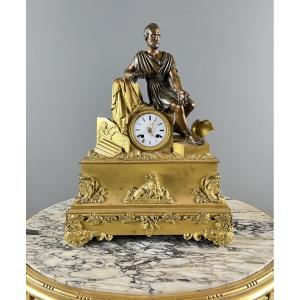
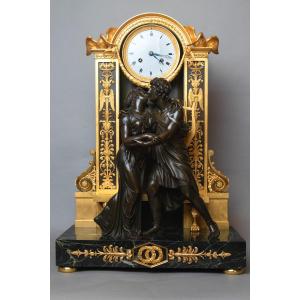
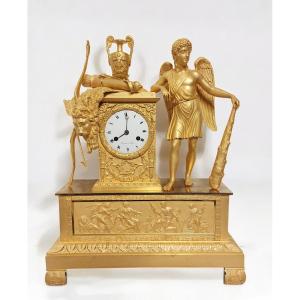
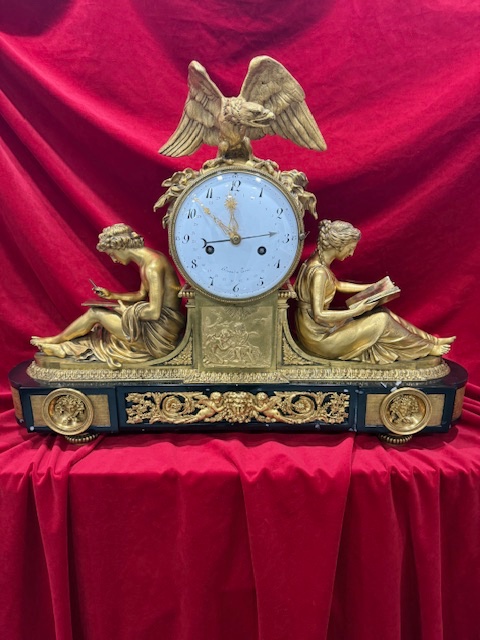
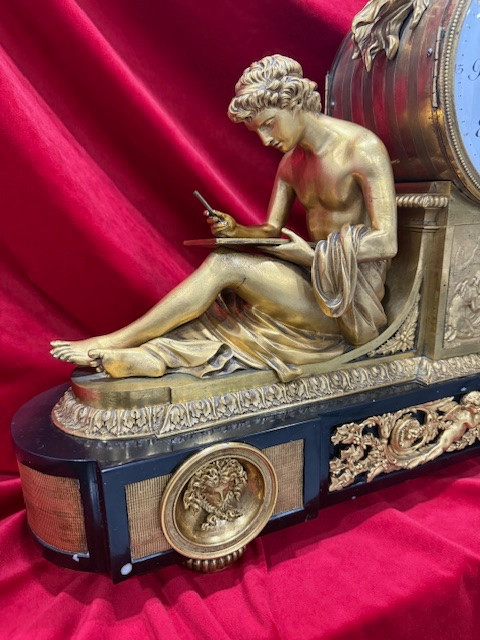
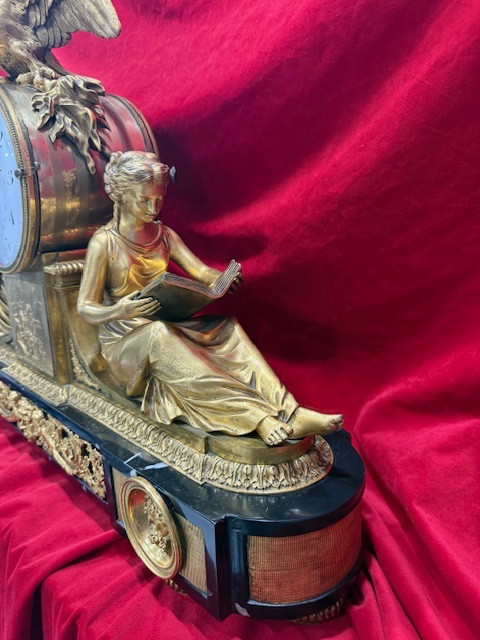
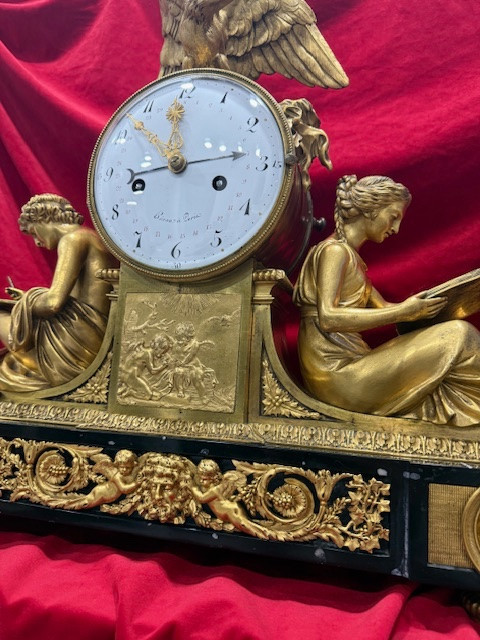
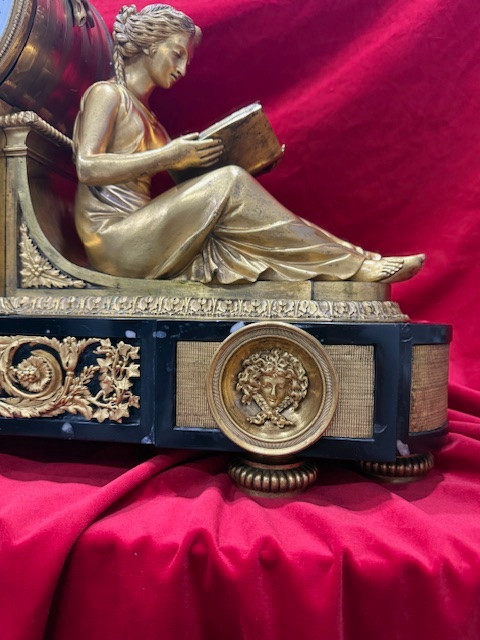
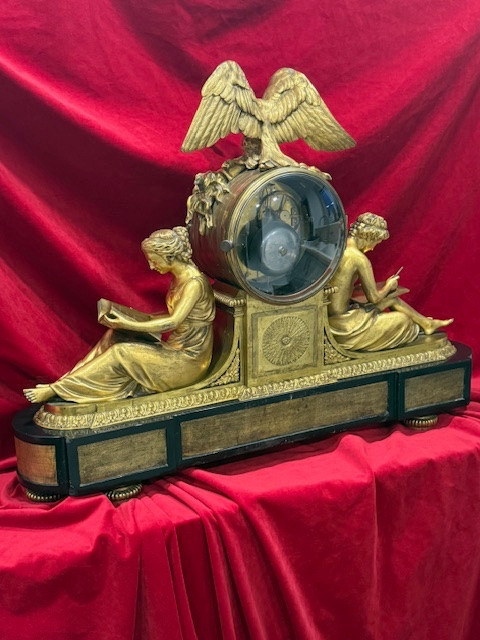
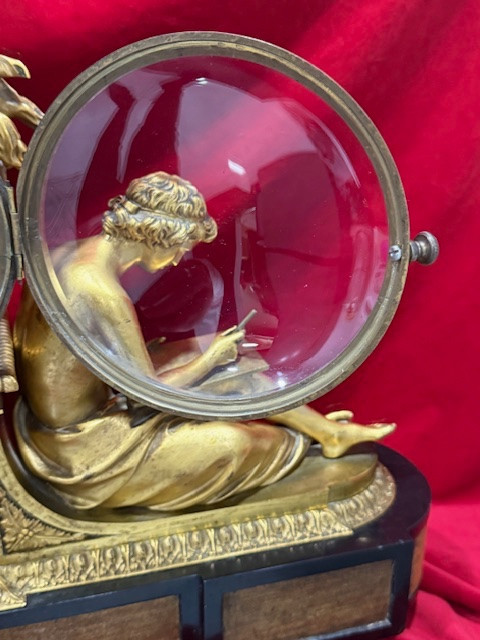
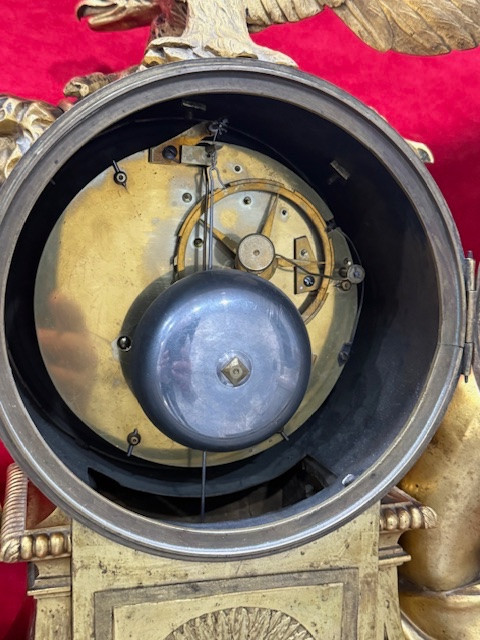
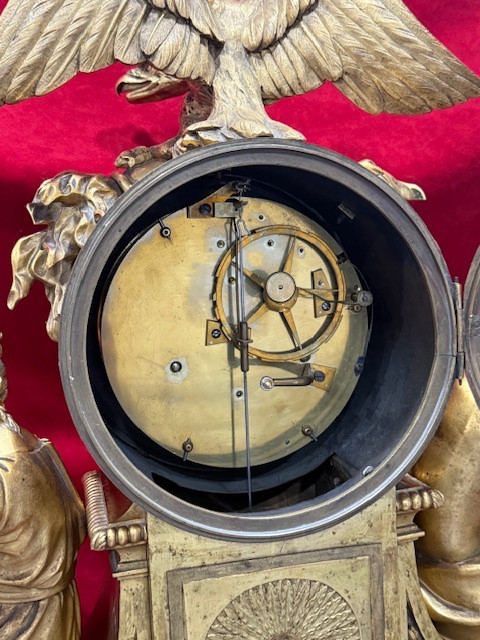
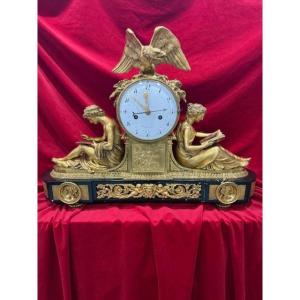
A gilt bronze and black marble "à l'étude" or "aux maréchaux" clock. Enameled dial, date of the month in Arabic numerals signed "à Paris". Dial surmounted by an eagle with lightning bolts. The movement stands on a bas-relief base with putti playing with doves and framed by two figures symbolizing Study and Philosophy. Griotte marble base decorated with rinceaux, masks and amours.
Dimensions
52 cm H x 70 cm W x 15 cm D
This clock is also entitled l'Etude et la philosophie, les Arts et les Sciences, La lecture et la Littérature
This clock takes its name "aux maréchaux" from the examples Napoleon gave to his marshals. The model, made by marchand-mercier Daguerre, was executed by bronzemaker François Rémond in the 1785s, with figures originally created by Boizot for the Manufacture de Sèvres. Several examples, with variations, are known to exist, including those in the Palais de l'Élysée, the Ministry of Foreign Affairs, the Château de Versailles, the Quirinal in Rome, the Victoria & Albert Museum in London and the Hermitage Palace in St. Petersburg. Bibliography: Pierre Verlet, "Les bronzes dorés français du XVIIIe siècle", Paris, 1987, page 322. Pierre Kjellberg, "Encyclopédie de La pendule française du moyen age au XXe siècle", Les éditions de l'amateur, page 259.
A gilt bronze and black marble "à l'étude" or "aux maréchaux" clock. Enameled dial, date of the month in Arabic numerals signed "à Paris". Dial surmounted by an eagle with lightning bolts. The movement stands on a bas-relief base with putti playing with doves and framed by two figures symbolizing Study and Philosophy. Griotte marble base decorated with rinceaux, masks and amours.
Dimensions
52 cm H x 70 cm W x 15 cm D
This clock is also entitled l'Etude et la philosophie, les Arts et les Sciences, La lecture et la Littérature
This clock takes its name "aux maréchaux" from the examples Napoleon gave to his marshals. The model, made by marchand-mercier Daguerre, was executed by bronzemaker François Rémond in the 1785s, with figures originally created by Boizot for the Manufacture de Sèvres. Several examples, with variations, are known to exist, including those in the Palais de l'Élysée, the Ministry of Foreign Affairs, the Château de Versailles, the Quirinal in Rome, the Victoria & Albert Museum in London and the Hermitage Palace in St. Petersburg. Bibliography: Pierre Verlet, "Les bronzes dorés français du XVIIIe siècle", Paris, 1987, page 322. Pierre Kjellberg, "Encyclopédie de La pendule française du moyen age au XXe siècle", Les éditions de l'amateur, page 259.
17 000 €
Period: 18th century
Style: Consulat, Empire
Condition: En l'etat
Material: Bronze
Reference (ID): 1767573
Availability: In stock
Print