THIS OBJECT WAS SOLD
Trappunto Quilt - Naples, Sicily Or Ottoman Empire 18th Century










Eighteenth century
Naples, Sicily or Ottoman Empire
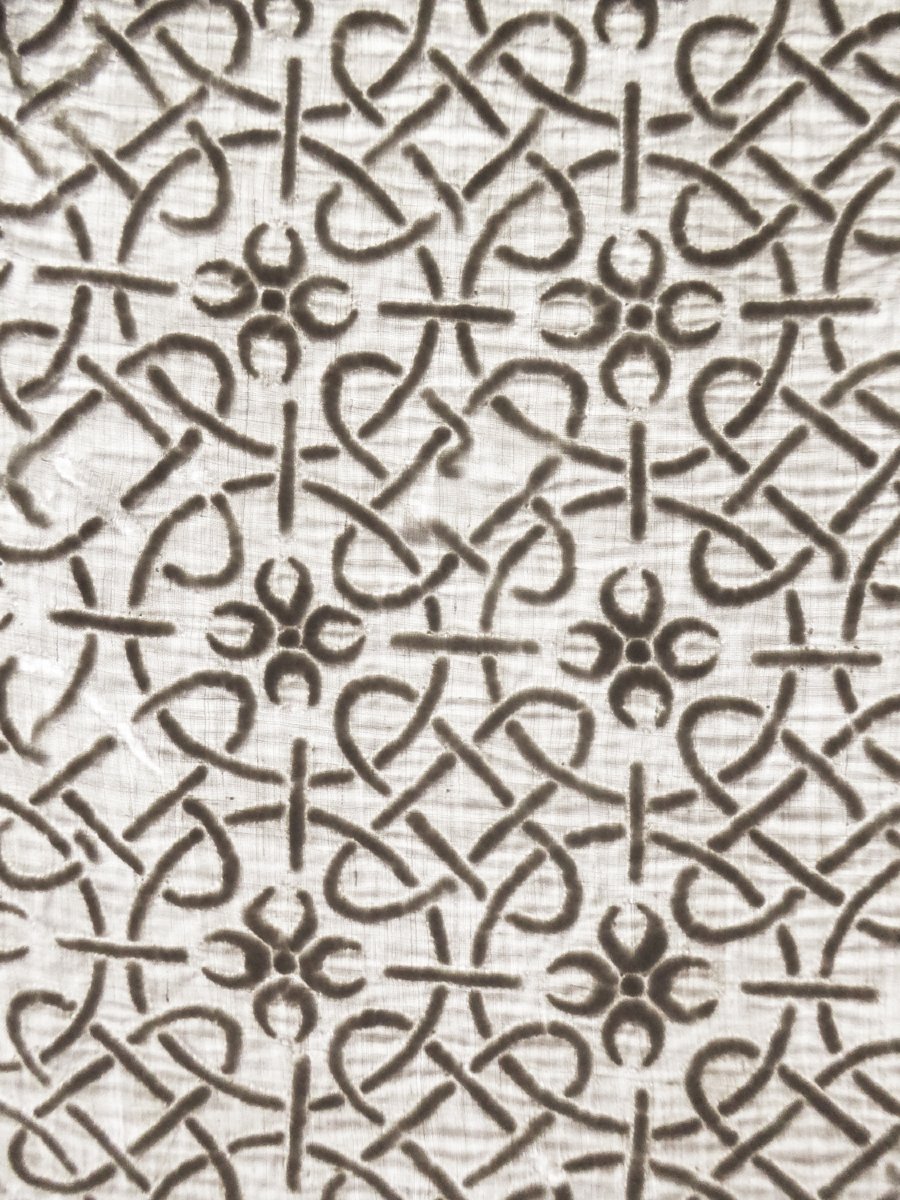
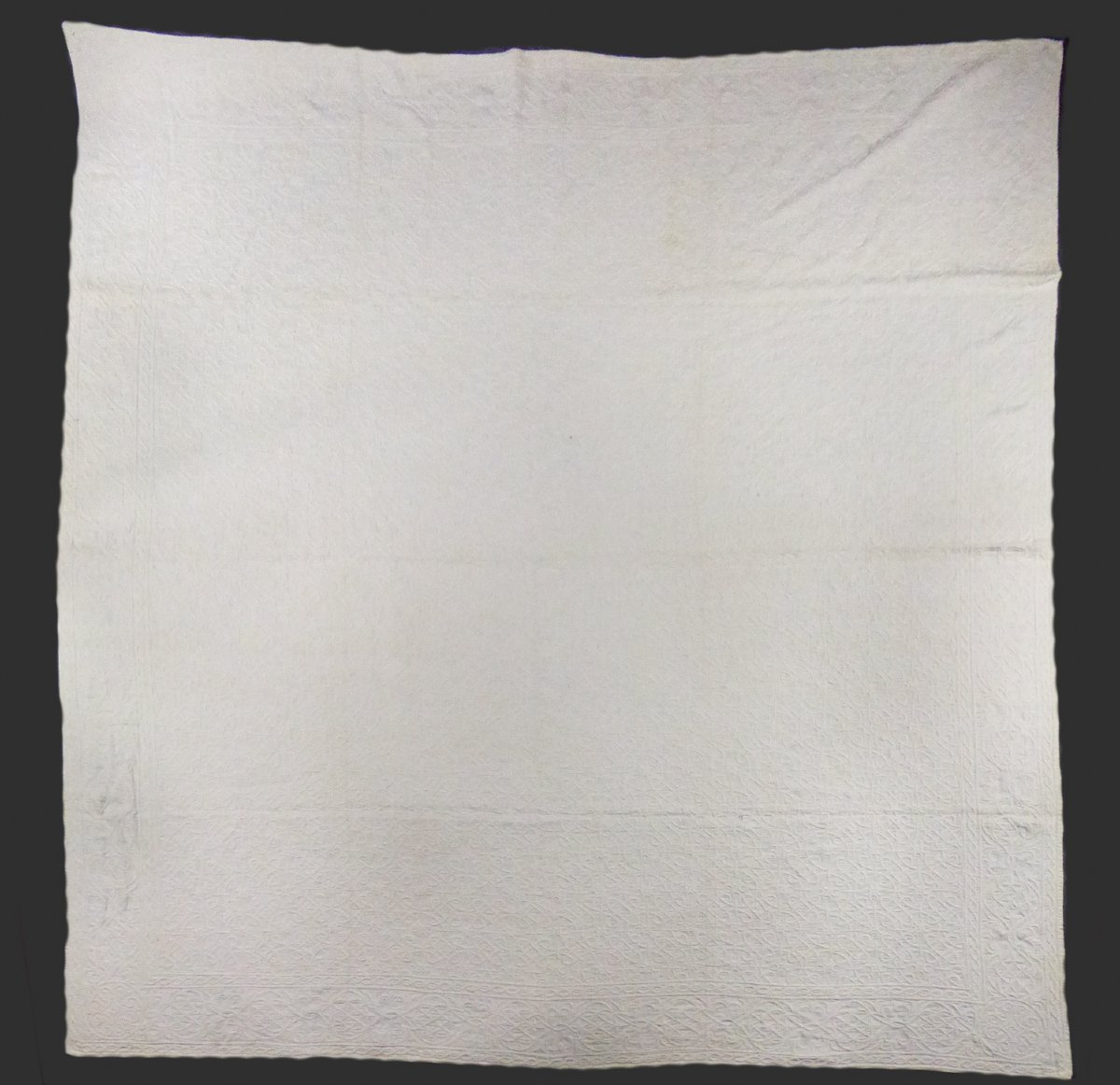
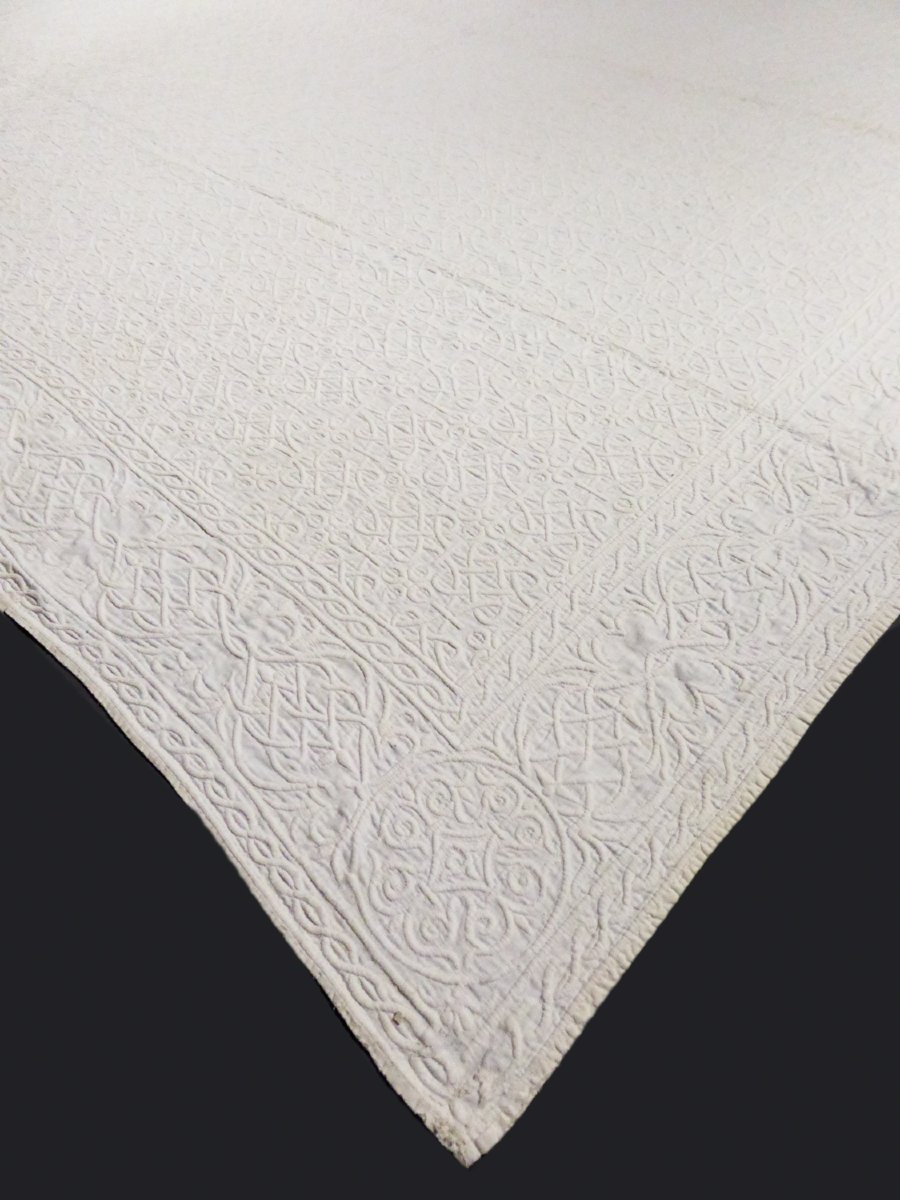
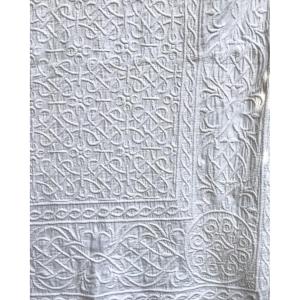
Rare Trappunto embroidered white cotton quilt with assertive oriental graphics dating from the 18th century. Collected in Provence, the work of front-stitch embroidered strands between two layers of white cotton, giving a beautiful transparency to the whole, is usually associated with Marseilles boutis or Italian Trappunto. Here, the decor is definitively Mediterranean, evoking Hispano-Moorish moucharabiehs as well as 17th-century Ottoman soiries. Thin, light quilt. On the right side, a few rust spots and slight yellowing, which can only be observed with close attention. On the reverse, the cotton is very slightly altered in places. The whole is stable, easy to handle and clean, with no major defects. Good overall condition.
Dimensions: 256 cm x 281 cm
There are only a few examples of this type of quilt, mistakenly attributed to Provençal boutis or Indo-Portuguese work. Kathryn Berenson, a Canadian researcher in a 2020 study entitled Enigmatic Mediterranean Quilts for the Textile Society of America, was able to study and compare the rare known models, mostly scattered around American museums. In France, the only known example is in the Musée des Arts Décoratifs de l'Océan Indien on Reunion Island. Kathryn Berenson was able to highlight the graphic commonalities. A detailed study of after-death inventories from Italy, Spain and France in the 16th and 17th centuries has revealed that all the pieces were produced in the Mediterranean region. Sicily and Naples first of all, allowing this type of Italian embroidery to be called Trappunto, but also the Aegean Sea and Tripoli, where several workshops for meché embroidery have been identified, like the example we present.
Naples, Sicily or Ottoman Empire
Rare Trappunto embroidered white cotton quilt with assertive oriental graphics dating from the 18th century. Collected in Provence, the work of front-stitch embroidered strands between two layers of white cotton, giving a beautiful transparency to the whole, is usually associated with Marseilles boutis or Italian Trappunto. Here, the decor is definitively Mediterranean, evoking Hispano-Moorish moucharabiehs as well as 17th-century Ottoman soiries. Thin, light quilt. On the right side, a few rust spots and slight yellowing, which can only be observed with close attention. On the reverse, the cotton is very slightly altered in places. The whole is stable, easy to handle and clean, with no major defects. Good overall condition.
Dimensions: 256 cm x 281 cm
There are only a few examples of this type of quilt, mistakenly attributed to Provençal boutis or Indo-Portuguese work. Kathryn Berenson, a Canadian researcher in a 2020 study entitled Enigmatic Mediterranean Quilts for the Textile Society of America, was able to study and compare the rare known models, mostly scattered around American museums. In France, the only known example is in the Musée des Arts Décoratifs de l'Océan Indien on Reunion Island. Kathryn Berenson was able to highlight the graphic commonalities. A detailed study of after-death inventories from Italy, Spain and France in the 16th and 17th centuries has revealed that all the pieces were produced in the Mediterranean region. Sicily and Naples first of all, allowing this type of Italian embroidery to be called Trappunto, but also the Aegean Sea and Tripoli, where several workshops for meché embroidery have been identified, like the example we present.
Explore similar pieces and discover your ideal find:
embroidery and lace