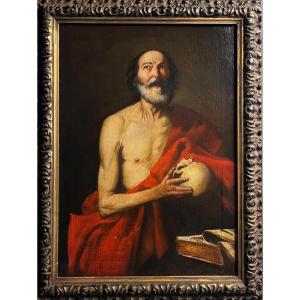


Monsieur Bernhard, Eberhard Or Bernhard Keilhau (helsingør 1624 - Rome 1687) Allegory Of Taste
Artist: Monsieur Bernhard, Eberhard Ou Bernhard Keilhau (helsingør 1624 - Rome 1687)
Mr. Bernhard, Eberhard or Bernhard Keilhau (Helsingør 1624 - Rome 1687)
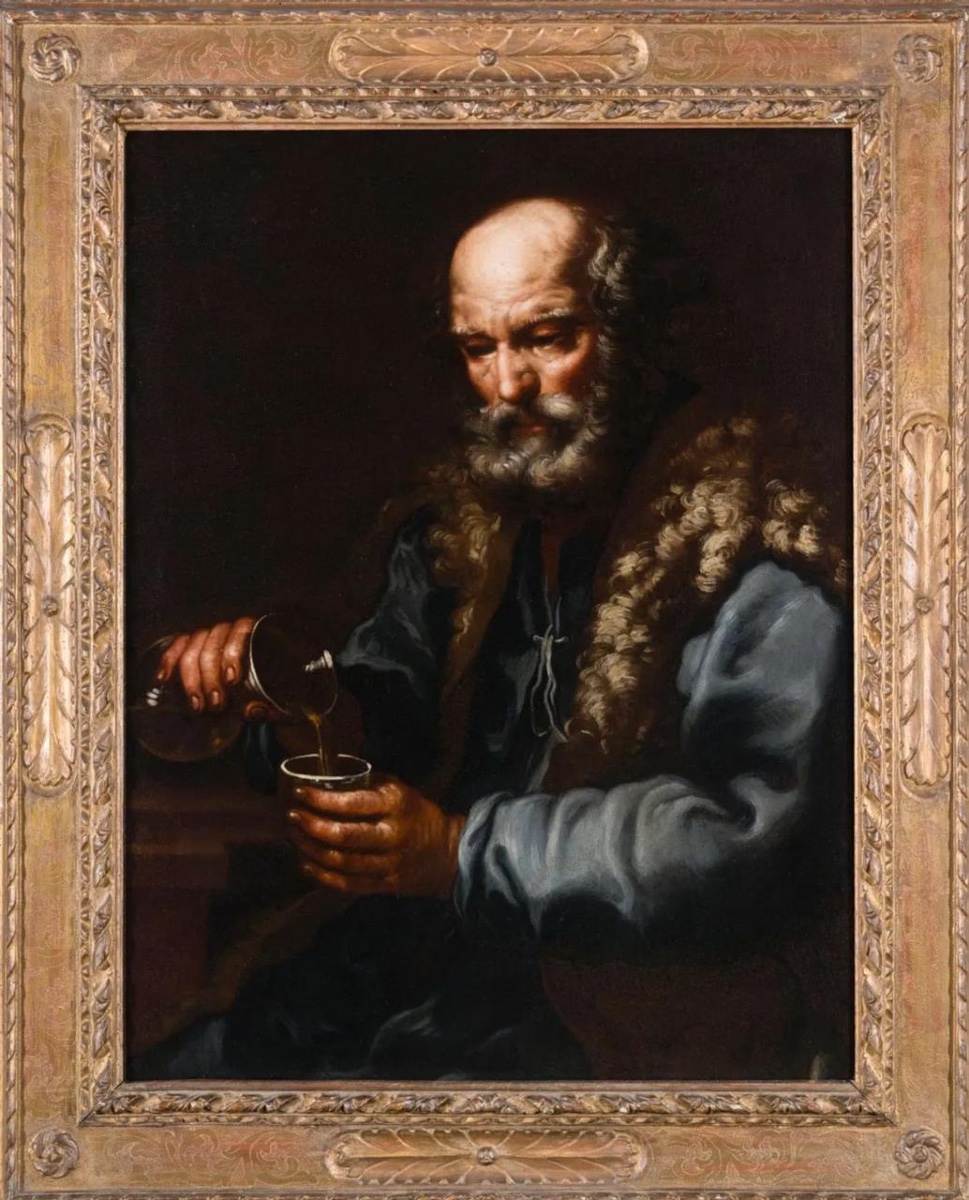
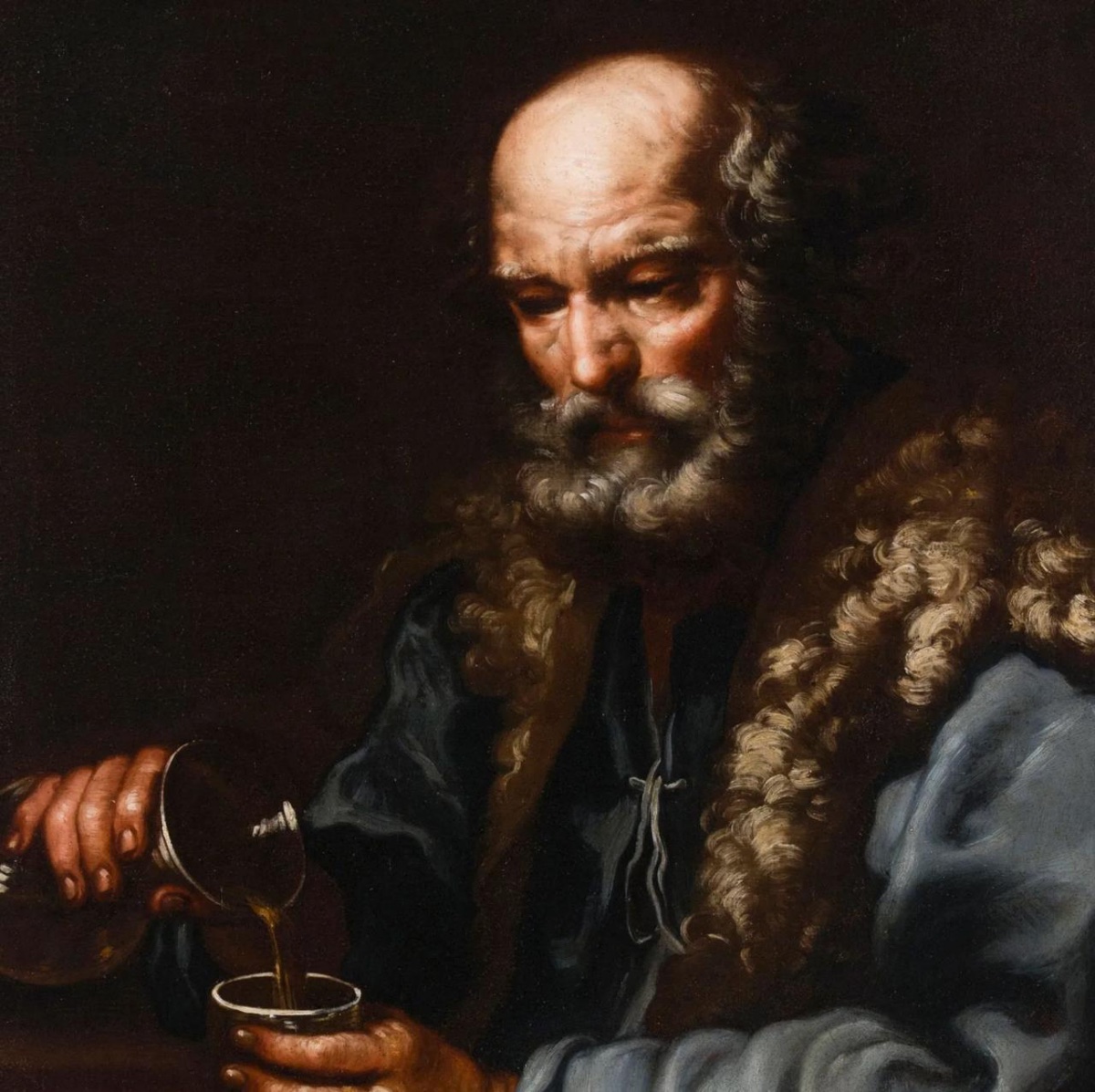
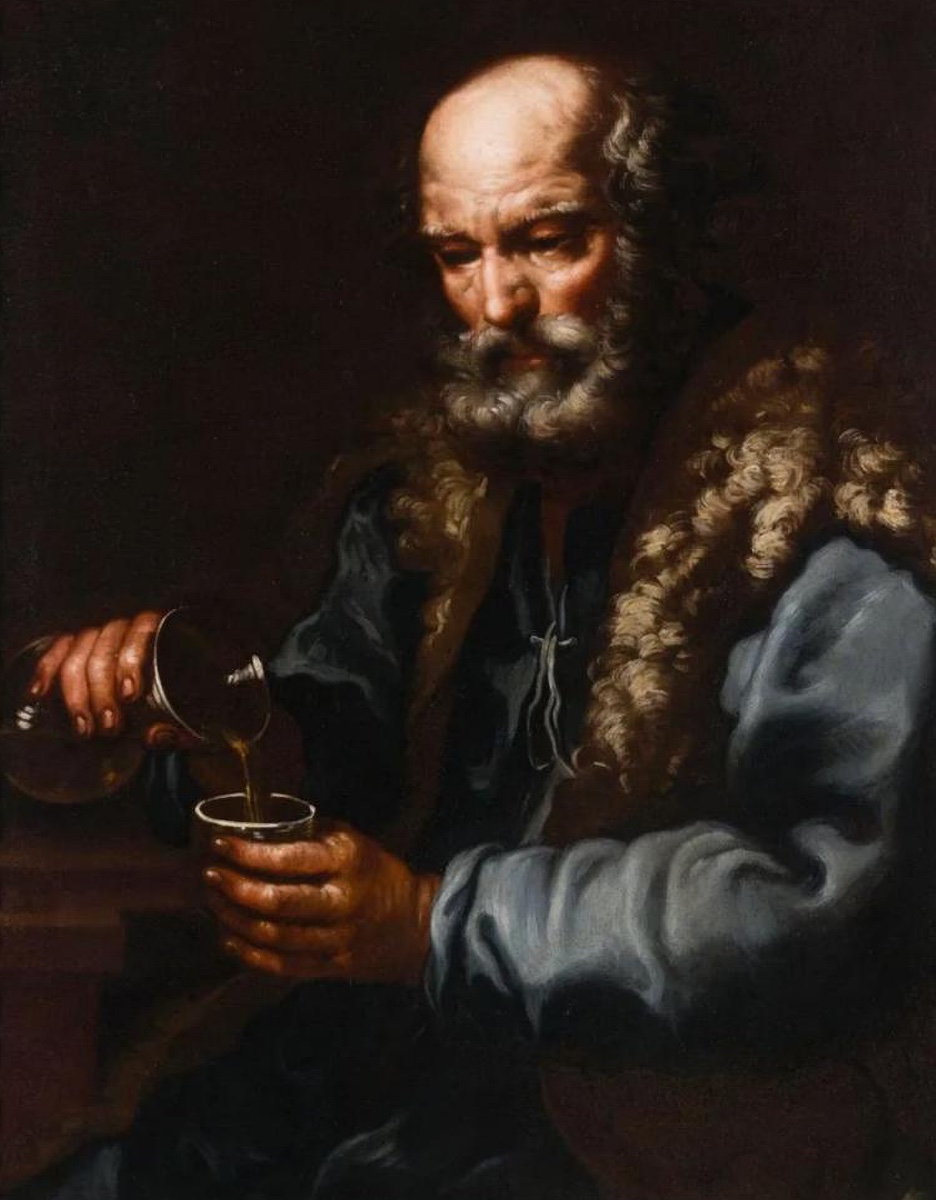
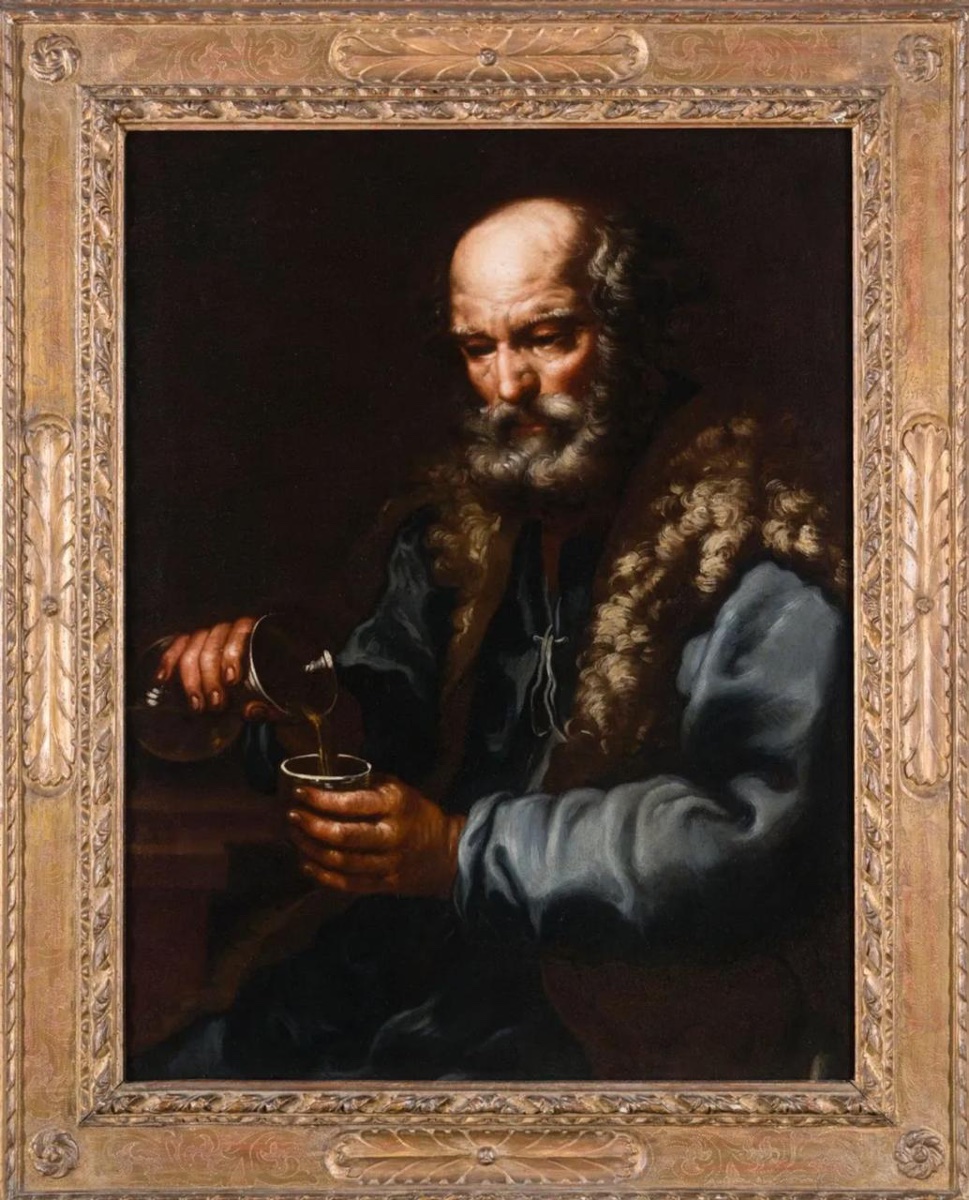
"Old man pouring wine, or Allegory of Taste"
Oil on canvas
95.5 x 73 cm
This painting finds a precise reference in the canvas kept at the Musée des Beaux-Arts de La Rochelle, reproduced on page 159, photo 24, of M. Heimburger's monograph, Bernardo Keilhau dit Monsù Bernardo.
After receiving his first artistic training with the Dane Morten van Steenwinkel, Bernhard joined the workshop of the Danish artist Remi van Steenwinkel. Heimburger, Bernardo Keilhau dit Monsù Bernardo.
After receiving his first artistic training from the Dane Morten van Steenwinkel, Bernhard joined Rembrandt's studio in Amsterdam. Following his early experiments with religious themes, he arrived in Italy in 1651 and fused his Rembrandtian style with Bambocciante painting, drawing inspiration from Salvator Rosa, Matteo de' Pitocchi, Antonio Amorosi and Giacomo Francesco Cipper.
His works can be found in major museums: the Prado in Madrid, the Academy Galleries in Vienna, the Catalan Museum in Barcelona, Troja Castle near Prague, the Walters Art Museum in Baltimore, the Statens Museum for Kunst in Copenhagen, the Uffizi Gallery in Florence, and many others.
Bernhard Keil, born Monsù Bernardo, settled in Italy in Danimarca. He lived in Venice from 1651 to 1654, then in Bergamo, in Romagna, and finally in Rome from 1656. His critical renown was immediate, so much so that Filippo Baldinucci dedicated a biography to him, "Notizie de' professori del disegno da Cimabue in qua'" (Florence, 1728, VI, pp. 510-516), considering him a painter of great talent, sought after throughout Europe. Keil raffigurò con naturalistica sensibilità anziani and giovani, contadini e artigiani, colti in semplici gestualità. Sono ritratti di quotidiana life, dove rarely appear as protagonists in quite elegant fashions. The posture is morbid, fluid, but able to be described with sincerety and volti segnati from the sun and from the old world, without transcending into the crud realism of the Caravagesque matrix. This inclination was important for the evolution of the Venice dark painting and if I could imagine a dialog between the work of the Nordic artist and the Genoese Giovanni Battista Langetti. Finally, if there is an access to the meaning of this image: it's easy to intuitive the allegory of autumn through wine even the five senses; In fact, the image alludes to the tattoo through gesture, to taste and smell by imagining the asprigno taste of wine, between sight and ear are represented by the mescita. The style of the opera, its characteristics and the measure of its interpretation will be confronted with those kept by the Corsini Gallery in Rome, refining winter and autumn, which, dating from the end of the decade and realized by the Podestà di Bergamo, the patrizio veneziano Giancarlo Savorgnan, suggest the data of our opera during the bergamasco soggiorno del pittore.
Reference bibliography:
M. Heimburger, Bernhard Keilhau, detto Monsù Bernardo, Rome 1989, p. 155
L. Laureati, in Da Caravaggio a Ceruti. La scène du genre et l'image du pitocchi dans la peinture italienne, catalog de l'échantillon à cura di F. Porzio, Milan 1998, pp. 336-337
"Old man pouring wine, or Allegory of Taste"
Oil on canvas
95.5 x 73 cm
This painting finds a precise reference in the canvas kept at the Musée des Beaux-Arts de La Rochelle, reproduced on page 159, photo 24, of M. Heimburger's monograph, Bernardo Keilhau dit Monsù Bernardo.
After receiving his first artistic training with the Dane Morten van Steenwinkel, Bernhard joined the workshop of the Danish artist Remi van Steenwinkel. Heimburger, Bernardo Keilhau dit Monsù Bernardo.
After receiving his first artistic training from the Dane Morten van Steenwinkel, Bernhard joined Rembrandt's studio in Amsterdam. Following his early experiments with religious themes, he arrived in Italy in 1651 and fused his Rembrandtian style with Bambocciante painting, drawing inspiration from Salvator Rosa, Matteo de' Pitocchi, Antonio Amorosi and Giacomo Francesco Cipper.
His works can be found in major museums: the Prado in Madrid, the Academy Galleries in Vienna, the Catalan Museum in Barcelona, Troja Castle near Prague, the Walters Art Museum in Baltimore, the Statens Museum for Kunst in Copenhagen, the Uffizi Gallery in Florence, and many others.
Bernhard Keil, born Monsù Bernardo, settled in Italy in Danimarca. He lived in Venice from 1651 to 1654, then in Bergamo, in Romagna, and finally in Rome from 1656. His critical renown was immediate, so much so that Filippo Baldinucci dedicated a biography to him, "Notizie de' professori del disegno da Cimabue in qua'" (Florence, 1728, VI, pp. 510-516), considering him a painter of great talent, sought after throughout Europe. Keil raffigurò con naturalistica sensibilità anziani and giovani, contadini e artigiani, colti in semplici gestualità. Sono ritratti di quotidiana life, dove rarely appear as protagonists in quite elegant fashions. The posture is morbid, fluid, but able to be described with sincerety and volti segnati from the sun and from the old world, without transcending into the crud realism of the Caravagesque matrix. This inclination was important for the evolution of the Venice dark painting and if I could imagine a dialog between the work of the Nordic artist and the Genoese Giovanni Battista Langetti. Finally, if there is an access to the meaning of this image: it's easy to intuitive the allegory of autumn through wine even the five senses; In fact, the image alludes to the tattoo through gesture, to taste and smell by imagining the asprigno taste of wine, between sight and ear are represented by the mescita. The style of the opera, its characteristics and the measure of its interpretation will be confronted with those kept by the Corsini Gallery in Rome, refining winter and autumn, which, dating from the end of the decade and realized by the Podestà di Bergamo, the patrizio veneziano Giancarlo Savorgnan, suggest the data of our opera during the bergamasco soggiorno del pittore.
Reference bibliography:
M. Heimburger, Bernhard Keilhau, detto Monsù Bernardo, Rome 1989, p. 155
L. Laureati, in Da Caravaggio a Ceruti. La scène du genre et l'image du pitocchi dans la peinture italienne, catalog de l'échantillon à cura di F. Porzio, Milan 1998, pp. 336-337
8 000 €
Period: 17th century
Style: Other Style
Condition: Good condition
Material: Oil painting
Width: 73cm
Height: 95,5cm
Depth: 9cm
Reference (ID): 1766800
Availability: In stock
Print