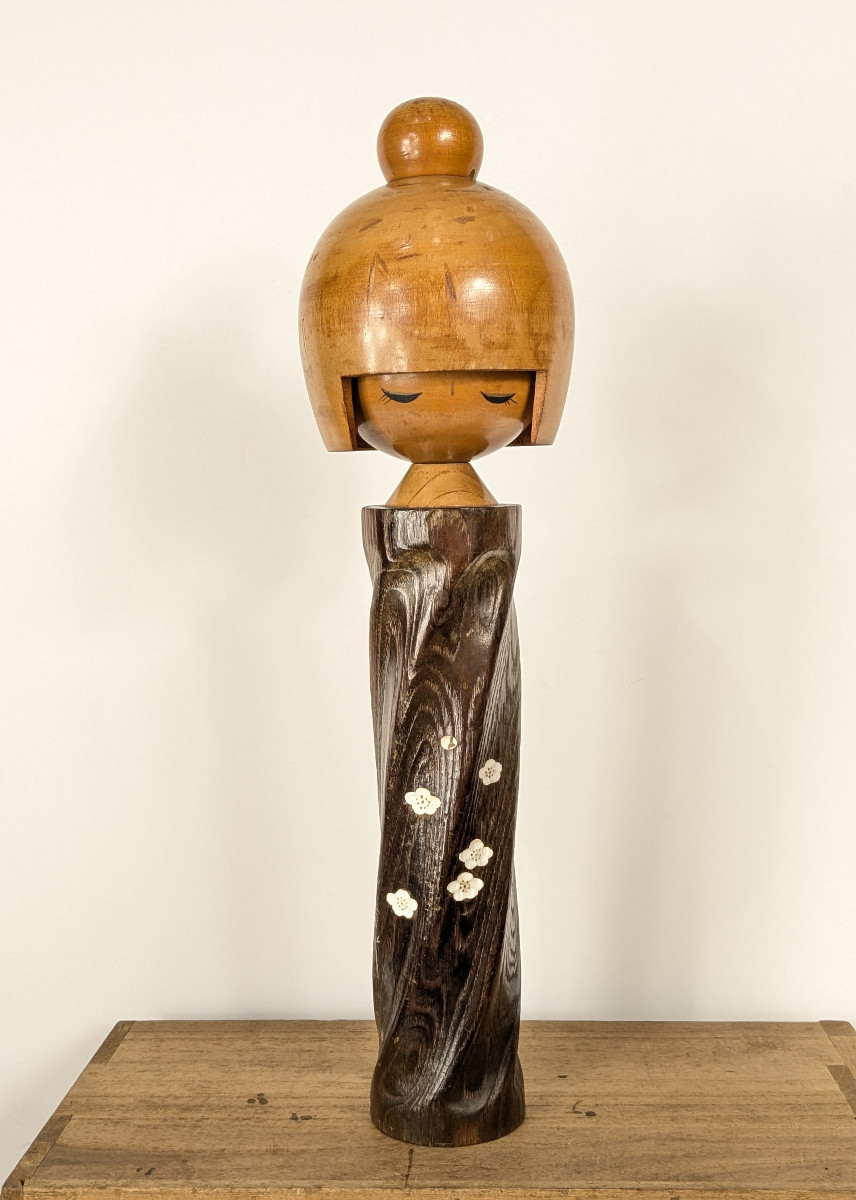
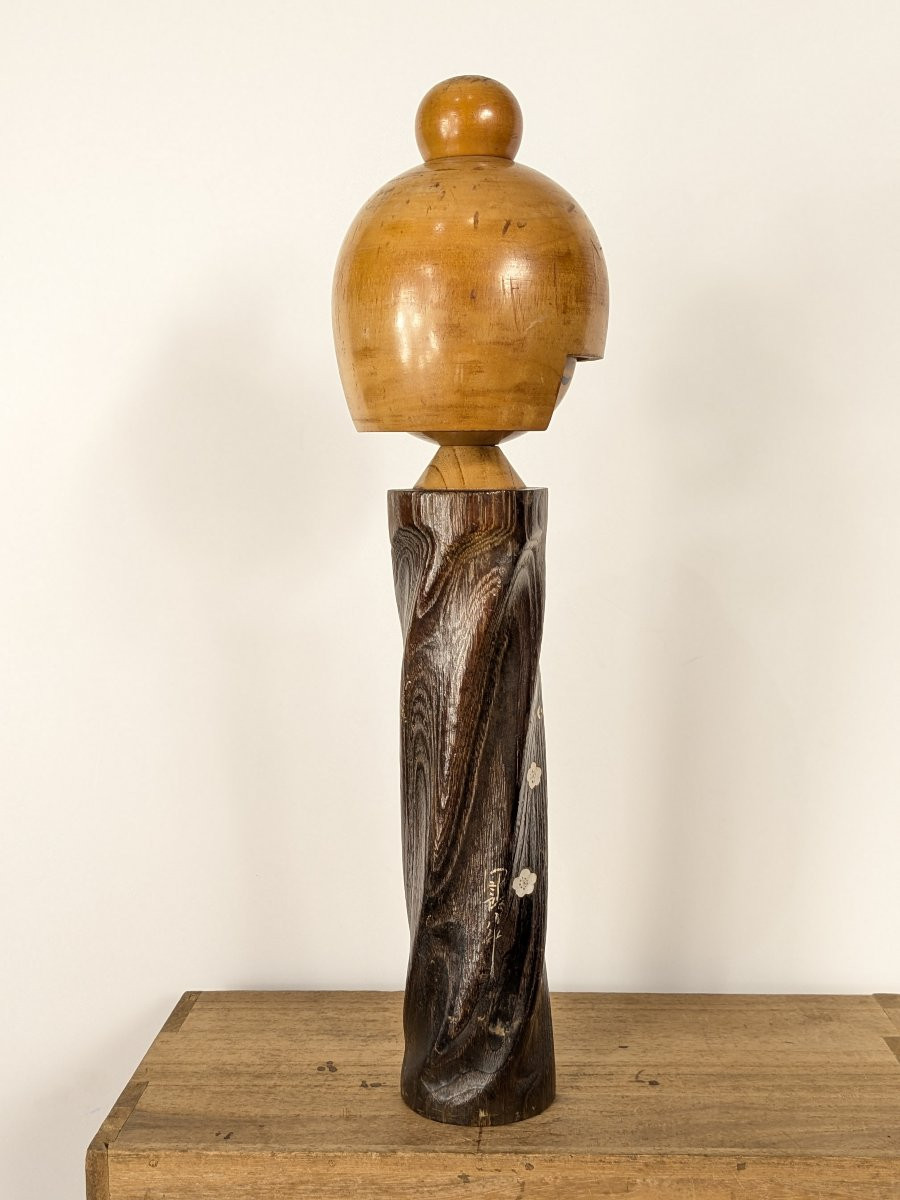
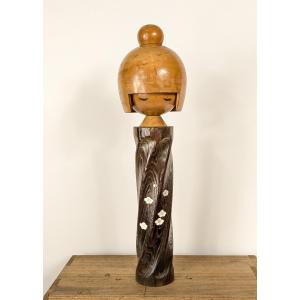


Kokeshi Circa 1970-80 - By Master Okamoto Usaburo -
Artist: Okamoto Usaburo (1917-2009) Japon
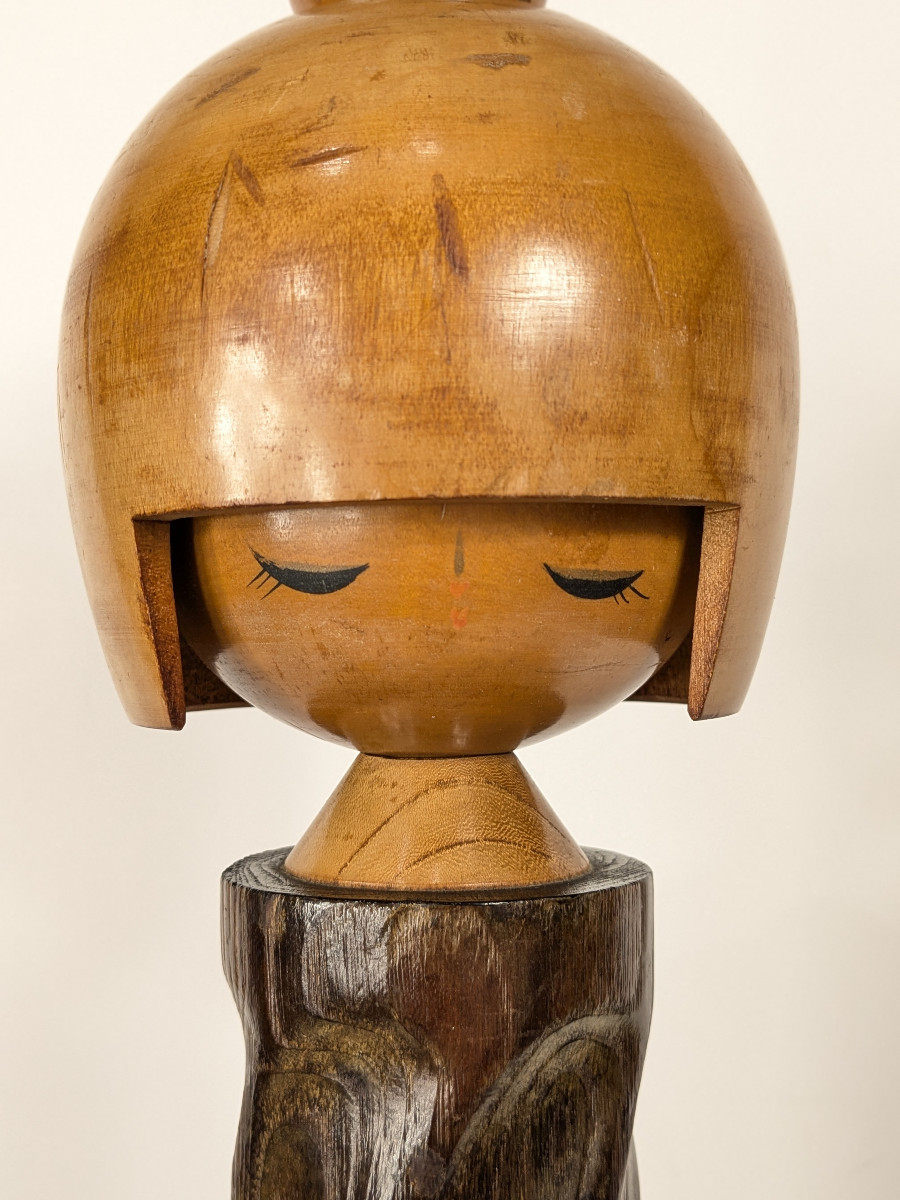
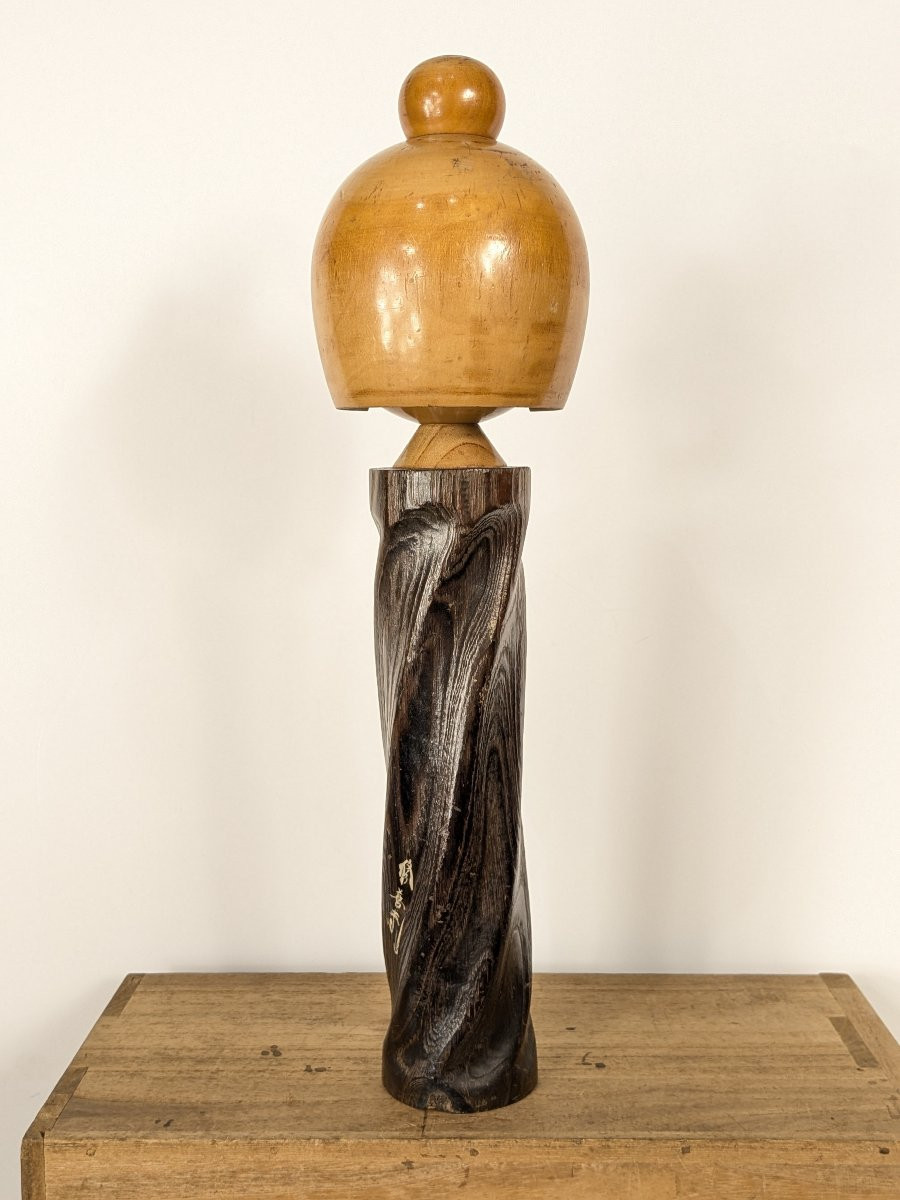
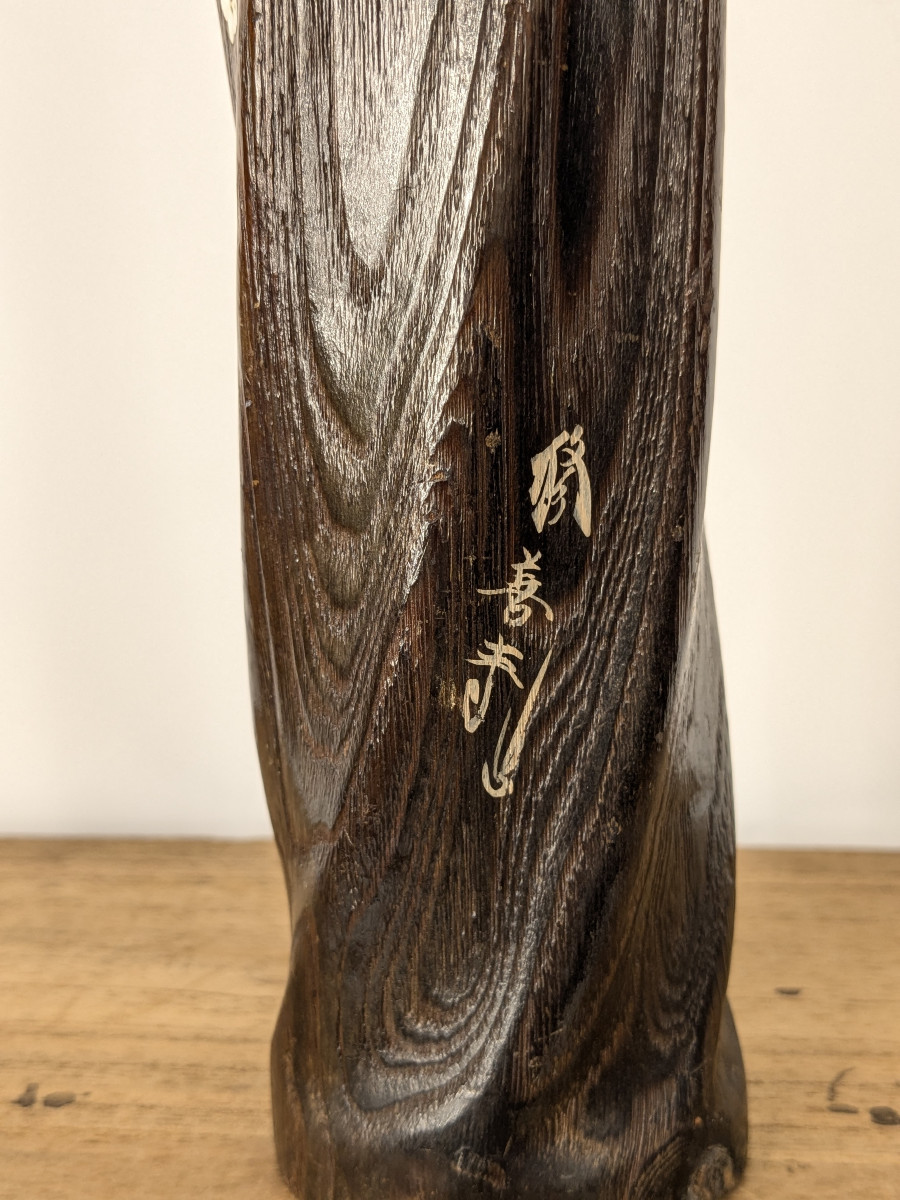
Condition: Traces of handling - shocks to the hairstyle. signed.A detailed and illustrated note on the kokeshis will be given to the buyer, as well as a note on the artist.
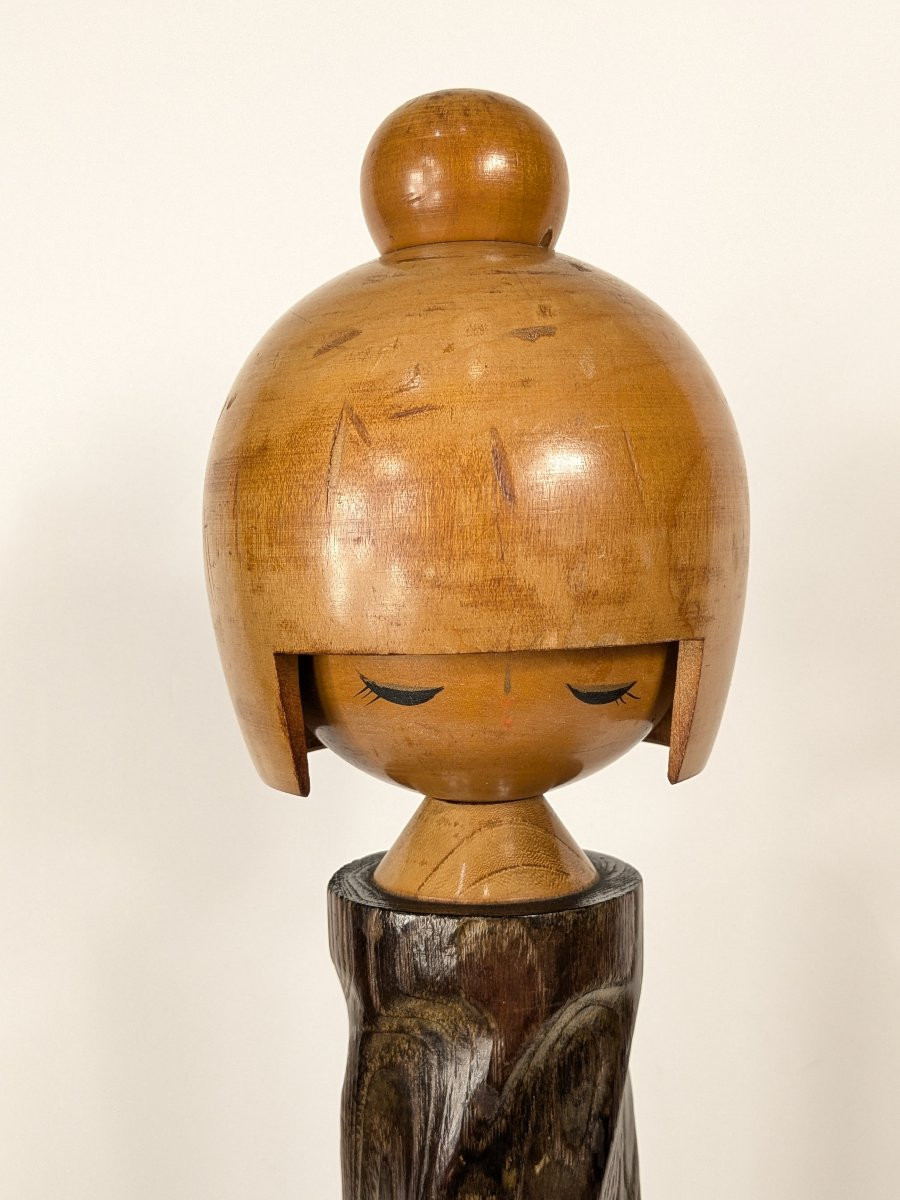
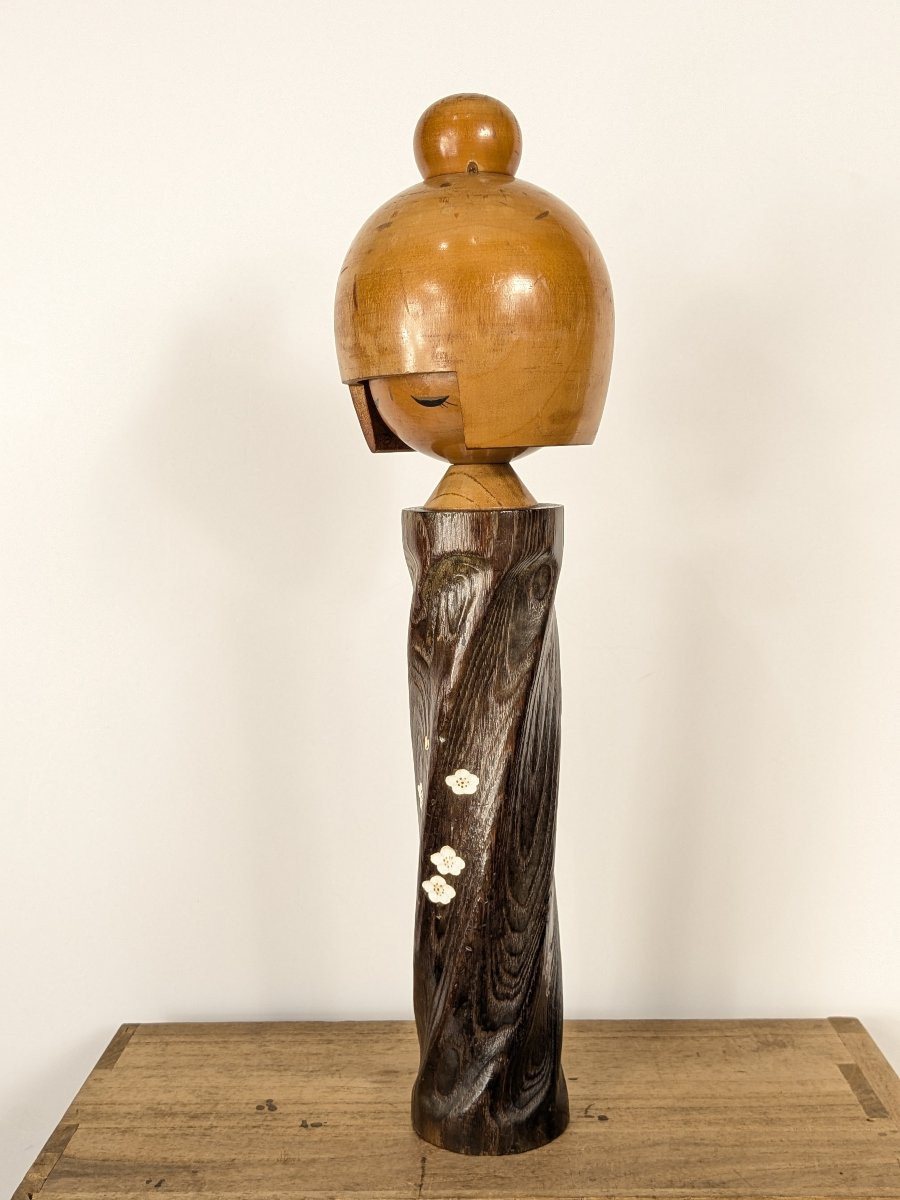
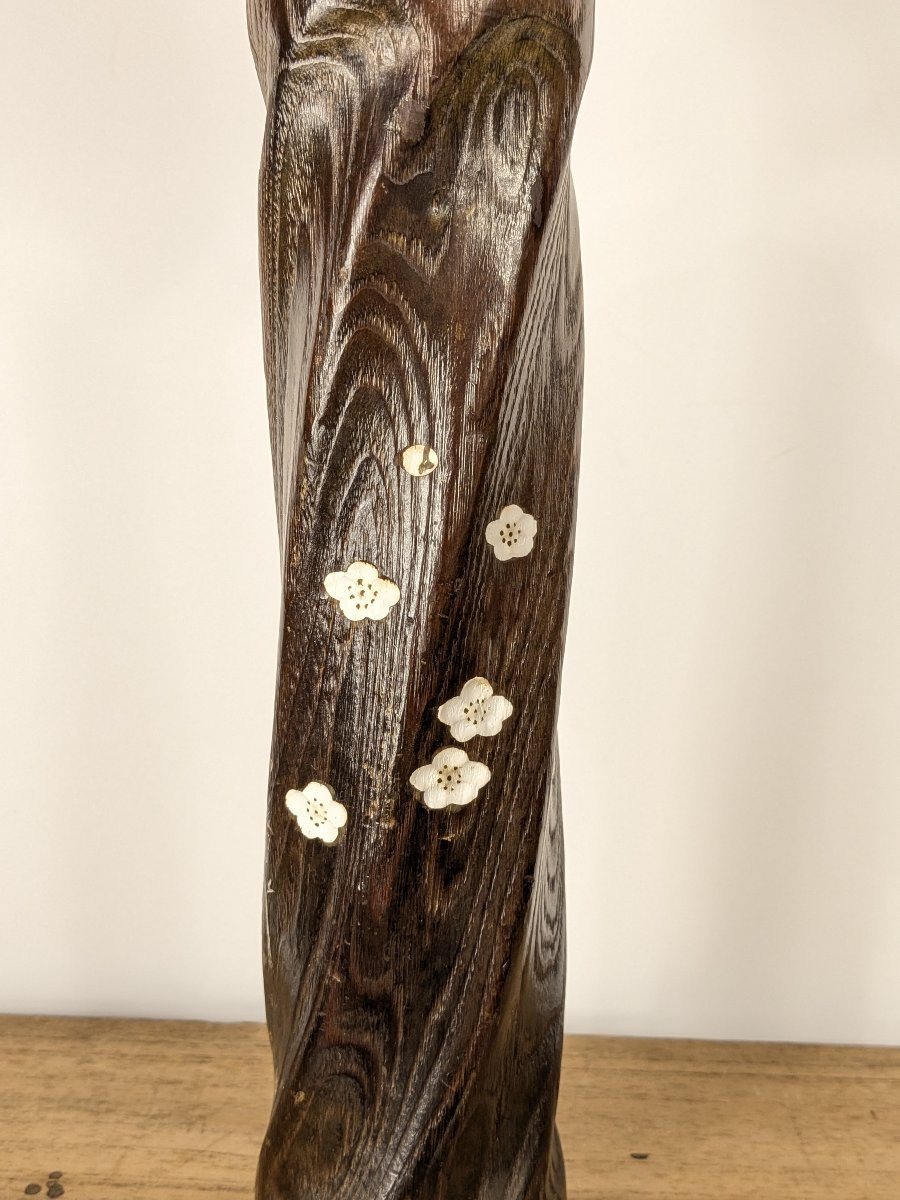
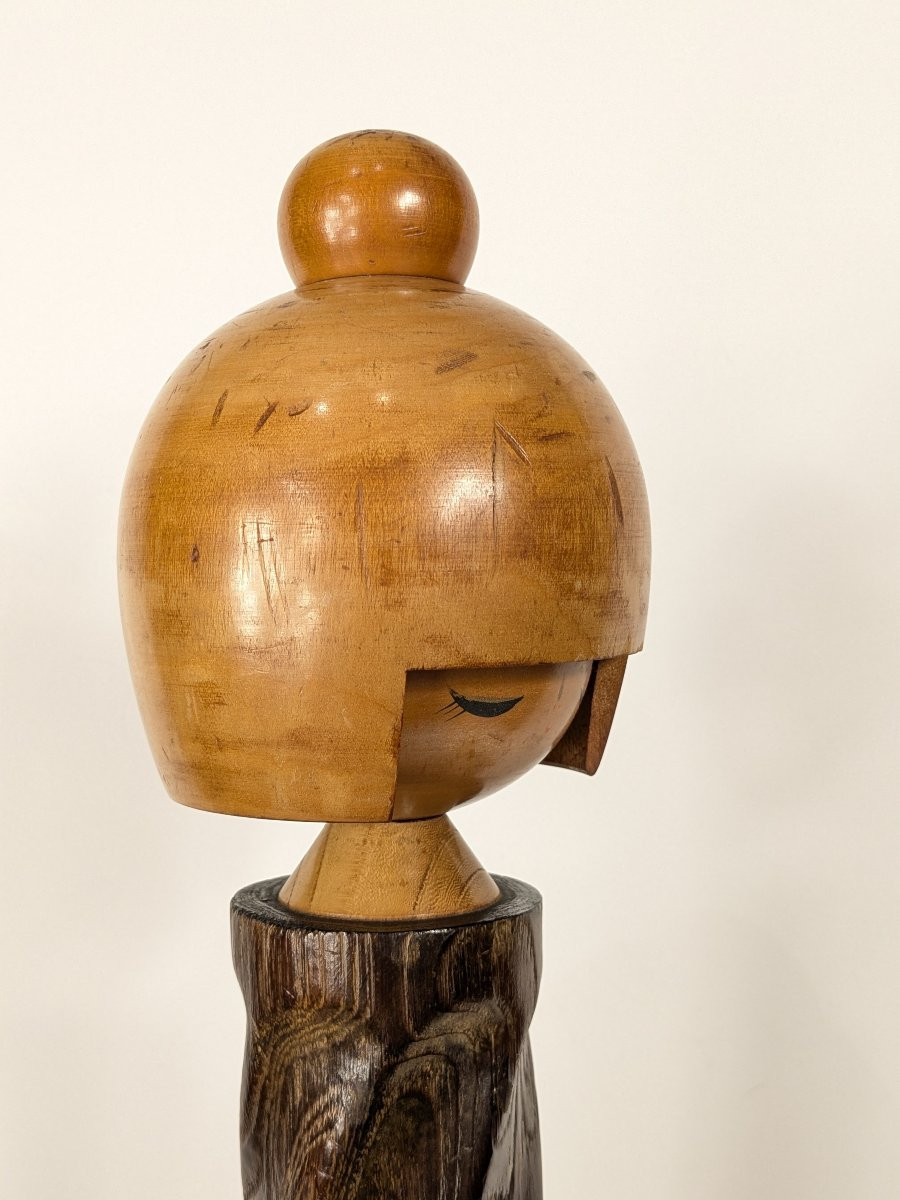
One of the artist's emblematic models. A young girl wearing a kimono patterned with plum blossoms.
Timid and reserved, the expression on her face is gentle and dreamy, emphasized by very long eyelashes. The plum blossom is a symbol of rebirth and strength, as it blooms in February.
the artist:
Founder of the "Usaburo Kokeshi" company, born in Shinto in 1917. Active 1945-80.He invented new processes and styles, introducing techniquestechniques using turning machines: intaglio engraving,polishing and stencil drawing. He loved the grain of keyaki and chestnut wood.chestnut wood. The basic models developed by Usaburo featurehelmet-cut hair, with a bun (a reference to Buddha); a bountifulbody. Usaburo took part in annual competitions from1961 and won numerous prizes. Died in 2009.
-------------about kokeshis kokeshi appeared in the 1820s-40s (late Edo era) as toys for girls, or as tokens of love and friendship, or as symbols of the desire to have a healthy child.The doll is the result of a Shinto communion with nature (forest/wood/landscape).they represent modesty, discretion, femininity, the feminine ideal.their chignon is an evocation of Buddha.
A certificate, a note on the artist and a detailed explanation of the art of kokeshis will be given to the purchaser.
One of the artist's emblematic models. A young girl wearing a kimono patterned with plum blossoms.
Timid and reserved, the expression on her face is gentle and dreamy, emphasized by very long eyelashes. The plum blossom is a symbol of rebirth and strength, as it blooms in February.
the artist:
Founder of the "Usaburo Kokeshi" company, born in Shinto in 1917. Active 1945-80.He invented new processes and styles, introducing techniquestechniques using turning machines: intaglio engraving,polishing and stencil drawing. He loved the grain of keyaki and chestnut wood.chestnut wood. The basic models developed by Usaburo featurehelmet-cut hair, with a bun (a reference to Buddha); a bountifulbody. Usaburo took part in annual competitions from1961 and won numerous prizes. Died in 2009.
-------------about kokeshis kokeshi appeared in the 1820s-40s (late Edo era) as toys for girls, or as tokens of love and friendship, or as symbols of the desire to have a healthy child.The doll is the result of a Shinto communion with nature (forest/wood/landscape).they represent modesty, discretion, femininity, the feminine ideal.their chignon is an evocation of Buddha.
A certificate, a note on the artist and a detailed explanation of the art of kokeshis will be given to the purchaser.
160 €
Period: 20th century
Style: Asian art
Condition: Good condition
Material: Solid wood
Diameter: 12
Height: 43,5
Reference (ID): 1763576
Availability: In stock
Print