

Judith With The Head Of Holofernes, Northern Italian School About 1670, Baroque Painting
Artist: école D’italie Du Nord, Vers 1670
NORTHERN ITALIAN SCHOOL, circa 1670
JUDITH WITH THE HEAD OF HOLOPHERN
NORTHERN ITALIAN SCHOOL
circa 1670
Oil on canvas
107 × 77 cm / 42.1 × 30.3 inches, unframed
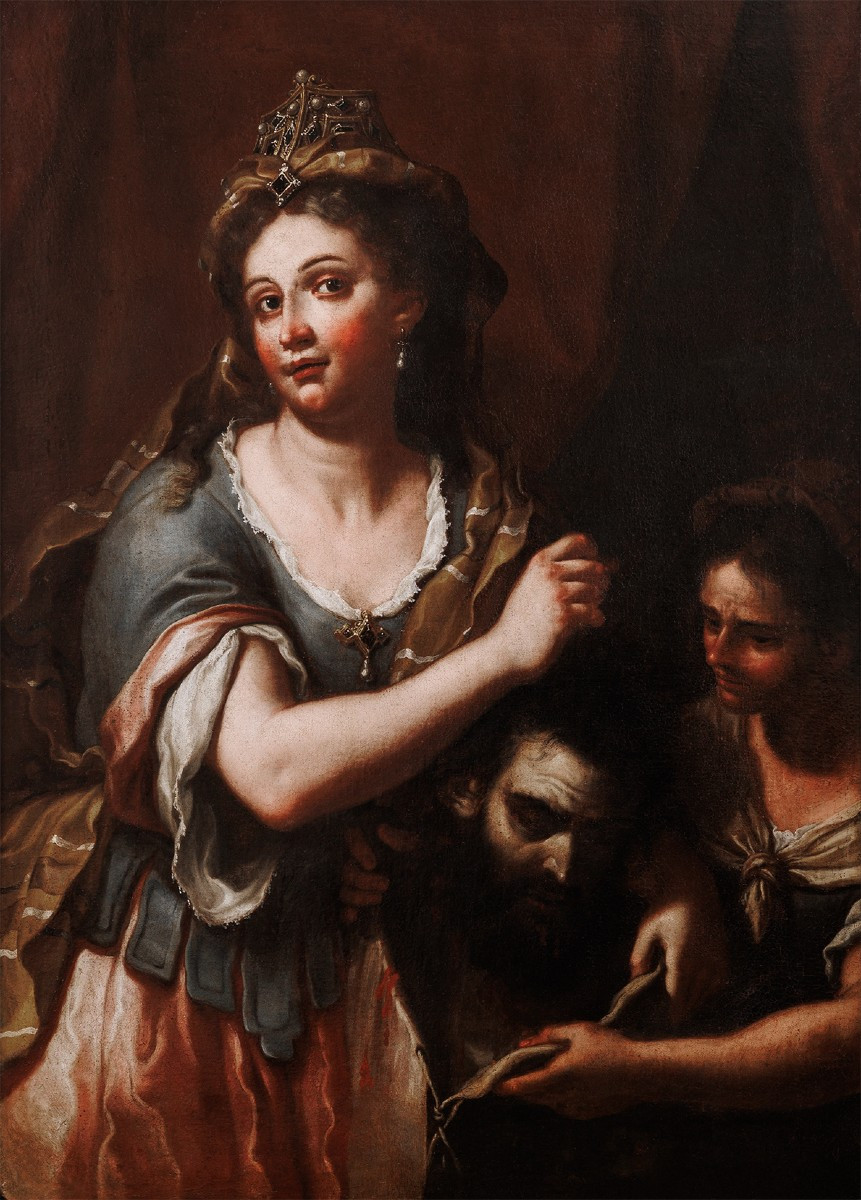
Executed on an impressive scale, the present composition belongs to a long and distinguished Italian tradition of representing Judith, one of the most compelling heroines of biblical history. The story of Judith occupies a privileged place within the history of Italian painting, where the biblical heroine emerged as a powerful embodiment of virtue, courage and seductive ambiguity. Particularly in the seventeenth century, the subject reached the height of its popularity, allowing artists to explore not only violence and triumph, but also psychology, theatricality and feminine presence.
From the dramatic naturalism introduced by Michelangelo Merisi da Caravaggio, through the more restrained and idealized interpretations associated with Guido Reni and the lingering echoes of late Mannerist spirituality found in artists such as Alessandro Allori, the iconography of Judith underwent a remarkable transformation. By the second half of the seventeenth century, depictions increasingly assumed a theatrical quality, almost anticipating the emotional staging of early opera.
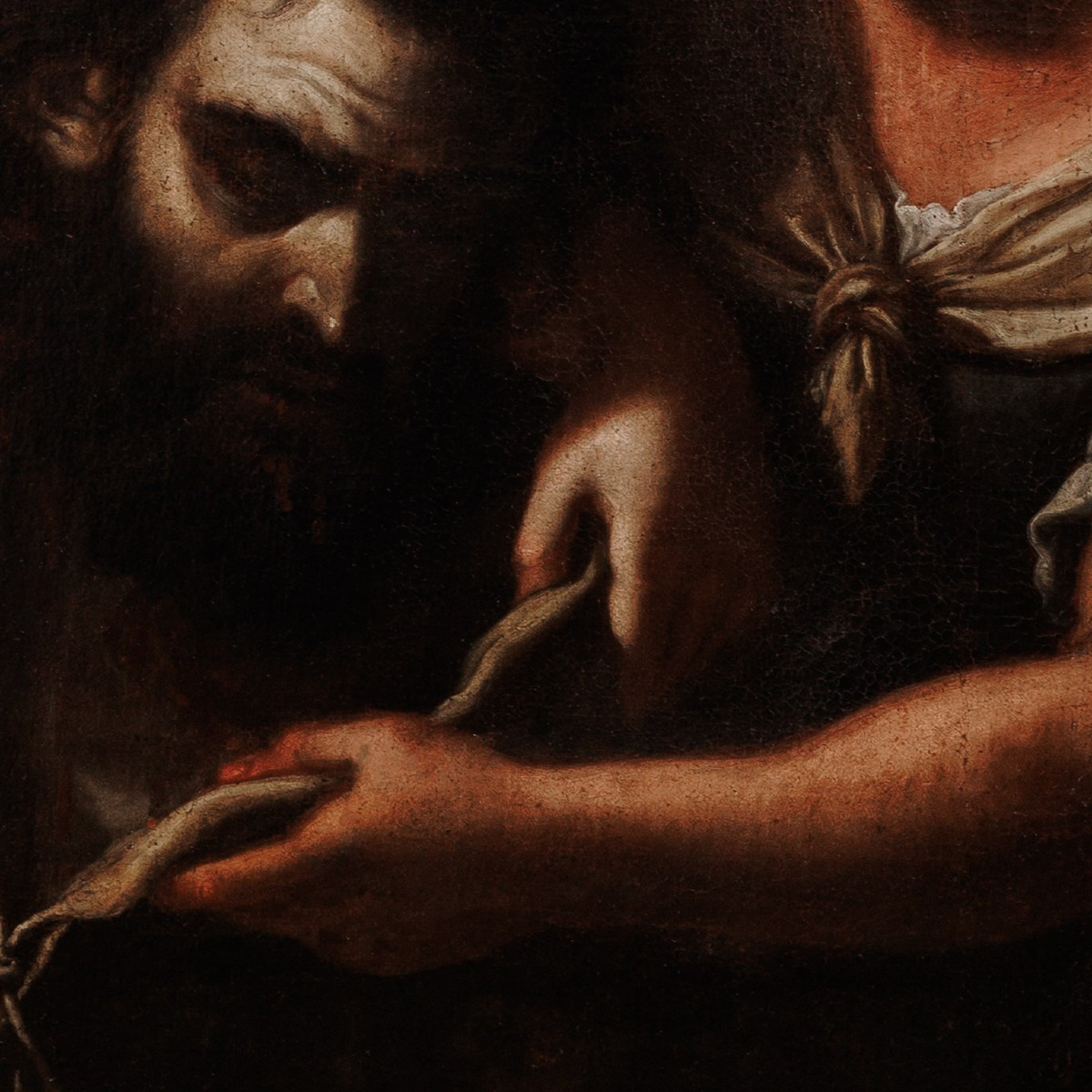
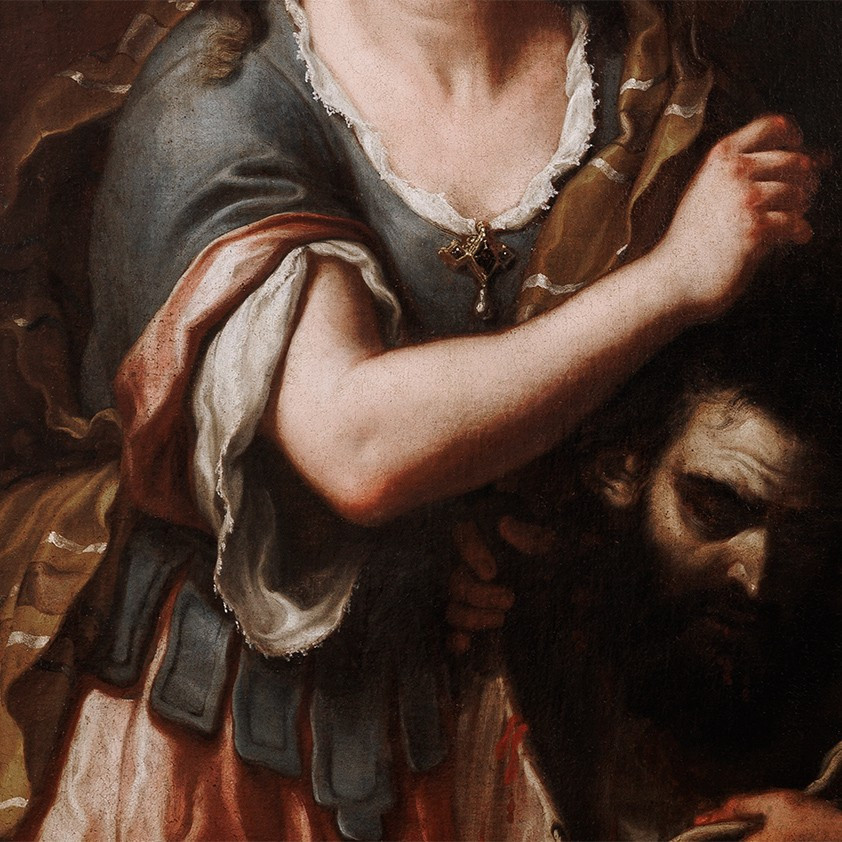
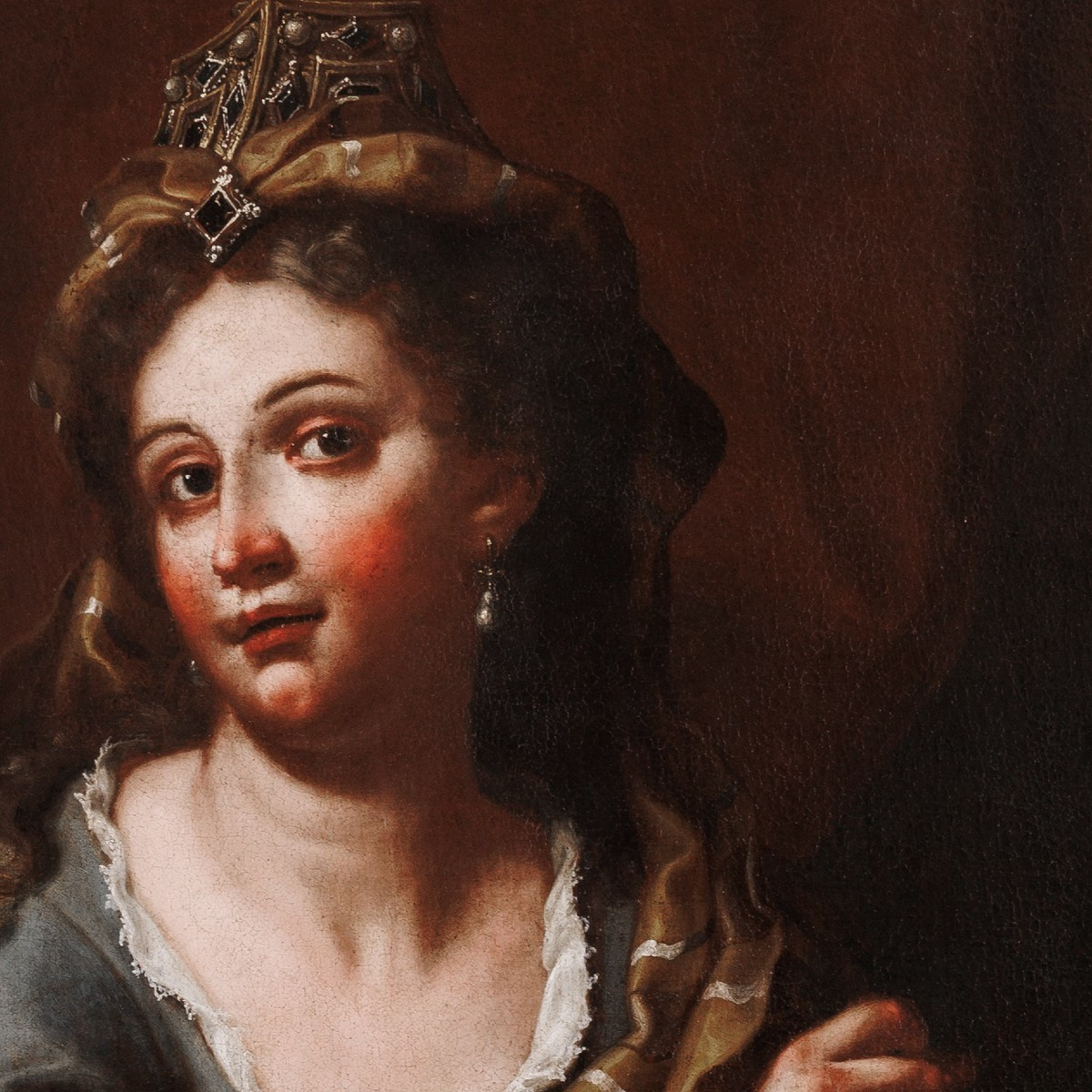
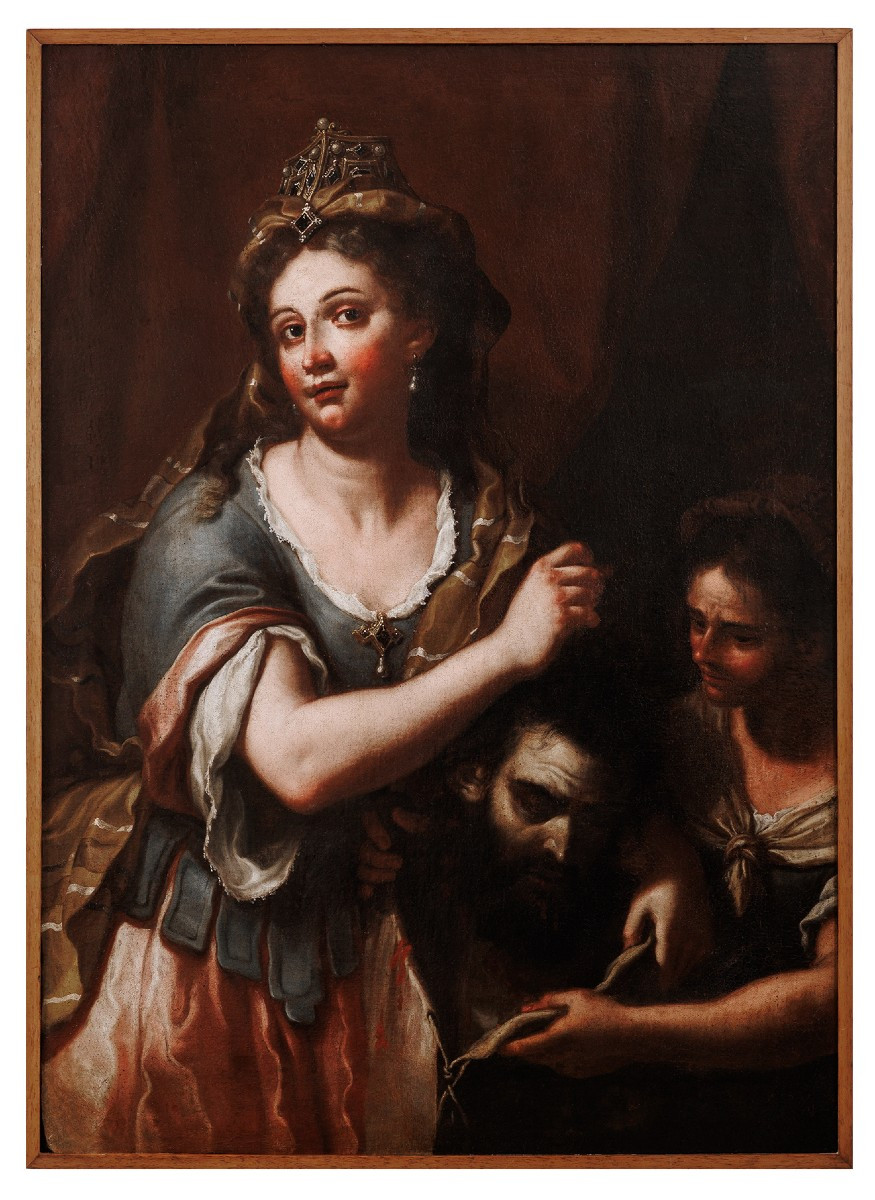
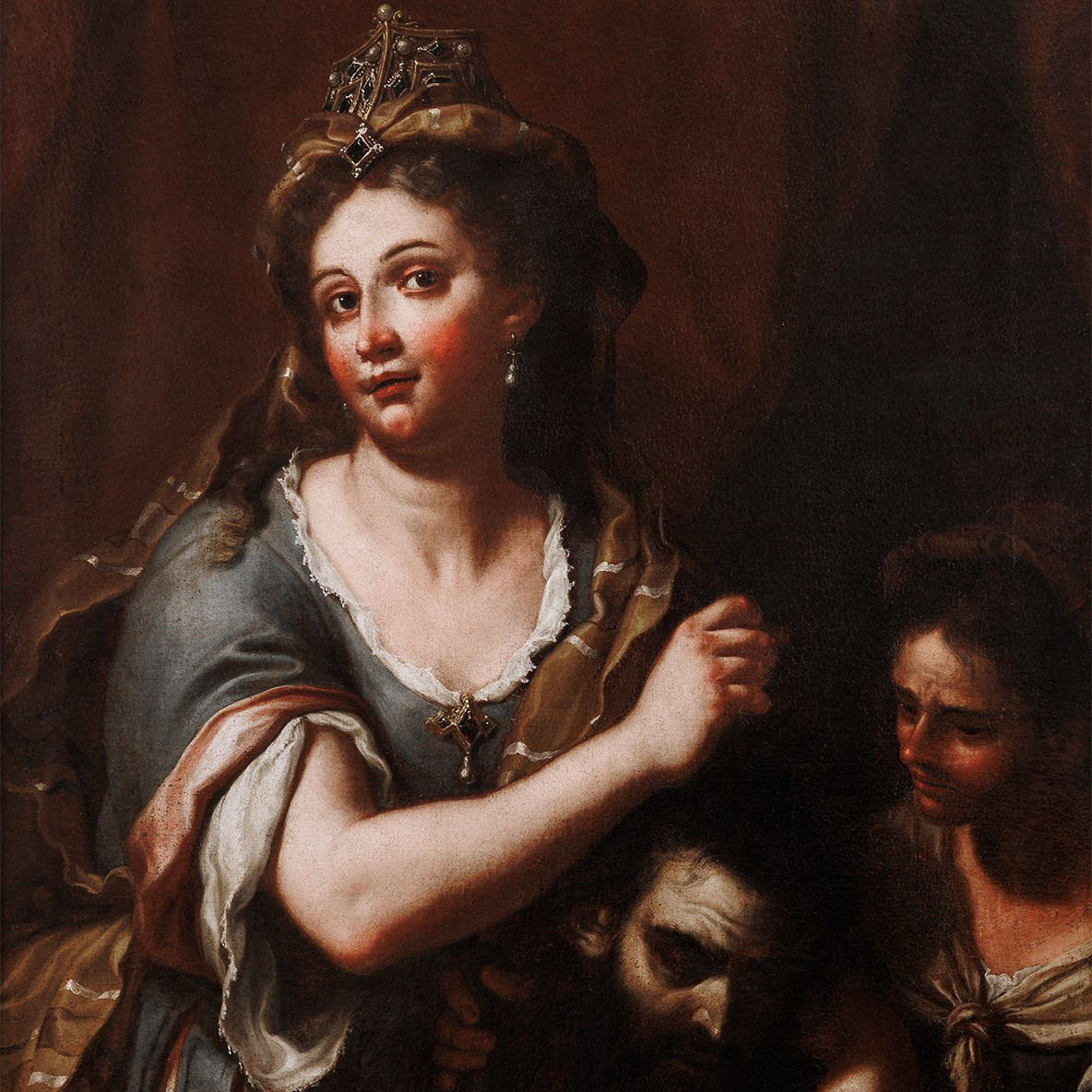
The present composition belongs to this later tradition. Judith no longer appears solely as the stern instrument of divine justice but acquires a distinctly aristocratic, almost portrait-like presence. Her delicately individualized facial features, refined costume and poised gesture suggest that the biblical drama has become inseparable from the visual culture of courtly elegance. The heroine stands not merely as victor over Holofernes, but as a protagonist in a carefully orchestrated scene of emotion and spectacle.
JUDITH WITH THE HEAD OF HOLOPHERN
NORTHERN ITALIAN SCHOOL
circa 1670
Oil on canvas
107 × 77 cm / 42.1 × 30.3 inches, unframed
Executed on an impressive scale, the present composition belongs to a long and distinguished Italian tradition of representing Judith, one of the most compelling heroines of biblical history. The story of Judith occupies a privileged place within the history of Italian painting, where the biblical heroine emerged as a powerful embodiment of virtue, courage and seductive ambiguity. Particularly in the seventeenth century, the subject reached the height of its popularity, allowing artists to explore not only violence and triumph, but also psychology, theatricality and feminine presence.
From the dramatic naturalism introduced by Michelangelo Merisi da Caravaggio, through the more restrained and idealized interpretations associated with Guido Reni and the lingering echoes of late Mannerist spirituality found in artists such as Alessandro Allori, the iconography of Judith underwent a remarkable transformation. By the second half of the seventeenth century, depictions increasingly assumed a theatrical quality, almost anticipating the emotional staging of early opera.
The present composition belongs to this later tradition. Judith no longer appears solely as the stern instrument of divine justice but acquires a distinctly aristocratic, almost portrait-like presence. Her delicately individualized facial features, refined costume and poised gesture suggest that the biblical drama has become inseparable from the visual culture of courtly elegance. The heroine stands not merely as victor over Holofernes, but as a protagonist in a carefully orchestrated scene of emotion and spectacle.
7 300 €
Period: 17th century
Style: Renaissance, Louis 13th
Condition: Good condition
Material: Oil painting
Length: 77 cm
Height: 107 cm
Reference (ID): 1761305
Availability: In stock
Print