

Ivory Okimono – The Rakan And The Hossu – Japan, Meiji Period (1868–1920)
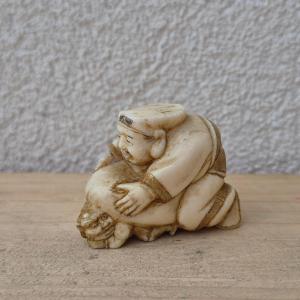
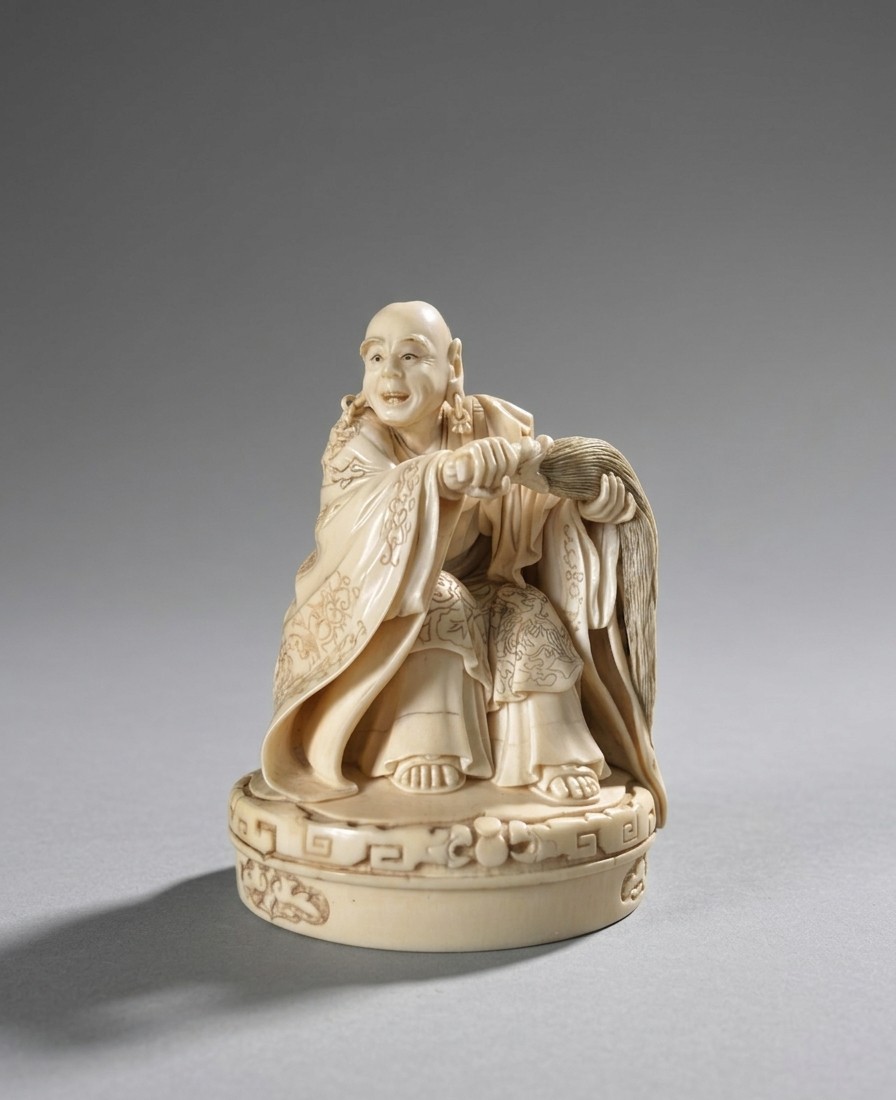
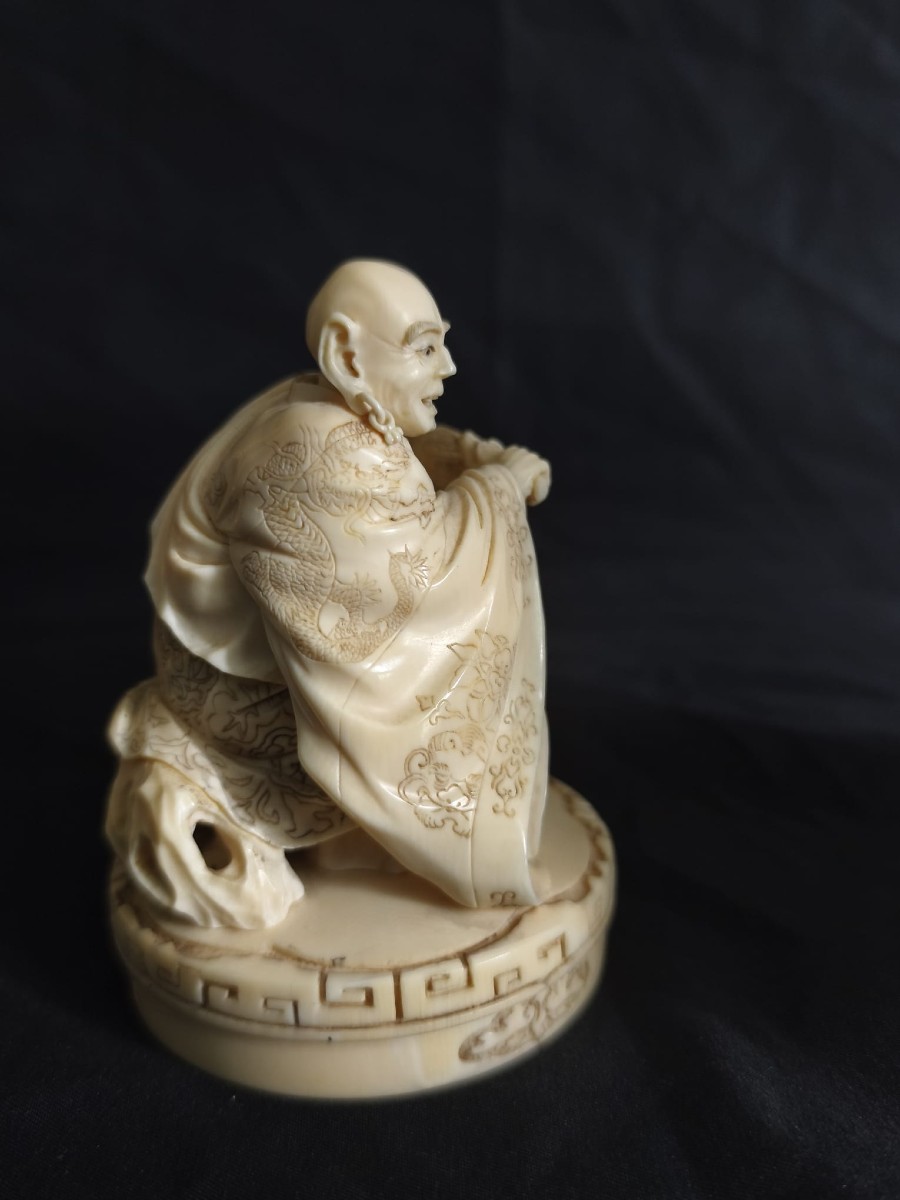
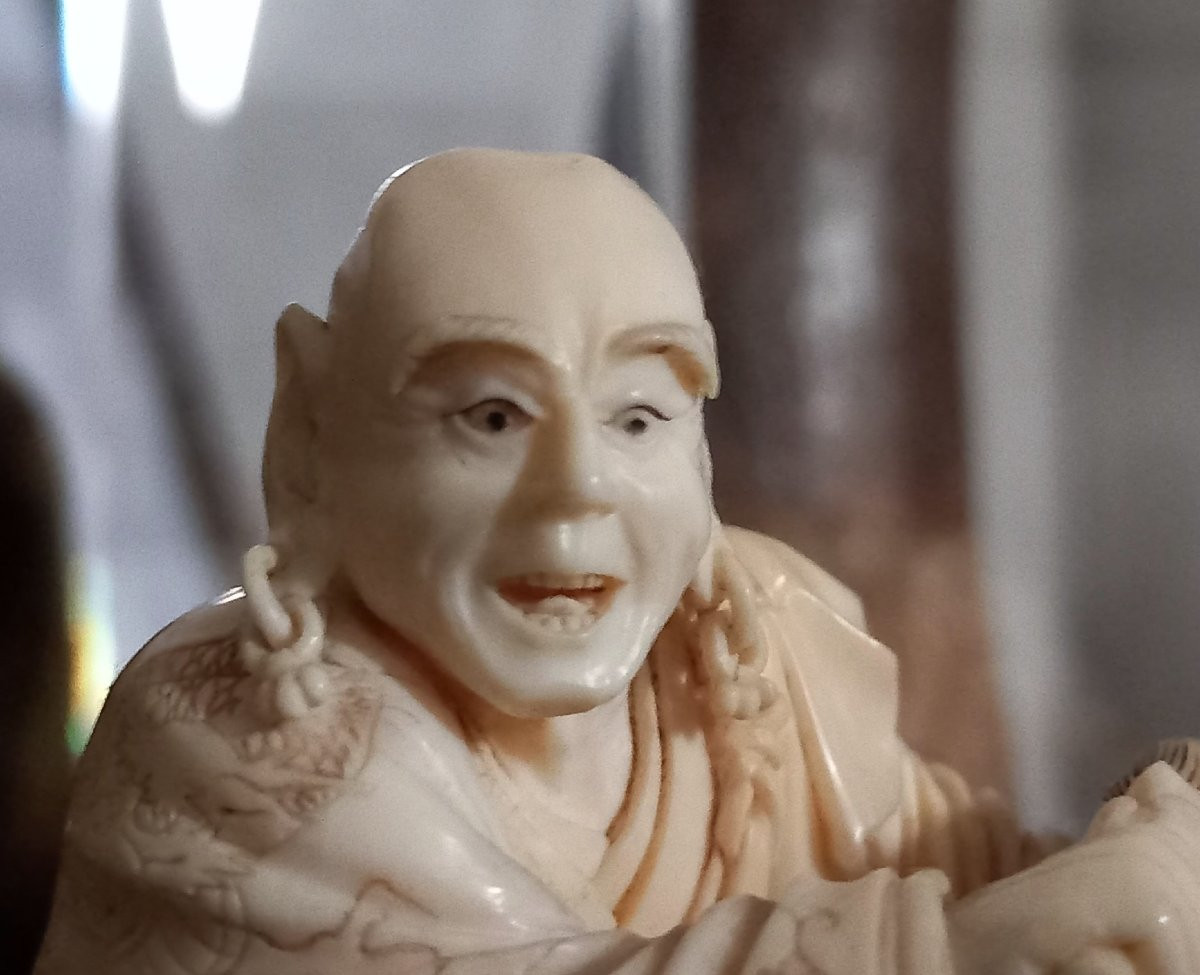
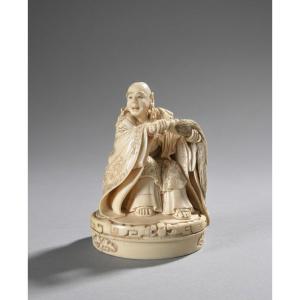
Small one-piece carved ivory okimono depicting a Rakan, a disciple of the Buddha who has attained enlightenment. Dating from the late 19th century, this work stands out for the strength of its expression and the refinement of its execution, characteristic of the golden age of Japanese carving.
Iconographic AnalysisPosture:
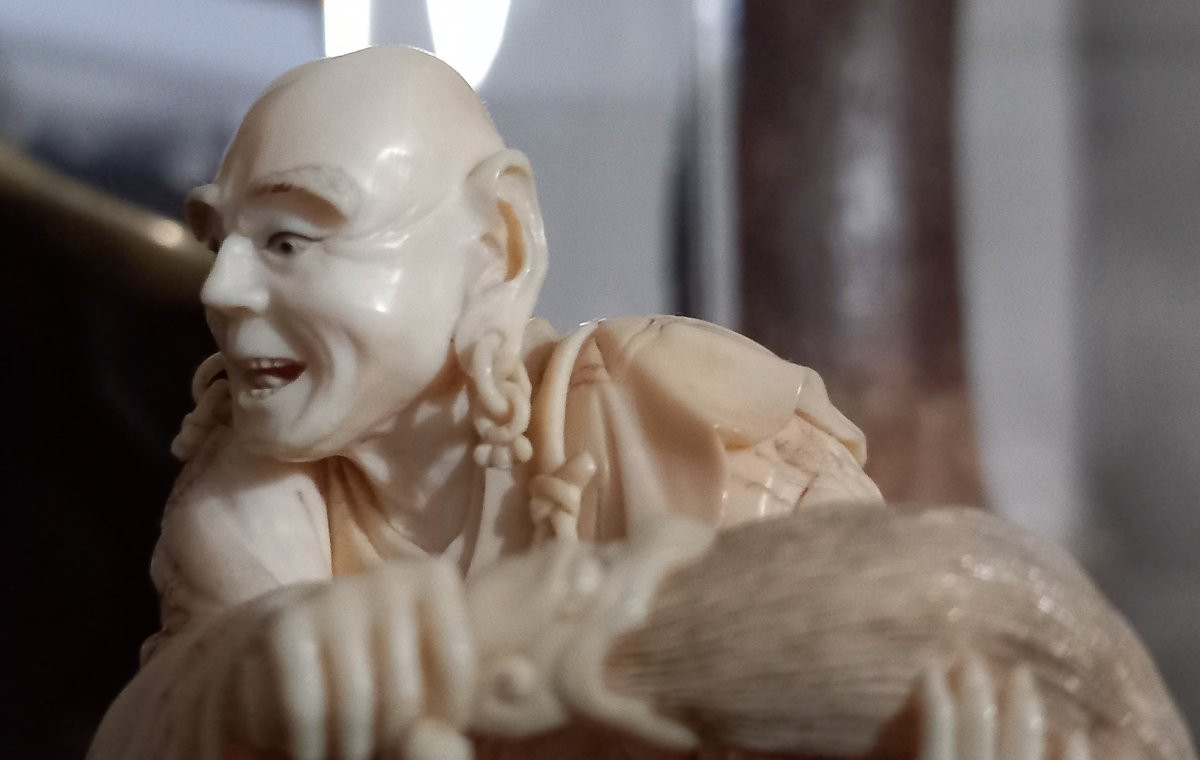
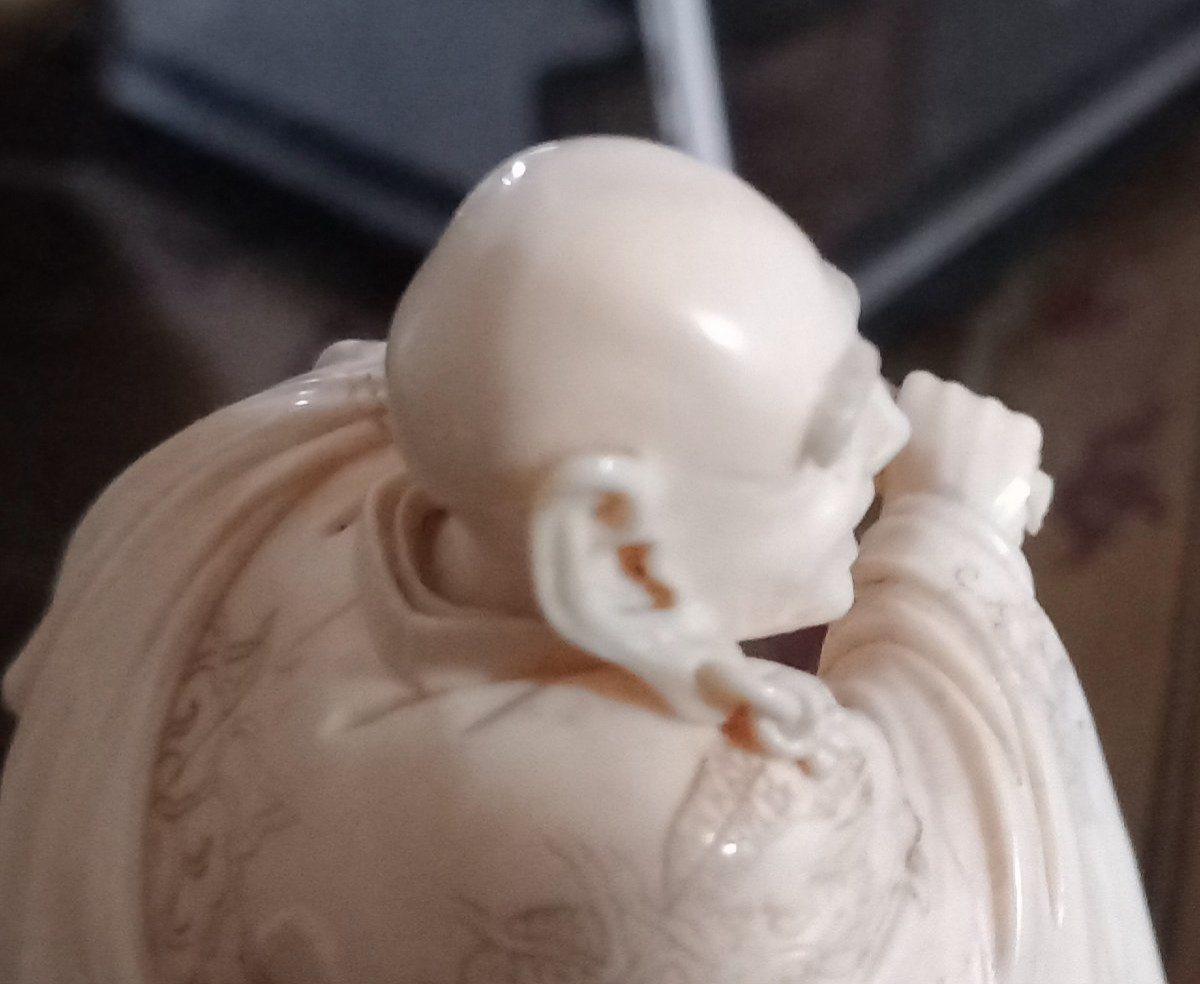
The Rakan is depicted seated on a rocky base in a dynamic and expressive pose. His strongly defined facial features, combined with the ritual tonsure, convey an intense spirituality imbued with profound humanity.
Attributes:
He firmly holds a hossu (a traditional fly-whisk made from horsehair), a symbol of compassion and spiritual authority in Zen Buddhism, used to dispel desires and obstacles without harming living beings.
Ornamentation (kesa):
The engraving work on the monastic robe is remarkable. One can distinguish a dragon moving among clouds as well as the head of a komainu (guardian lion-dog), executed with great precision through delicate relief carving and fine incisions.
The sculpture demonstrates great mastery in the rendering of the drapery and anatomical details (hands, feet, elongated ears). The natural patina of the ivory enhances the depth and delicacy of the engravings.
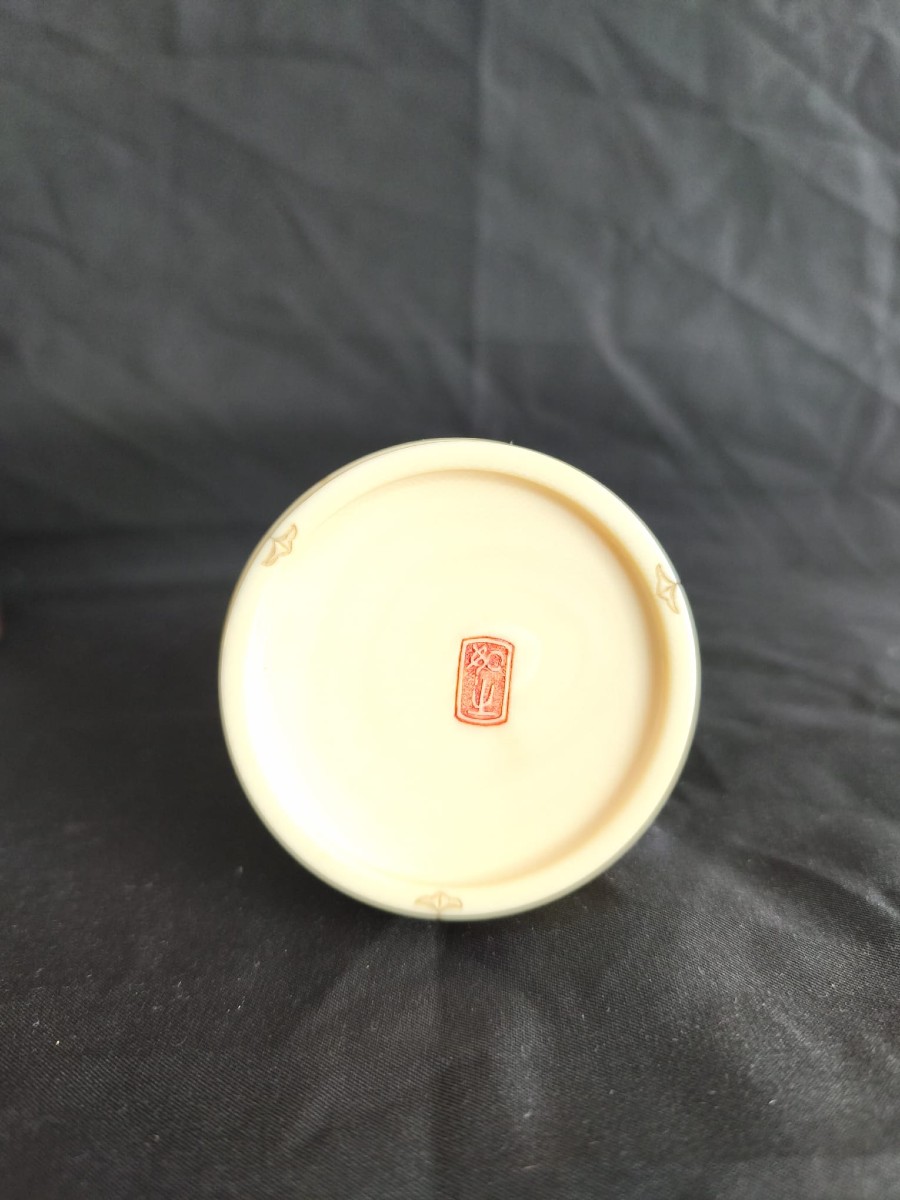
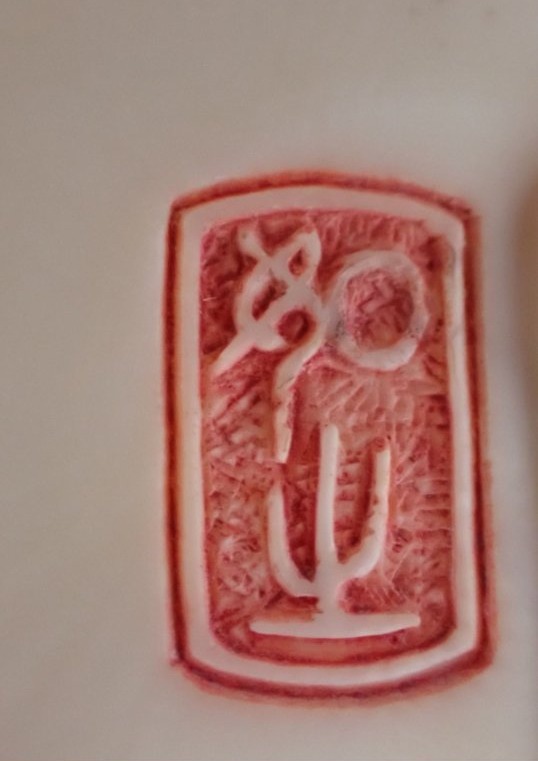
SignatureStylized signature carved in slight relief within a cartouche located beneath the base.
BaseThe base is decorated with a Greek key frieze and floral motifs, completing the refined aesthetic of the piece.
Details- Period: Japan, circa 1860–1920 (Late Edo / Early Meiji period).
- Material: Elephant ivory (Elephantidae spp.)
- Dimensions: Height: 8.7 cm- Diameter: 7cm
- Weight: 211 g
- Condition: Minor age crack to the base. Overall in very good condition.
- Documentation: Sold with its CITES certificate.
Period: 20th century
Style: Asian art
Condition: Good condition
Material: Ivory
Diameter: 7
Height: 8,7
Reference (ID): 1757425
Availability: In stock