

Large Amsterdam Longcase Clock Circa 1730, Signed H. Rasteur
Provenance
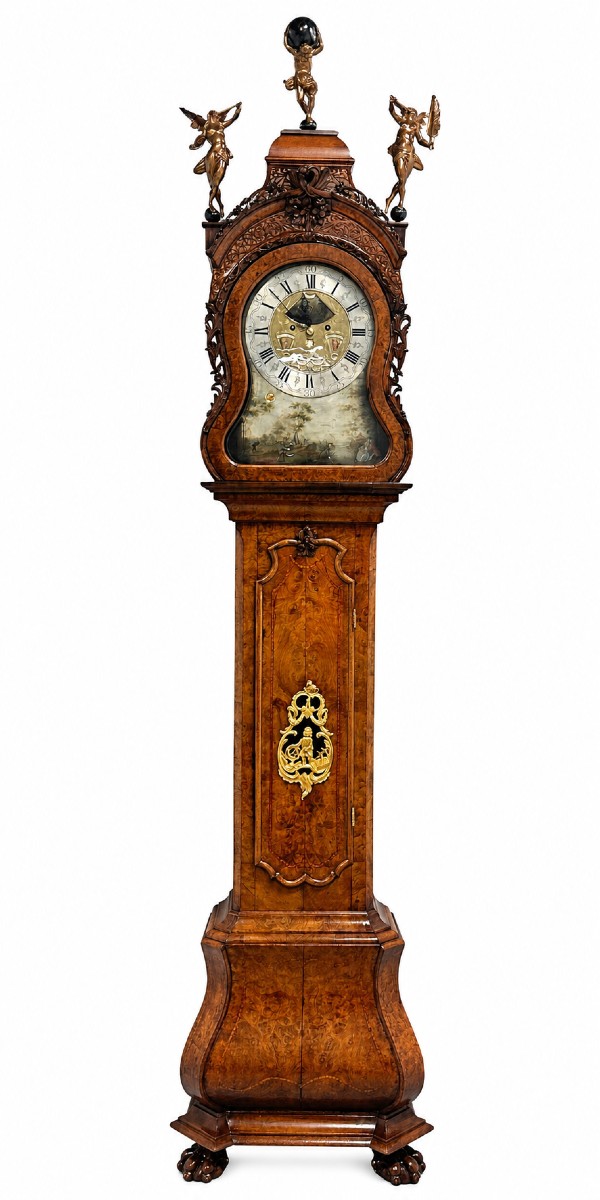
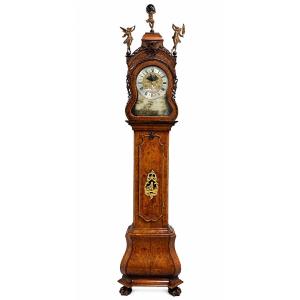
Important Dutch longcase clock of Amsterdam type, signed H. Rasteur, Amsterdam, on the dial. This attribution places the clock within the refined production of early eighteenth-century Dutch domestic horology, when Amsterdam was one of the principal centres for high-quality longcase clocks. With its architectural case, complex dial and sculptural cresting, the piece belongs to the tradition of prestigious staande klokken made for patrician interiors.
Description
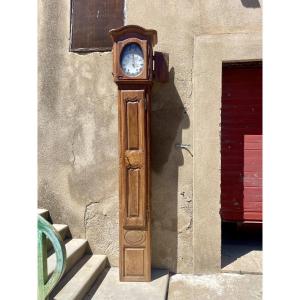
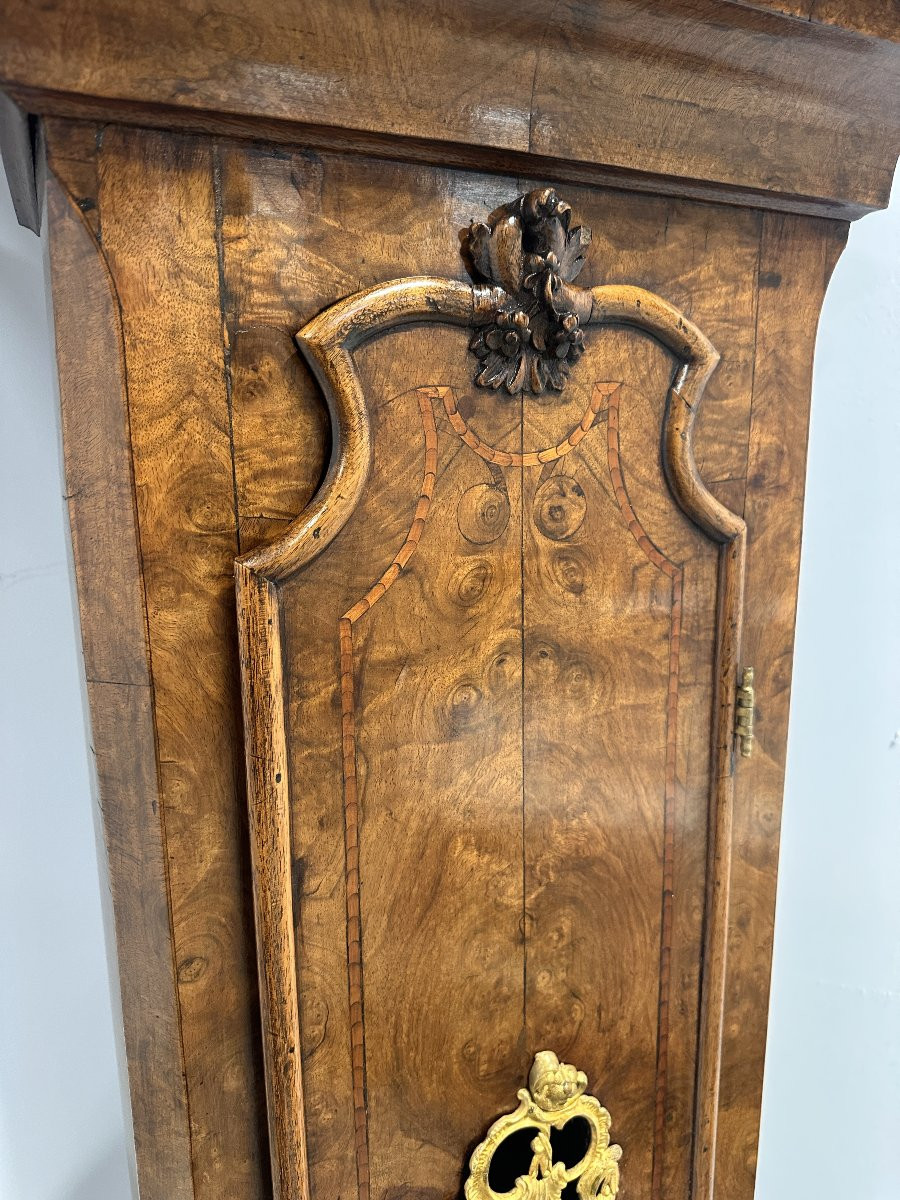
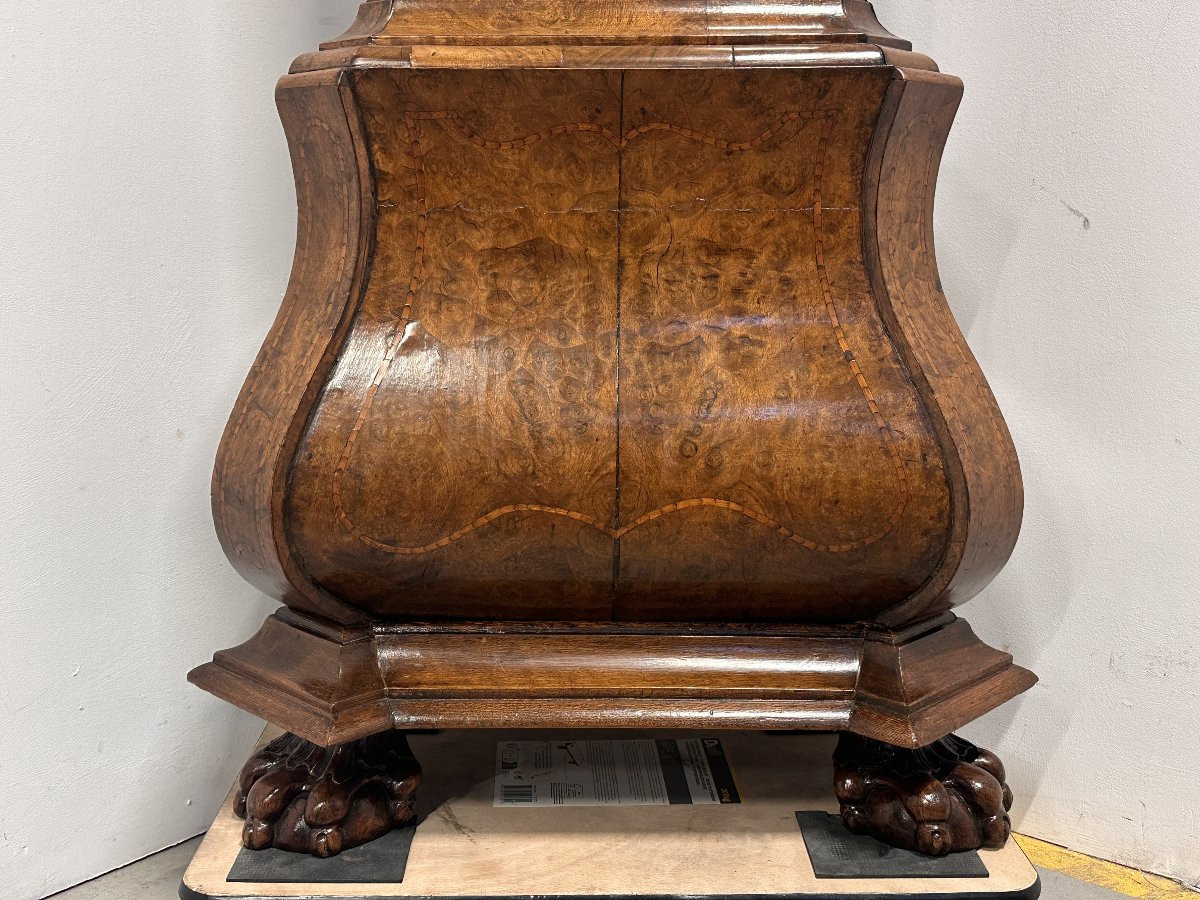
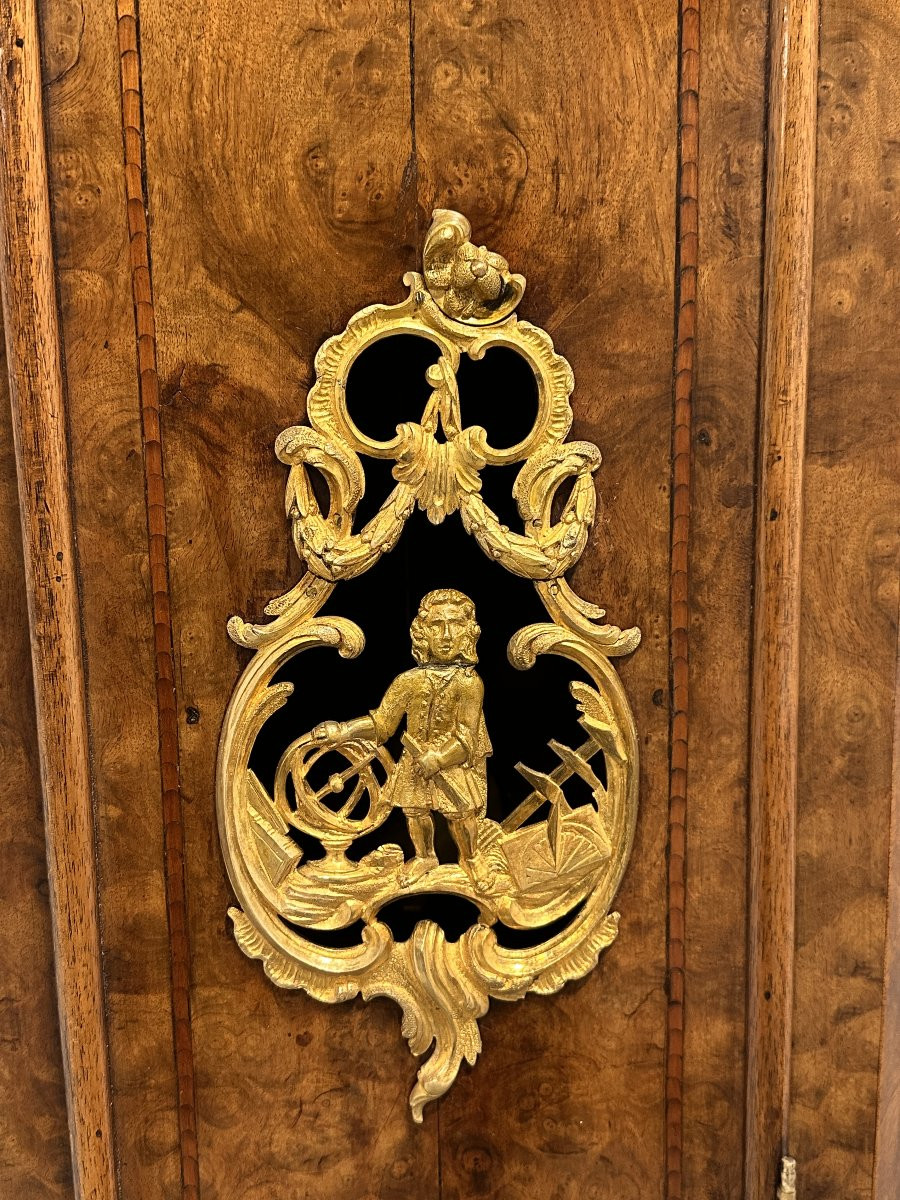
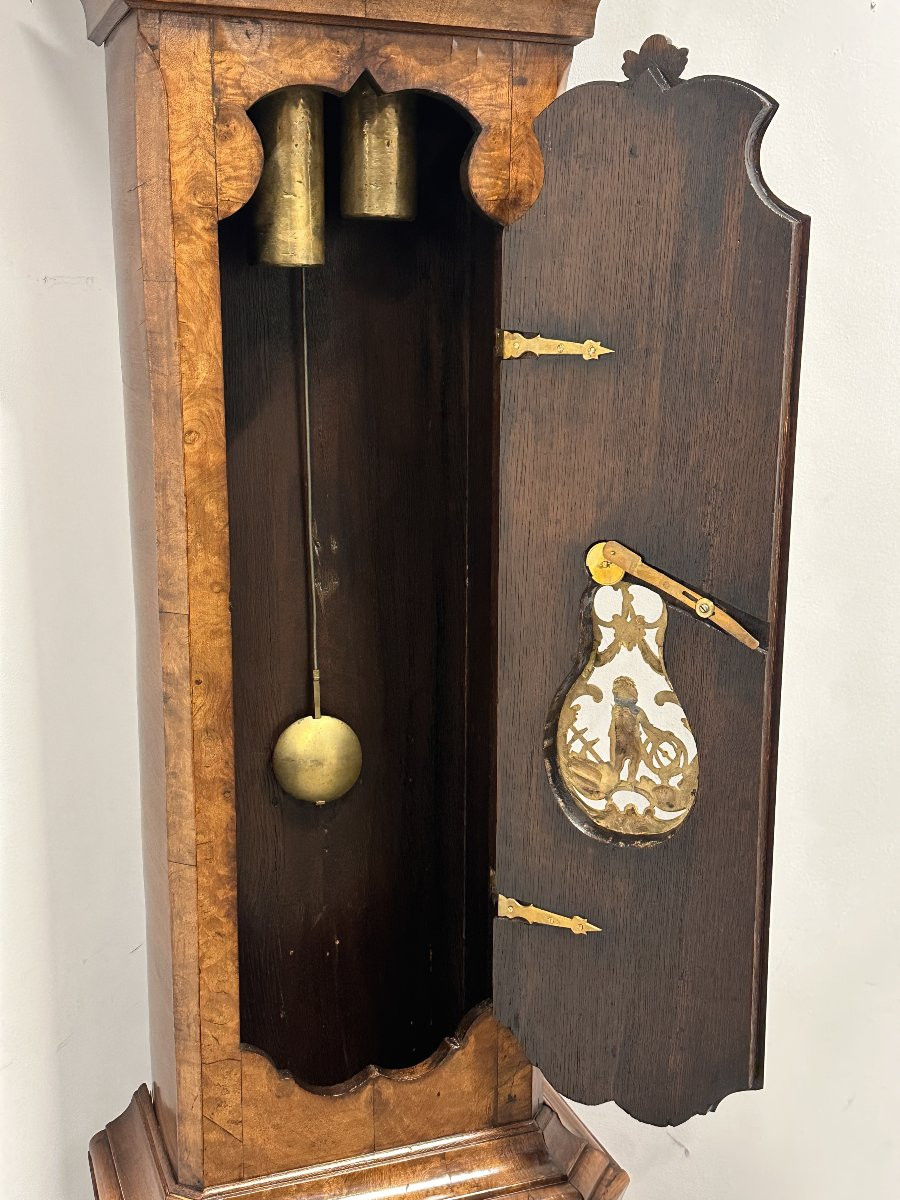
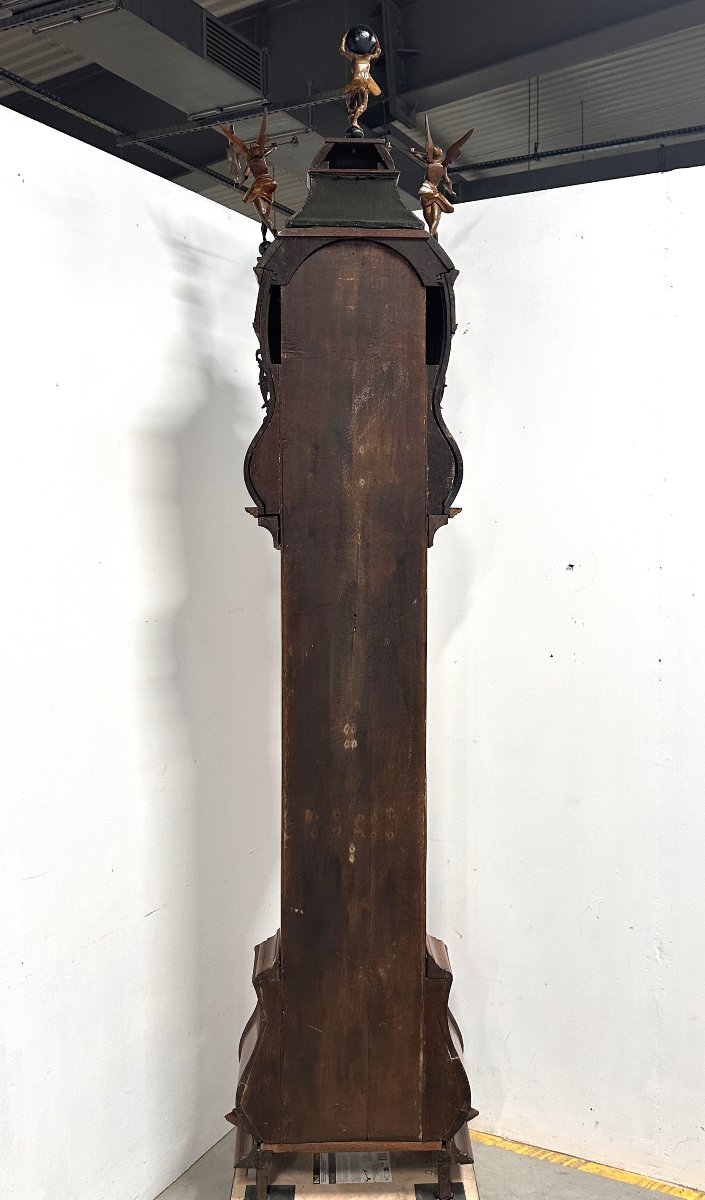
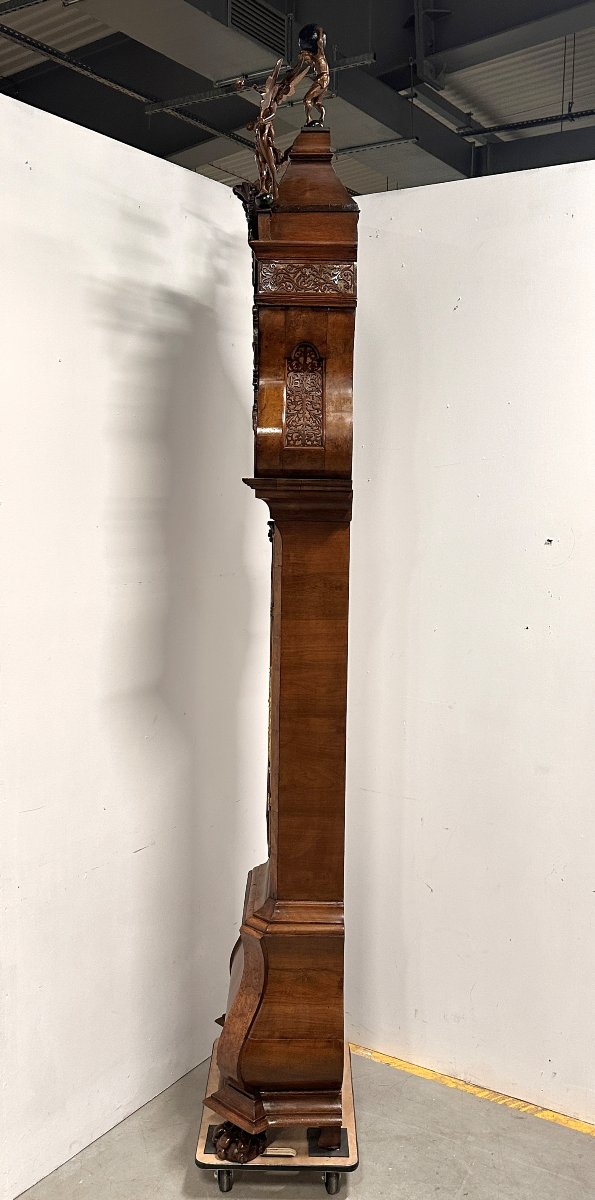
The case is monumental yet slender, with a tall vertical trunk rising from a bombe-shaped lower base. The façade is veneered with richly figured walnut burr, arranged in balanced panels and bordered by fine inlaid lines and moulded frames. The central door is fitted with an elaborate gilt-bronze mount, finely pierced and chased, depicting an allegorical figure associated with science and measurement, accompanied by scholarly attributes including an armillary sphere and instruments.
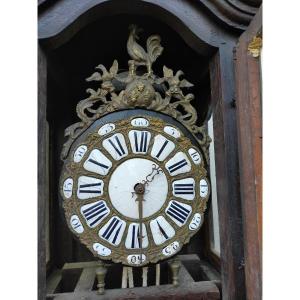
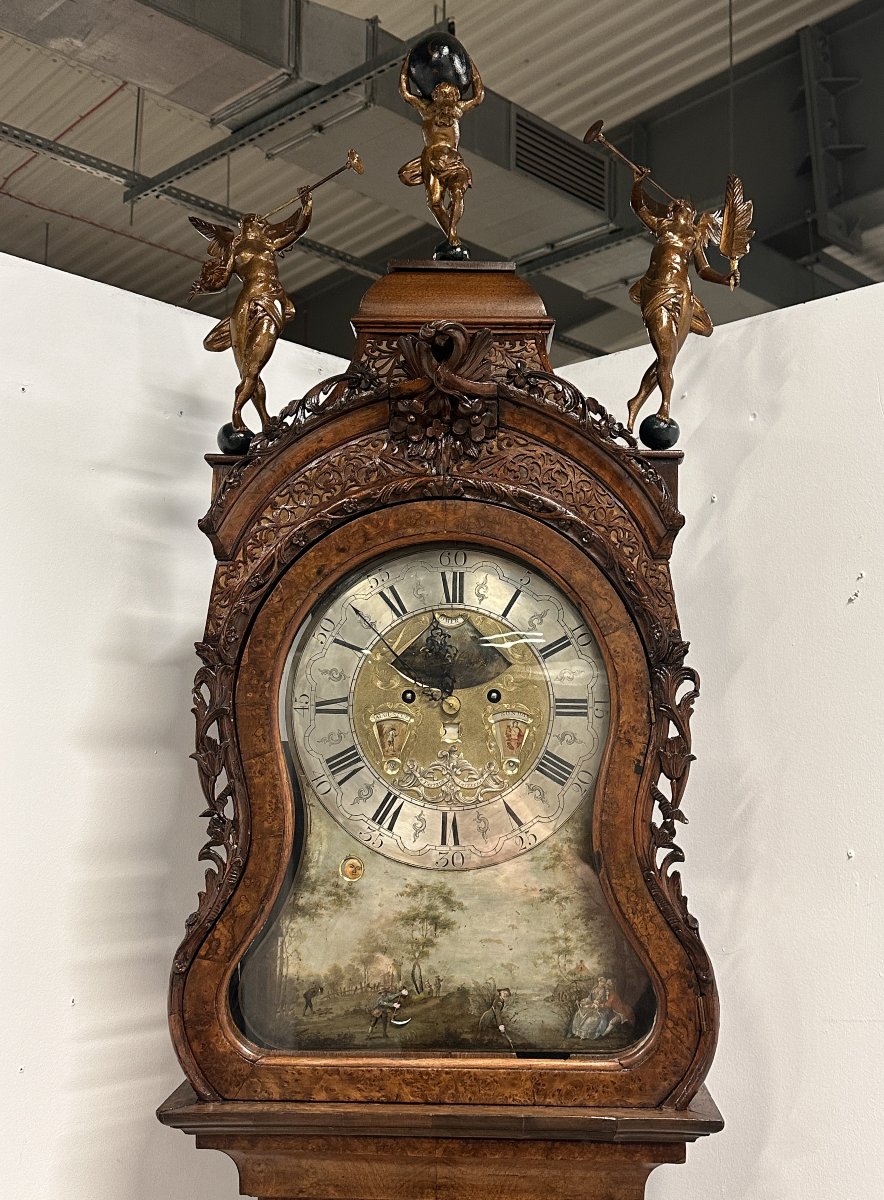
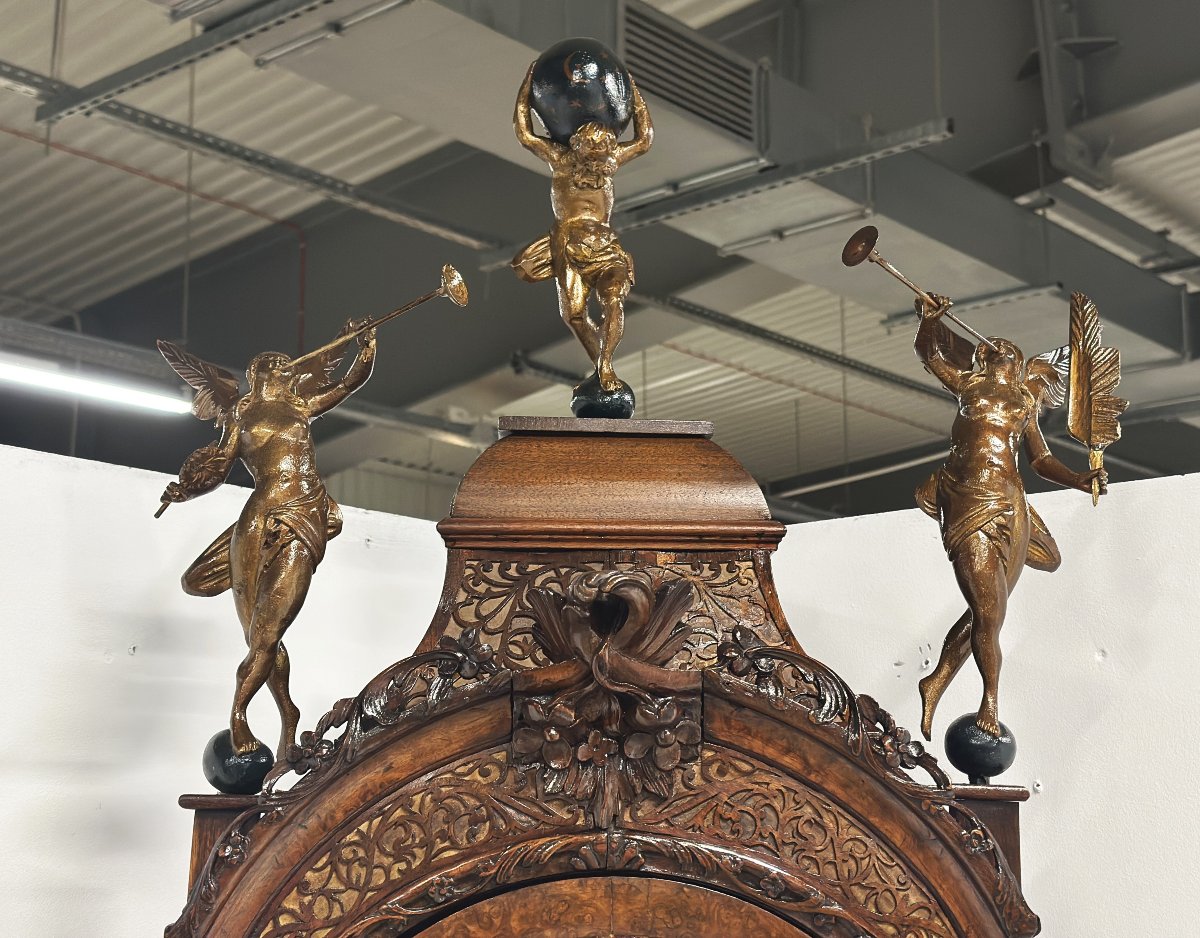
The upper section is particularly elaborate. The arched hood is enriched with openwork carving, scrolling foliage and vegetal ornament. It is surmounted by three gilded figures: at the centre, Atlas supports a black celestial sphere, a symbolic reference to the cosmos and universal time; on either side, two winged figures holding trumpets complete the theatrical composition. This type of sculptural summit is characteristic of high-ranking Dutch longcase clocks of the period.
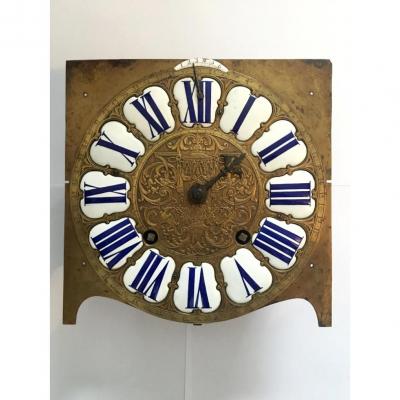
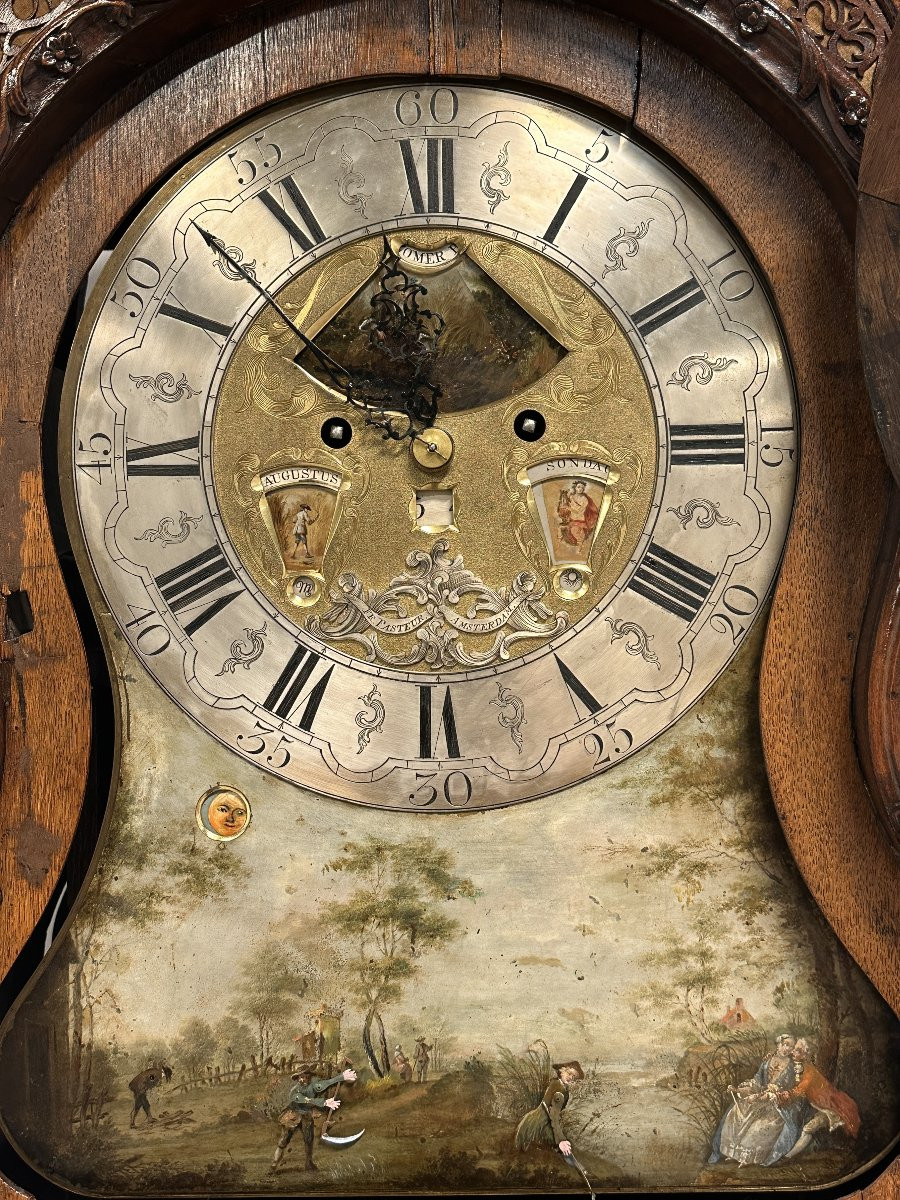
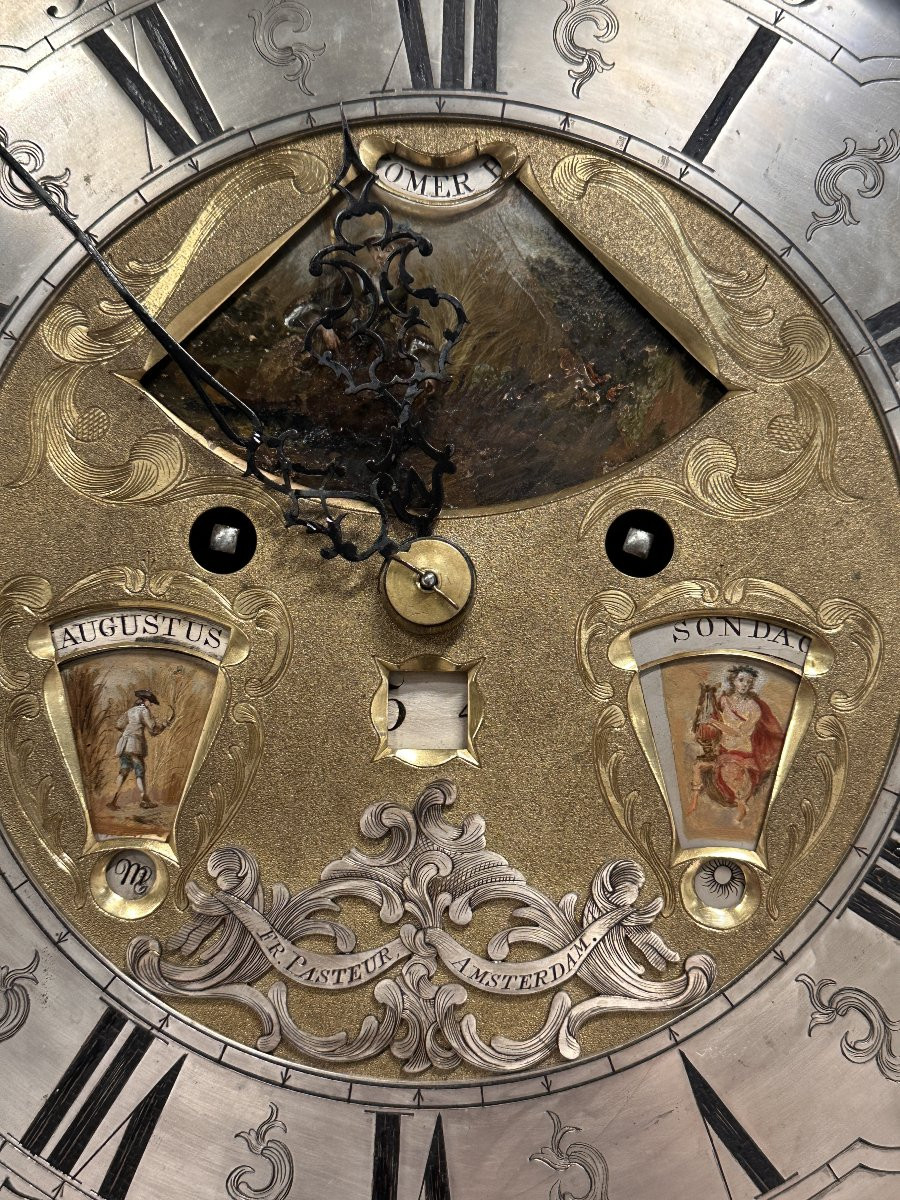
The dial is executed in gilt and silvered brass, with a Roman numeral chapter ring, outer minute track, pierced hands and an engraved centre. It includes several calendar and astronomical indications: painted side apertures for the month and day, a date aperture, moon phase and an upper animated painted disc. The lower part of the dial is decorated with a pastoral painted scene, showing figures within a landscape, in keeping with the Dutch taste for genre and rural subjects.
Technique and materials
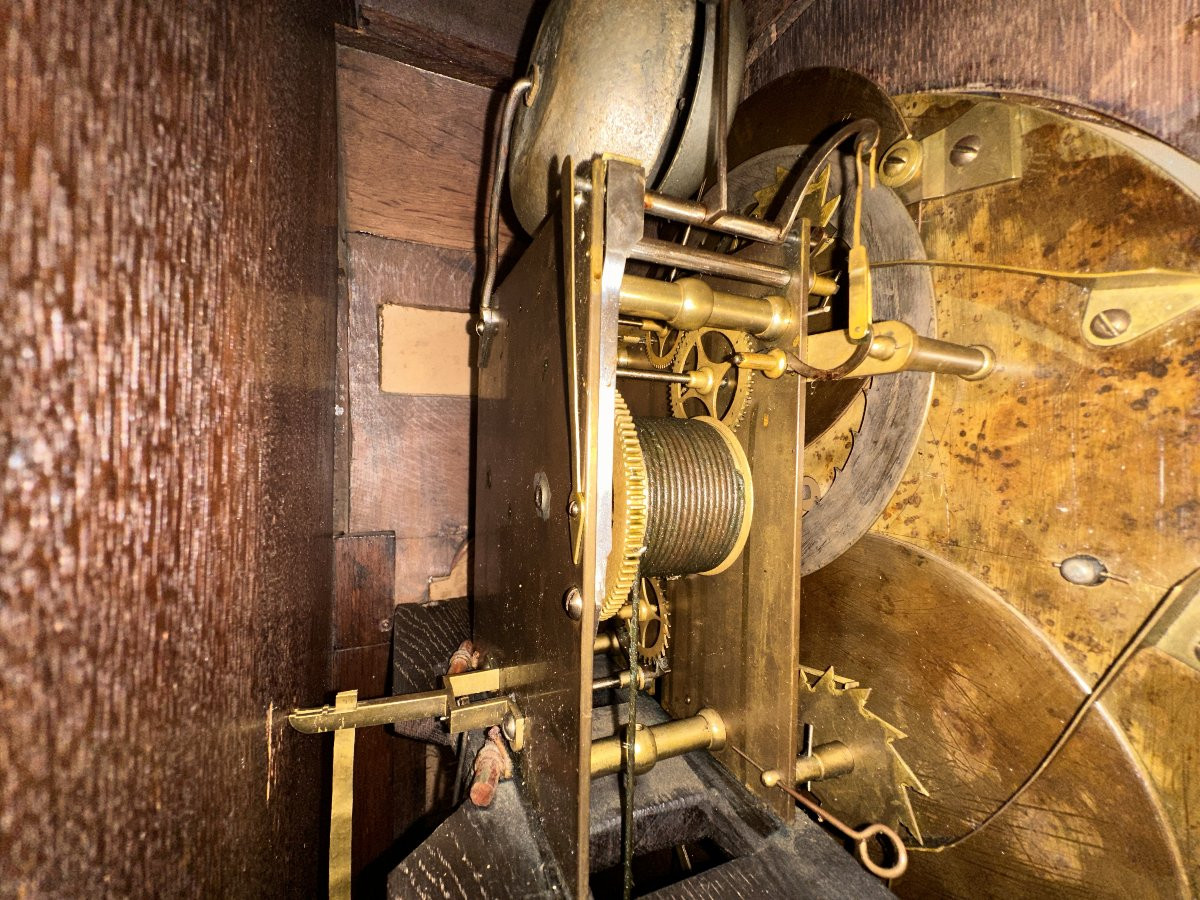
Walnut and walnut burr veneer over a solid wooden carcass, with line inlay, carved openwork ornament, gilt-bronze mounts and gilded sculptural elements. Brass weight-driven movement, with bell striking and long pendulum.
Dating
Amsterdam, circa 1730. The dating is supported by the curved architectural form of the case, the late Baroque decorative vocabulary, the sophisticated complication dial and the typology of early eighteenth-century Dutch Amsterdam longcase clocks.
Condition
Good overall condition, with wear, minor restorations and signs of use consistent with age. The case retains strong decorative presence, with its veneer, mouldings, carved elements, bronzes and old dial. The movement is present; professional servicing by a clockmaker is recommended before regular operation.
Function and display
A decorative and collectible horological piece suitable for a classical interior, library, entrance hall or formal reception room. Owing to its scale, iconography and technical character, it functions both as a timepiece and as a statement piece of furniture.
Dimensions
height - 276 cm
width - 66 cm
depth - 35 cm
Period: 18th century
Style: Louis 14th, Regency
Condition: Excellent condition
Material: Wallnut
Width: 66 cm
Height: 276 cm
Depth: 35 cm
Reference (ID): 1756866
Availability: In stock