THIS OBJECT WAS SOLD
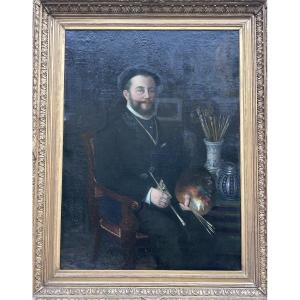
Portrait d'Un Homme Du Monde, Jean-joseph Weerts 1892
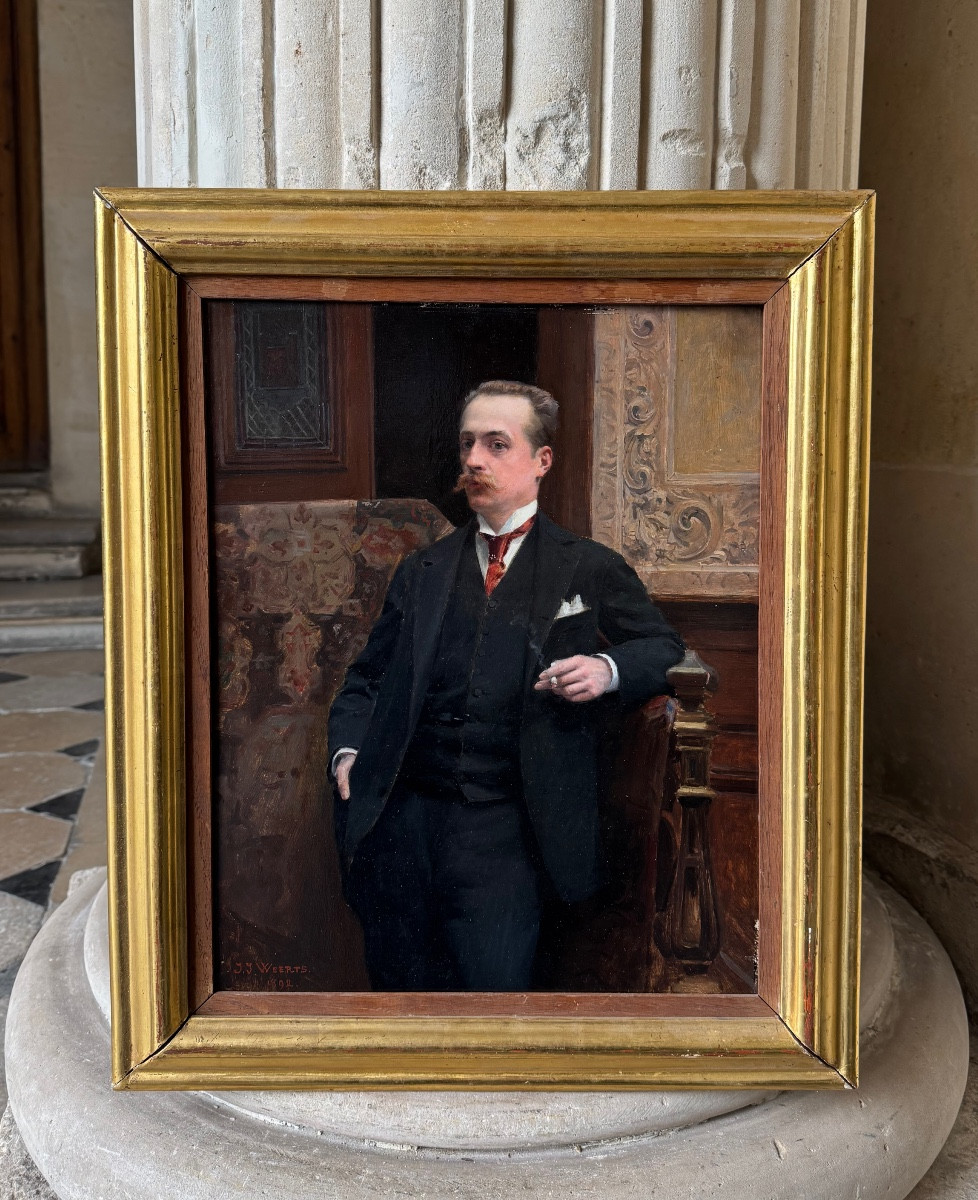
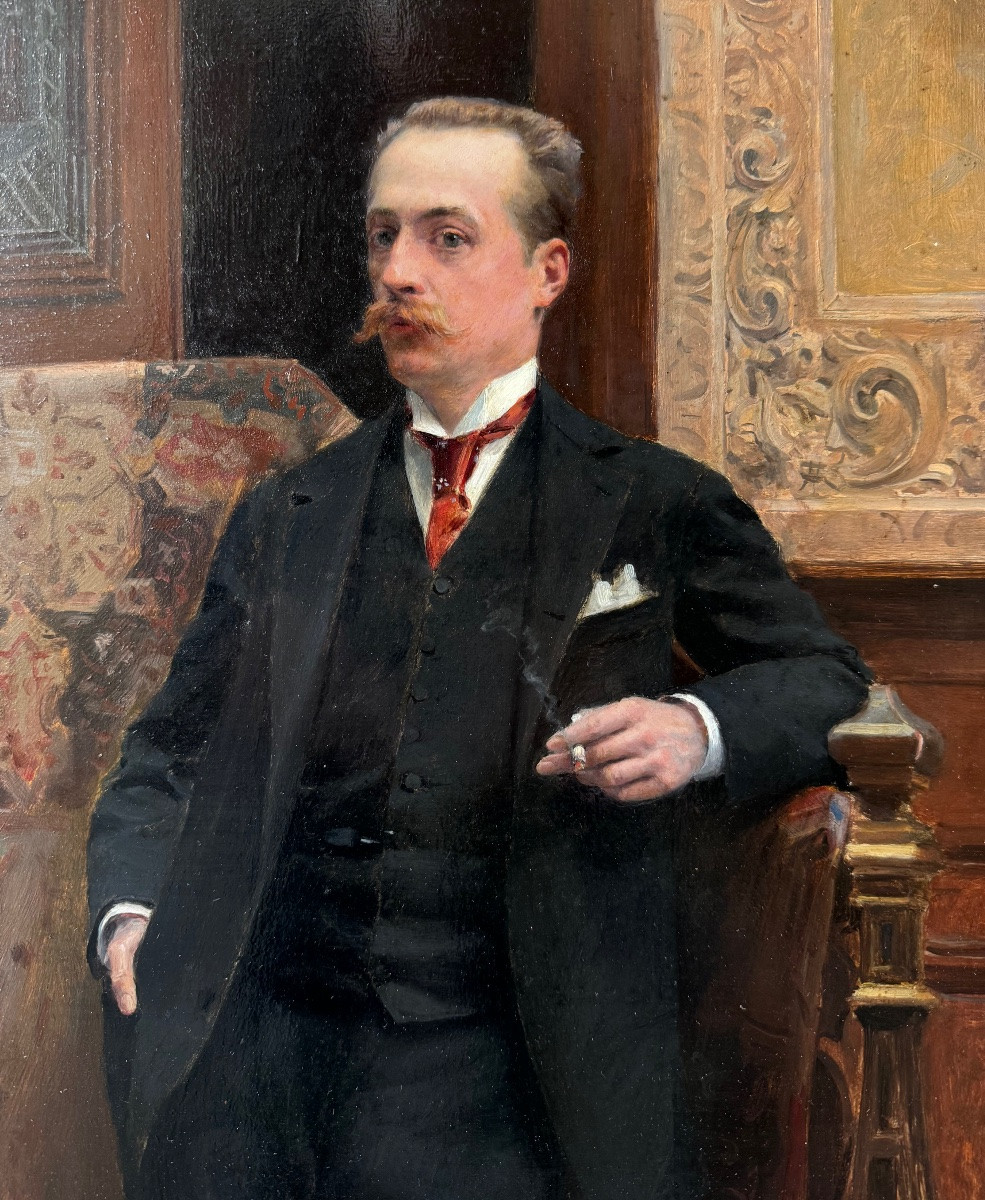
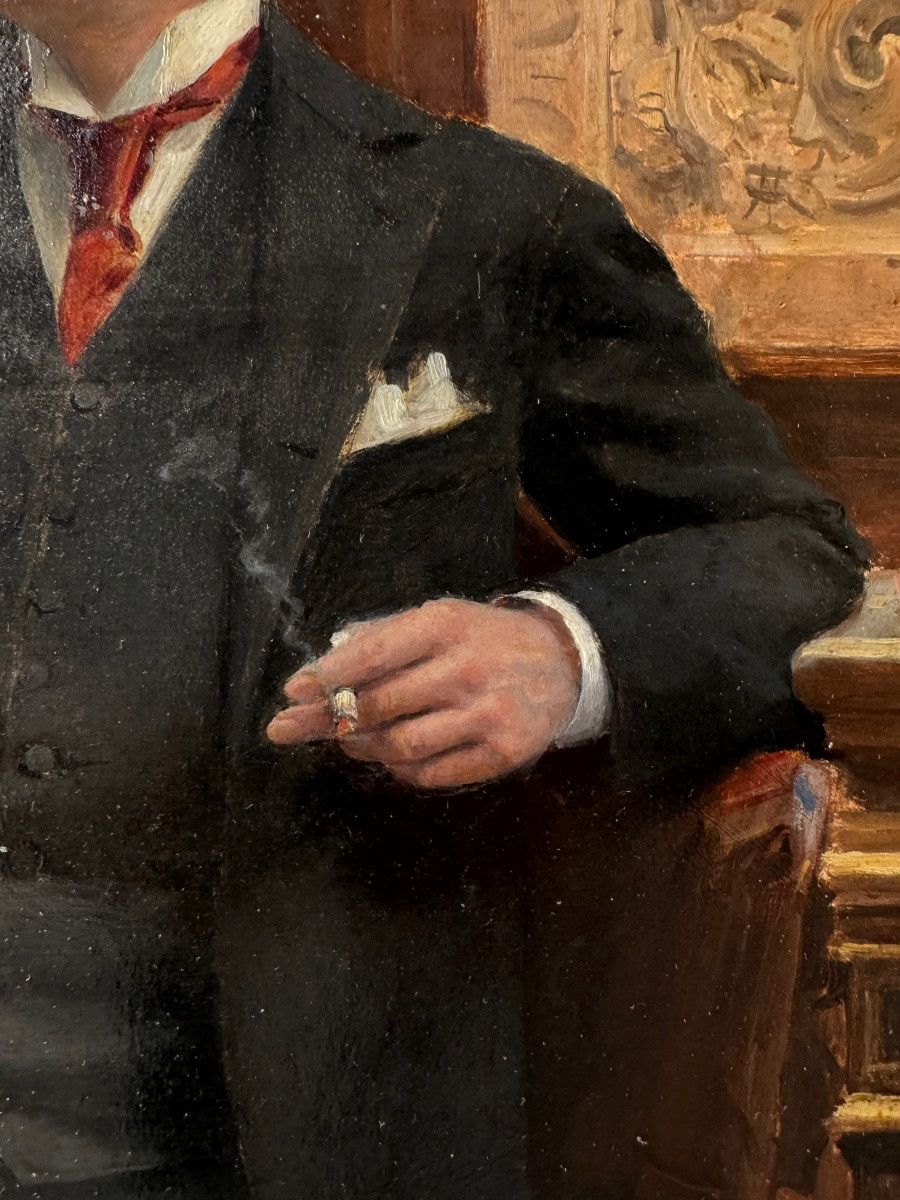
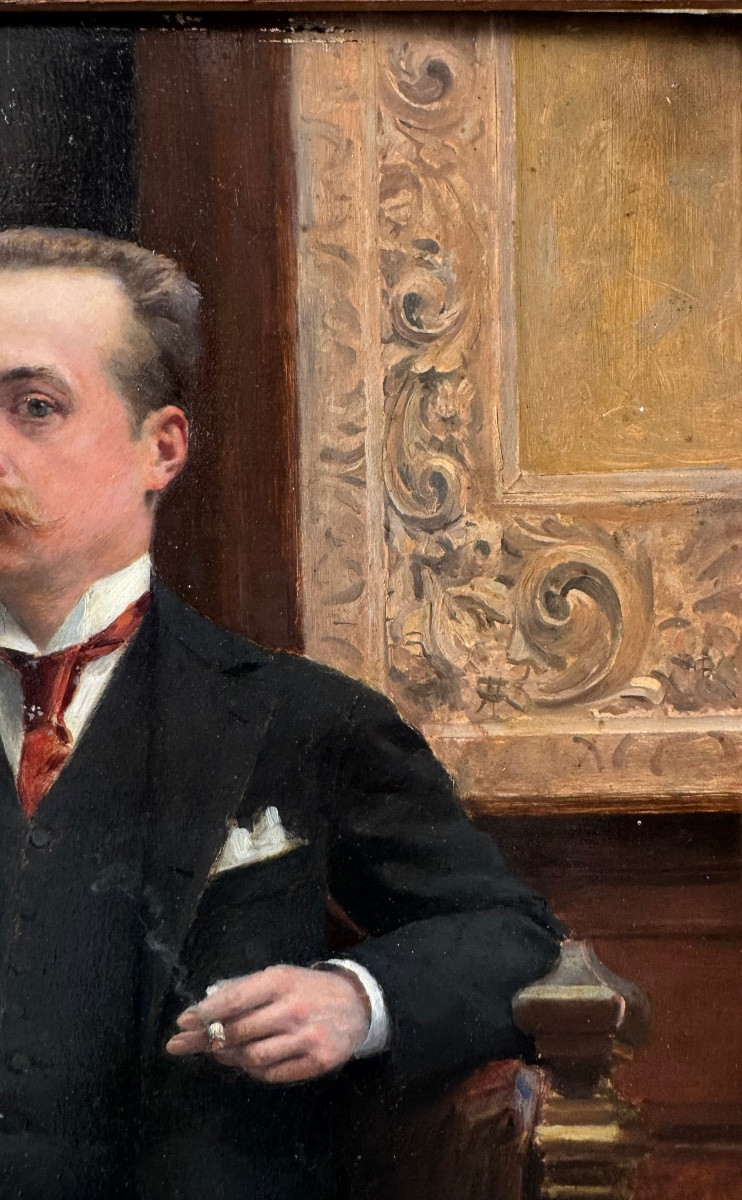
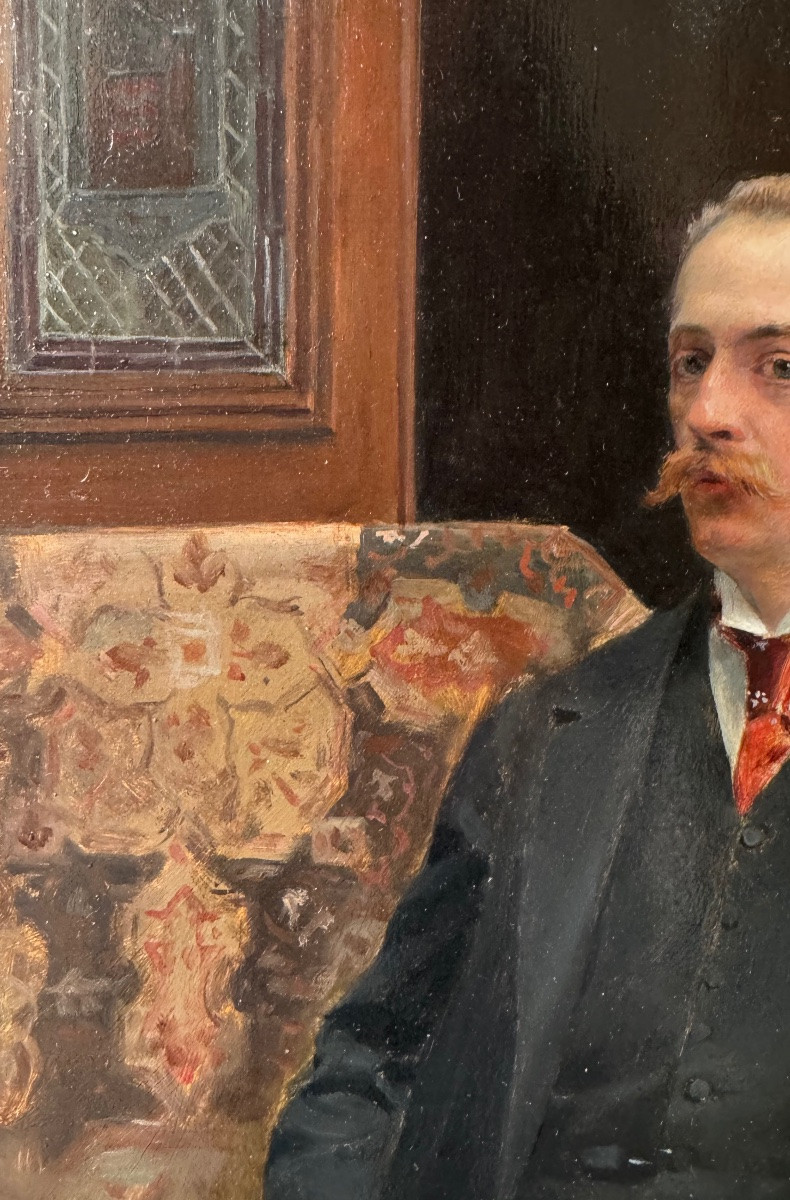
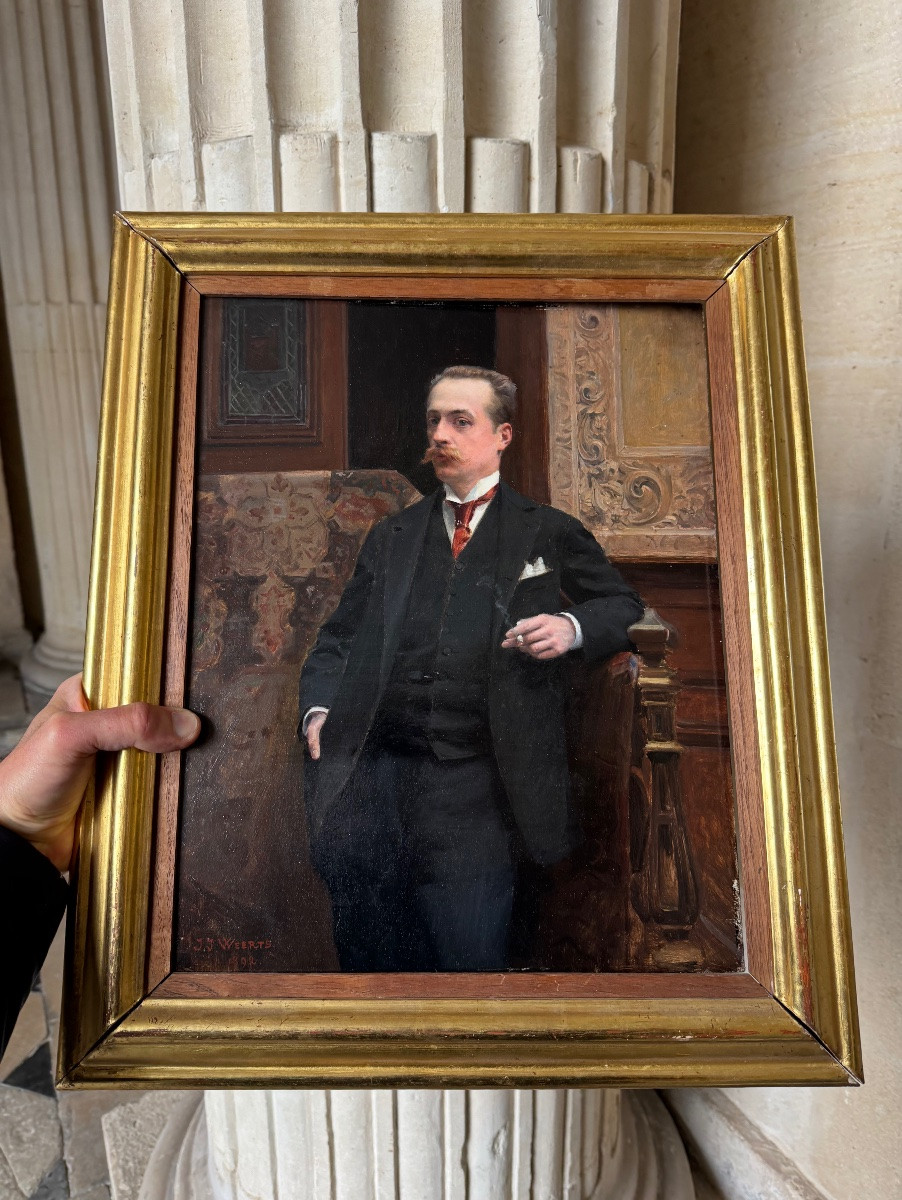


Jean-Joseph Weerts (1852-1927) - Portrait of a gentleman, 1892
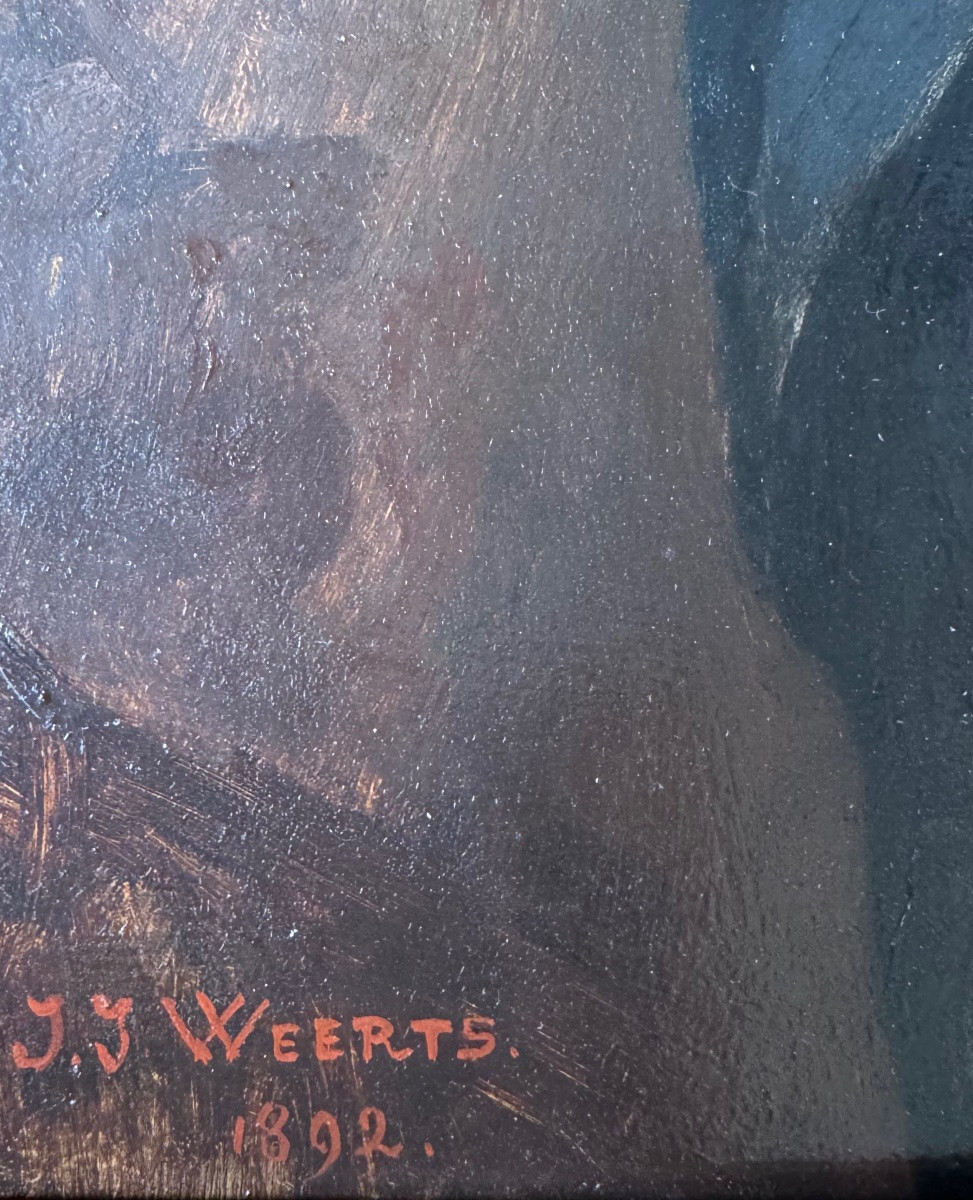
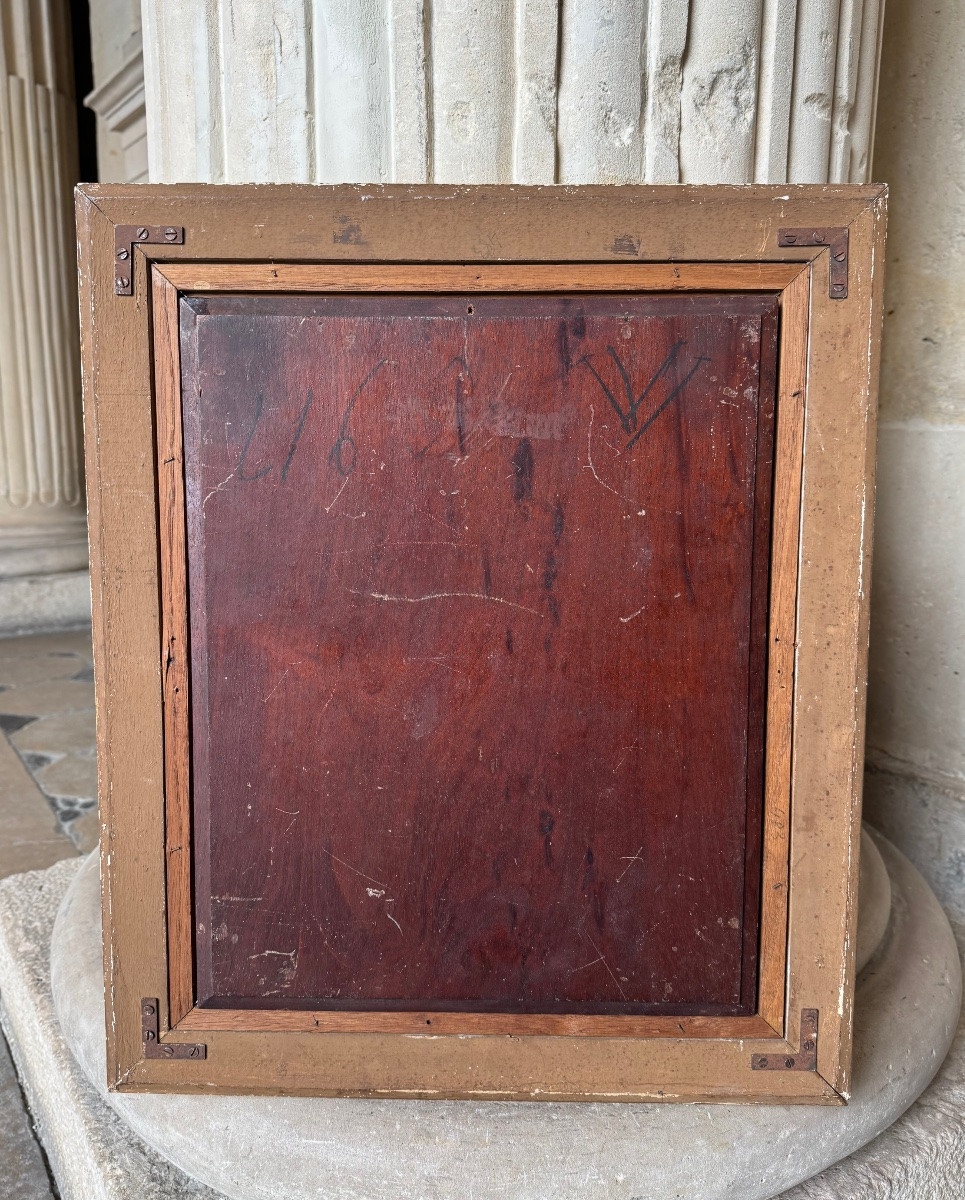
Oil on mahogany signed and dated lower left: J. J. Weerts, 1892
Very good condition,
Frame 44x53 cm
Portrait of a young man from the fin-de-siècle upper middle class, depicted in a refined interior with carved woodwork and precious fabrics. Dressed in a perfectly tailored black three-piece suit, enhanced by a satin-finish red tie and white clutch, the model adopts that measured, slightly aloof attitude typical of Belle Époque society portraits.
The carefully raised mustache, the casually held cigarette, the posture both restrained and assured compose an almost literary figure, evoking Marcel Proust's world: that of salons, select conversations and skilfully mastered appearances. One is reminded of the characters in À la recherche du temps perdu, the elegant men of the world who frequent Parisian salons.
Jean-Jacques Weerts, a renowned academic painter, famous for his great historical scenes and official portraits, shows here a facet of his talent as a portraitist.
Some of Weerts' works
- 1880: L'Assassinat de Marat, La Piscine, Roubaix.
- 1883: La Mort de Bara, oil on canvas, 350 x 250 cm, Musée d'Orsay, Paris
- 1893: Portrait d'Hippolyte Destailleur, oil on canvas, 31.5 × 23.cm cm, Musée Carnavalet, Paris
- 1903: Portrait de Gaston Joliet, 46 × 33.5 cm, Musée des Beaux-Arts de Dijon, Dijon
- 1903: Portrait de Joseph Chaumié, Musée des Beaux-Arts d'Agen.
- 1904: La Fête du Lendit, set of two marouflaged canvases (3.10 x 8.60 m): La foire aux parchemins and Cortège joyeux des étudiants se rendant à la fête. Installed under the arcades of the Sorbonne's cour d'honneur (Paris), they face the chapel, where another Weerts work is kept: Pour l'humanité, pour la patrie, pour la France, soldat de Dieu[.
- 1906: France!!! ou l'Alsace et la Lorraine désespérées, 1.7 × 2.3 m, Musée lorrain, Nancy
- 1911: Concours d'éloquence à Lugdunum, sous Caligula, fresco, 7 × 15 m, grand amphithéâtre de l'université Lumière-Lyon-II, Lyon
He produced nearly seven hundred works: portraits, history paintings (notably depicting the French Revolution and military history), as well as works of religious inspiration. His painting The Death of Bara, completed in 1883, earned him the Legion of Honour. Shortly after its completion, this large canvas was reproduced as a photogravure, and hundreds of thousands of copies were distributed to schools. This engraving was also reproduced in newspapers, and the image subsequently became deeply embedded in collective memory.
He also decorated a number of public buildings throughout France, such as the Sorbonne (1904), the reception hall of the Hôtel de Ville de Paris, the Hôtel de la Monnaie, and the Hôtel de Ville de Roubaix, where he painted the episode of the 1469 charter in the Pierre de Roubaix Hall (1913), as well as the Hôtel de Ville de Limoges and the grand amphitheatre of the University of Lyon.
Explore similar pieces and discover your ideal find:
Portraits