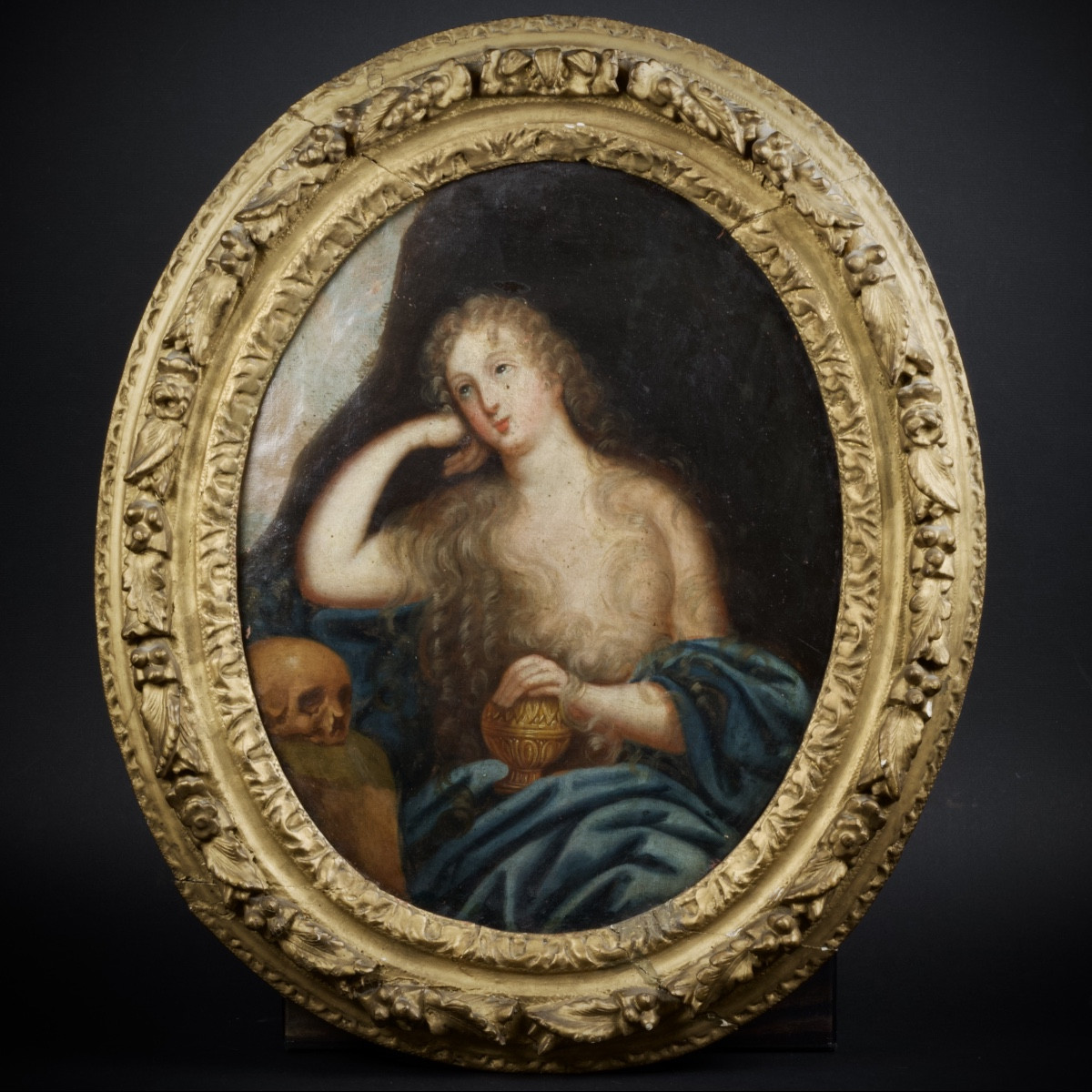
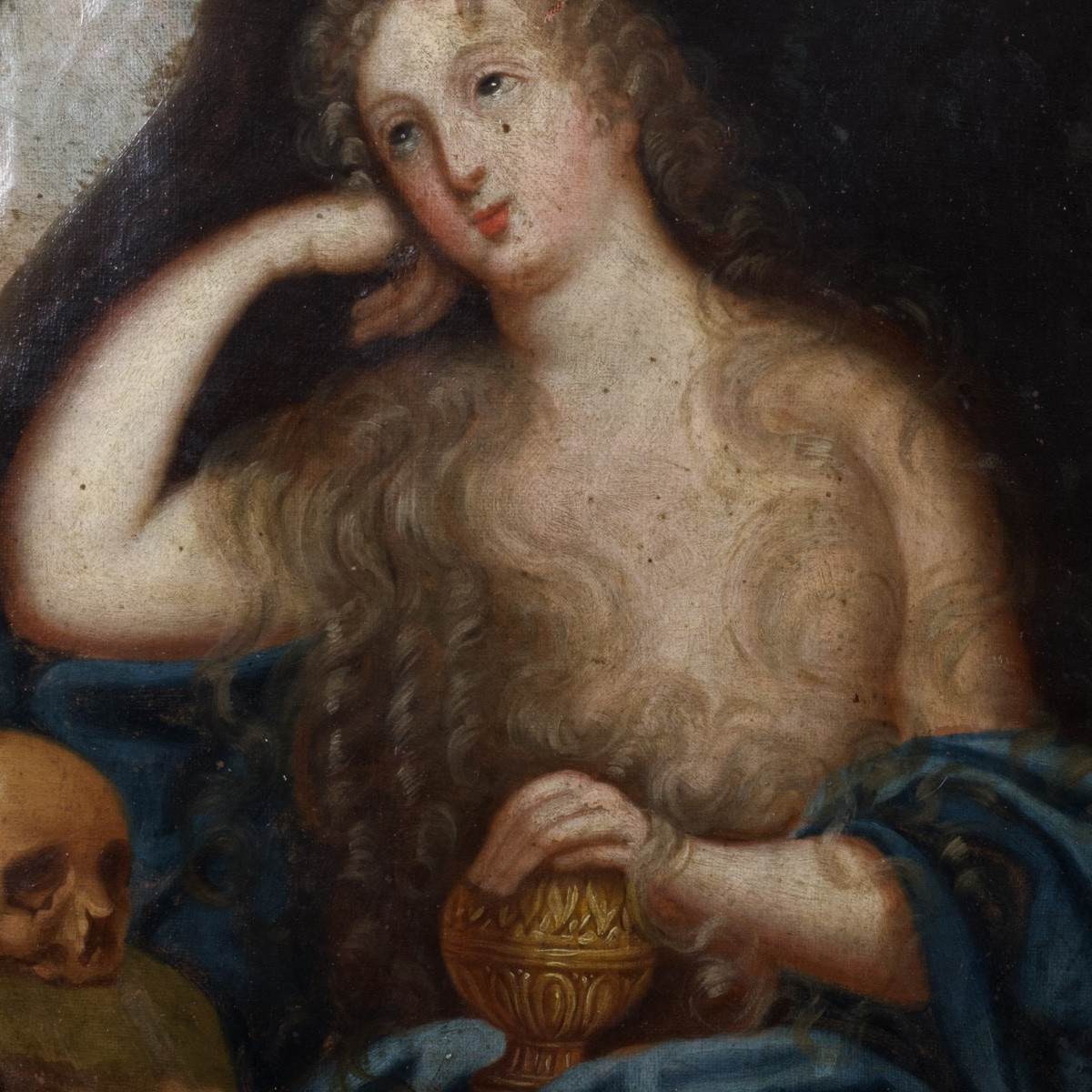
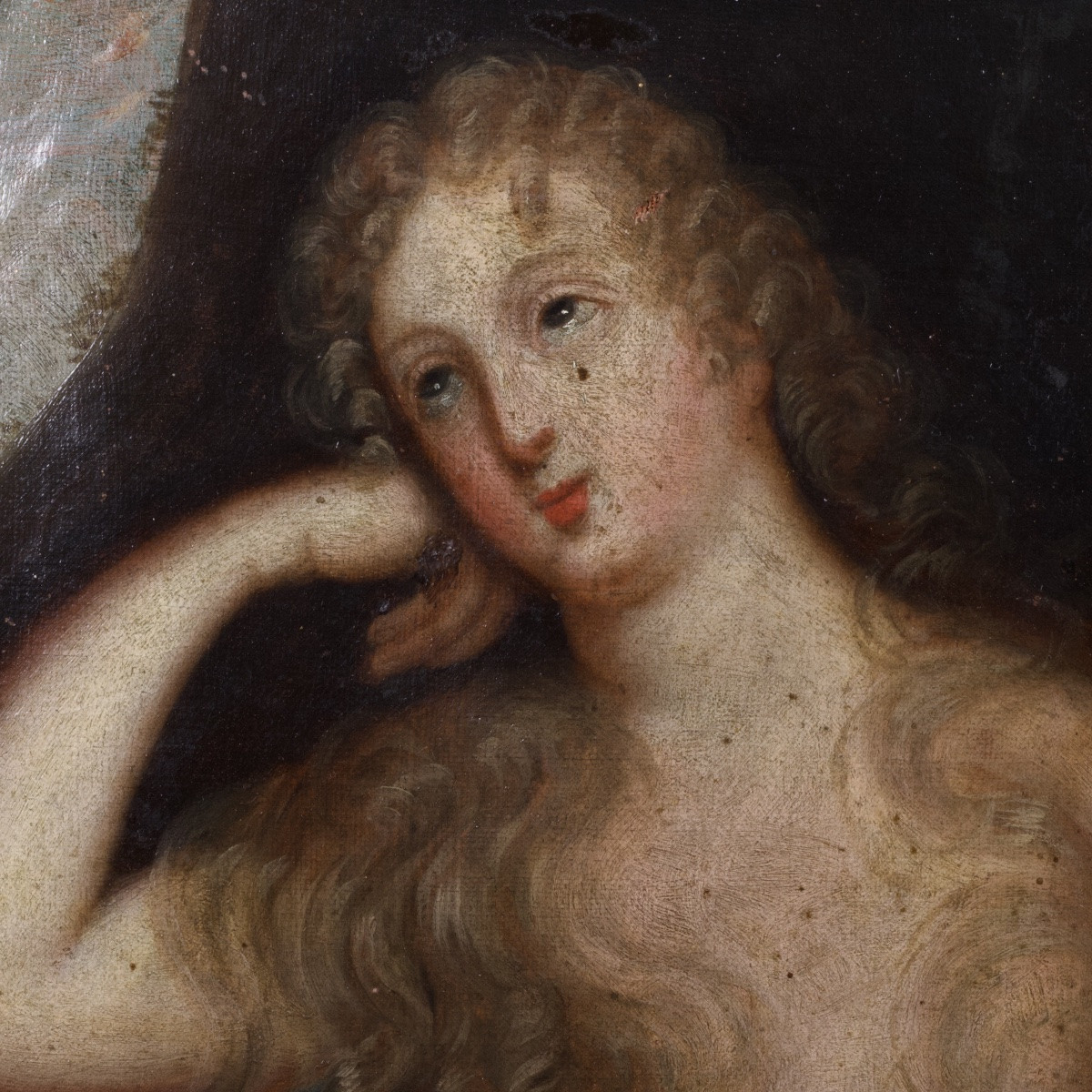
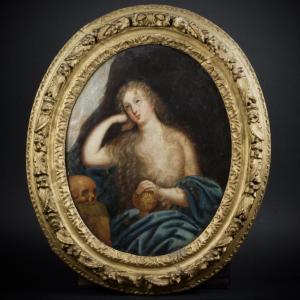


French School After Mignard, Madame De Ludres En Marie-madeleine, Oil On Canvas, C. 1700
Madame de Ludres (c.1647 - 1726), known as "la belle Ludres", favorite of Louis XIV around the years 1676-1678, passed "like a flash" through the king's heart, to quote Saint-Simon.
This short-lived royal idyll, and the overwhelming personality of her rival, the Marquise de Montespan, were two factors contributing to her oblivion, so much so that already Madame de Scudéry wrote to Bussy-Rabutin on February 17, 1678 "Du Ludre is forgotten as if she had died at the time of the deluge".
The affair, however, caused much grief and fits of tears for the reigning favorite, Françoise-Athénaïs de Rochechouart.
Documented at the French court as early as 1666 as one of the dancers in the Muses royal ballet, Madame de Ludres, who arrived from her native Lorraine after many setbacks caused by the libidinous Duke of Lorraine Charles IV, occupied a position as lady-in-waiting in 1670, in turn with Henriette of England, first wife of Monsieur, the king's brother, with Queen Marie-Thérèse, and then with Monsieur's second wife, the celebrated Princess Palatine.
She is first mentioned in the correspondence of the time on March 13, 1671, in a letter from Madame de Sévigné to her daughter Madame de Grignan. In it, the Marquise mischievously mocks the belle's lisp and strong Germanic accent, transcribing them phonetically. The singularity of these little flaws is said to have seduced Louis XIV.
It wasn't until January 30, 1677, that our model reappeared in courtier correspondence, with the exiled Bussy-Rabutin: "Madame de Ludre makes a lot of noise in Saint-Germain. She gives, they say, love to the king, and alarms to Madame de Montespan."
Versailles gossip will run riot, and Montespan will vow the new favorite a fierce hatred, calling her "ce haillon" (Letter from Madame de Sévigné to Madame de Grignan, July 7, 1677).
Too sure of her fortune, Madame de Ludres fell from grace and first retired to a convent in the Faubourg Saint-Germain at the end of January 1678, before returning to her native Lorraine and quietly ending her days there, far from the hustle and bustle of the Court, surrounded by a couple of servants, the Bécu-Cantigny, who would be none other than the grandparents of Jeanne Bécu, future Madame du Barry and mistress of an aging Louis XV: the circle had been completed!
This portrait, which can be dated to the late 17th or very early 18th century, depicts her as the penitent Marie-Madeleine, based on a model kept at the Château de Versailles, sometimes given to Pierre Mignard himself, sometimes and more probably to Jean Nocret (c. 1677, Inv. MV8927).
Other versions of this painting are held in regional public collections: the Hôtel de l'Intendance de la Généralité de Metz (now the Préfecture de la Moselle), the Musée Barrois in Bar-Le-Duc (Inv. 851.11.2) and the MUDAAC in Épinal (inventory number unknown: site under construction).
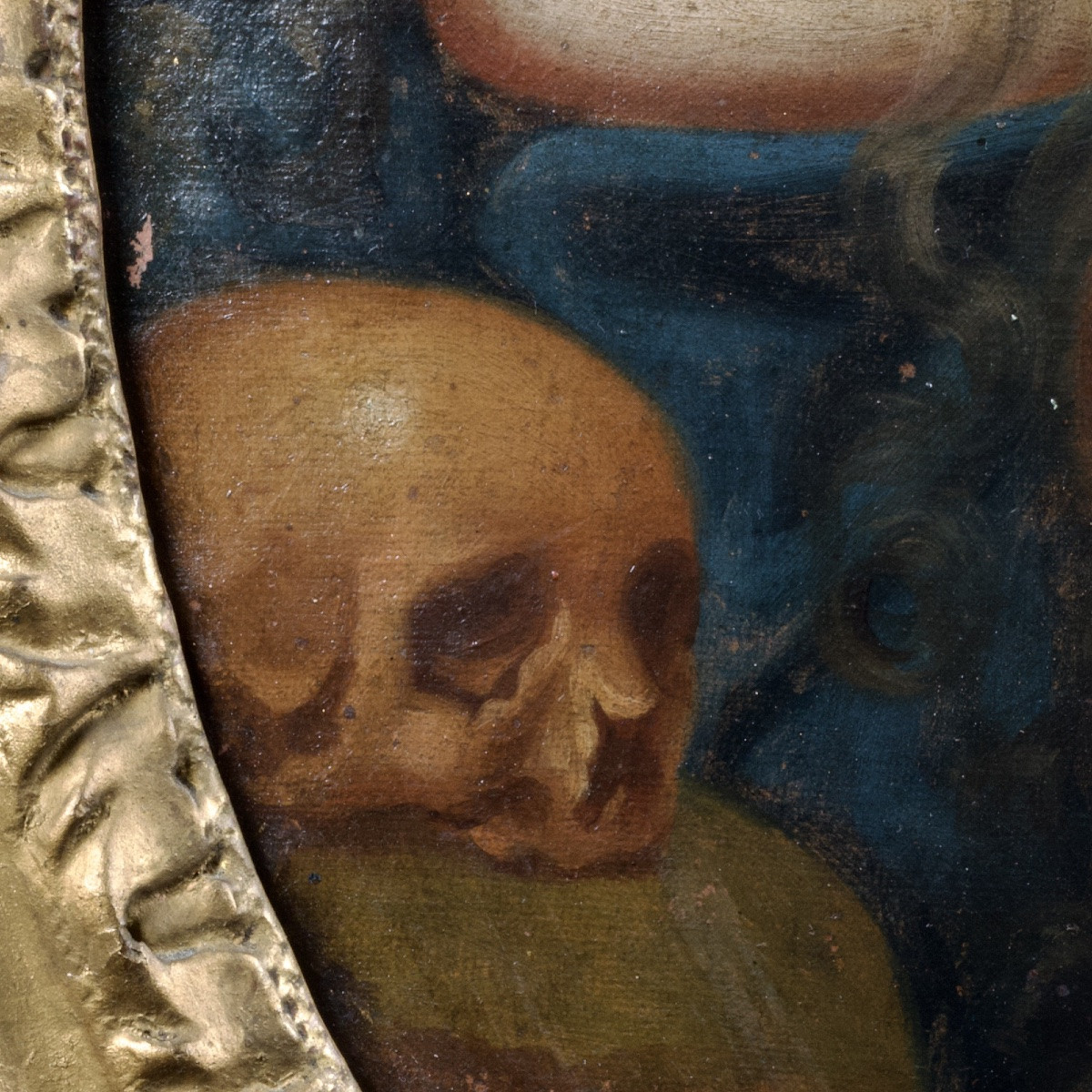
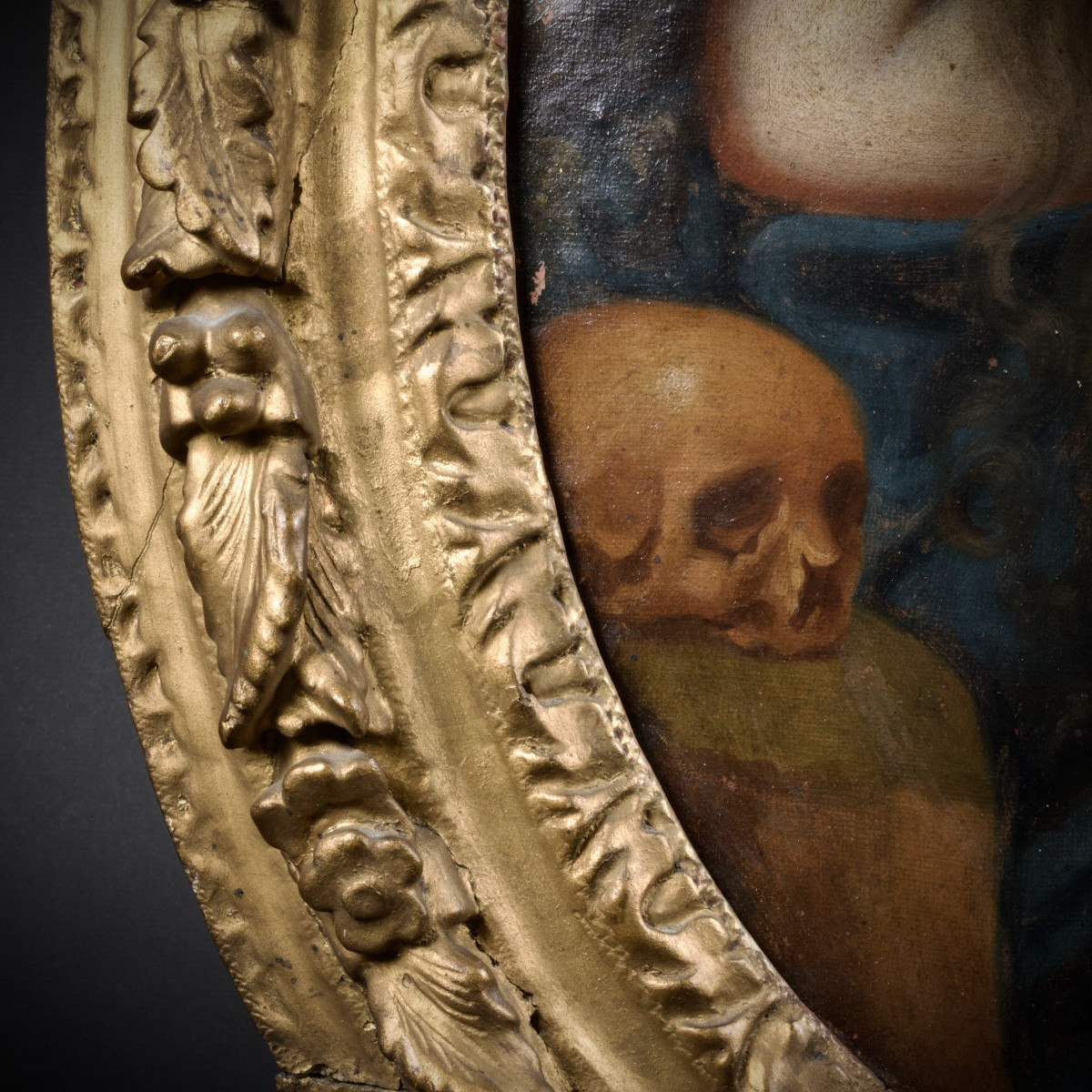
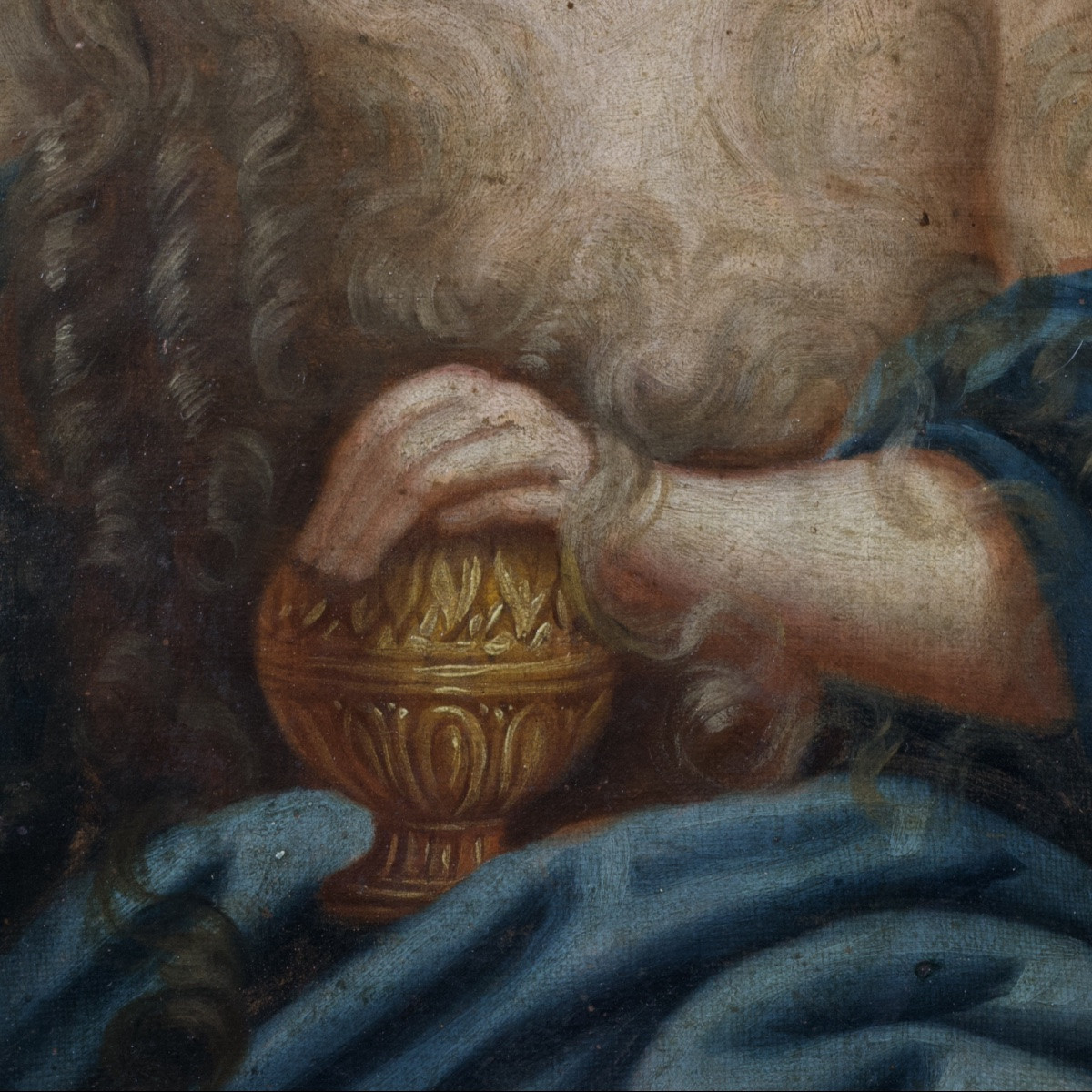
Our portrait is closer to the Versailles original than to these versions preserved in the region, in that it retains alongside Madame de Ludres, transvestite as Marie-Madeleine, the skull supporting her penitence and contrition.
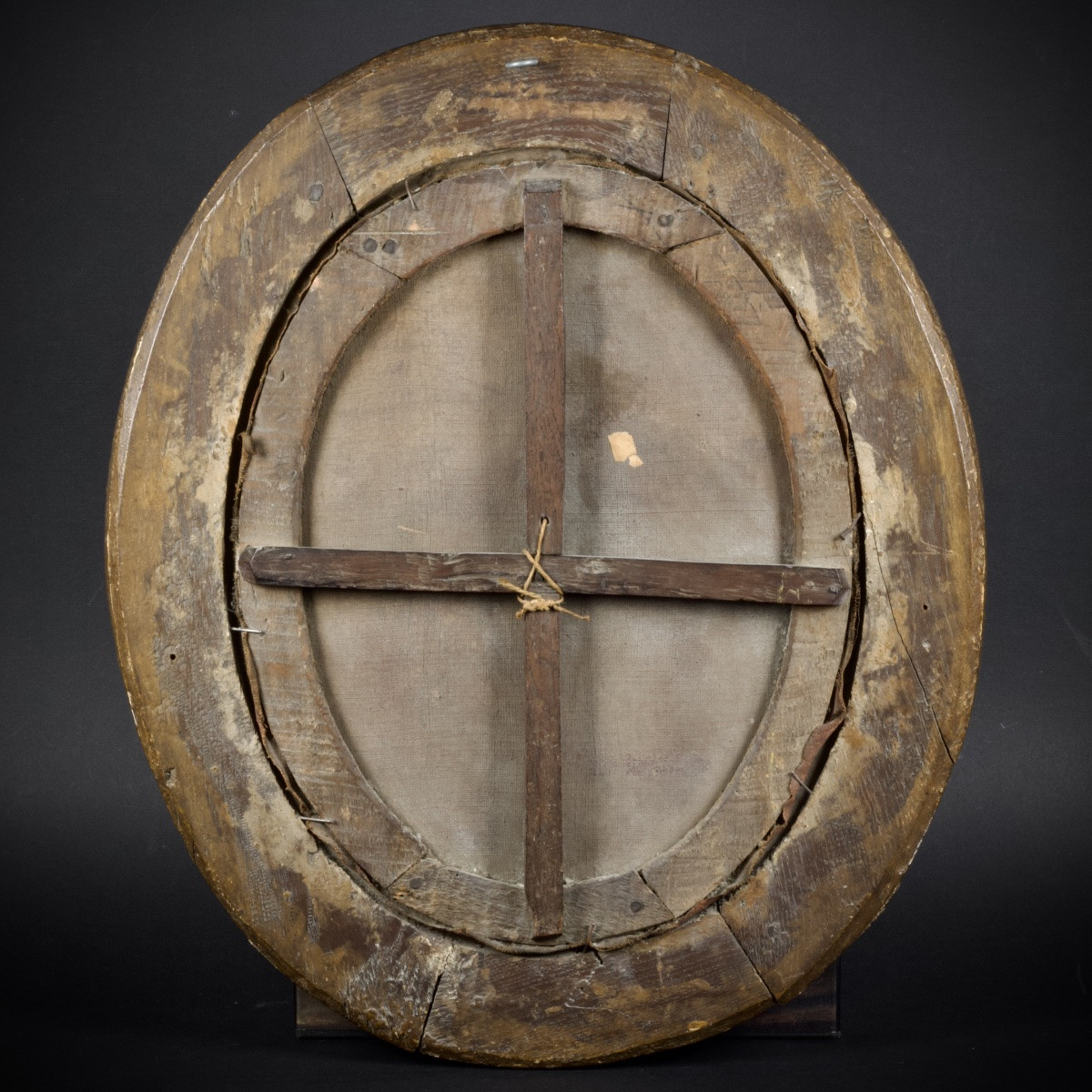
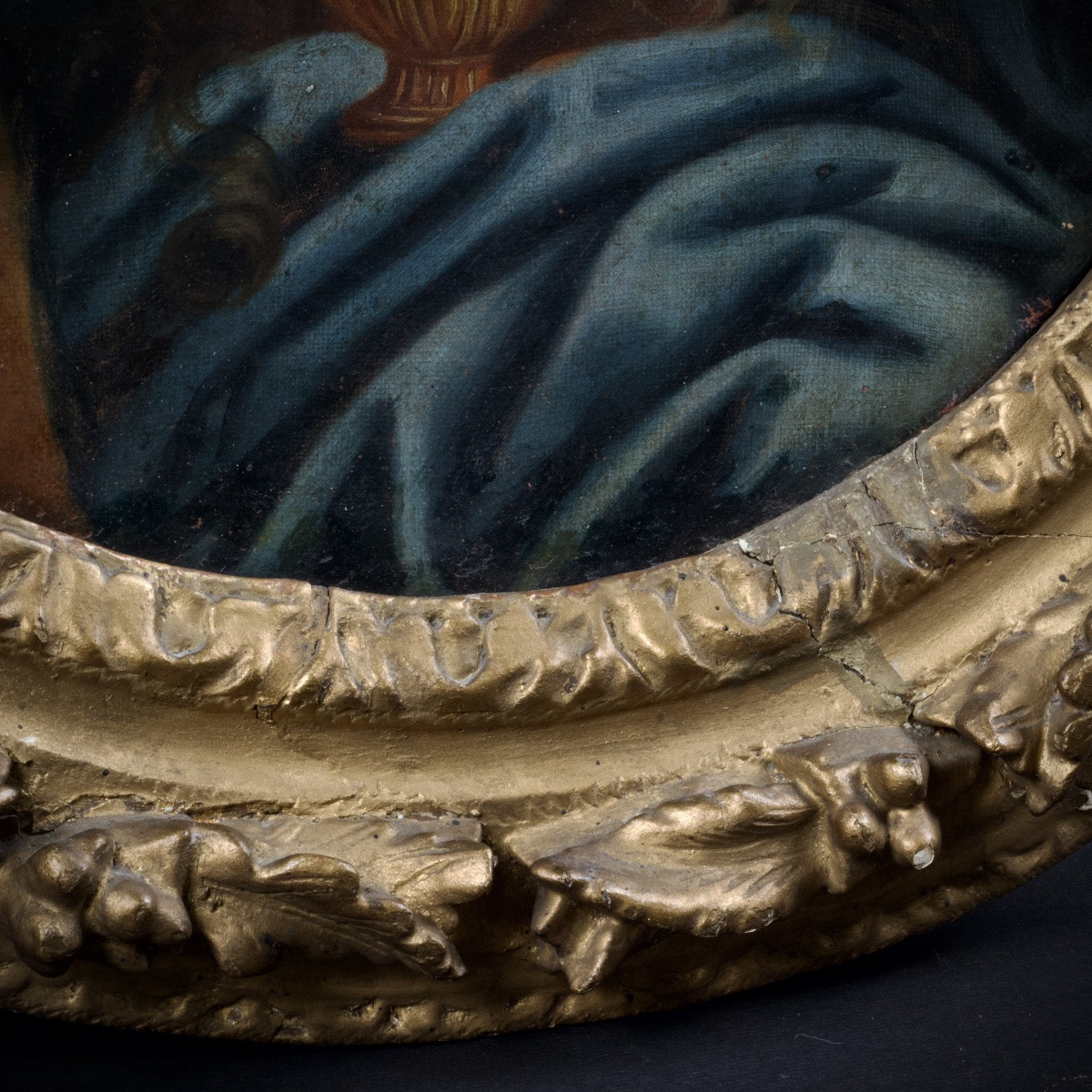
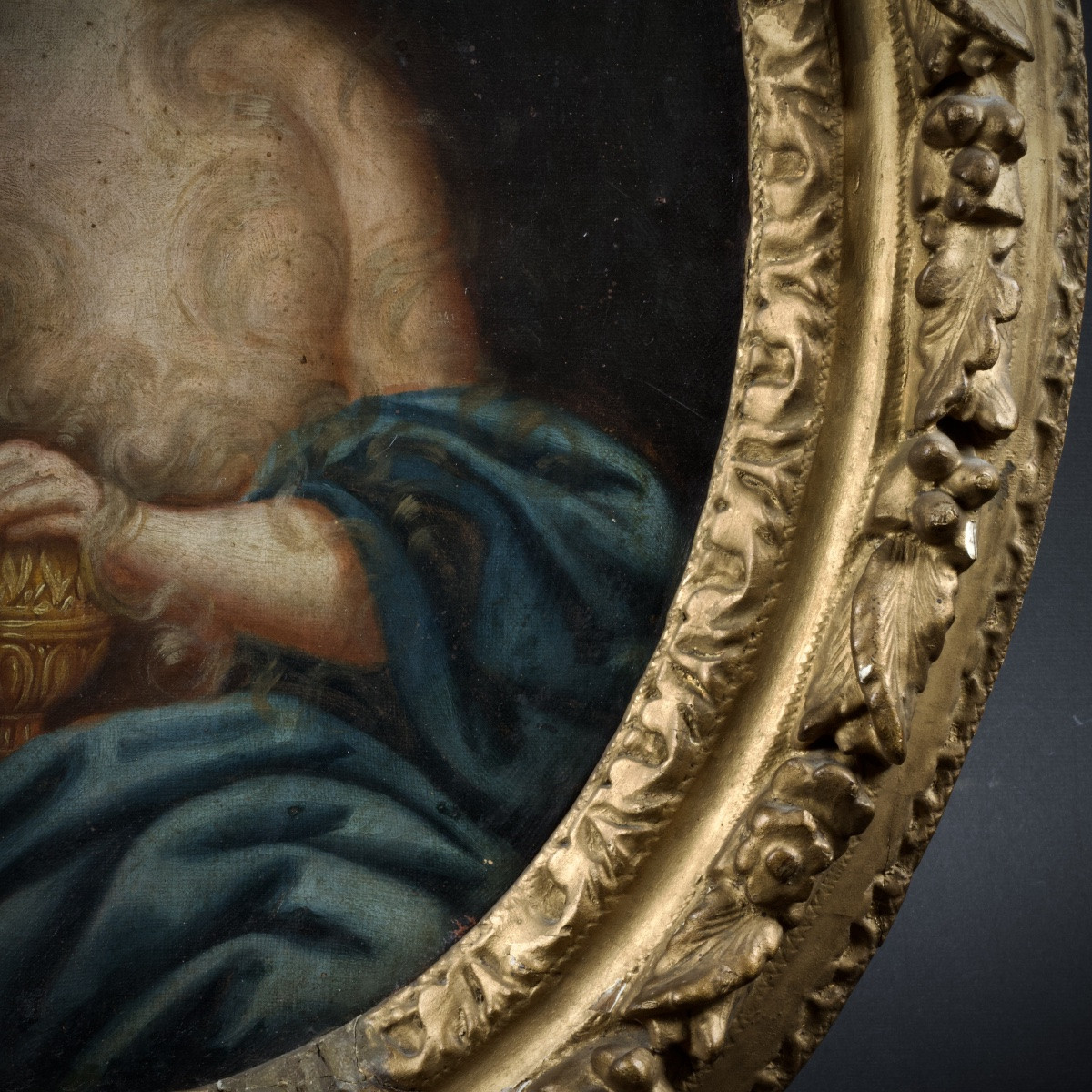
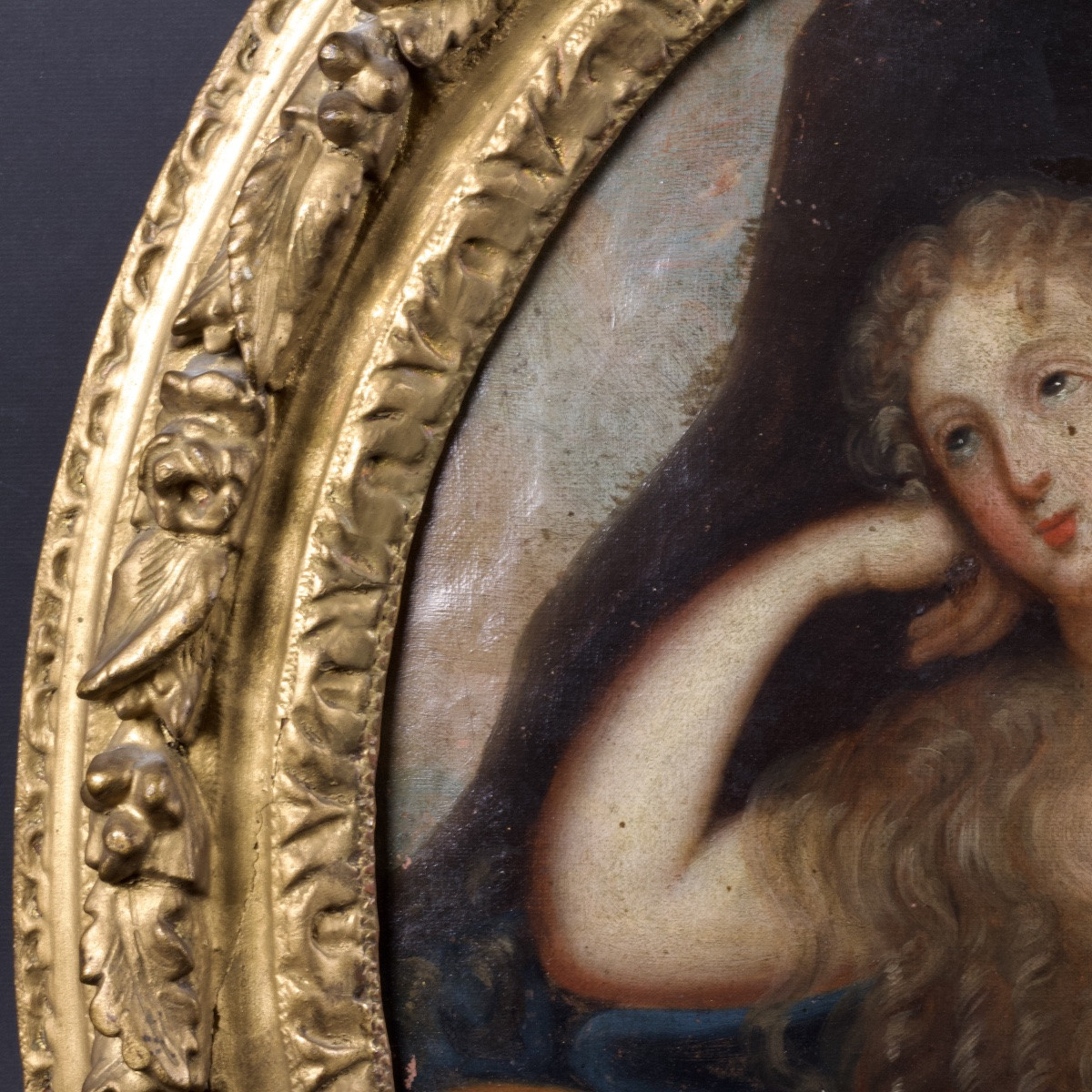
The antique frame, in carved, stuccoed and gilded wood, has undergone damage and sometimes clumsy repairs.
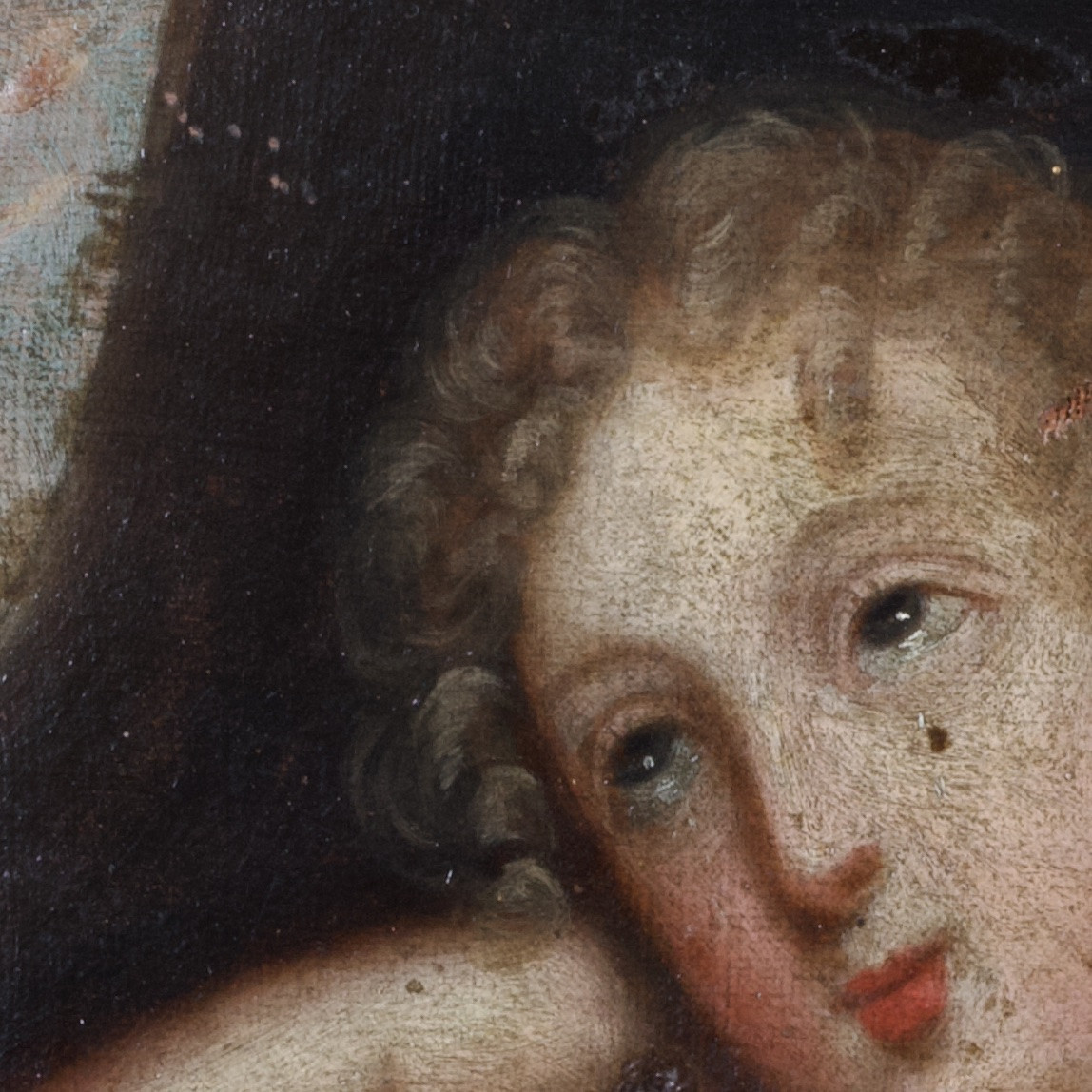
We note a minor restoration to the hand of the beautiful.
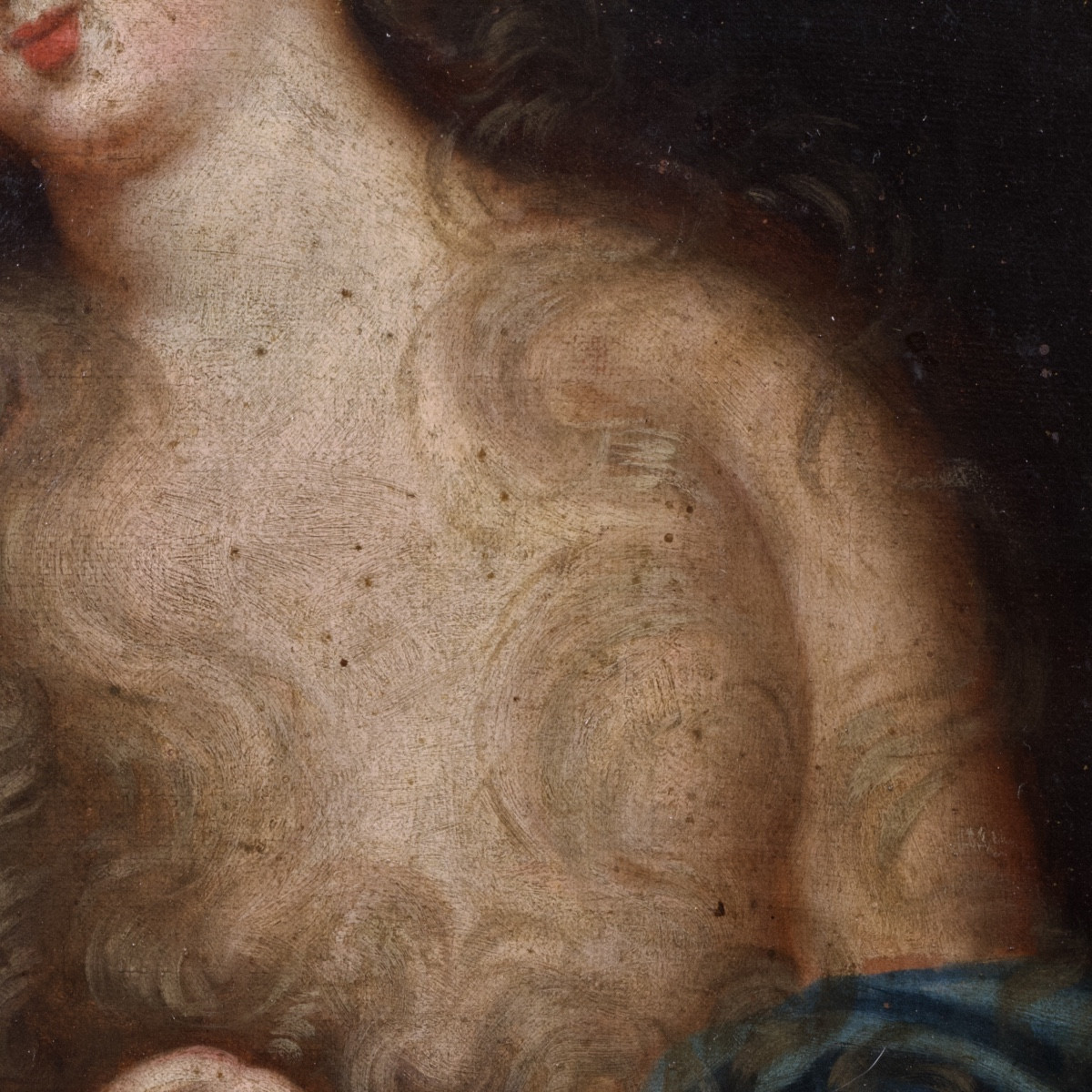
The canvas and stretcher are period.
All best documented in photographs.
A moving pictorial testimony to a little-known figure in French history; we refer you to our Instagram page (click on "Personal site"), where three videos have been dedicated to the life of this favorite largely forgotten by historiography.
Viewable dimensions: 41x32cm
Overall dimensions: 55x46cm
This short-lived royal idyll, and the overwhelming personality of her rival, the Marquise de Montespan, were two factors contributing to her oblivion, so much so that already Madame de Scudéry wrote to Bussy-Rabutin on February 17, 1678 "Du Ludre is forgotten as if she had died at the time of the deluge".
The affair, however, caused much grief and fits of tears for the reigning favorite, Françoise-Athénaïs de Rochechouart.
Documented at the French court as early as 1666 as one of the dancers in the Muses royal ballet, Madame de Ludres, who arrived from her native Lorraine after many setbacks caused by the libidinous Duke of Lorraine Charles IV, occupied a position as lady-in-waiting in 1670, in turn with Henriette of England, first wife of Monsieur, the king's brother, with Queen Marie-Thérèse, and then with Monsieur's second wife, the celebrated Princess Palatine.
She is first mentioned in the correspondence of the time on March 13, 1671, in a letter from Madame de Sévigné to her daughter Madame de Grignan. In it, the Marquise mischievously mocks the belle's lisp and strong Germanic accent, transcribing them phonetically. The singularity of these little flaws is said to have seduced Louis XIV.
It wasn't until January 30, 1677, that our model reappeared in courtier correspondence, with the exiled Bussy-Rabutin: "Madame de Ludre makes a lot of noise in Saint-Germain. She gives, they say, love to the king, and alarms to Madame de Montespan."
Versailles gossip will run riot, and Montespan will vow the new favorite a fierce hatred, calling her "ce haillon" (Letter from Madame de Sévigné to Madame de Grignan, July 7, 1677).
Too sure of her fortune, Madame de Ludres fell from grace and first retired to a convent in the Faubourg Saint-Germain at the end of January 1678, before returning to her native Lorraine and quietly ending her days there, far from the hustle and bustle of the Court, surrounded by a couple of servants, the Bécu-Cantigny, who would be none other than the grandparents of Jeanne Bécu, future Madame du Barry and mistress of an aging Louis XV: the circle had been completed!
This portrait, which can be dated to the late 17th or very early 18th century, depicts her as the penitent Marie-Madeleine, based on a model kept at the Château de Versailles, sometimes given to Pierre Mignard himself, sometimes and more probably to Jean Nocret (c. 1677, Inv. MV8927).
Other versions of this painting are held in regional public collections: the Hôtel de l'Intendance de la Généralité de Metz (now the Préfecture de la Moselle), the Musée Barrois in Bar-Le-Duc (Inv. 851.11.2) and the MUDAAC in Épinal (inventory number unknown: site under construction).
Our portrait is closer to the Versailles original than to these versions preserved in the region, in that it retains alongside Madame de Ludres, transvestite as Marie-Madeleine, the skull supporting her penitence and contrition.
The antique frame, in carved, stuccoed and gilded wood, has undergone damage and sometimes clumsy repairs.
We note a minor restoration to the hand of the beautiful.
The canvas and stretcher are period.
All best documented in photographs.
A moving pictorial testimony to a little-known figure in French history; we refer you to our Instagram page (click on "Personal site"), where three videos have been dedicated to the life of this favorite largely forgotten by historiography.
Viewable dimensions: 41x32cm
Overall dimensions: 55x46cm
1 300 €
Period: 17th century
Style: Louis 14th, Regency
Condition: Good condition
Material: Oil painting
Width: 46 cm
Height: 55 cm
Reference (ID): 1753794
Availability: In stock
Print