
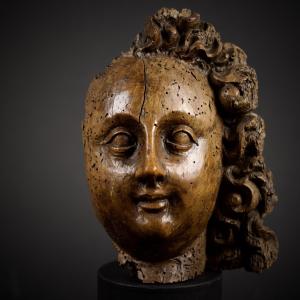


Fragment Of A Baroque Angel's Head In Carved Wood, 17th Century
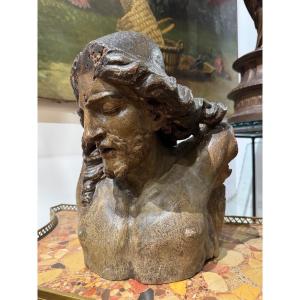
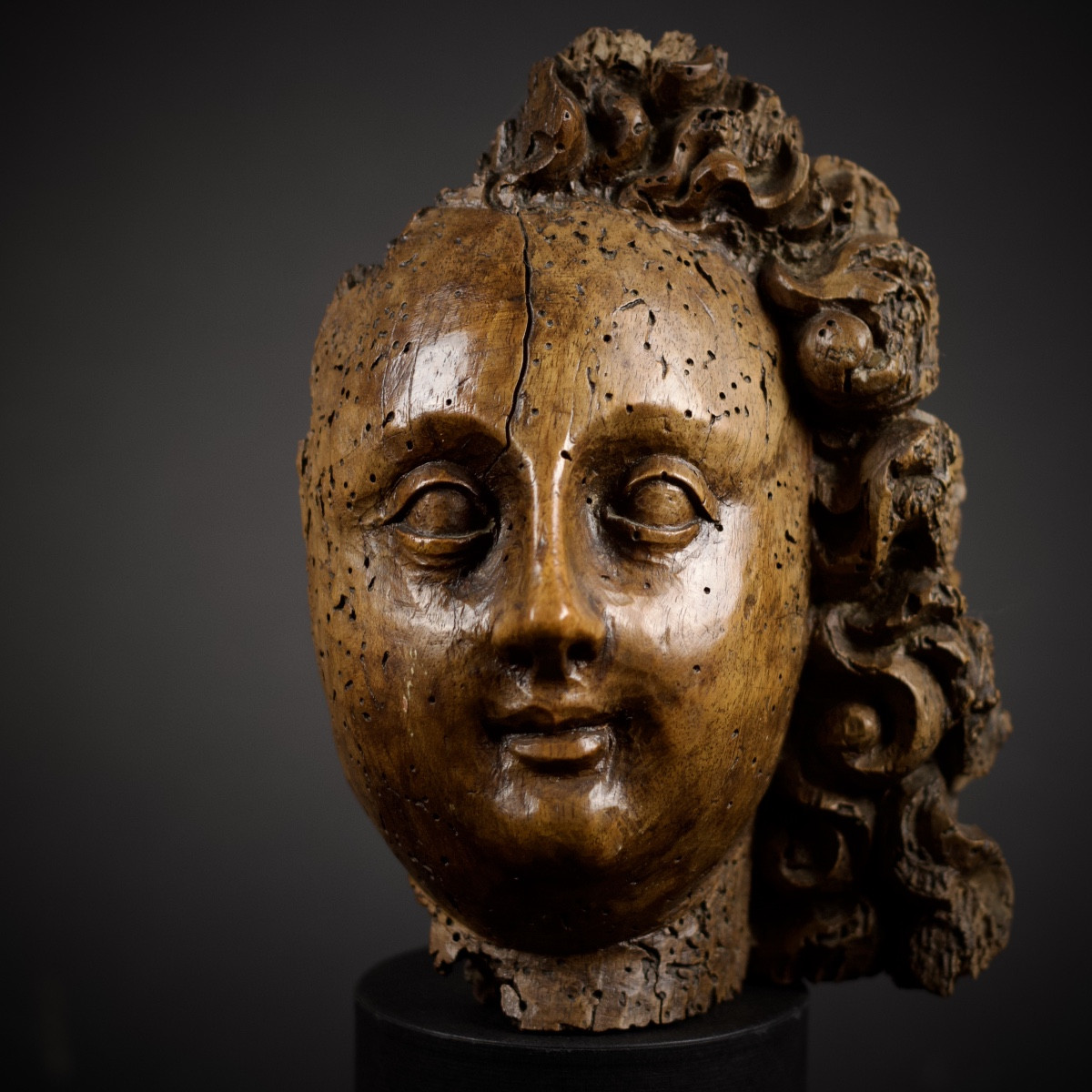
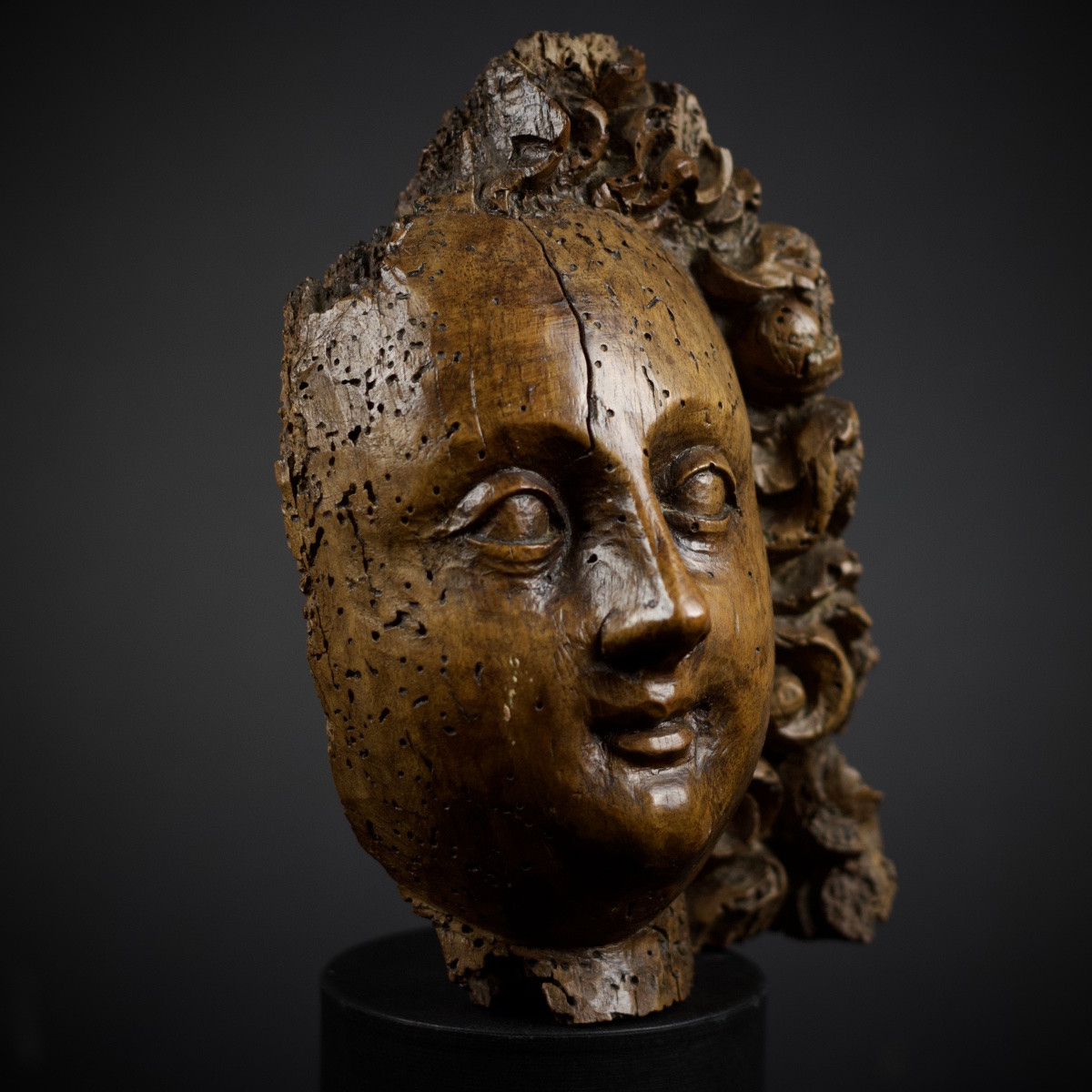
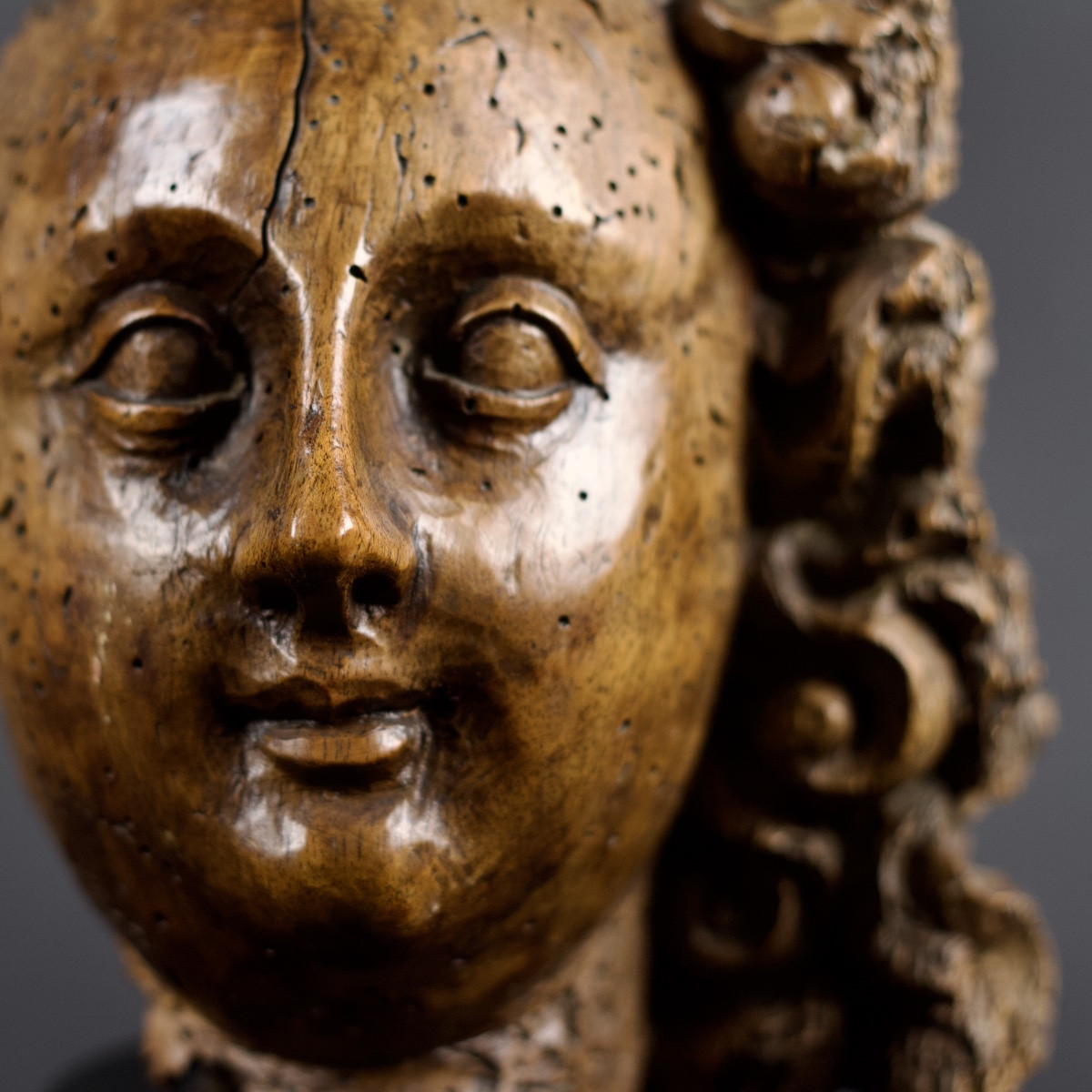
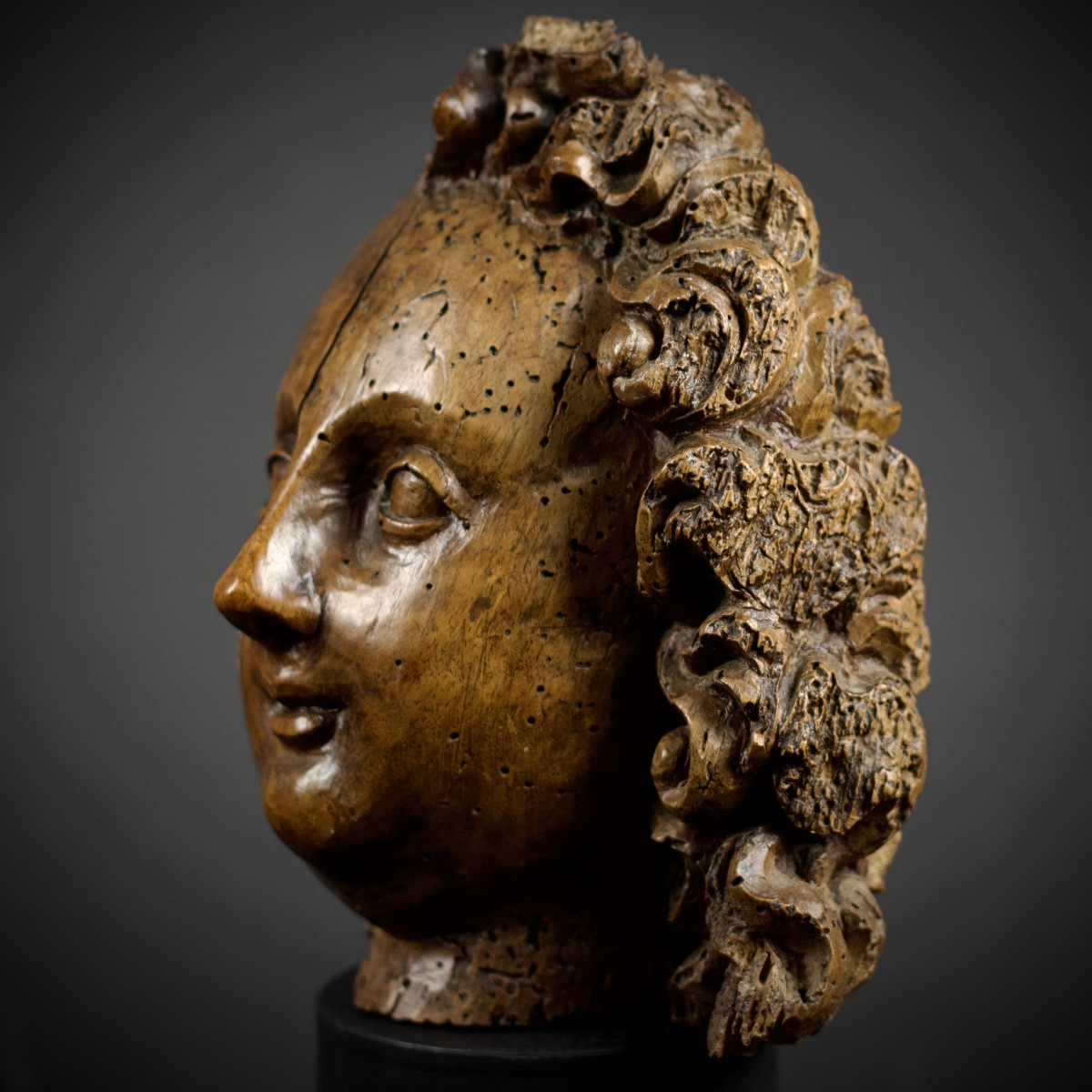
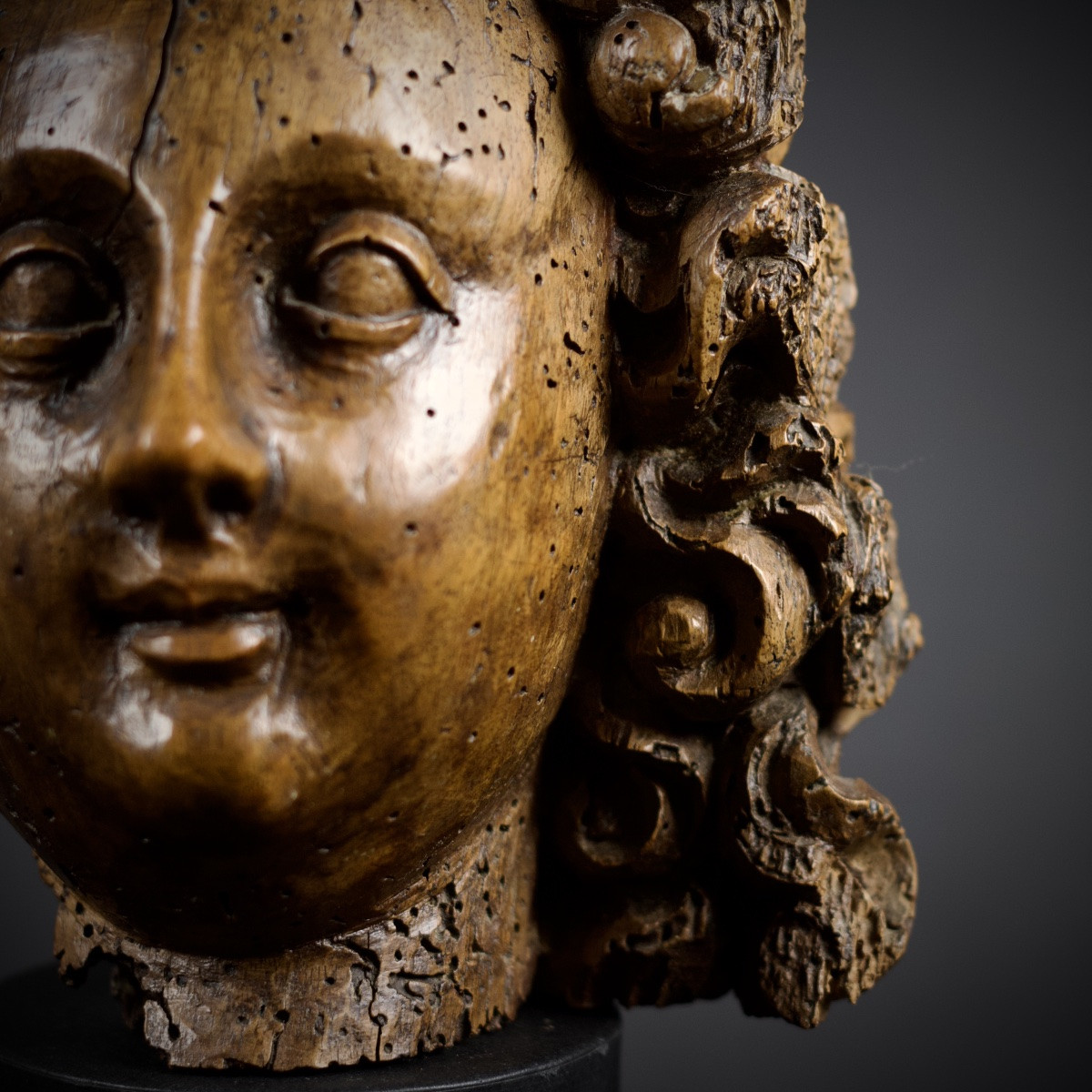
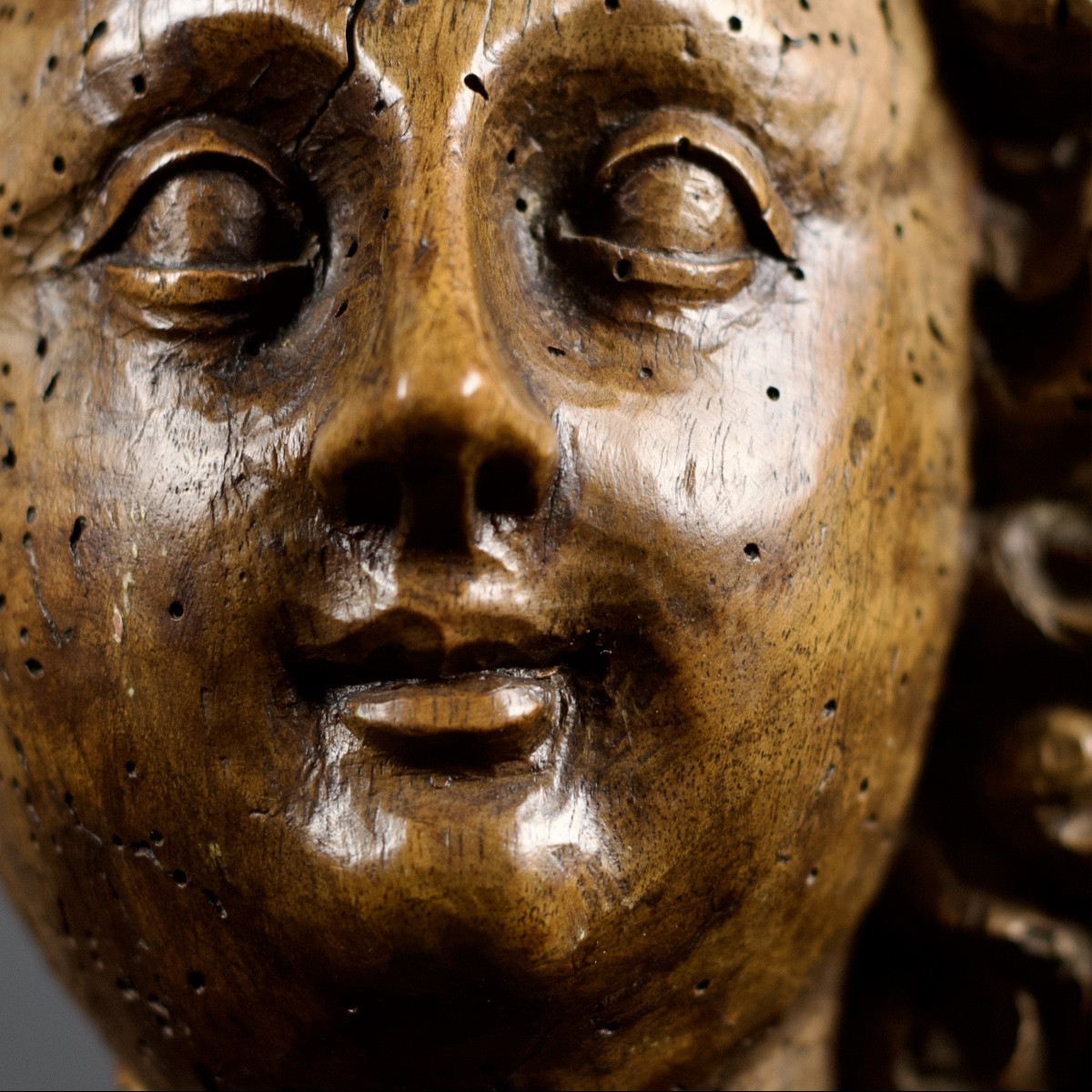
Fragment of an angel's head in carved wood, the face surrounded by curls of hair worked with beautiful relief, in a very Baroque expressiveness distantly evoking the work of Norman sculptor Michel Lourdel (1577-1676).
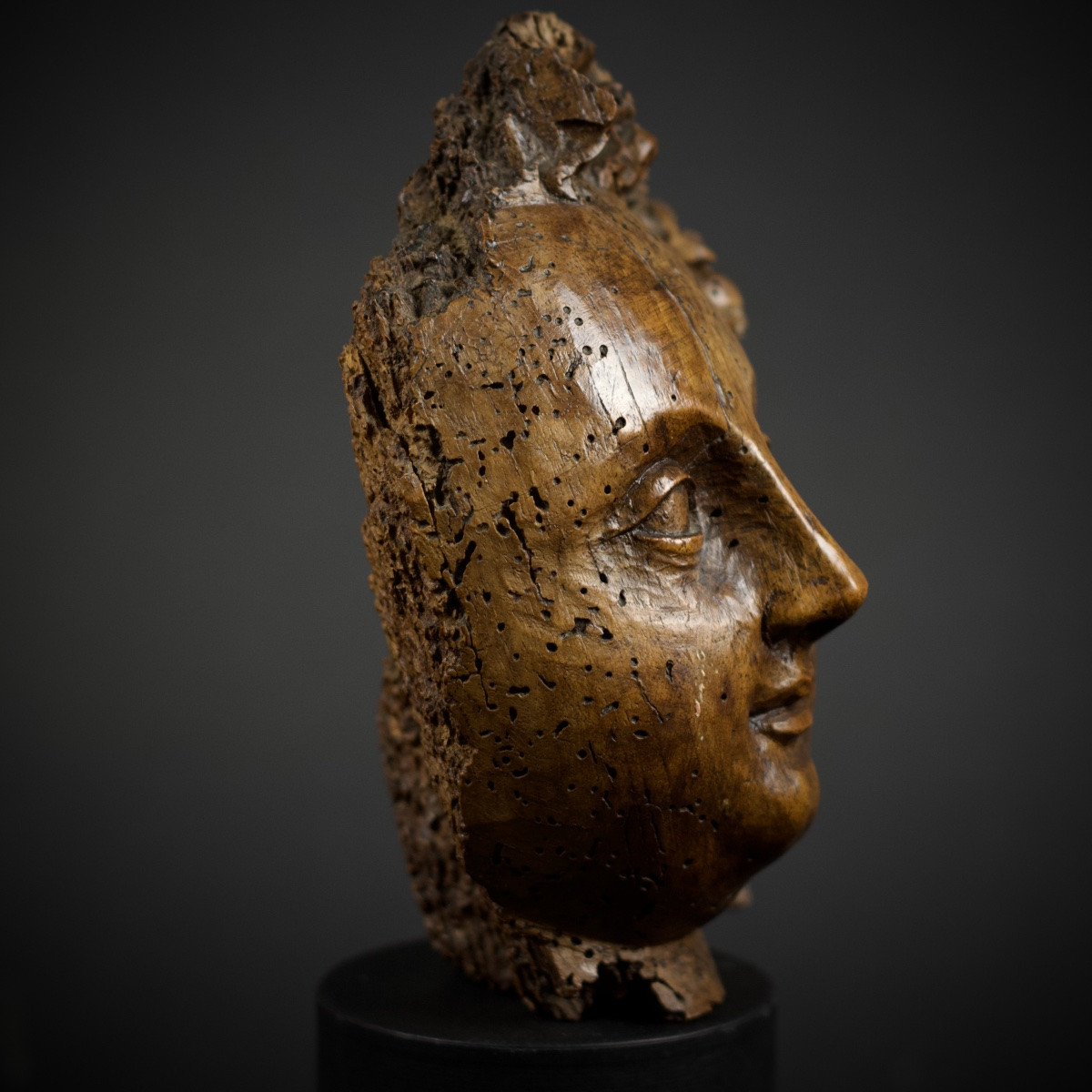
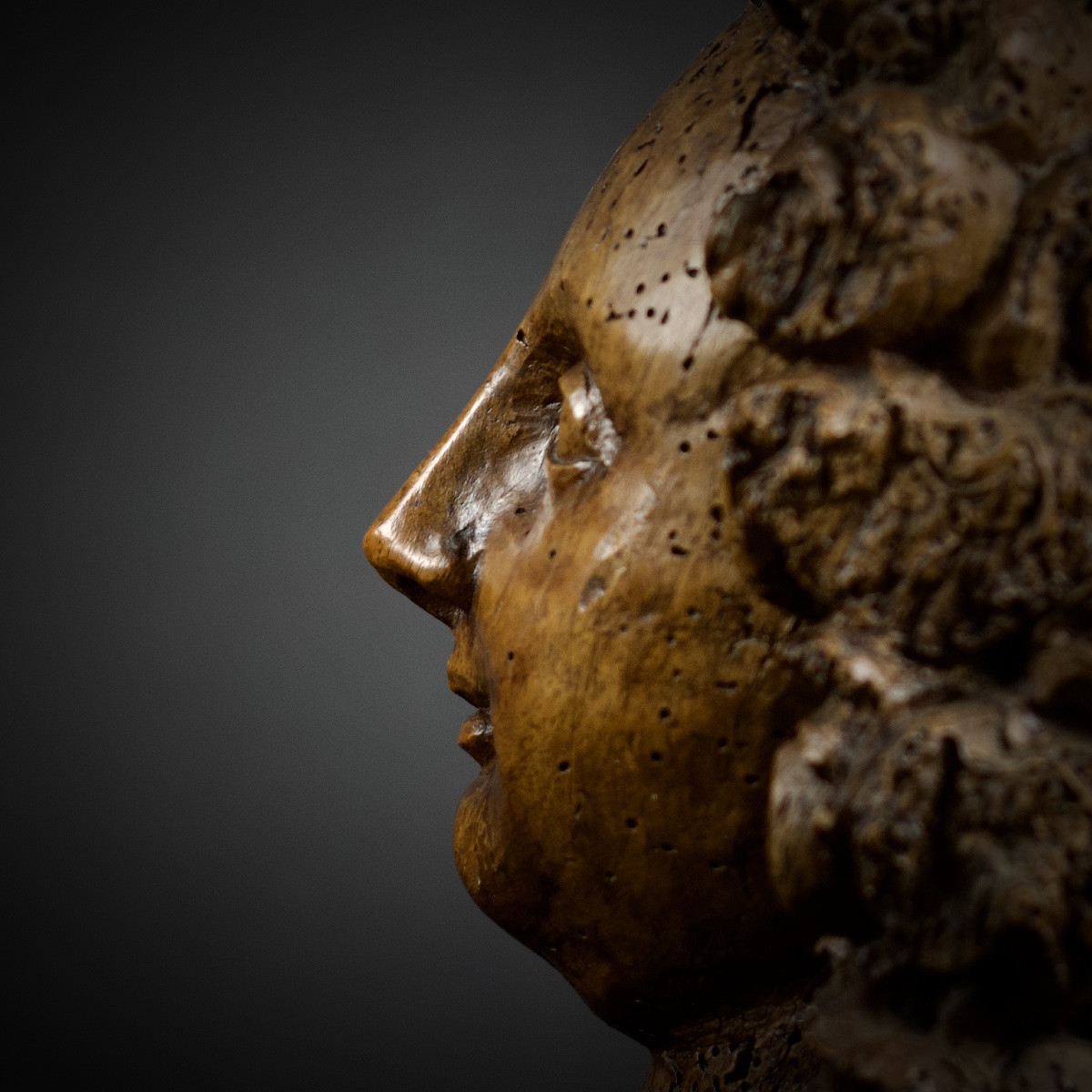
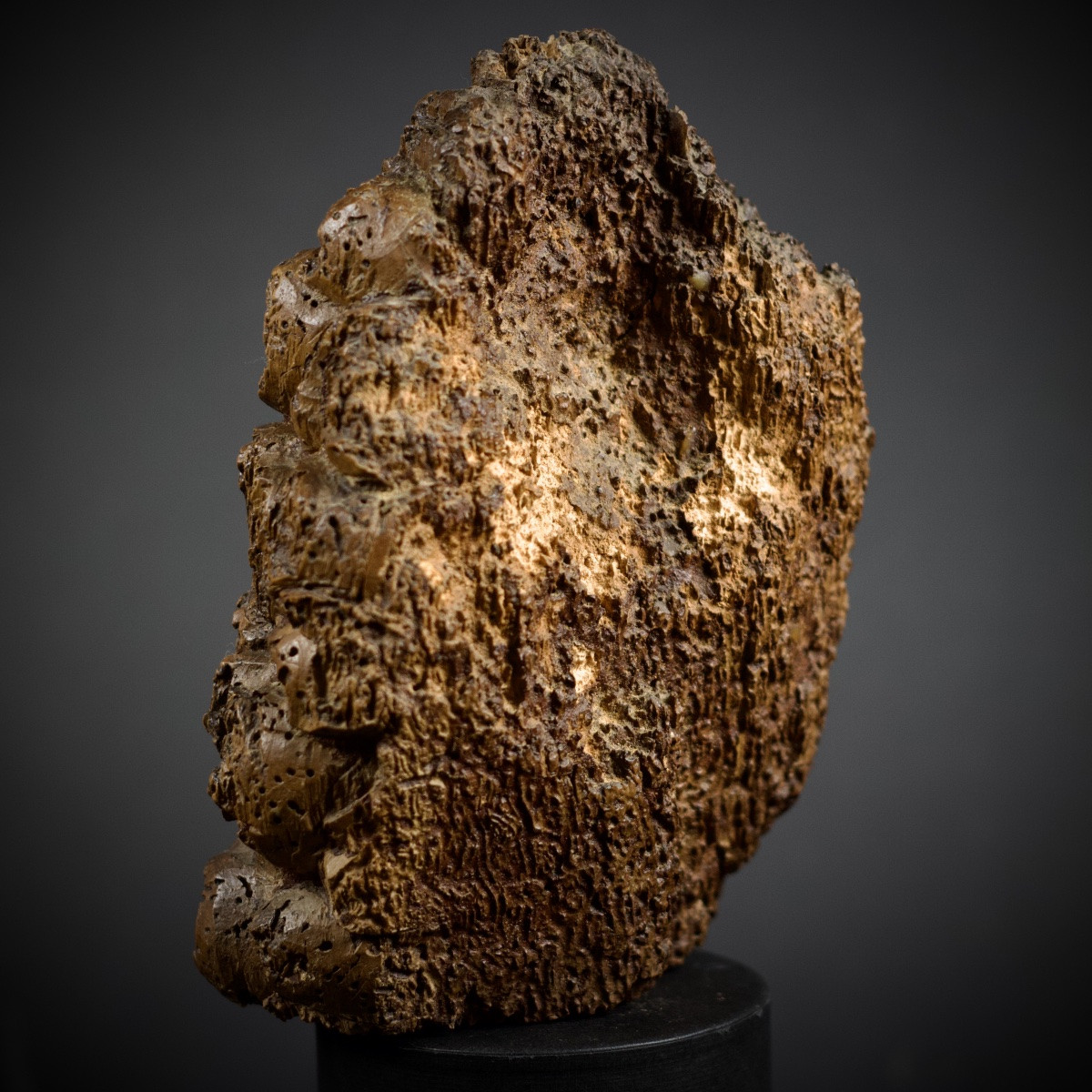
The full, chubby face, and the profile with its pronounced Greek nose (cf. profile photos), are reminiscent of the figurative conventions emerging from the mid-17th century, and particularly those that animated in painting what would come to be known as Parisian Atticism, and its leader Laurent de la Hyre (see the profile of his Vierge à l'Enfant, 1642, preserved in the Musée du Louvre).
The reserved smile, the marked eyelids, the unlikely roundness of the eyebrow arch, the deep corners of the mouth, are all stylistic (and stylized!) choices in the representation of the figure's lineaments, giving it an expression of great placidity that is utterly classicizing.
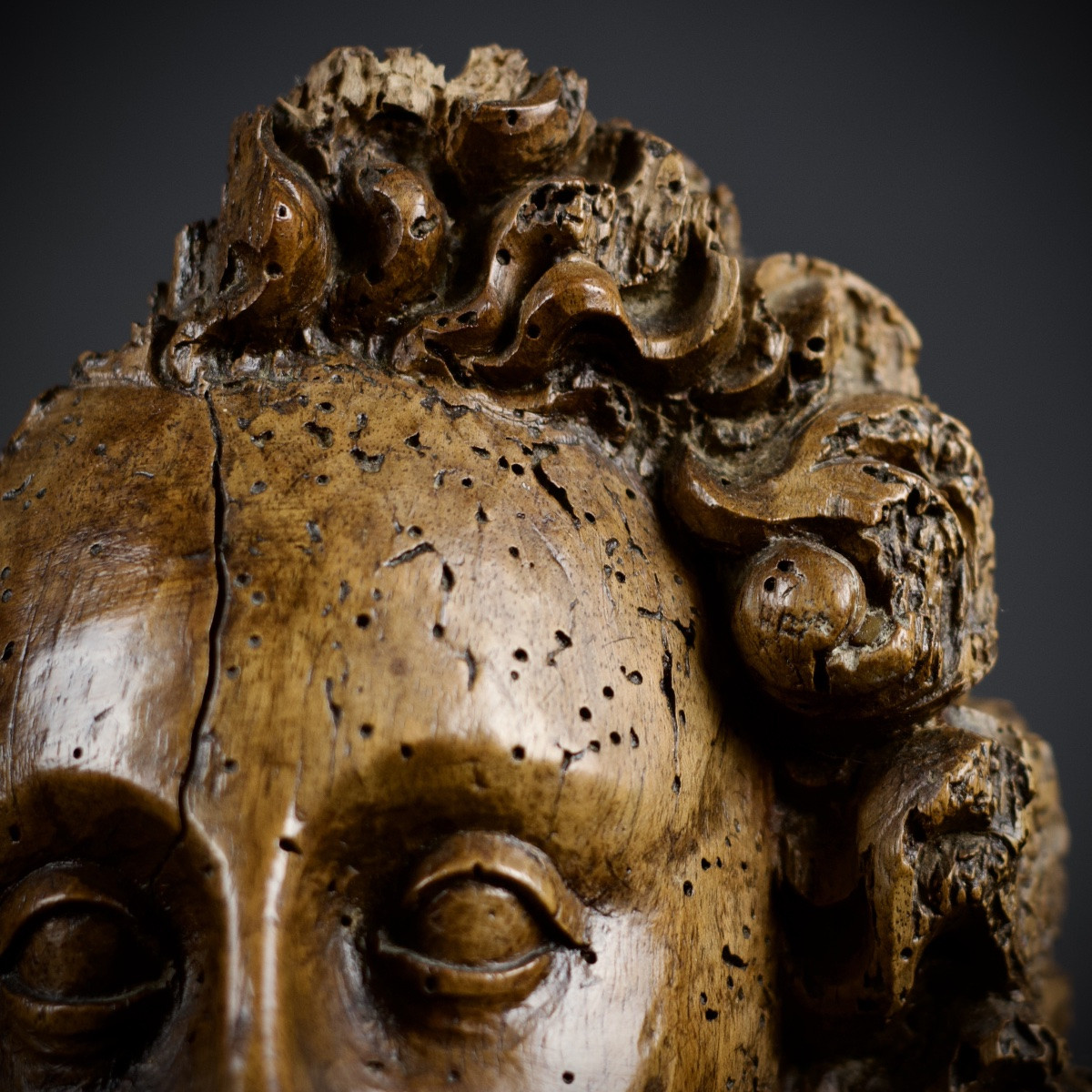
As a counterpoint to the highly expressive work of the parerga of the face (what Aby Warburg calls the "accessories in motion"), namely the hair, very baroque in its treatment, the work is consequently at the hinge of these two artistic inclinations, precisely in conflict at mid-century and in the second half of the XVIIe, which saw the triumphant exuberance of the French Baroque - of Italian descent - gradually fade in favor of a more classical, temperate art that would, under Louis XIV, become a political issue in the creation of a properly "French" art.
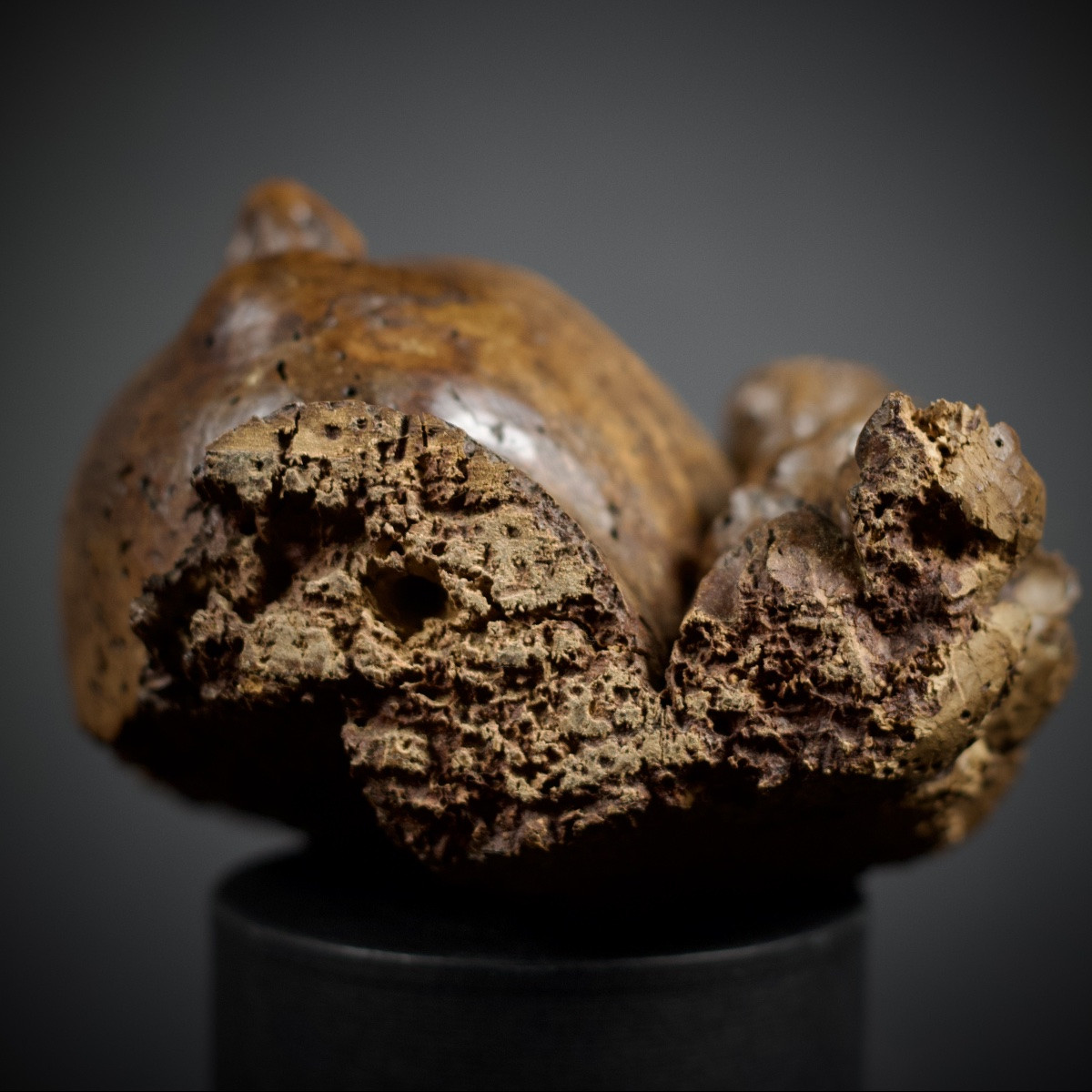
There are reports of missing pieces and serious attacks by woodborers, with photos serving as documentation of this ancient damage.
An interesting piece nonetheless in terms of its place in art history, as well as being a definite decorative asset.
Very fine patina.
The full, chubby face, and the profile with its pronounced Greek nose (cf. profile photos), are reminiscent of the figurative conventions emerging from the mid-17th century, and particularly those that animated in painting what would come to be known as Parisian Atticism, and its leader Laurent de la Hyre (see the profile of his Vierge à l'Enfant, 1642, preserved in the Musée du Louvre).
The reserved smile, the marked eyelids, the unlikely roundness of the eyebrow arch, the deep corners of the mouth, are all stylistic (and stylized!) choices in the representation of the figure's lineaments, giving it an expression of great placidity that is utterly classicizing.
As a counterpoint to the highly expressive work of the parerga of the face (what Aby Warburg calls the "accessories in motion"), namely the hair, very baroque in its treatment, the work is consequently at the hinge of these two artistic inclinations, precisely in conflict at mid-century and in the second half of the XVIIe, which saw the triumphant exuberance of the French Baroque - of Italian descent - gradually fade in favor of a more classical, temperate art that would, under Louis XIV, become a political issue in the creation of a properly "French" art.
There are reports of missing pieces and serious attacks by woodborers, with photos serving as documentation of this ancient damage.
An interesting piece nonetheless in terms of its place in art history, as well as being a definite decorative asset.
Very fine patina.
580 €
Period: 17th century
Style: Renaissance, Louis 13th
Condition: En l'etat
Material: Solid wood
Width: 12 cm
Height: 17 cm
Reference (ID): 1733901
Availability: In stock
Print