

Painting On Paper Depicting The Japanese Underworld
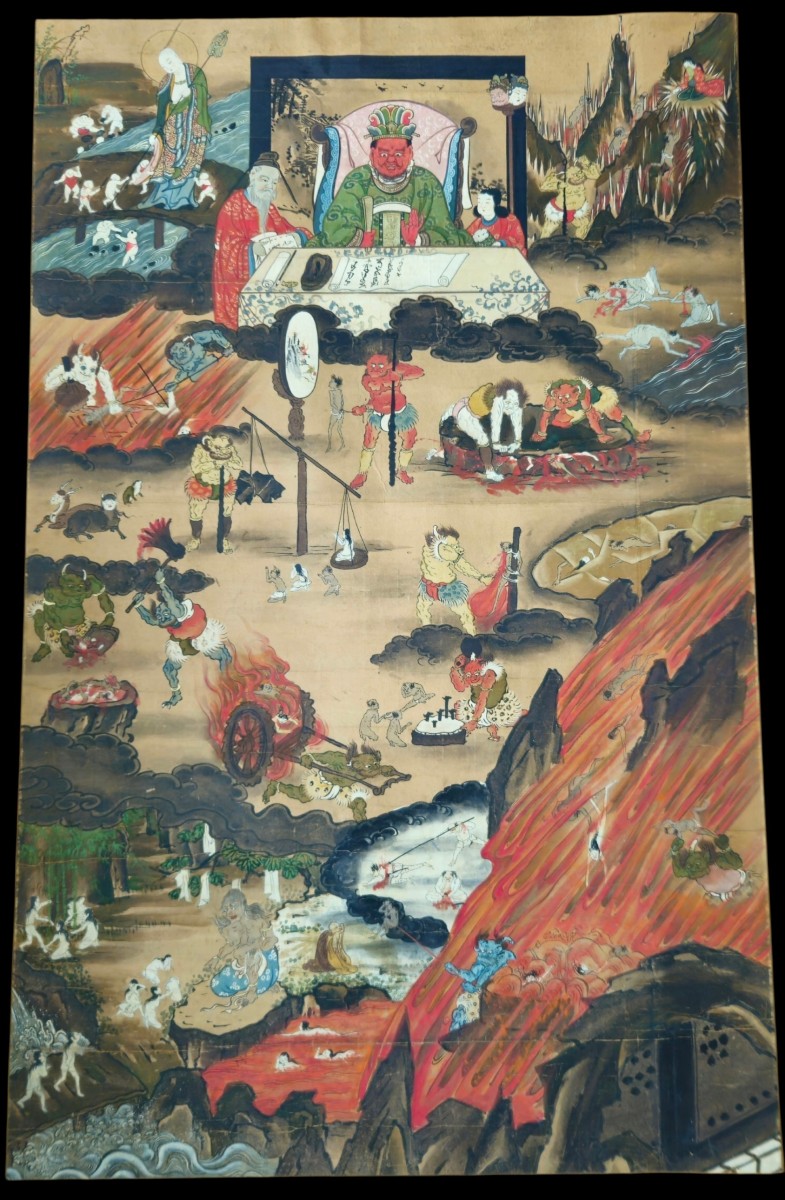
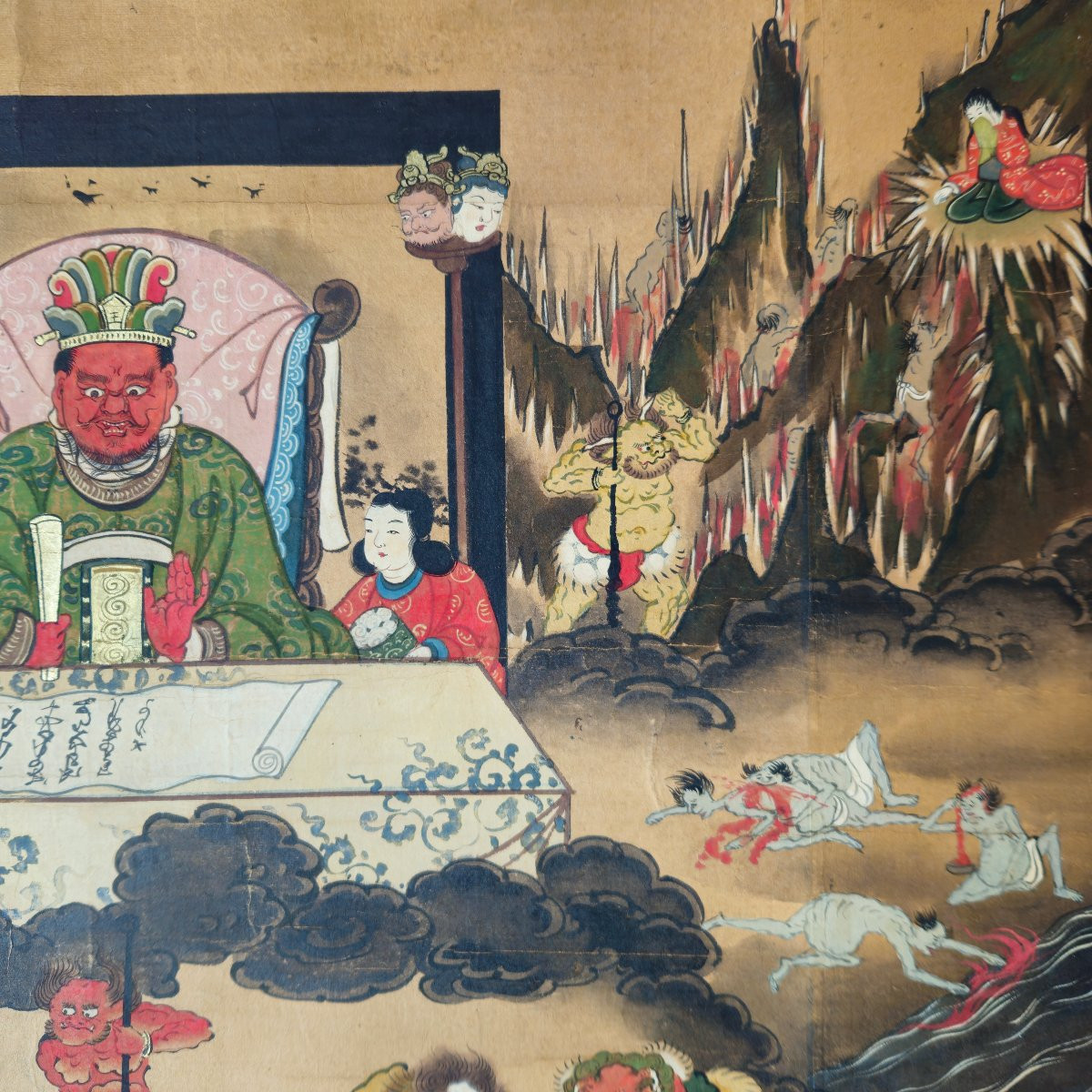
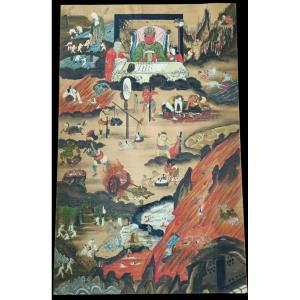
Painting depicting the Japanese underworld with Enma-ō above on his throne.
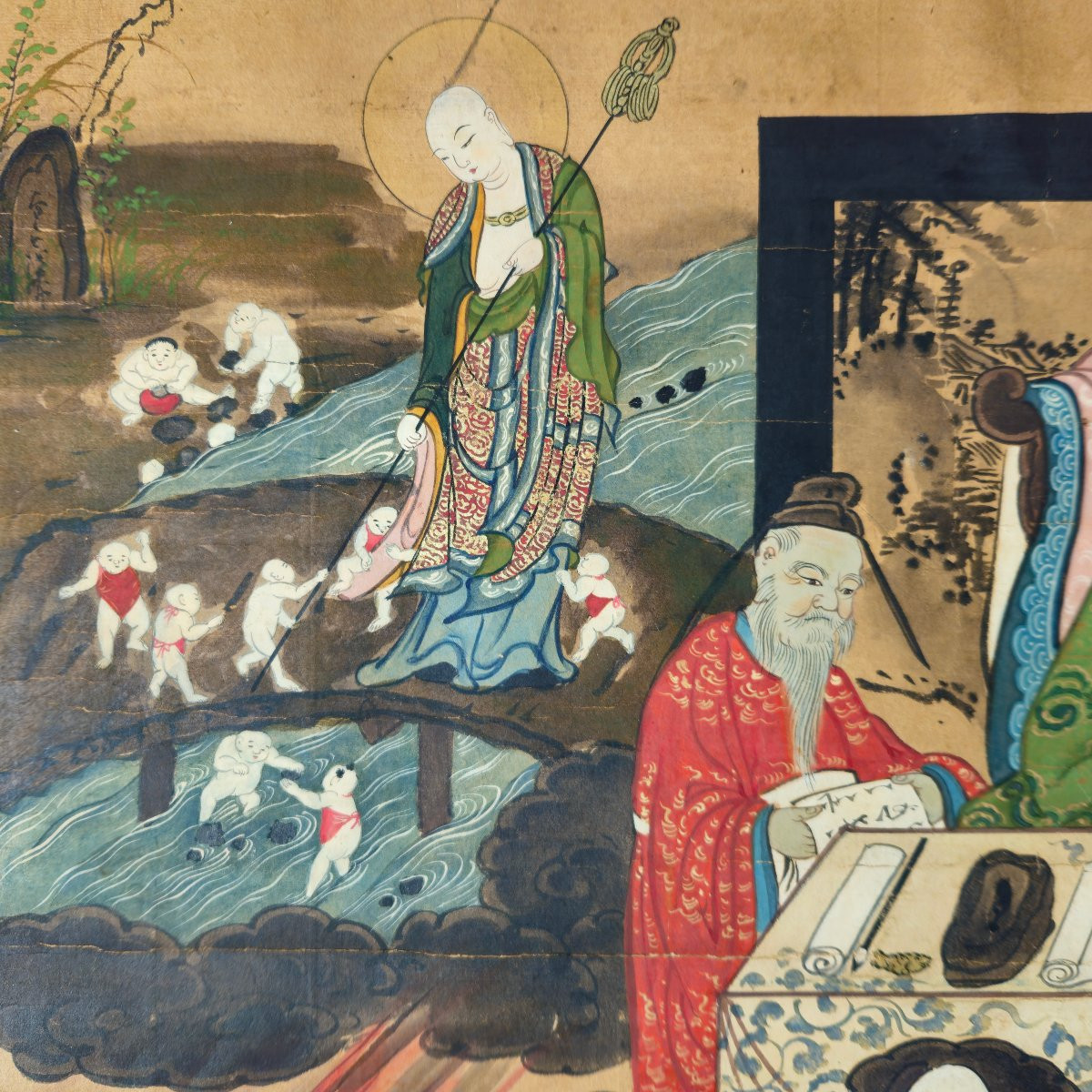
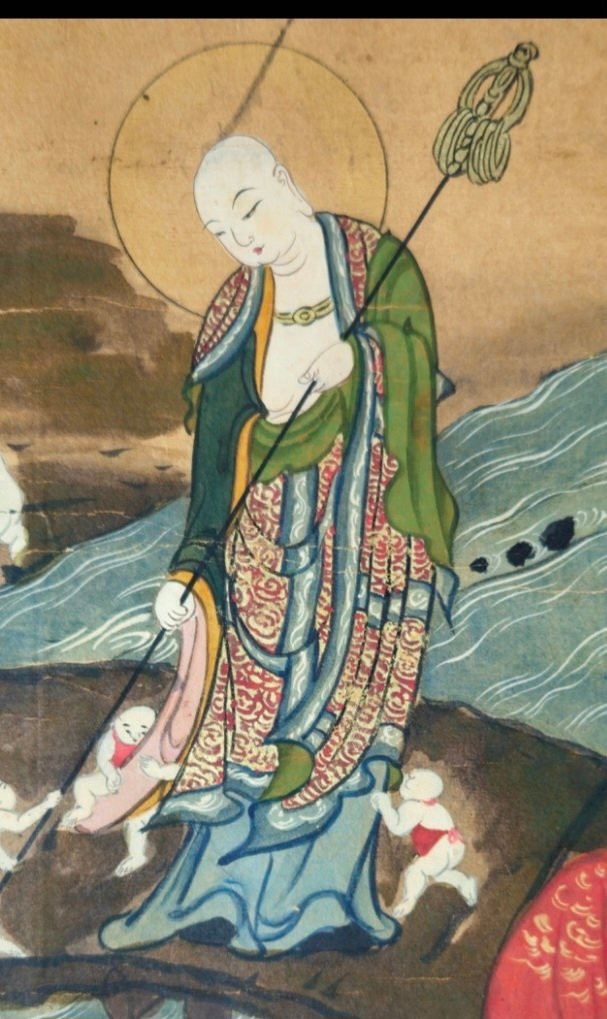
Top left: Jizō Bosatsu saves the souls of children by a river (Sai no Kawara).
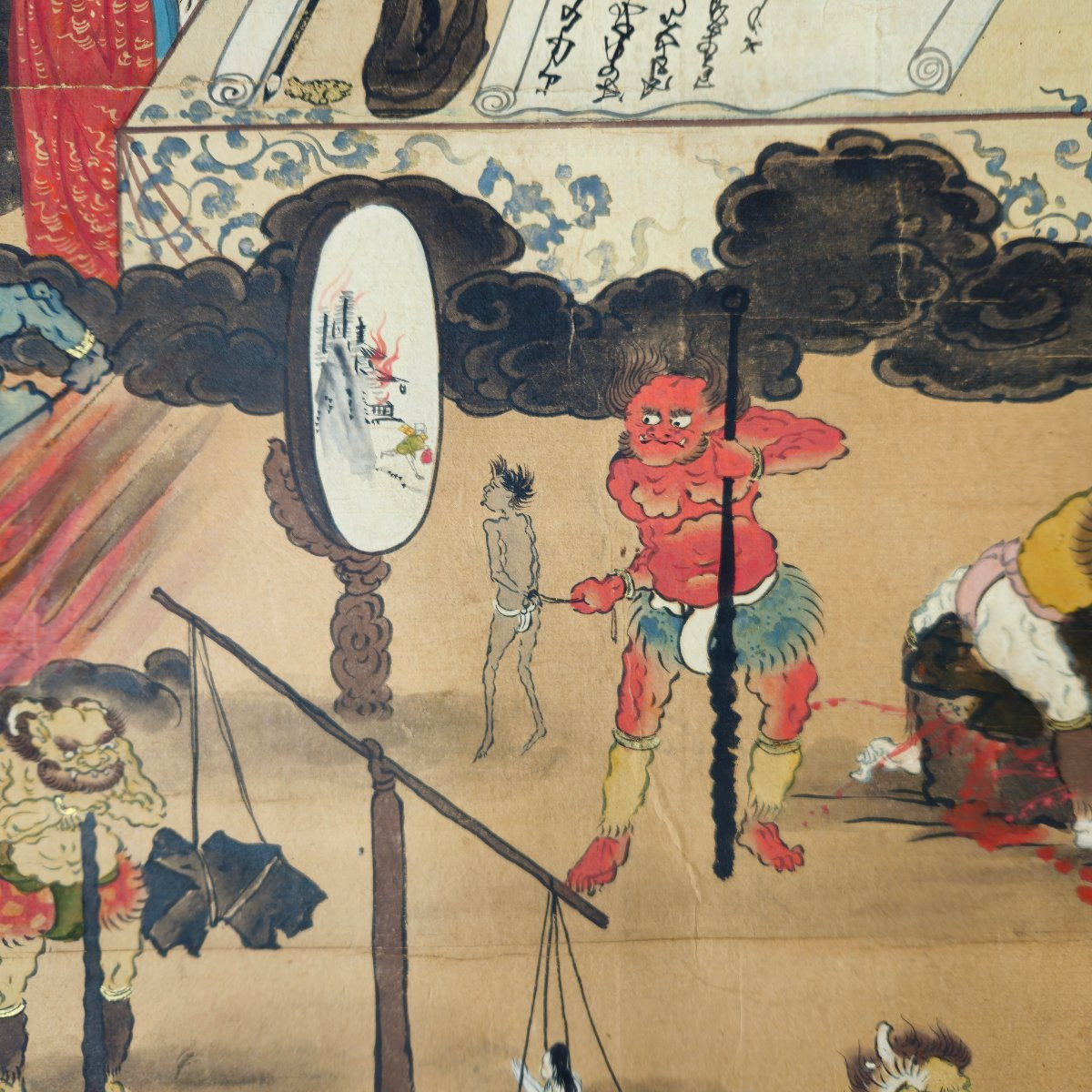
Center top: the tribunal of the dead presided over by Enma (equivalent to Yama), judge of the underworld.
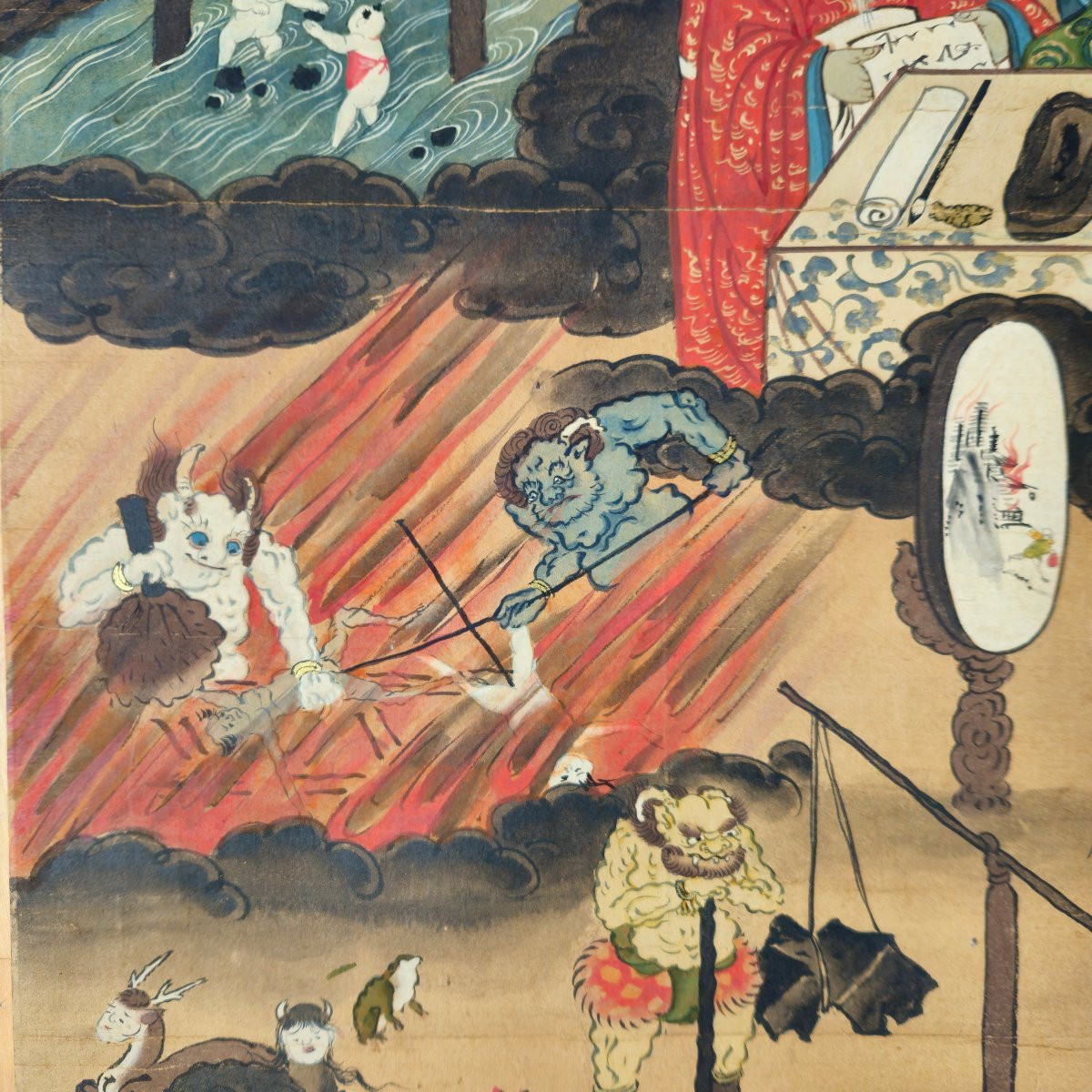
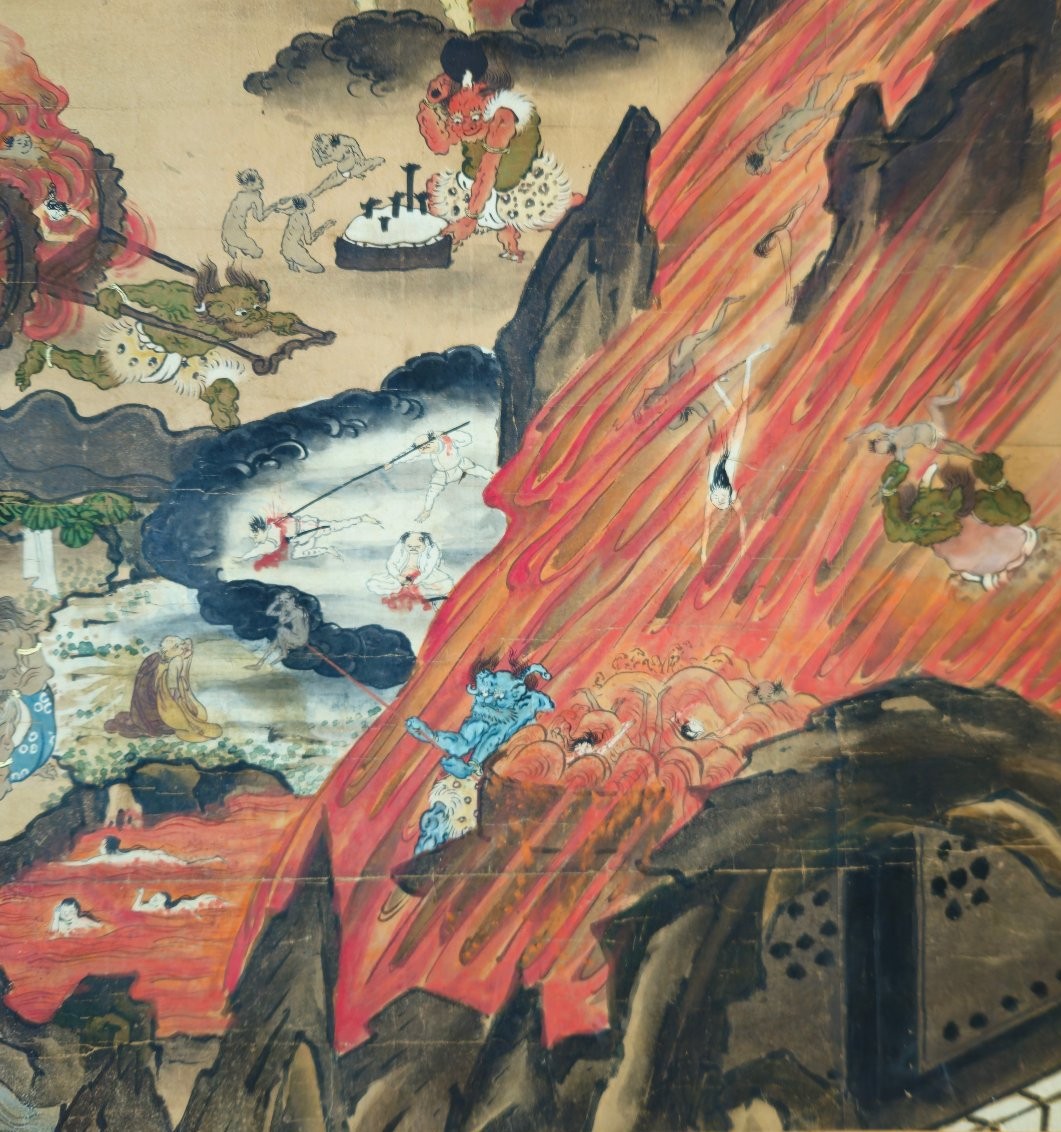
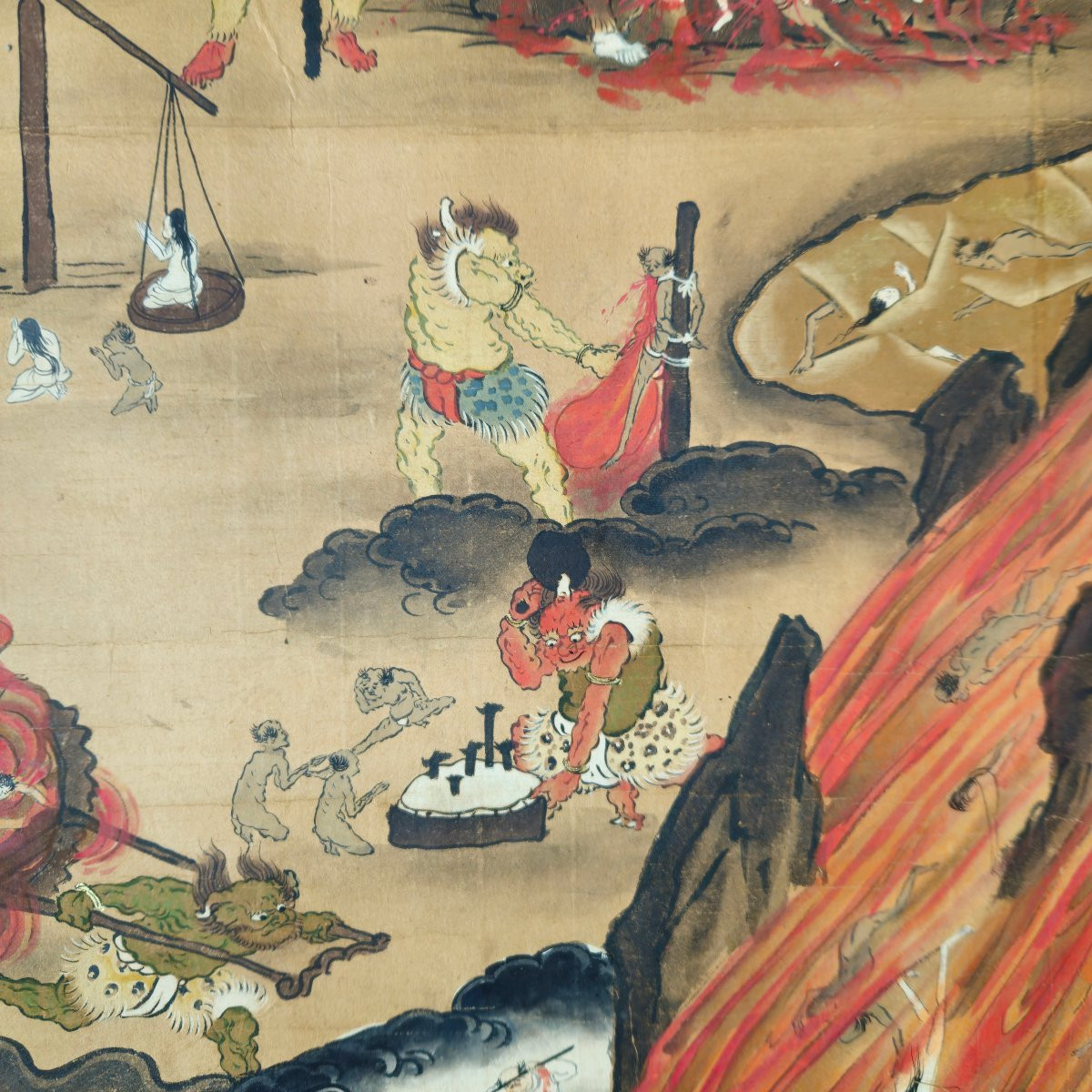
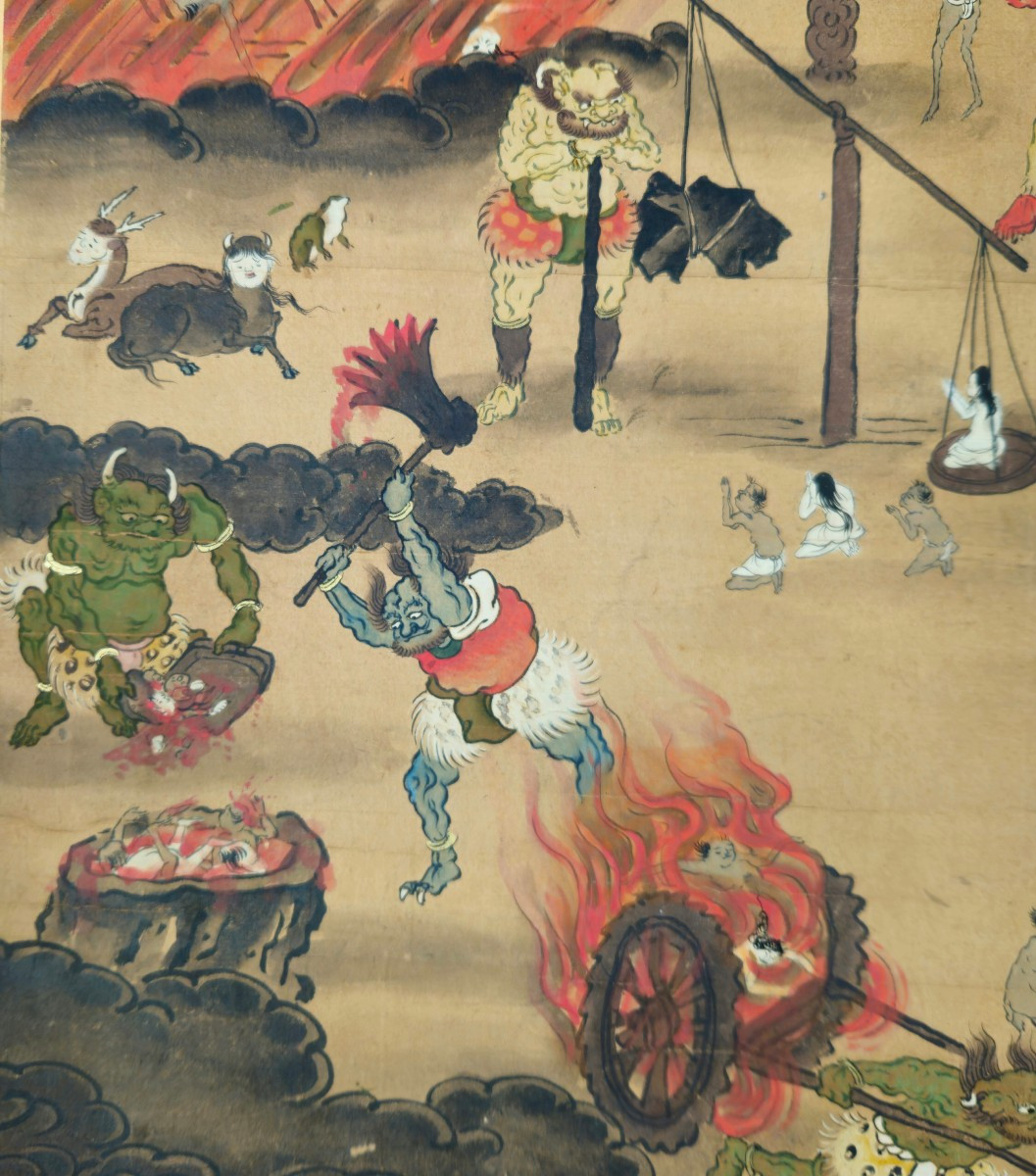
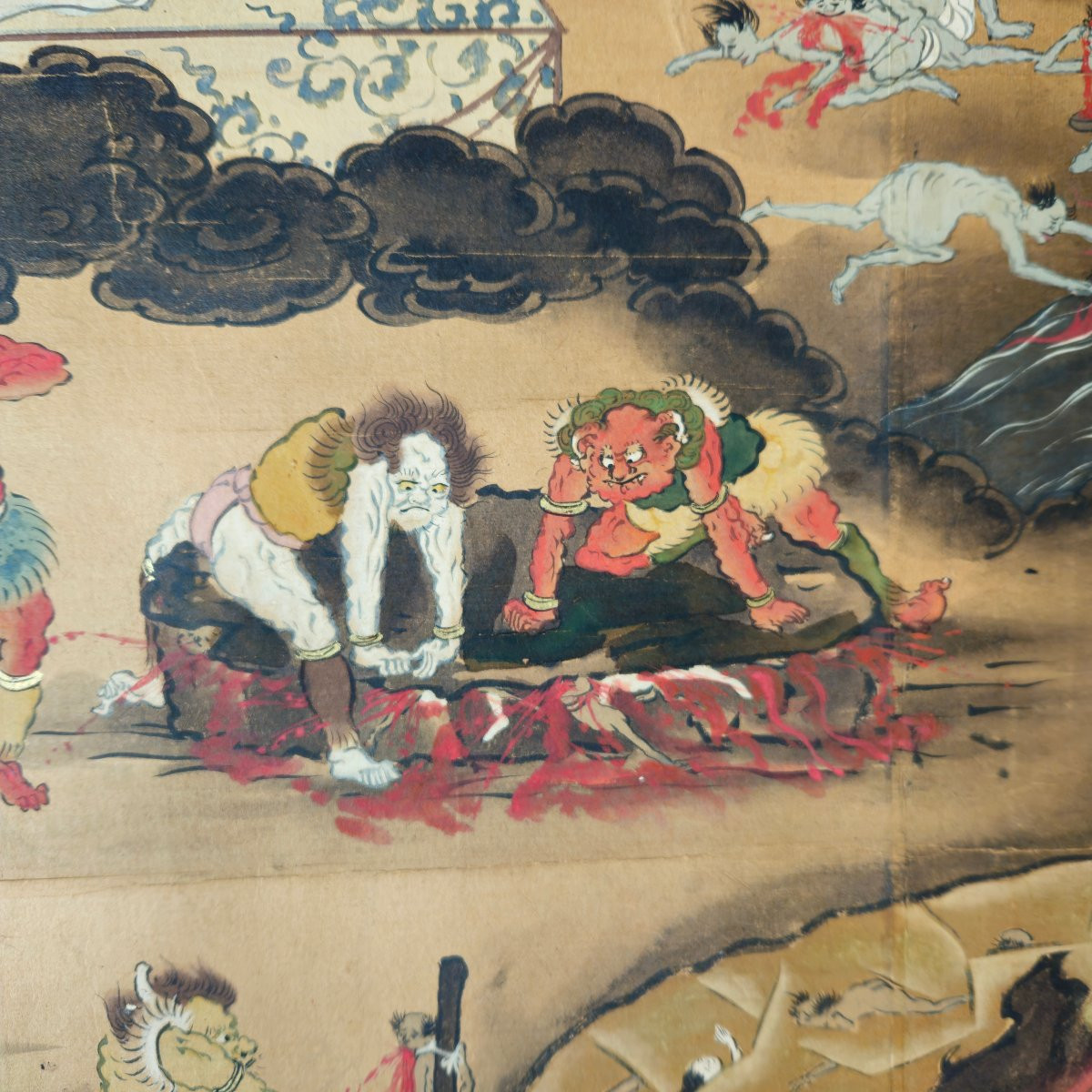
Center and bottom section: scenes of torments inflicted by demons (oni).
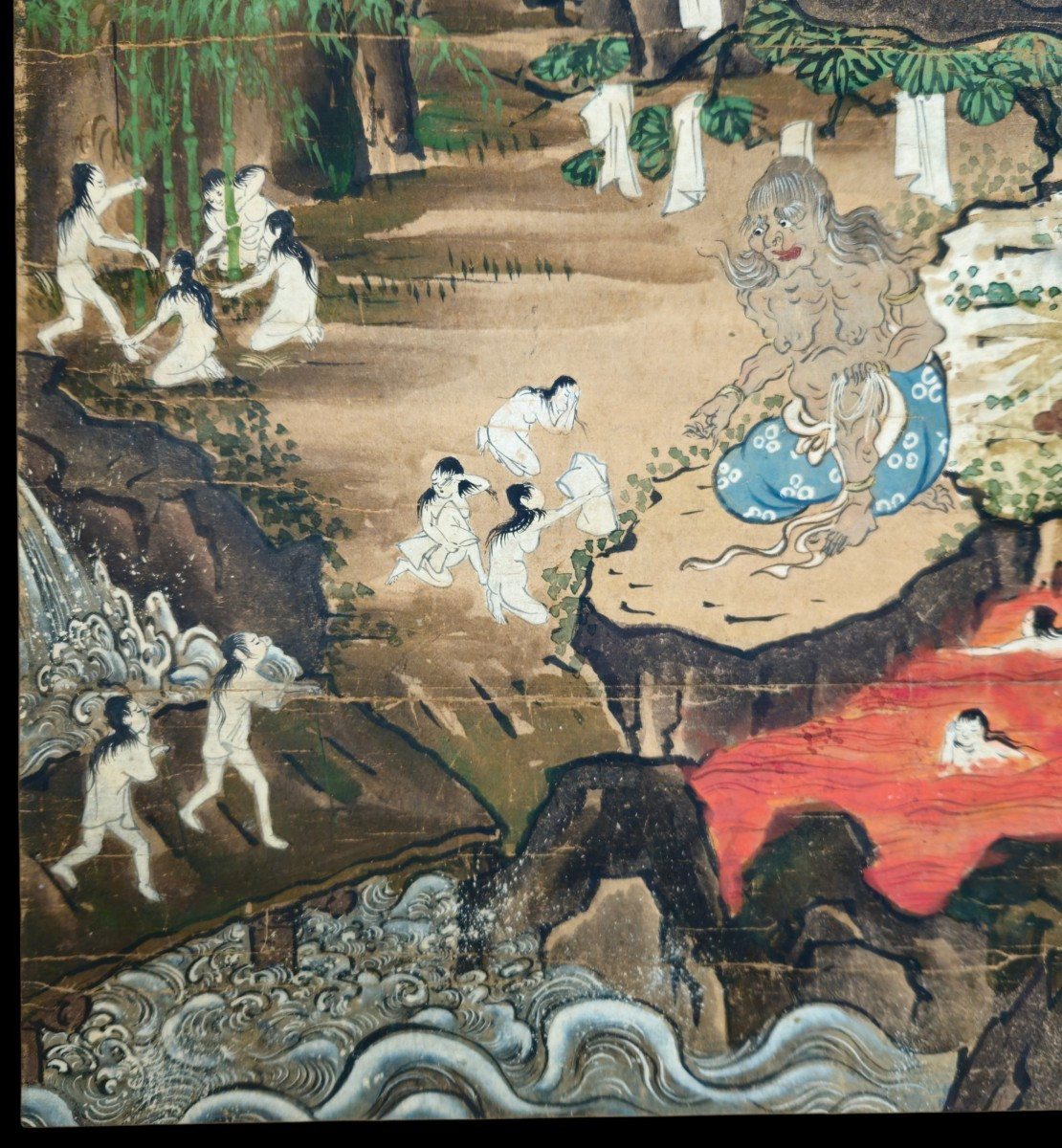
Bottom of picture: various hells with rivers of blood, mountains of blades, cauldrons, etc.
complete narrative journey of the soul after death: judgment → punishment → possible salvation.
2. Enma's tribunal
In the center:
Enma (red skin, stern expression) embodies karmic justice.
He is assisted by scribes who consult registers (the deeds of the deceased).
A balance appears: symbol of the weight of actions (kakma).Each torment corresponds to a precise fault.
3. The torments: a codified iconography
The scenes are typical of the "hot hells":
Boiling cauldrons: for liars or corrupters.
Mountains of blades: for the violent.
Rivers of blood and fire: for murderers.
Demons torturing bodies: embodiment of karmic consequences.
The oni (demons) are not "evil" in the Western sense:
they execute cosmic justice.
4. Jizō's central role
The scene at top left is essential:
Jizō takes in the children who have died prematurely.
These children are condemned to stack stones (incomplete karma), but Jizō protects them.
Top left: Jizō Bosatsu saves the souls of children by a river (Sai no Kawara).
Center top: the tribunal of the dead presided over by Enma (equivalent to Yama), judge of the underworld.
Center and bottom section: scenes of torments inflicted by demons (oni).
Bottom of picture: various hells with rivers of blood, mountains of blades, cauldrons, etc.
complete narrative journey of the soul after death: judgment → punishment → possible salvation.
2. Enma's tribunal
In the center:
Enma (red skin, stern expression) embodies karmic justice.
He is assisted by scribes who consult registers (the deeds of the deceased).
A balance appears: symbol of the weight of actions (kakma).Each torment corresponds to a precise fault.
3. The torments: a codified iconography
The scenes are typical of the "hot hells":
Boiling cauldrons: for liars or corrupters.
Mountains of blades: for the violent.
Rivers of blood and fire: for murderers.
Demons torturing bodies: embodiment of karmic consequences.
The oni (demons) are not "evil" in the Western sense:
they execute cosmic justice.
4. Jizō's central role
The scene at top left is essential:
Jizō takes in the children who have died prematurely.
These children are condemned to stack stones (incomplete karma), but Jizō protects them.
1 600 €
Period: 19th century
Style: Asian art
Condition: Excellent condition
Material: Paper
Width: 79
Height: 125
Reference (ID): 1752445
Availability: In stock
Print