

Cosmatesque Column - Lazio - 13th Century
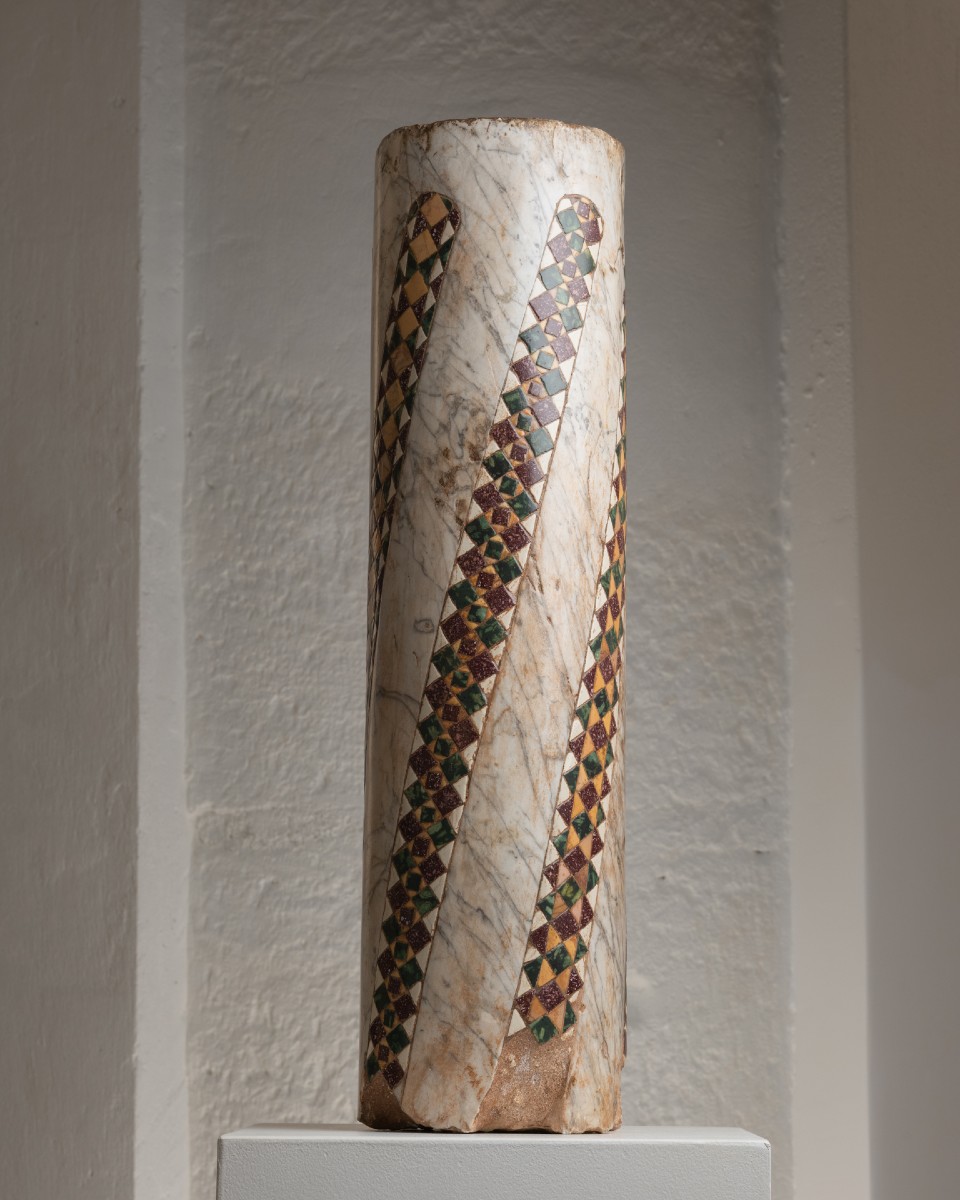
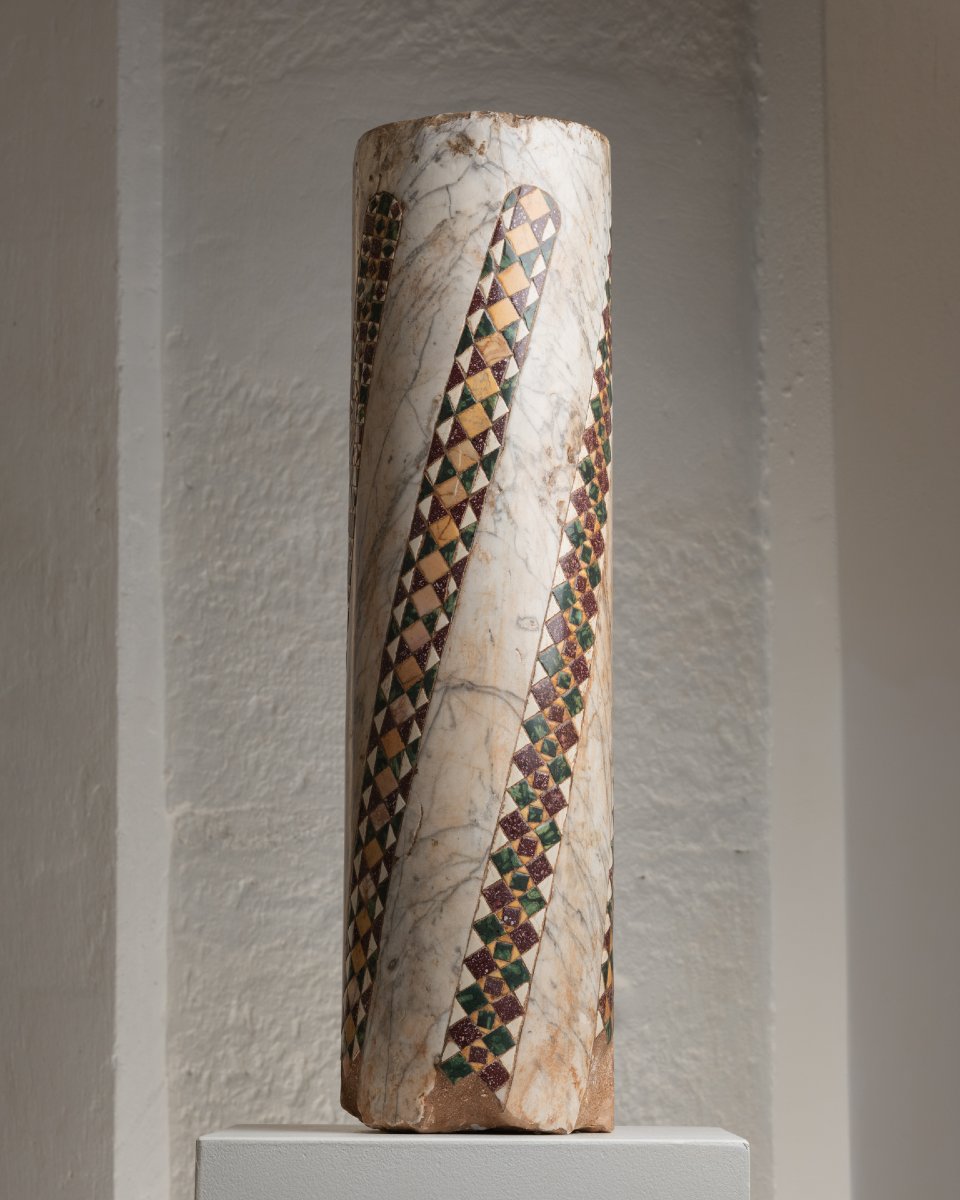
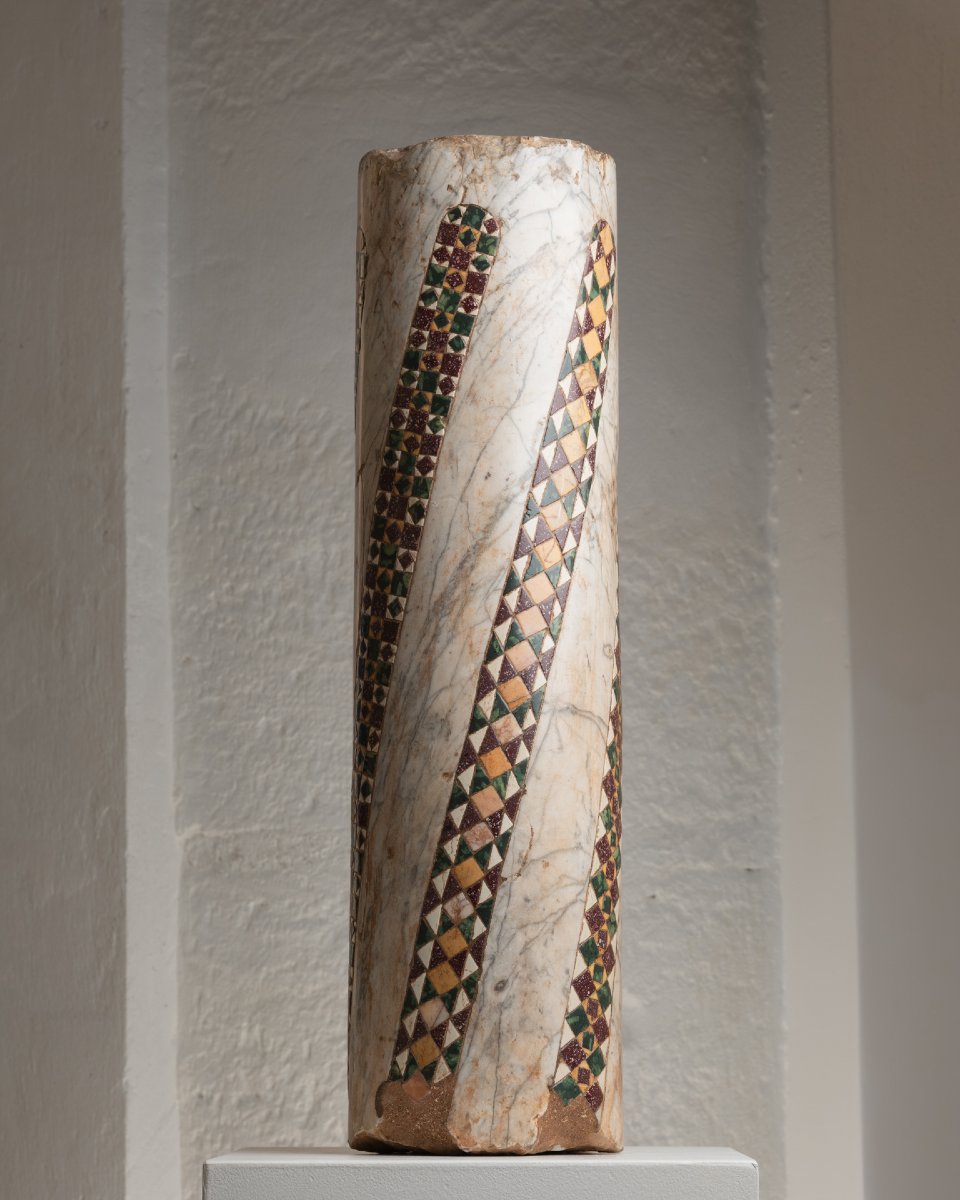
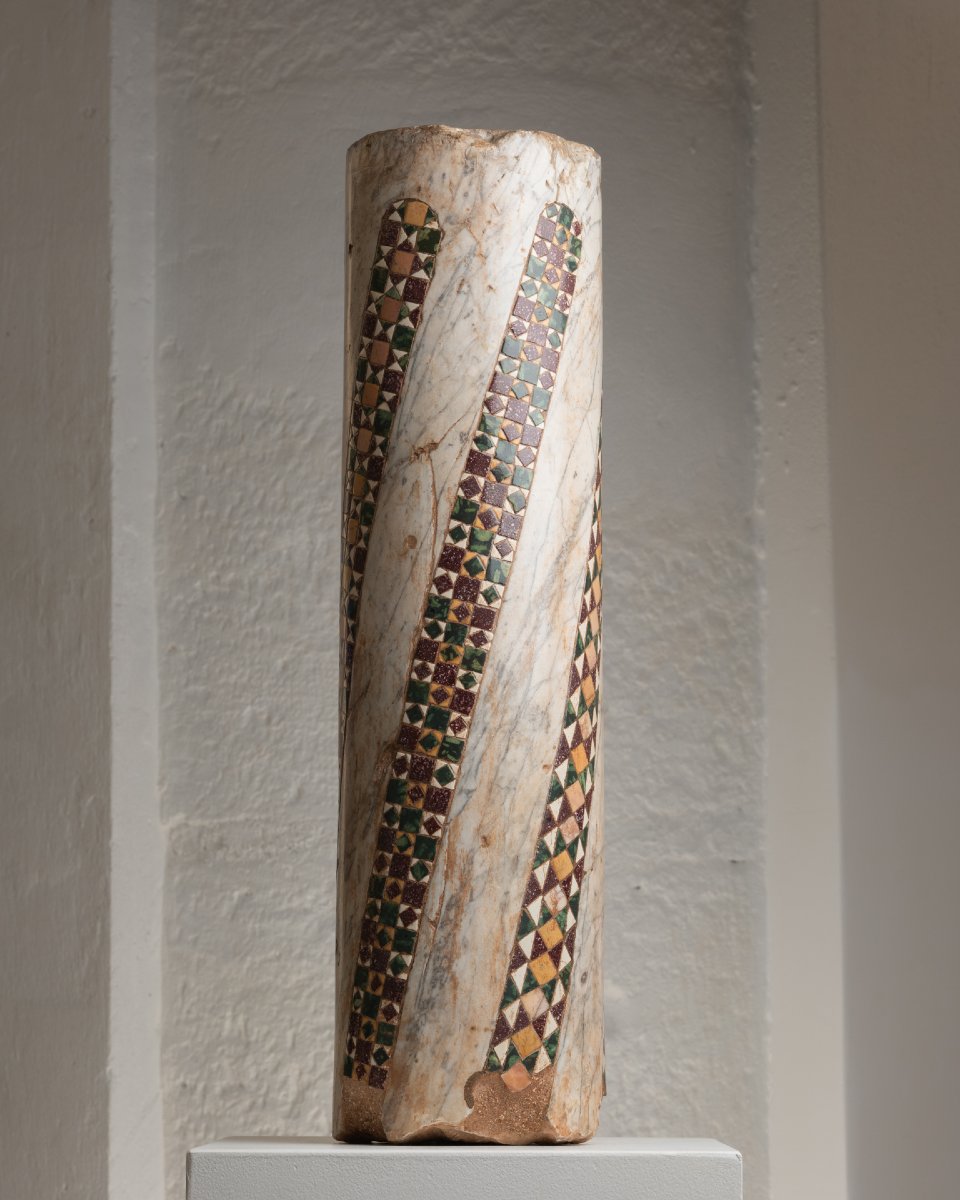
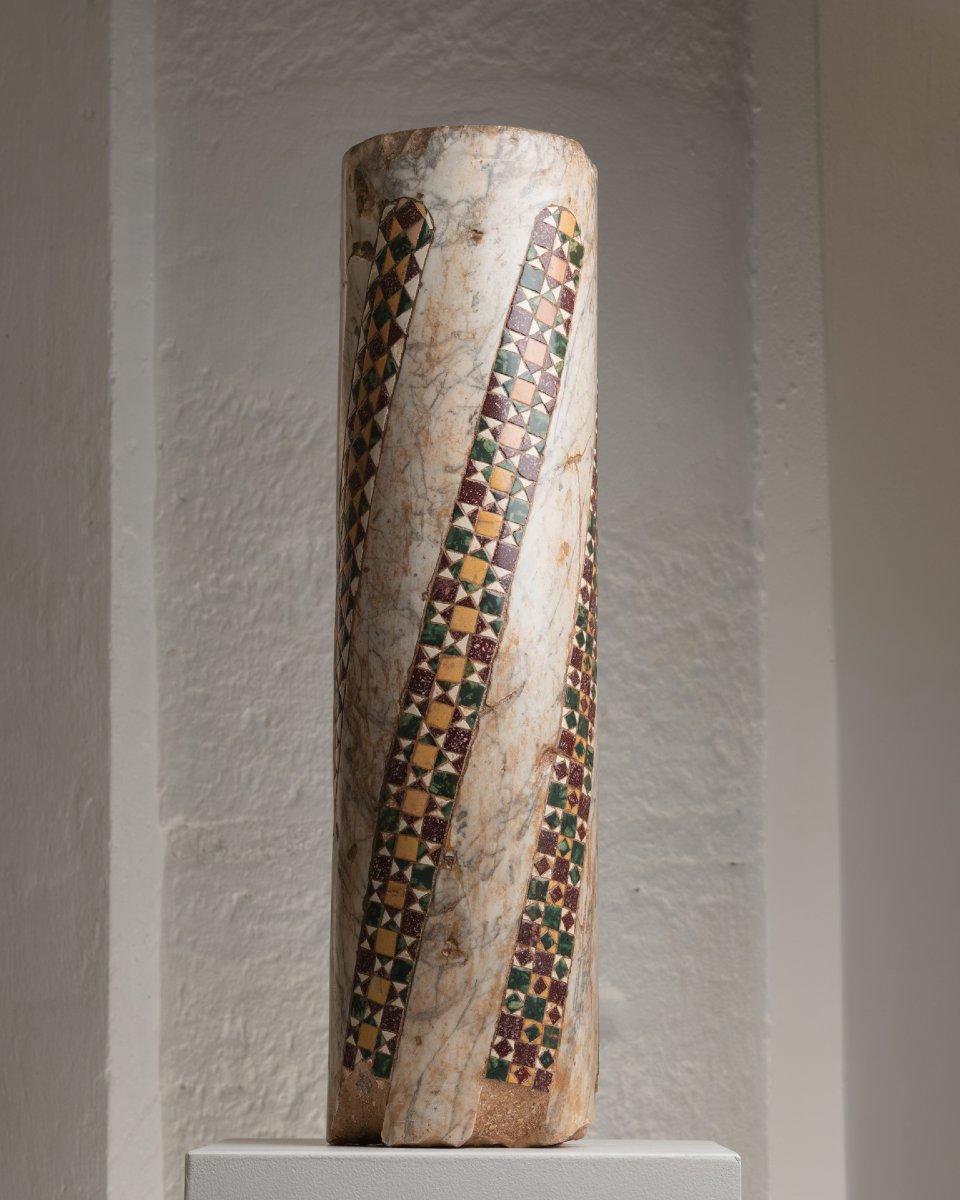
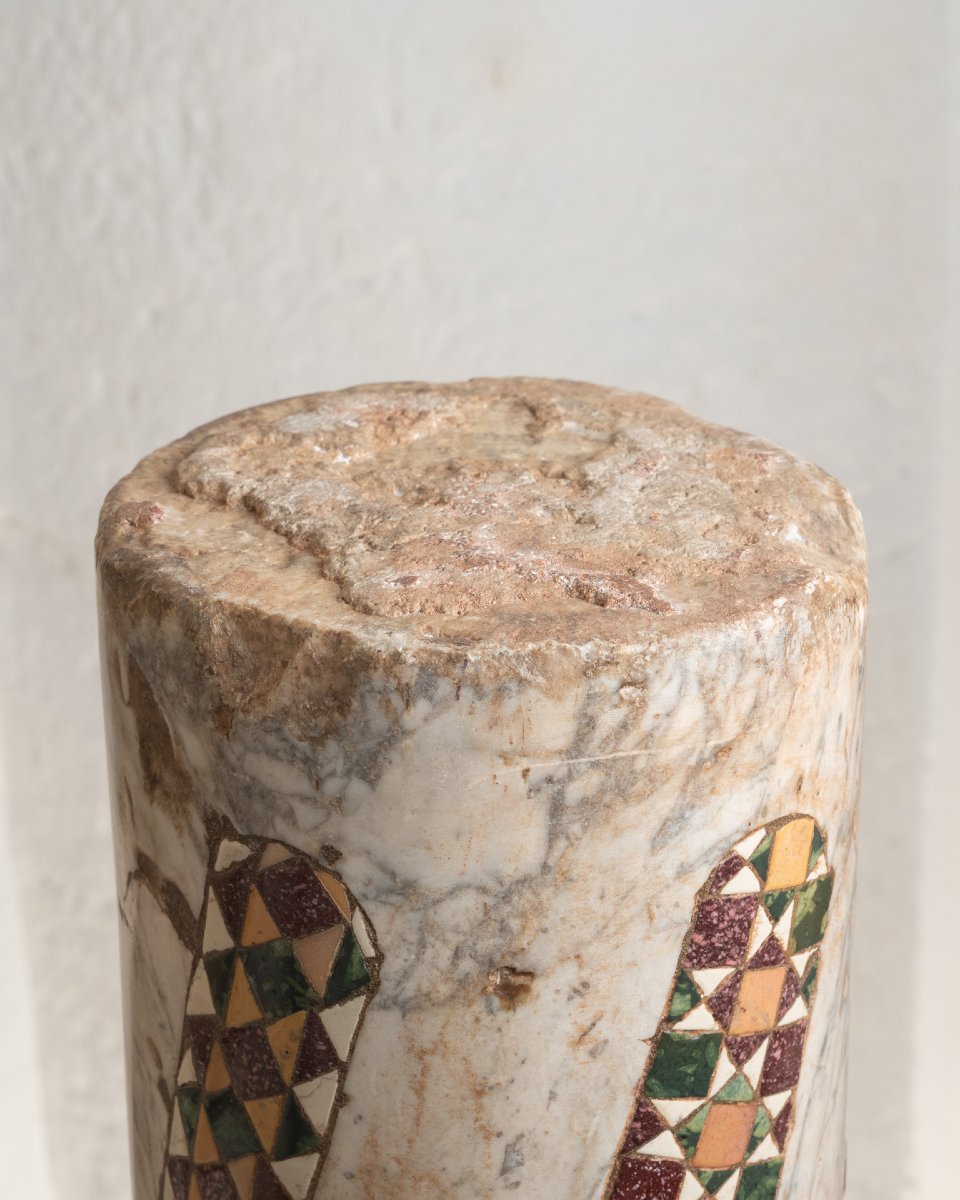
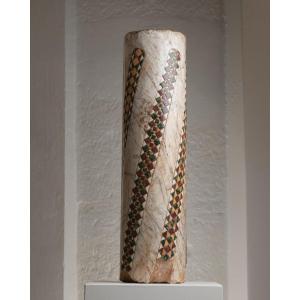
This upper fragment of a cosmatesque column, made in opus sectile, is dated circa 1200, comes from central Italy, more precisely from the Lazio region. Carved in marble and adorned with polychrome inlays. This column would have belonged to a religious architectural ensemble, where it fulfilled both a structural and decorative function, integrated into a liturgical device designed to magnify the sacred space.
The decoration on this column falls within the cosmatesque style, an ornamental language developed by Roman marble workshops, known as Cosmati, active from the early XIIᵉ century until the third quarter of the XIVᵉ century. Initially concentrated in Rome, this tradition gradually spread to the whole of Lazio, then to some neighboring regions. Cosmatist artists specialized in monumental architectural ornamentation, blending sculpture, marble marquetry and mosaics, in a learned aesthetic deeply rooted in ancient heritage.
While cosmatesque art proceeds from a synthesis of multiple traditions, the present column stands out for its essentially Byzantine inspiration, perceptible in the use of continuous, regular motifs and undulating rhythms, giving the whole an abstract, meditative character, far removed from any figurative narrative. However, this Byzantine influence is part of a strong local know-how, inherited from ancient Roman, late Roman and early Christian traditions. Central Italian workshops assimilated these external contributions and reinterpreted them according to regional conventions, based on a geometric rigor inherited from ancient Roman mosaics. The compositions, structured by alternating square shapes and regular modules, are enriched by gentle, sinusoidal curves inspired by Byzantine opus sectile. The column thus illustrates a coherent decorative language, where Byzantine influence renews a vocabulary deeply rooted in Roman culture.
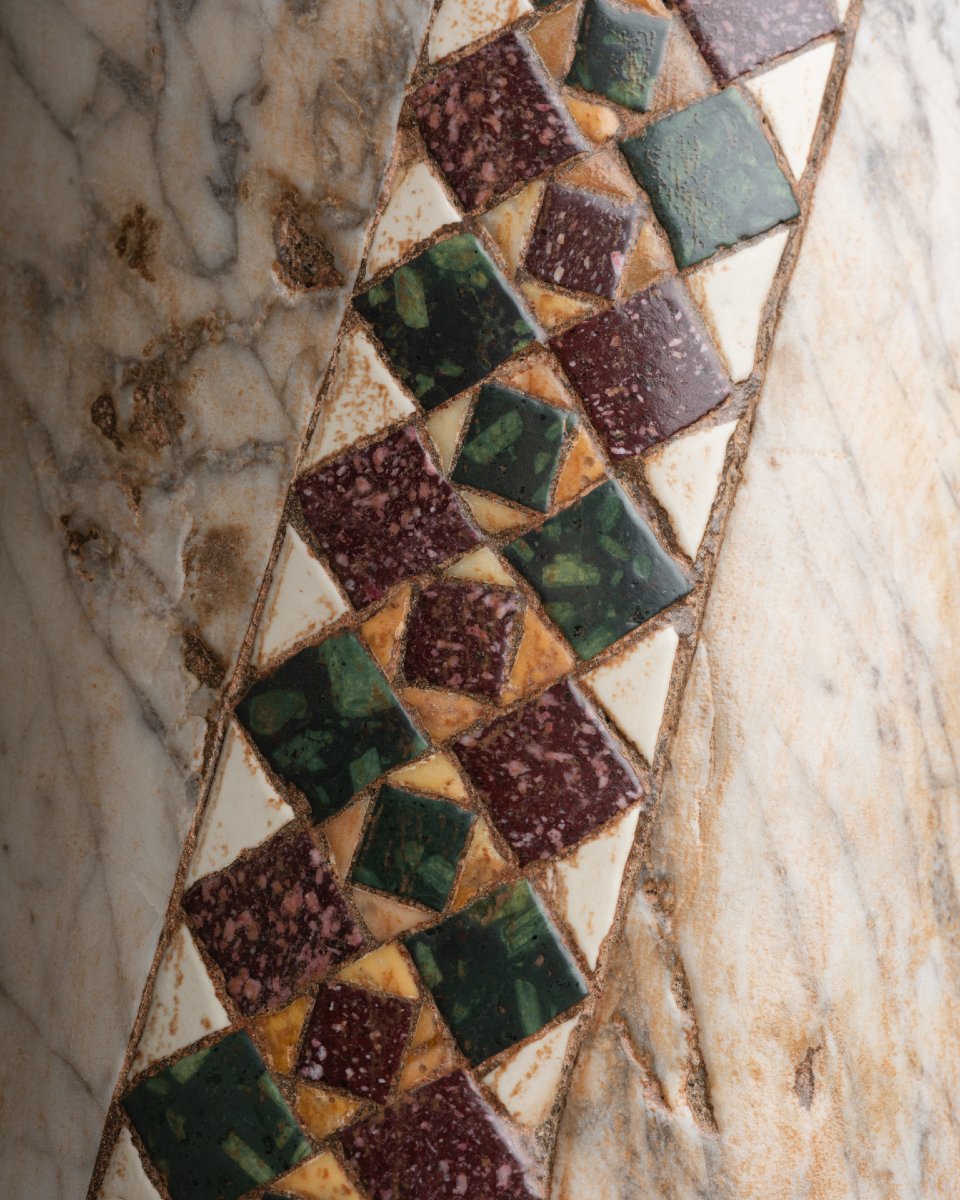
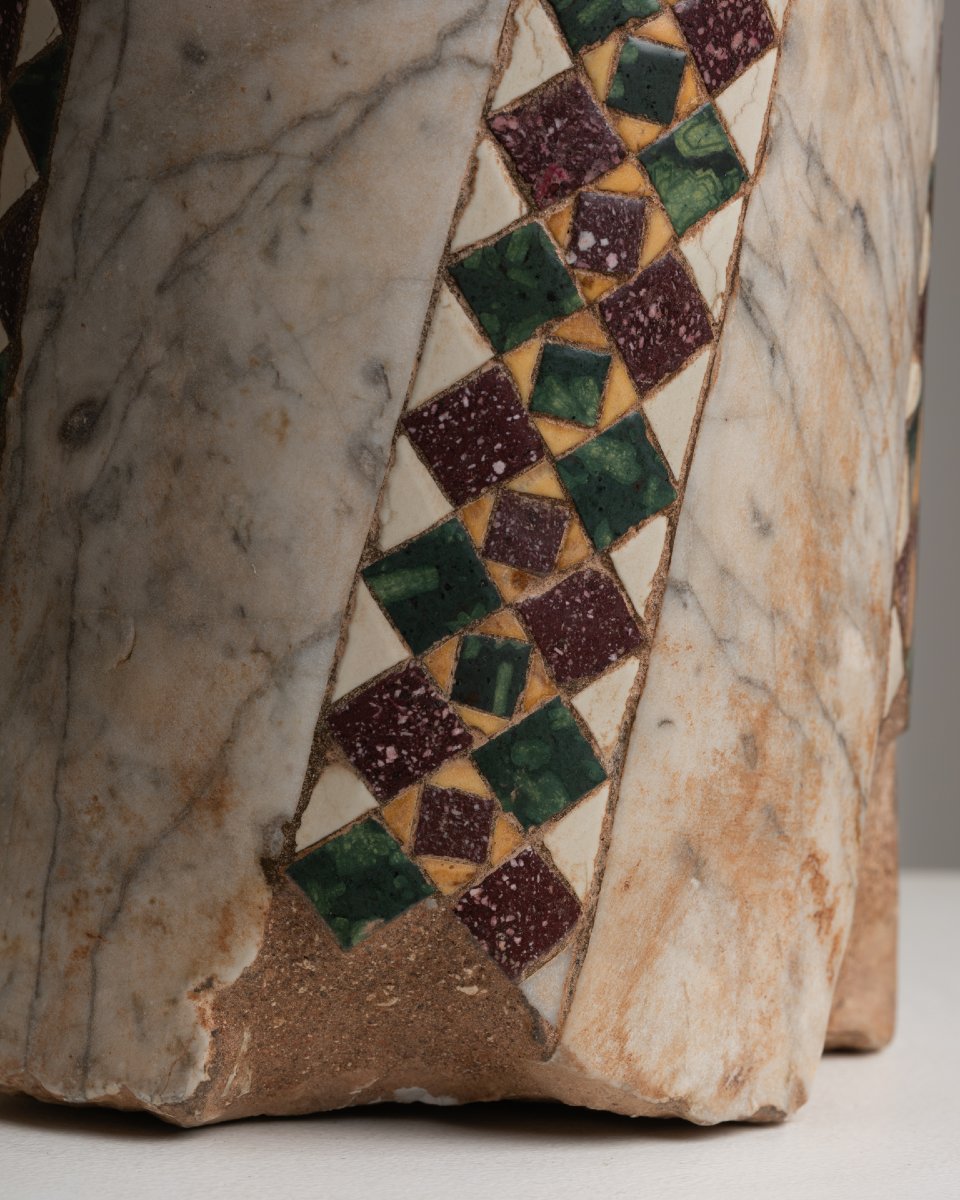
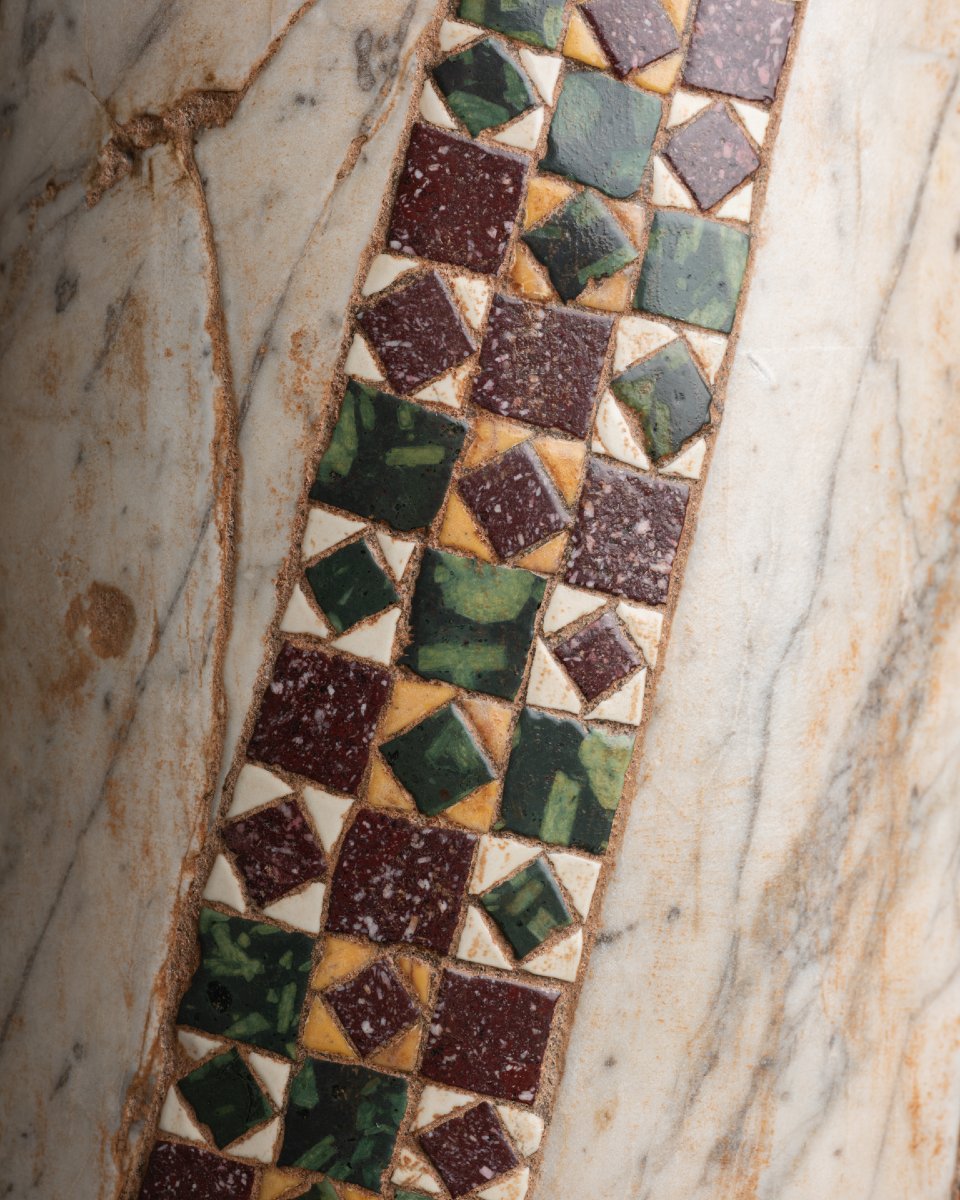
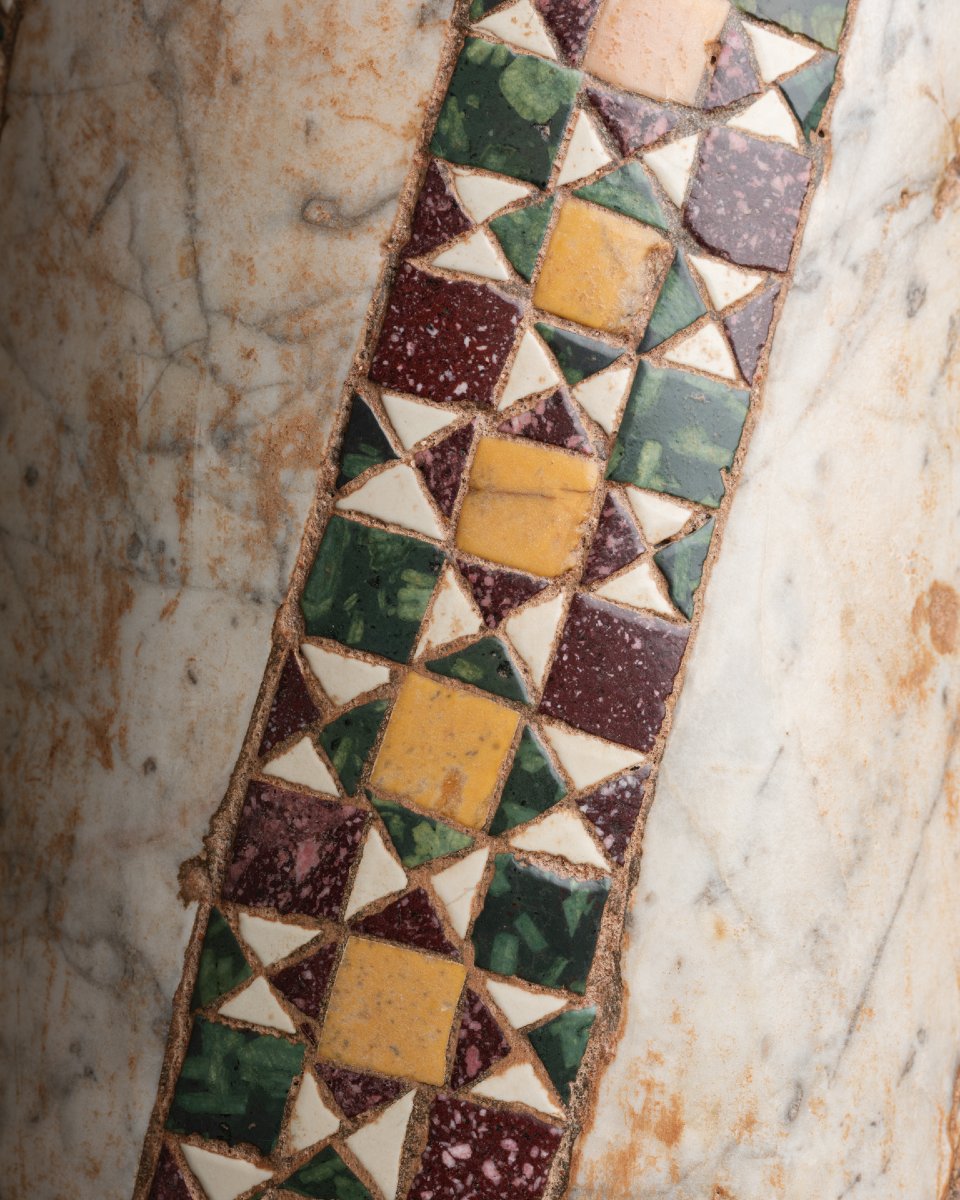
Opus sectile constitutes one of the most refined and prestigious marble decoration techniques of the ancient and medieval world. It is distinguished as much by the nobility of the materials used as by the complexity of its implementation, requiring the cutting of marble into thin slabs (crustae) fitted with extreme precision. In this case, the polychromy is based on a masterful combination of yellow, green and red stones, whose chromatic contrasts structure the surface and enhance the legibility of the geometric motifs. The choice and arrangement of these stones testify to an in-depth knowledge of the visual and symbolic qualities of marble.
The column features a decoration structured in vertical bands of geometric inlays, characteristic of cosmatesque ornamentation. These bands organize the cylindrical surface in a rhythmic, regular fashion. In particular, one band features a checkerboard pattern, composed of two rows of balanced squares, alternating yellow, green and red stones. A second band is made up of three rows of tangent squares, arranged to create hourglass patterns, generating a dynamic effect despite the geometric rigor. A third band combines a central row of squares with triangles arranged on either side, enriching the décor with a controlled alternation of angular shapes.
The slight relief of the inlays catches the light and makes the material vibrate, revealing the purity of the marble and the depth of the green, red and yellow hues. Animated by variations in light, these motifs transform the column into a veritable medium for contemplation, where the material seems to become spiritualized by contact with light. In this way, this fragment of a cosmatesque column is an eloquent testimony to Italian architectural sculpture in the Middle Ages. Through the combination of Byzantine inspiration and local craftsmanship, as well as the mastery of opus sectile and the essential role of light, this fragment retains all its evocative power.
Period: Before 16th century
Style: Renaissance, Louis 13th
Condition: Good condition
Material: Marble
Diameter: 15 cm
Height: 59 cm
Reference (ID): 1751234
Availability: In stock