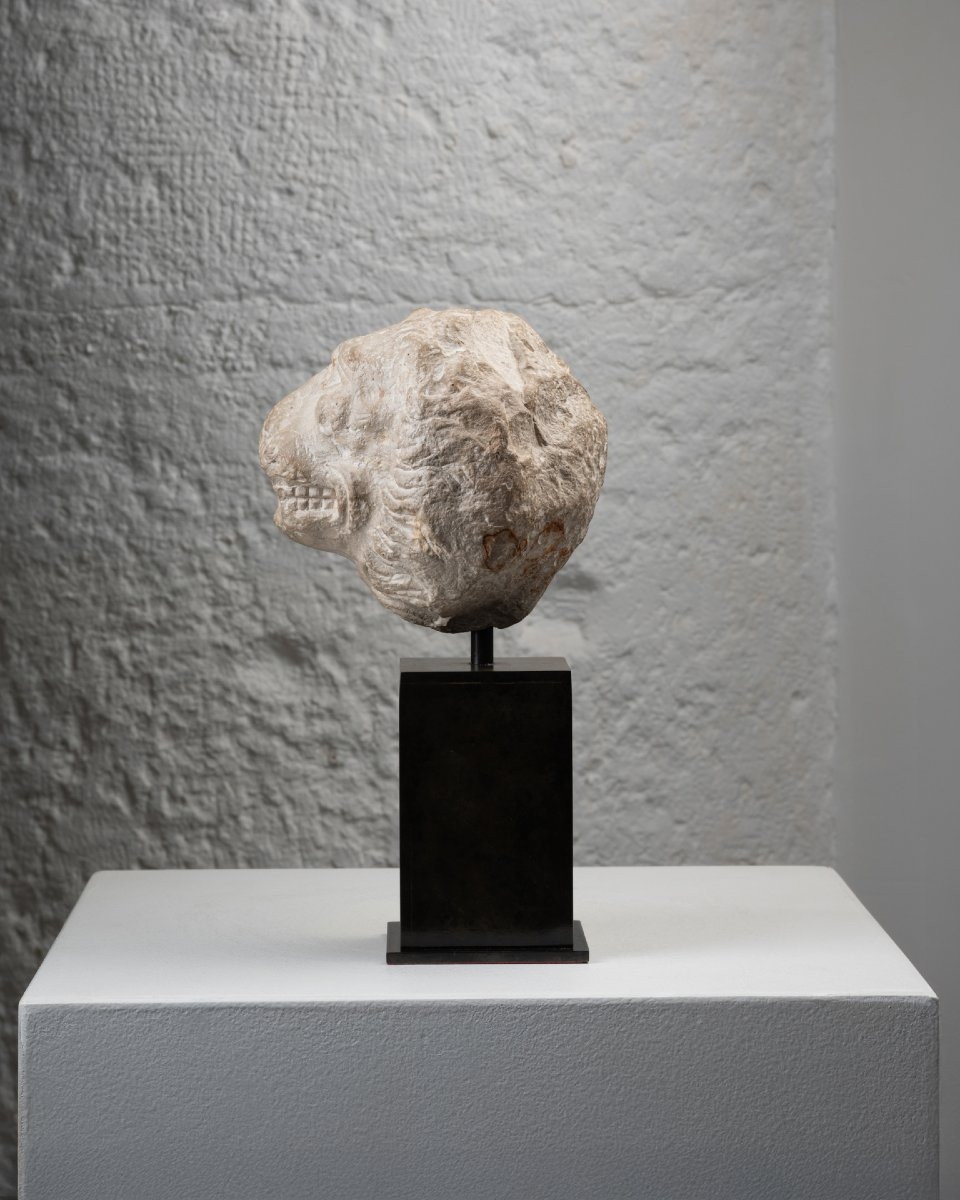

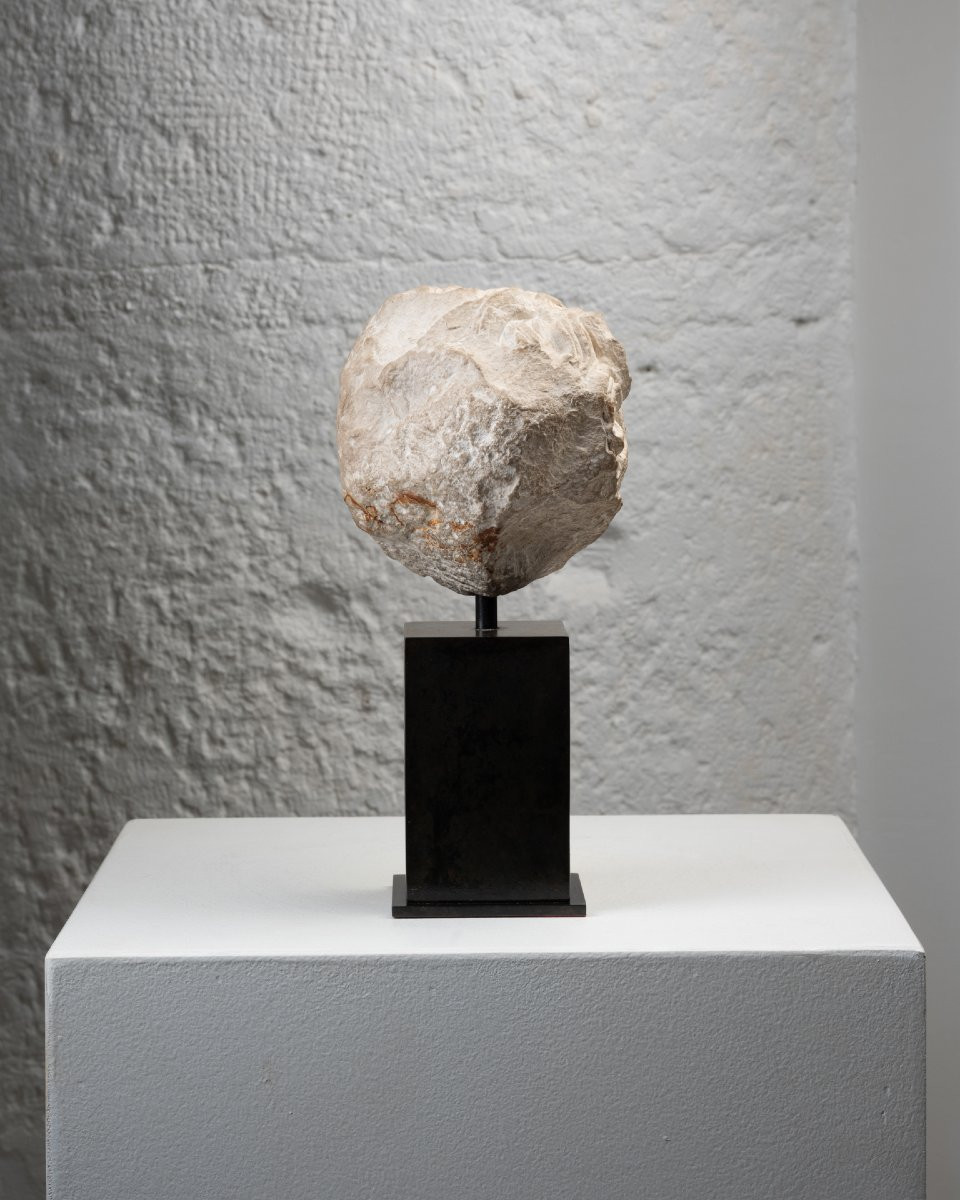

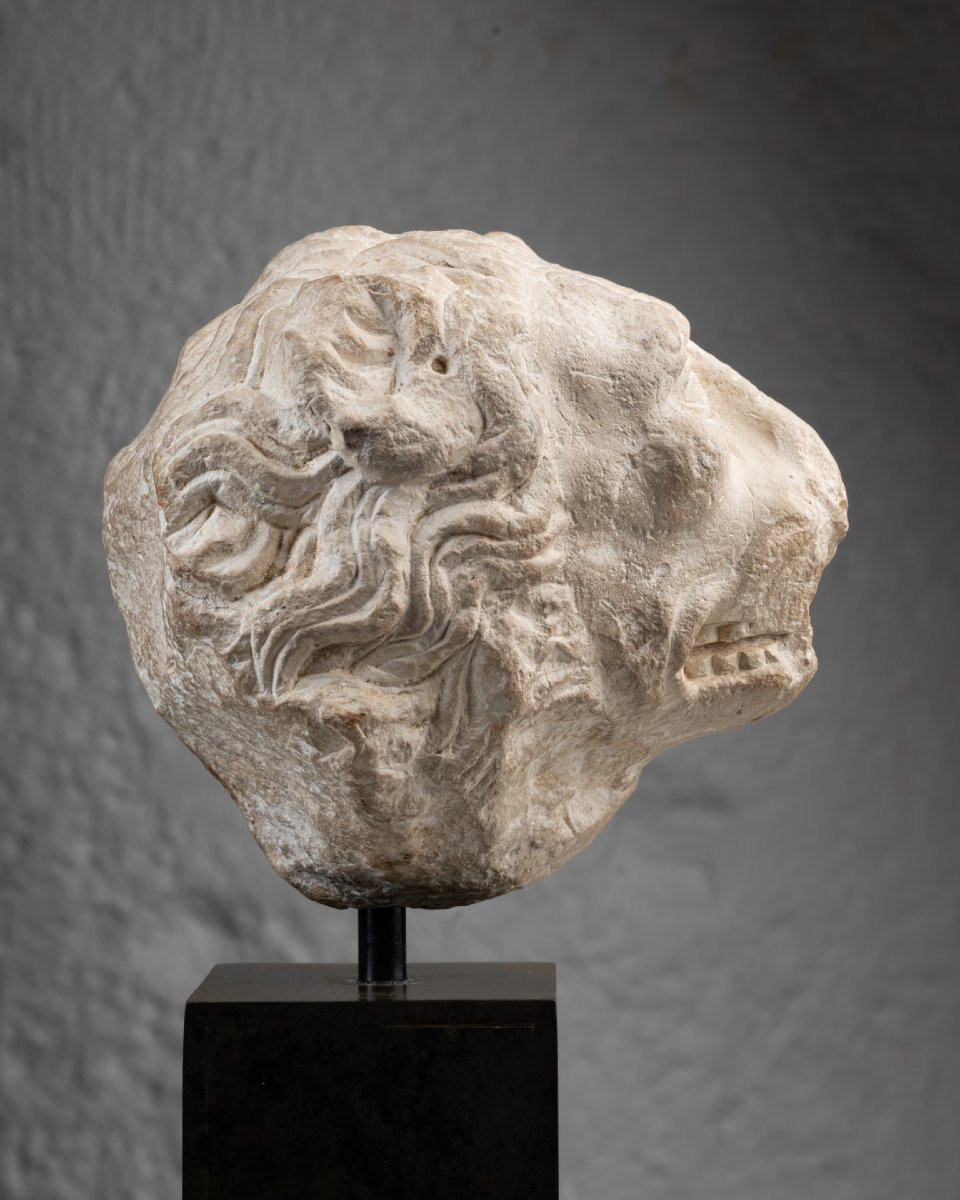
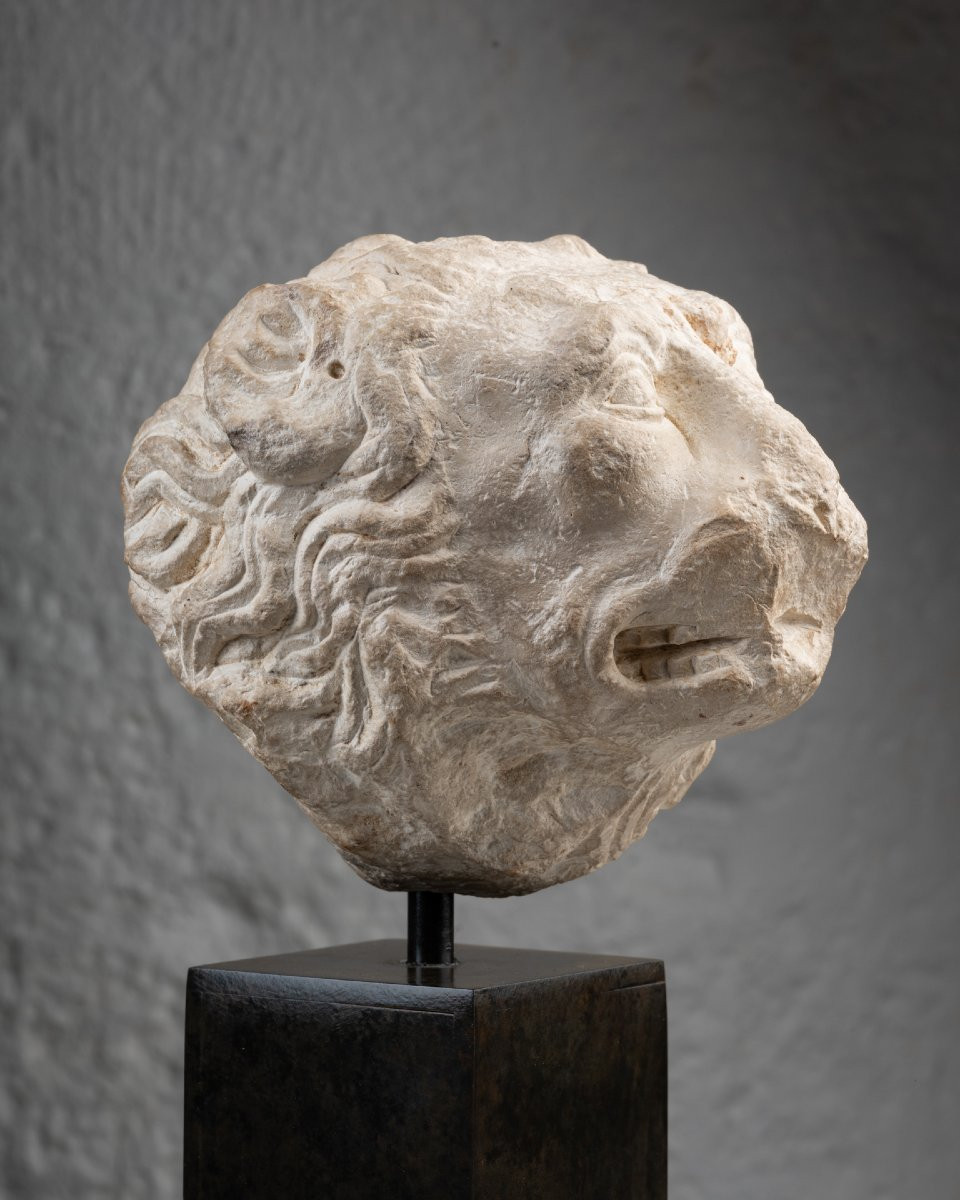


Small Marble Lion - Italy - 12th Century
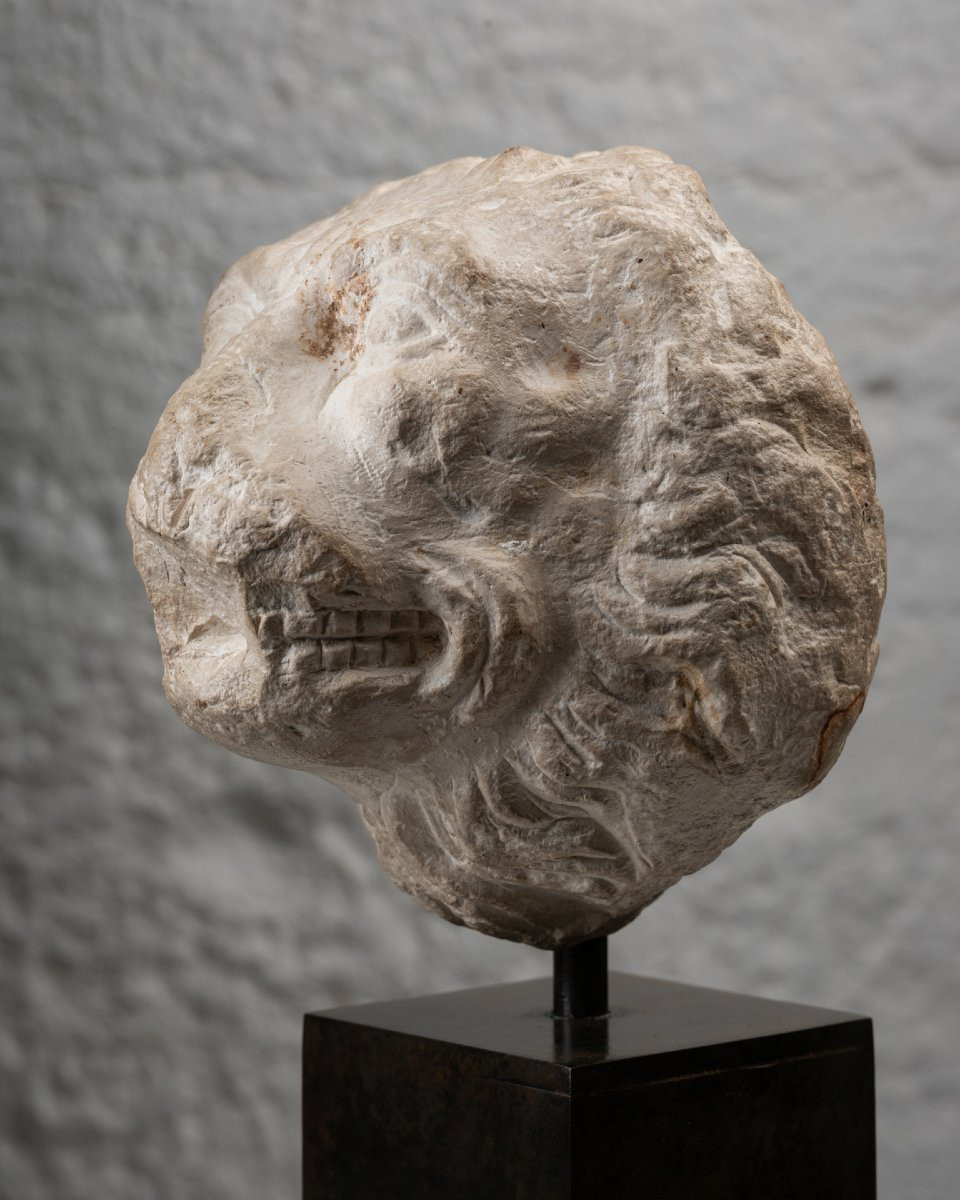
This small marble lion, of Italian origin, can be traced back to the Romanesque period, more precisely around the 12th century. Sculpted in the round, it survives today only as a fragmentary head, probably part of a larger architectural or decorative ensemble.
The representation of the lion is part of a particularly widespread iconographic tradition in the Romanesque period, where this animal occupies a central place. A symbol of strength, vigilance and power, the lion is frequently associated with the protection of sacred places. In the Middle Ages, the lion was often interpreted as an image of justice and power, as demonstrated by its presence in the decoration of royal and episcopal thrones. It is also found in church portals, capitals and architectural supports, where it acts as an apotropaic figure to ward off evil. In the Christian context, it can also be interpreted as an image of Christ, embodying both resurrection and divine sovereignty.
These sculptures were placed on religious or funerary buildings, in continuity with ancient traditions of symbolic decoration. The lion, often depicted in partial form - up to the bust or as a protome - was used as a decorative and protective motif. The stylistic treatment of this head fully reflects the characteristics of Romanesque sculpture. Far from seeking naturalism, the artist favors a marked stylization: the head is built according to schematic forms, with a strong frontal aspect and simplified volumes. The wide-open eyes give the animal an intense, almost abstract expression. The mane, suggested by irregular, rhythmic trimming, frames the face and accentuates the almost living dimension of the figure. The open mouth, revealing protruding fangs, reinforces the impression of tension and vigilance, accentuating the figure's protective yet threatening character. This formal simplification, combined with a certain rigidity and geometric construction of the masses, is characteristic of Romanesque plastic language. It reflects less a desire to imitate reality than a search for symbolic and visual effectiveness. The lion is represented not just as an animal, but as a sign that conveys meaning. However, the quest for expressiveness and the dynamism of the modelling already herald Gothic developments towards greater individualization of forms.
Thus, this sculpted fragment, though modest, bears witness to a decorative, architectural and symbolic use. It is fully in line with the visual language of Romanesque art, where the stylization of forms and the expressive power of the image take precedence over realism, in the service of a spiritual and protective meaning.
Period: Before 16th century
Style: Renaissance, Louis 13th
Condition: Some scratches and chips
Material: Marble
Width: 11 cm
Height: 23 cm
Reference (ID): 1743002
Availability: In stock