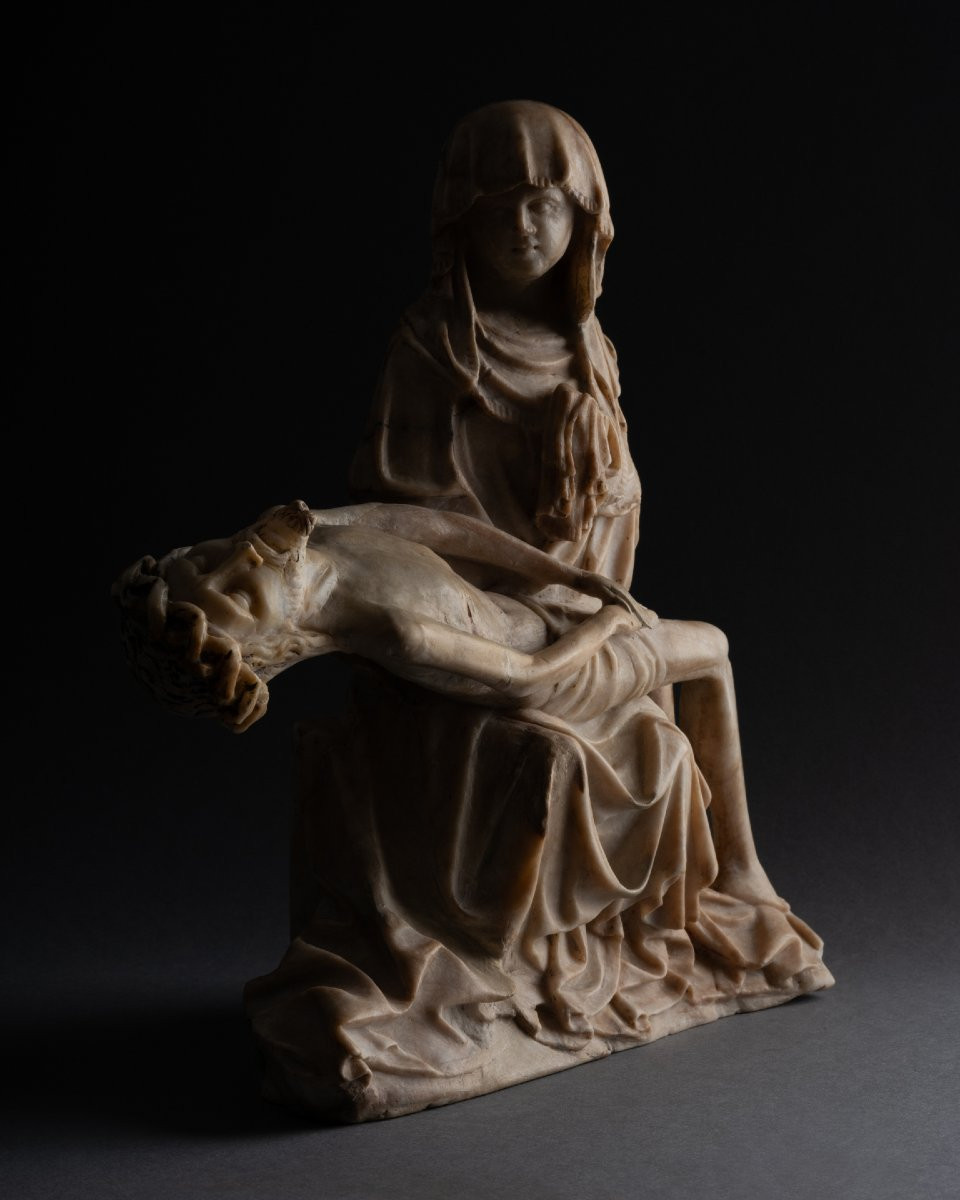


Vesperbild – Netherlands – 15th Century
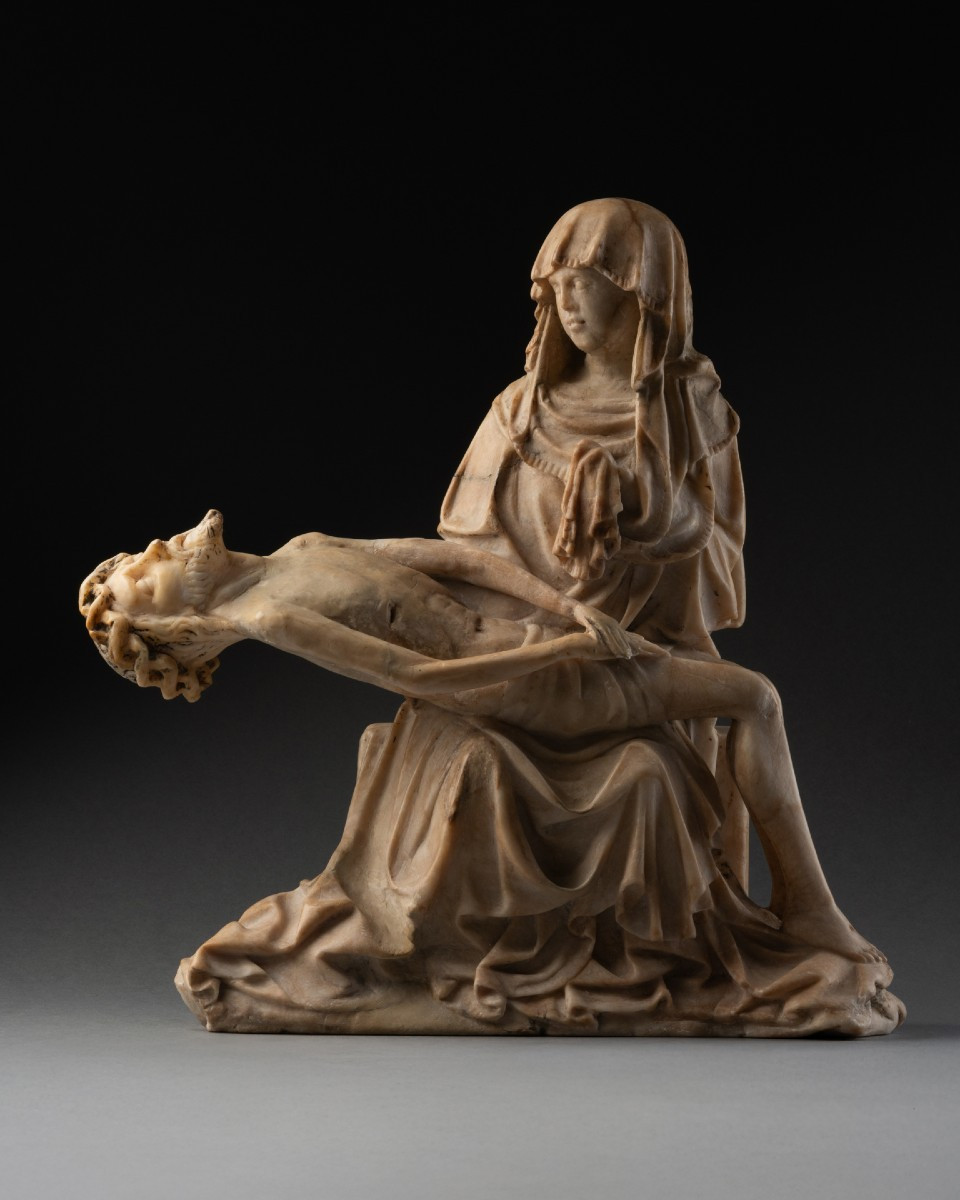
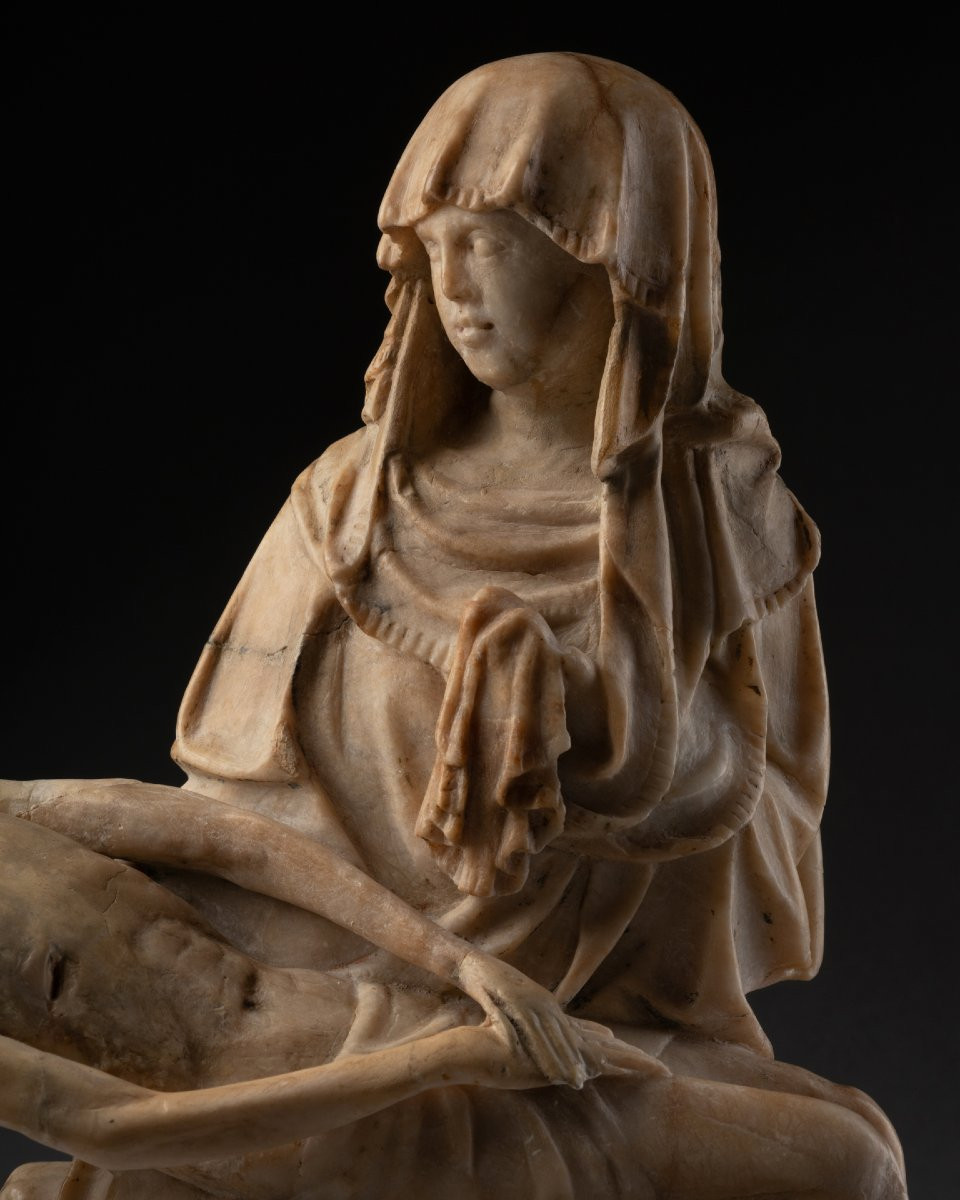
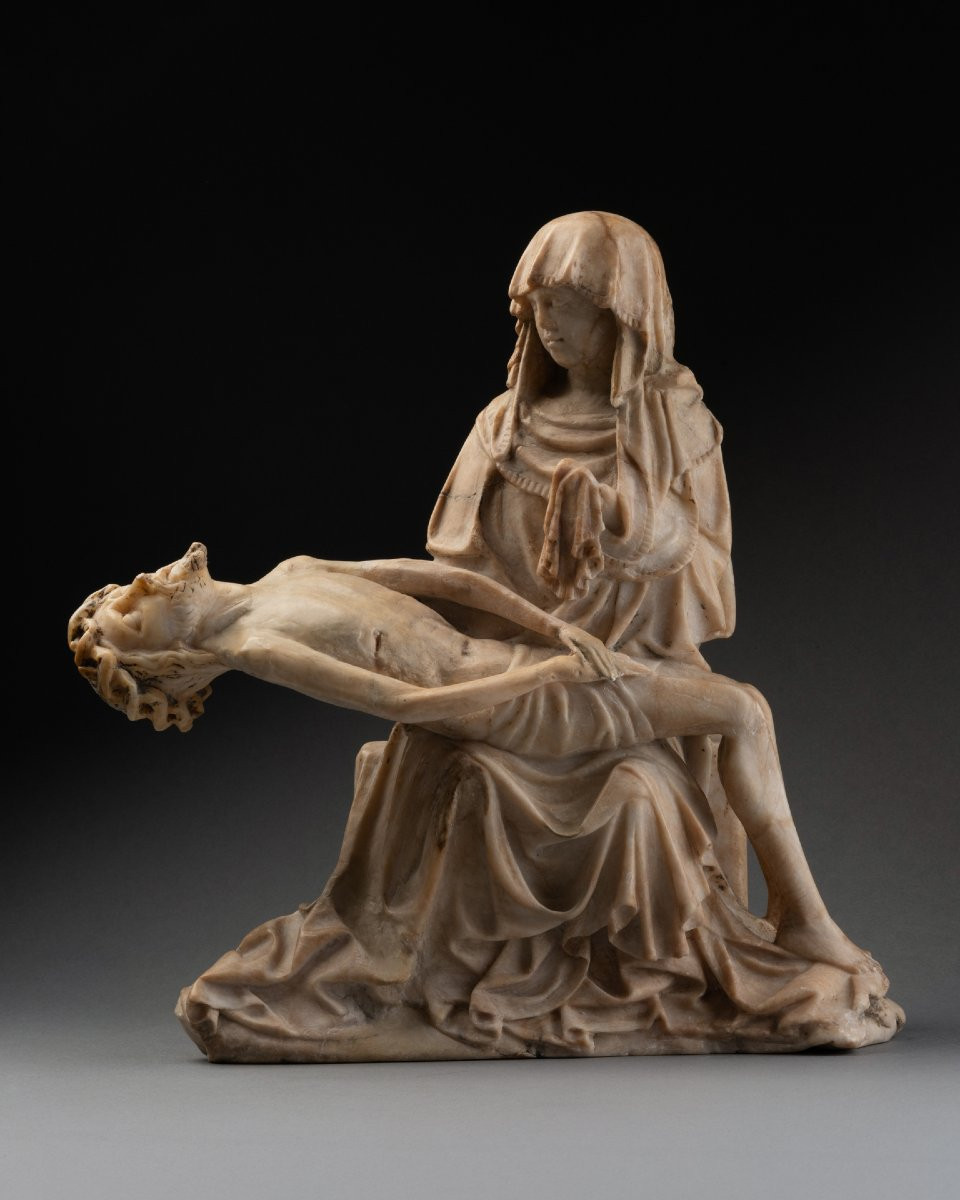
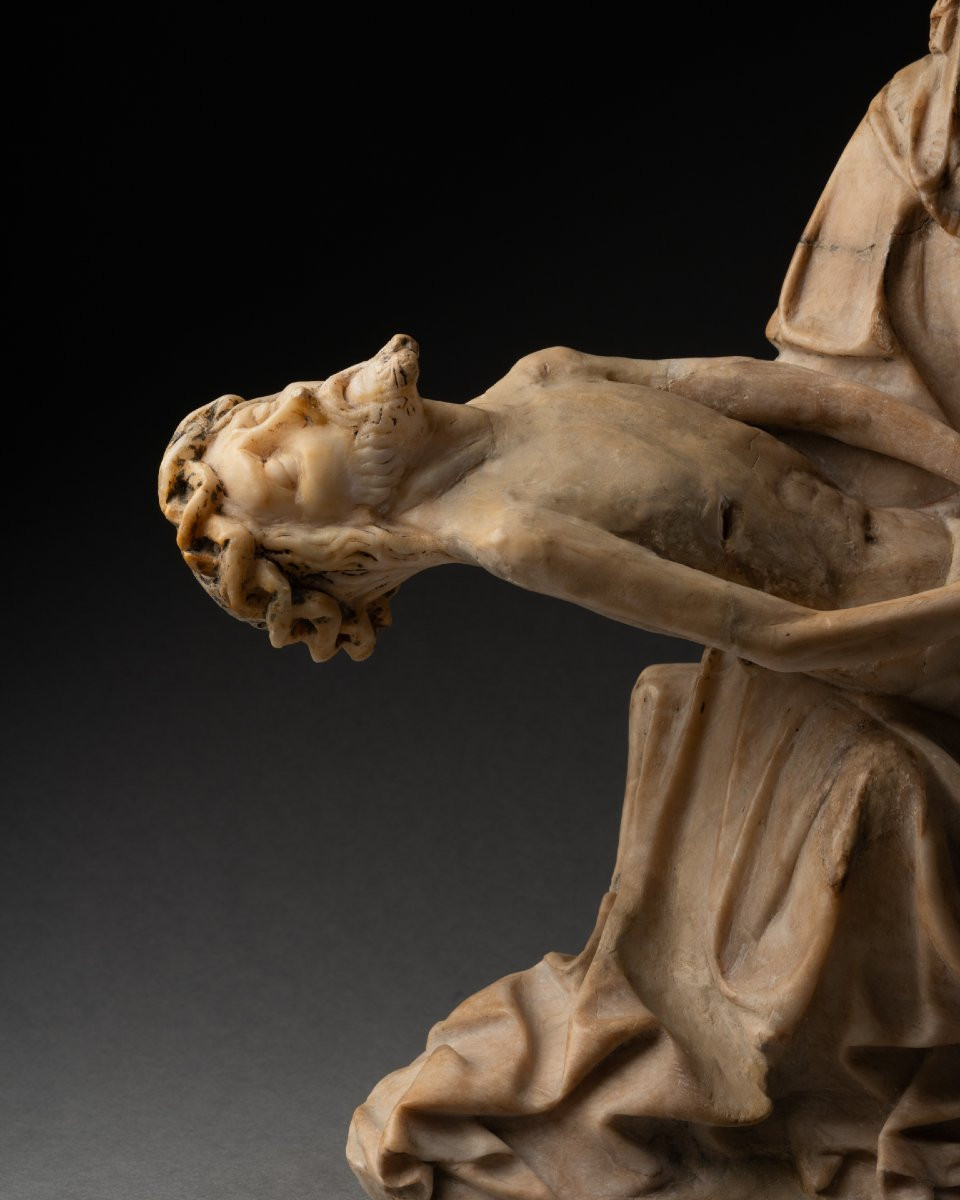
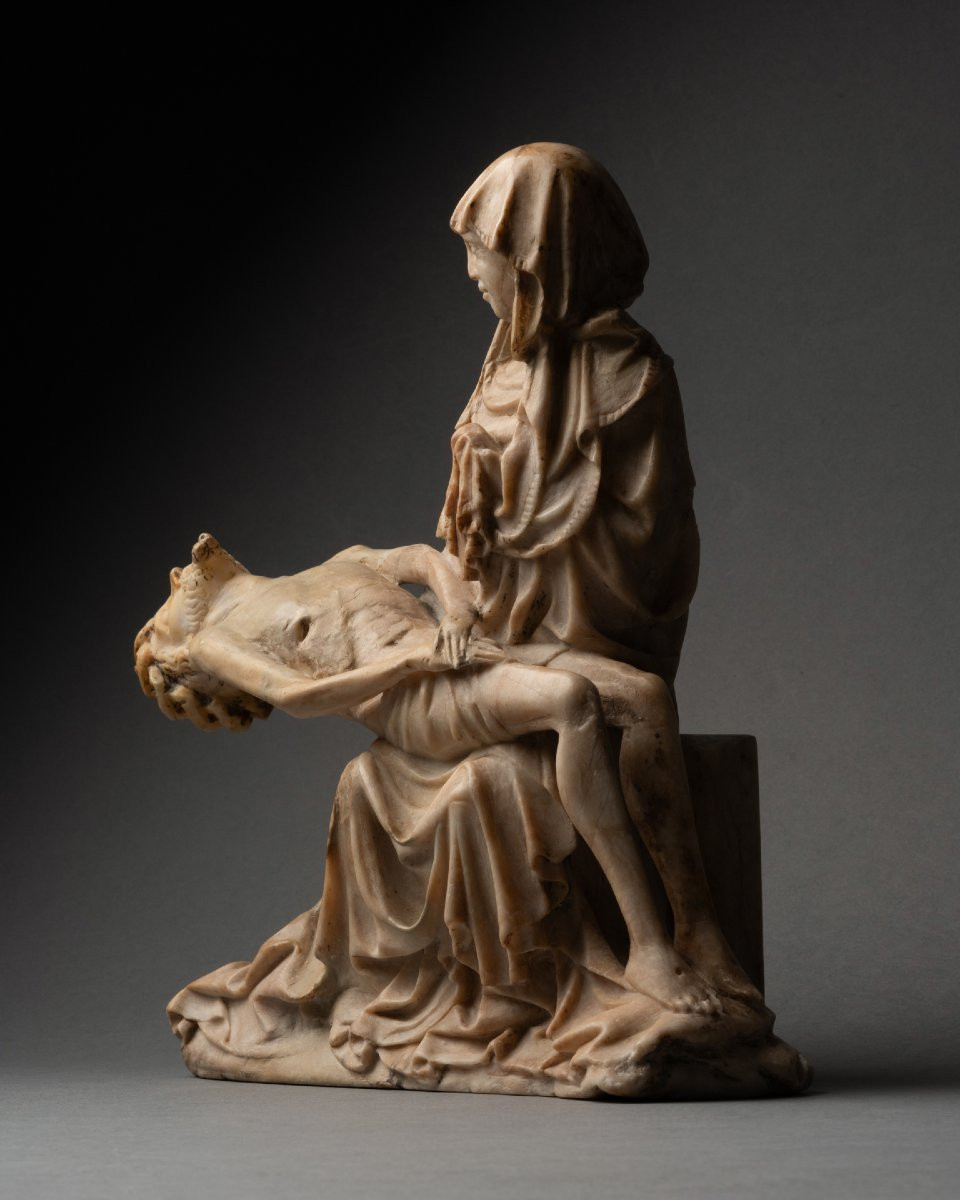
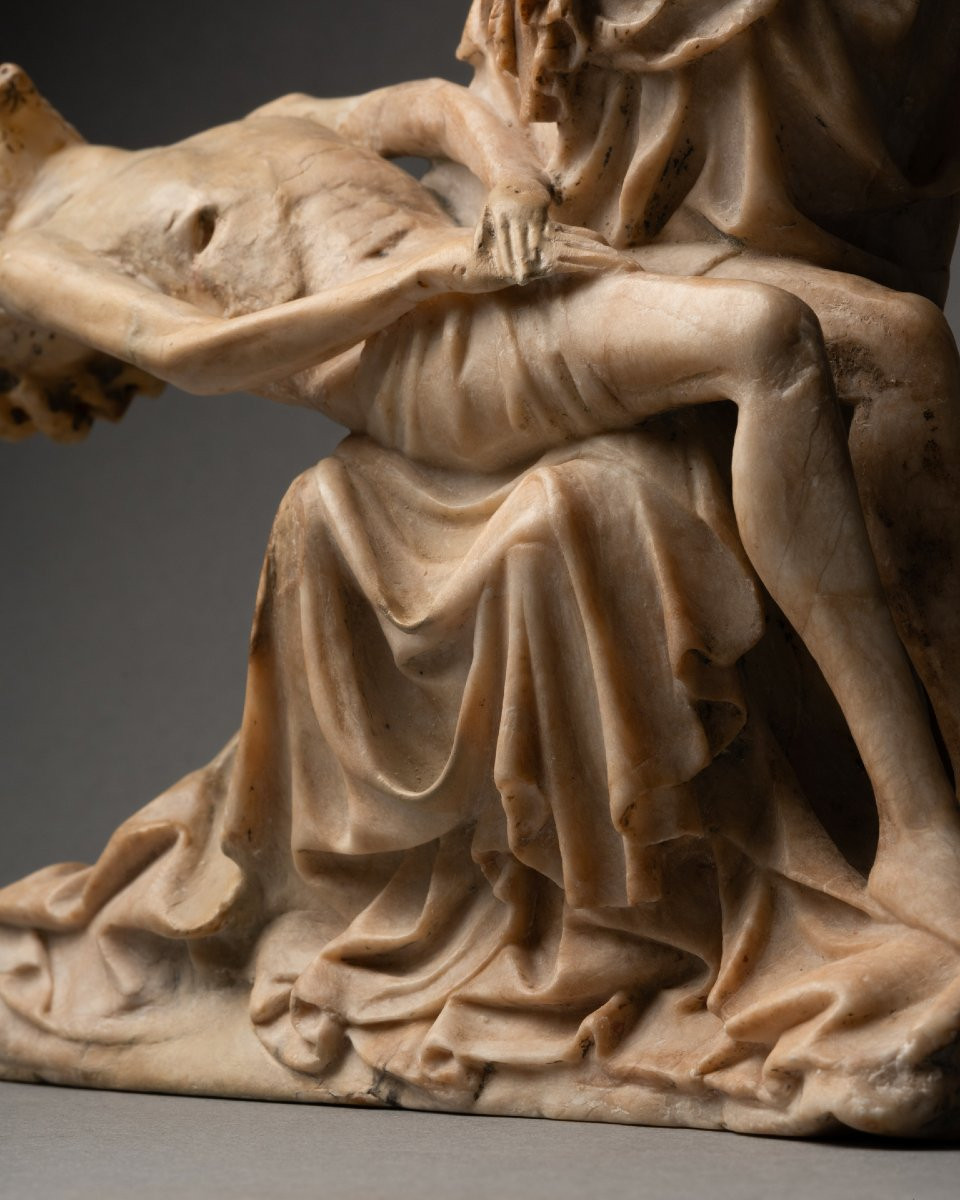
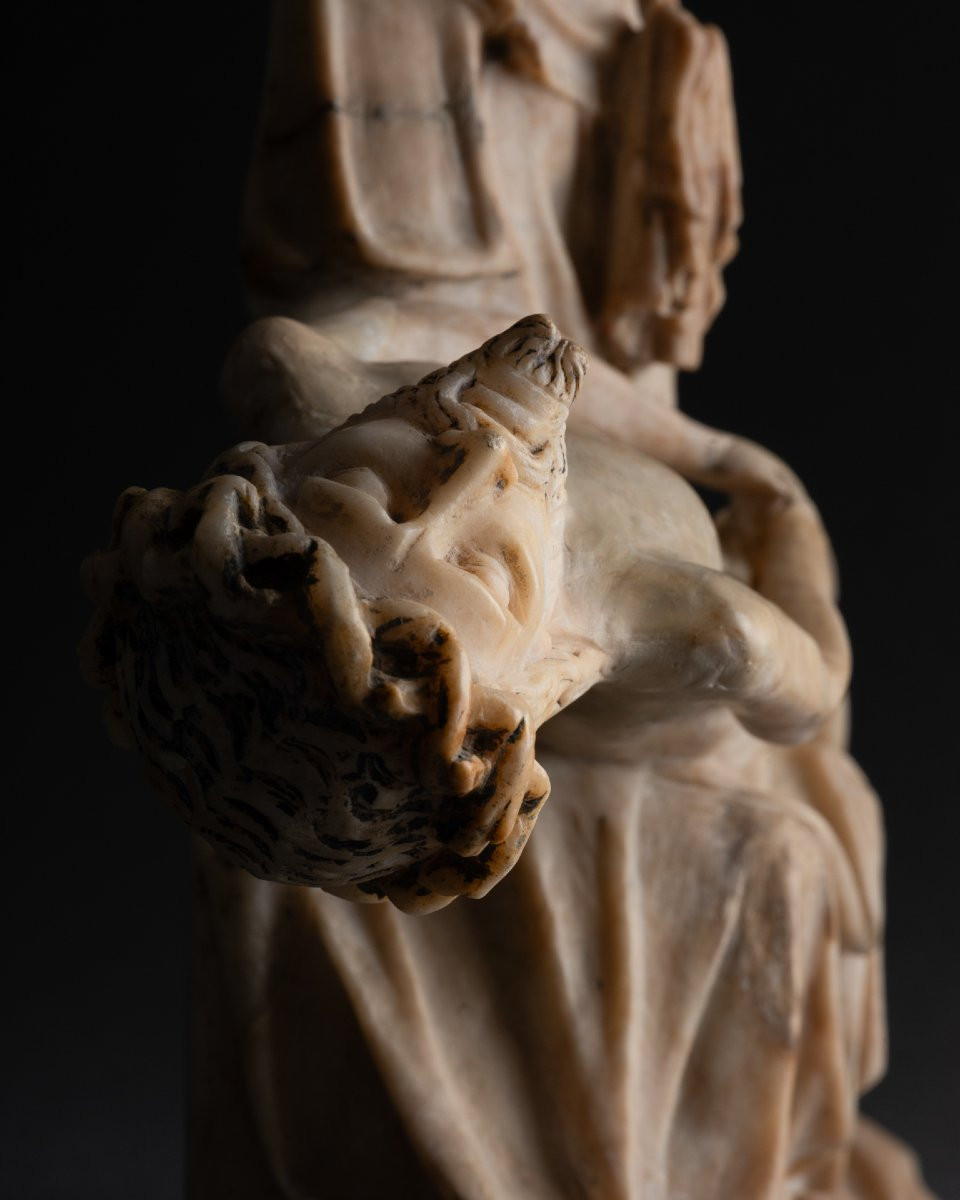
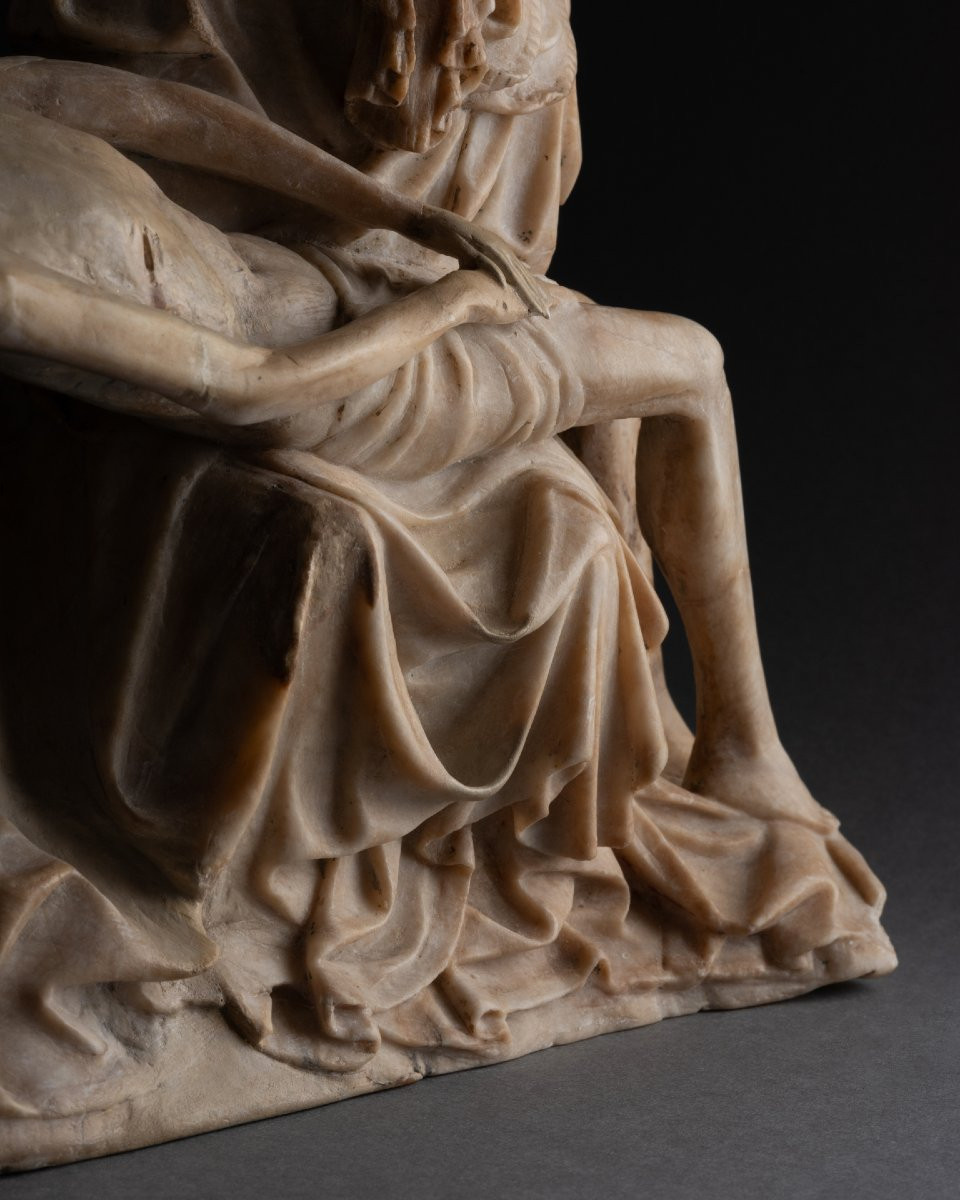
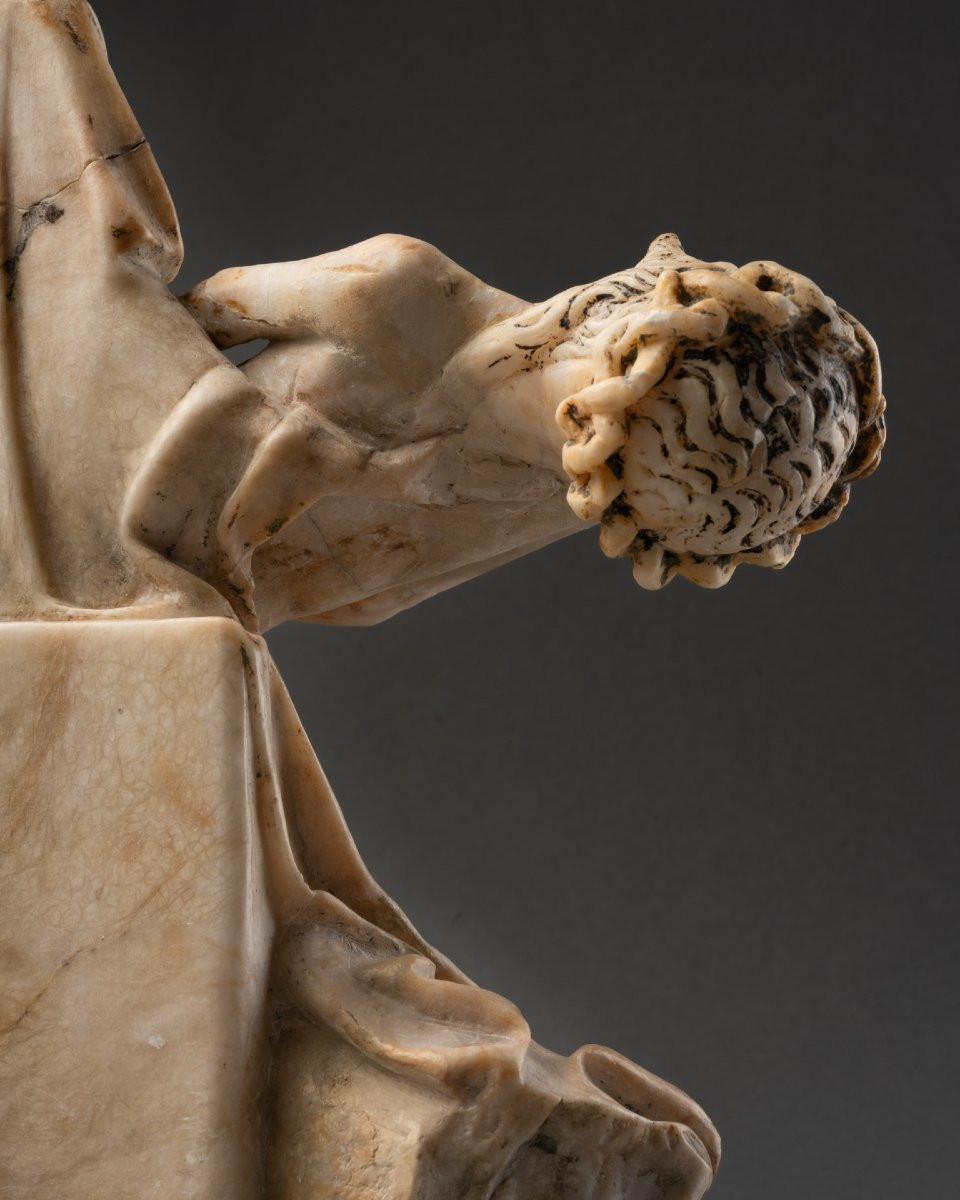
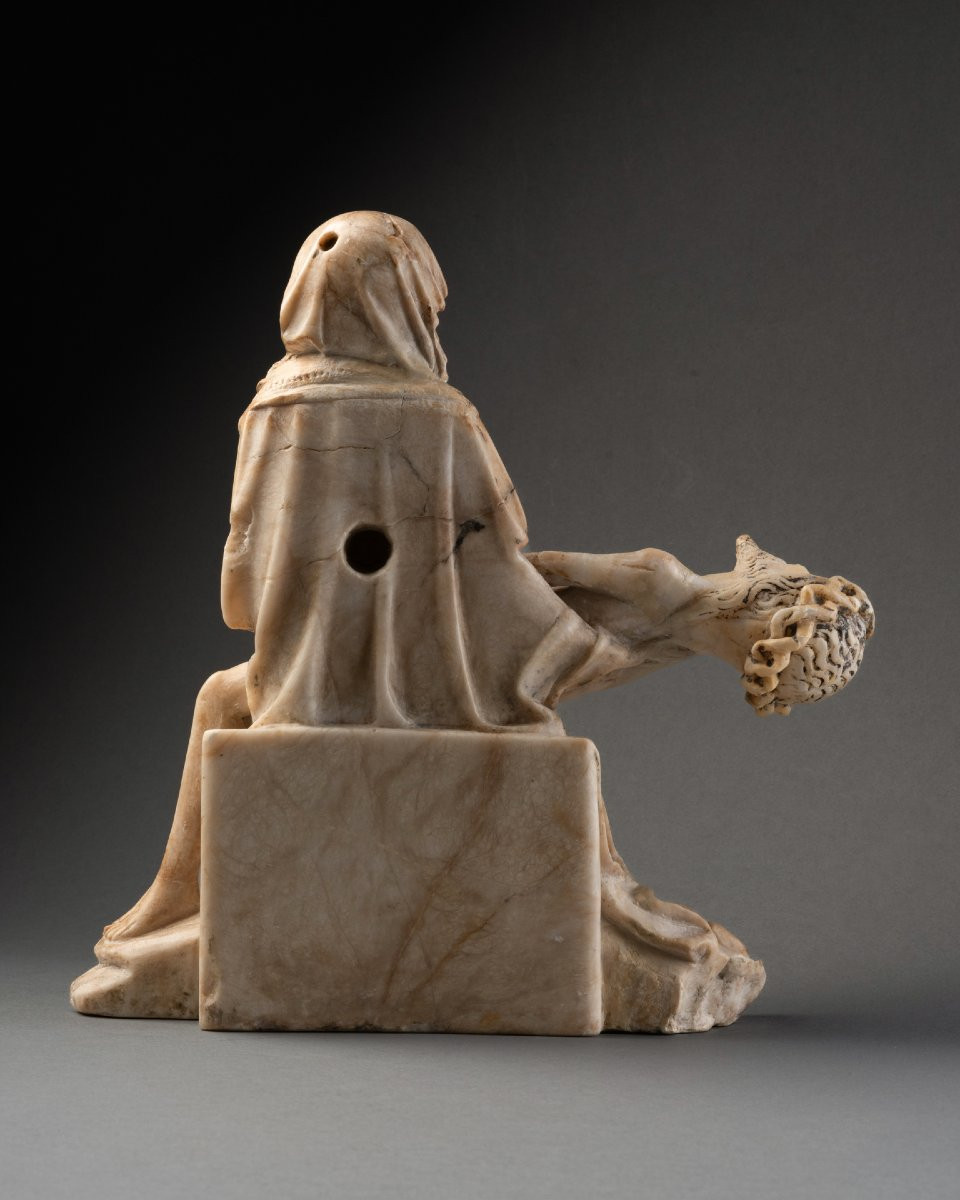
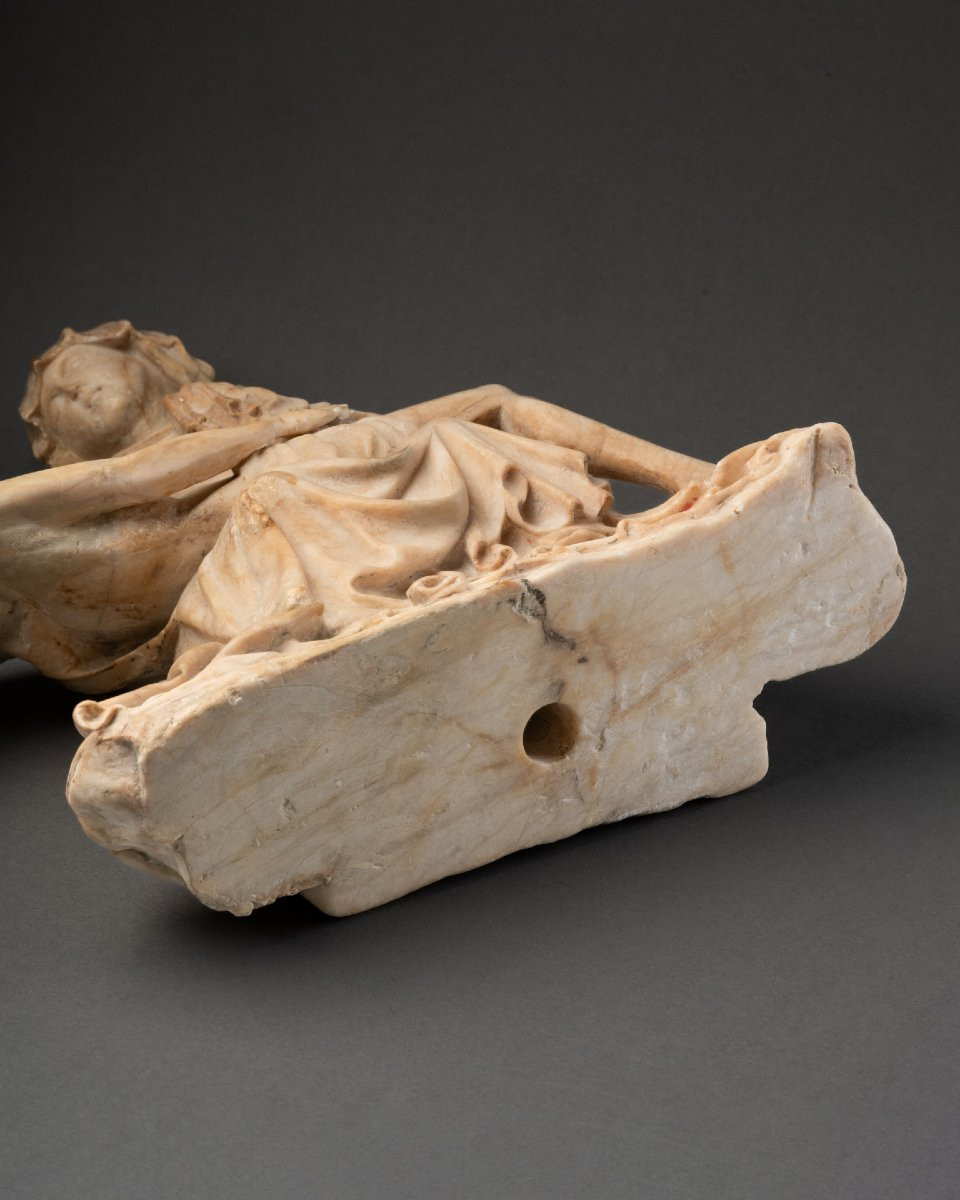
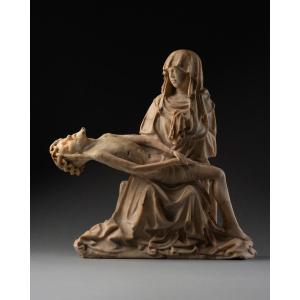
This small 15th-century alabaster sculpture depicts a Pietà, a scene from Christian tradition in which the Virgin Mary cradles the lifeless body of her son, Christ, in her lap after his descent from the cross. Although this moment is not recounted in the Gospels, it became widely popular from the 14th century onward under the influence of apocryphal writings, the Devotio Moderna, and German mystical texts. These latter texts saw Mary as a mother symbolically reliving motherhood by holding her dead son like an infant. In this context, images of the Pietà—often referred to by the German term Vesperbild, in connection with the evening prayer commemorating Christ's death—became objects of personal devotion, to be handled or contemplated in a private setting. This work is attributed to the workshop of the so-called Master of Rimini, an anonymous sculptor active in the 15th century, probably in the southern Netherlands or southern Germany. His identity remains unknown, but his distinctive style and the exceptional quality of his alabaster works have allowed for the identification of some forty pieces scattered throughout Europe. His workshop was one of the most influential in late Gothic Europe, specializing in the production of religious statuettes in alabaster for a wealthy clientele across the continent. His distinctive style is recognizable here: the drapery, with its sharp, broken folds, unfolds vigorously, forming jagged, prominent lines, particularly visible in Mary's meticulously rendered mantle. Details such as gestures and hairstyles are individually treated with great naturalism, while the faces possess strong, clear features with prominent bone structure, combining expressiveness and restraint. The Virgin gazes at her son with a restrained, almost silent sadness, her eyelids lowered and her lips closed, reinforcing the introspective nature of the scene. Seated, she holds a fold of her veil in her left hand in a gesture of sorrow, and with the other, rests her hand on her reclining son. Christ is depicted in a rigid horizontal pose, his body emaciated, his arms outstretched along his mother's legs, in a position that evokes both death and abandonment. The master's characteristic finesse and skill are evident in the natural veins, the deep carvings, and Christ's open mouth. The chosen material, alabaster, lends this sculpture a luminous softness and great finesse. A relatively little-used material before the 14th century, alabaster experienced a resurgence of interest during this period. Although England was a major center for the extraction and carving of this material, continental workshops, particularly in the Netherlands and the Holy Roman Empire, were able to compete by producing works of high quality, sometimes even more inventive and detailed. The Master of Rimini belongs to this tradition, and his sculptures, though modest in size, are distinguished by the purity of the material: an off-white alabaster, sometimes subtly veined. This Pietà thus testifies as much to the profound spirituality of its time as to the technical excellence of a workshop at the height of its powers. Through its understated beauty, balanced composition, and noble material, it embodies a pivotal moment in the history of religious sculpture in Europe at the end of the Middle Ages.
40 000 €
Period: Before 16th century
Style: Renaissance, Louis 13th
Condition: Excellent condition
Material: Alabaster
Width: 20 cm
Height: 22 cm
Reference (ID): 1673205
Availability: In stock
Print