

Charcoal And Pastel Drawing By Antonio Mancini, 20th Century
Artist: Antonio Mancini
He was born in Rome to Paolo, a tailor from Narni, and Domenica Cinti, from Terni. He showed such precocious artistic talent that at the age of twelve he was admitted to the Academy of Fine Arts in Naples, where he studied under Domenico Morelli, Filippo Palizzi, and Stanislao Lista. He was also a close friend of the sculptor Vincenzo Gemito, his contemporary, with whom he shared a poor and difficult youth, a theme that influenced the work of both. In 1877, he moved to Paris for a few months, working for the art dealers Adolphe Goupil and Hendrik Willem Mesdag. There he met Degas and Manet and befriended Sargent, who considered him the best living painter. He also met Ernest Meissonier and Jean-Léon Gérôme. [2] He also stayed in London, at Sargent’s invitation, where his painting continued to be successful. He returned to Naples, then left for Paris in 1877. In 1878, he returned to Naples, afflicted by illness and severe bouts of depression that, in 1879, led to his admission to a sanatorium until 1883, when he decided to settle permanently in Rome, where he could also count on the financial support of his artist friends. In Rome, he met Aurélia, who, in addition to posing for him, became his life partner. In 1885, he signed a contract with the Dutch patron Mesdag, who regularly sent him money in exchange for paintings and drawings (about 150 works), which the art dealer kept for himself (they are now on display in the museum bearing his name) and sold the rest. Between 1901 and 1902, he stayed in England, where he painted portraits of high society, encouraged by the American painter John Singer Sargent. Between 1907 and 1908, he returned to England and Ireland. He signed a contract with the art dealer Messinger (for whom he worked until 1911), then with the patron and collector Fernand du Chêne de Vère, who welcomed him to Villa Jacobini (Casal Romito) in Frascati, where he remained for eleven years, until 1918. He exhibited in Venice in 1914 and in 1920, the year in which the 22nd Biennale dedicated a solo exhibition to him. In 1928 he exhibited at the Castello Sforzesco in Milan and, in 1929, was admitted to the Accademia Italiana. He embraced fascism and donated a self-portrait to Mussolini, who was tempted to give it to Hermann Göring on the occasion of the Nazi leader’s fiftieth birthday, on January 12, 1943 (his son-in-law Ciano dissuaded him). He died in Rome in 1930 and is buried in the right aisle of the Basilica of Saints Boniface and Alexius on the Aventine Hill.
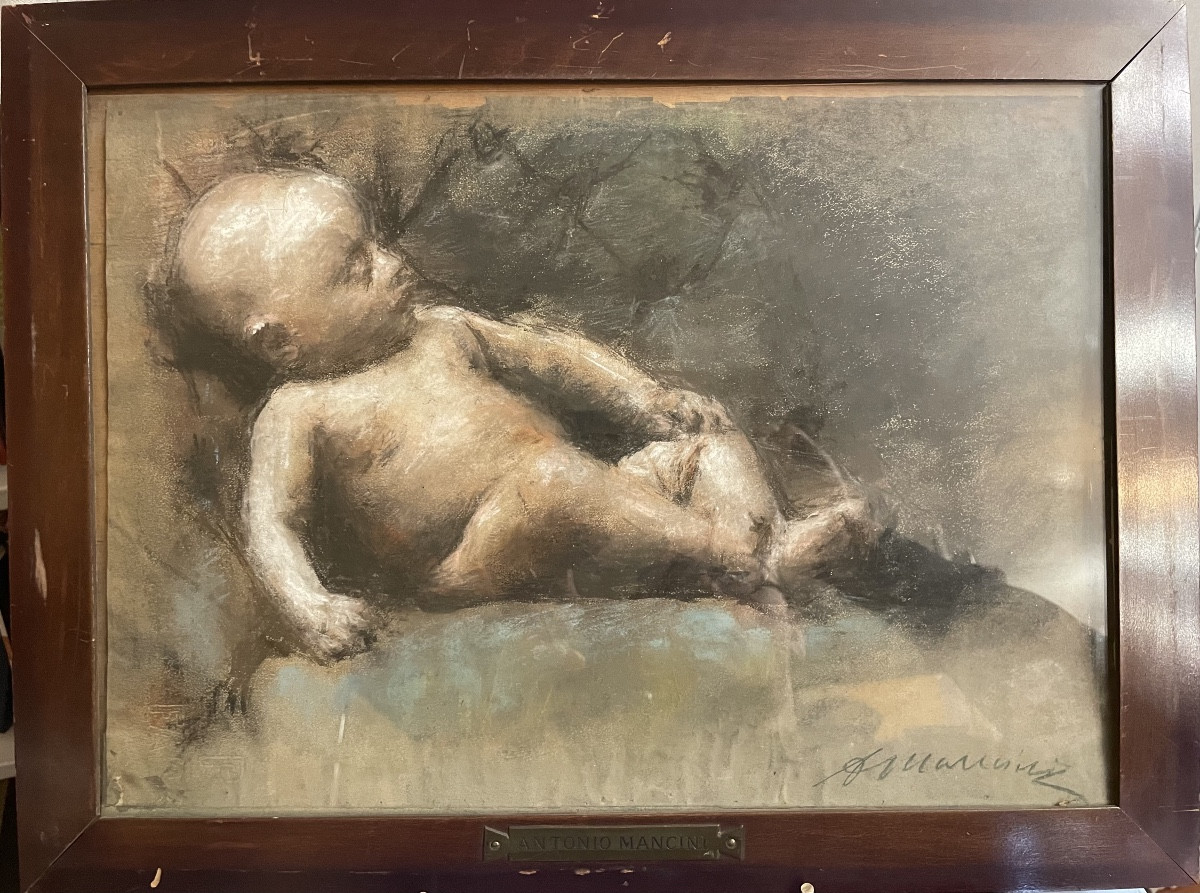
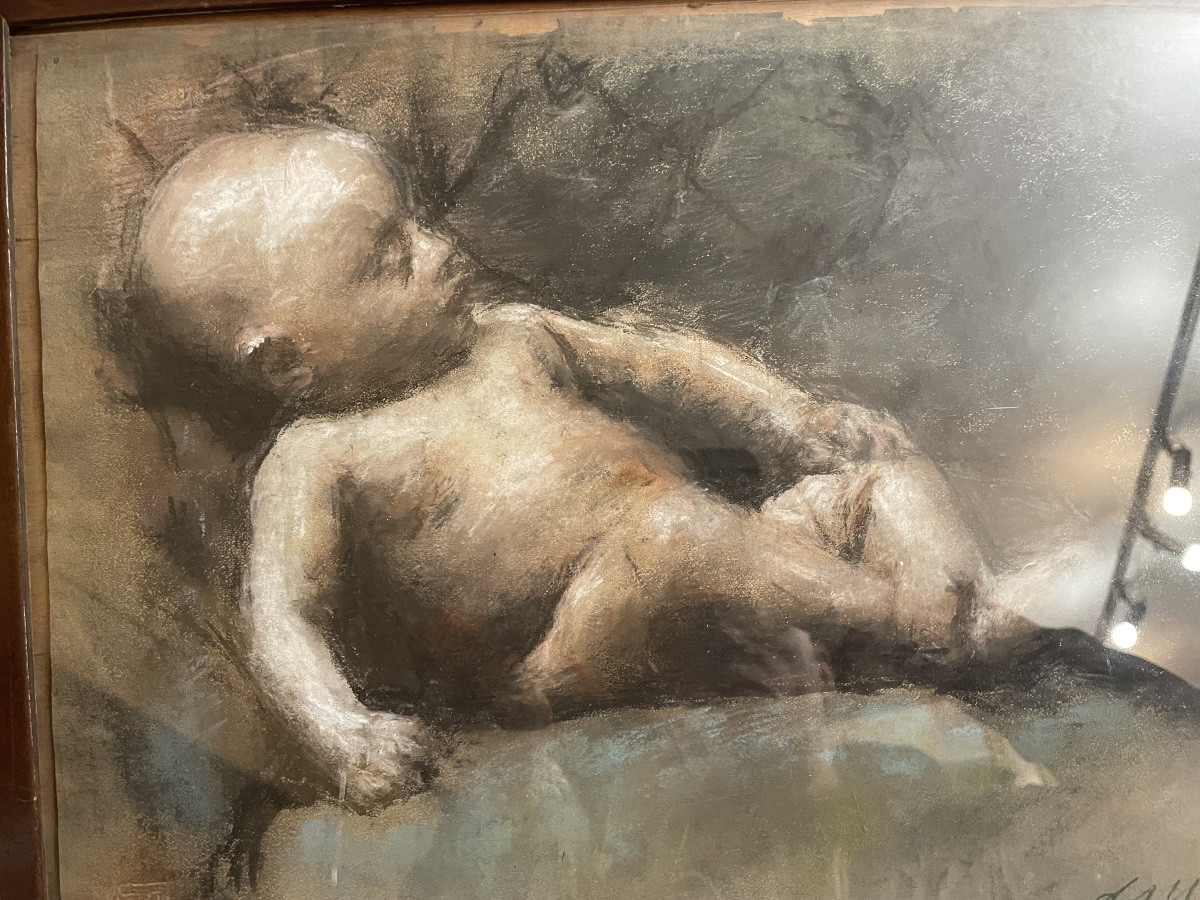
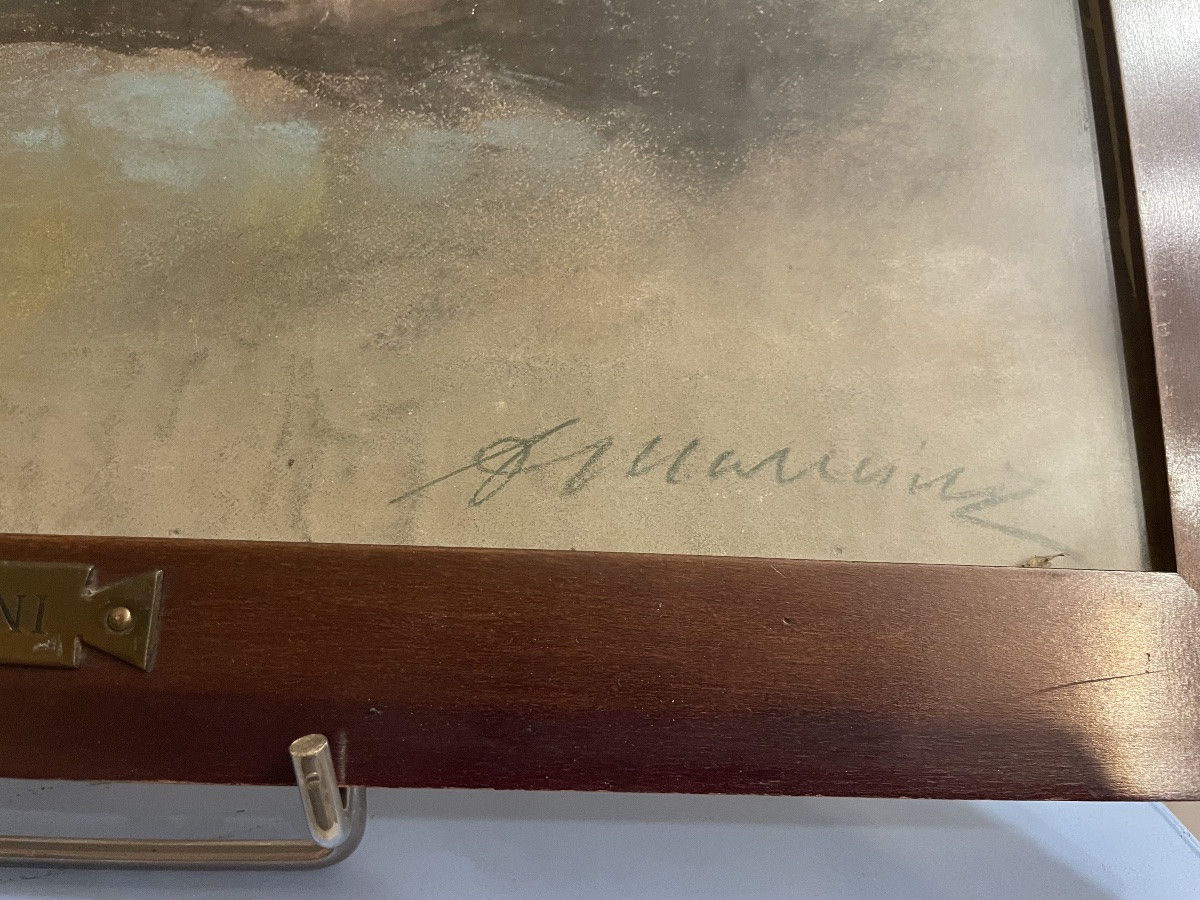
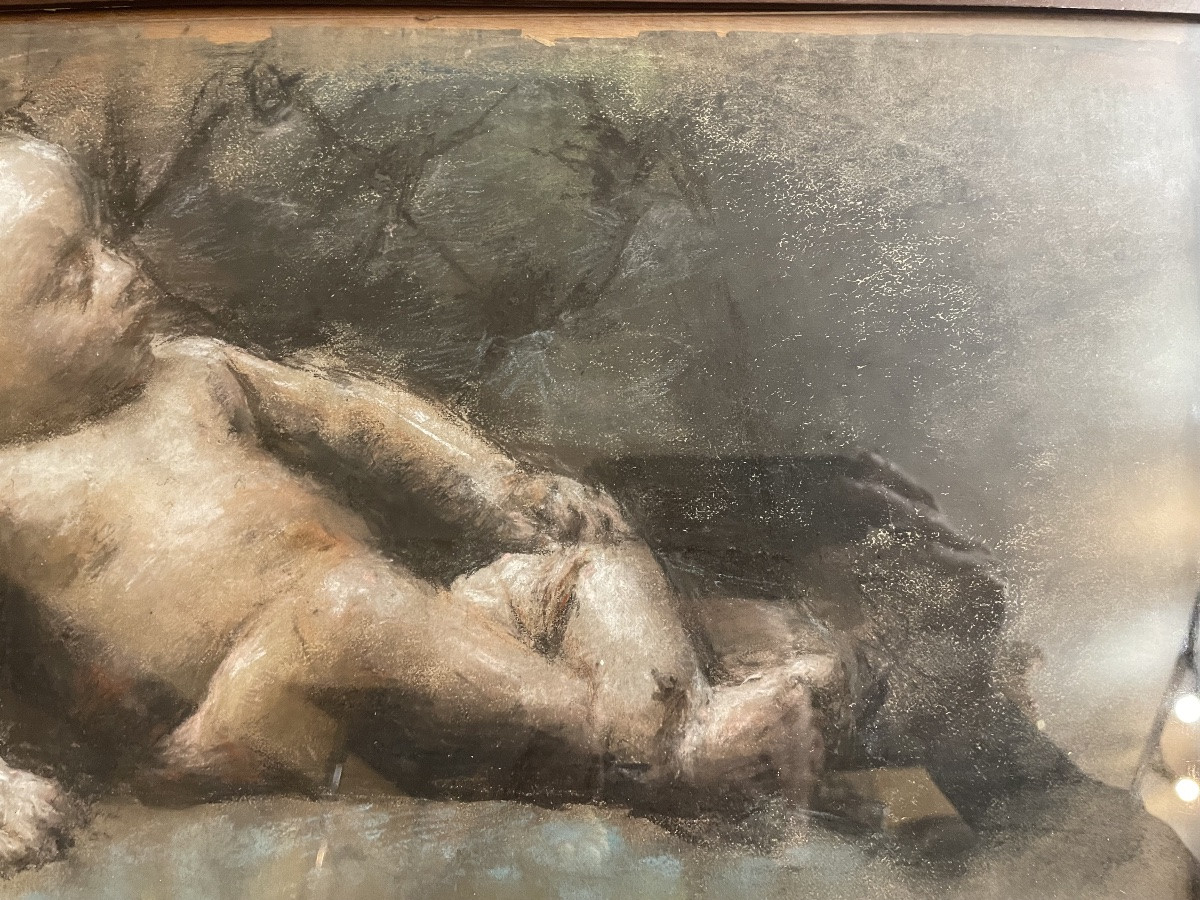
The painting on paper, depicting a sleeping child and executed using a technique that combines charcoal and pastel, has small tears along the edge of the paper (which do not compromise the work). Signed in the lower right corner, it is accompanied by a certificate from the Mancini Archive.
The painting on paper, depicting a sleeping child and executed using a technique that combines charcoal and pastel, has small tears along the edge of the paper (which do not compromise the work). Signed in the lower right corner, it is accompanied by a certificate from the Mancini Archive.
1 800 €
Period: 20th century
Style: Art Nouveau
Condition: En l'etat
Width: cm 42 avec cadre cm 48,5
Height: cm 30 abec cadre cm 37
Reference (ID): 1749875
Availability: In stock
Print